Pet travel safety

Pet Travel Safety and Welfare From Booking to Arrival

Not every journey is easy for a pet, and a pet cannot tell us how it feels. Looking after its welfare is both the right and the duty of everyone who loves animals. This page covers the risks, the pet’s health and the preparation that makes a journey safer.
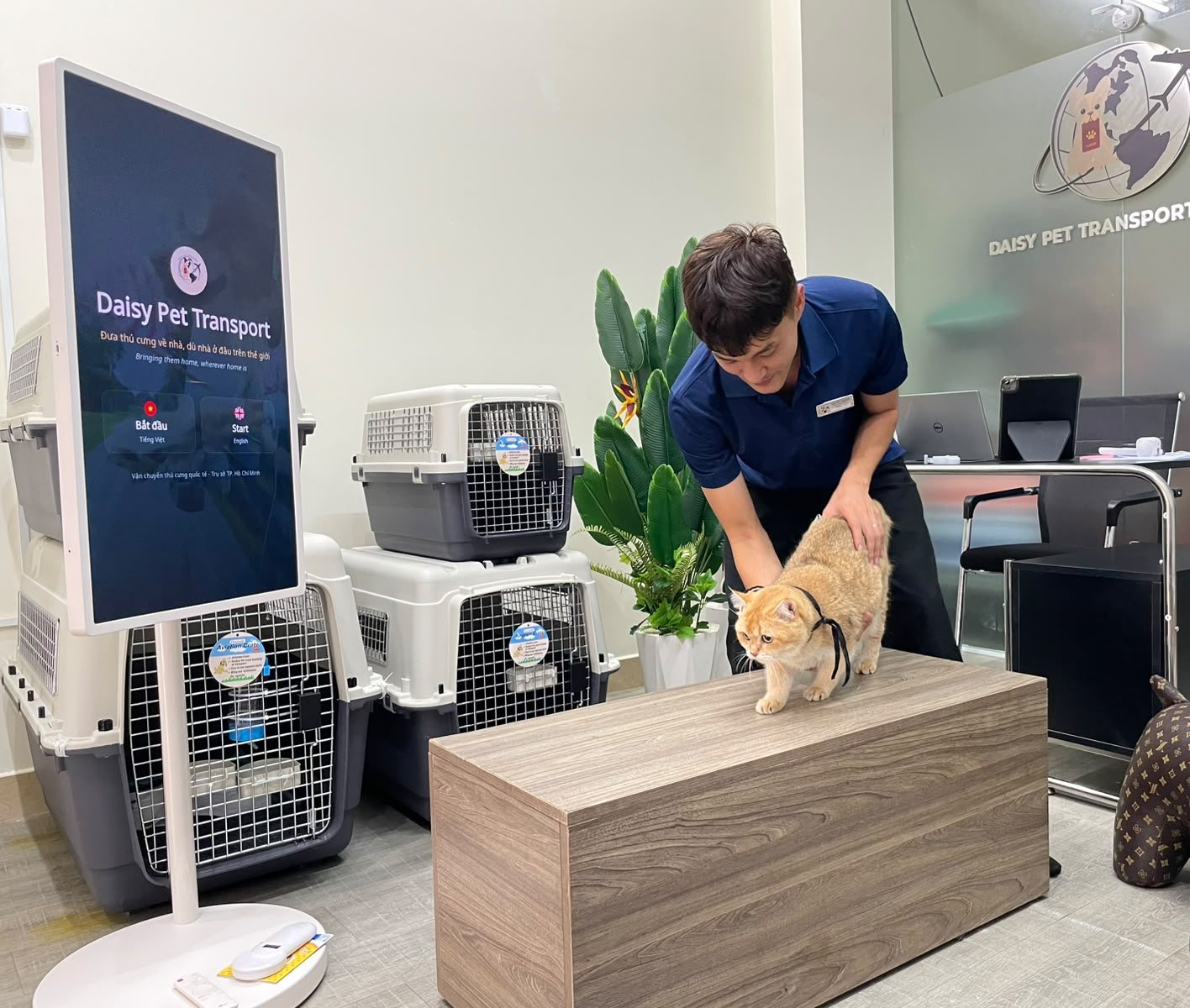
Daisy Pet Transport staff member checking a golden cat on a bench beside travel crates at the Ho Chi Minh City office
For the hours you can’t be thereDogs and cats, from booking to arrival
Know this first

Three Things That Decide a Safe Flight

Careful preparation is essential to any pet’s journey.

01

The Risks

Risk does not appear only on flight day. It begins during preparation.

02

The Pet’s Health

Not every pet is suited to flying. A veterinarian makes that call.

03

Prevention

The vet, the owner and the transport company each have a role in the journey.

Potential risks

Risks You May Not Have Considered

The greatest risk is rarely the flight itself, as many assume. Most of it builds up before take-off.

01

Fear Without You

Away from its owner, in a place it does not know, a pet may bark, howl, pant hard or scratch and chew at the crate door. A panicking pet can injure its paws, teeth or nose on the door. See how pets travel in the hold.

02

Heat and Ground Time

Much of the risk is on the ground: loading, the tarmac, and delays with the doors shut. A crate waiting beside an aircraft has no climate control around it. Airlines set temperature limits for this reason.

03

An Unsafe Crate

A crate that is too small, poorly ventilated or weakly assembled can put a pet’s life at risk. It can restrict breathing, cause injury, or come apart in handling and let the pet escape near the aircraft.

04

Well-Meant Sedatives

Owners sometimes sedate a pet out of kindness. Sedation can slow breathing and weaken the body’s response to heat and stress, and airlines can refuse a sedated pet. See why sedatives are avoided.

05

Papers That Don’t Match

A missing date, a microchip number that differs between documents, or a vaccine given in the wrong order can stop a pet at check-in or on arrival. The pet may then be held in quarantine or sent back on a return flight.

06

After Landing

Stress can stop a cat eating after arrival. A cat that stops eating can develop hepatic lipidosis, a liver disease that can be fatal (Cornell). Overweight cats are more at risk. See the first 48 hours.

Pet health

Is Your Pet Fit to Fly?

Three groups of factors decide it. A veterinarian assesses each one before the flight is booked.

Breed

Short-nosed (brachycephalic) dogs and cats have narrow airways that heat and stress narrow further. About half the purebred dogs that died on US flights in 2005 to 2010 were short-nosed (US DOT). Some breeds also carry inherited heart disease (Seo et al., 2024). See flat-faced breeds and breed restrictions.

Body and Age

Airlines refuse unweaned puppies and kittens, and generally refuse pregnant animals. A pet that is ill or recovering is treated before it flies. A senior pet, or one with a heart or breathing condition, needs a vet’s assessment first. See puppies and kittens, pregnant pets and falling ill before departure.

Temperament

Anxiety, panic in the crate and fear-driven aggression all add stress to a long journey, for the pet and for the people handling it. Calm comes from weeks of practice in the crate, not from sedatives. Where medicine is needed, a vet prescribes it and the airline is told. See managing anxiety.

Prevention

How the Risks Are Reduced

Five areas of preparation. Most of the work is done in the weeks before the flight.

01

Veterinary Care

A vet examines the pet, brings vaccinations up to date and treats internal and external parasites, then follows its health until departure. For Daisy Pet clients in Ho Chi Minh City, this is done at Belwee International Animal Hospital.

02

Health Documents

A fit-to-fly certificate and, for short-nosed breeds, a breathing (BOAS) assessment by a vet. These papers are not there to complete a file or to get a pet onto a plane. They record whether the pet is fit to travel, and a “not yet” is acted on.

03

The Travel Crate

The crate is the pet’s protection for the whole journey. It must meet IATA standards, fit the pet’s measurements, ventilate on several sides and let water be added from outside. See the IATA-standard crate and the crate checklist.

04

Crate Training

About six weeks of daily practice turn the crate into a familiar place, so the pet travels in a space it already knows. See crate training and preparing a cat.

05

Transport Planning

The route, departure hour, connections and document timing are planned together, so nothing is left to the day of travel. See cabin, baggage or cargo, layovers and delays and cancellations.

Who does what

Each Party’s Role in a Safe Journey

Four parties share the work. Each one covers a part the others cannot.

The Veterinarian

Examines the pet, assesses whether it is fit to fly, and sets a treatment plan when it is not ready yet. The vet’s decision comes before any booking.

The Owner

Cares for the pet day to day, practises with the crate, follows the vet’s advice, and watches the pet closely after arrival. See feeding before a flight.

The Airline

Carries the pet and holds it from check-in to arrival; no one opens the crate in flight. That is why airlines set breed restrictions, crate standards and temperature limits.

The Transport Company

Connects every party: plans the route, schedules the vet checks, prepares the documents and works with partner agents abroad, so each step happens in the right order.

Choosing a company

What to Expect From a Pet Transport Company

Not a promise that every pet will fly, but the knowledge to find the option that suits the pet, even when that option is not to fly yet.

01

The Right Route

If no direct flight suits the pet, a route is built. Hoa Hoa, a teacup Poodle, flew in the cabin from Hanoi to Abu Dhabi via Bangkok, as no direct flight from Vietnam took pets in the cabin. See Hoa Hoa’s route.

02

The Right Checks

The company arranges the tests the pet needs on the owner’s behalf: the fit-to-fly exam, a breathing assessment for short-nosed breeds, and any test the destination requires, in the order the deadlines allow.

03

Standards Explained

The owner should understand the veterinary and IATA standards behind each step, and why they matter, rather than receive a checklist. A rule that is understood is a rule that is followed at home.

04

Experience on the Day

Experience shortens waits, reduces avoidable errors in the file, and keeps hand-overs calm for the pet and the owner. Many travel-day problems start as a detail missed weeks earlier.

Our standard

Six Rules Set Before Any Booking

They apply to every case. None of them is decided on the day.

No Sedatives Used

None are used. Anti-anxiety medicine is the vet’s call, and the airline is told.

Heat Sets the Hour

Departures are chosen around the heat at every airport on the route.

Breathing Checked

A veterinarian assesses the breathing of short-nosed breeds before booking.

Crate Comes First

The crate is fitted and familiar before the flight is booked.

Fitness Confirmed

A licensed veterinary clinic examines the pet and confirms it is fit to fly.

A Sick Pet Waits

A pet that falls ill is treated first, and the flight is rebooked.

FAQ

Frequently Asked Questions

Can a pet die during air travel?+
Yes, although it is rare. US airlines reported 3 deaths among 117,861 animals carried in 2025. Most of those animals flew in the cabin on US domestic routes, so the figure says little about a long international cargo journey. The cases that do happen are often linked to heat, short-nosed breeds or an illness nobody had found, which is why a vet exam comes before booking. No honest company can promise a risk-free flight, and we don’t.
Is it safe for pets to fly internationally?+
For most healthy pets, yes, and serious incidents are rare. It is not risk-free. The risk rises with heat, short-nosed breeds, poorly fitted crates and long ground waits. That is why most of the work happens before the flight.
What if my pet isn’t fit to fly on the planned date?+
Treatment comes first, and the flight moves. Our rule is to rebook rather than fly a pet that is unwell.
How long can a pet stay in a travel crate?+
IATA sets no single time limit. What matters is that the pet is fit for the journey, has water that can be refilled from outside the crate, and is used to its IATA-standard crate before it travels. Long routes are planned with connections that keep ground holding short.
Can my pet fly in the cabin with me?+
Only small pets, within the airline’s combined weight limit for pet and carrier, and only where both the airline and the destination allow it. Some countries accept pets only as manifest cargo, whatever their size.
Do airline staff check a pet’s health at check-in?+
Staff check the crate, the documents and how the animal looks, and a pet that seems unwell or sedated can be refused. They do not carry out a veterinary examination, which is why the fit-to-fly assessment happens before the flight.
What should go inside the crate?+
An absorbent liner, one familiar item that smells of home, and a water container fixed to the door that can be filled from outside. No hard toys and no loose bowls.
Does Daisy Pet Transport provide veterinary care?+
No. Examinations, fit-to-fly certificates and treatment are carried out by licensed veterinarians, for Daisy Pet clients at Belwee International Animal Hospital in Ho Chi Minh City. Daisy Pet coordinates the file and the transport.

Airplane Texture 1

Ready to Relocate Your Pet?

Tell us about your pet and destination. Our team will review your case and provide a clear, tailored quotation.

GET A QUOTE CONTACT US