VietnamJapan

Pet Shipping from Vietnam to Japan 2026 Expert Guide

Japan has been rabies-free since 1957. For pets arriving from Vietnam a minimum preparation of 7–8 months is required before your pet can land in Japan.

Last updated 18 Oct 2026i
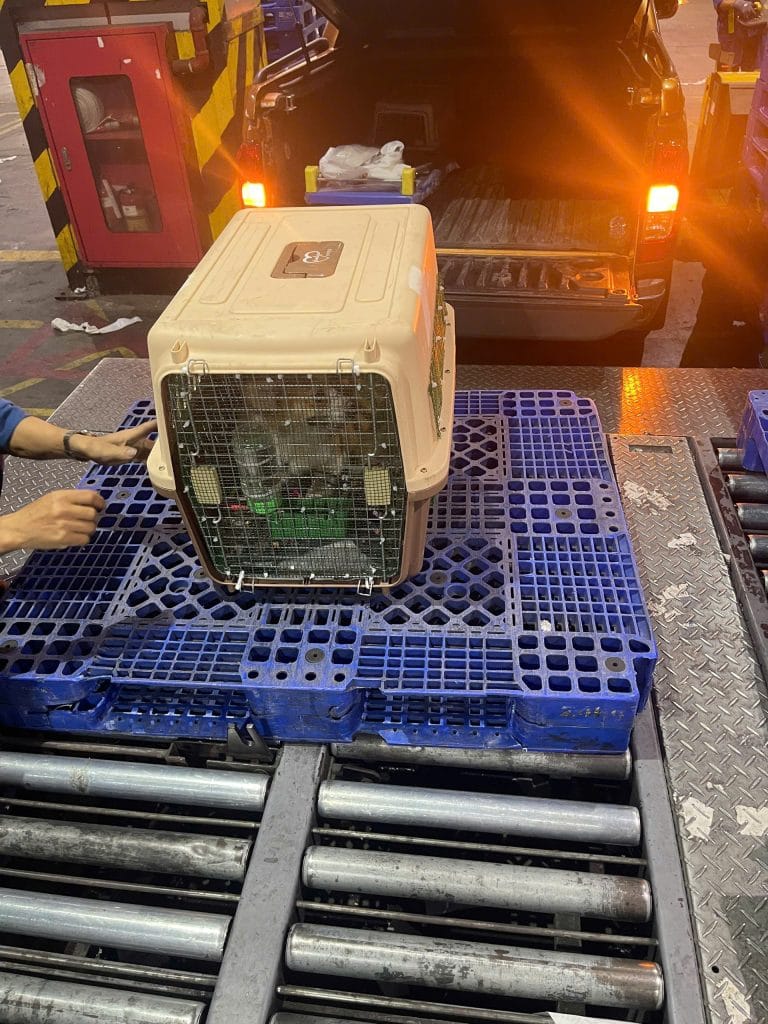
Dog in an IATA travel crate on a pallet at the cargo warehouse
180-Day Waiting Period
Know this first

Key Facts Before Shipping a Pet to Japan

Japan’s Animal Quarantine Service (AQS) enforces one of the strictest pet import protocols in the world

01

The 2-Vaccine Rule

Japan mandates a minimum of TWO rabies vaccinations – spaced at least 30 days apart

02

The 180-Day Biological Wait

After the RNATT blood draw, your pet must remain in Vietnam for a full 180 days

03

Zero-Error Documentation

A single discrepancy between documents results in quarantine for up to 180 days

2026 Estimated Costs & Timelines

Prices are from Daisy Pet’s 2026 quotes for Japan. They cover the Vietnam-side work: export documents, the rabies antibody test, the AQS notification and the service fee.

Travel Mode
Pet Type / Weight Class
Estimated Cost
Total Timeline
AQS Quarantine
Flying with You(Cabin or Checked Baggage)
Pet Type / Weight ClassCatsSmall carrier or crate
Estimated Cost$1,500 – $1,600
Total Timeline7 – 8 Months(Rabies wait included)
AQS Quarantine0 – 12 Hours(With valid docs)
Dogs, or Any Pet as Cargo(Checked Baggage or Manifest Cargo)
Pet Type / Weight ClassDogs of any sizeCrate size sets the freight
Estimated CostQuoted case by case
Total Timeline7 – 8 Months
AQS Quarantine0 – 12 Hours(With valid docs)

*The airline’s pet fee is paid on top: USD 200 to 400 on Vietnam Airlines, or JPY 25,000 per crate on ANA and JAL. The 180-day biological waiting period begins the day the blood sample is drawn for the Rabies Antibody Titer Test (RNATT). Attempting to import your pet before Day 180 will trigger mandatory quarantine at an AQS facility at your own expense (care alone from ¥4,400/night at Haneda, per the caretaker price list).*

MAFF/AQS Regulatory Framework

Compliance with the following standards is mandatory for all dogs and cats entering Japan from Vietnam

Microchip (ISO 11784/11785)

A 15-digit ISO-compliant microchip must be implanted before the first rabies vaccination.

Two Rabies Vaccinations (Minimum)

Dose 1: Pet must be ≥ 91 days old. Must be given after or on the same day as microchip implantation. Dose 2: At least 30 days after Dose 1, within the validity period of Dose 1

RNATT Blood Test (≥ 0.5 IU/ml)

Blood must be drawn after the 2nd rabies vaccination. Samples must be tested at a MAFF-designated laboratory. The RNATT Titer Test results are valid for 2 years.

180-Day Waiting Period

The date of the RNATT blood draw is Day 0. Your pet must wait a full 180 days in Vietnam before departure. Arriving sooner results in mandatory quarantine at an AQS detention facility until the 180-day mark is reached

40-Day Advance Notification

You must notify the AQS office at your arrival airport at least 40 days before landing. Submissions are made via the NACCS system or email. Read our step-by-step NACCS Notification Guide. AQS will review and issue an “Approval of Import Inspection of Animals.”

Health Certificate (Form AC) & Leptospirosis

A clinical inspection must be performed within 10 days of departure. Dogs only: must be certified free of Leptospirosis symptoms. Form AC must be endorsed by Vietnam’s Department of Animal Health. AQS recommends sending a copy of Form AC for pre-review before travel.

Step by step

MAFF 2026: The 8-Step Import Roadmap

The expert protocol for importing dogs and cats into Japan from Vietnam. Follow every step precisely to qualify for rapid clearance upon arrival.

01

Microchip Implantation

Implant a 15-digit ISO 11784/11785 microchip. Chips starting with “900 202” are not accepted. Other “900” chips may be duplicated, so tell AQS early. This must be done BEFORE any rabies vaccination.

02

Rabies Vaccine – Dose 1

Use an inactivated or recombinant rabies vaccine (live and RNA vaccines are not accepted). The pet must be at least 91 days old. Given on the same day or after microchip implantation.

03

Rabies Vaccine – Dose 2

Wait at least 30 days after Dose 1. Administer Dose 2 while Dose 1 is still valid. Breaking the chain means starting over from Step 2.

04

RNATT Blood Test

Draw blood after (or on the same day as) Dose 2. Send the sample to a MAFF-designated lab. Required result: ≥ 0.5 IU/ml. Valid for 2 years.

05

180-Day Waiting Period

The blood draw date is Day 0. Your pet must remain in Vietnam for a full 180 days. There is no legal shortcut. Miscounting by even one day triggers mandatory quarantine.

06

Advance Notification

Submit the Notification form to the AQS office at your arrival airport via NACCS or email. Must be filed at least 40 days before landing. AQS will issue an Approval of Import Inspection.

07

Clinical Exam & Form AC

Perform clinical inspection within 10 days of departure. Dogs must be checked for Leptospirosis. Complete Form AC and obtain DAH endorsement. Send a copy to AQS for pre-review.

08

Arrival & Import Inspection

Present original Form AC, RNATT results, and the AQS Approval at the airport. If all documents pass inspection, clearance is granted in under 12 hours. Welcome to Japan.

The Reality Check: Critical Mistakes to Avoid

Beyond the official regulations, these are the real-world traps where most DIY pet relocation attempts fail when moving pets to Japan.

1

Vaccinating Before Microchip

If the first rabies vaccine was given before the microchip was implanted, Japan considers the entire vaccination history invalid — unless very strict “Certain Conditions” are met. This is the most common reason for case restarts, adding months to the timeline.

2

Correcting Form AC the Wrong Way

MAFF does not accept correction fluid or tape on Form AC. After the government endorsement, only that office can correct the certificate and must endorse it again. AQS recommends emailing a draft before the endorsement.

3

Arriving Before the 180-Day Mark

Miscounting by even one day results in your pet being detained at an AQS facility until the 180-day requirement is fulfilled. The cost of quarantine — including daily caretaking, food, facility maintenance — is entirely at the owner’s expense.

4

Landing at the Wrong Airport

Dogs can ONLY enter Japan through designated ports. If quarantine exceeding 12 hours is required, your pet must arrive at a port with a detention facility (Narita, Haneda, or Kansai are recommended)

Breed Restrictions and Unique Regulations

No Breed-Specific Bans

Japan has NO breed-specific legislation at the national level. Pitbulls, Rottweilers, and all other breeds are permitted entry as long as they meet standard quarantine requirements

Leptospirosis: Dogs Only

Japan requires a clinical Leptospirosis inspection for dogs during the pre-export health examination. This bacterial disease (spread through rodent urine) must be ruled out within 10 days of departure

Three Shipping Methods for a Short Route

Japan’s quarantine rules are the same for all three methods. The airline decides which one your pet can use.

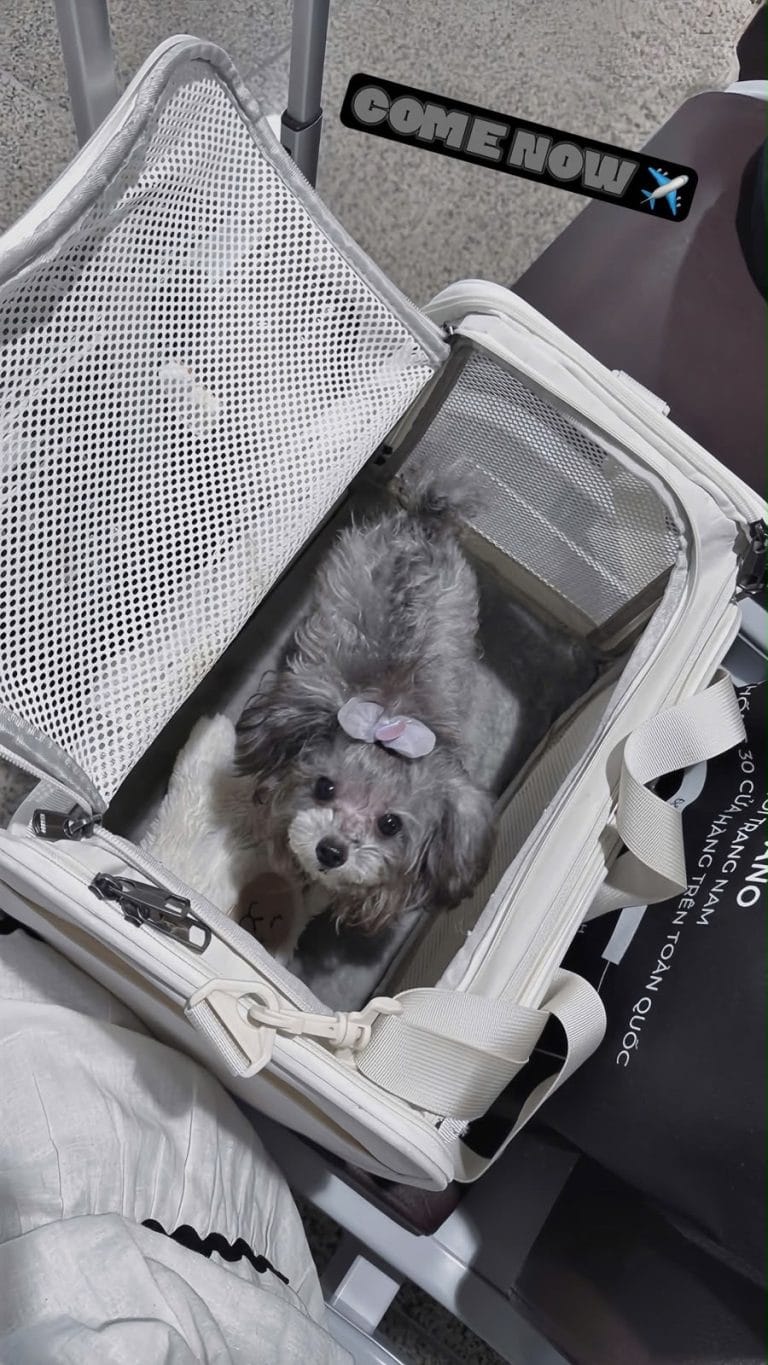
Poodle in a soft-sided travel bag at the airport

In-Cabin (PETC)

Travels in the cabin with the owner, in a soft-sided carrier under the seat.

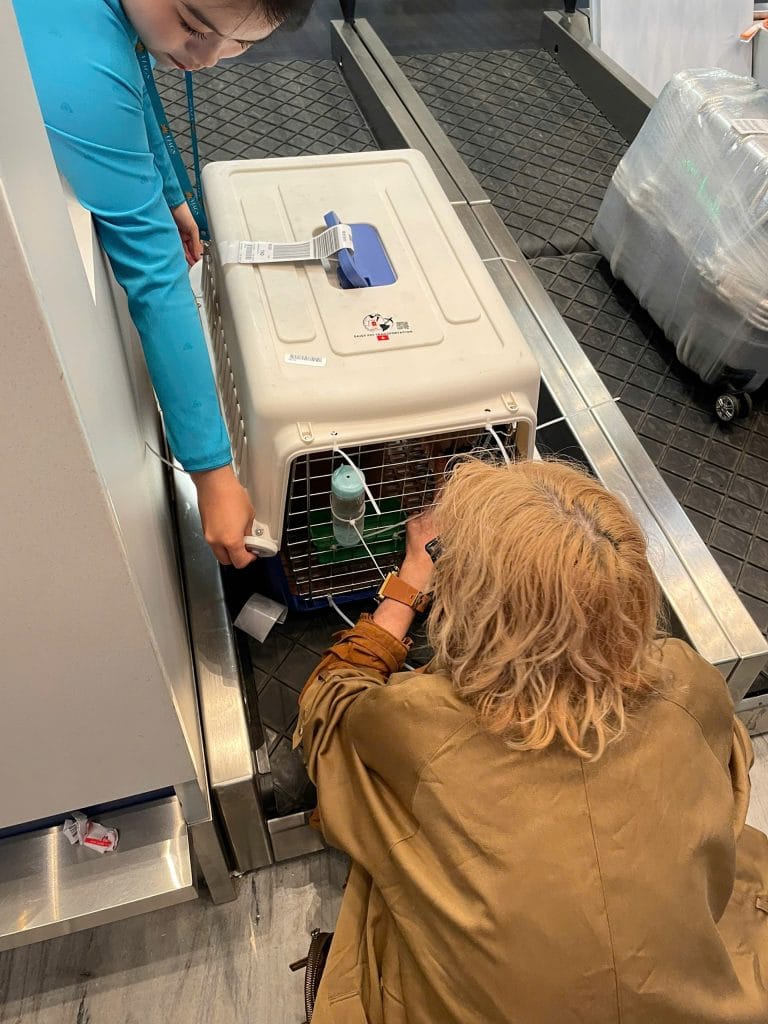
Pet owner checking in a dog crate at the airline counter

Checked Baggage (AVIH)

Flies on the same flight as the owner, in the temperature-controlled hold.

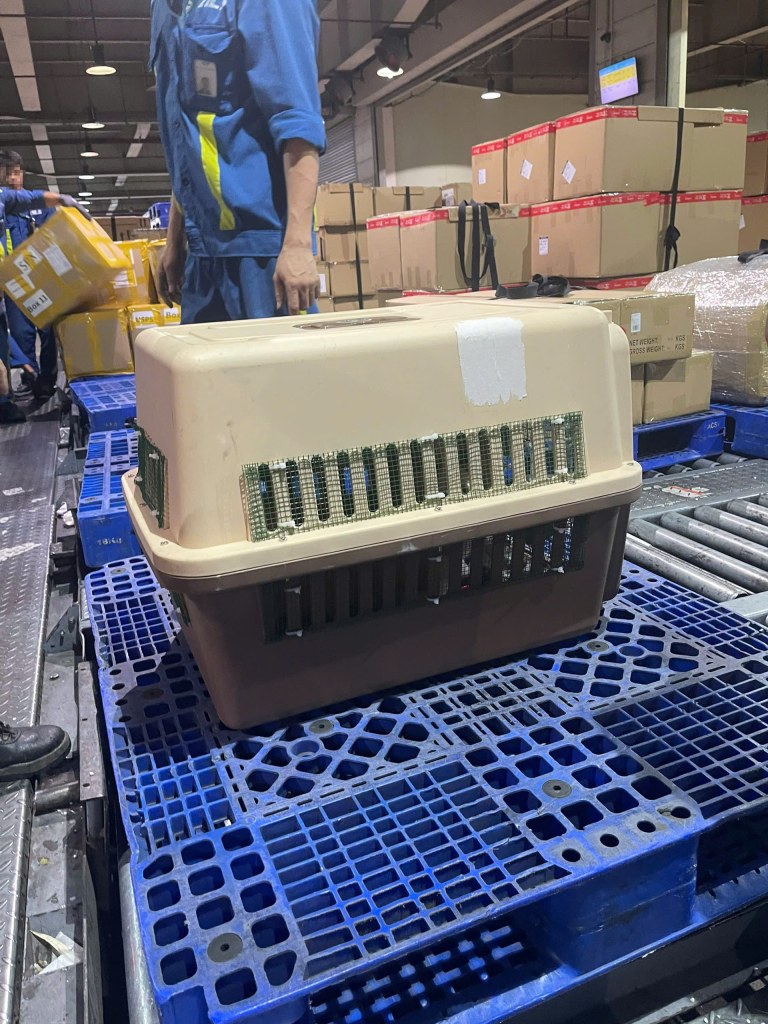
Pet crate on a pallet in the airport cargo warehouse

Manifest Cargo

Does not fly with the owner, with fewer limits on weight and size.

Welfare Standards That Apply

Applied to every pet flying the Japan route.

Age and Cabin Limits Vary by Carrier

Eight weeks and fully weaned is the floor for carriage, and some airlines set it higher. Cabin allowances count pet and crate together. Pregnant animals are not accepted.

Sedation Is Not Used

IATA and IPATA both advise against sedation, and a pet known to be sedated can be refused at the counter. Crate conditioning on a six-week schedule does that work instead.

How Daisy Pet Transport Supports Your Pet Shipping

Pet owners work with a single point of contact, while we take full responsibility for the entire journey

PET OWNER SERVICE

  • Travel plan including : Flight schedule, Airline selection, Pet space booking.
  • Documentation including : Import/Export permit, Health Certificate, Rabies antibody Titer test…
  • Procedures including : Custom clearance, Quarantine reservation ( when apllicable ), Airport Check-in

PET SERVICE

  • Pet travel essential kit including : Microchip, Passport, IATA-compliant crate
  • Vaccination including : Core vaccine, Rabies vaccine, Parasite treatment, other as requested.
  • Rabies Antibody Titer Test ( when applicable ) : Draw blood sample, Send to Labs for test result.

Absolute Pricing Transparency

Japan pet relocation involves complex international logistics and strict biological protocols. We provide you with an honest breakdown of every cost, with no hidden fees.

What is Included

  • Flight & Logistics: Airline selection and pet booking; for cargo, the air waybill and export customs declaration
  • Expert Docs: NACCS Notification, AQS Approval, Form AC & Government Endorsements
  • Antibody Test: Blood sample shipping and coordination with a MAFF-designated laboratory
  • Veterinary: Final health exam with leptospirosis check (dogs) and parasite treatment certificate

What is NOT Included

  • Travel crate: Custom IATA-Compliant Travel Crates (Quoted separately based on breed and size)
  • Airline Pet Fee: Paid to the airline at check-in when your pet flies with you
  • Microchip & Rabies Shots: If not already done; rabies shots are given at your vet clinic
  • Japan Customs: Destination customs clearance and applicable duties at the arrival airport
  • Quarantine Detention: Daily caretaking fees if quarantine is triggered (from ¥4,400/night at Haneda, plus food and utilities)
  • Ground Transport: Specialist pet taxi from the airport to your Japan residence
Reviews

What Owners Say

5.0
Google Business Profile rating
TTony ZGoogle review

“They provided me great service, the team was very responsive and accommodating with the whole process. Giving updates and video throughout the transfer gave me peace of mind. Everything from A-Z was streamline and effortless. It really made my travel much more of a breeze. I would highly recommend them again.”

ММаргарита СитишеваGoogle review

“I would like to express my sincere gratitude to the entire team for their outstanding support in arranging my dog's relocation like manifesting cargo. The guidance throughout the whole process and assistance with all the required documentation and formalities were truly invaluable. The experience was smooth, professional, and reassuring from start to finish. I always felt well supported and confident that everything was being handled with care and attention to detail. Thank you for making what could have been a stressful journey so much easier. I would highly recommend your services to anyone planning an international pet relocation.”

SSarah J.Google review

“Moving my pets to Vietnam seemed impossible until I found Daisy Pet. Their local expertise made everything smooth and stress-free. 10/10 service!”

NNusantra BengalsGoogle review

“It was such a great experience to work with Ms Thuy from Daisy Pet Transport. She did excellent job! Looking for more cooperation in the next future 😍”

MMinh TranGoogle review

“Very enthusiastic support, detailed and ensuring safety for the pets. Very satisfied with the service.”

KKhue CaoGoogle review

“Very informative and supportive throughout this stressful process, highly recommended!”

ZZoran NikolovskiGoogle review

“Thuy was so helpful. We couldn't do it by ourselves. Highly recommended!”

LLe LeGoogle review

“I flew my pet internationally, Thuy was very enthusiastic and helpful 😊”

TThy NguyenGoogle review

“Fast and efficient service, staff loves animals. Fast home delivery.”

Post-Arrival Obligations in Japan

After your pet clears AQS inspection, there are mandatory steps required by Japanese law to complete your pet’s legal residency.

Dog Registration (30 Days)

Dog owners must register their pet with the local Municipality within 30 days of import. Bring the Import Quarantine Certificate issued by AQS. This certificate is NOT re-issued if lost — keep the original safe, as it is also required if you later export your pet from Japan, for example when bringing your pet back to Vietnam.

Annual Rabies Vaccination

Under Japan’s Rabies Prevention Law, all dogs must receive an annual rabies vaccination. This is a strict legal requirement, not a recommendation. Microchip registration with AIPO (Animal ID Promotion Organization) is also available for domestic tracking purposes.

Expert FAQs: Japan Pet Import 2026

How long does the Japan pet import process take from Vietnam?+
The entire process takes a minimum of 7–8 months. This includes approximately 30 days between the two mandatory rabies vaccinations, blood testing at an international lab, and the non-negotiable 180-day biological waiting period. There is no legal method to shorten this timeline.
Does Japan ban Pitbulls or other specific dog breeds?+
No. Japan has no breed-specific legislation (BSL) at the national level. Pitbulls, American Staffordshire Terriers, Rottweilers, and all other breeds are permitted entry as long as they meet the standard quarantine requirements. This is a key difference from Taiwan, which bans certain breeds. However, individual Airlines for Japan Pet Shipping and rental properties in Japan may have their own breed restrictions.
Why do dogs need a Leptospirosis check for Japan?+
Japan requires a clinical leptospirosis check for dogs as part of the health certificate. During the pre-export health examination (within 10 days of departure), a veterinarian must certify that the dog shows no clinical symptoms of Leptospirosis — a bacterial disease transmitted through rodent urine. Cats are exempt from this requirement.
What happens if my pet arrives even one day before the 180-day mark?+
Your pet will be placed in mandatory quarantine at an AQS detention facility until the full 180 days have elapsed. The owner pays every cost: transport to the facility, daily care (from ¥4,400 a night at Haneda, per the caretaker price list), food, utilities and any vet visits. During quarantine, pets cannot be removed from the facility under any circumstances, except for re-export.
How long does customs clearance take at the airport if documents are perfect?+
If all documentation (original Form AC, RNATT results, AQS Approval) is complete and error-free, the import inspection at the airport typically takes less than 12 hours, and MAFF says it usually takes less than a few hours. The AQS officer will verify the pet’s health condition, microchip number, and all certificates before issuing the Import Quarantine Certificate.

Last updated 18 Oct 2026

Compiled by our specialists from the regulations in force on the date above, for reference only. Rules may change after this date. Please verify with the competent authorities or contact us for the most accurate information.

Airplane Texture 1

Plan Your Japan Relocation Securely

Contact our case managers for a risk assessment of your pet’s current medical and biological timeline. Japan’s
180-day protocol requires early planning — the best time to start is today.

Get a Quote Contact Us