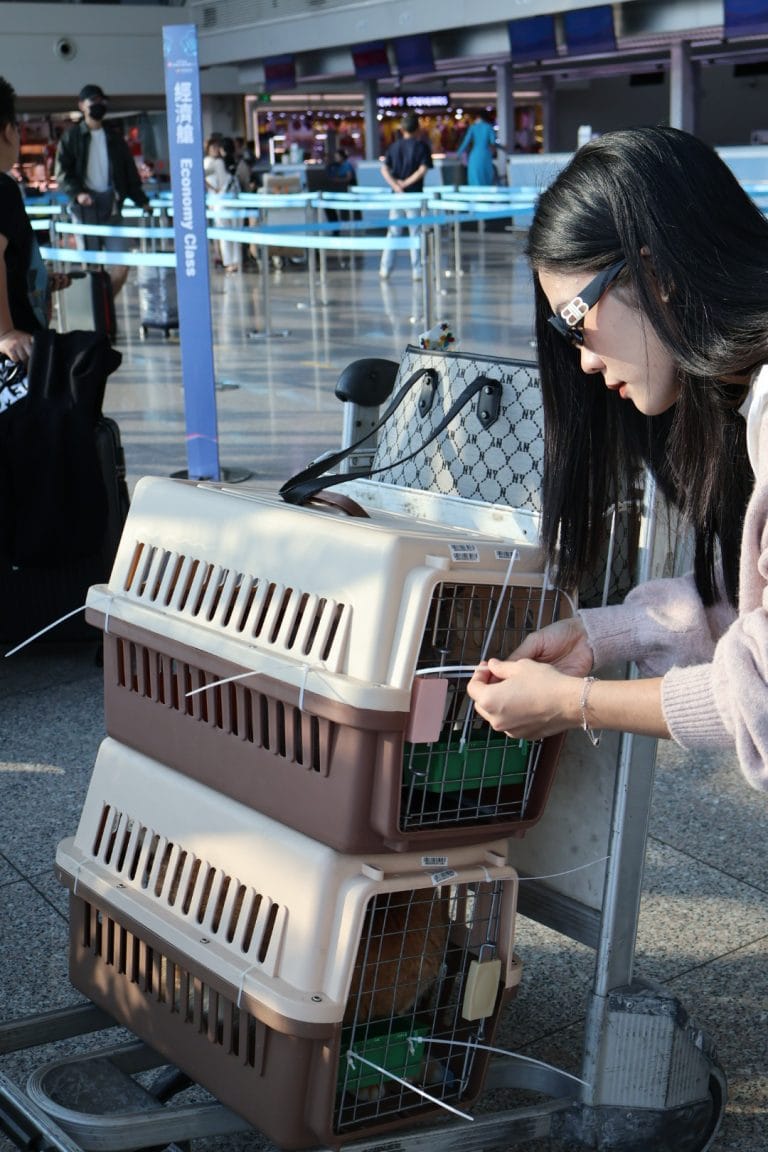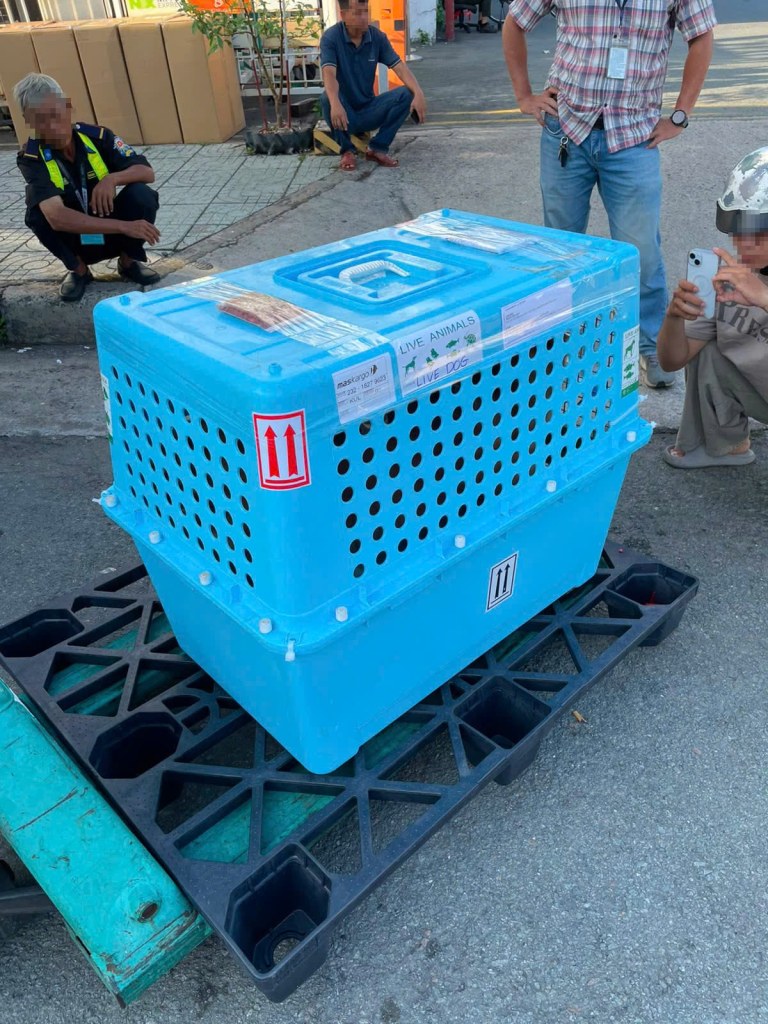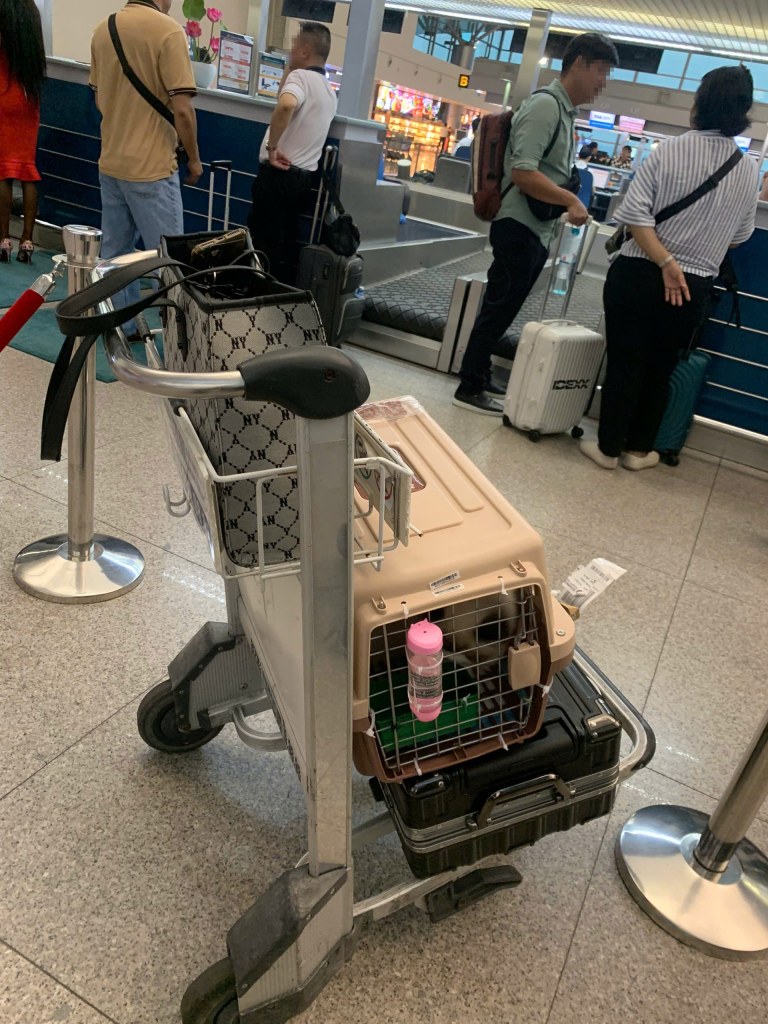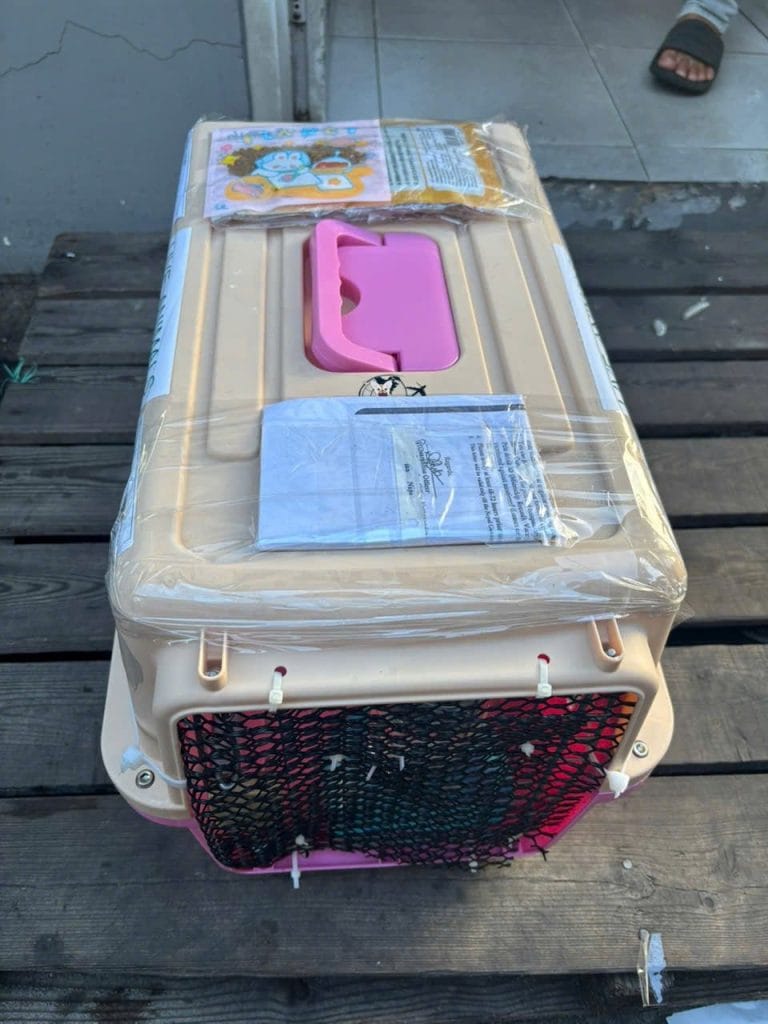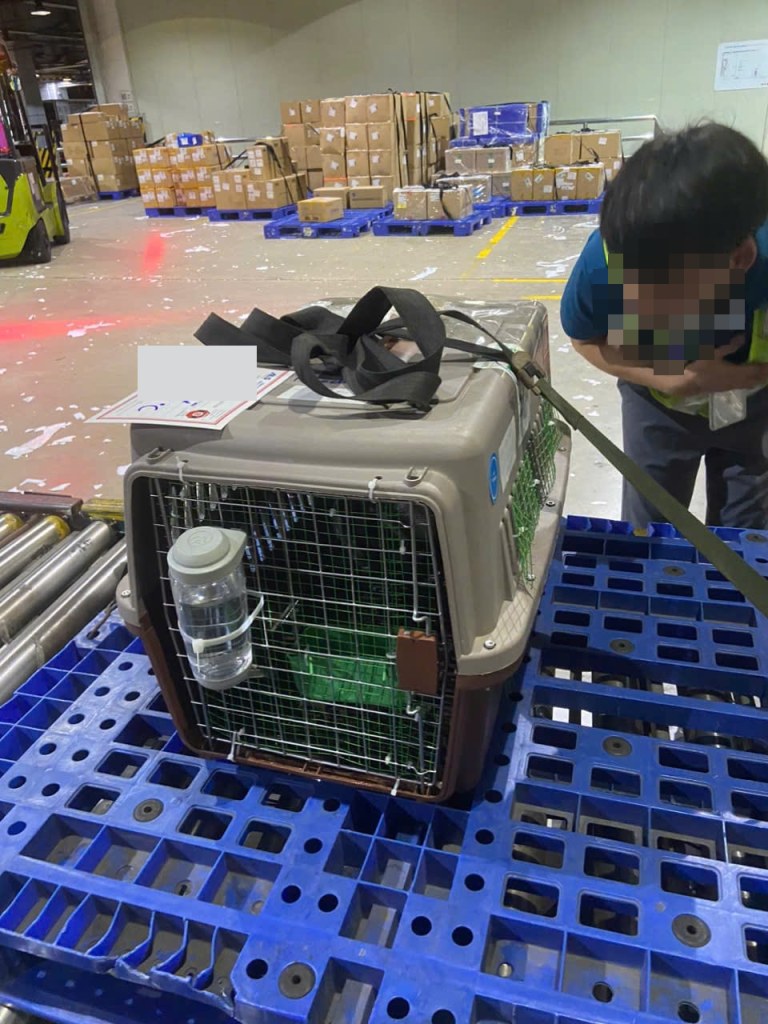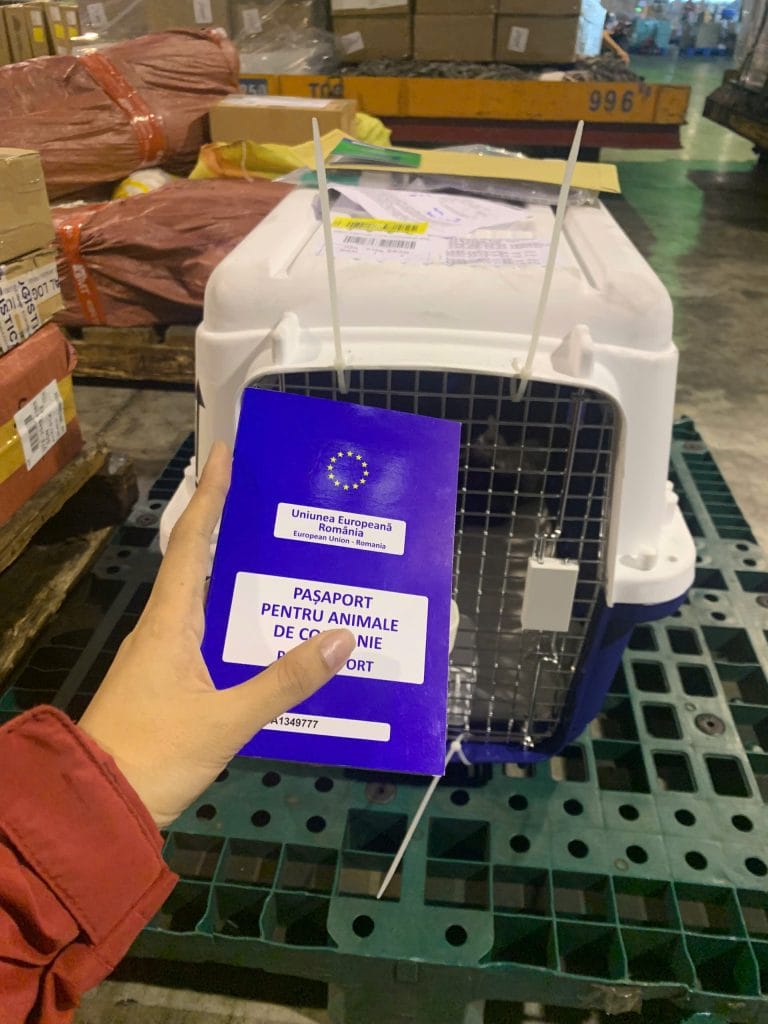
When a pet travels internationally on a connecting flight, the question every owner asks is: what happens to my pet during the layover? Unlike passengers who can stretch their legs and grab a meal, pets remain in their crate — but they are not left unattended.
This guide explains exactly what happens during transit stops, how professional transport providers minimize risk, and what you should know before booking a connecting flight for your pet.
What happens to pets during a layover
When a pet’s flight has a connection, the process during the layover typically follows this sequence:
- Unloading: The pet’s crate is carefully removed from the aircraft’s live animal section.
- Transfer to animal holding facility: Most major transit airports have dedicated animal transit lounges or holding areas managed by trained ground handling staff.
- Monitoring: Staff check the pet’s condition — signs of stress, crate integrity, food/water levels.
- Reload: The crate is loaded onto the connecting flight, again into the designated live animal section.
Will I need to collect and re-check my pet at the connection?
It depends on the ticket, not on the length of the layover.
- One ticket: If the whole trip is on one booking and the airlines agree to transfer the pet, it goes through to the final destination. You do not collect it at the connection.
- Separate tickets or airlines: If the airlines do not transfer the pet, you collect it, enter the transit country and check it in again like baggage. You then need to meet that country’s entry or transit rules.
Some transit countries add their own permit. These are the ones owners from Vietnam meet most often:
- Hong Kong: Dogs and cats that change aircraft in Hong Kong must travel as manifest cargo, with a transhipment permit issued in advance (AFCD transit terms). Checked baggage is not allowed.
- Singapore: Dogs and cats transiting Singapore need a transhipment licence from the Animal and Veterinary Service (AVS transhipment rules).
- Thailand: A connection in Bangkok on separate tickets needs a Thai transit permit. In June 2026, a pet flying Hanoi to Abu Dhabi on two tickets via Bangkok travelled this way.
- Mainland China: A pet taken off the aircraft is inspected again and needs a transit permit. Plan at least 3 hours for the connection.
The choice of hub can decide the travel method. From Vietnam to the US, a dog can fly as checked baggage on one ticket through Taipei with EVA Air or China Airlines, on aircraft that take pets in the hold. The same dog routed through Hong Kong would have to fly as manifest cargo.
What are animal transit facilities like?
Some hubs run dedicated animal centres. Doha (Qatar Airways Cargo), Dubai (Emirates SkyCargo), Istanbul (Turkish Cargo) and Frankfurt (Lufthansa Cargo Animal Lounge) publish details of theirs. Facilities like these offer:
- Climate control: Temperature-regulated rooms to prevent heat or cold stress.
- Ventilation: Proper airflow designed for enclosed animal areas.
- Security: Crates remain securely closed to prevent escape. Staff do not open crates unless there is a medical emergency.
- Water access: If the layover is extended, staff may refill the IATA-Compliant Crate’s attached water dish from the outside without opening the door.
For how food and water are planned for the whole journey, not just the layover, see our guide to feeding pets before a flight.
The biggest risk: ground handling, not flying
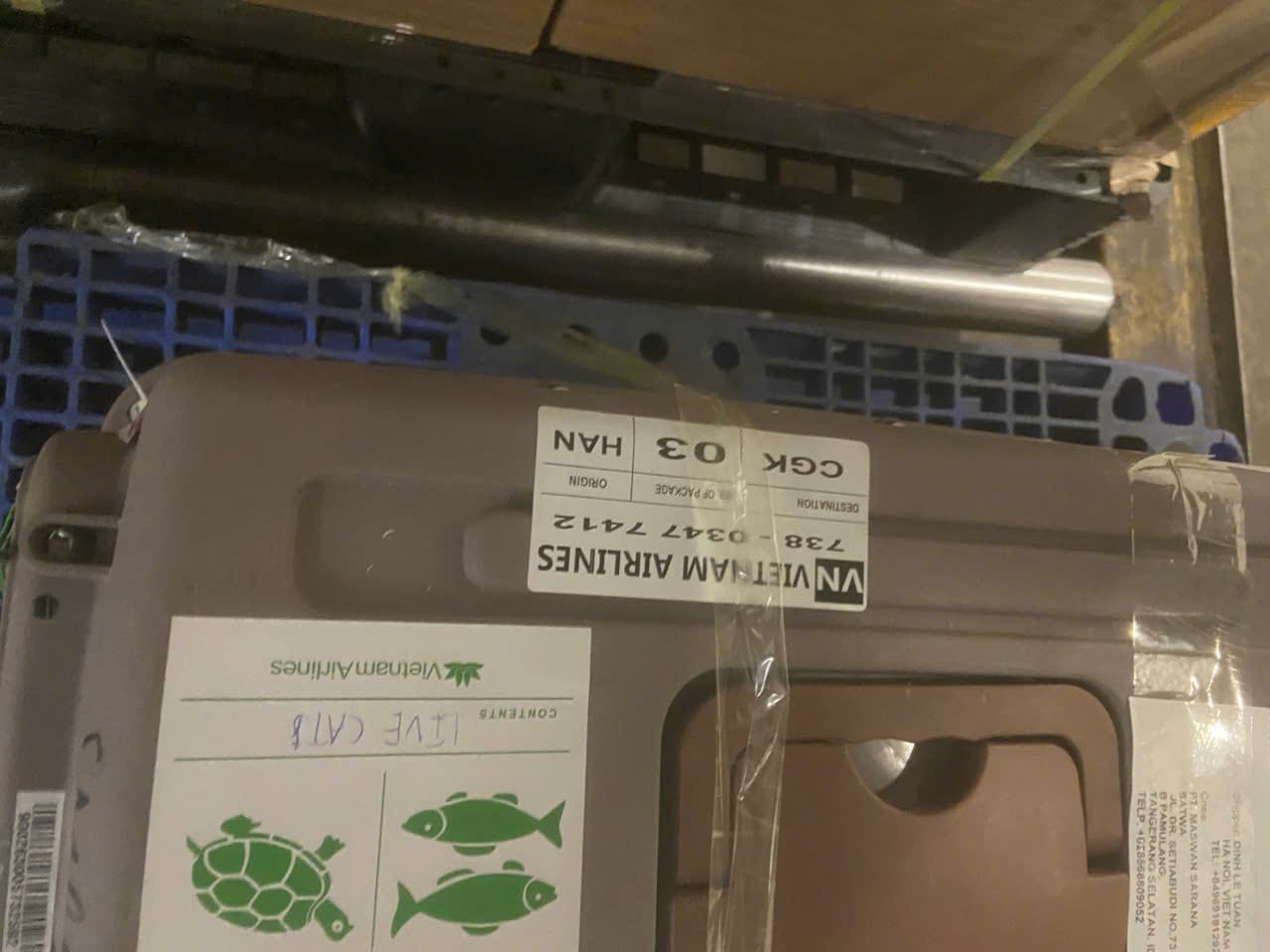
The flight itself is typically the safest part. The highest-risk period for pets is ground handling — the time between flights when the crate is outside the temperature-controlled aircraft.
Risks during ground handling include:
- Heat exposure: Tarmac temperatures can exceed 50°C in summer. This is why airlines enforce Temperature Embargoes during extreme weather.
- Extended wait times: Longer layovers increase exposure to unfamiliar conditions.
- Miscommunication between ground crews: At busy airports, mishandling can occur if the live animal shipment is not clearly flagged.
💡 Expert Insight: Where a direct flight exists, Daisy Pet uses it. In 2026, for a cargo move to Dubai, we offered only the direct Emirates flight from Ho Chi Minh City, even though the owner asked about a connection. Where a connection cannot be avoided, we choose a hub with established animal handling and enough time to transfer the crate.
How professional transport providers minimize layover risk
When Professional Pet Transport Providers plan a route, the layover strategy is one of the most critical decisions:
| Factor | What Professionals Do | Risk if Done Wrong |
|---|---|---|
| Layover duration | Allow at least 3 hours where the pet changes aircraft | Extended ground exposure |
| Transit airport selection | Choose hubs with certified animal transit facilities | No climate-controlled holding area |
| Season & weather | Avoid summer layovers in Middle East hubs; choose cooler routes | Heat-related health emergencies |
| Airline reliability | Book airlines with strong live animal handling records | Mishandled crates, missed connections |
Direct flights vs. connecting flights
Direct flights are always preferred for pet safety, but not every route has one. Vietnam Airlines flies non-stop from Vietnam to Paris and Frankfurt. Its non-stop flights to San Francisco carry cats only, so dogs going to the US need a connection. In these cases, a well-planned connection is significantly safer than a poorly planned direct route on an unreliable carrier.
Factors that determine whether a direct or connecting flight is best:
- Availability of direct cargo routes from SGN (Ho Chi Minh City) or HAN (Hanoi).
- Airline’s live animal policy and track record.
- Destination import clearance timing — some countries require arrival during specific hours.
- Cost — direct cargo flights from Vietnam are sometimes significantly more expensive.
Which airlines fly pets from Vietnam, and through which hubs, is covered in our guide to airline pet policies from Vietnam.
What should pet owners do before a layover flight?
- Choose a professional provider: Don’t try to book connecting cargo flights yourself. Route planning for live animals requires expertise.
- Check the ticket: Book the whole trip on one ticket where possible. If your pet travels as checked baggage, ask staff at the connection to confirm it is on the next flight.
- Crate training: A pet that is calm and comfortable in its crate handles layovers much better. Start training 2–4 weeks before travel.
- Feeding schedule: Follow a feeding plan before departure to minimize discomfort during transit.
- Avoid sedation: Sedated pets cannot regulate body temperature or respond to stress. Read why: Sedation for Flying Pets: Is It Safe?
Last updated 17 Oct 2026
Compiled by our specialists from the regulations in force on the date above, for reference only. Rules may change after this date. Please verify with the competent authorities or contact us for the most accurate information.
Official sources cited in this guide
- AFCD transit termsafcd.gov.hk
- AVS transhipment rulesavs.nparks.gov.sg