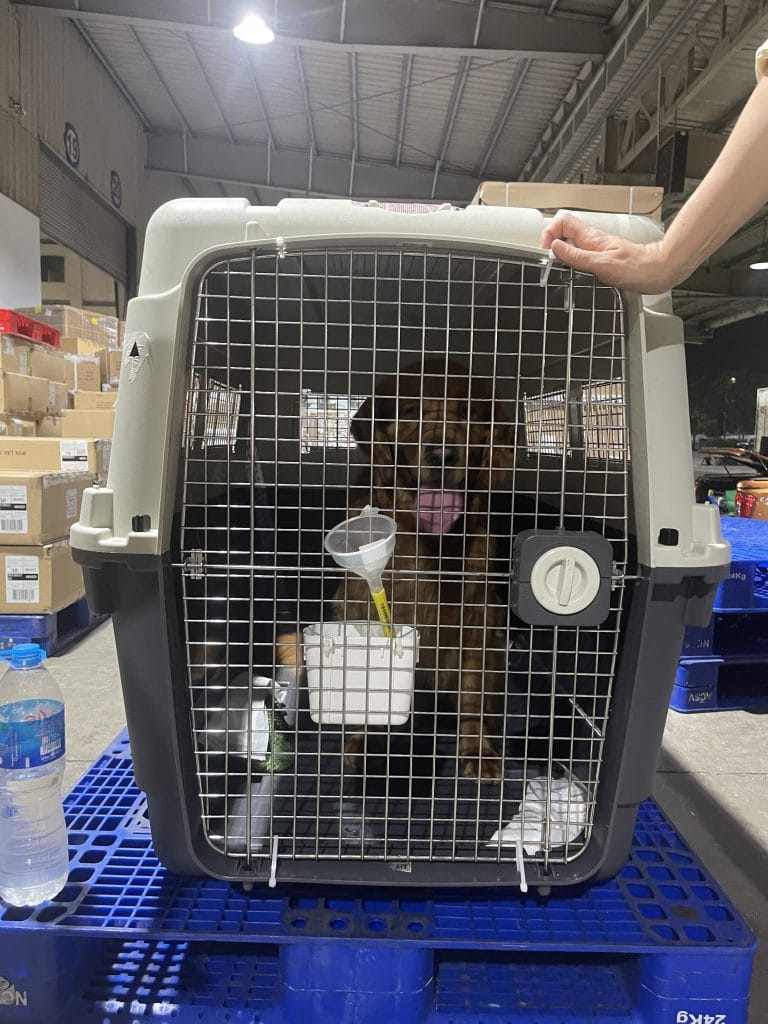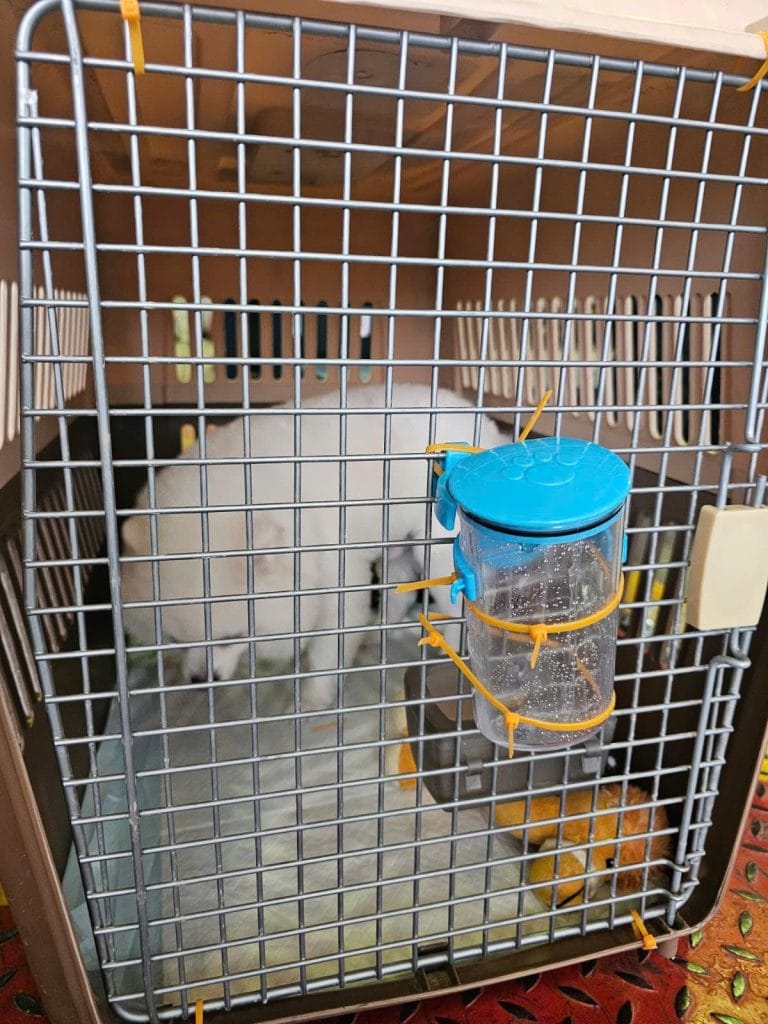
Most anxious pets can still fly. A pet that panics, injures itself or attacks staff at check-in can be refused, though. The fix is training time and the right plan, not a pill.
Short Answer: Can an Anxious Pet Fly?
- Can a nervous pet fly? Yes. Most pets are nervous on their first flight, and most cope.
- Who can be refused? A pet that panics, harms itself or tries to bite the staff who accept it.
- What helps most? Weeks of crate training, practice with strangers, and a calm handover on the day.
- Should I give a calming pill? No sedatives. Any anti-anxiety medicine is your vet’s decision, and the airline must be told.
- What if my pet bites when scared? Tell your shipper, the airline and the team receiving the pet before the flight.
Anxiety is one part of planning a safe flight. The other parts are covered in our guide to pet travel safety.
When Will an Airline Refuse an Anxious or Aggressive Pet?
Airline staff look at the pet when they accept it. They check the crate, the documents and the pet’s behaviour. A pet that is quiet but nervous is normal. A pet that throws itself at the crate door, bites the bars or bleeds from its mouth or paws is a risk to itself.
Staff can also refuse a pet that tries to bite them. They must be able to put the crate on a trolley, move it and load it without danger. If a pet cannot be handled safely, the airline will not take it. This applies whether the pet flies as checked baggage or as manifest cargo.
A pet can be refused at the counter even when every document is correct. The other reasons for a same-day refusal are listed in why airlines refuse pets on departure day.
How Do You Read Stress Signals in a Pet?
Watch your pet during crate practice at home. What you see there tells you how the flight will go. Most signs fall into three levels.
- Mild: yawning, lip licking, panting without heat, ears held back. Keep training at the same pace.
- Moderate: pacing, trembling, whining or meowing, refusing food in the crate. Slow down and shorten the sessions.
- Severe: scratching or biting the crate, drooling heavily, losing bladder or bowel control, not calming after several minutes. Stop, and talk to your vet before you book a date.
Cats often show stress by going still and silent rather than noisy. Signs that matter for cats are covered in preparing a cat for air travel.
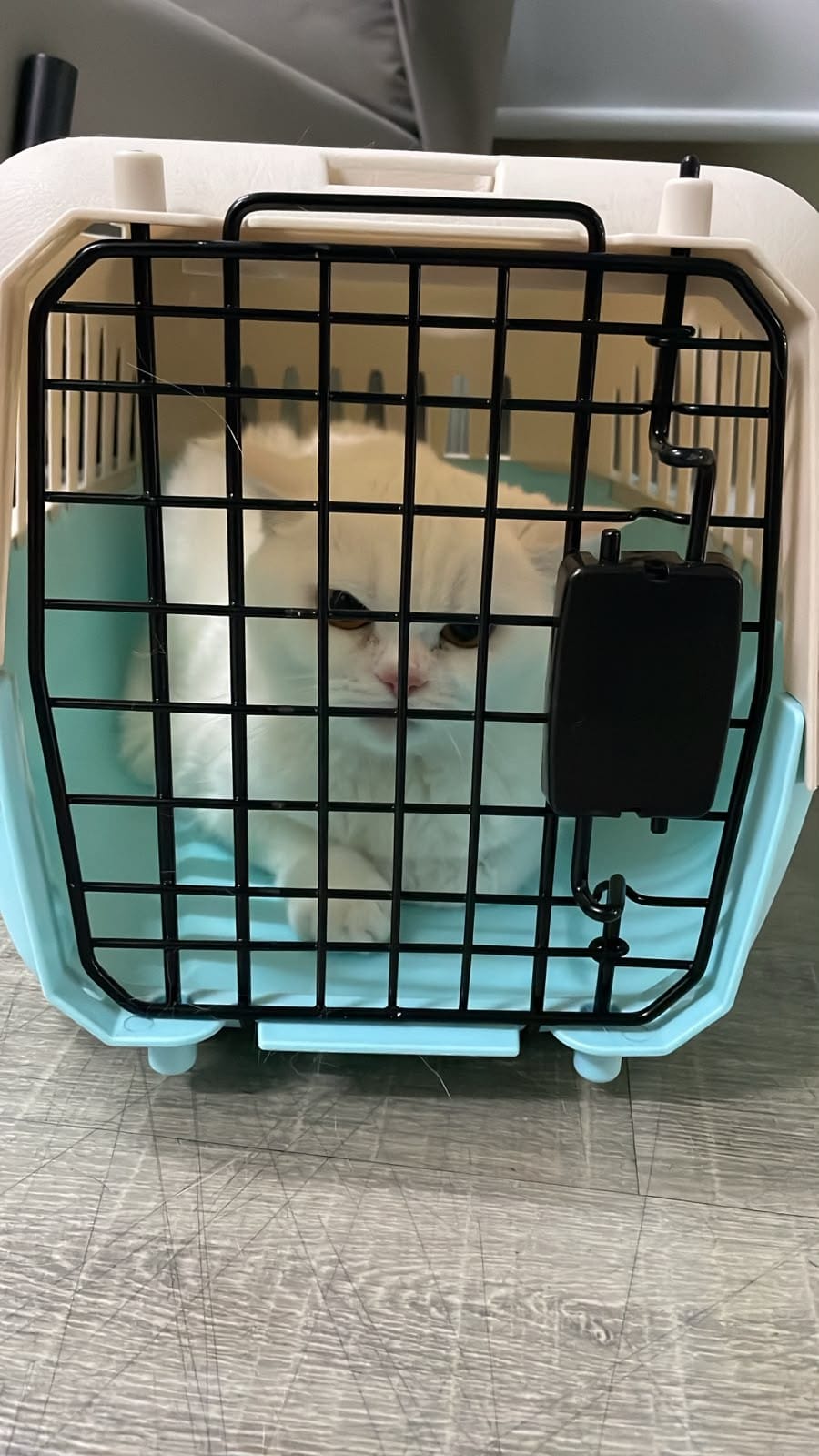
How Do You Train an Anxious Pet for a Flight?
Training builds the pet’s tolerance one step at a time. Start with the crate the pet will fly in, not a borrowed one.
Crate Training
Most pets need about 6 weeks to treat the crate as a safe place. Anxious or previously frightened pets need 8 to 12 weeks. Leave the crate open at home. Feed meals inside it. Close the door for a few minutes, then longer, then overnight. The week-by-week plan is in the crate training timeline.
Practice With Strangers
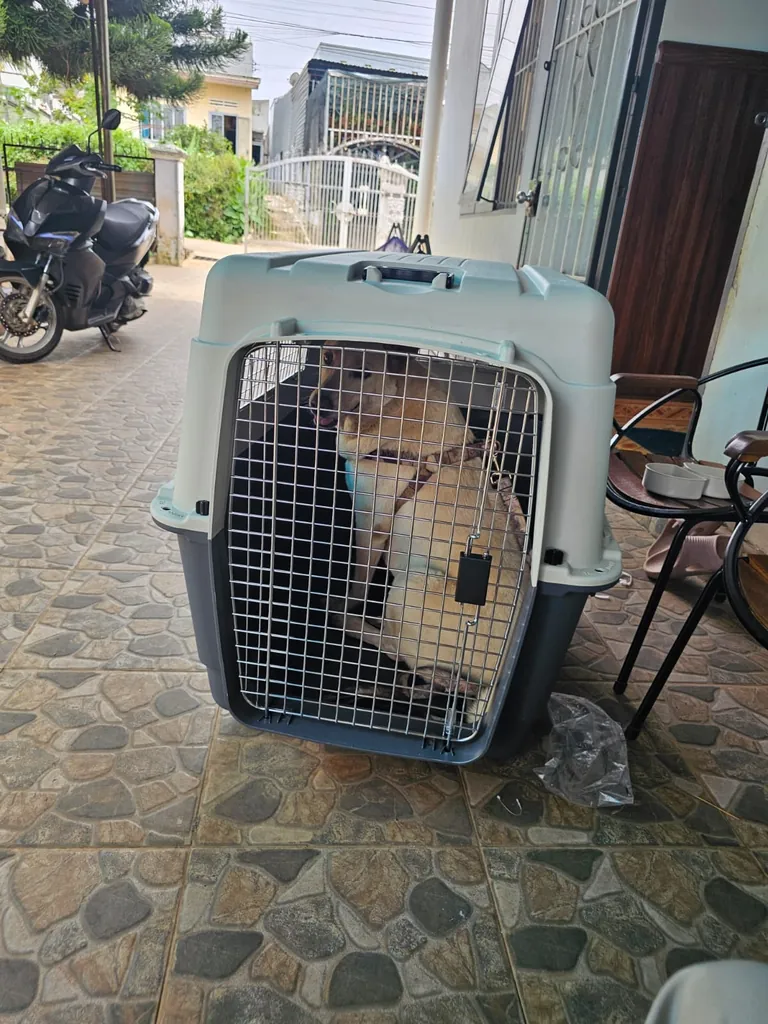
Before an export flight from Vietnam, a government vet examines the pet. Airline staff and cargo handlers then lift and move the crate. A pet that is only used to its family meets several strangers in one week. Ask friends or a groomer to handle the pet gently in the weeks before. Short car rides in the crate help too.
The Right Crate
A crate that rattles or flexes frightens a nervous pet more. The crate must meet airline rules and be large enough for the pet to stand, turn and lie down. Strong or restricted breeds may need a reinforced crate on some airlines. What each airline asks is set out in breed restrictions for flying pets.
What If Your Pet Bites When Scared?
A pet that bites when frightened can still travel, if everyone handling it knows in advance. Do not hide it.
- Tell your shipper: they choose the route, the crate and the handover plan with this in mind.
- Tell the airline: staff at acceptance need to know before they reach for the crate door.
- Tell the destination team: the agent, kennel or quarantine station that receives the pet.
In one export case from Ho Chi Minh City to the United States, the dog was shy and bit when afraid. It had also been very nervous at the government vet inspection. We advised the owner to email the receiving kennel in the United States before the flight. The team there could then prepare for the inspection on arrival.
Should You Give an Anxious Pet a Sedative or Calming Product?
Daisy Pet Transport does not use sedatives. These drugs slow breathing and make it harder for a pet to control its body temperature. The International Air Transport Association (IATA) recommends not sedating pets in transit. Airlines can refuse a pet that appears sedated.
The medical reasons are set out in our guide on sedating pets before flying.
Anti-anxiety medicine is a different question. Whether one suits a particular pet is for its vet to decide. If one is given, the airline must be told, and it may refuse the pet. IATA asks that any drug given for a medical reason is prescribed by a veterinarian and recorded on the health certificate.
Pheromone sprays such as Adaptil for dogs and Feliway for cats are widely sold. The evidence for them is mixed. A 2010 systematic review in the Journal of the American Veterinary Medical Association found too little evidence that they reduce stress. They are harmless as an extra, not a solution.
How Do You Keep an Anxious Pet Calm on Flight Day?
On the day, the goal is to add as little new stress as possible.
- Keep the routine: a normal morning, a light meal and water. Timings are in feeding pets before flying.
- Exercise first: a long walk or play session before you leave for the airport.
- Add a familiar smell: a worn T-shirt or a small blanket from home inside the crate.
- Prevent escapes: use a harness and a lead, and close car doors before opening the crate. Frightened pets slip collars.
- Keep the handover short: say goodbye calmly, then let the staff take the crate.
- Do not open the crate at the airport to comfort the pet. It is the moment pets escape most easily.
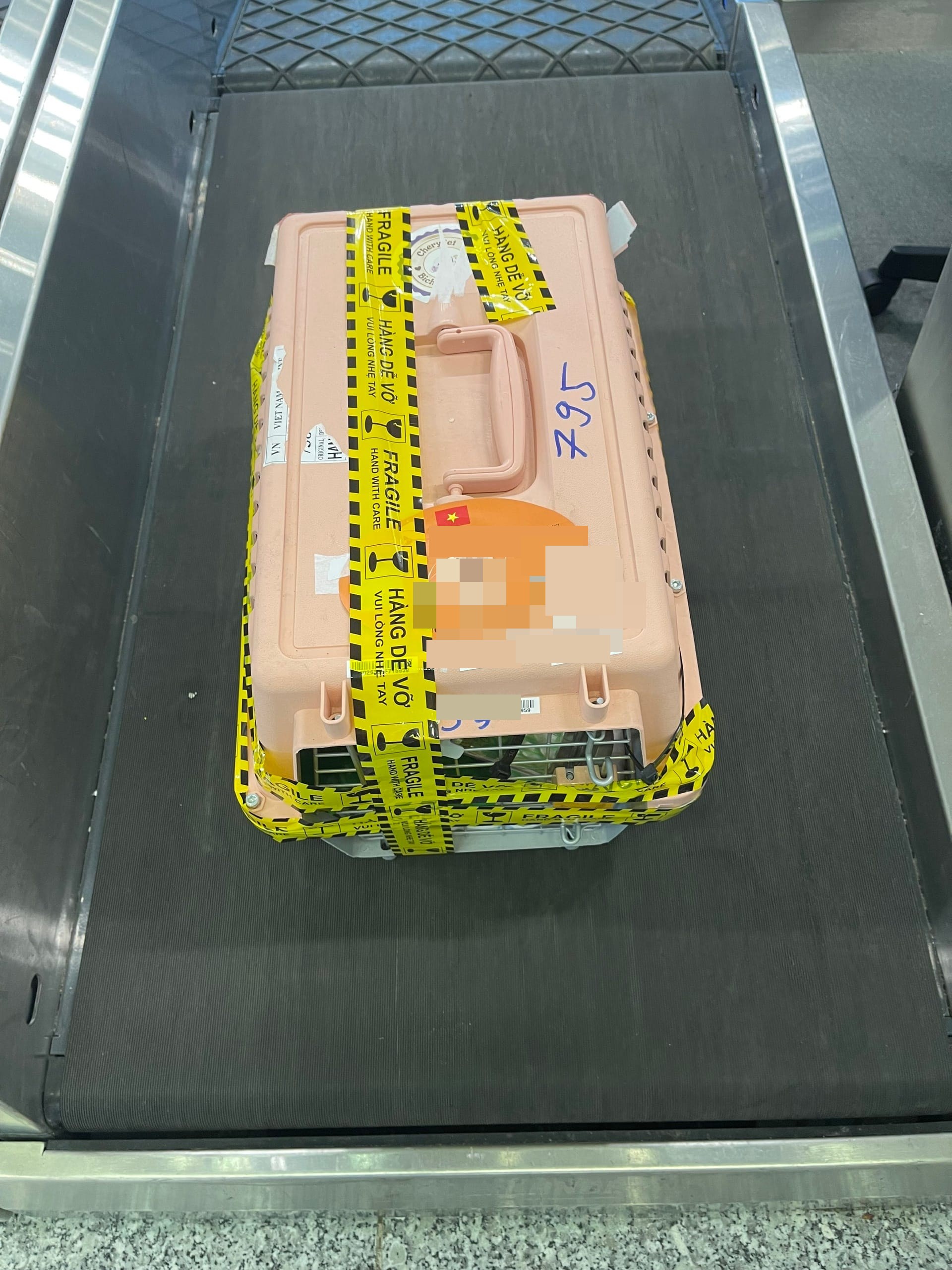
How Do You Calm an Anxious Pet in the Cabin?
In the cabin, the pet stays in its carrier under the seat in front of you for the whole flight. Do not take it out. Speak quietly and rest your hand on the side of the carrier. The IATA guidance for cabin pets advises getting the pet used to the carrier well before the journey.
When Should You Postpone the Flight or Change the Plan?
Postpone if the pet still shows severe signs after several weeks of training. Moving the date costs less than a refusal at the counter, or an injury in the crate.
- More time: extend crate training to 8 to 12 weeks.
- A shorter journey: choose a direct flight, so the pet is handled fewer times.
- A different way to fly: a small pet may qualify for the cabin on some routes.
- A vet’s view: ask your vet whether the pet is fit to fly. The fit-to-fly vet check covers what the vet assesses.
After landing, give the pet a quiet room, water and time. The first 48 hours are covered in pet care after a long flight.
Frequently Asked Questions
Can an anxious dog fly in cargo?
Yes, in most cases. Train the dog in its crate for at least 6 weeks, and 8 to 12 weeks if it is very anxious. Airlines can refuse a dog that panics, injures itself or tries to bite at check-in.
Will an airline accept an aggressive dog?
Only if staff can handle the crate safely. Tell the airline and your shipper in advance. Some airlines also require a reinforced crate for strong breeds.
Can I give my pet something to calm it before a flight?
Not a sedating drug. Any anti-anxiety medicine is your vet’s decision, and the airline must be told. Airlines can refuse a pet that appears sedated.
Do pheromone sprays help pets on flights?
The evidence is mixed. A 2010 systematic review found too little evidence that they reduce stress. They are harmless as an extra, not a solution.
How long does crate training take for an anxious pet?
Allow about 6 weeks for most pets, and up to 12 weeks for a very anxious one. Train with the crate the pet will fly in.
Last updated 18 Oct 2026
Compiled by our specialists from the regulations in force on the date above, for reference only. Rules may change after this date. Please verify with the competent authorities or contact us for the most accurate information.
Official sources cited in this guide
- International Air Transport Association (IATA)iata.org
- pubmed.ncbi.nlm.nih.govpubmed.ncbi.nlm.nih.gov