IATA LAR 52 · CR1

IATA Pet Crate Requirements for Dogs and Cats Flying in 2026

A compliant crate keeps your pet safe and comfortable for the whole journey, and every airline treats it as a hard requirement. Here is the full IATA standard and how to choose the right crate for your pet.

Source: IATA LAR, 52nd edition (January 2026), CR1. Last checked 6 October 2026.
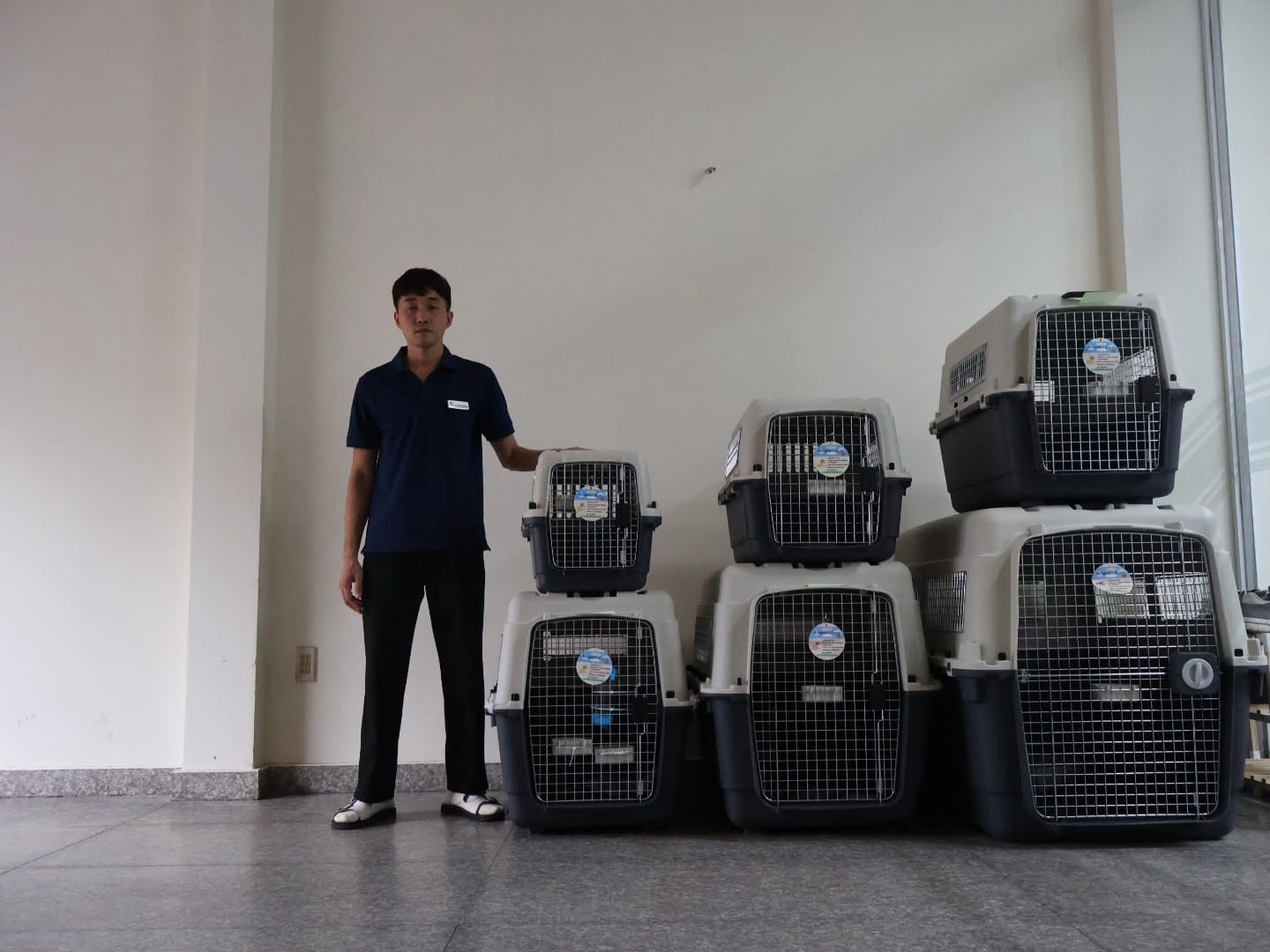
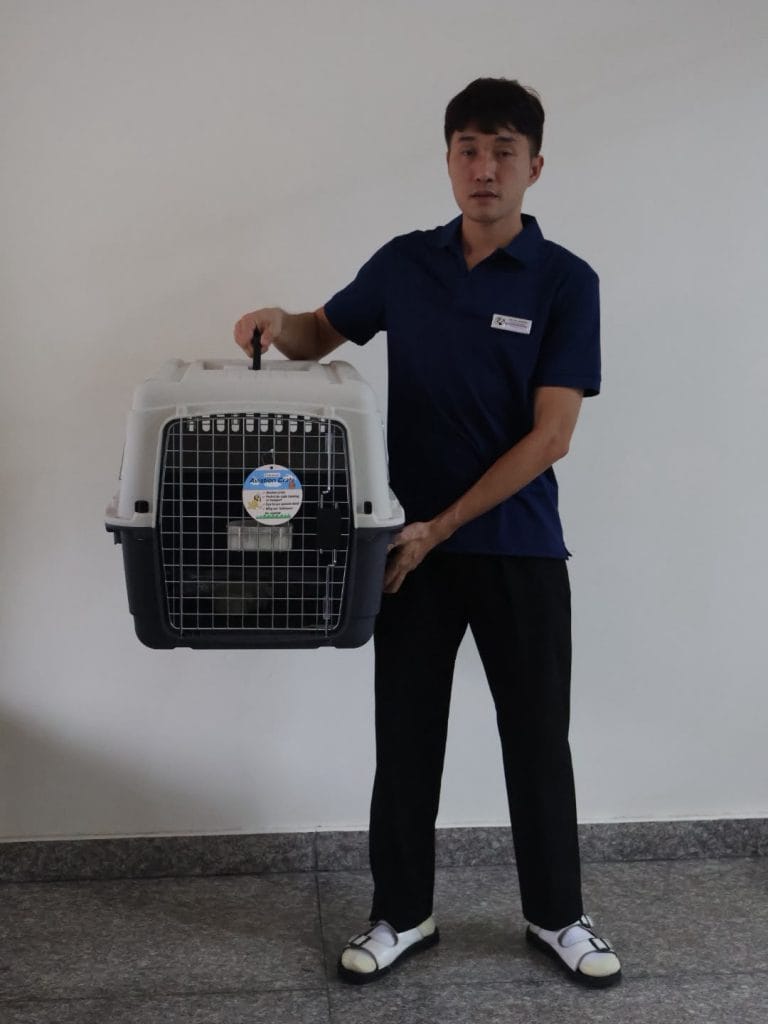
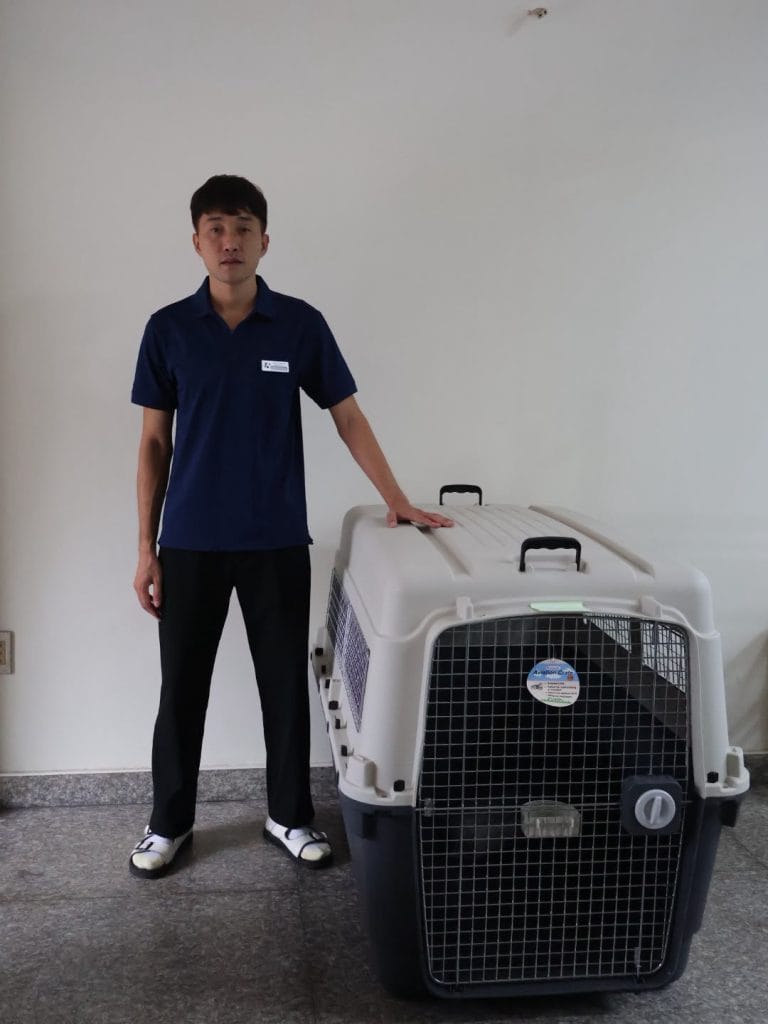
Daisy Pet Transport staff beside six IATA-compliant crates from L60 to L120
6
L60 to L120Daisy supplies all 6 sizes, including the hard-to-find L90 to L120
Know this first

IATA Crate Rules: Key Facts at a Glance

Four points to understand before you buy a crate or book your pet’s flight.

01

CR1 Is the Standard

The crate rules for dogs and cats sit in CR1 of the IATA LAR, 52nd edition.

02

IATA Never Certifies

No crate carries an IATA approval. Airline staff judge each crate against CR1 and can refuse it.

03

Cabin and Hold Differ

A cabin carrier can be soft-sided. A crate for the hold must be rigid, with spacers and a water bowl.

04

Airlines Add Rules

Some airlines add rules for listed breeds, such as a reinforced wooden crate. Check yours first.

The standard

CR1 Crate Standards: The 7 Requirements

The mandatory requirements for a crate to be accepted on international flights.

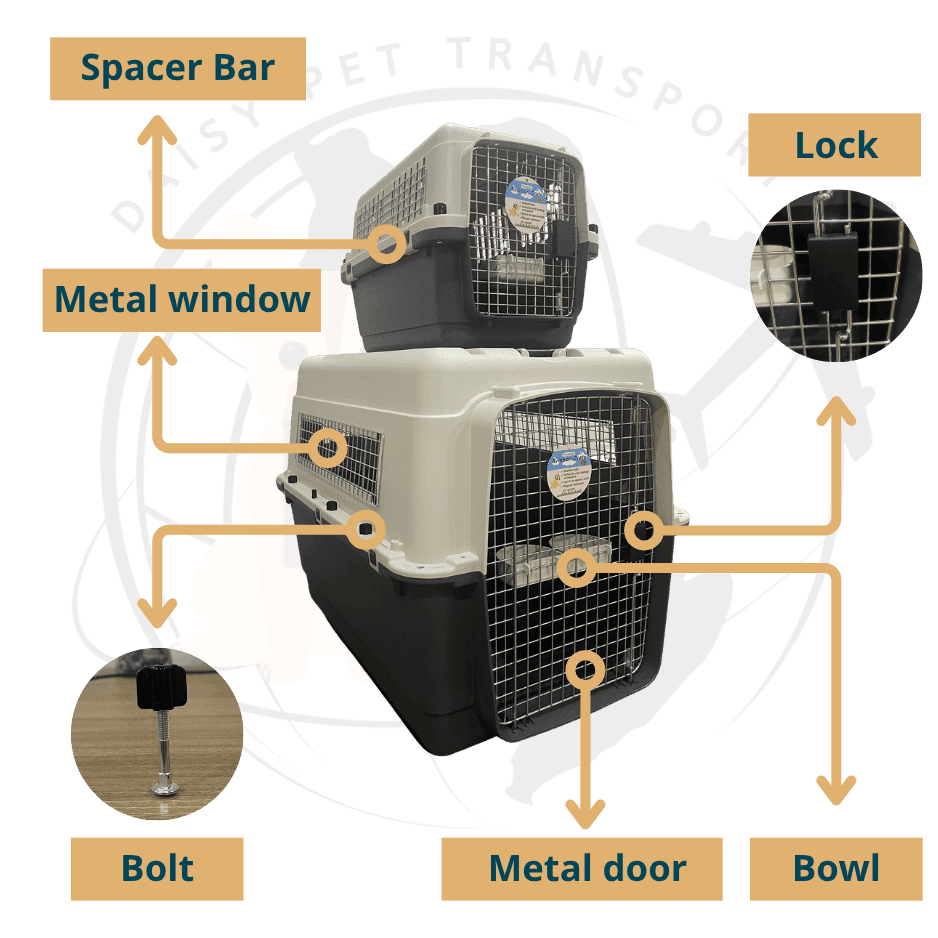
Parts of an IATA-compliant pet crate: spacer bar, lock, metal window, bolt, metal door and bowl
  1. 1

    Size

    Big enough for your pet to stand, sit upright, lie down naturally, and turn around

  2. 2

    Material

    Fiberglass, metal, rigid plastic, solid wood or plywood, with welded wire mesh only on the openings

  3. 3

    Ventilation

    Openings on all four sides, at least 16% of their surface, with no gap a nose or paw can get through

    Openings that are too wide can be covered with welded wire mesh, fixed so your pet cannot push it out. A second layer of mesh is allowed if both layers meet the minimum for the species.

  4. 4

    Roof

    Solid, but ventilation openings or welded mesh are allowed across the whole roof, as long as the roof stays strong.

  5. 5

    Fastening

    Plastic crate halves must be bolted together, and plastic clips alone are not enough

  6. 6

    Spacer Bars

    Rims that stop surrounding cargo from blocking the ventilation openings

  7. 7

    Labels

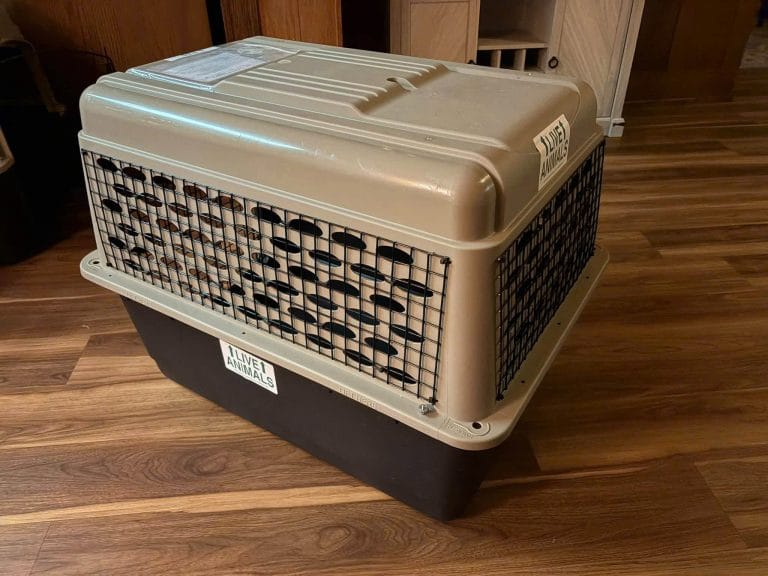
    A green “Live Animals” label and “This Way Up” labels on at least two opposite sides

Built for the hold

What Makes a Crate Safe in the Hold

Size is only half of it. These four parts decide whether the crate protects your pet and the people handling it.

Metal door lock on an IATA crate
01

Door and Locking Pins

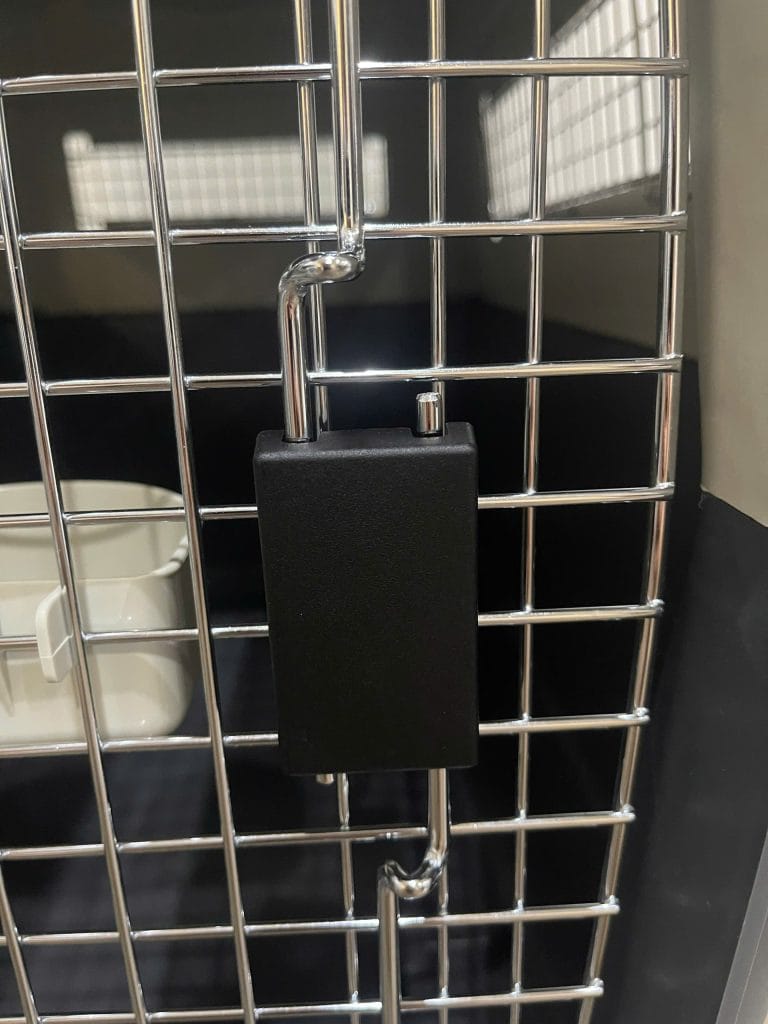
The door forms one whole end of the crate. Locking pins must reach at least 1.6 cm into the frame.

Crate halves bolted together at the side
02

Bolts, Not Just Clips

Plastic halves must be bolted together. Cable ties in the door corners add a second layer of security.

Absorbent bedding on a solid crate floor
03

Solid, Leak-Proof Floor

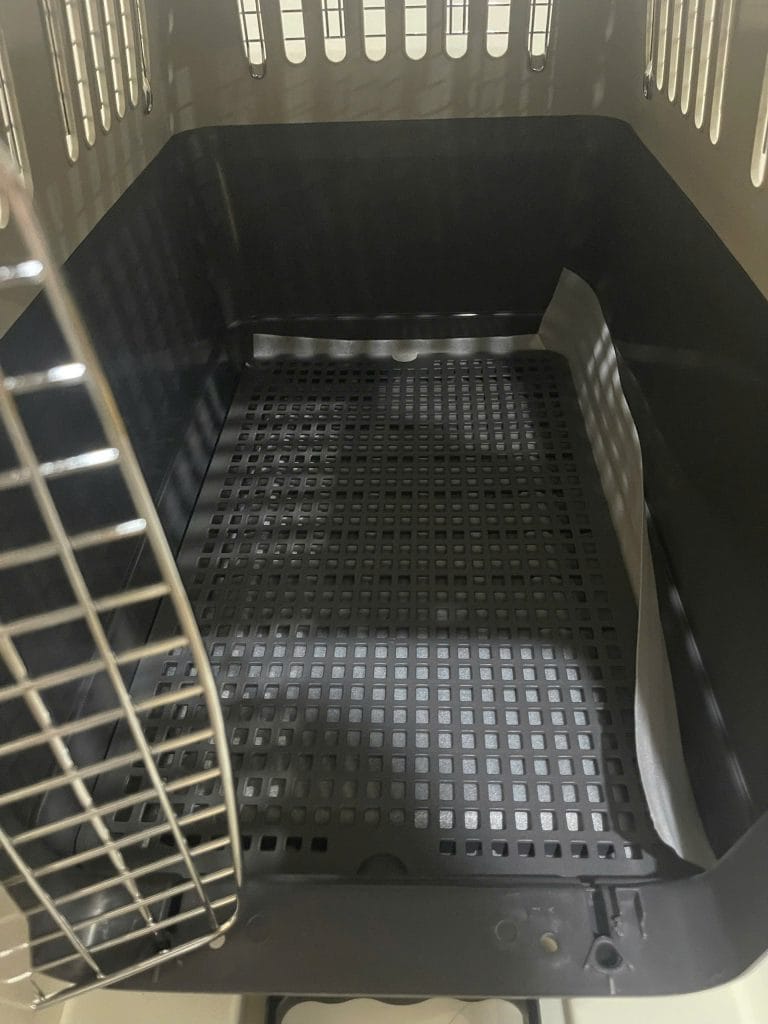
A solid, leak-proof floor with absorbent bedding, and a smooth inside with nothing to bite or scratch loose.

Side view of an IATA crate with handles
04

Handles and Wheels

Handles must let staff move the crate without scratches or bites. Any wheels must be removed or disabled.

60 kgpet + crate

When the pet and crate together weigh more than 60 kg, the crate also needs forklift spacers at least 5 cm high.

Dogs and cats

Dogs and Cats: Same Standard, Different Numbers

CR1 covers both species, but cats get tighter limits on openings, mesh, and wood.

Openings, at most

Dog

Cat

25 × 25mm · dogs
19 × 19mm · cats

Welded mesh, at least

Dog

Cat

2.5mm or thicker · dogs
2.0mm or thicker · cats

Wooden sides, at least

Dog

Cat

12mm · dogs
6mm · cats

Wooden roofs must be at least 12 mm for both. A large cat fits a bigger plastic crate only if its openings are 19 × 19 mm or smaller; otherwise a custom wooden crate is the answer.

Strong dogs: wood may be needed
Large cats: wood may be needed
Cabin or hold

Soft Cabin Carrier vs Rigid Hold Crate: What’s the Difference

Both must meet the CR1 size rule: your pet can stand, sit upright, lie down and turn around.

In the Cabin

In the Hold

Construction

Soft-sided is allowed

Rigid construction required

Spacer bars

Not required

Three sides required

Water and food bowls

Not required

Water bowl: Fixed, filled from outside

Labels

“Live Animals”, vents unblocked

“Live Animals” and “This Way Up”

IATA’s Operational Guidelines for In-Cabin Pet Transport (Edition 1, 15 July 2026) tell airlines to check the carrier at check-in and to deny boarding if it fails CR1 or the pet looks distressed. Cabin spots are limited, and reservations are generally needed 48 to 72 hours ahead. Airlines also set their own cabin size and weight limits, so check yours before you buy a carrier.

Under-seat space also changes with the aircraft, and smaller regional jets often have less room, so check the limit for your exact flight. Whether a soft carrier may be squeezed to fit is the check-in agent’s call.

Crate types

Types of IATA-Compliant Crates

Each type suits a different group of pets and a different way of flying.

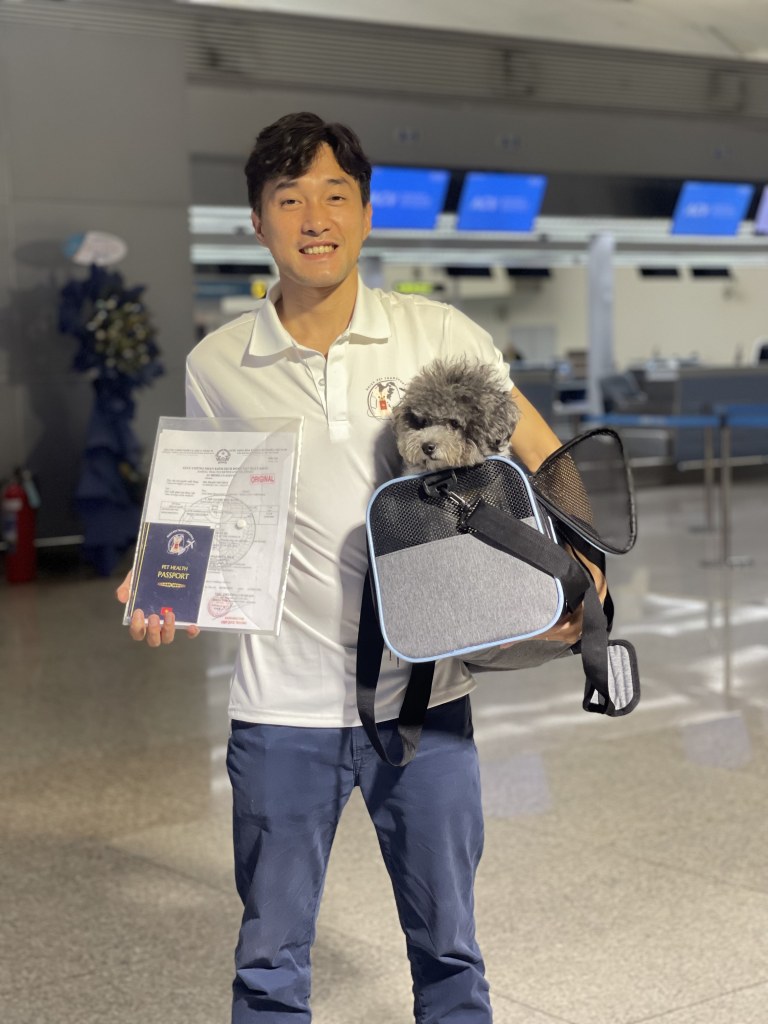
Soft-sided pet carrier for cabin travel

Cabin

Soft-Sided Carrier

For pets travelling in the cabin, mostly small pets. Weight limits vary by airline.

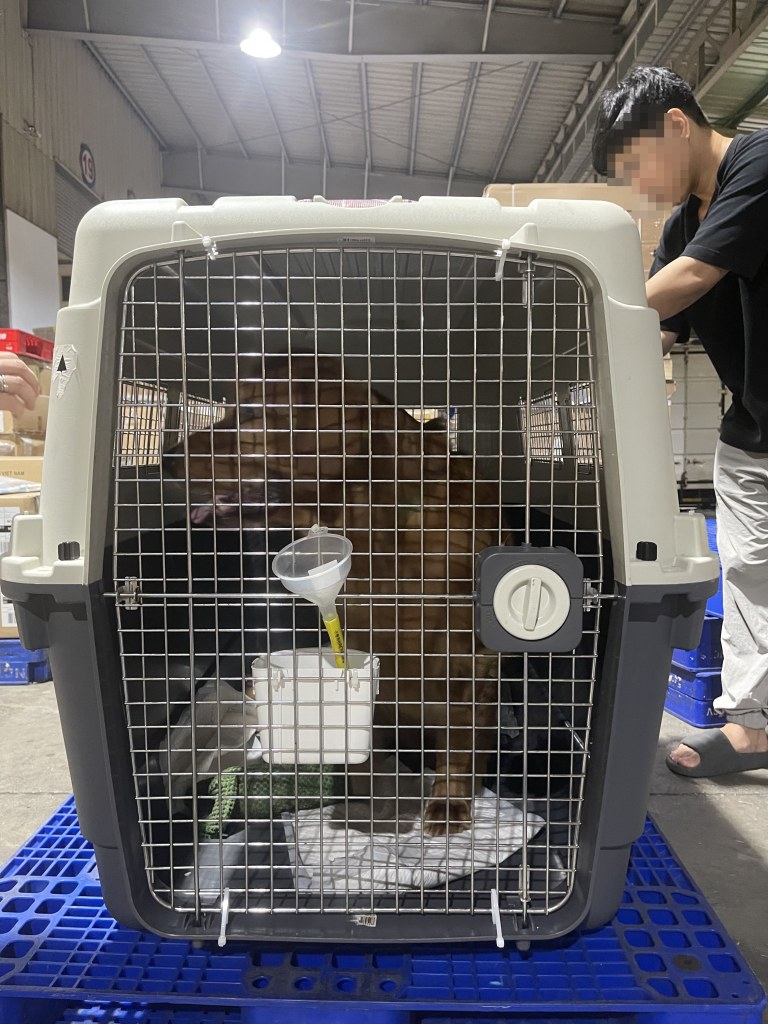
Rigid plastic IATA crate in a cargo warehouse

Hold

Rigid Plastic Crate

The most common choice, suitable for most dogs and cats.

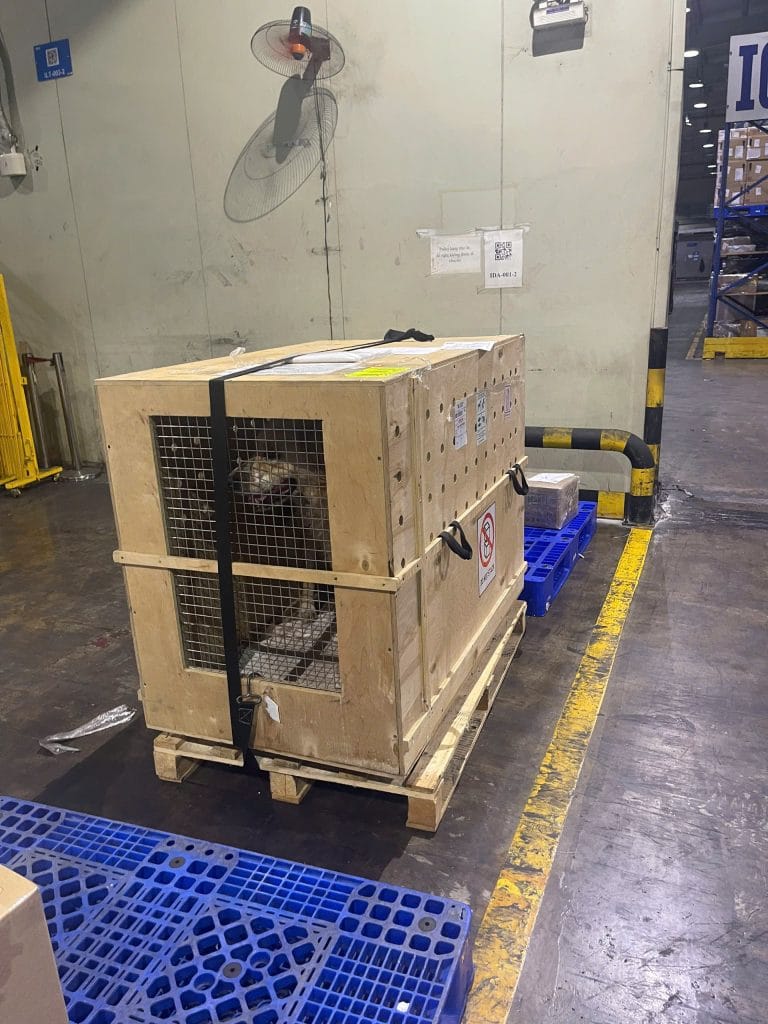
Custom wooden crate for a large dog on a pallet at the cargo warehouse

Hold

Custom Wooden Crate

For very large dogs and listed breeds. Heavy, often built to order.

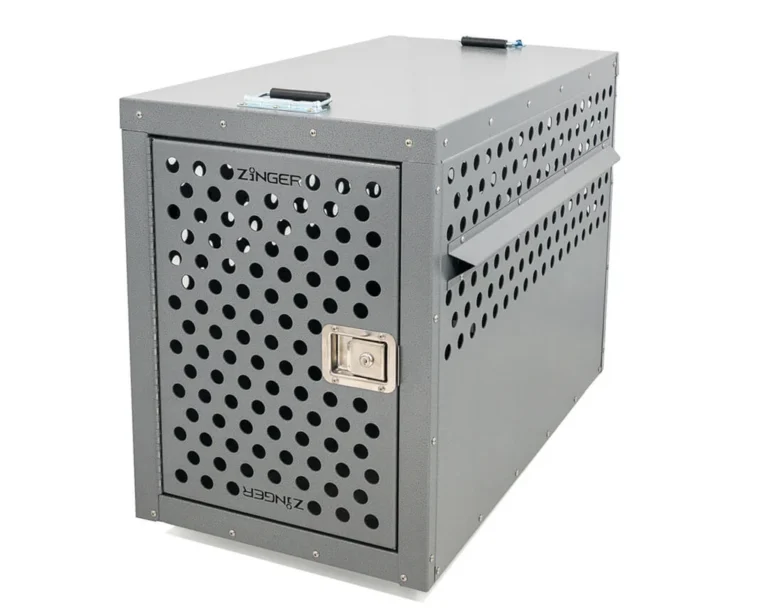
CR82 aluminum crate

Hold

CR82 Aluminum Crate

Built to Container Requirement 82 (CR82), for breeds an airline lists for it. Lightweight and reusable.

Measure your pet

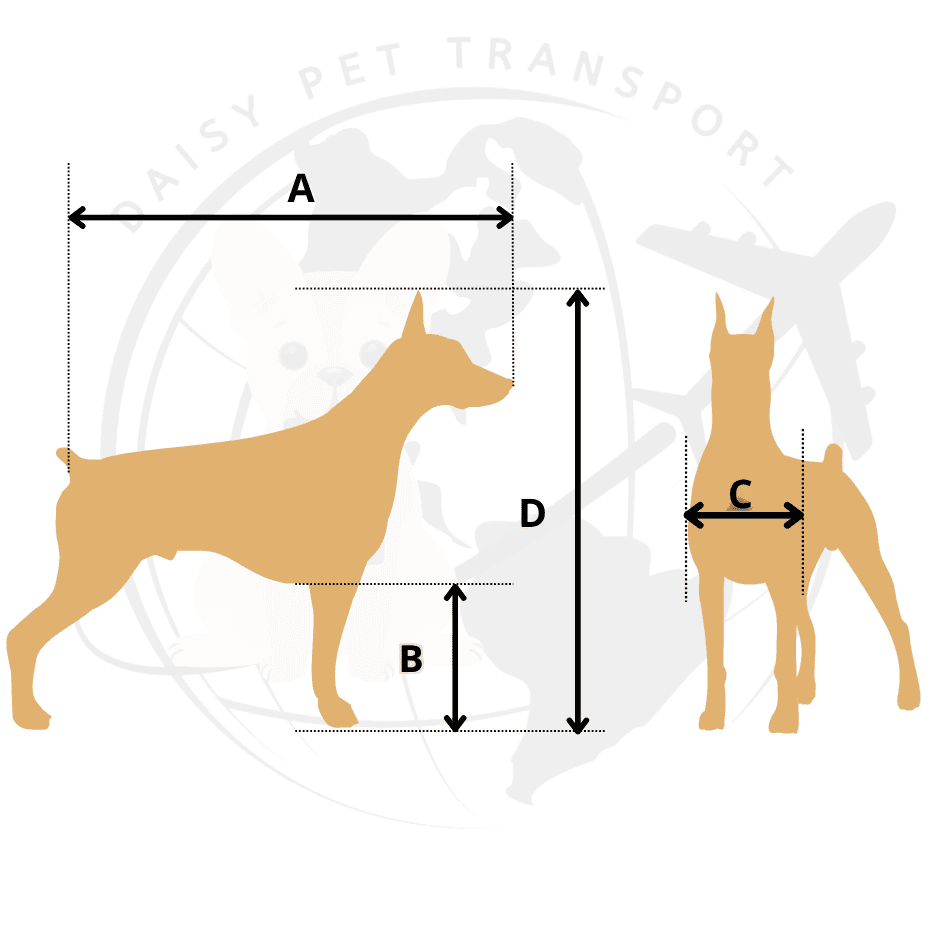
How to Measure Your Pet for the Right Crate Size

Always follow the IATA measuring method to keep your pet safe and comfortable. Type your pet’s measurements below to see the crate size it needs.

How to measure a dog for an IATA crate: A, B, C and D

A
D
B
C

Measure your pet standing, then type the numbers.

cm

cm

cm

cm
LengthA + ½B
WidthC × 2
HeightD + bedding

Standard crate dimensions. These are internal dimensions, measured inside the crate.

Fill in all four measurements to see the smallest crate that fits.
Every crate we supply

Size Chart for the 6 IATA-Compliant Crates

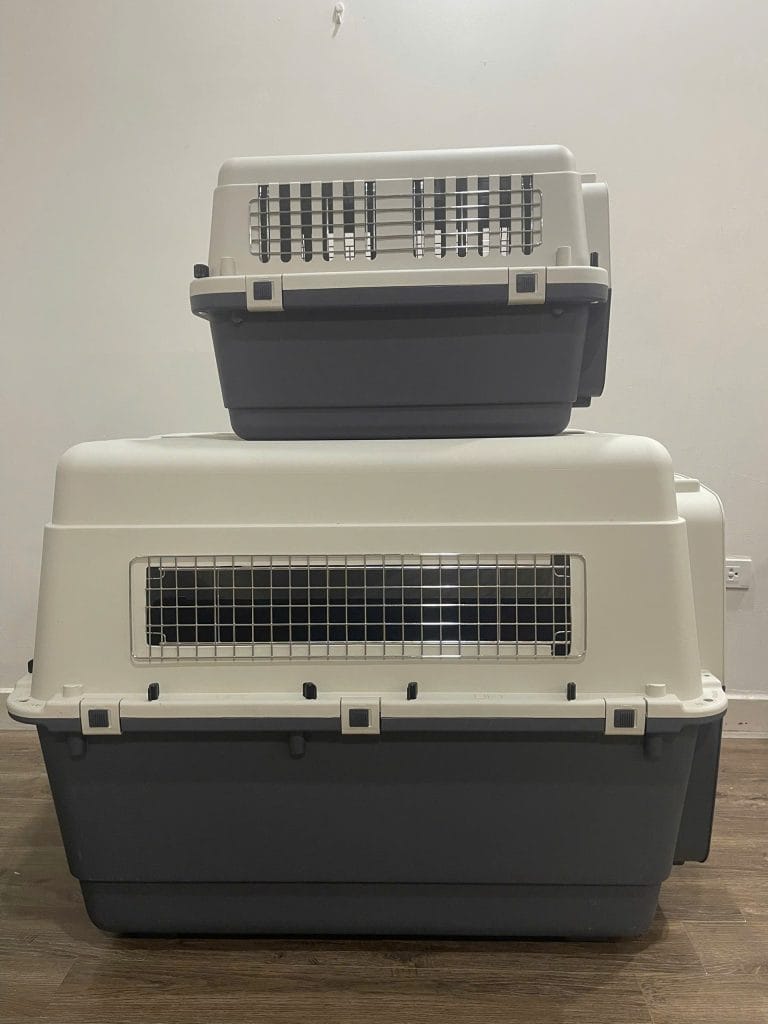
The six L-series crates are made of IATA-compliant resin plastic, including the large L90 to L120 sizes that are hard to find in Vietnam. Pick a crate to see it next to a person.

L-series · resin plastic
Beyond L120
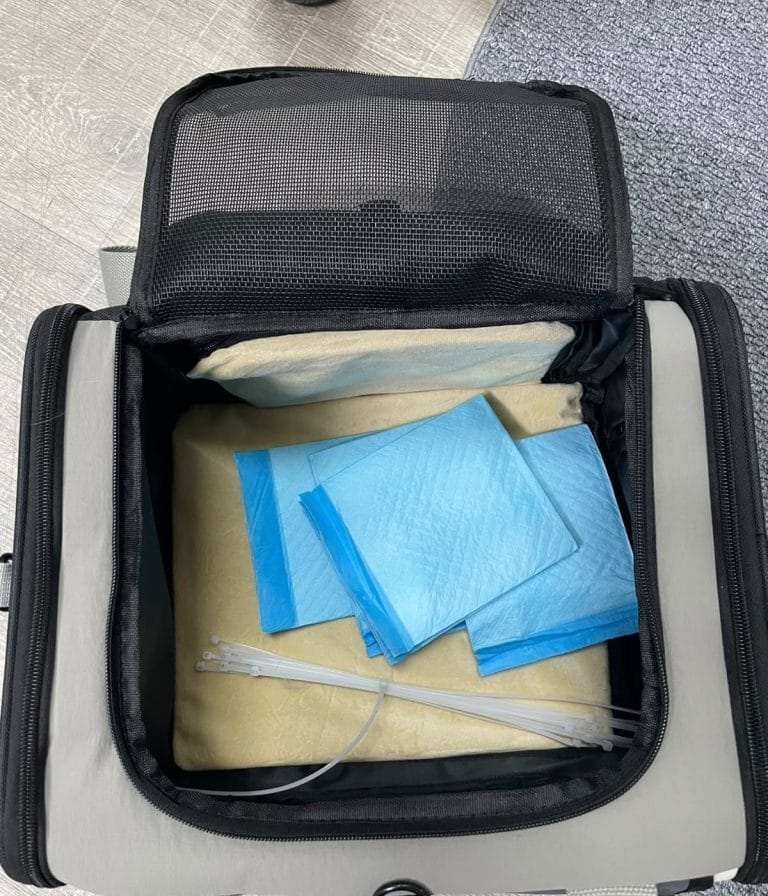
Open soft-sided pet carrier bag lined with absorbent pads and spare cable ties before a cabin flight
Every crate we supplySoft Cabin Carrier

For small pets that fly in the cabin. The airline sets the weight limit.

Where it sits in the range
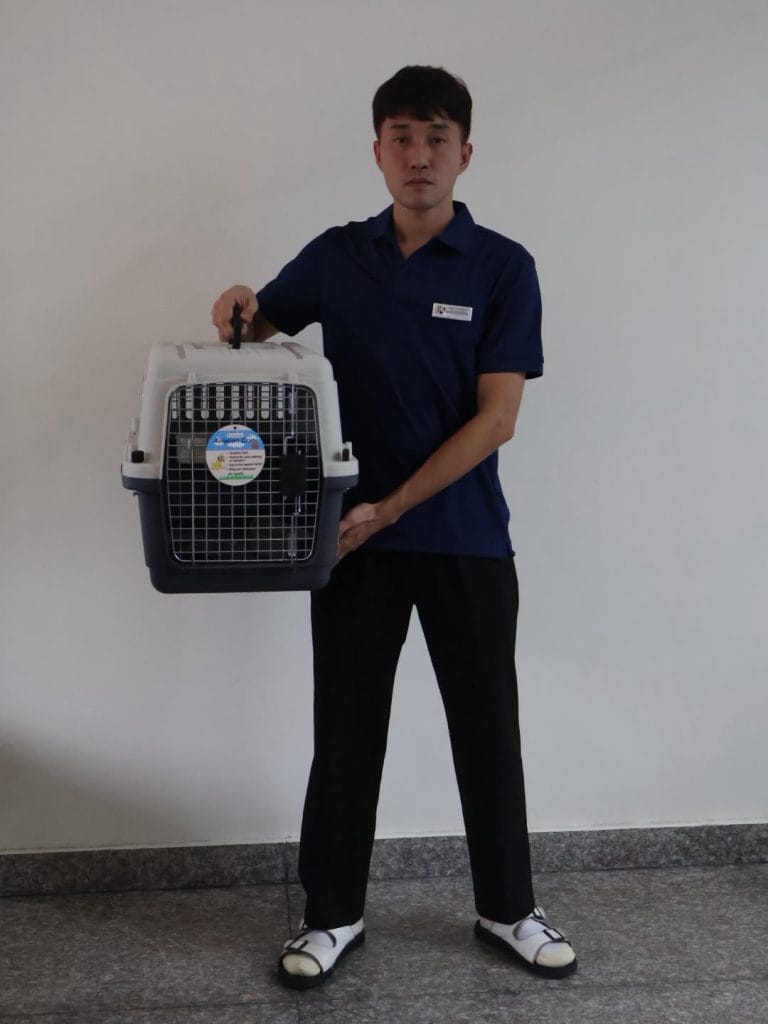
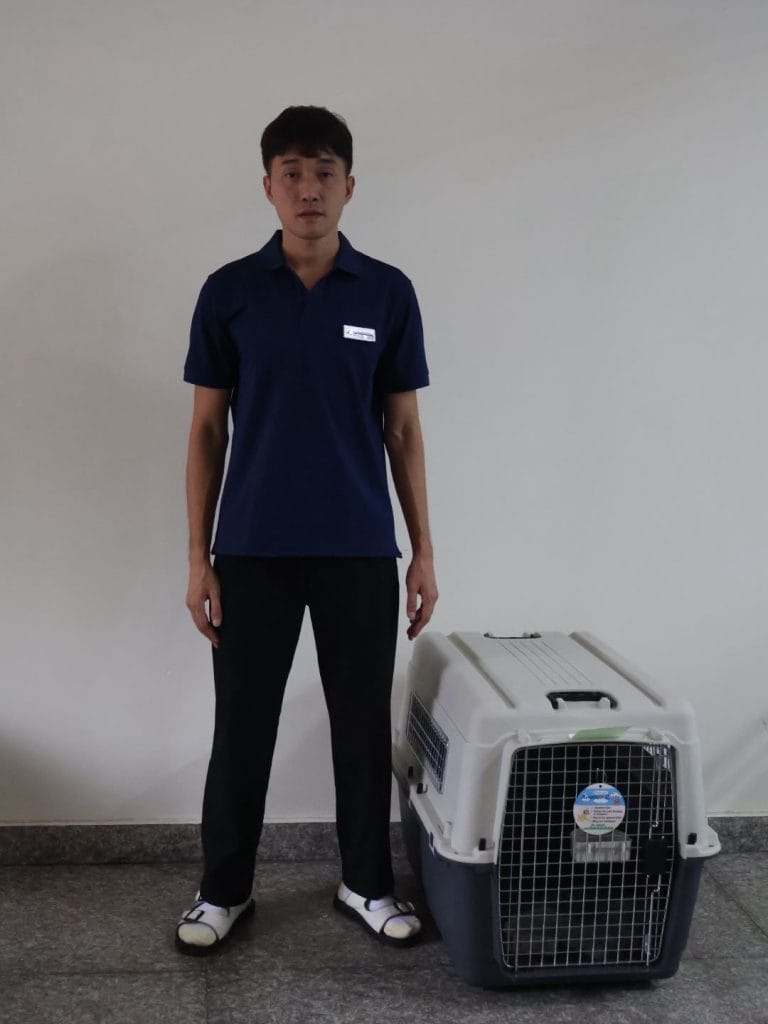
Daisy Pet Transport staff beside an L60 IATA dog crate for size reference
IATA-compliant resin plasticL60
Outer size
60.7 × 40.0 × 40.5 cm23.90 × 15.75 × 15.94 in
Pet weight
Dogs 4–8 kg, and cats
Breeds
Toy/Mini Poodle, Chihuahua, Pomeranian, cats
Where it sits in the range
Daisy Pet Transport staff beside an L70 IATA dog crate for size reference
IATA-compliant resin plasticL70
Outer size
67.5 × 51.0 × 47.0 cm26.57 × 20.08 × 18.50 in
Pet weight
Dogs 8–14 kg
Breeds
Standard Poodle, Corgi, Dachshund
Where it sits in the range
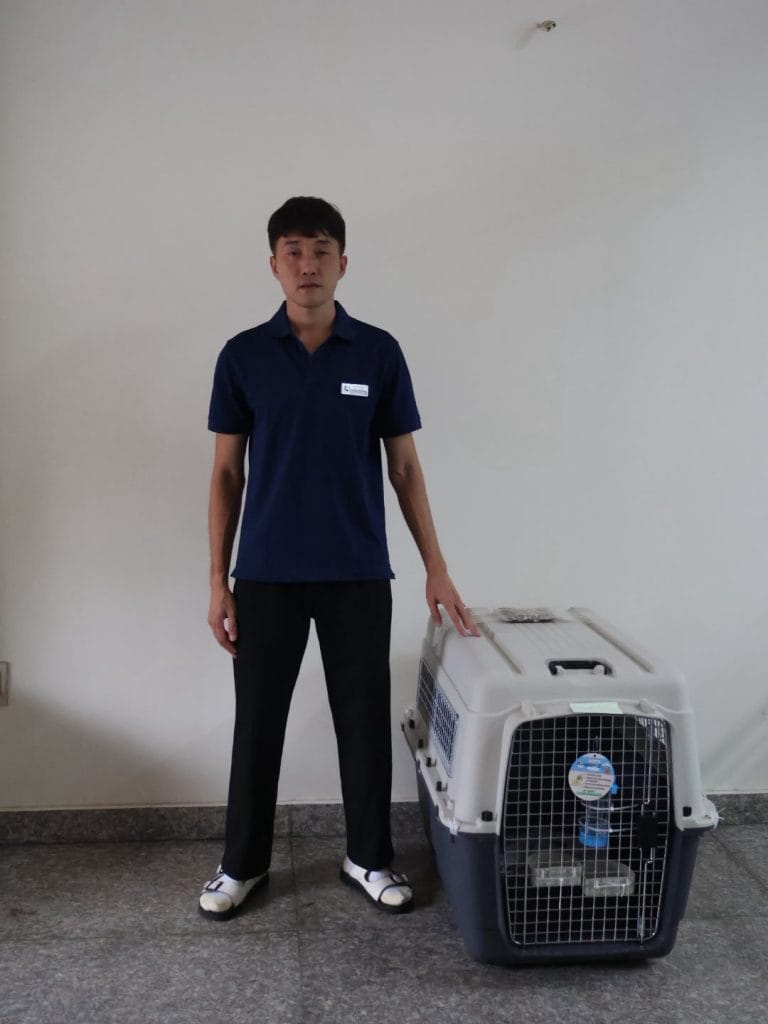
Daisy Pet Transport staff beside an L80 IATA dog crate for size reference
IATA-compliant resin plasticL80
Outer size
80.1 × 56.2 × 59.0 cm31.54 × 22.13 × 23.23 in
Pet weight
Dogs 14–22 kg
Breeds
Beagle, Shiba, Cocker Spaniel, Bulldog
Where it sits in the range
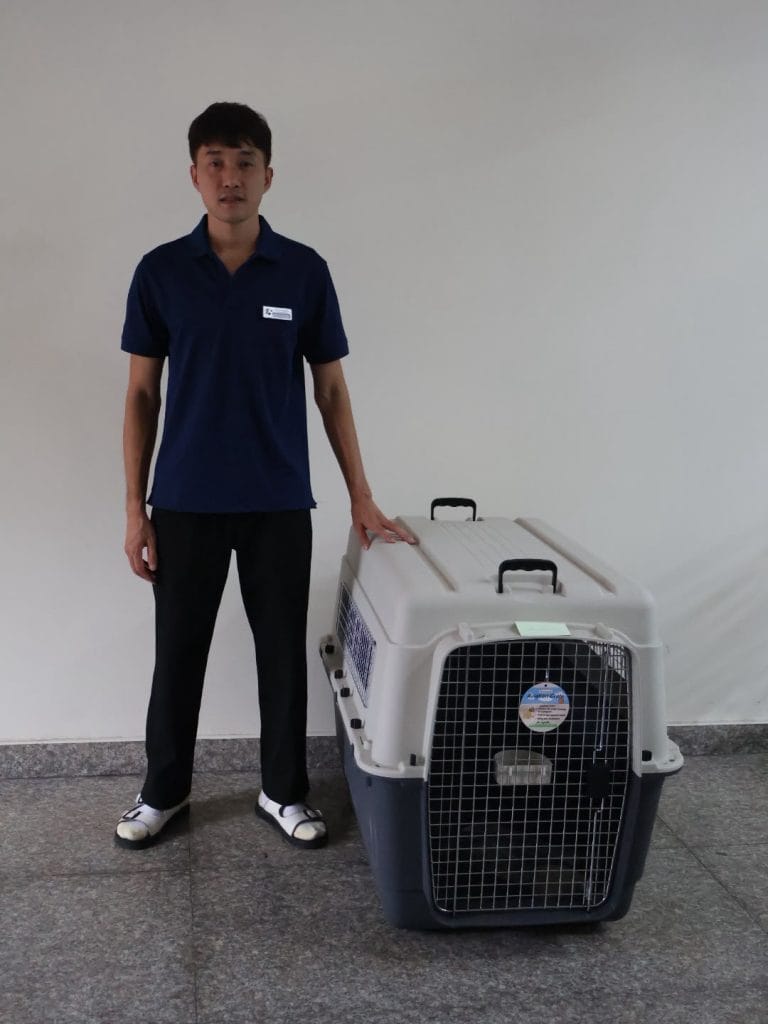
Daisy Pet Transport staff beside an L90 IATA dog crate for size reference
IATA-compliant resin plasticL90
Outer size
90.0 × 60.0 × 68.0 cm35.43 × 23.62 × 26.77 in
Pet weight
Dogs 22–30 kg
Breeds
Border Collie, Australian Shepherd, small Samoyed
Where it sits in the range
Daisy Pet Transport staff beside an L100 IATA dog crate for size reference
IATA-compliant resin plasticL100
Outer size
100.0 × 67.0 × 75.0 cm39.37 × 26.38 × 29.53 in
Pet weight
Dogs 30–40 kg
Breeds
Labrador, Golden Retriever, Husky, medium German Shepherd
Where it sits in the range
Daisy Pet Transport staff beside an L120 IATA dog crate for size reference
IATA-compliant resin plasticL120
Outer size
121.0 × 82.0 × 90.0 cm47.64 × 32.28 × 35.43 in
Pet weight
Dogs 40–55+ kg
Breeds
Large German Shepherd, Alaskan Malamute, Rottweiler, Doberman
Where it sits in the range
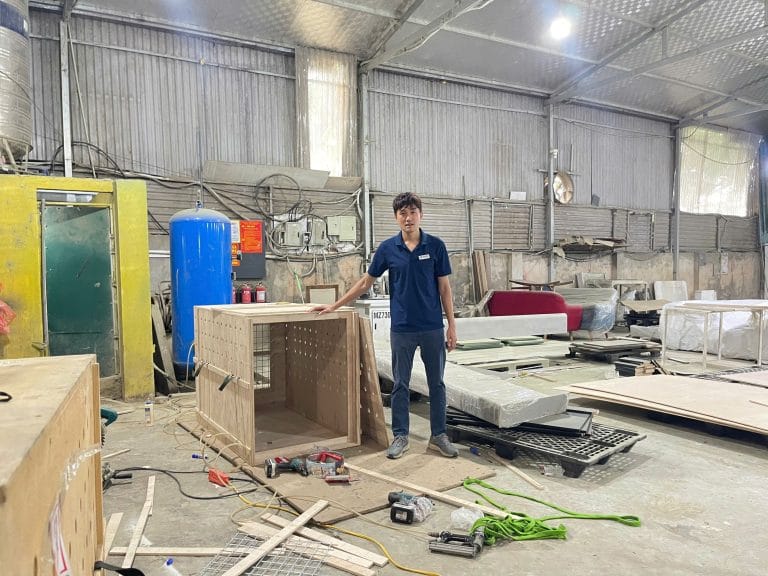
Daisy Pet Transport staff member standing beside a custom wooden IATA dog crate in the workshop
Every crate we supplyCustom Wooden Crate

Built to your pet’s measurements for giant, powerful or listed breeds.

Where it sits in the range

Dogs over 55 kg, very tall or narrow dogs, and breeds an airline lists for a reinforced crate may need a custom wooden crate built to the airline’s specification. Weight counts too: Vietnam Airlines accepts a pet and its crate up to 32 kg together as checked baggage, and heavier shipments travel as cargo. Contact the Daisy team for the right size and route for your pet.

Crate Size by Breed

Why crates get refused

Common Crate Mistakes

The frequent errors that make a crate non-compliant and get it rejected at the airport.

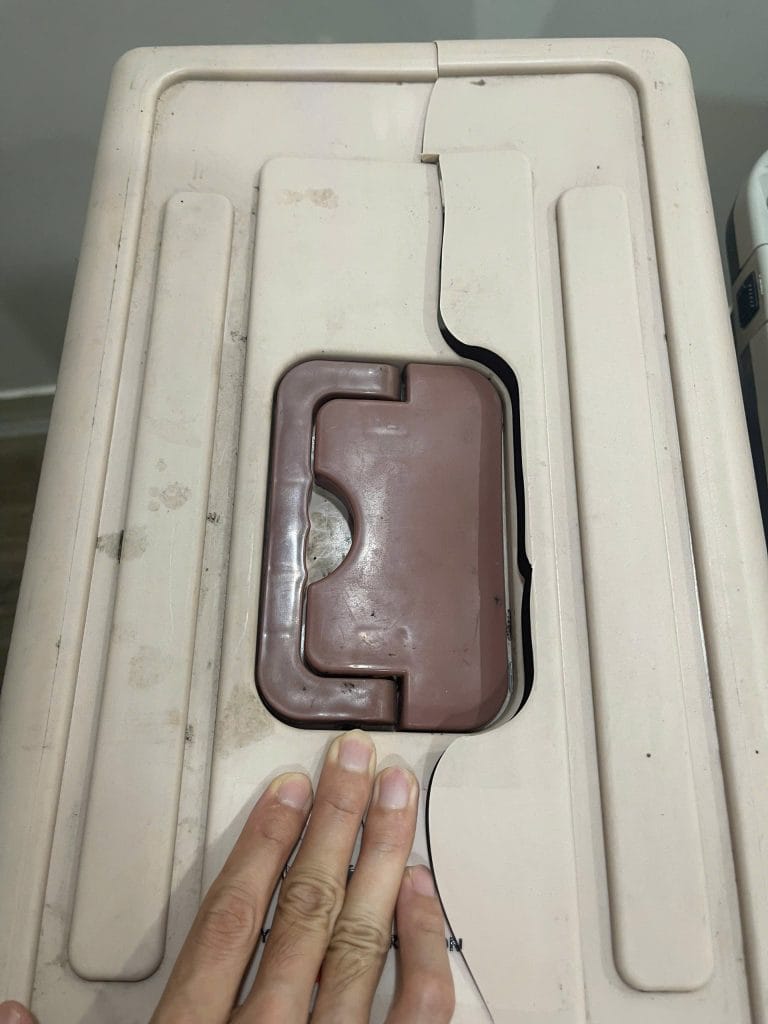
Non-compliant crate with a broken roof

Thin Material

Bends and cracks when heavy cargo presses on it, unsafe for your pet.

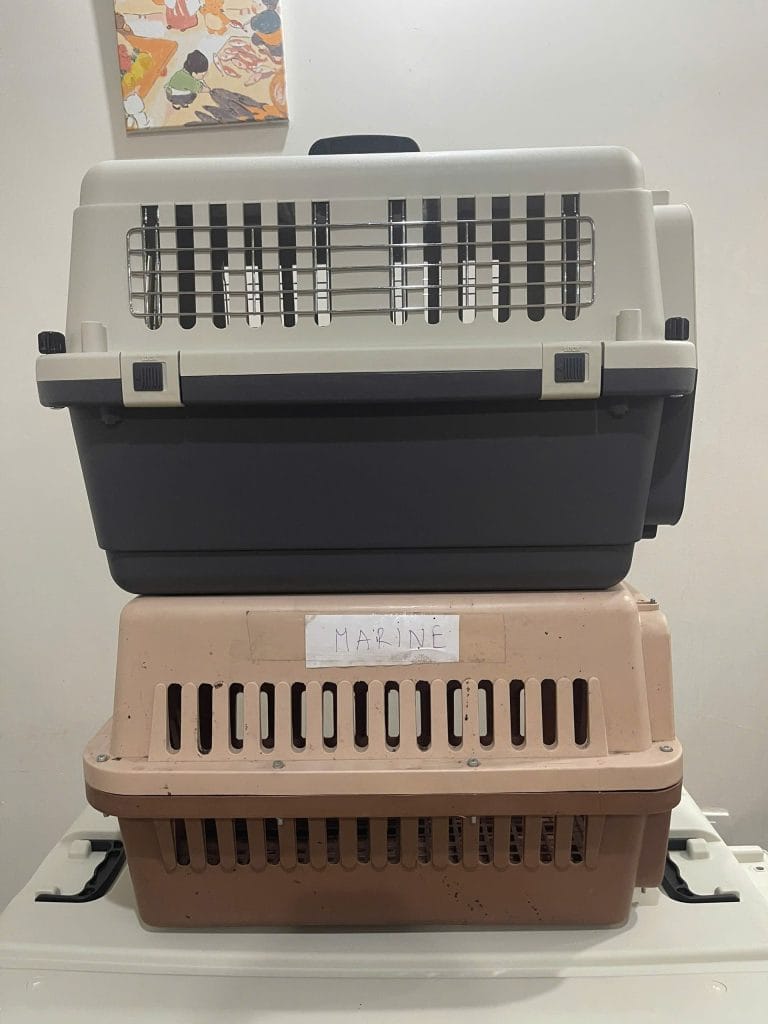
IATA crate next to a standard crate

Thin or Loose Mesh

Mesh must be 2.5 mm or thicker for dogs and fixed so your pet cannot push it out. It has to cover every opening that is too wide, the door included.

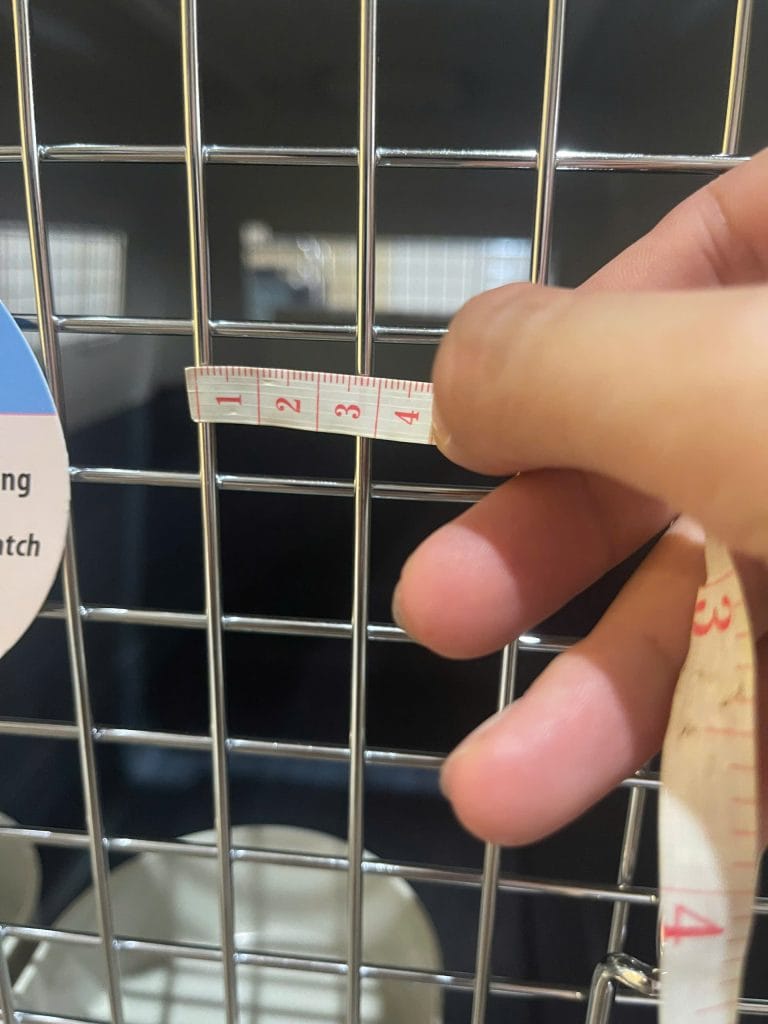
Measuring the metal window of a crate

Ventilation Gaps Too Wide

Openings beyond 25 mm for dogs and 19 mm for cats, with no proper mesh over them.

Crate water bowl with a fill funnel

Bowl With No Water Tube

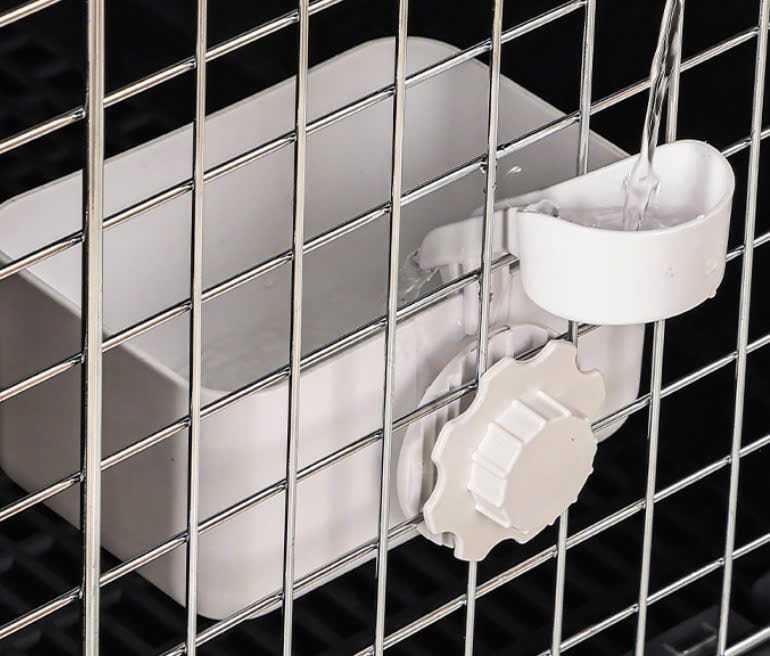
No fill tube, so the door must be opened just to refill the water bowl.

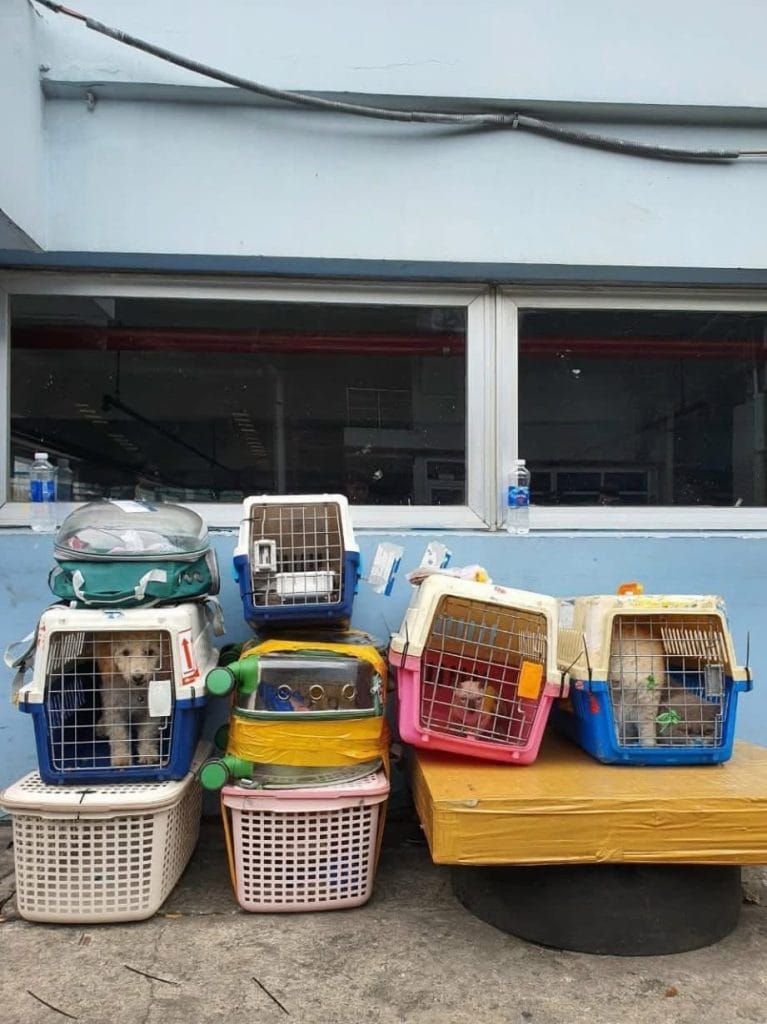
Old crates and makeshift plastic baskets that do not meet IATA standards, stacked for shipping

Worn Second-Hand Crate

Cracks, missing bolts or locking pins, and wheels still fitted. Lufthansa asks owners to check crates bought before 2024 against the current rules.

Plastic pet crate with extra wire mesh fixed on by cable ties, a home-made change the airline has not approved

Home-Made Changes

Drilled holes, glued parts or extra mesh the airline has not seen. Send photos to your airline and get its approval in writing before you fly.

Six-week plan

How to Get Your Pet Used to the Crate

A pet that is already used to its crate stays far calmer and less stressed throughout the flight. Airline staff can refuse a pet that looks distressed at check-in, and IATA’s July 2026 in-cabin guidelines say so explicitly.

Start six weeks before flight day, train in the exact crate your pet will fly in, and work through these goals in order. Anxious pets, or pets with a bad crate history, may need 8 to 12 weeks.

Step 1 · Week 1

Get comfortable with the crate being around

Leave the crate in a living area with the door open or taken off, and praise every approach. Never push or carry your pet inside.

Step 2 · Weeks 1–2

Step into the crate on their own

Put a familiar-smelling blanket near the entrance, then hide treats at the door, the middle, and the back, so going in always pays off.

Step 3 · Weeks 2–3

Eat and rest inside the crate

Feed meals beside the crate, then inside it, and add a chew toy. The crate must never be used as punishment.

Step 4 · Weeks 3–4

Stay calm inside with the door closed

Close the door for 10 seconds, then build up to 1, 5, and 15 minutes with you in the room. Open it during a quiet moment, not the second your pet whines.

Step 5 · Week 4

Stay alone in the crate without anxiety

Stretch to 30 minutes, then leave the room for 1 to 2 hours at a time. By the end, your pet should settle and nap on their own.

Step 6 · Weeks 5–6

Get used to being moved and to gentle motion

Practice car rides from 5 minutes up to 30–60 minutes with airport-style background noise, then finish with a full night in the crate.

Owners ask

Frequently Asked Questions

CR1IATA LAR 52, January 2026
11questions answered
What makes a crate IATA-compliant?+
It has to meet CR1 in the IATA LAR: a crate made of approved materials, with ventilation on all four sides, a solid leak-proof floor, a securely locking door, and enough room for your pet to stand, sit upright, lie down and turn around. IATA does not certify or sell crates, so there is no official IATA stamp, and the airline’s check-in staff decide whether a crate passes.
Can I add mesh to my crate to meet the 25 mm (1-inch) rule?+
Yes, CR1 allows it. Use welded wire mesh at least 2.5 mm thick for dogs (2.0 mm for cats), cover every opening that is too wide, and fix it so your pet cannot push it out. A second layer is fine if both layers meet the minimum. Airlines can be stricter about how mesh is attached, so send photos to your airline and get its approval in writing before you fly.
Can I use a second-hand crate?+
Yes, if it still meets CR1: no cracks, every bolt and locking pin in place, wheels removed or disabled, and openings within the limit. Lufthansa asks owners to check crates bought before 2024 against the current rules.
Is a crate with vents in the roof acceptable?+
Yes. CR1 allows ventilation openings and welded mesh across the whole roof, as long as the roof stays strong. Each opening must still be no wider than 25 mm for dogs or 19 mm for cats.
Can several pets travel in the same crate?+
Yes, but only under strict IATA conditions, and it often does not save as much on freight as people expect. Each pet must be under 14kg, with a maximum of 2 adults of the same size or 3 pets under 6 months, and they must be used to living together. Any pet over 14kg must travel in its own crate. See the rules on sharing a crate.
Should I put food inside the crate?+
Use only a thin absorbent liner, one familiar soft toy, and provide water as ice cubes instead of poured water to avoid spills. No hard food or breakable toys. See the crate preparation checklist.
Why are so many standard crates rejected?+
Ventilation openings wider than 25 mm patched with thin or loosely fixed mesh, plastic clips used as the only fasteners, plastic hinges or locking pins, and thin brittle material. This is common with crates sold on Amazon and other online stores. They may pass on easy routes, such as domestic flights or around Southeast Asia, but are very likely to be refused where inspection is strict.
Do cats need a different crate from dogs?+
The same CR1 standard applies, with tighter numbers: openings no larger than 19 × 19 mm instead of 25 × 25 mm, welded mesh at least 2.0 mm instead of 2.5 mm, and wooden sides at least 6 mm instead of 12 mm. A large cat may outgrow the smallest crates, and a bigger plastic crate only works if its openings are 19 × 19 mm or smaller. Otherwise a custom wooden crate is the answer.
Can my pet fly in a soft-sided carrier?+
Only in the cabin. A cabin carrier must still let your pet stand, sit upright, lie down and turn around, but it does not have to be rigid, needs no spacer bars, and needs no water or food containers. A crate for the hold must be rigid. Airlines also set their own cabin size and weight limits, and under IATA’s July 2026 in-cabin guidelines, check-in staff can deny boarding if the carrier or the pet’s condition is not acceptable.
Which dog breeds need a reinforced wooden crate?+
It depends on the airline, not on a dog’s size or temperament. Under IATA LAR 52 Addendum I (15 January 2026), Lufthansa (LH-05) and Austrian Airlines (OS-04) list nine breeds, including Rottweiler and American Pit Bull Terrier, for a reinforced wooden crate built to CR1 with extra reinforcements, and Turkish Cargo (TK-03) lists about thirty breeds for CR82. Some airlines do not carry wooden crates at all. Rules differ by airline and by edition, so ask for the exact specification in writing before you build or buy.
Does Daisy offer large crates for big dogs?+
Yes. Daisy supplies all 6 sizes from L60 to L120, with the large L90 to L120 range for breeds like German Shepherds, Alaskan Malamutes, and Golden Retrievers, which are very hard to source in Vietnam. Dogs over 55kg, and breeds an airline lists for a reinforced crate, can order a custom wooden crate built to the airline’s specification.
Airplane Texture 1

Ready to Relocate Your Pet?

Tell us about your pet and destination. Our team will review your case and provide a clear, tailored quotation.

GET A QUOTE CONTACT US