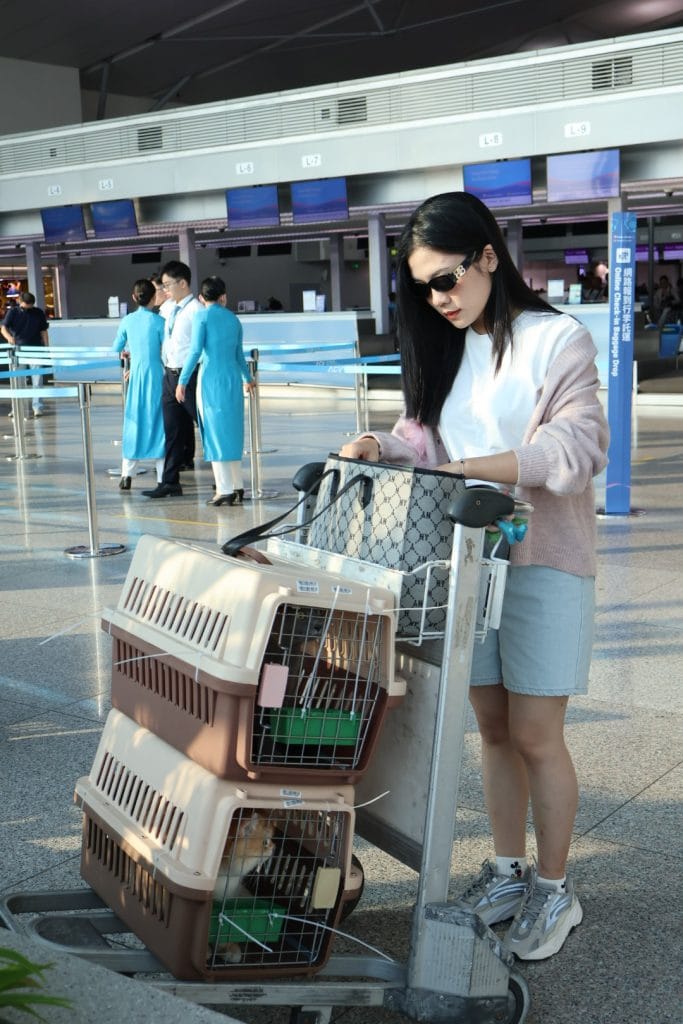
You’ve chosen the right crate. You’ve verified the IATA Sizing Formula. Your pet has been crate-trained. All documents are ready.
If you are relocating multiple pets and considering having them share a single container, special setup rules and size constraints apply — see our guide on Can Two Dogs Travel In The Same Crate before finalizing your setup.
Now it’s the night before the flight — and the question becomes: what goes inside the crate, and how do you set it up so nothing goes wrong at the cargo counter?
This is where small details matter more than you’d expect. We’ve seen crates rejected not because of structural issues, but because the bedding was too thick (reducing internal height below the IATA minimum), because a hard chew toy was left inside (safety hazard), or because the water dishes were placed on the floor instead of attached to the door.
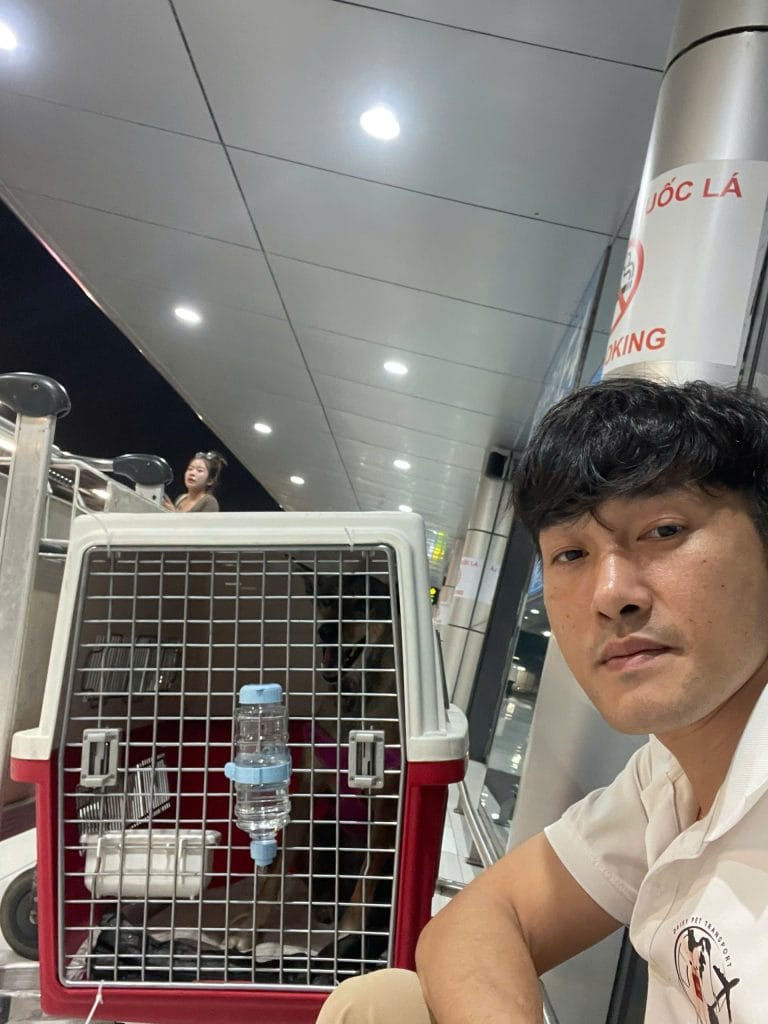
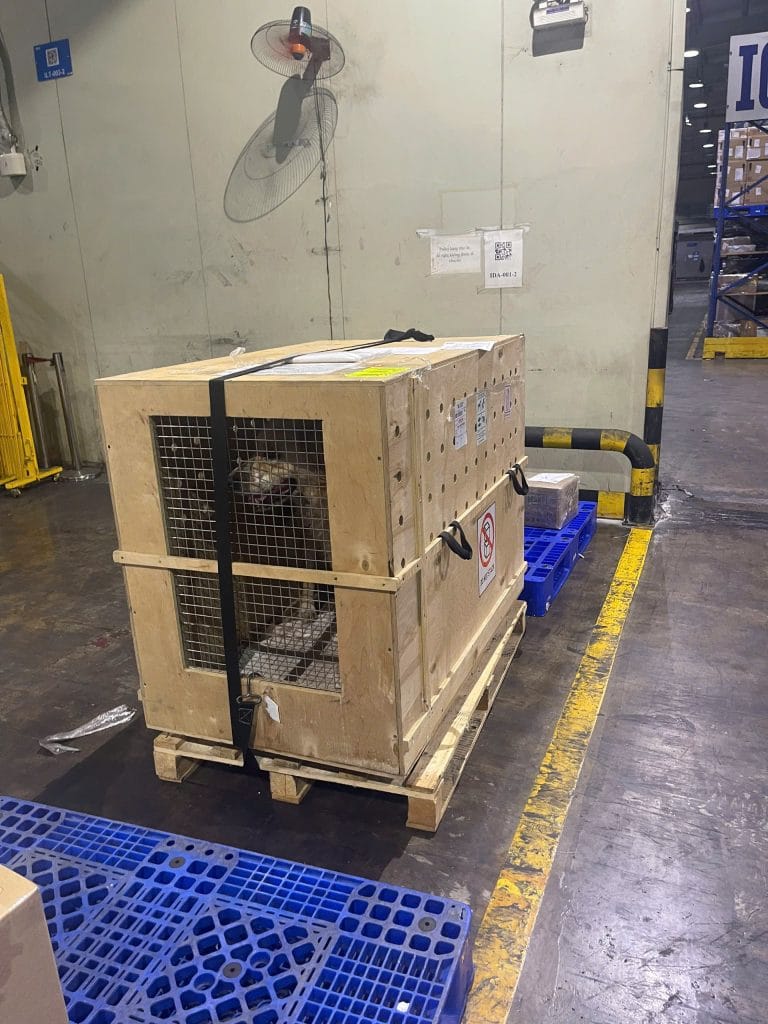
This checklist covers everything we prepare for every shipment at Daisy Pet Transport — broken down into what goes inside the crate, what goes on the crate, and what stays outside.
Inside the Crate
1. Bedding — Comfort Without Compromise
Your pet needs something soft to lie on. But there are rules:
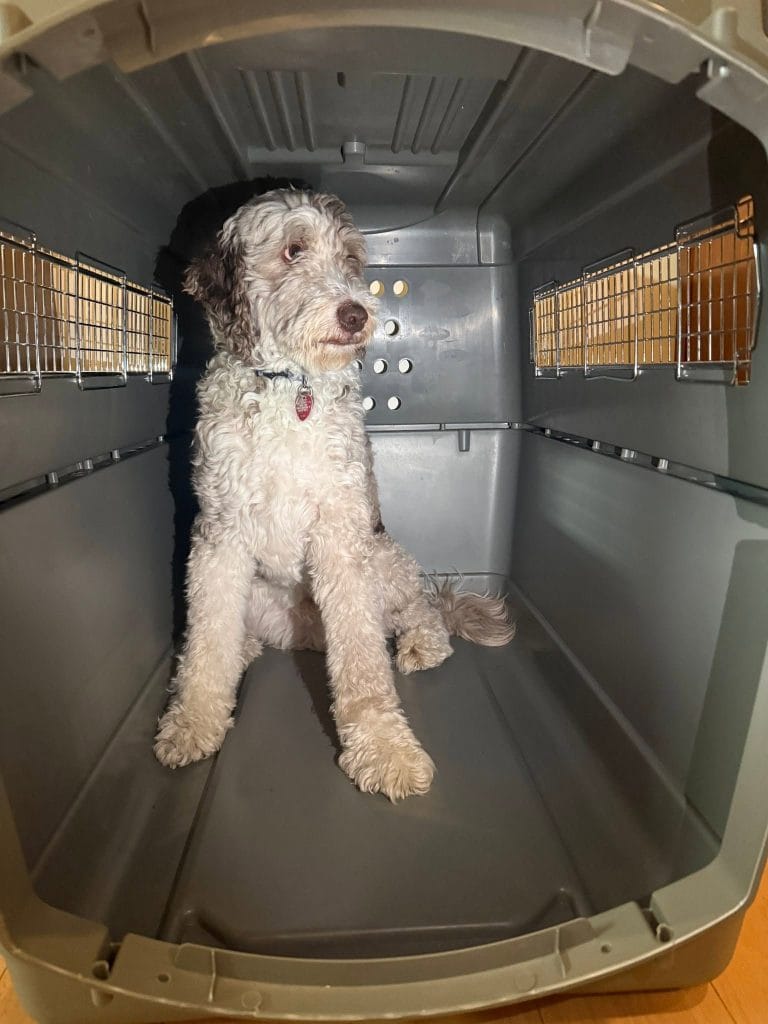
- Use: A familiar towel, a worn t-shirt (your scent calms the pet), or a thin absorbent pad (puppy pad).
- Avoid: Thick memory foam mattresses, bulky blankets, or anything that raises the floor height by more than 1–2 in.
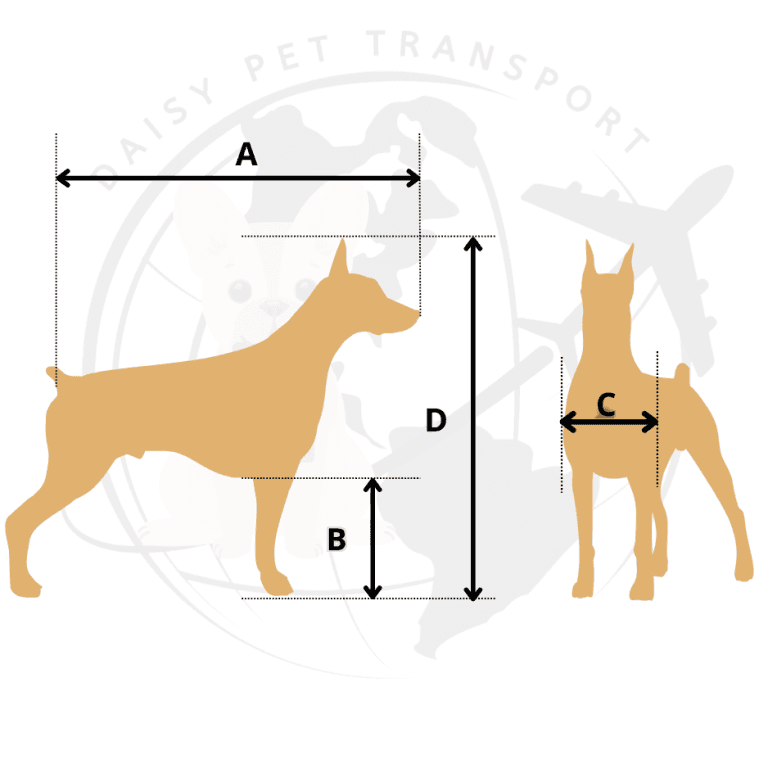
- Why it matters: The IATA formula for minimum crate height is D + bedding height. If your bedding is 3 in thick, you’ve effectively reduced your pet’s standing clearance by 3 in. We’ve seen crates fail inspection because the owner put a plush dog bed inside — the pet could no longer stand without touching the ceiling.
💡 What we do: We use a single absorbent puppy pad (about 1 in) topped with a light towel from the owner’s home. Familiar scent + minimal height impact + easy cleanup if the pet has an accident mid-flight.
2. Food — Enough for Delays, Not for a Feast
- Pack 2–3 days’ worth of your pet’s regular food in a sealed, clearly labeled bag (Ziplock works fine).
- Label it: Write feeding instructions directly on the bag with a permanent marker — “1 cup, twice per day” or similar.
- Why 2–3 days? International shipments can be delayed by weather, customs holds, or missed connections. The food travels with the crate, taped to the outside or placed in the designated pouch, so handlers at transit points can feed your pet.
3. Water — Ice, Not Liquid
This is a detail many pet owners get wrong:
- Do not fill the water bowl with liquid water before departure. It will spill during loading and handling, soaking the bedding and leaving your pet sitting in a wet crate for hours.
- Instead: Fill the attached water dish with ice cubes or frozen water. The ice melts slowly during transit, giving your pet a steady supply of water without the mess.
- For long flights (8+ hours): Freeze a full bowl of water the night before. It will last longer than loose ice cubes.
4. Toys — Soft Only, Nothing That Can Kill
- Allowed: One small, soft toy or a chew blanket. Something familiar that provides comfort.
- Banned: Hard bones, rope toys (can unravel and become a choking/binding hazard), squeaky toys (can malfunction and cause stress), tennis balls (choking risk for some breeds).
- Our recommendation: A small Kong toy stuffed with peanut butter and frozen — it gives the pet something to focus on during the first hour of transit, then it’s done.
5. Medications — Prescription Only, Clear Instructions
- Only veterinarian-prescribed medications. Place in a Ziplock bag with written instructions for use.
- Sedatives: Medications that render the pet unresponsive or impair motor skills are prohibited by virtually all airlines. At altitude, sedatives can dangerously lower blood pressure and body temperature — a combination IATA warns can be fatal. If your vet recommends a sedative, discuss alternatives with your pet transport provider first.
- Anti-anxiety supplements (like Adaptil collars or calming treats) are generally acceptable — but declare them to your airline.
6. Leash and Collar
- Dogs: Include a leash and collar inside the crate (not worn during the flight — collar must be removed to prevent snagging). This allows handlers to walk the dog at transit points.
- Cats: Not necessary. Cats should remain in the crate at all times during transit.
On the Crate (External Setup)
7. “LIVE ANIMAL” Stickers and Directional Arrows
- Required on at least two sides (preferably all four).
- Directional arrows (▲ THIS SIDE UP) must be clearly visible.
- Use stickers that are waterproof — baggage areas and tarmacs get wet.
8. Document Pouch
- Attach a clear plastic pouch to the top or side of the crate containing:
- Copy of health certificate
- Copy of vaccination records
- Feeding instructions (duplicate of what’s on the food bag)
- Owner’s contact information (name, phone, destination address)
- Receiving party’s contact (if someone else is picking up)
- Originals travel separately — either with the airline’s cargo documentation or in a separate sealed envelope attached to the crate, depending on the airline’s procedure.
9. Food and Water — External Attachment
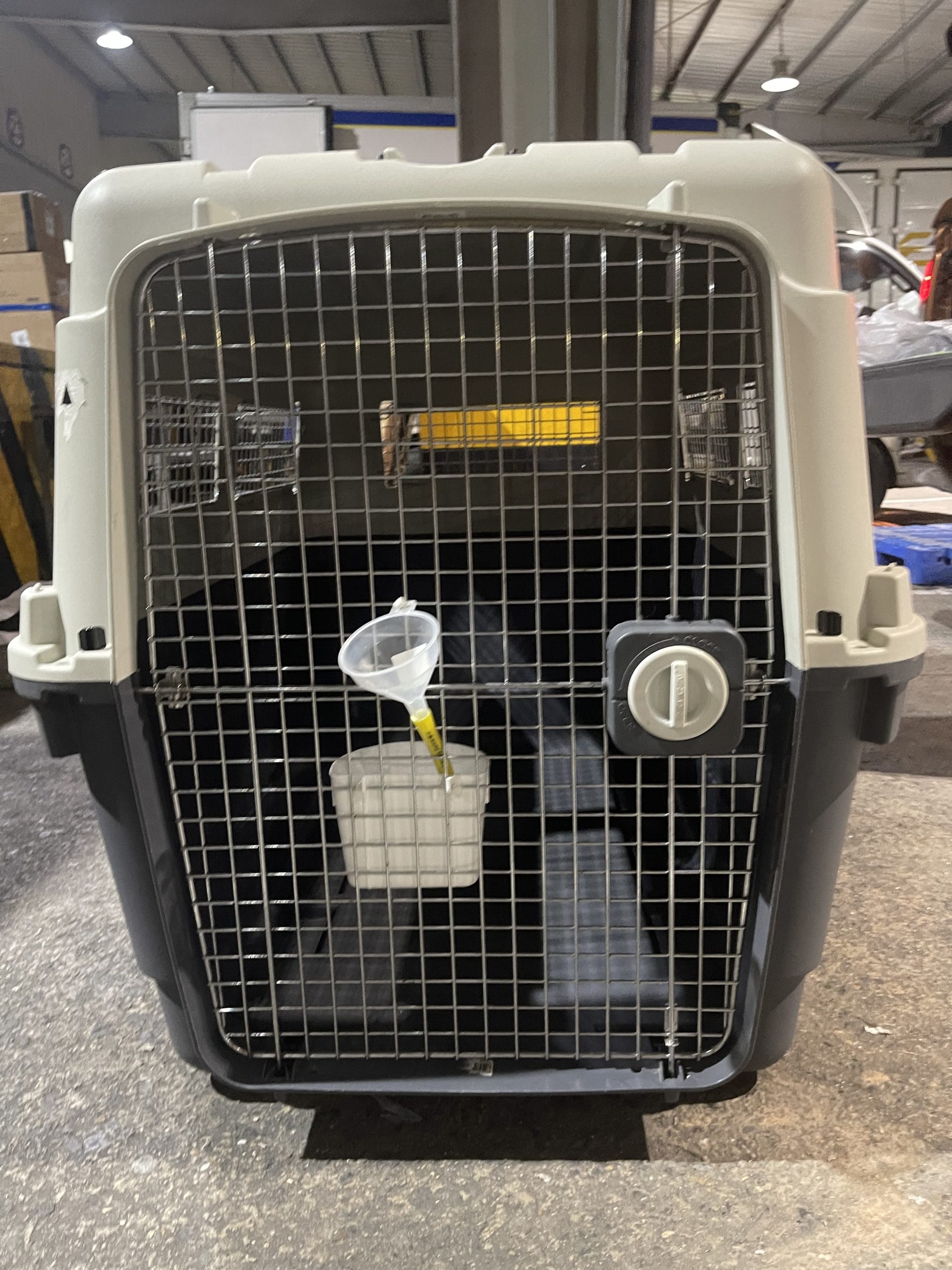
- Two dishes must be attached to the inside of the crate door, but accessible (fillable) from outside without opening the door.
- The sealed food bag is typically taped to the top of the crate so handlers can access it at transit points.
What NOT to Do — Common Mistakes We Catch Before the Airport
| Mistake | Why It’s a Problem | What to Do Instead |
|---|---|---|
| Thick bedding (3+ in) | Reduces internal height → fails IATA formula | Use a thin puppy pad + light towel (1–2 in max) |
| Filling water bowl with liquid | Spills during loading → wet bedding for entire flight | Freeze water or use ice cubes |
| Leaving collar on the pet | Can snag on crate door/vents → injury or strangulation risk | Remove collar, place inside crate loosely |
| Hard toys or rope toys | Choking, binding, or impact hazard | Soft toys only, or a frozen Kong |
| Taping ventilation holes “for warmth” | Reduces airflow → overheating risk, instant rejection | Never cover vents. Cargo holds are temperature-controlled. |
| No “LIVE ANIMAL” stickers | Crate may be handled like regular cargo | Stickers on at least 2 sides + directional arrows |
The Daisy Pet Pre-Flight Crate Inspection
For every international shipment, our team runs this exact checklist at our office — typically 2–3 hours before the airport departure time:
- ☐ Bolt integrity check (all metal fasteners tight, no plastic clips)
- ☐ Internal height measurement with bedding in place
- ☐ Ventilation inspection (all openings clear, nose/paw proof)
- ☐ Door latch test (open/close 5 times, verify secure lock)
- ☐ Water dishes attached and fillable from outside
- ☐ “LIVE ANIMAL” stickers + directional arrows applied
- ☐ Document pouch attached with copies of all paperwork
- ☐ Food bag labeled and taped to crate exterior
- ☐ Bedding placed, collar removed, soft toy inside
- ☐ Pet enters crate voluntarily (final comfort check)
If any item fails, we fix it on-site before leaving. The airport is the wrong place to discover a missing bolt or an expired health certificate copy.
💡 Pro tip for long-haul flights (SGN → LAX, SGN → CDG): We tape a second set of feeding instructions in the destination country’s language to the crate. A handler at LAX is more likely to follow instructions they can read. For Japan-bound pets, we include instructions in both English and Japanese.
Last updated 17 Oct 2026
Compiled by our specialists from the regulations in force on the date above, for reference only. Rules may change after this date. Please verify with the competent authorities or contact us for the most accurate information.