Most pet travel advice is written with dogs in mind, and much of it carries over. The parts that do not carry over are the ones that matter most for cats: how they show fear, how they feel about the carrier, and what happens when they stop eating in a new place.
This guide covers the cat-specific side of preparation, from carrier training and airport security to food, stress signs and the breeds that need extra checks.
Why Cats Need a Different Approach
A frightened dog usually shows it. It pants, whines, paws at the crate door. A frightened cat more often goes quiet and still, which owners and handlers can easily mistake for calm. Cats also cope best when they feel some control over their surroundings, and a crate in a busy terminal offers none.
Two further differences shape the whole plan. Many cats associate the carrier with trips to the vet, so it starts as a source of stress rather than a refuge. And a cat that stops eating for several days in a new place faces a real medical risk that a dog does not. Each section below traces back to one of these points.
Start Carrier Training Earlier for Cats
IATA’s guidance for passengers travelling with a cat in the cabin asks owners to get the animal used to its carrier “well before the journey”. It gives no number of weeks, and neither do veterinary welfare bodies. The practical rule is to start early and move at the cat’s pace.
- Leave the carrier out: keep it in a quiet room with the door open and familiar bedding inside, so it becomes part of the furniture.
- Use a carrier with a removable lid: RSPCA Australia recommends it for cats, so the cat can stay in the base as a safe spot. Build up from no lid, to lid on with no door, to the door closed for short periods.
- Add movement last: lift the carrier, carry it around the house, then try short car journeys.
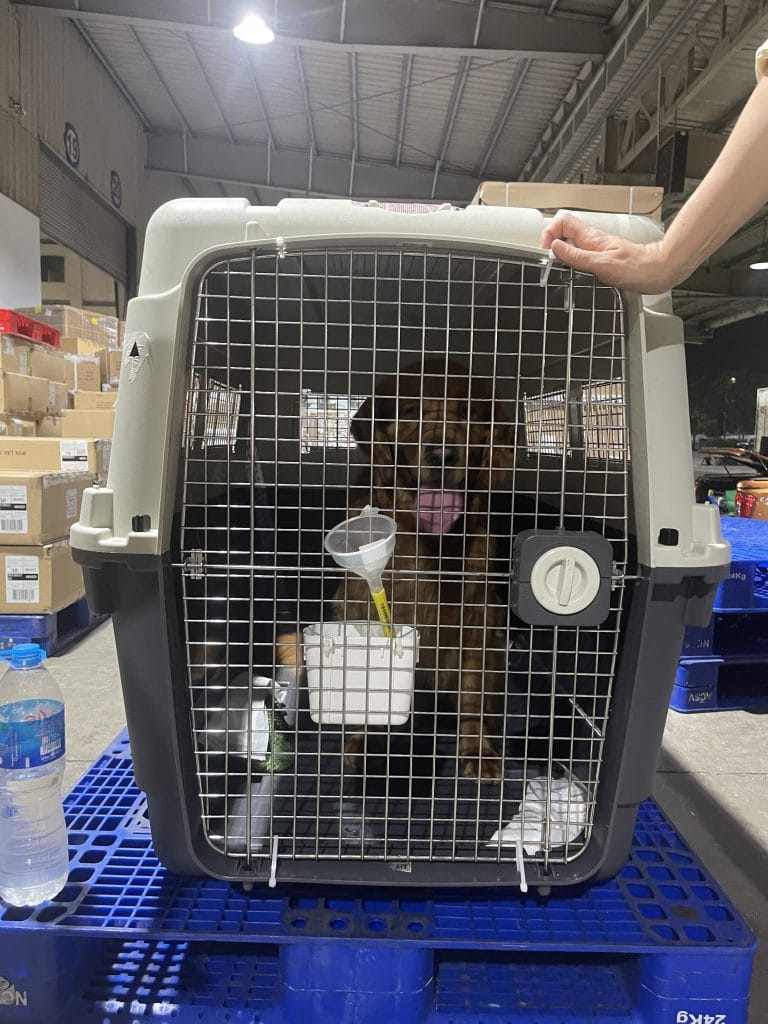
- Use the actual travel crate: for cats flying in the hold, the training has to happen in the IATA-standard crate, not in a soft bag.
Daisy works to a six-week conditioning schedule for every pet. Cats, especially those that already fear the carrier, often need longer, so start as soon as the move is confirmed. The step-by-step method is in our crate training timeline for pets.
Cabin or Hold for a Cat
Most cats are small enough to fly in the cabin, which keeps them at cabin temperature and close to their owner. Whether that is possible depends on the airline and the destination, not on the cat. Airlines set a combined weight limit for pet and carrier—Korean Air 7 kg, Turkish Airlines and Etihad 8 kg—and some routes have no cabin pet service at all. Several countries accept pets only as manifest cargo, whatever their size. The options are compared in where pets fly on an airplane.
For the cabin, IATA’s cabin guidance asks for a leak-proof, escape-proof carrier with ventilation on all sides, large enough for the cat to stand, turn and lie down. A soft carrier squeezed under a seat can lose ventilation and trap heat. The carrier must stay closed for the whole flight.
Getting Through Airport Security With a Cat
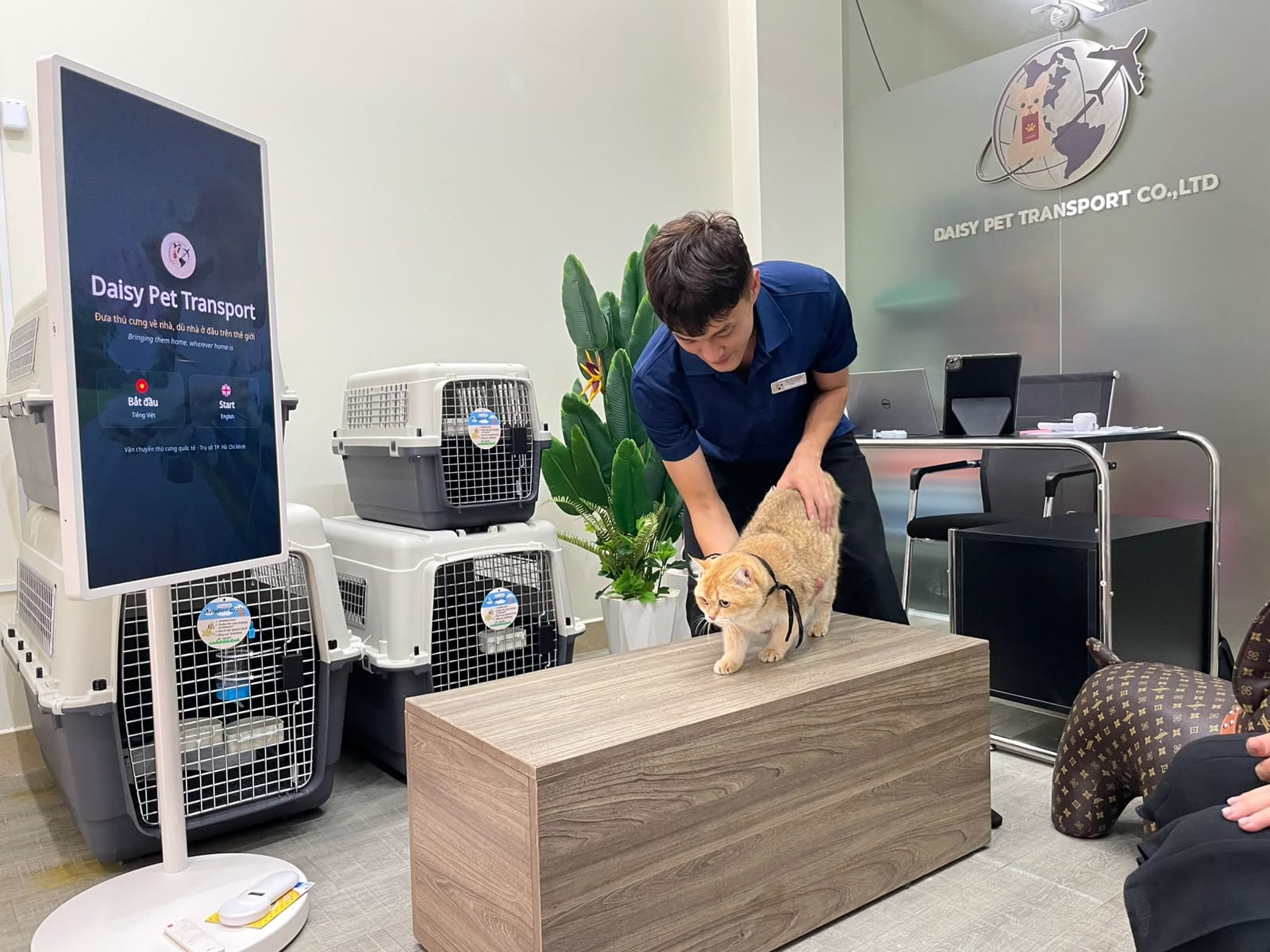
A cat flying in the cabin goes through passenger security, and this is where escapes happen. Under the US TSA procedure, which many airports follow in similar form, the owner takes the cat out of the carrier just before screening, the empty carrier goes through the X-ray, and the owner carries the cat through the metal detector. Owners of nervous animals can ask for a private screening room, where the cat leaves the carrier behind a closed door.
Fit a snug harness before leaving home and hold the cat firmly at the checkpoint. Procedures differ between airports, so check the departure airport’s process before the travel day rather than at the checkpoint.
Food, Water and Toileting on the Journey
IATA’s cabin guidance suggests a light meal at least two hours before the flight. Daisy’s own timeline is stricter—the last full meal about 12 hours before, no solid food in the last four to six hours, and small sips of water close to departure—to keep the stomach light without dehydrating the cat. The full timeline is in the pre-flight feeding guide.
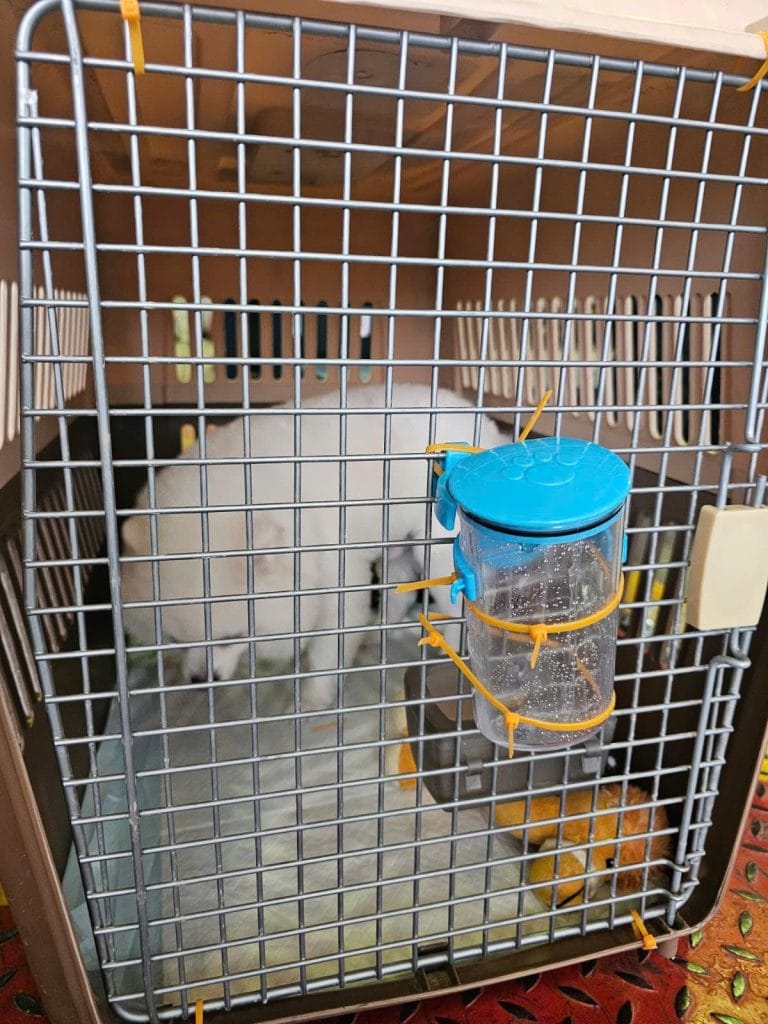
IATA also requires absorbent bedding in the carrier, and the carrier must contain any mess. A thick absorbent pad with a spare underneath works better than loose litter, which shifts and spills.
The difference from dogs comes after landing. A cat that refuses food for several days can develop hepatic lipidosis, a serious liver condition, and overweight cats are at higher risk. If a cat is not eating after arrival, call a vet promptly. What to watch for is covered in pet care after a long flight.
Reading Stress in a Cat
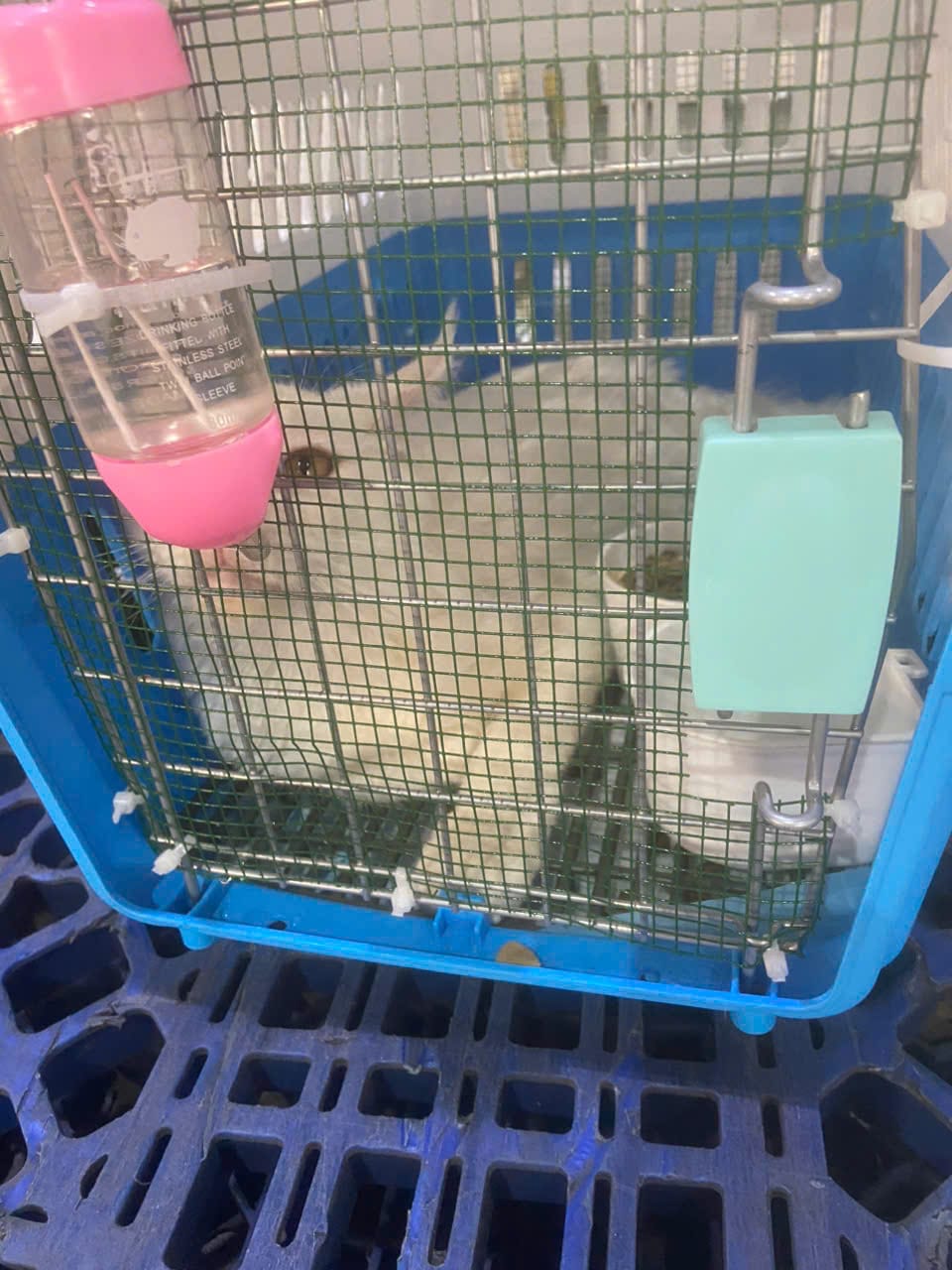
Because a stressed cat often goes still rather than noisy, the signs are easy to miss: crouching low at the back of the carrier, wide pupils, ears flattened, refusing food and treats, or not grooming. A cat that freezes is not relaxed. It is coping in the only way it can.
Hiding helps cats. In a study of shelter cats, those given a hiding box showed lower stress scores and recovered faster than cats without one, and IATA notes that animals prefer dim light. Partly covering the carrier with a light cloth, leaving ventilation clear, gives the cat a similar sense of cover. More on recognising and managing fear is in our guide to managing pet anxiety during travel.
Pheromones, Music and Medication
Several products promise a calmer cat. The evidence behind them is thinner than the marketing.
- Synthetic pheromones: a systematic review in the Journal of the American Veterinary Medical Association in 2010 found insufficient evidence that they reduce stress in cats. They are harmless as an extra, not a solution.
- Music for cats: small studies found that cats pay more attention to music composed for them, and that cats hearing it during vet visits had lower stress scores. Those studies took place at home and in clinics, not in aircraft, so it is best used during carrier training.
- Sedation: IATA advises against sedating cats for travel, as sedatives reduce an animal’s ability to cope, and airlines may refuse an animal known to be sedated. Some vets prescribe anti-anxiety medication for very fearful cats; that decision belongs to the vet, and the airline must be told. Read why sedation is avoided before flights.
Breeds That Need Extra Checks
Flat-faced cats—Persian, Exotic Shorthair and Himalayan, and on some airline lists British Shorthair and Scottish Fold—face the same airway and heat limits as flat-faced dogs, and airline rules for them differ from carrier to carrier. Those rules are explained in flying a flat-faced dog or cat.
Hairless cats such as the Sphynx lose heat faster than coated cats, so warmth during the journey needs planning. Their hearts deserve attention too: a 2024 study of apparently healthy Sphynx cats in New Zealand found hypertrophic cardiomyopathy in 40% of them, without outward signs.
For breeds like this, a heart assessment is worth discussing at the fit-to-fly vet check, well before the route is booked.
Carrier training, food, stress and breed checks are the cat-specific parts of a wider set of welfare decisions, gathered in our pet travel safety and welfare guide.
Frequently Asked Questions
How long before a flight should I start training my cat with the carrier?
As early as possible. IATA asks for familiarisation well before the journey without setting a number of weeks. Daisy uses six weeks as the baseline for all pets, and cats that already fear the carrier often need longer.
Can a cat fly in the cabin?
Often, yes, if the airline offers cabin pet service on the route, the cat and carrier are within the weight limit, and the destination accepts pets in the cabin. Some countries accept pets only as manifest cargo.
Should a cat have a litter tray in the carrier?
No. IATA requires absorbent bedding and a carrier that contains any mess. A thick absorbent pad works better than loose litter on a flight.
Is it safe to sedate a cat for a flight?
IATA advises against it, because sedatives reduce a cat’s ability to cope with stress, and airlines may refuse a sedated animal. Any medication should be decided by a vet and declared to the airline.
Last updated 18 Oct 2026
Compiled by our specialists from the regulations in force on the date above, for reference only. Rules may change after this date. Please verify with the competent authorities or contact us for the most accurate information.
Official sources cited in this guide
- IATA’s cabin guidanceiata.org
- pmc.ncbi.nlm.nih.govpmc.ncbi.nlm.nih.gov