If you have been searching online for Malaysia pet import regulations, you have likely encountered conflicting government summaries and outdated checklists. Most pet owners assume that shipping a dog or cat internationally is a matter of simple paperwork—it is not. In practice, bringing your pet to Malaysia from Vietnam is a rigorous, dual-tier compliance exercise that requires absolute operational control to navigate successfully.
The Department of Veterinary Services (DVS) Malaysia and the Malaysian Quarantine and Inspection Services (MAQIS) enforce strict biosecurity protocols. For pets arriving from Non-Scheduled Countries—which includes Vietnam—mandatory quarantine is a non-negotiable legal requirement. This guide outlines the exact compliance framework and ground execution steps needed to secure your pet’s entry for 2026. For the complete country-level roadmap, see our Malaysia Pet Relocation Guide.
Strategic Overview: Scheduled vs. Non-Scheduled Compliance
Malaysia classifies countries of origin based on their historical rabies-free status. While Scheduled Countries (such as Singapore, Australia, and the UK) enjoy streamlined entry pathways, Non-Scheduled Countries must satisfy extensive biosafety standards. When relocating a pet from Vietnam to Peninsular Malaysia, you don’t pick an airline first—you establish the biosafety architecture first, then align the logistics.
Below is the standard protocol blueprint required for pets imported into Peninsular Malaysia (Kuala Lumpur) for 2026:
| Compliance Component | Peninsular Malaysia Standard Requirement | Operational Significance |
|---|---|---|
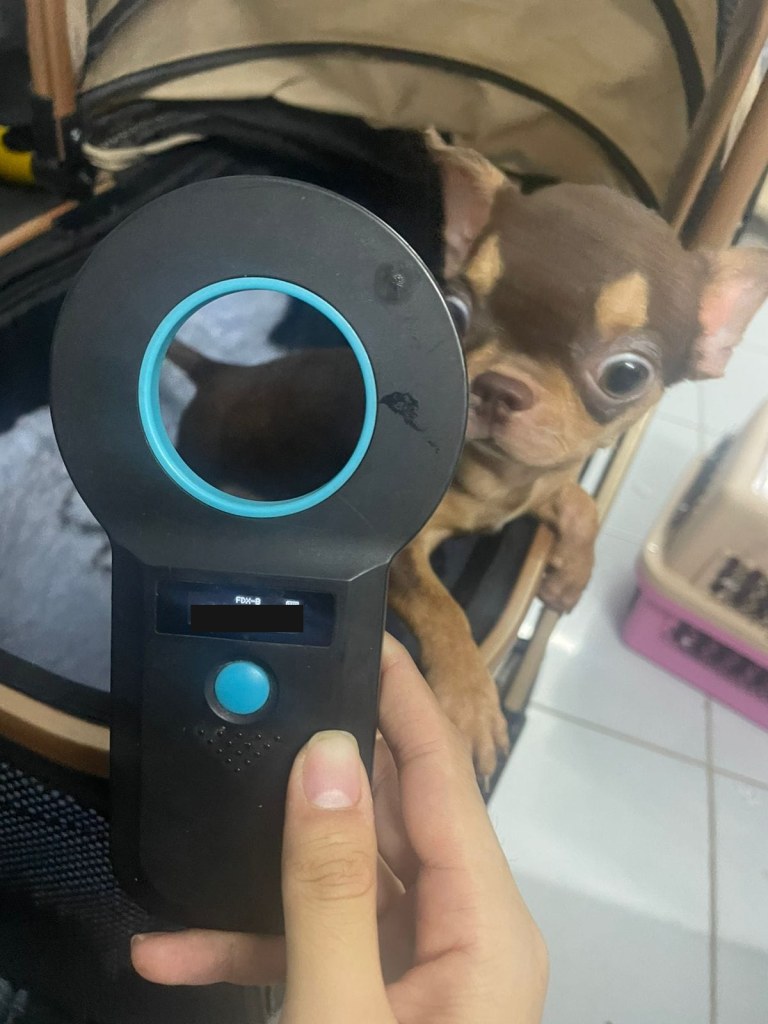
| ISO Microchip | ISO 11784/11785 compliant, 15-digit non-encrypted. | Must be implanted prior to any official diagnostics or vaccines. |
| Rabies Vaccine | Inactivated or recombinant vaccine, administered 30 days to 12 months pre-flight. | Core document verification check by MAQIS on arrival. |
| Core Vaccines | DHLPP/DHLP (dogs) and FVRCP (cats) up to date. | Prevents biological cross-contamination during quarantine. |
| RNATT / Titer Test | Optional but highly recommended (neutralizing antibody titer ≥ 0.5 IU/mL). | Acts as a powerful risk control asset during DVS document vetting. |
| Import Permit | Issued by DVS/MAQIS via the e-Permit online system. | Legally required by air carriers before boarding is authorized. |
| Quarantine Booking | Mandatory 7-day stay at KLAQS (KLIA). | Required to obtain the import permit from DVS. |
Moving a pet the other way, from Malaysia to Vietnam? The export steps are in our step-by-step guide from Malaysia to Vietnam.
The 6-Phase Execution Protocol for Vietnam to Malaysia Relocation
To keep the transition smooth and avoid problems at the border, every relocation should follow this timeline:
Phase 1: ISO Microchip Implantation & Primary Vaccination
Before any vaccine is drawn, your veterinarian must implant a 15-digit Pet Microchip conforming to ISO standards 11784/11785. The microchip number serves as your pet’s permanent legal identity — note that chips beginning with the digits “999” are excluded and will not be accepted by DVS/MAQIS. The sequence of events is critical—if a rabies vaccine is administered before the microchip is officially registered in your pet’s medical record, the DVS and MAQIS will declare the vaccine invalid. Your pet will then be forced to undergo a full revaccination cycle, delaying your departure by at least 30 days.
Phase 2: Complete Rabies & Core Vaccination Regimen
Once the microchip is active, your pet must receive an approved inactivated rabies vaccine. For puppies and kittens, this must occur at a minimum age of 12 weeks. Alongside the rabies immunization, dogs must be vaccinated against canine distemper, adenovirus, parvovirus, and parainfluenza (DHLPP). Cats must receive their feline panleukopenia, calicivirus, and rhinotracheitis (FVRCP) shots. The vaccine certificates must bear the exact microchip number, date of administration, batch number, and veterinarian’s signature.
Phase 3: Rabies Neutralizing Antibody Titer Test (FAVN)
While the DVS does not strictly mandate a titer test for Peninsular Malaysia, operating without one is a significant operational vulnerability. By conducting a Rabies Titer Test (FAVN/RNATT) at an approved laboratory and achieving a titer of ≥ 0.5 IU/mL, you present an indisputable biosafety profile to DVS officers. This proactively eliminates delays during permit vetting and acts as a biological shield for your pet’s record.
Phase 4: MAQIS Import Permit & KLAQS Quarantine Reservation
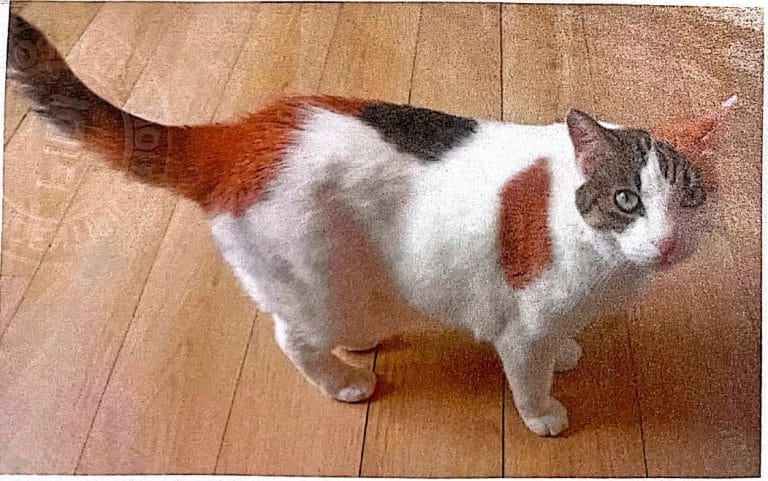
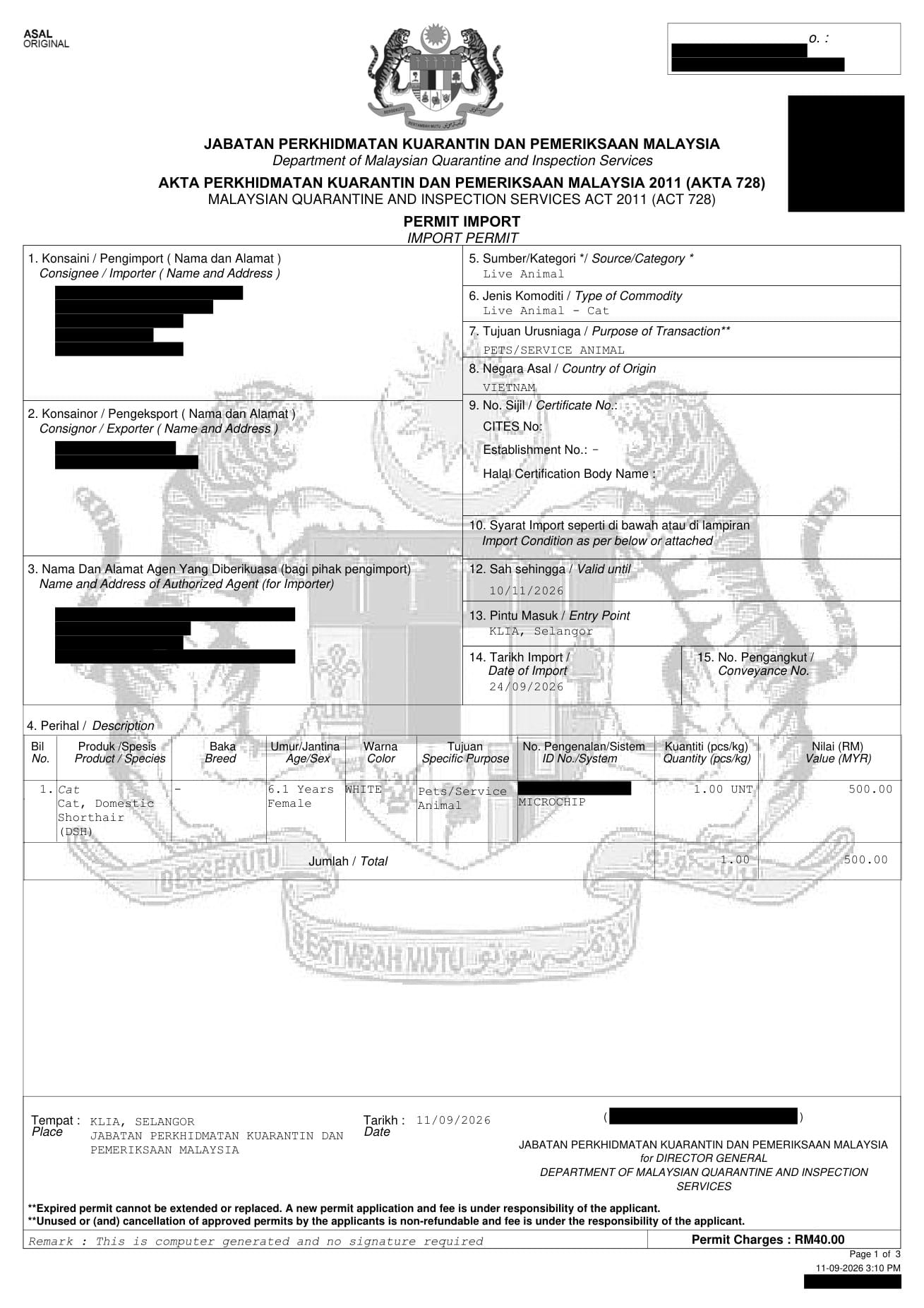
Because Vietnam is a Non-Scheduled country, all pets entering Malaysia via Kuala Lumpur International Airport (KLIA) must undergo a minimum of 7 days of mandatory isolation. This takes place at the Kuala Lumpur Animal Quarantine Station (KLAQS) located directly at KLIA. To obtain your import permit, you must first book and pay for a quarantine slot at KLAQS. This booking confirmation must be uploaded to the DVS e-Permit portal alongside your pet’s medical documents. The import permit is valid for approximately 60 days from the date of issue (confirmed from a real issued permit: 7 July 2026 to 5 September 2026) and is legally required for customs clearance. In another real case, a calico cat named Sushi switched from an in-cabin booking to checked baggage after her travel bag turned out too small — see the full case study for how her import permit and quarantine assignment played out.
Phase 5: Veterinary Health Certificate & Export Inspection
Within 7 days of departure, your pet must be inspected by a government-endorsed veterinarian at the Department of Animal Health (DAH) in Vietnam. The vet will verify that your pet is clinically healthy and free from infectious diseases. At this stage, your pet must also receive official treatments for internal parasites (nematodes and cestodes) and external parasites (ticks and fleas). The DAH will then issue the official Veterinary Health Certificate, which must accompany your pet during transit. If you still have specific questions about this process, our Malaysia Pet Shipping FAQ covers the ones we hear most often.
Phase 6: IATA Crate Selection & Air Freight Logistics
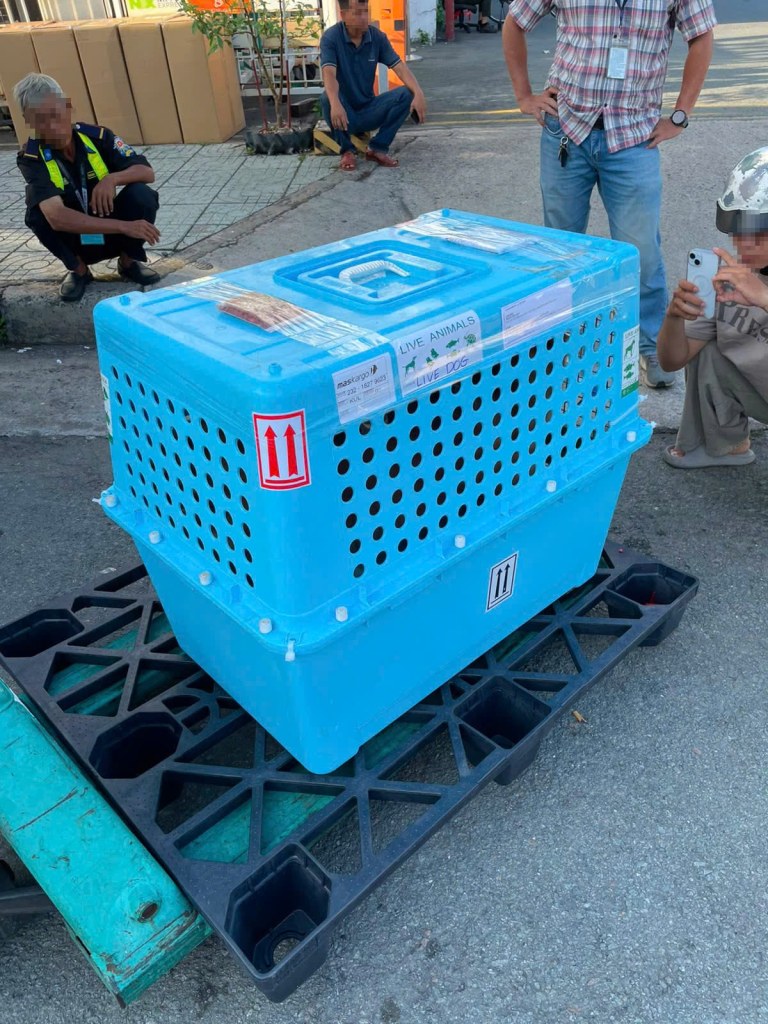
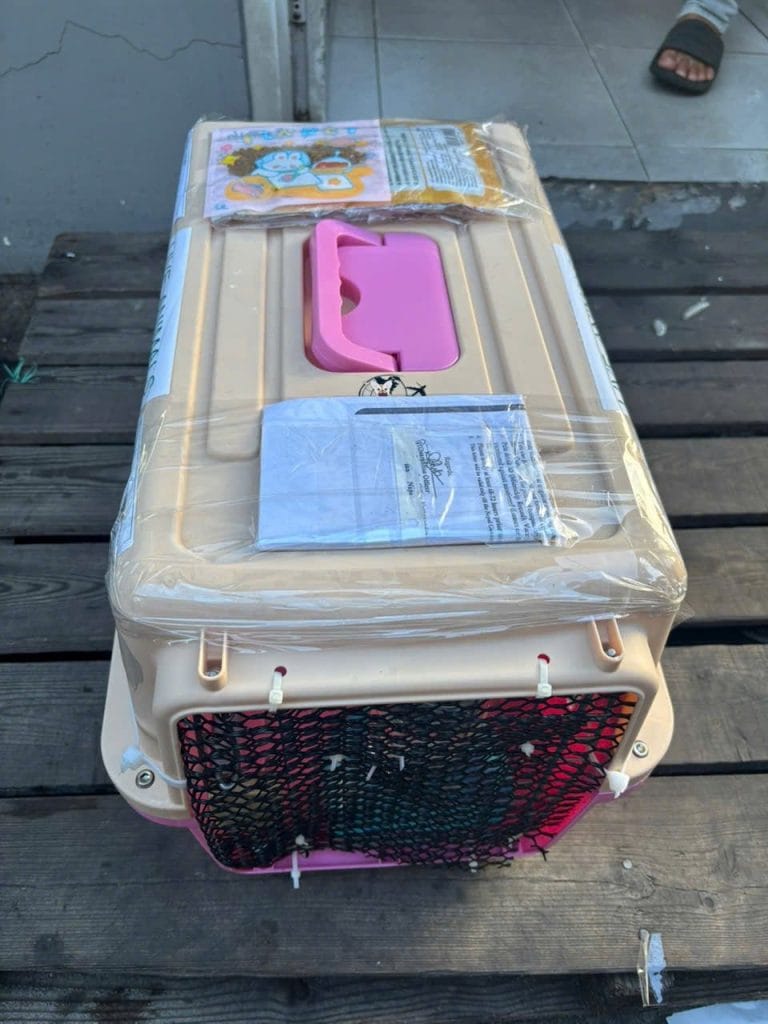
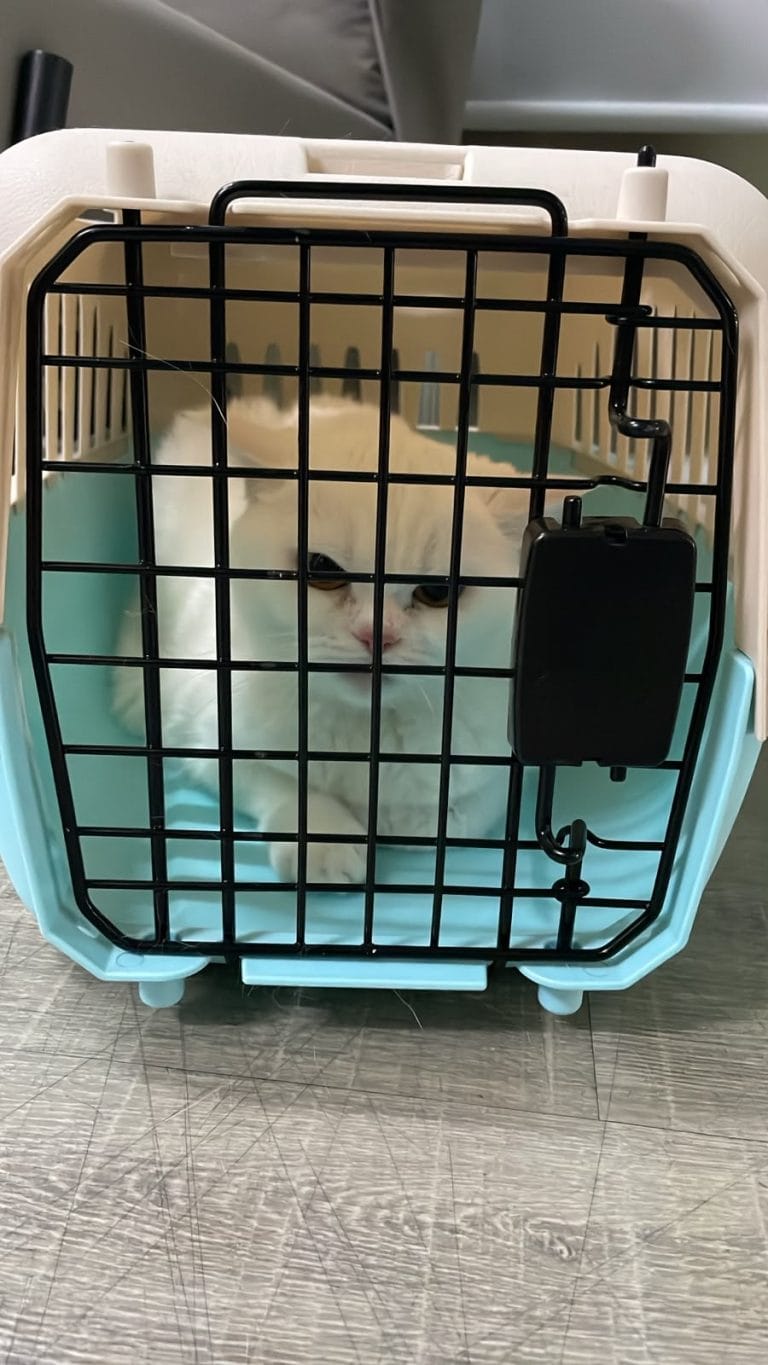
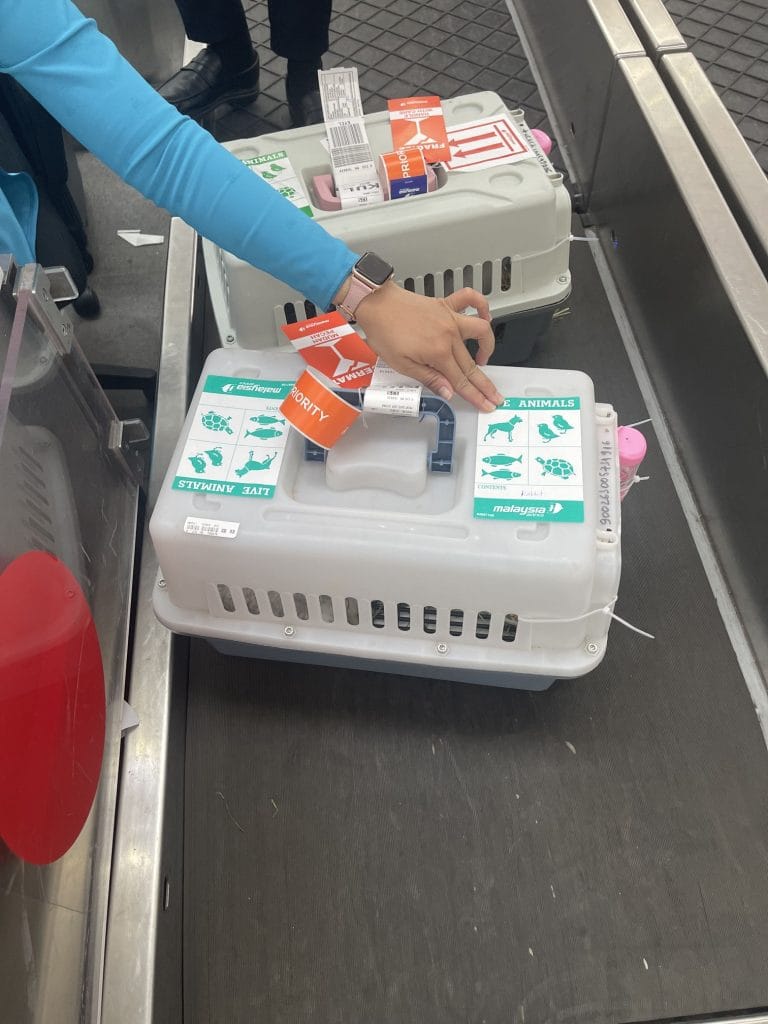
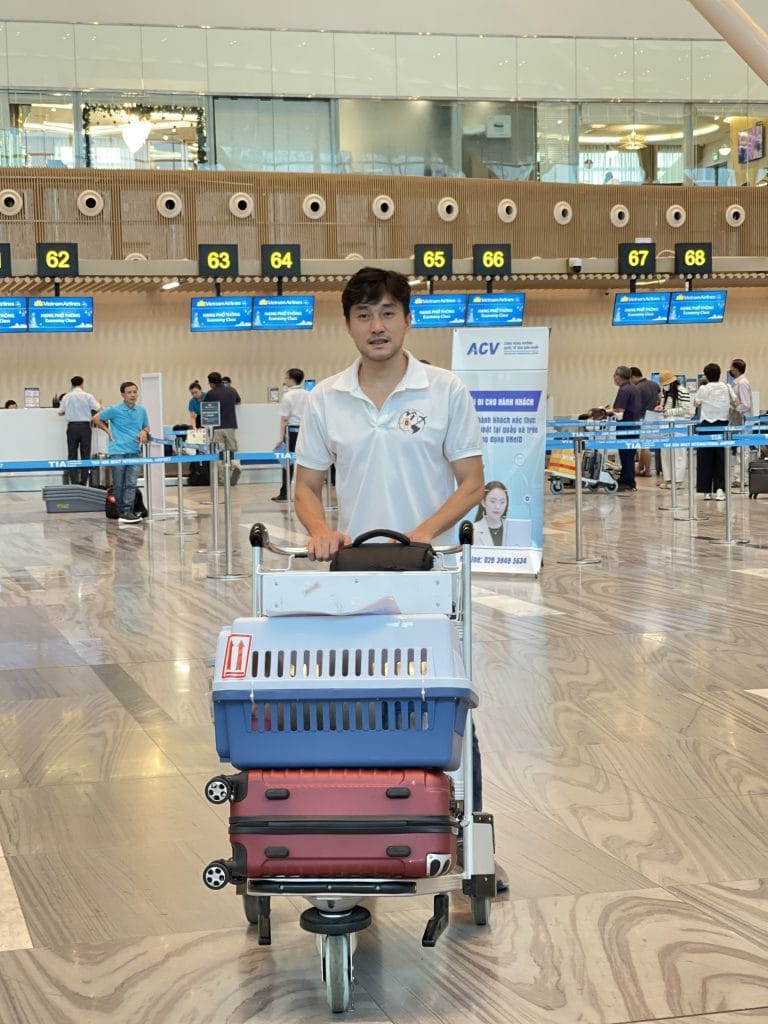
Your pet must travel in a container that strictly complies with the IATA Live Animals Regulations (LAR). The container must be large enough for your pet to stand, turn around, and lie down in a natural position. Malaysian law itself does not dictate a transport mode — that decision rests with your chosen airline, not DVS/MAQIS. In practice, airlines route pets from Vietnam to Malaysia through one of two hold methods: as Checked Baggage (AVIH) when the combined weight of pet and crate is under 32 kg, or as Manifest Cargo (unaccompanied air freight under an Air Waybill) for larger pets or unaccompanied shipments. Vietnam Airlines is an exception, offering a limited in-cabin option for pets under 6 kg combined weight — see our Airlines Pet Shipping to Malaysia guide for the full carrier comparison. Whichever method you use, pets are monitored in climate-controlled conditions throughout transit. Ensure you select an airline with an established live animal division, like Malaysia Airlines Cargo (MASkargo) or Vietnam Airlines.
For a detailed breakdown of all associated costs and cargo tariffs, refer to our comprehensive guide on Pet Relocation Cost Malaysia to accurately plan your relocation budget.
Restricted and Banned Dog Breeds in Malaysia
Malaysia maintains a strict classification of restricted and banned dog breeds. Failure to comply with these breed-specific policies will result in immediate confiscation and deportation at KLIA:
- Banned Breeds (Absolute Import Prohibition): Pit Bull Terriers (including American Pit Bull Terrier and Staffordshire Bull Terrier), Akita, Dogo Argentino, Fila Brasileiro, Japanese Tosa, Neapolitan Mastiff, and American Bulldog. MAQIS will not issue an import permit for these breeds under any circumstances.
- Restricted Breeds (Conditional Import Approved): German Shepherd, Rottweiler, Doberman Pinscher, Bull Mastiff, and Bull Terrier. These breeds require written pre-approval from the Director General of DVS. Owners must submit specialized applications demonstrating socialization history, secure housing arrangements in Malaysia, and a commitment to strict muzzling in public spaces.
Before proceeding, we highly recommend reading our specialized deep-dive on Banned Dog Breeds in Malaysia to verify your dog’s classification and learn how to secure DVS pre-clearance.
Why Professional Compliance Management is Critical
A single compliance error—such as a mismatch between the microchip scan and the health certificate, or an expired vaccine—can lead to immediate quarantine extension (up to 6 months) or deportation at KLIA. Coordinating with multiple government agencies (DAH Vietnam, DVS Malaysia, MAQIS, and maskargo) requires professional oversight.
Daisy Pet delivers a secure, risk-controlled transition for your family:
- KLAQS Placement: We request KLAQS quarantine reservations directly with MAQIS and book early for climate-controlled cabins for your pet during high-demand seasons.
- End-to-End Customs Clearance: Our agents manage the ground transition at KLIA, supervising customs clearance, physical veterinary inspection by MAQIS, and safe transfer to KLAQS.
- Residency Delivery: Upon successful completion of the 7-day quarantine, we coordinate delivery from KLAQS to your home anywhere in Malaysia.
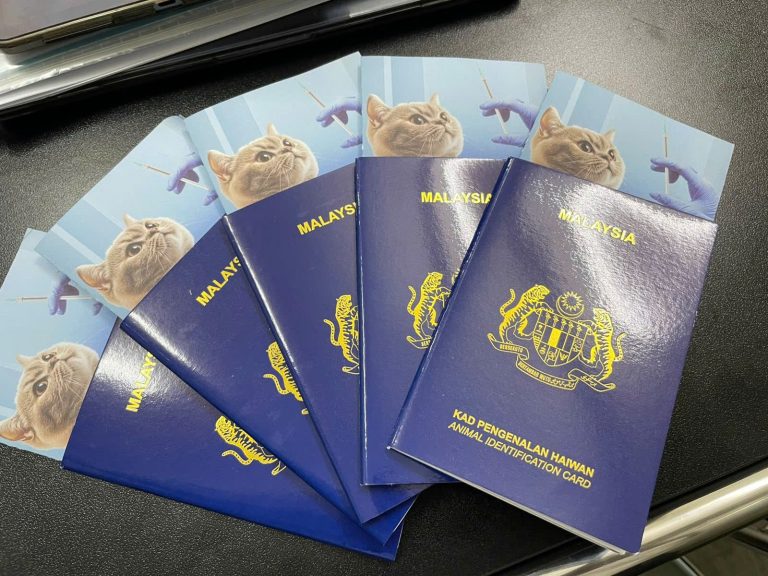
After your pet settles in Malaysia, register it for the Malaysian Pet Passport early. Since 1 January 2024, every dog and cat leaving Malaysia must have one. See how to get a Malaysian Pet Passport.
Last updated 18 Oct 2026
Compiled by our specialists from the regulations in force on the date above, for reference only. Rules may change after this date. Please verify with the competent authorities or contact us for the most accurate information.