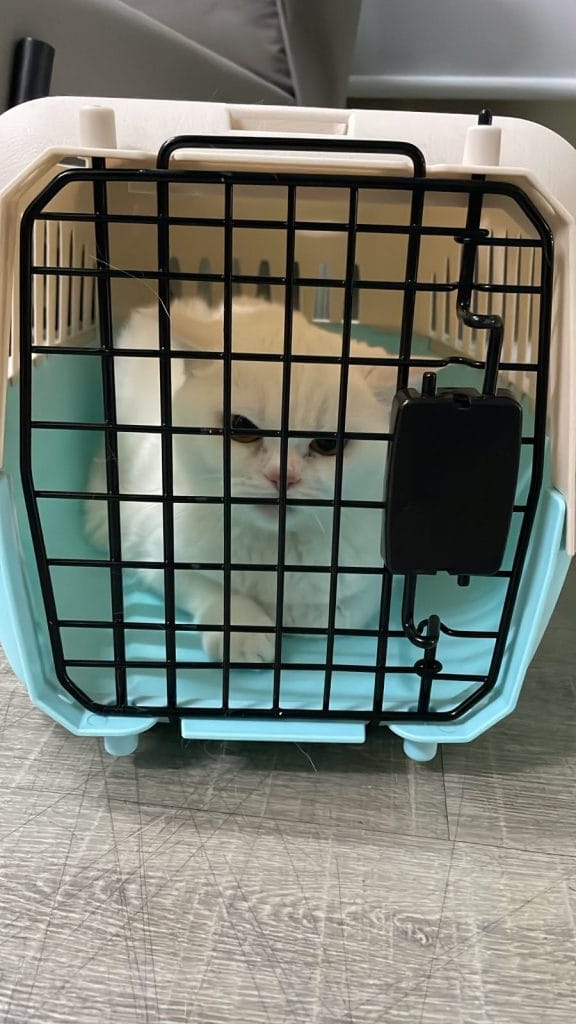
Most owners assume a cat flying to Malaysia has to go in the hold, because Malaysia Airlines—the first name that comes to mind on the Vietnam–Malaysia route—takes no pets in the cabin. Malaysia’s import rules don’t say that. They say nothing about cabin or hold, so the decision belongs to the airline. On 23 September 2026, Baby, a six-year-old white cat, flew from Ho Chi Minh City to Kuala Lumpur under the seat in front of her owner on Vietnam Airlines flight VN679—and almost everything that made it work happened in the 26 days before takeoff.
Meet Baby
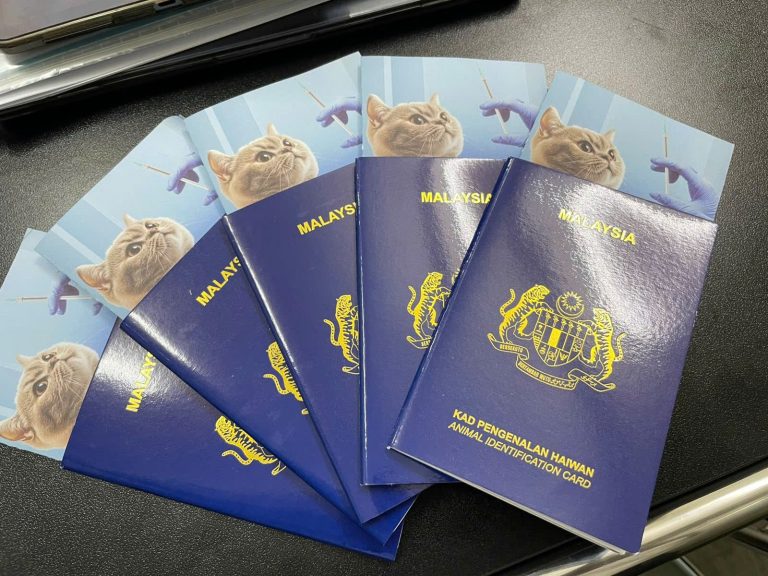
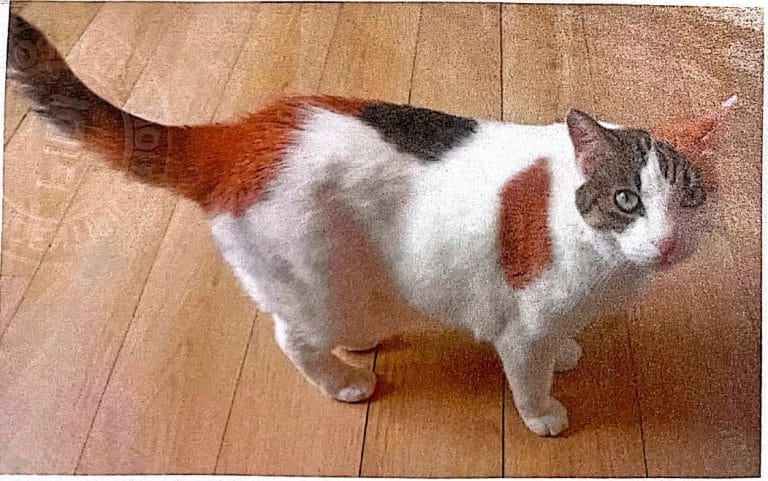
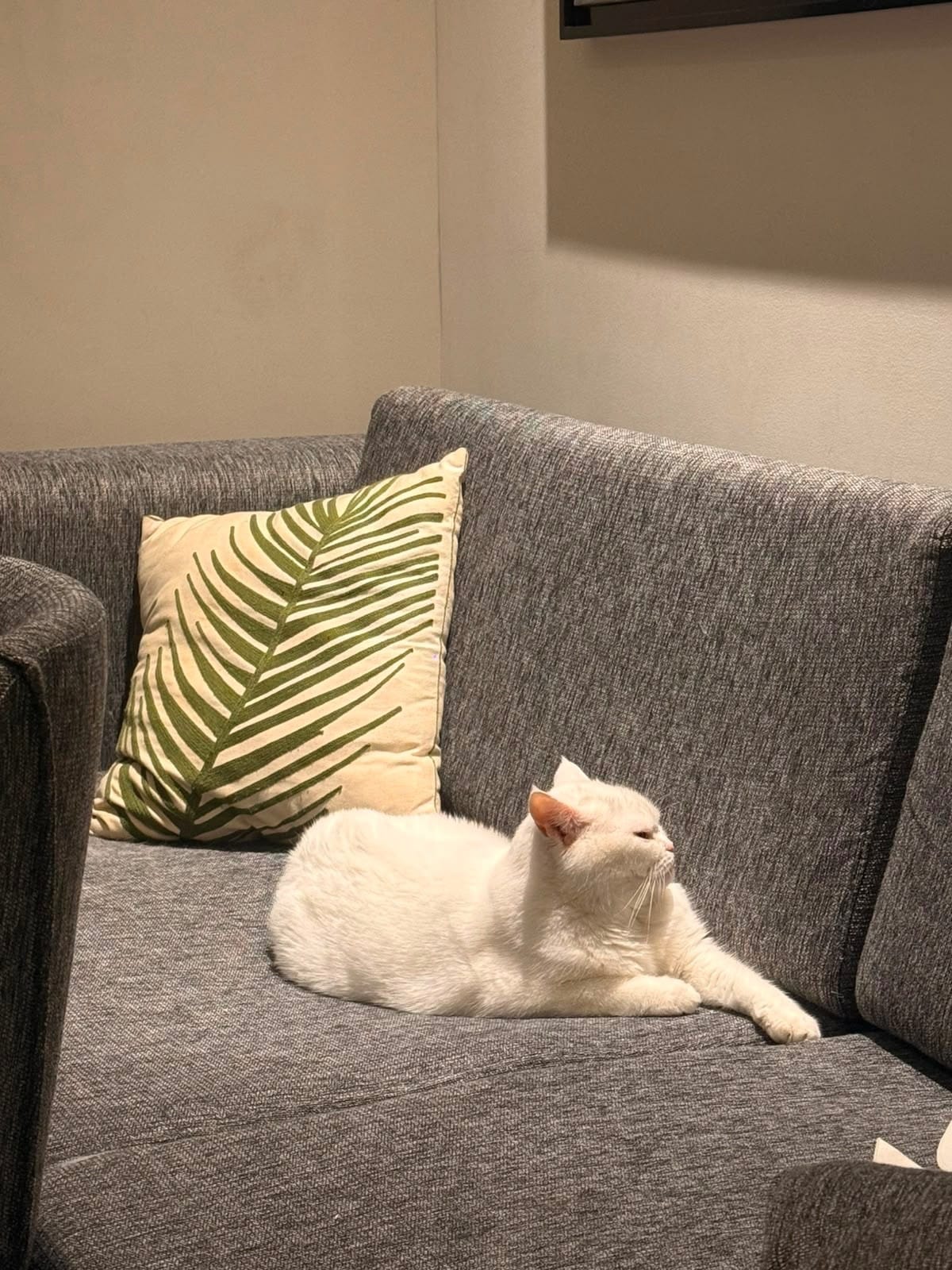
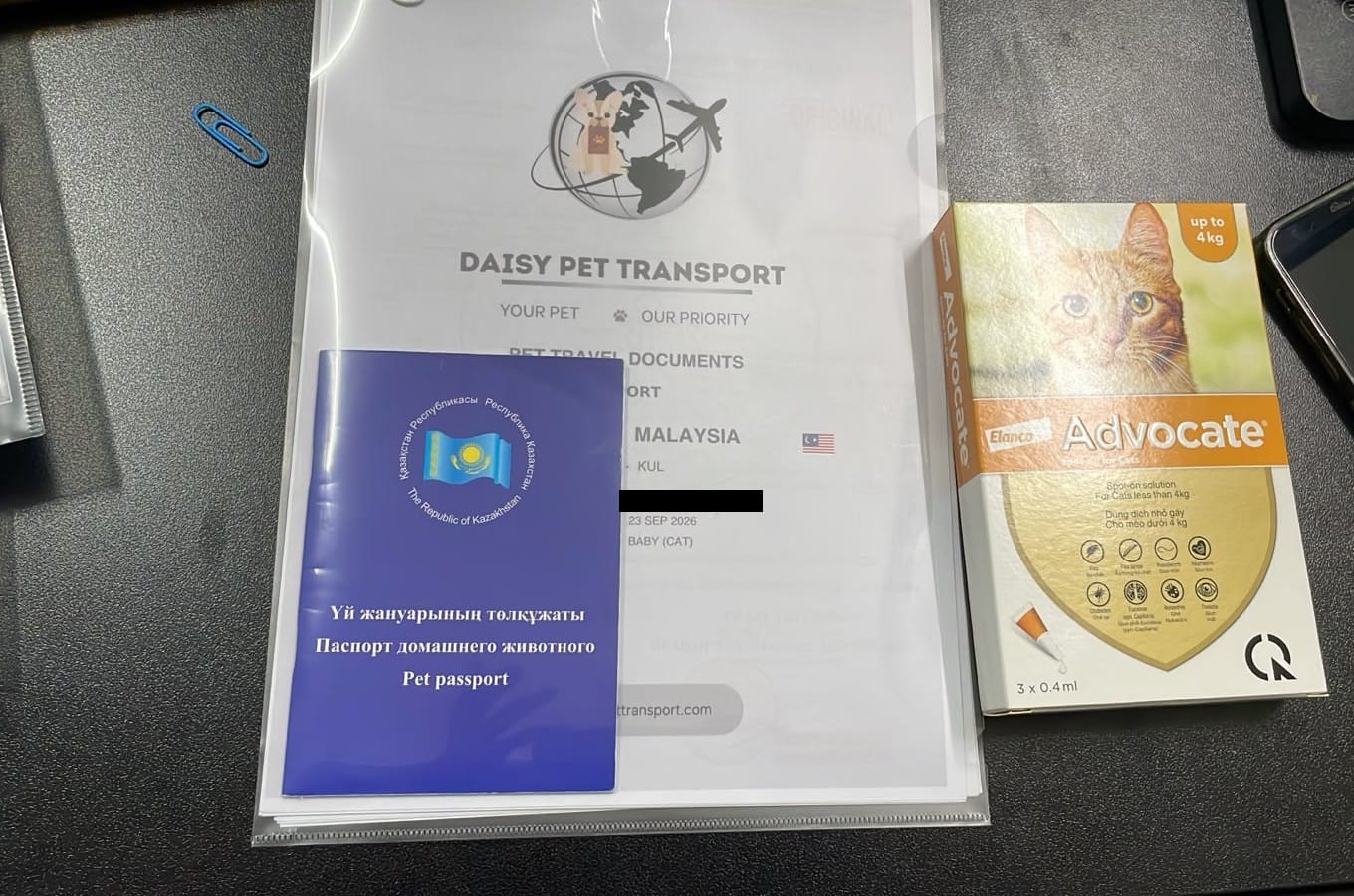
Baby was born on 10 August 2020, a female with a white coat. Her owner brought her pet passport to our office on 28 August: it already held a rabies vaccination from 2024, a rabies booster dated 21 August 2026, and a core feline vaccine dated 26 August. Her partner followed every step from the group chat we open for each case.
From those pages alone we could work out her earliest flight date. The rabies shot was dated 21 August, so she could travel after 22 September, and we told her owner that same evening. The rest of the route follows the official timeline from Vietnam to Malaysia.
Why the Cabin Was Possible on This Route
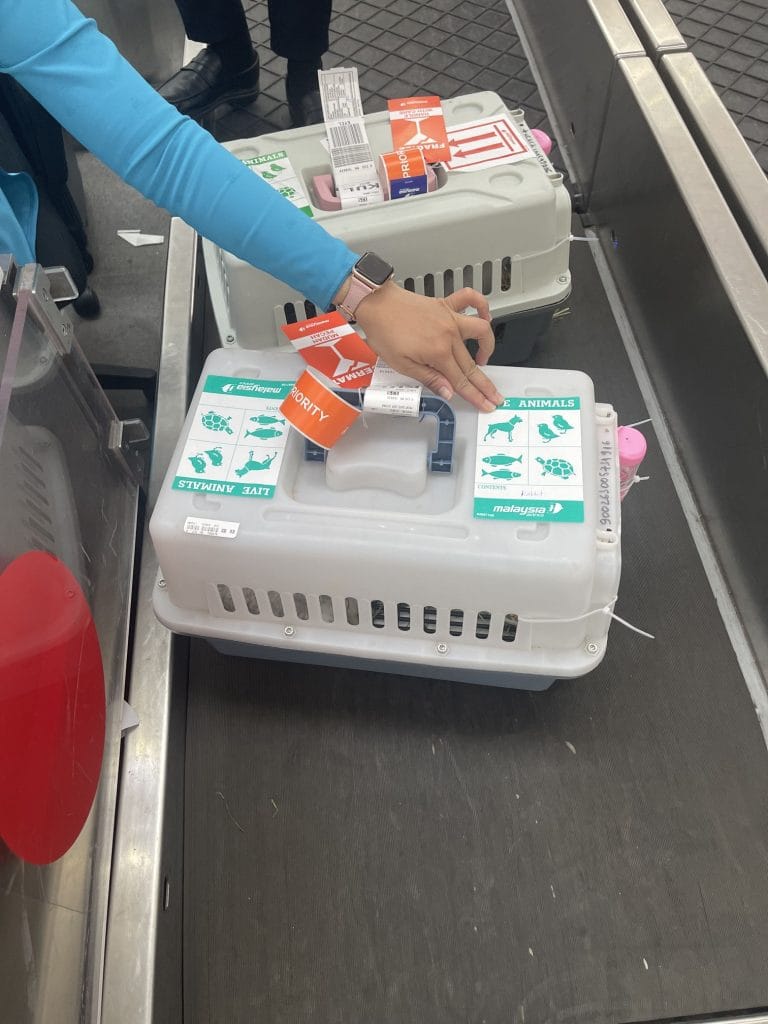
Malaysia’s import conditions require only that animals arrive by aircraft. The permit in Baby’s file says nothing about cabin, checked baggage or cargo. The limits come from airlines, and they differ: Malaysia Airlines carries no pets in the cabin on any route, while Vietnam Airlines does, for a cat whose weight plus carrier is under 6 kg and whose carrier measures no more than 35 × 30 × 20 cm.
We reserved Baby’s place on VN679, one of the airlines that carry pets to Malaysia, and had it confirmed on 9 September, two weeks out. The booking screen showed the line we wanted: pets transported as hand baggage, confirmed.
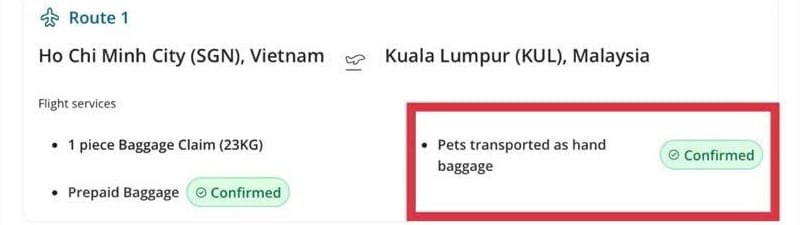
A confirmation made two weeks earlier did not settle it. On 22 September, the day before the flight, the airline was still verifying whether it could accept pets on VN679; if not, Baby’s flight would have moved to the 24th. At 13:57 it confirmed the flight as scheduled.
A Ticket Name That Didn’t Match the Passport
Baby’s owner sent us the draft itinerary before paying, as we had asked, and bought the ticket through an online travel agency on 2 September. The first name on the booking was one letter off from her passport. A pet travels on the ticket of the passenger escorting her, so the two names have to match exactly, and the correction had to go from the agency to the airline. It took until 7 September. In the meantime we kept the permit application moving on the original booking code and added the corrected e-ticket to the file as soon as it arrived.
The Microchip That Was Still on a Collar
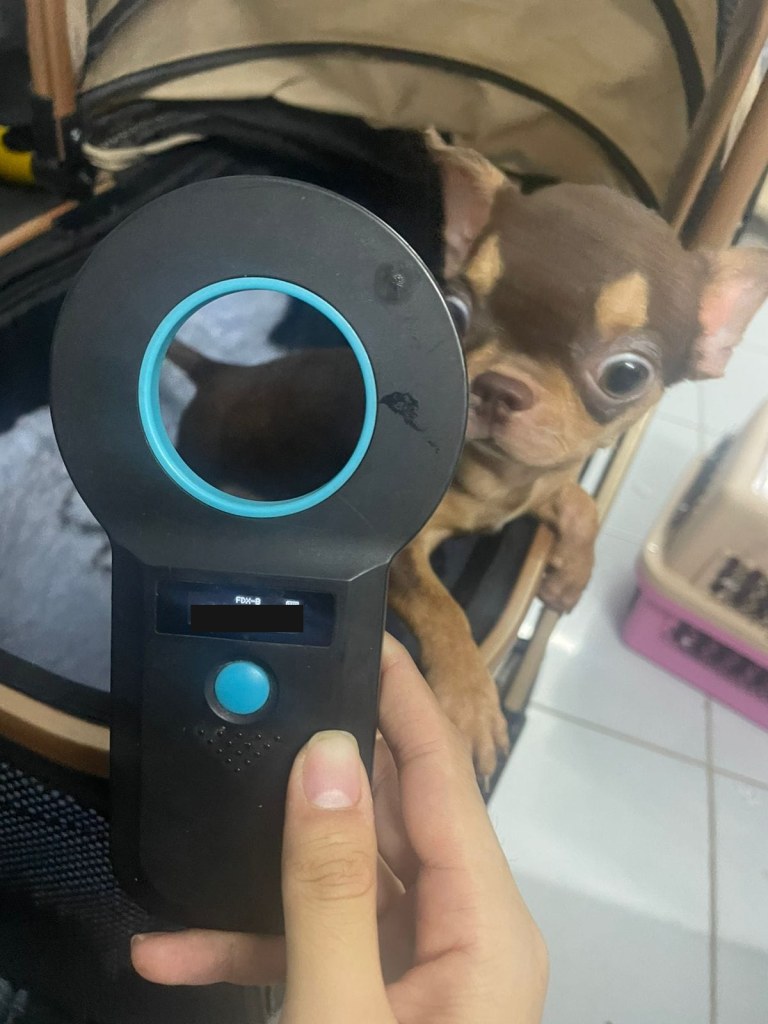
The conditions attached to Malaysia’s permit are specific: an ISO 11784/11785 microchip implanted under the skin, with chips starting 999 not accepted. Our guide to microchips for international travel explains why every other document in the file depends on it. On 21 September, the morning of Baby’s government inspection, our staff found that her chip was not implanted; it had been fitted to a collar instead. We told her owner plainly that arriving that way could put Baby’s entry at risk. The chip was implanted that afternoon, and when Baby came to our office the next evening we scanned it ourselves: readable and valid.
One Visit to the Government Vet, Then the Paperwork Was Ours
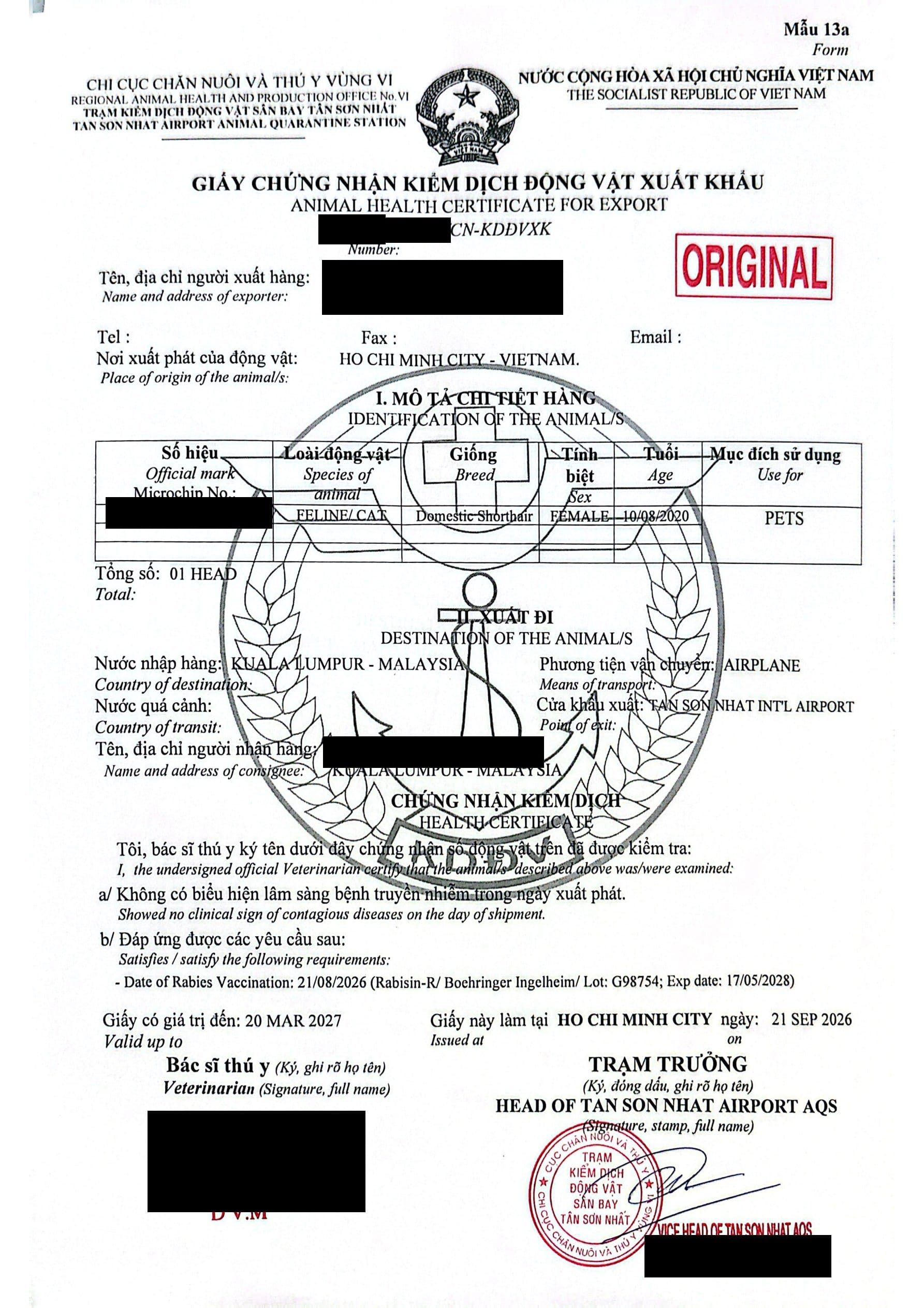
Baby went to Regional Animal Health Office No. 6 in Ho Chi Minh City once, at 9:30 on 21 September; we had told her owner to expect 1.5 to 2 hours. By 14:25 that afternoon the export application was approved. The export certificate, Form 13a, was issued by the Tan Son Nhat Airport Animal Quarantine Station and is valid until 20 March 2027. Malaysia’s own condition is tighter: a health examination within seven days before export, which a 21 September certificate satisfies for a 23 September flight. The animal health certificate guide walks through the same step for other routes.
The government vet had planned to give the parasite treatment at the inspection. To save Baby’s owner a second trip, we arranged for the medication and the treatment certificate to come to our office, and for the internal and external parasite treatment to be done there on 22 September instead.
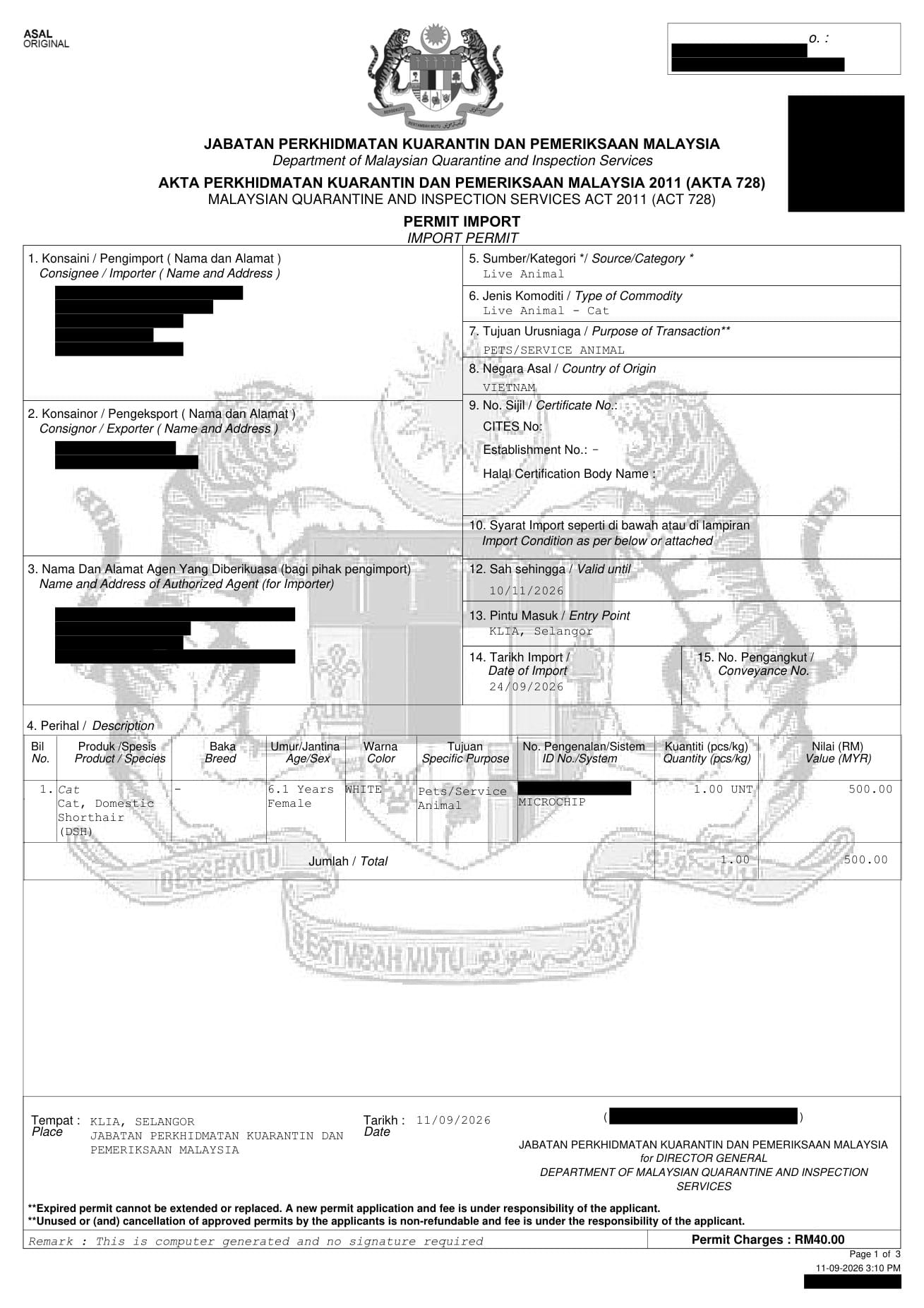
The Malaysian Side: Permit and Quarantine Room
Malaysian Quarantine and Inspection Services issued Baby’s import permit on 11 September. It is valid for 60 days, until 10 November 2026, and the permit charge was RM40. The importer named on it is a licensed agent in Malaysia, not Baby’s owner. The quarantine room was reserved on the same day. Under the permit’s conditions, Baby would be quarantined on arrival for at least seven days, a period Malaysia can extend case by case.
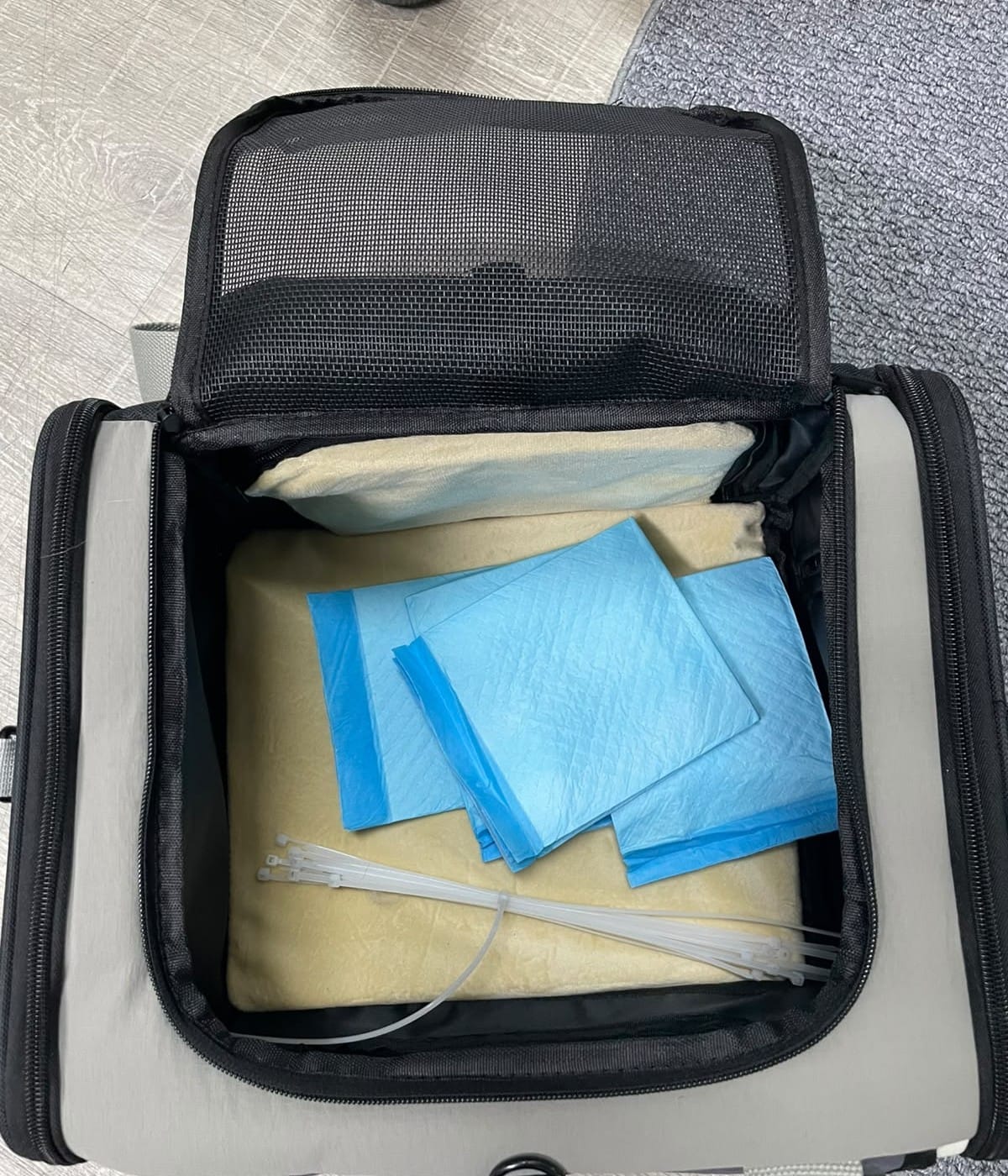
Packing the Carrier the Night Before
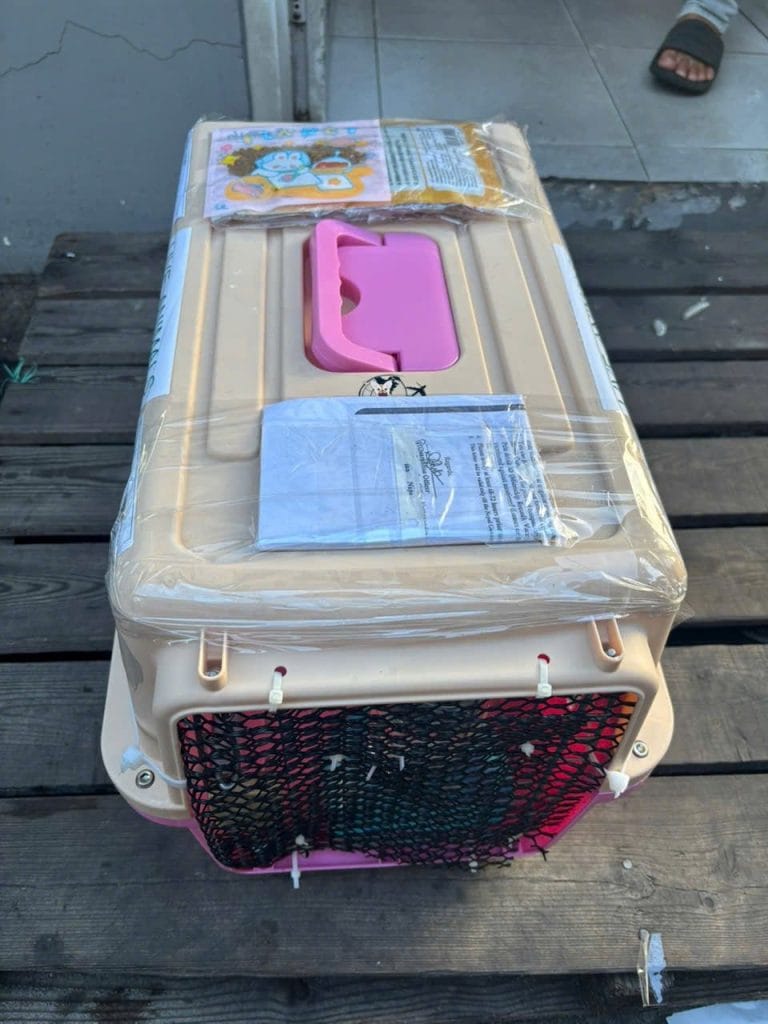
Baby’s owner came to our office on the evening of 22 September to collect the document set and have the carrier checked. We laid absorbent pads in the base and put spare cable ties inside.
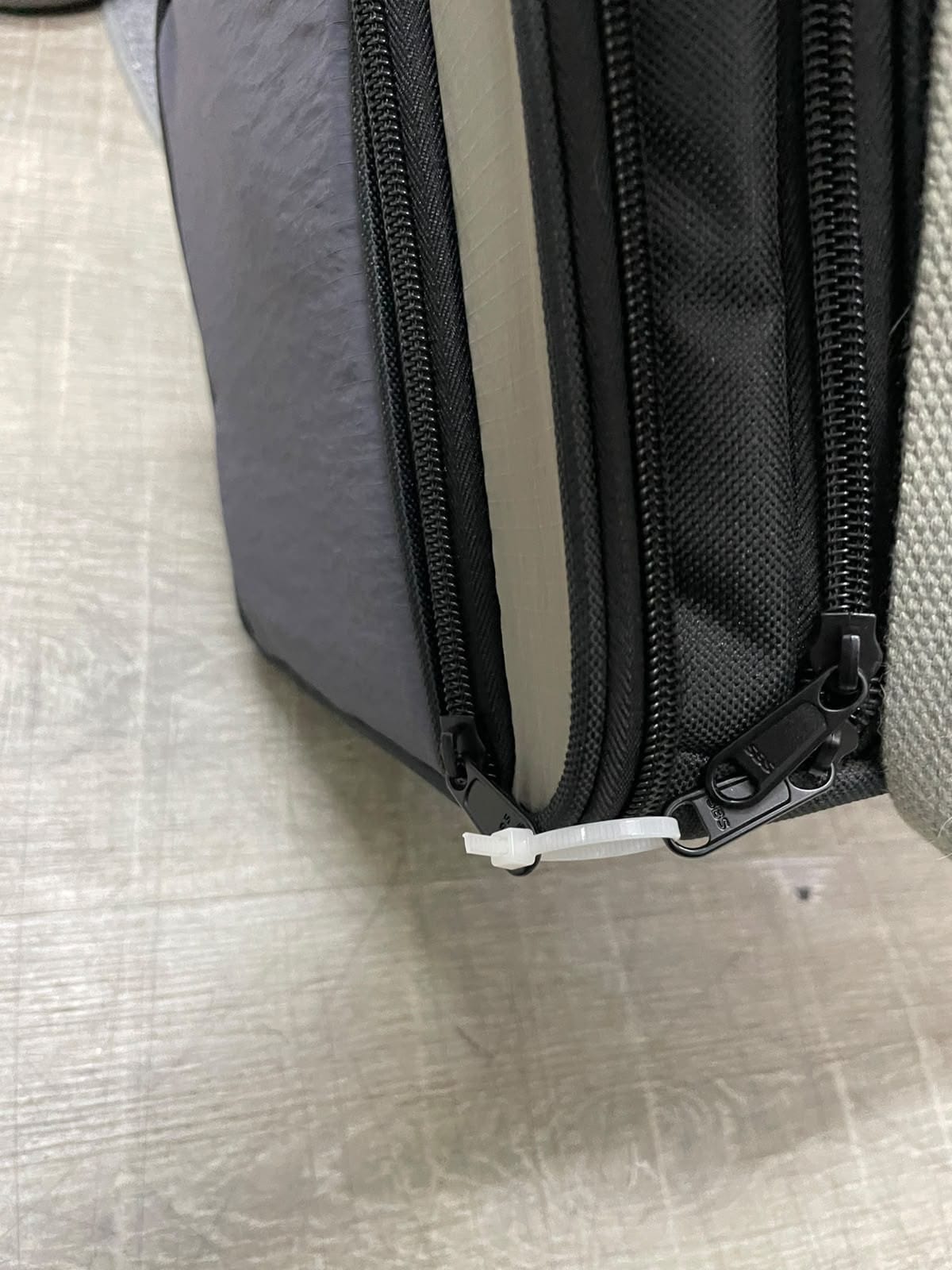
Then we fastened every zip pull on the sides of the bag with a cable tie and left only the top opening free, so Baby’s owner could place her inside at the airport and close it herself.
We gave three instructions for the airport: arrive three hours before departure, show the full set of original documents at the counter, and pay the airline’s pet fee directly at check-in. That fee sits outside our quotation because the airline collects it; the Vietnam Airlines fee schedule has the current figures, and on this booking it came to roughly USD 310–320.
Boarding Day
At 14:02 on 23 September we asked whether Baby had reached the airport. By 14:19 she had checked in, and her owner was walking through security to the gate for the 15:25 departure to Kuala Lumpur.
Landing at KLIA
The arrival procedure for a cat in the cabin is short, and our agent in Malaysia wrote it out the night before in the case’s group chat. Clear immigration, collect the luggage, then go to the quarantine office in front of carousel J and hand the officer the original health certificate, the vaccination card, the passport and the boarding pass. The officer copies the papers and returns the passport and boarding pass, and from that moment the owner is free to leave. Baby’s owner did not have to wait for the agent, who had already told the officer she was coming.
She handed Baby over on 23 September. Within about half an hour the agent reported clearance done, and a little over an hour later Baby was checked into her room at a private quarantine facility in Sepang.
Eleven Days in Quarantine
The agent sent a video after each day’s cleaning and feeding, and we passed on every question from Baby’s family, one of whom was in the UK for part of the stay. The first night, in the agent’s words, Baby was “a bit upset,” but she accepted clean water and food. A quarantine officer inspected on 24 September. By 27 September she was out of her carrier, and by 29 September the agent’s caption was “happy tummy.” We also offered to request one visit during the stay, which depends on government approval; with part of the family abroad, it wasn’t needed.
Under Malaysia’s quarantine rules, the stay is at least seven days, and Baby’s pick-up was set for 1 October, the eighth day. A family member’s travel pushed it to 4 October. Two details matter if that happens to you: a private facility charges for the extra nights and asks for payment before it releases the pet, and pick-up ends at 4 pm. Baby went home on 4 October, 11 days after landing, with her pet passport and clearance slip in the pocket of her carrier. “I have Baby with me now, and we’re on our way home,” her partner wrote.
What Baby’s Case Shows for Cabin Flights to Malaysia
- Weigh before you book: cat and carrier together must stay under 6 kg. A soft bag that looks right online can be too small for a full-grown cat, as Sushi’s case showed three days before her flight.
- Send the itinerary first: the draft ticket goes to your relocation team before you pay, not after.
- Match the passport exactly: one wrong letter in the first name sends the booking back through the agency and the airline.
- Chip under the skin: a chip on a collar is not an implanted chip.
- Ask the airline again the day before: a confirmation from two weeks earlier is not the last word.
- Keep the originals on you: the complete document set stays in your hands for the whole journey.
- Plan the pick-up date: a private quarantine facility bills extra nights and wants payment before release.
Published 5 Oct 2026