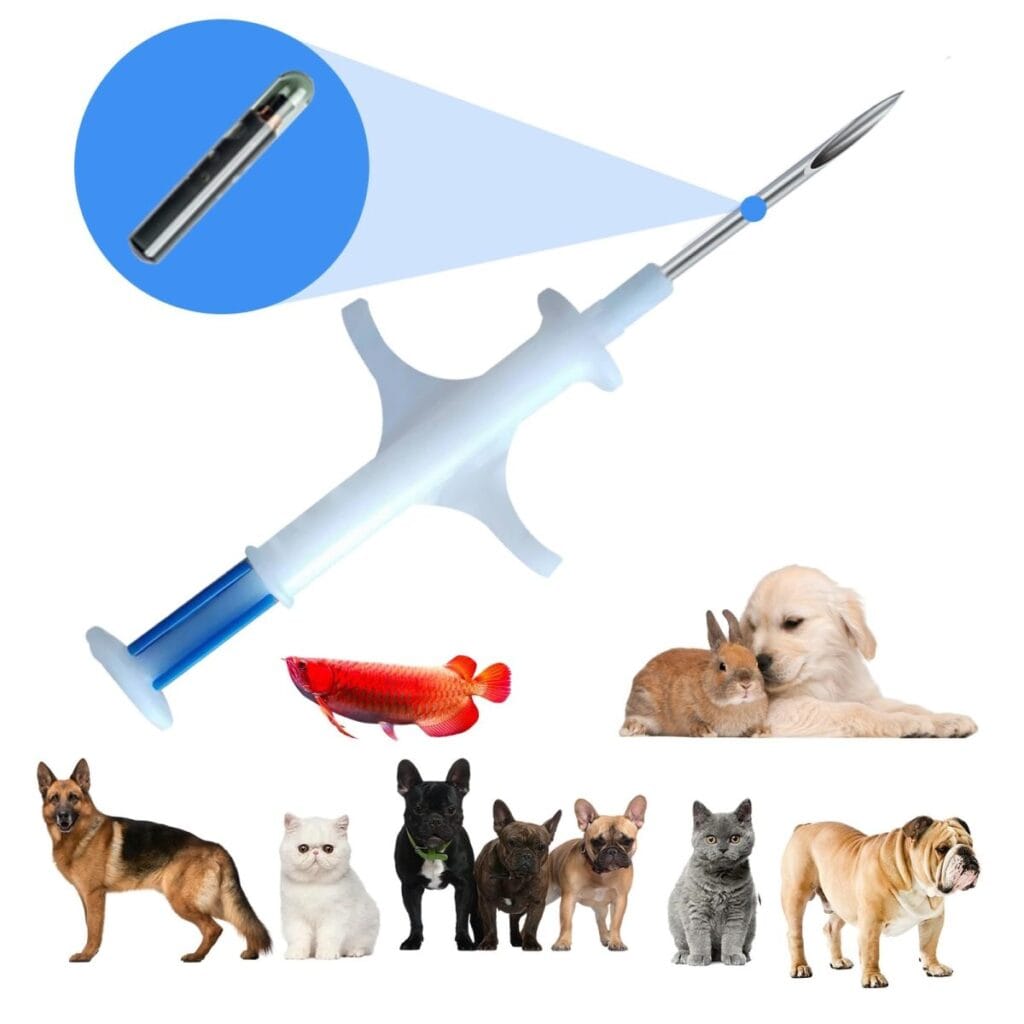
A pet microchip for international travel is an ISO 11784/11785 chip with a 15-digit number. It goes in before or on the same day as the rabies vaccine.
The same number then appears on every document in the file. Most problems come from three things: the wrong order, a chip that cannot be read, or one wrong digit on a page.
Quick answers about pet microchips for travel
- Which chip is accepted? An ISO 11784/11785 chip. Most destinations ask the owner to bring a reader for any other chip.
- Before or after the rabies vaccine? Before it, or at the same visit with the chip first. A vaccine given before the chip does not count.
- Where do I find the number? On the barcode sticker in the vaccination booklet, or on the screen of a scanner.
- Where must the number appear? On the vaccine records, the antibody test report, any permit, the destination’s form and Form 13a.
- What if the chip cannot be read? The pet can be quarantined or sent back, depending on the destination.
What is a pet microchip?
A pet microchip is a passive RFID transponder about the size of a grain of rice. The vet injects it under the skin, usually between the shoulder blades. It has no battery and no GPS, so it cannot track the pet. It only sends its number when a scanner is held close to it.
| Size | About 11–14 mm long, like a grain of rice |
| Where it sits | Under the skin, usually between the shoulder blades |
| What it holds | One number of 15 digits, no letters |
| How it is read | A handheld scanner held over the chip |
| How long it lasts | The pet’s whole life |
| The procedure | An injection similar to a vaccine, usually without sedation |

What does the 15-digit microchip number mean?
The microchip number is the pet’s ID in every travel document. It has 15 digits and no letters.
The first three digits show who issued the number. A country code from the ISO list, such as 250 for France, means the chip was registered in that country. A code from 900 to 998 is a manufacturer code, registered with ICAR (International Committee for Animal Recording). Code 900 is shared by many smaller manufacturers. Many chips implanted in Vietnam start with 900.
A chip starting with 900 is accepted in general. Japan is the exception to watch, as the destination table below explains.
Where to find your pet’s microchip number
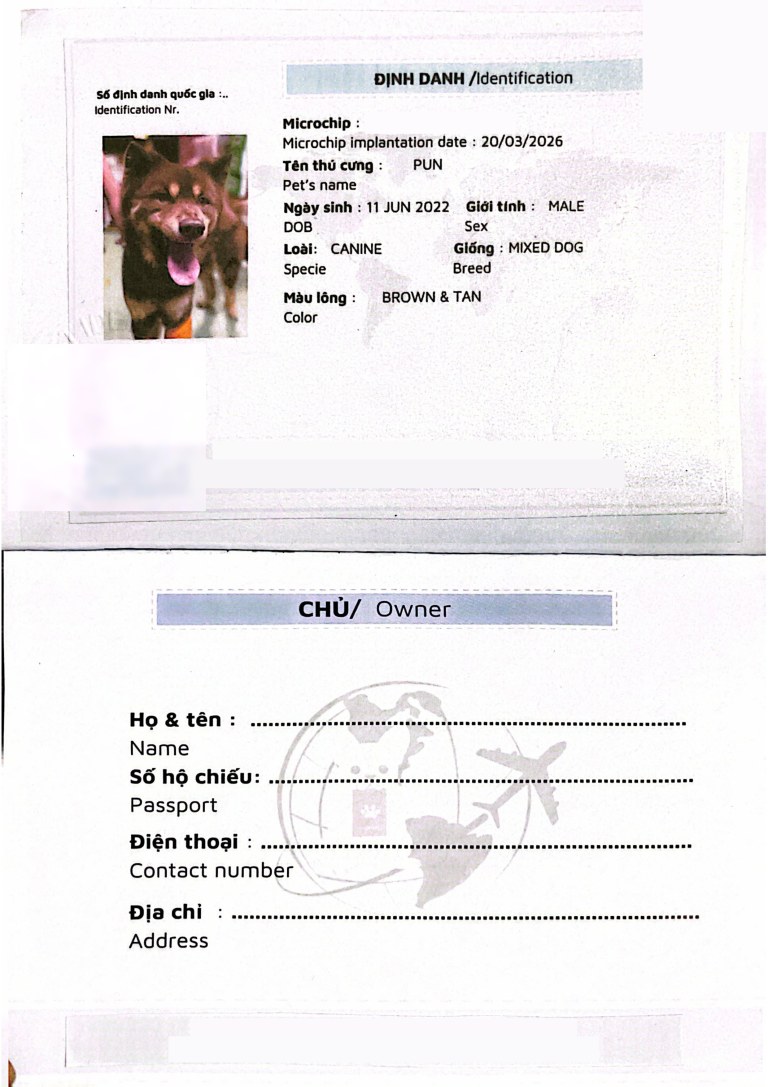
- The barcode sticker: each chip comes with stickers printed with its number. The vet puts one in the vaccination booklet.
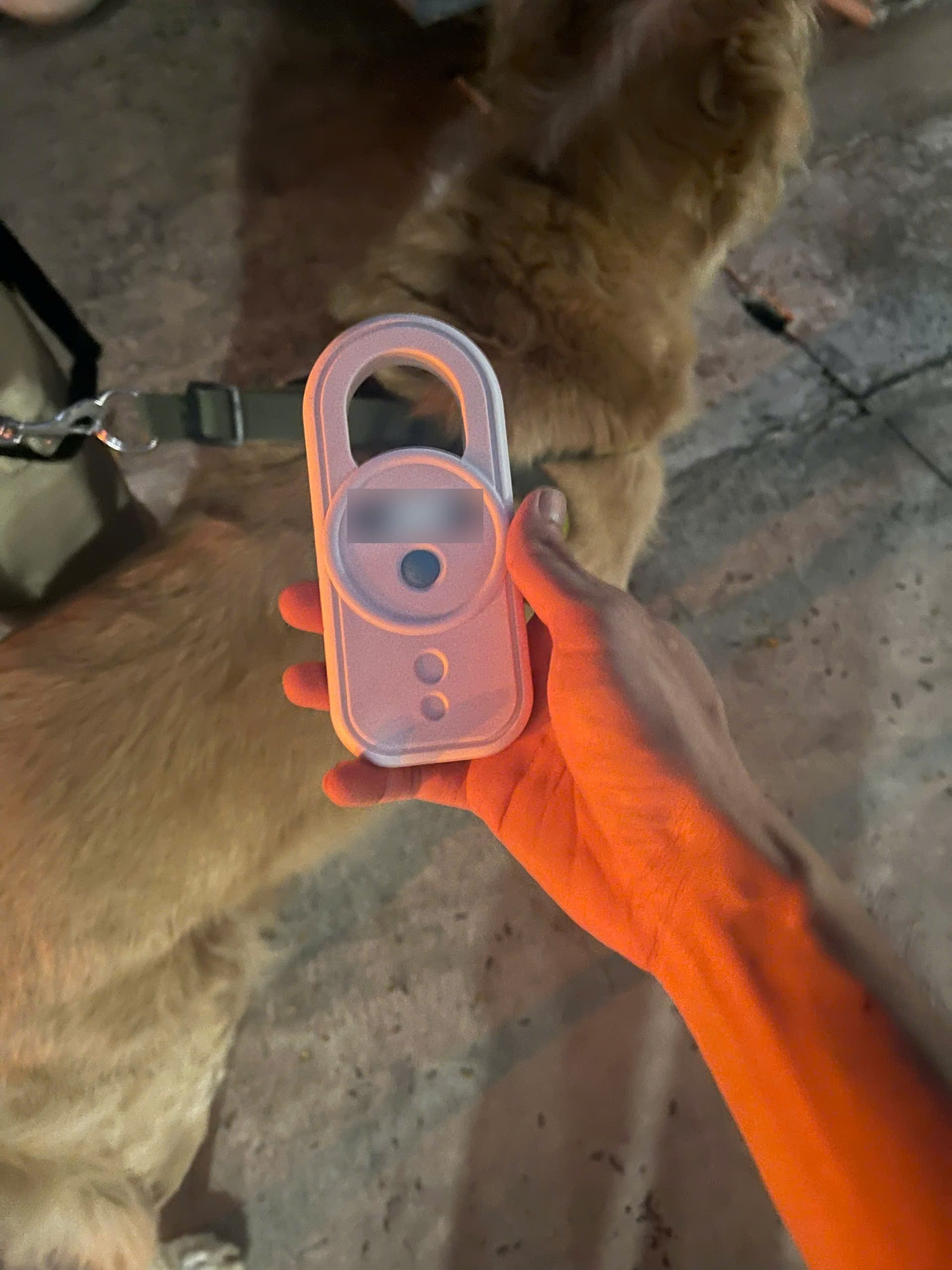
- A scanner: any vet clinic can scan the pet and show the number on screen.
- Earlier records: clinic invoices and older certificates usually show it too.
If the sticker and the scanner show different numbers, stop and ask the vet before any vaccine is given.
Which microchip standard is required for travel?
The standard is ISO 11784/11785. ISO 11784 sets the number format. ISO 11785 sets how the scanner reads it, using a format called FDX-B. Most scanners at airports and quarantine stations are built for this standard.
The EU, the UK, Japan, Australia, Singapore and China accept a non-ISO chip only if the owner brings a reader for it. Japan also asks owners to contact its Animal Quarantine Service first.
The US rule is worded differently. The CDC (Centers for Disease Control and Prevention) accepts any brand, but the chip must be readable with a universal scanner. In practice, an ISO chip meets that rule.
Should the microchip go in before the rabies vaccine?
Yes. The chip goes in before the rabies vaccine, or at the same visit. At that visit, the vet implants the chip, scans it, and then gives the vaccine.
A rabies vaccine given before the chip is not counted, even if it works medically. The certificate cannot prove which animal received it. The pet needs a new rabies vaccine after the chip. Every waiting period then starts again from the new vaccine date.
Waiting periods count from the rabies vaccine, not from the chip. Implanting the chip early costs no time. Our guide to the waiting period after pet vaccination explains each gap.
Microchip rules by destination
Every destination below requires a microchip. All except China want it before the rabies vaccine, and the EU, the UK and Japan state that the same day is allowed. China’s rules do not set the order, but Daisy Pet still has the chip implanted first.
| Destination | Chip accepted | What to watch |
|---|---|---|
| European Union | ISO chip | Border checks include a chip scan. A pet that fails can be refused entry. |
| United Kingdom | ISO chip | For any other chip, the owner brings a scanner. |
| Japan | ISO chip | Chips starting with 900 202 are not accepted. Other 900 chips have had duplicate numbers, so notify the Animal Quarantine Service early. |
| United States (dogs) | Any brand a universal scanner can read | The number goes on the CDC certification form and the CDC Dog Import Form. |
| China | ISO chip | The certificate must show the chip number, implant date and implant site. A pet without a chip faces 30 days of quarantine. |
| Australia | ISO chip | Pets cannot fly to Australia straight from Vietnam. A government vet scans the chip in the approved country where the pet lives first. |
| Singapore | ISO chip | A rabies vaccine given before the chip must be redone. |
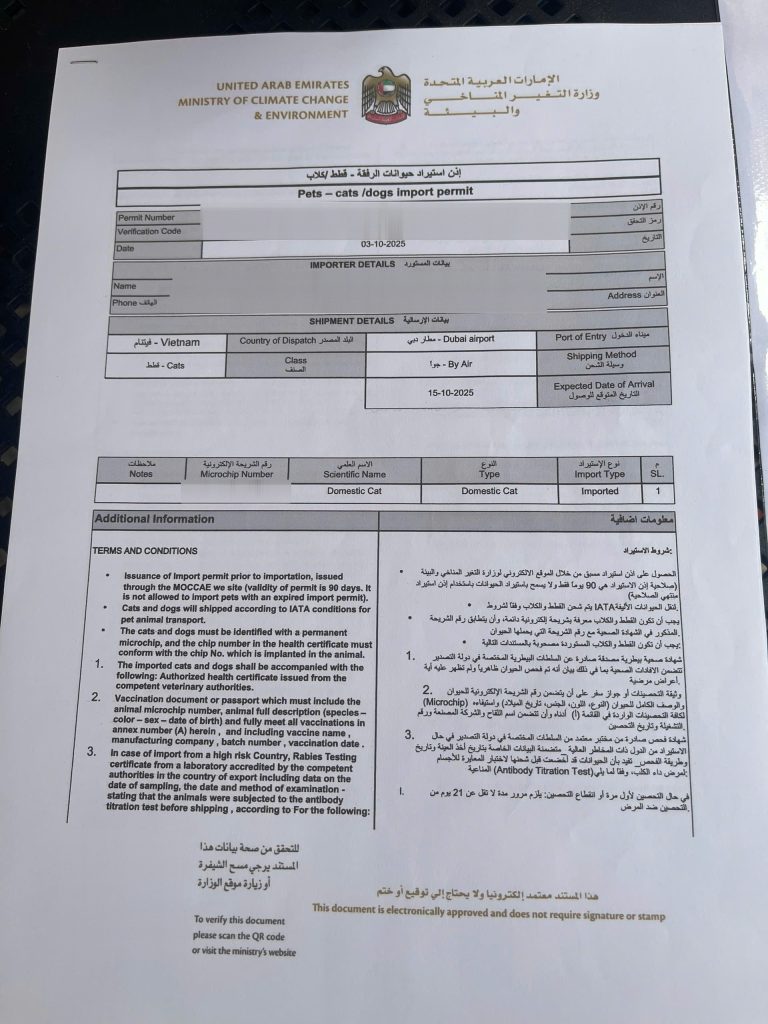
| UAE | ISO chip, not encrypted | The vaccination booklet must show the chip number next to each vaccine. |
Japan’s rules are the strictest on microchips. Our pet transport guide for Japan covers the full 180-day process.
Australia works through an approved third country. Our guide to shipping pets to Australia explains that route.
Official sources: Japan MAFF, US CDC, European Commission, UK government, Australia DAFF and ICAR.
Where must the microchip number appear?
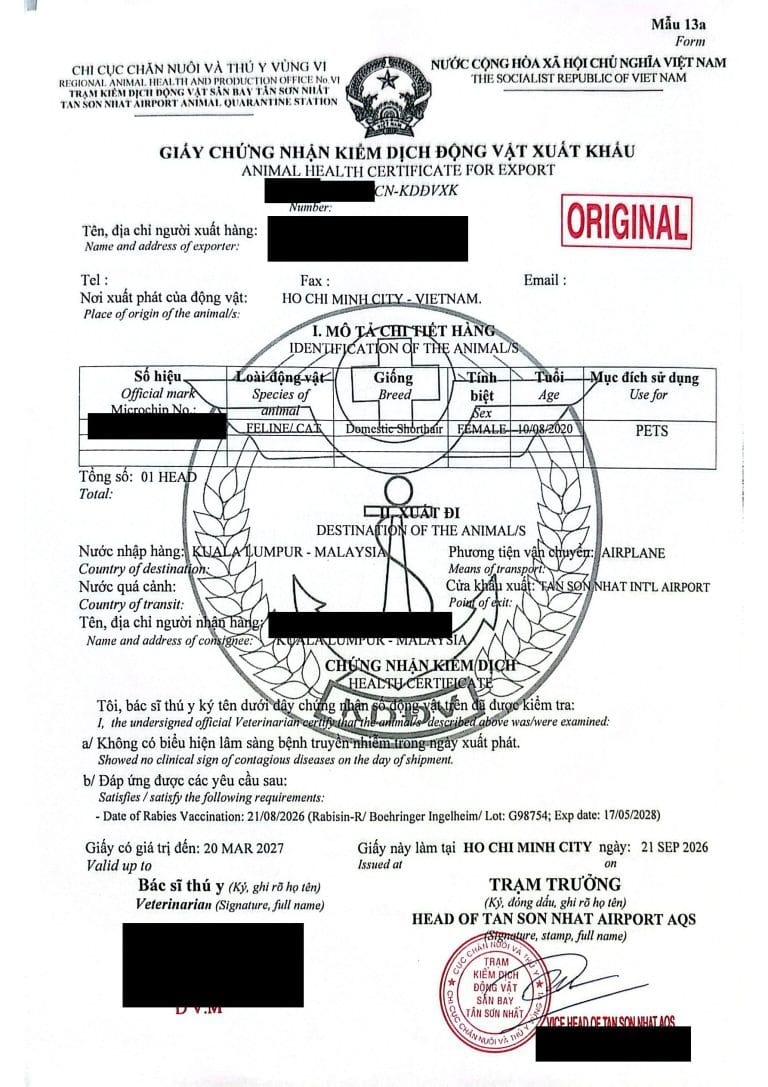
The same 15-digit number must appear on every document that names the pet. Spaces and line breaks can differ, but every digit must match.
- Vaccination booklet: the rabies vaccine and other vaccines, with the chip number.
- Rabies antibody test report: where the destination requires one. Our rabies titer test guide explains which destinations do.
- Parasite treatment certificate: issued by the clinic before export.
- Import permit or advance notice: where the destination issues one. See our pet import permit guide.
- The destination’s own form: for dogs going to the US, the Certification of Foreign Rabies Vaccination and Microchip. Our CDC dog import form walkthrough shows where the number goes.
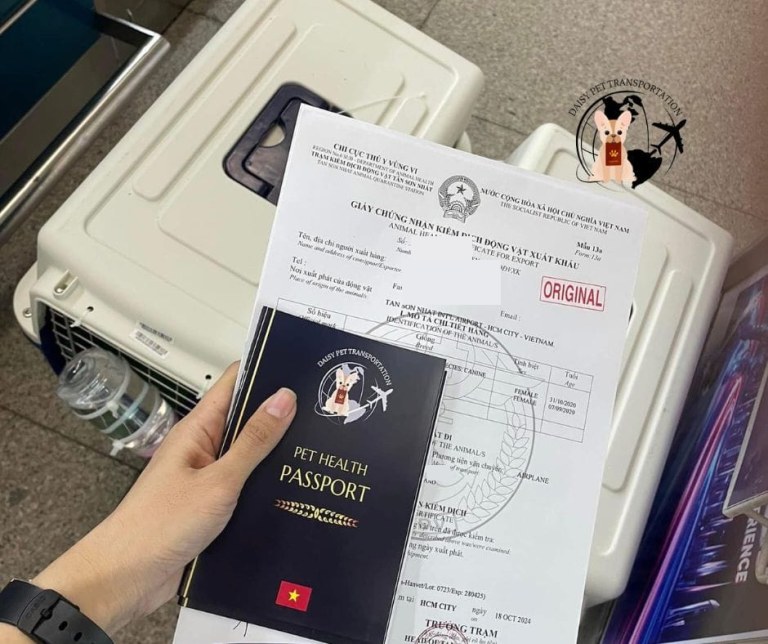
- Form 13a: Vietnam’s export health certificate, issued last. The animal health certificate guide covers who issues it.
Read every digit on every page, not only on the government certificate. In October 2026, a clinic’s parasite treatment certificate in a Daisy Pet file showed the chip number with one wrong digit. It was caught and reissued before the flight.
Who scans the chip, and when?
The chip is scanned several times between the first vet visit and arrival. Each scan compares the pet with the papers.
- The clinic vet: when implanting the chip, before vaccinating and at the blood draw. Japan’s MAFF asks for a check at each of these steps.
- The government vet in Vietnam: at the airport animal quarantine station, before issuing Form 13a.
- The destination officer: on arrival, before the pet is released.
Pets arriving in Vietnam go through the same check. The quarantine officer scans the chip, compares it with the documents and then issues Form 15a.
What if the chip cannot be read or the number does not match?
The result depends on the destination. These are the official outcomes:
- Japan: up to 180 days of quarantine, or the pet is returned at the owner’s expense.
- European Union: the pet can be refused entry, held in isolation or returned.
- China: a pet without a valid chip faces 30 days of quarantine.
- United States: a dog whose chip cannot be scanned may be denied entry and returned.
A chip can also move away from the shoulders over time. It still works, but a quick scan between the shoulders may find nothing. Ask the vet to scan along the back, sides and legs before the export check.
A wrong digit is easiest to fix before export. The clinic or the authority that issued the document reissues it. Japan does not allow corrections on an antibody test result, so an error there usually means a new test.
How to get a pet microchipped in Vietnam
Licensed vet clinics in Vietnam implant microchips in a few minutes. In Ho Chi Minh City, Daisy Pet refers clients to Belwee International Animal Hospital in Go Vap. Belwee is an independent licensed hospital, and its vets are responsible for the procedure.
At the clinic, check four things:
- The chip is ISO 11784/11785.
- The vet scans it straight after implanting it.
- A barcode sticker goes into the vaccination booklet.
- The number on the sticker matches the scanner before the vaccine is given.
Daisy Pet checks the vaccination booklet before booking the vaccine and blood draw dates. Our list of required pet travel documents from Vietnam shows where the chip fits in the full file.
A real file: chip and rabies vaccine on the same day
Two Pomeranians flew from Ho Chi Minh City to Paris on 23 August 2026. Both had the chip and the rabies vaccine at one visit on 3 April 2026. The blood draw for the antibody test followed on 3 May, exactly 30 days later.
The same chip number ran through the vaccination booklet, the test report and the export certificates. From chip to flight took 4.7 months. Our guide to pet travel to Europe explains why the EU route takes that long.
FAQ about pet microchips for international travel
Can the microchip and rabies vaccine be done on the same day?
Yes. The EU, the UK and Japan allow it. The vet implants and scans the chip first, then gives the vaccine.
My pet’s chip number starts with 900. Is that a problem?
Usually not. 900 is a shared manufacturer code. For Japan, chips starting with 900 202 are not accepted, and other 900 chips should be reported to the Animal Quarantine Service early.
Does a cat need a microchip to enter the US?
Not under federal rules. The CDC microchip rule covers dogs only. Some US states and airlines set their own rules, and most other destinations require a chip for cats.
Can my pet travel on a chip from another country?
Yes, if it is an ISO chip that scans and its number is on the vaccine records. A non-ISO chip needs the owner’s own reader at most destinations.
Does the microchip need to be registered in a database?
The destinations above check the chip against the travel documents, not against a database. Registering it still helps if the pet is lost.
Last updated 18 Oct 2026
Compiled by our specialists from the regulations in force on the date above, for reference only. Rules may change after this date. Please verify with the competent authorities or contact us for the most accurate information.
Official sources cited in this guide
- Japan MAFFmaff.go.jp
- US CDCcdc.gov
- European Commissionfood.ec.europa.eu
- UK governmentgov.uk
- Australia DAFFagriculture.gov.au
- ICARicar.org