Most pricing pages quote international pet transport at “$500 to $6,000.” For a pet leaving Vietnam, that range is both too narrow and not very useful—our own 2026 quotes run from about $350 to more than $16,000 per pet, and a move to Australia costs more again.
The spread is not random. In practice, one decision sets most of the bill before anything else is considered: whether your pet flies with you or as cargo. The destination’s rules and the size of the crate do the rest.
The ranges below come from quotes Daisy Pet Transport issued between July and October 2026, grouped by destination. They are per pet, in USD, and each one states what is and isn’t included—because a quote that leaves out the airline fee or the arrival-side fees cannot be compared with one that includes them.
The Short Answer: Three Price Bands for Pets Leaving Vietnam
Most moves from Vietnam fall into one of three bands, set by the travel method and by whether the destination requires a rabies titer test.
- Flying with you, no titer test: about $350–$900 for destinations such as Thailand, the Philippines, or a cat going to the USA, plus the airline’s pet fee.
- Flying with you, titer test required: about $1,200–$1,600 for the EU, Japan, South Korea, Taiwan, and dogs going to the USA, plus the airline’s pet fee. Dogs entering the USA also pay a CDC-registered Animal Care Facility (ACF) $1,500–$2,000 on arrival, plus an airport cargo-warehouse fee of $300–$500 when flying with their owners.
- Manifest cargo or quarantine destinations: about $2,300–$3,300 for a cat on a short Asian route, rising to $10,000–$17,000 for a larger dog on long-haul routes to Dubai, Toronto, Amsterdam, or South Africa. Australia sits apart at around $25,000.
2026 Pet Transport Prices from Vietnam by Destination
All prices are per pet, in USD. “Flying with you” means checked baggage (AVIH) or cabin travel on the owner’s flight; the airline’s pet fee is paid at check-in and is not included. “Manifest cargo” prices include the flight.
| Destination | Flying with you | Manifest cargo | Notes |
|---|---|---|---|
| USA | Cat: $350–$450 Dog: $1,350–$1,550 + ACF fee $1,500–$2,000 + warehouse fee $300–$500 |
Cat: $2,350–$2,900 Dog: about $5,600–$6,300, ACF fee included |
Cargo prices exclude US-side customs clearance. Dogs enter only through the eight airports with a CDC-registered ACF. See the USA cost breakdown. |
| EU and Norway | Cat: $1,250–$1,350 Dog: $1,450–$1,570 |
Cat: $3,900–$4,400 Large dog: about $12,000 |
Titer test included; a 90-day wait follows the blood draw. Cargo cat prices exclude arrival-side clearance. See the EU cost breakdown. |
| United Kingdom | Cargo only | Cat: $3,900–$4,150 Dog (12 kg): about $10,400 |
Cat prices exclude UK-side clearance; the dog price includes the UK agent and import fees. See the UK cost breakdown. |
| Japan | Cat: $1,500–$1,600 | Quoted case by case | Two rabies shots, a titer test, then a 180-day wait before entry. See the Japan cost breakdown. |
| South Korea | Cat: $1,220–$1,250 Dog: $1,230–$1,270 |
Dog: $3,600–$5,300 | Titer test included. Cargo prices include Korean import fees. |
| China | Cat: about $1,200 | Quoted case by case | Titer test required. China-side import and inspection fees are paid on arrival. |
| Taiwan | Cat: about $1,550 Large dog: about $2,650, airline fee and crate included |
Quoted case by case | Titer test and import permit included. A 7-day quarantine applies unless the pet completes the 180-day wait after the blood draw. |
| Singapore | Cat: about $2,450 + quarantine fee Dog: about $5,150, quarantine included |
Dog: $6,000–$6,600 | Every pet from Vietnam spends 30 days at Singapore’s quarantine station. See the Singapore cost breakdown. |
| Malaysia | Cat: about $1,500 Dog: about $1,700 |
Cat: $2,800–$3,300 Dog: $4,100–$4,900 |
No titer test. All prices include the 7-day quarantine. See the Malaysia cost breakdown. |
| Thailand | Cat: about $600 | Cat: about $2,450 Very large dog: about $7,500 |
No titer test. The large-dog price excludes Thai-side clearance. |
| Philippines | Cat: $850–$900 | Dog: about $2,500 | No titer test. Import permit included. |
| Indonesia | Cat: about $1,950 Dog: about $2,200 |
Quoted case by case | Titer test and 7-day quarantine included. |
| Russia | Dog: about $1,400 | Quoted case by case | Titer test and import permit included. |
| Hong Kong | Cargo only | Cat: about $2,500 + Hong Kong-side fees | Pets from Vietnam serve at least 120 days of quarantine in Hong Kong. The permit, clearance, and boarding are billed separately. See the Hong Kong cost breakdown. |
| UAE (Dubai) | Almost always cargo | Large dog: about $10,400 | Includes the titer test, import permit, and Dubai clearance. Emirates freight alone reached $7,500 for a large crate. See the UAE cost breakdown. |
| Canada | Quoted case by case | Dog (35 kg): about $9,900 | Includes Canadian import clearance. Crate extra. |
| South Africa | Cargo only | Dog: about $16,700 | Includes blood tests for five diseases (blood drawn no more than 30 days before arrival), quarantine, and arrival-side clearance. |
| Australia | Not possible from Vietnam | About $25,000 in total | No direct route: at least six months in an approved third country, then quarantine in Melbourne. See the Australia cost breakdown. |
Two patterns stand out. Flying with you is usually the lower-cost option wherever a destination allows it, and long-haul cargo for a medium or large dog moves into five figures quickly—mostly because of freight, not paperwork.
What a Pet Transport Quote Includes—and What It Usually Leaves Out
A quote is only comparable once you know where its edges are. Across Daisy’s 2026 quotes, the Vietnam-side work is fairly consistent; the differences sit in the airline fee and in the arrival country.
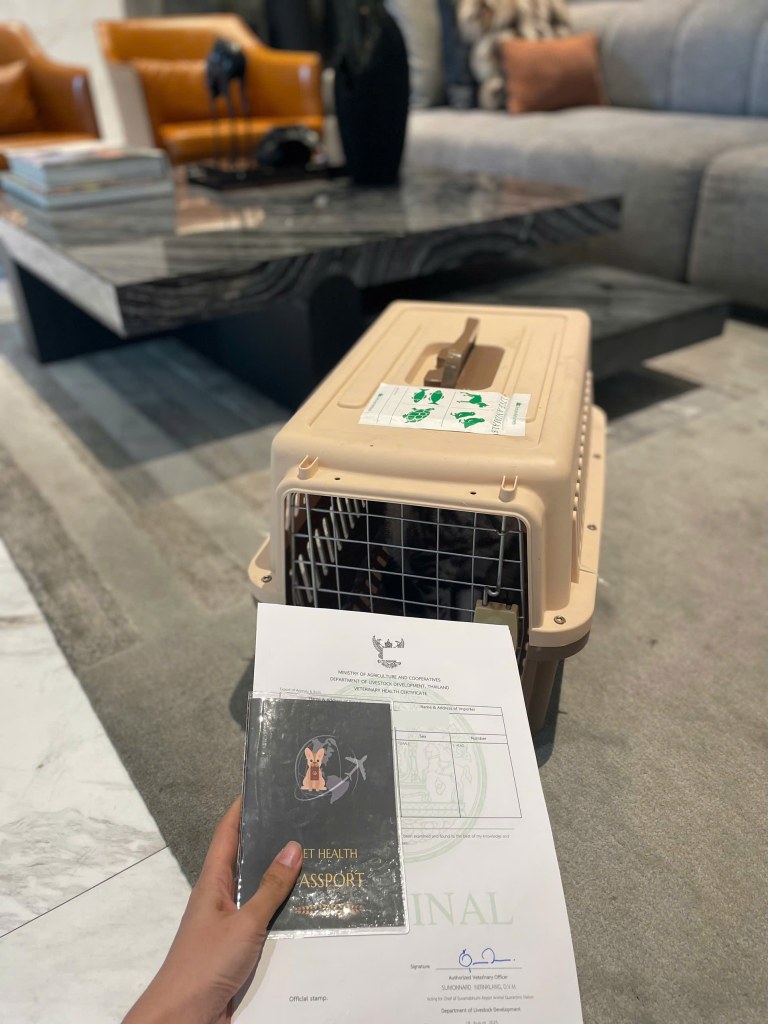
- Usually included: the export health certificate issued through Vietnam’s Department of Animal Health (DAH), microchip and parasite-treatment certificates, the titer test where required (about $550 per pet), the import permit, and—for cargo—the freight, air waybill, export customs declaration, and handling (about $520 per shipment on top of freight).
- Usually not included: the airline’s pet fee when your pet flies with you, the IATA crate ($100–$300), routine vaccinations, the US ACF and warehouse fees for dogs, vet care during quarantine, and arrival-side clearance for the USA, the UK, Germany, and Hong Kong.
For the airline fee, Vietnam Airlines estimates run about $150 for a pet in the hold and $320–$350 in the cabin on regional routes. Arrival-side agent and clearance fees, where quoted, ranged from $900 to $3,000 per pet. The full list of add-ons is covered in our guide to hidden costs in pet transport.
Why the Same Pet Can Cost $600 or $6,000: Three Variables
1. Travel Method: Flying With You vs. Manifest Cargo
When your pet flies with you, the owner’s ticket carries the pet as checked baggage or as a cabin pet, and the airline charges a fixed pet fee at check-in. Vietnam Airlines accepts cabin pets only under 6 kg including the carrier; some foreign carriers allow 7–10 kg.
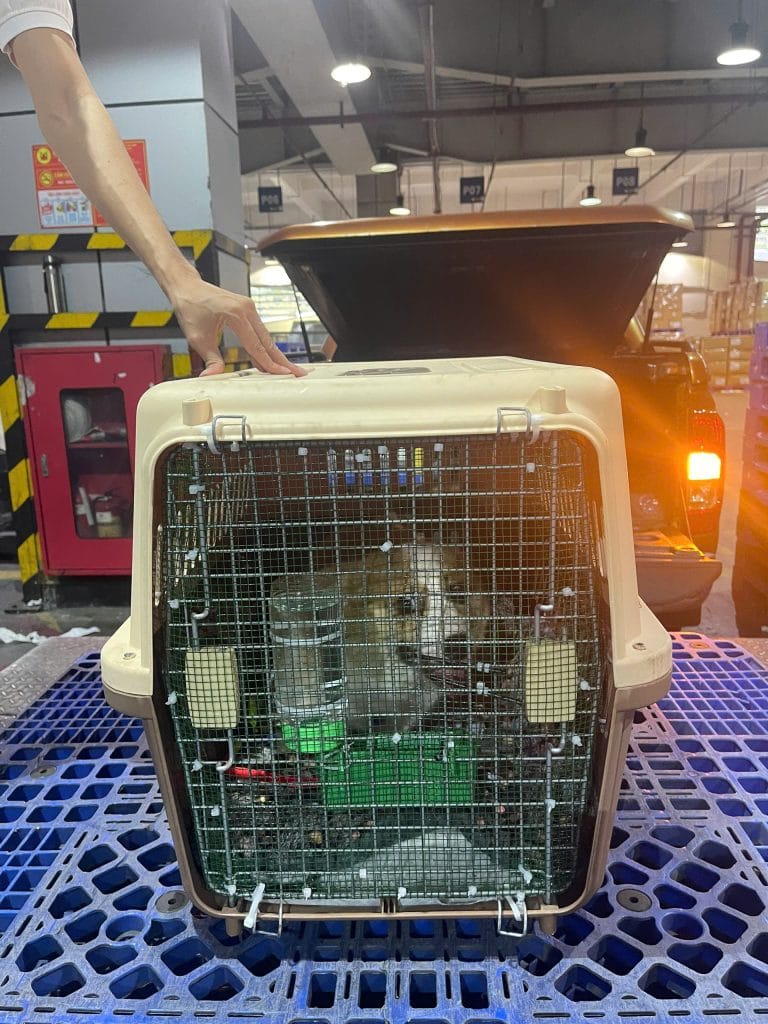
Manifest cargo is a separate shipment with its own air waybill, export customs declaration, and warehouse handling, billed on top of the freight. It is the only option for unaccompanied pets, for most large dogs, and for destinations that do not accept pets any other way—the UK, Hong Kong (for pets from Vietnam), South Africa, and Australia. In practice, nearly every pet entering the UAE also arrives as cargo.
Airline rules can close the lower-cost option too: Vietnam Airlines does not carry dogs on its Vietnam–USA routes in the cabin or the hold, so US-bound dogs flying with their owners travel on other carriers.
2. Destination Rules: Titer Tests, Waiting Periods, and Quarantine
The second variable is how much the destination asks for before and after the flight. A rabies titer test (FAVN) adds about $550 per pet and starts a waiting period: 90 days for the EU and the UK, 180 days for Japan.
- No titer test: Thailand, the Philippines, Malaysia, and cats entering the USA.
- Titer test required: the EU, the UK, Japan, South Korea, Taiwan, Singapore, Indonesia, the UAE, and China. A pet arriving without a valid result faces 30 days of quarantine in China, and 97 days counted from a passing blood draw in Taiwan.
- Quarantine on arrival: 7 days in Malaysia and Indonesia, 30 days in Singapore, at least 120 days in Hong Kong, and a stay in Melbourne after the third-country period for Australia.
3. Crate Size and Route: How Airlines Actually Bill
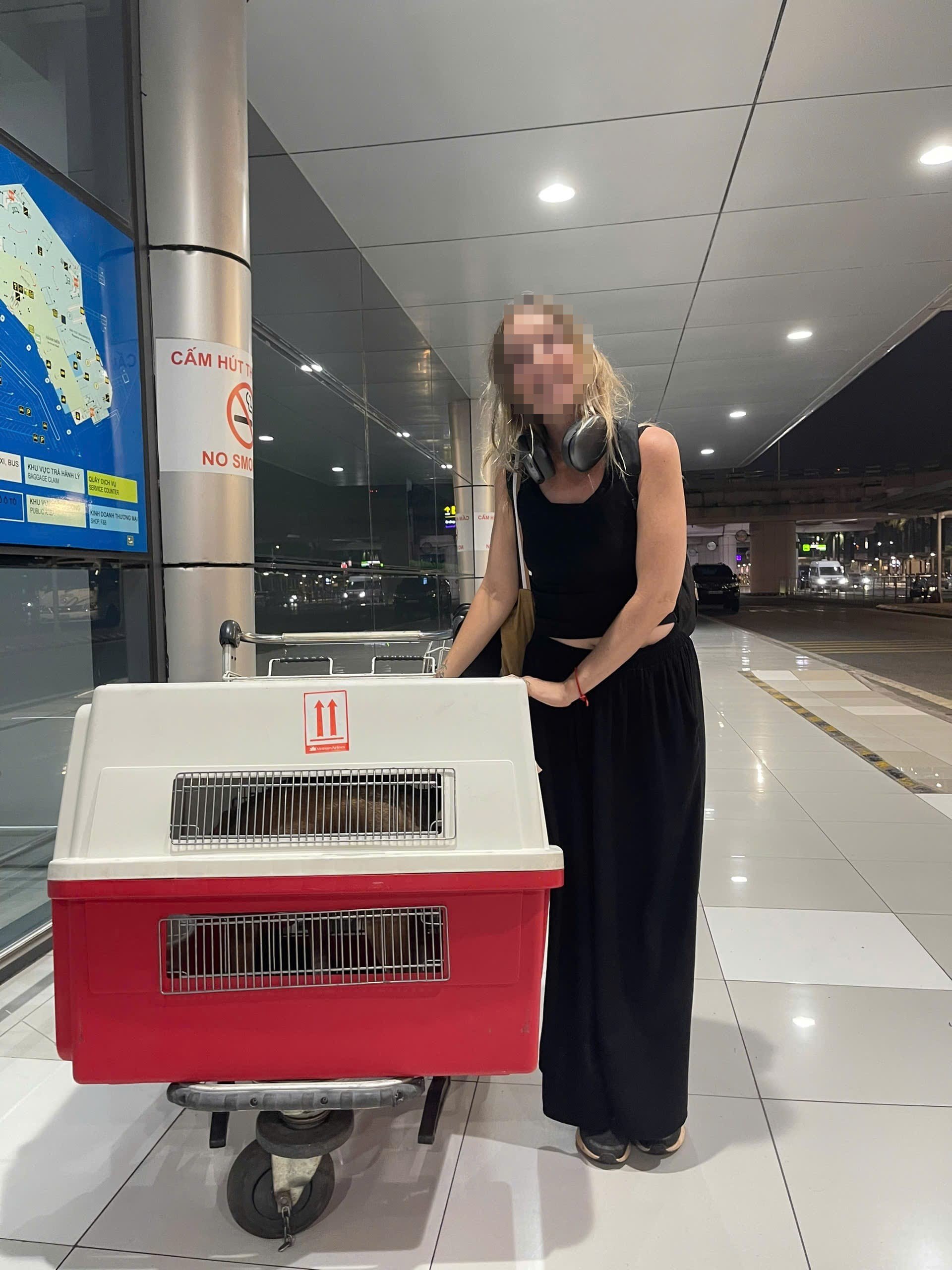
Airlines do not bill live animals on the scale weight alone. They charge on chargeable weight—the higher of the actual weight and the volumetric weight, calculated as length × width × height in centimetres divided by 6,000.
That is why a stocky dog can cost far more than its weight suggests. When Vodka, a Corgi flown to Dubai, was checked in, he and his crate weighed 15 kg, but a 72 × 53 × 53 cm crate bills at about 34 kg.
Before you request a quote, measure your pet against an IATA-compliant crate sizing guide rather than guessing a size.
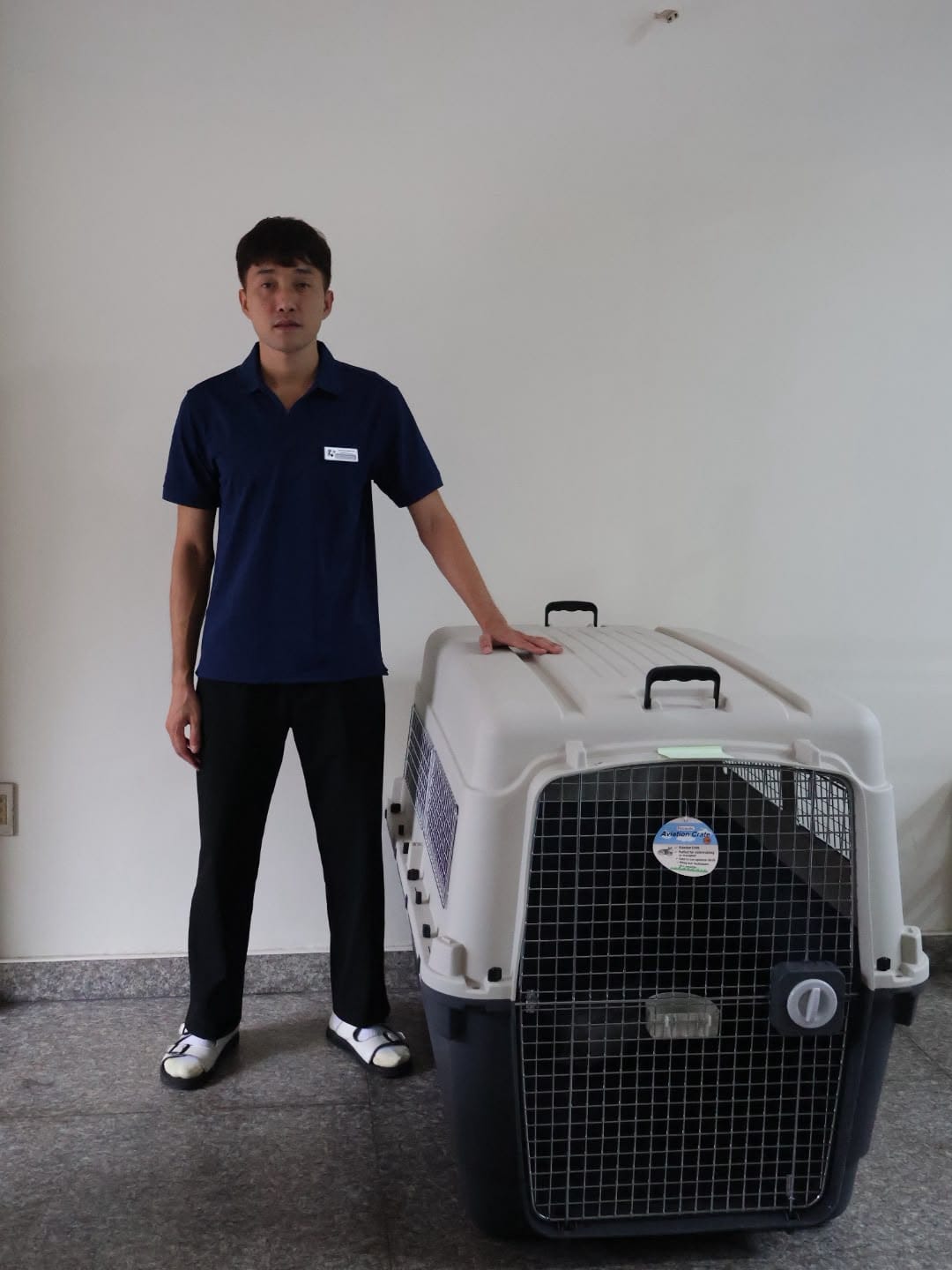
The route matters as much as the crate. In 2026 quotes, freight for a small crate on a direct Asian route ran $450–$1,500, while long-haul routes ran $1,800–$2,800. Emirates and large crates on long-haul routes reached $4,500–$7,500—even for dogs under 7 kg. The live animal standards airlines apply are set out in the IATA Live Animals Regulations.
Two Worked Examples Using 2026 Quote Ranges
Example 1: A Cat Flying With Its Owner to Germany
Daisy’s fees for an EU-bound cat run $1,250–$1,350, including the titer test and the EU health certificate. Add the airline’s pet fee and a crate, and the total lands at roughly $1,500–$2,000. The constraint is time, not money: after the blood draw, the cat cannot enter the EU for 90 days, so most of these moves take about four months from start to finish.
Example 2: A 6 kg Dog Going to Los Angeles
Flying with the owner on a carrier that accepts dogs on US routes, Daisy’s fees run $1,350–$1,550, the ACF on arrival charges $1,500–$2,000, and because US Customs now routes these dogs through the airline’s cargo warehouse at LAX, the warehouse adds $300–$500, so the total is roughly $3,150–$4,050 before the airline fee. The same dog sent as manifest cargo costs about $5,600–$6,300. Same dog, same destination—the travel method alone adds roughly $2,000 to the bill.
Before You Request a Quote: Four Things to Check
- Crate size: measure your pet standing and lying down; the crate sets the chargeable weight.
- Travel method: confirm whether your destination and airline accept pets flying with their owners, or only as cargo.
- Titer test and waiting period: check whether your timeline leaves room for the blood draw and the wait that follows.
- The exclusions line: ask for the “not included” items in writing—airline fee, crate, arrival-side fees—before comparing two quotes.
Frequently Asked Questions
How much does it cost to ship a dog from Vietnam to the USA?
In 2026, a small dog flying with its owner costs roughly $3,150–$4,050 before the airline’s pet fee: $1,350–$1,550 for the Vietnam-side work and titer test, $1,500–$2,000 for the CDC-registered Animal Care Facility on arrival, and a $300–$500 airport cargo-warehouse fee. The same dog sent as manifest cargo costs about $5,600–$6,300.
Does flying with my pet cost less than sending it as cargo?
Usually, yes. For a cat going to Malaysia, flying with the owner costs about $1,500 against $2,800–$3,300 as cargo. The option is not always available, though: the UK, Hong Kong, South Africa, and Australia accept pets only as cargo, and the UAE almost always does.
Why does pet transport from Vietnam to Australia cost so much?
Pets cannot fly directly from Vietnam to Australia. They must first live for at least six months in an approved third country, then complete quarantine in Melbourne. The two stages, the extra flights, and the long boarding period bring a typical move to around $25,000.
Do airlines charge for pets by weight?
Airlines charge cargo on chargeable weight: the higher of the actual weight and the volumetric weight of the crate (length × width × height in centimetres ÷ 6,000). A 15 kg dog in a 72 × 53 × 53 cm crate is billed at about 34 kg.
What is usually not included in a pet transport quote?
The airline’s pet fee when your pet flies with you, the IATA crate ($100–$300), routine vaccinations, vet care during quarantine, the US ACF and warehouse fees for dogs, and—on many routes—customs clearance in the arrival country.
How far ahead should I start planning?
Destinations without a titer test, such as Thailand or the Philippines, can take a few weeks. Plan about four months for the EU and the UK, at least seven months for Japan because of the two rabies shots and the 180-day wait, and around a year for Australia.
Last updated 20 Oct 2026
Compiled by our specialists from the regulations in force on the date above, for reference only. Rules may change after this date. Please verify with the competent authorities or contact us for the most accurate information.
Official sources cited in this guide
- IATA Live Animals Regulationsiata.org