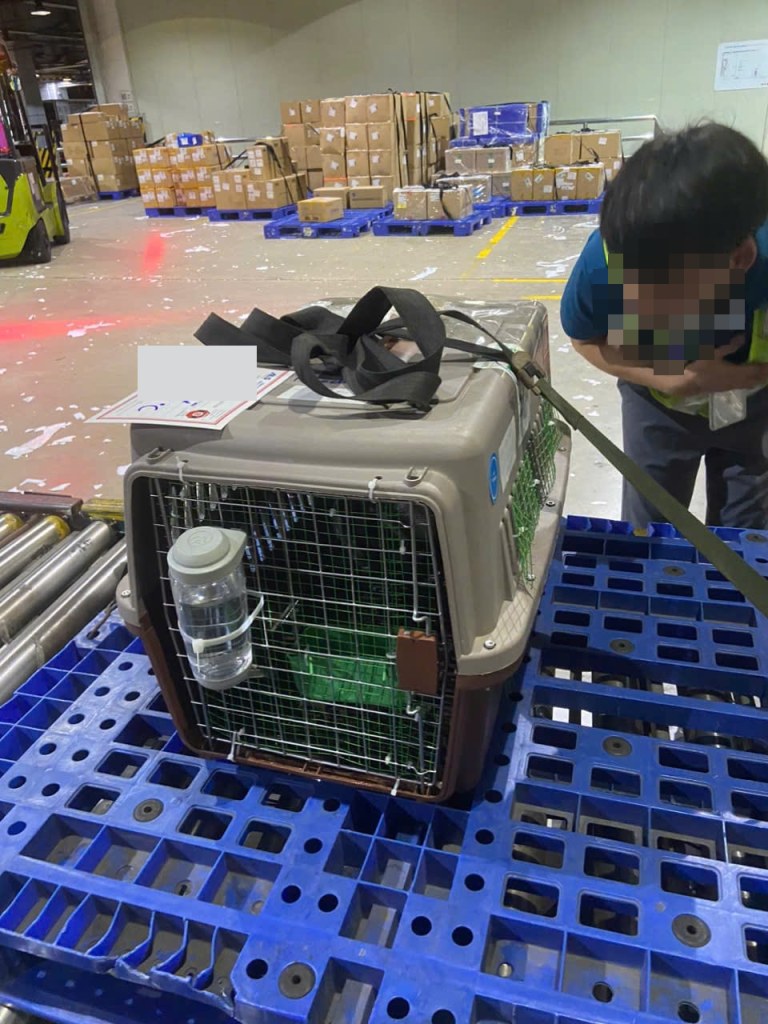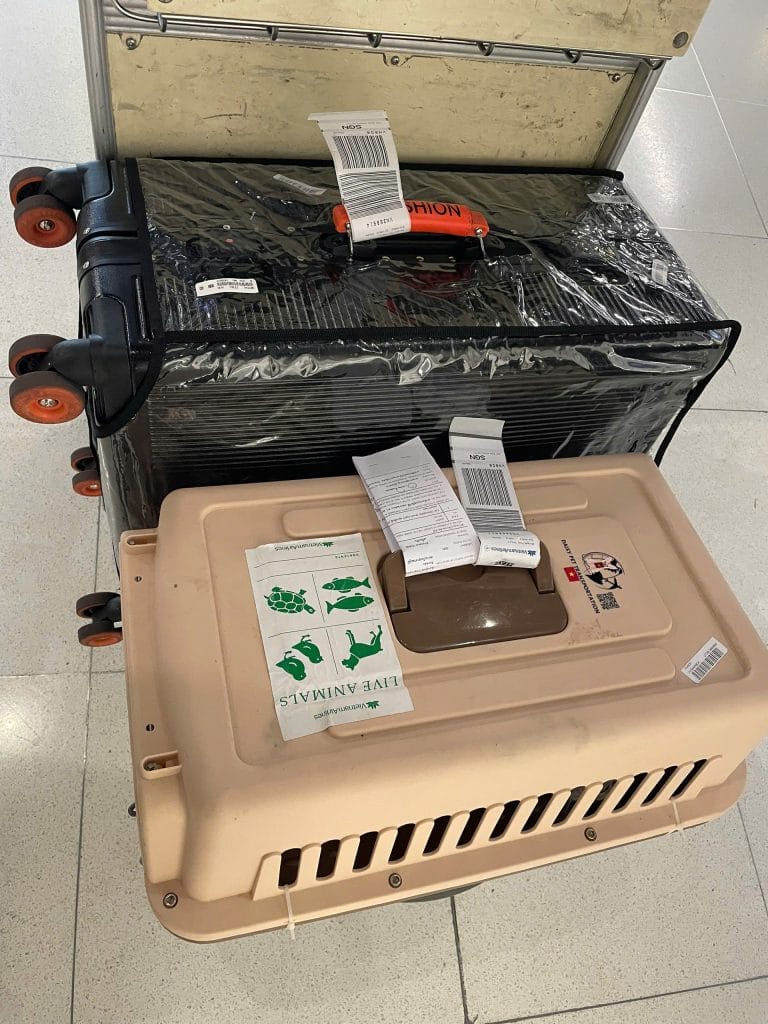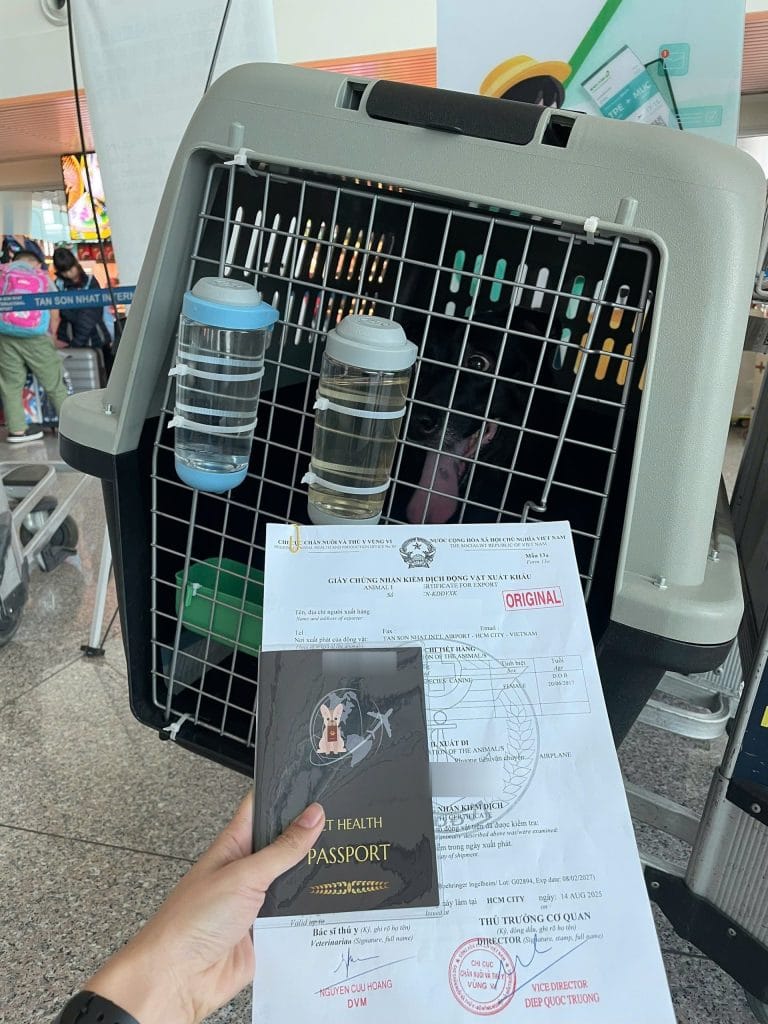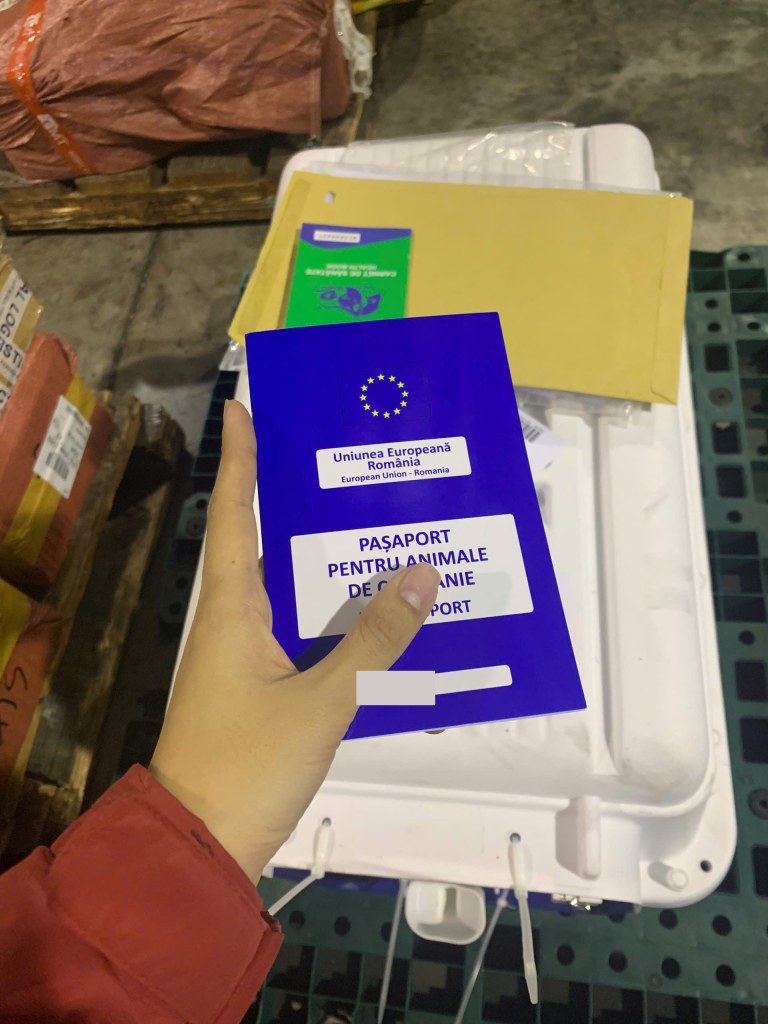
Moving a pet from Vietnam to the European Union is not like booking a flight upgrade — there’s no single ticket price. The total cost is built from five distinct categories: veterinary procedures, laboratory testing and international shipping, official documentation, freight, and equipment. Each has its own timeline, its own provider, and its own failure mode if cut short.
This guide breaks down each cost component so you can budget accurately and understand why “cheap” quotes often omit the items that matter most. For the step-by-step preparation process, see our EU pet shipping timeline guide. For regulatory requirements, see EU Pet Import Laws 2026. For airline options, see Airlines for Pet Transport to Europe.
If you’ll later need to bring your pet back from Europe to Vietnam, the process runs in reverse — see our guide on bringing a pet from Europe back to Vietnam.
Estimated Total Cost: What to Expect
In Daisy’s 2026 quotes, the total depends first on how the pet flies. Prices are per pet, in USD.
| Travel Method | Cat | Dog | What the Price Covers |
|---|---|---|---|
| Flying with you (cabin or checked baggage) | $1,250 – $1,350 | $1,450 – $1,570 | Vietnam-side documents, titer test, EU health certificate and annex. The airline’s pet fee is paid at check-in. |
| Manifest cargo | $3,900 – $4,400 | about $12,000 for a large dog (crate 100 × 68 × 47 cm) | Freight, air waybill, export customs and handling, titer test. Cat prices exclude arrival-side clearance; the dog price includes the destination agent and clearance. |
Not included in any row: the airline’s pet fee when your pet flies with you, the IATA crate ($100–$300), and routine vaccinations. The carrier also moves cargo prices: on Emirates, quotes for small dogs to Switzerland, which applies the same pet rules as the EU, came to about $9,800 per dog.
Category 1: Veterinary Protocol and RNATT Testing
This is the cost component most people underestimate — not because individual items are expensive, but because the sequence locks in a 4-to-5 month timeline regardless of how much you spend upfront.
| Item | Estimated Cost (USD) | Notes |
|---|---|---|
| ISO microchip implantation | $15 – $50 | One-time. Must be done before the rabies vaccination. |
| Primary rabies vaccination | $20 – $60 | Pet must be ≥12 weeks old. Booster required within validity window — breaking the chain resets everything. |
| RNATT titer test: blood draw, serum shipping and laboratory fee | about $550 (up to $750) | Blood drawn at least 30 days after vaccination by an authorized vet in Vietnam, then shipped in temperature-controlled packaging to a laboratory on the EU’s designated list. No designated labs in Vietnam. Shipping alone takes 2–4 weeks each way. |
| Pre-export health check and documentation preparation | $50 – $150 | Final health check before issuing the EU Animal Health Certificate. |
If the RNATT fails: The clock resets. You re-vaccinate, wait 30 days, draw again, ship again, wait 90 days from the new blood draw. Add about $550 for the repeat test, plus 3–5 months of additional time.
Category 2: Official Documentation
| Item | Estimated Cost (USD) | Notes |
|---|---|---|
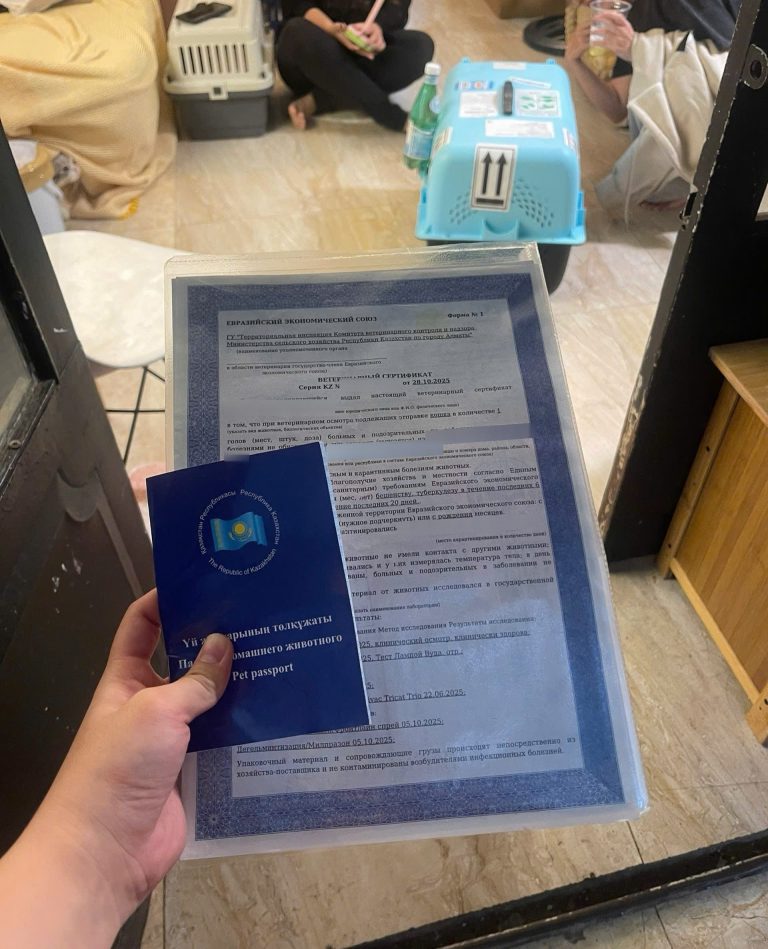
| EU Animal Health Certificate (2026/705 model) | $80 – $200 | Issued by official vet, endorsed by Vietnam’s Cục Thú y (DAH). Valid for 10 days from issue. Must be timed carefully against the 90-day waiting period. |
| Export health certificate (Form 002 from DAH) | $30 – $80 | Vietnamese export documentation that must align precisely with the EU certificate. |
| Written non-commercial declaration | Included in service fee | Owner or authorized person signs. Must confirm travel dates comply with the EU 5-day rule. |
| Echinococcus treatment certification (dogs to FI/IE/MT/NO only) | $20 – $60 | Veterinary fee for treatment + certificate entry. Must occur 24–120 hours before scheduled arrival. |
Category 3: Air Travel — Flying With You or Manifest Cargo
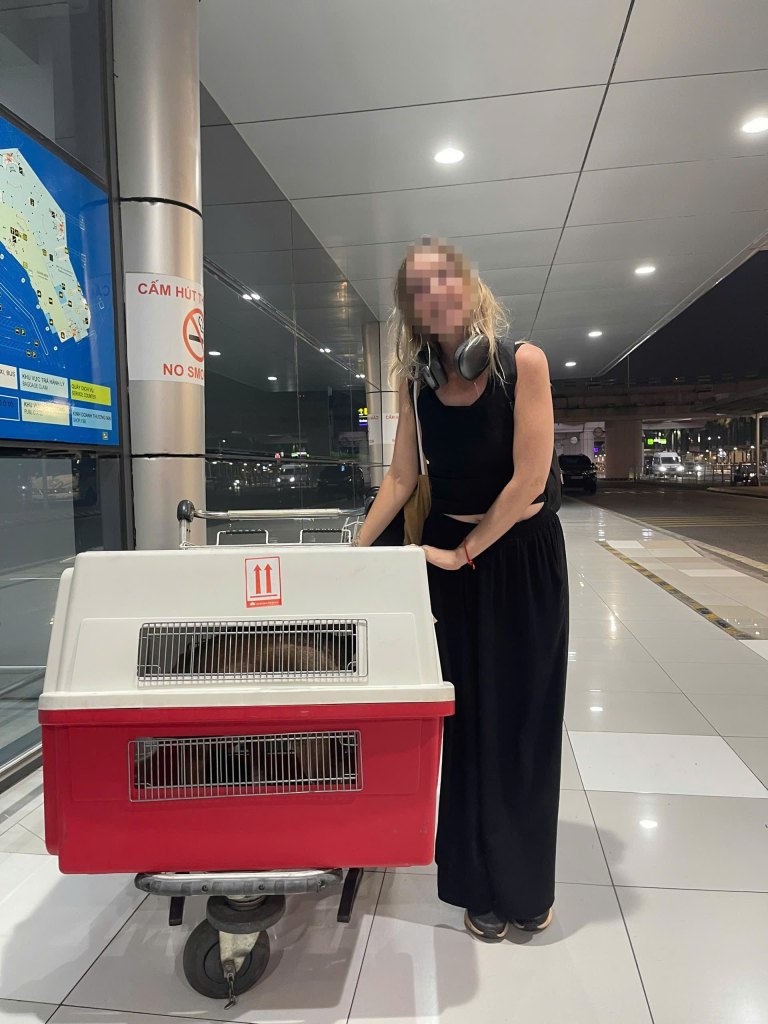
Many pets bound for the EU fly with their owner, in the cabin or as checked baggage, when the airline accepts them on the whole routing. In that case the airline charges a pet fee at check-in and there is no freight bill. Unaccompanied pets, most medium and large dogs, and routings that do not accept pets as baggage go as Manifest Cargo. Freight is priced by the airline cargo division based on chargeable weight (actual weight or volumetric weight, whichever is higher) and route.
| Crate Size | Freight in 2026 Quotes (USD) | Typical For |
|---|---|---|
| L70 / 68 × 47 × 47 cm | $2,400 – $2,500 | Cats and small dogs (Germany) |
| 68 × 47 × 47 cm and 81 × 57 × 57 cm on Emirates | $4,500 – $5,500 | Small dogs (Switzerland) |
| 100 × 68 × 47 cm | about $7,500 | Large dog (Netherlands) |
Each cargo shipment also carries about $520 for the air waybill, export customs declaration and handling. Freight quotes vary significantly by carrier and routing. Turkish Airlines Cargo (via Istanbul), Lufthansa Cargo (via Frankfurt), KLM Cargo (via Amsterdam), and Qatar Airways Cargo (via Doha) are the primary options. Prices also shift seasonally — peak periods and temperature embargo seasons reduce competition and increase rates.
Category 4: IATA-Compliant Travel Crate
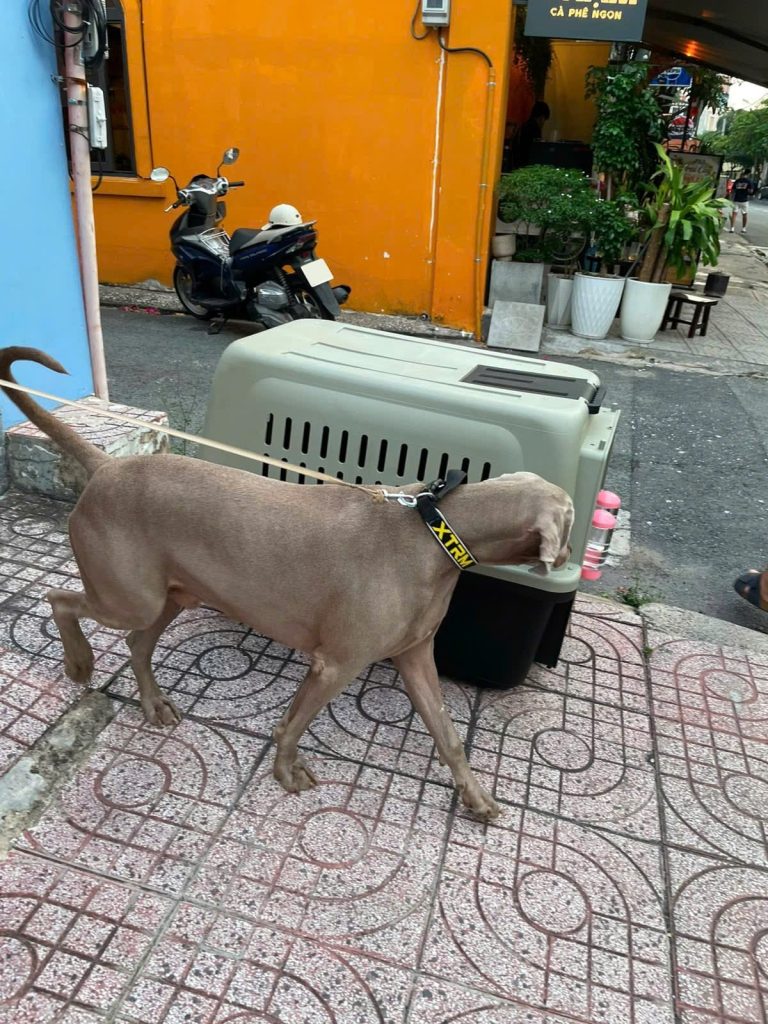
If you don’t already own an IATA-compliant crate, this is a one-time purchase. IATA crates for small pets start around $50–$120; large breed crates can run $200–$600 depending on size and material. Airlines will refuse cargo animals in non-compliant crates — absorber pads, water dishes, ventilation requirements, and label placement are all checked.

Category 5: Professional Service Fee
If you work with a specialist pet relocation company, the service fee covers coordination across all the above categories: scheduling veterinary appointments, managing lab shipments, liaising with Cục Thú y, booking cargo space, preparing documentation, and ensuring the 5-day travel window is met. Service fees vary by provider scope — from documentation-only arrangements ($200–$500) to full end-to-end management ($500–$1,500+).
What “Cheap” Quotes Usually Omit
The most common way cost comparisons mislead: quotes that omit the RNATT lab fee and international serum shipping, present freight as a per-kilogram base rate without volumetric weight adjustment, exclude the Cục Thú y endorsement fee, or assume one test cycle when two are sometimes needed. A quote that looks $800 cheaper may simply not include these items. Ask any provider to break their quote into the five categories above.
Planning note: The largest single variable in total cost is the freight rate, which depends on your pet’s size. Before committing to a breed or acquiring a second pet, calculate the IATA crate size that will be required at full adult weight — freight costs scale non-linearly with crate dimensions.
Frequently Asked Questions
How much does it cost to ship a pet from Vietnam to Europe?
In Daisy’s 2026 quotes, a cat flying with its owner costs $1,250–$1,350 and a dog $1,450–$1,570, including the titer test, plus the airline’s pet fee. As manifest cargo, a cat costs $3,900–$4,400 before arrival-side clearance, and a large dog about $12,000 including it. The IATA crate ($100–$300) is extra.
What is the RNATT test and why does it cost so much for EU pet import from Vietnam?
The RNATT (Rabies Neutralising Antibody Titre Test) is mandatory for pets from Vietnam. Because there are no EU-approved labs in Vietnam, the blood sample must be prepared as serum and shipped internationally to a laboratory on the EU’s designated list. In Daisy’s 2026 quotes, the full test — blood draw, temperature-controlled shipping and the lab fee — costs about $550 per test cycle.
Why is pet cargo to Europe so expensive compared to other destinations?
Two factors: distance and documentation. Pets that cannot fly with their owner travel as Manifest Cargo, and long-haul freight to Europe ran $2,400–$7,500 in Daisy’s 2026 quotes, depending on crate size. And the EU’s strict import protocol — mandatory RNATT, international lab shipping, Cục Thú y endorsement, EU health certificate — adds fixed costs regardless of route. Larger pets pay more because freight is priced by volumetric weight.
Last updated 17 Oct 2026
Compiled by our specialists from the regulations in force on the date above, for reference only. Rules may change after this date. Please verify with the competent authorities or contact us for the most accurate information.