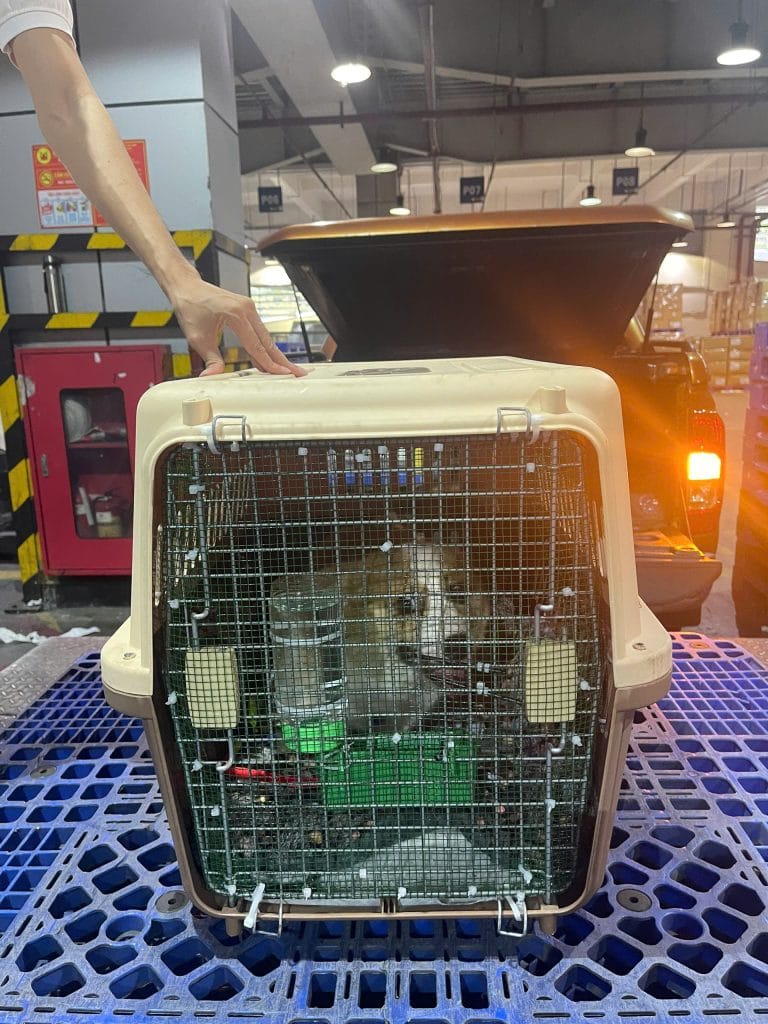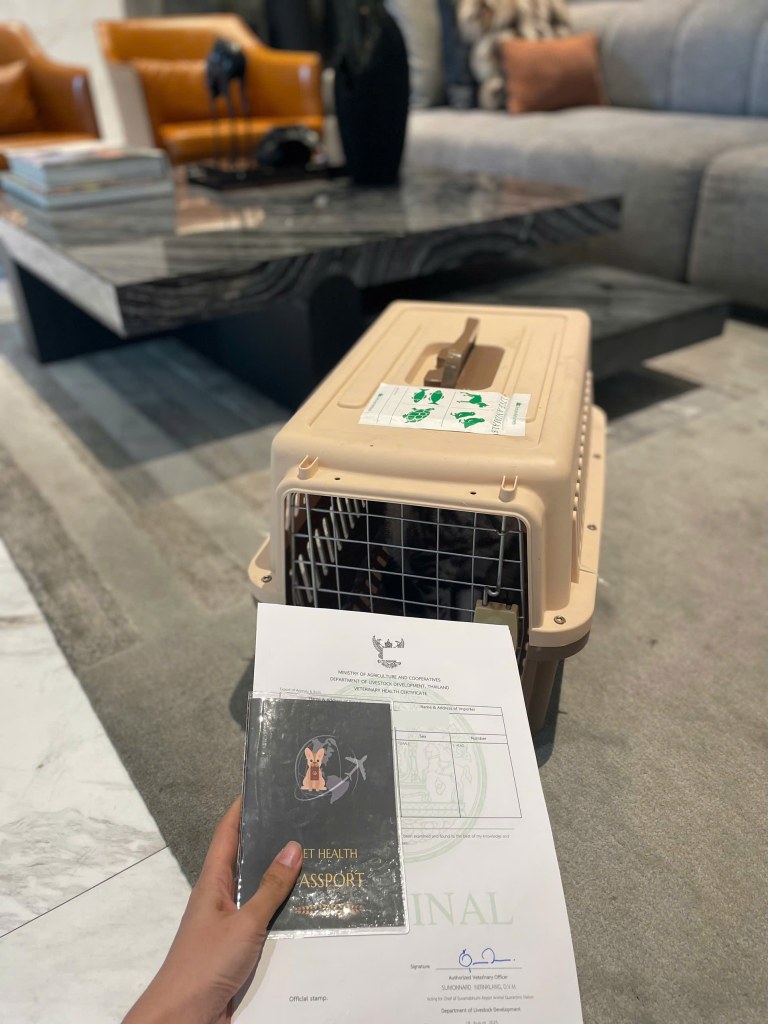
What makes pet transportation so expensive is three things: how the pet flies, what the destination requires, and the size of the crate. In 2026, quotes for pets leaving Vietnam ran from about USD 350 to more than USD 16,000 per pet. A move to Australia costs about USD 25,000.
Short Answer: Why Is Pet Transportation So Expensive?
- Travel method: flying with you costs a fixed airline fee. Manifest cargo adds freight, an air waybill and warehouse handling.
- Destination rules: a titer test costs about USD 550 per pet. Quarantine, where required, adds daily fees.
- Crate size: airlines bill cargo on the crate’s volume, not just the pet’s weight.
- Arrival fees: agents, clearance and inspection at the destination are often billed separately.
- Fewer options: some airlines carry no dogs on certain routes, which pushes pets onto more costly carriers or into cargo.
How Much Does Pet Transport Cost in Total?
These bands come from quotes for pets leaving Vietnam between July and October 2026. They are per pet, in USD.
| Type of move | Typical total |
|---|---|
| Flying with you, no titer test (Thailand, the Philippines, a cat to the USA) | About USD 350–900, plus the airline’s pet fee |
| Flying with you, titer test required (EU, Japan, South Korea, Taiwan, a dog to the USA) | About USD 1,200–1,600, plus the airline’s pet fee and, for US dogs, arrival fees |
| Cat as cargo on a short Asian route | About USD 2,300–3,300 |
| Larger dog as cargo on a long-haul route (Dubai, Toronto, Amsterdam, South Africa) | About USD 10,000–17,000 |
| Australia | About USD 25,000 in total |
Prices for each destination are in our pet transport price guide from Vietnam.
How Does the Travel Method Change the Price?
When your pet flies with you, it travels on your ticket in the cabin or as checked baggage. The airline charges a fixed pet fee at check-in. Vietnam Airlines estimates run about USD 150 for a pet in the hold and USD 320–350 in the cabin on regional routes.
Manifest cargo is a separate shipment. It pays freight, plus an air waybill, an export customs declaration and handling, about USD 520 per shipment on top of the freight.
A 6 kg dog going to Los Angeles shows the gap. Flying with its owner, the total is about USD 3,150–4,050 before the airline fee. The same dog as cargo costs about USD 5,600–6,300.
Some destinations remove the choice. The UK, Hong Kong, South Africa and Australia accept pets from Vietnam only as cargo, and the UAE almost always does. The three methods are explained in cabin, checked baggage and manifest cargo.
How Do Airlines Calculate the Freight?
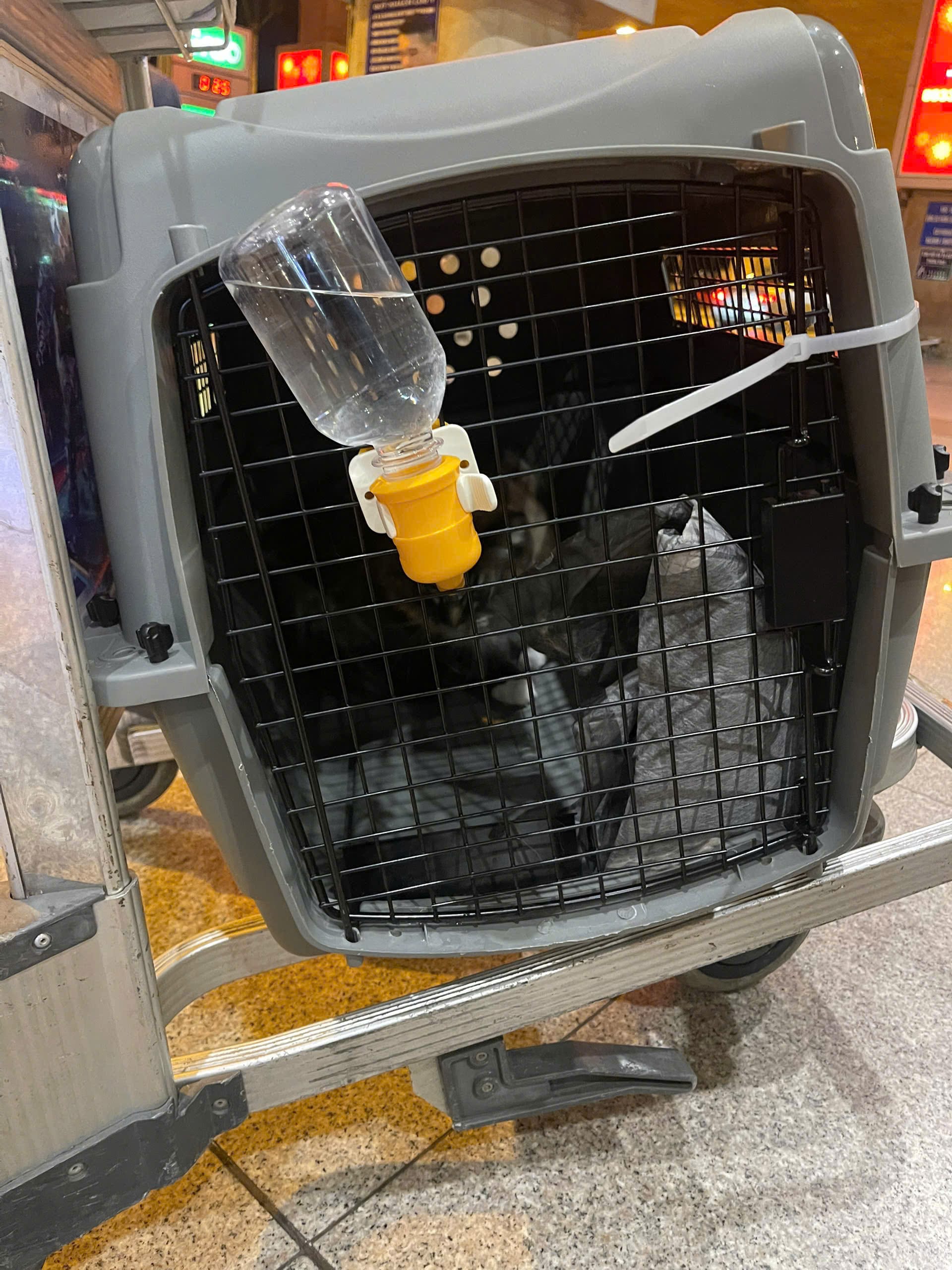
Airlines bill cargo on chargeable weight. It is the higher of the real weight and the volume weight of the crate. Volume weight is length × width × height in centimetres, divided by 6,000.
A stocky dog in a large crate can therefore cost far more than its weight suggests. In 2026 quotes, freight for a small crate on a direct Asian route ran USD 450–1,500, and long-haul routes ran USD 1,800–2,800. Large crates on long-haul routes with carriers such as Emirates reached USD 4,500–7,500.
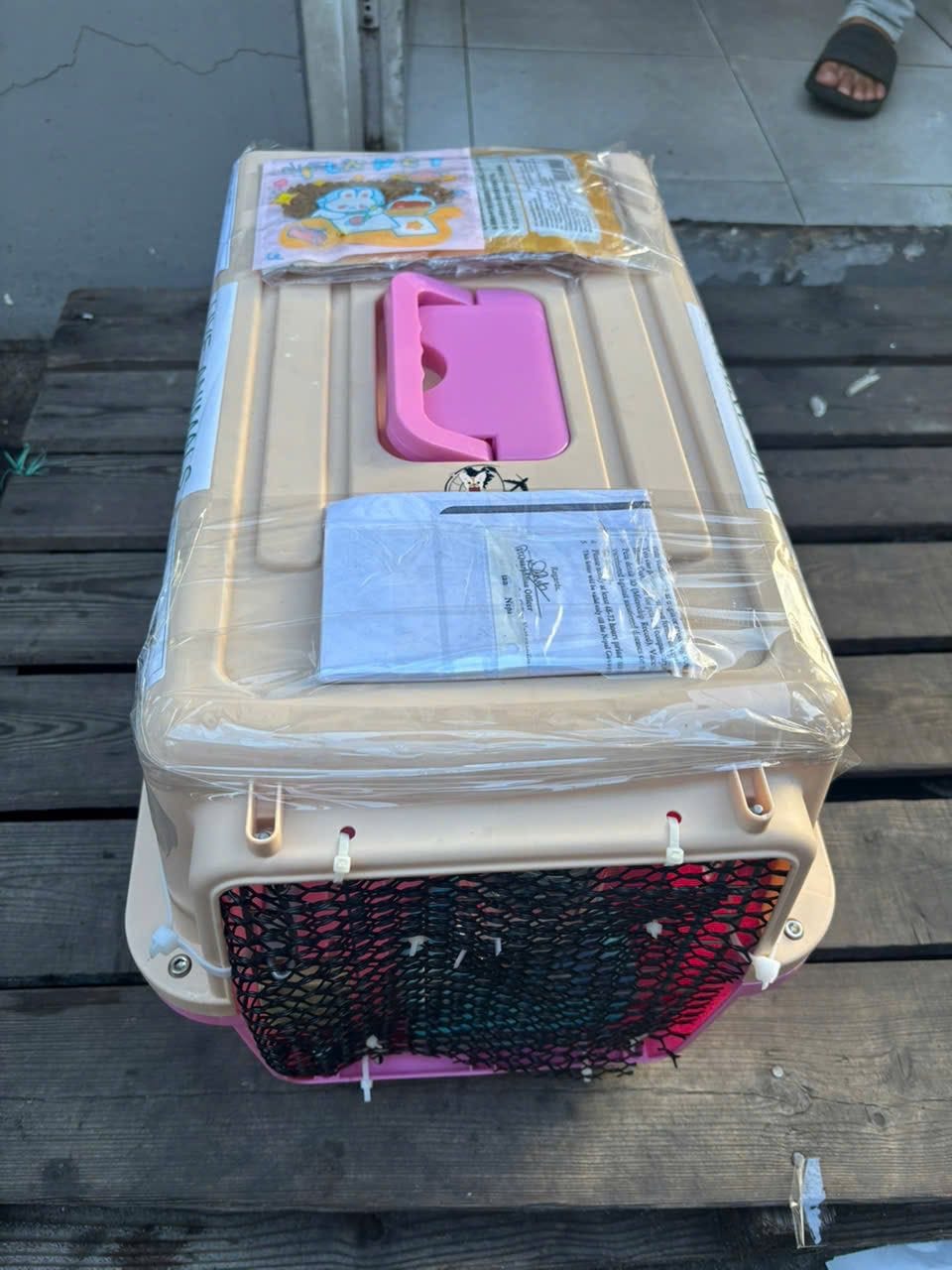
The airline also applies the IATA Live Animals Regulations, which set how much space the pet needs. A larger pet needs a larger crate, and the bill follows.
How Much Do Tests and Destination Rules Add?
A destination that requires a rabies titer test adds about USD 550 per pet, plus a waiting period after the blood draw: 3 months for the EU and the UK, at least 180 days for Japan. See the rabies titer test guide.
Quarantine adds daily fees. Every pet from Vietnam spends 30 days at Singapore’s quarantine centre, at S$26–35 a day. Hong Kong requires at least 120 days. Australia’s own estimate for quarantine and the import permit is A$3,114 for a 10-day stay (Department of Agriculture, Fisheries and Forestry). Pets bound for Australia must also first live in an approved country, which adds months of boarding and a second flight.
What Does the Paperwork in Vietnam Cost?
The Vietnam-side work is usually included in the quote. It covers the export health certificate from Vietnam’s government veterinary office, the microchip and parasite treatment certificates and, where needed, the import permit for the destination.
Each destination sets its own form and validity window for the health certificate. A flight change can therefore mean a new vet exam and a new certificate. The full list is in our guide to pet transport documents from Vietnam.
How Much Does the Crate Cost?
An IATA crate costs about USD 100–300, depending on size. Most quotes leave it out. The crate must let the pet stand, turn around and lie down, so a large dog needs a large crate. For cargo, that crate also raises the freight, because airlines bill on volume.
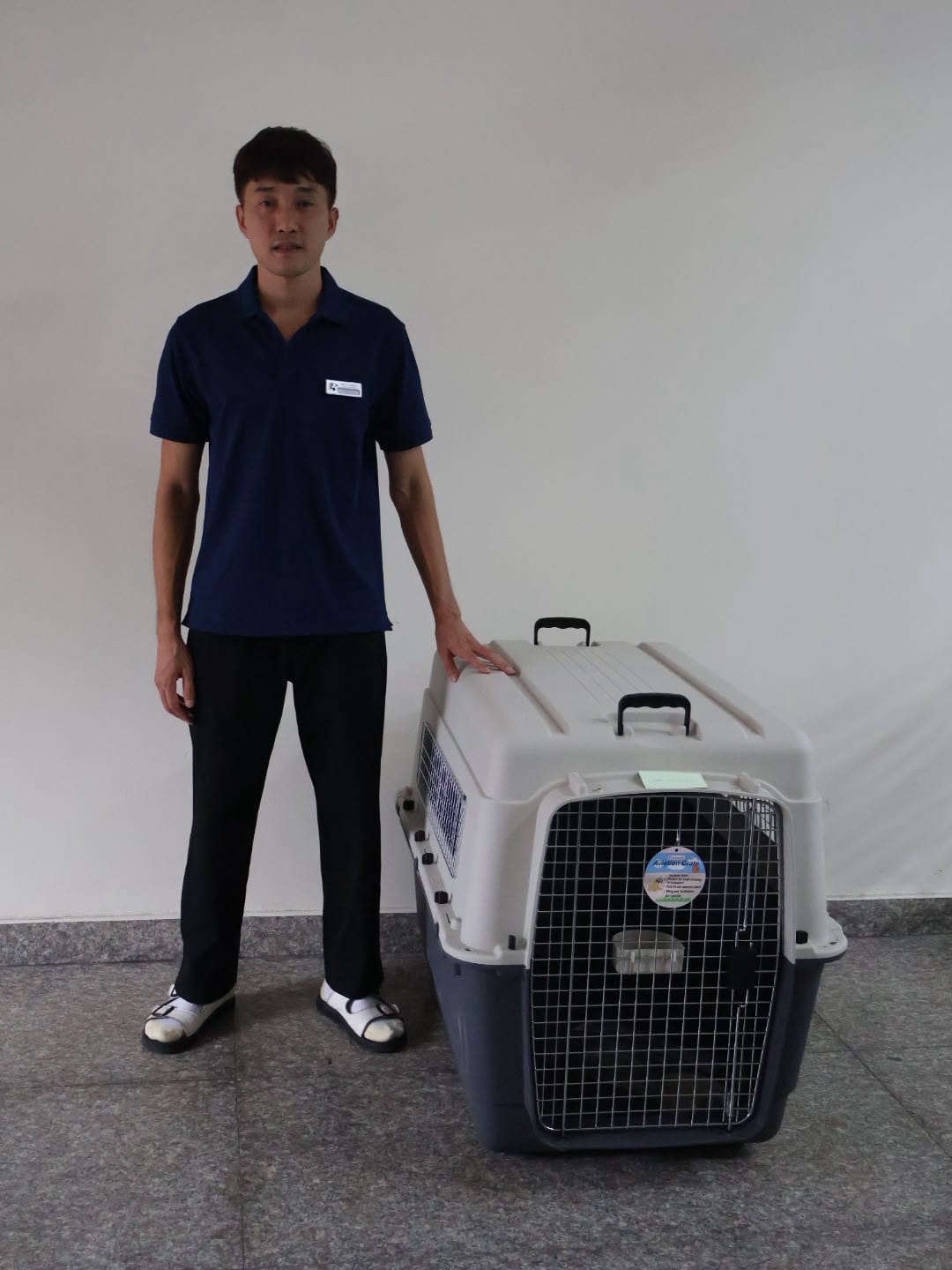
Measure your pet before asking for a quote, using our IATA pet crate sizing guide.
What Fees Apply After Landing?
Where arrival-side agent and clearance fees were quoted in 2026, they ran USD 900–3,000 per pet. Dogs entering the USA also pay a CDC-registered Animal Care Facility USD 1,500–2,000, and dogs flying with their owners add a cargo-warehouse fee of USD 300–500.
These fees are often outside the quote. The full list is in our guide to hidden costs in pet transportation.
Why Is Pet Transport More Expensive Than It Used to Be?
For pets leaving Vietnam, several recent changes have narrowed the cheaper options.
- Fewer airlines carry dogs on some routes. Vietnam Airlines does not carry dogs on its Vietnam–USA flights, so US-bound dogs fly with other carriers.
- US entry rules for dogs. Since 2024, dogs vaccinated outside the USA and coming from high-risk countries such as Vietnam must pass through a CDC-registered Animal Care Facility.
- Warehouse handling at US airports. Since September 2026, dogs flying with their owners into Los Angeles go through the airline’s cargo warehouse before the facility collects them, which adds a fee.
- Transit rules. Hong Kong requires dogs and cats that change aircraft there to travel as manifest cargo.
- Limited live animal space. Airlines carry only a few animals per flight and set their own temperature limits, so the cheapest flight is often not available.
Airline rules change often; our overview of airline pet policies and restrictions tracks the main carriers.
How Can You Make Pet Transport Less Expensive, Legally?
These steps lower the cost without skipping any legal requirement.
- Fly with your pet where allowed: it is usually the lower-cost option.
- Start early: more flights and routes are available, and nothing must be redone in a rush.
- Measure the pet accurately: use the smallest crate that still meets airline rules.
- Keep the rabies vaccination current: a gap can mean a new vaccine and a new titer test.
- Land on a weekday, in office hours: some destinations charge more at night and at weekends.
- Compare like with like: line up quotes item by item, as shown in our guide to comparing pet shipping quotes.
Skipping a legal step never lowers the cost. A missed waiting period or a fake document can lead to quarantine or a return flight, both paid by the owner.
Frequently Asked Questions
Why is shipping a pet as cargo so much more expensive?
Cargo is a separate shipment. It pays freight on chargeable weight, plus an air waybill, an export customs declaration and handling. A pet flying with you pays only the airline’s fixed pet fee.
How much does a rabies titer test add?
About USD 550 per pet in 2026 quotes. It also adds a waiting period after the blood draw: 3 months for the EU and the UK, and at least 180 days for Japan.
Why does moving a pet to Australia cost about USD 25,000?
Pets from Vietnam cannot fly to Australia directly. They must first live in an approved country, then fly to Melbourne and complete quarantine. Two moves, long boarding and quarantine bring the total to about USD 25,000.
Is the crate included in the price?
Usually not. An IATA crate costs about USD 100–300, depending on size, and its size also sets the freight cost for cargo.
What is the cheapest way to send a pet abroad from Vietnam?
Flying with the owner, where the destination and airline allow it. For destinations without a titer test, such as Thailand, the total starts at about USD 350–900 plus the airline’s pet fee.
Last updated 17 Oct 2026
Compiled by our specialists from the regulations in force on the date above, for reference only. Rules may change after this date. Please verify with the competent authorities or contact us for the most accurate information.
Official sources cited in this guide
- Live Animals Regulationsiata.org
- Department of Agriculture, Fisheries and Forestryagriculture.gov.au
- CDC-registered Animal Care Facilitycdc.gov