
Most guides to bringing a pet into France still describe a regulation that stopped applying in April 2026 and an outdated certificate form. The rest stop at “France follows EU rules” and leave the owner to work out what that means for a dog or cat leaving Vietnam. This guide follows the whole sequence in the order it happens, plus the few rules that belong to France rather than to the EU as a whole. For the fast overview, start with the France pet shipping guide.
The Full Sequence, Start to Finish
Vietnam is not on the EU’s list of countries exempt from the rabies titer test (Implementing Regulation (EU) 2026/636), which puts every dog and cat on the strictest track. That track runs in a fixed order, and each step has a minimum wait built on the one before it.
| Step | What happens | Timing |
|---|---|---|
| 1 | Microchip implanted | Day 1 |
| 2 | Rabies vaccination | Day 1, same day or after the chip, at 12 weeks of age or older |
| 3 | Blood draw for the antibody titer test | Day 31 or later |
| 4 | Health certificate issued | At least 90 days after the blood draw |
| 5 | Entry into France and customs check | Within 10 days of the certificate being issued |
From a standing start, the realistic minimum is about four to five months from the rabies vaccination — and because the first rabies vaccine can’t be given before 12 weeks of age, a puppy or kitten can’t arrive before roughly seven months old. The 90-day wait is fixed. No urgency shortens it, and a failed titer test starts it again. The EU pet shipping timeline lays out the same sequence month by month.
Three Age Rules, Not One
France sets three separate thresholds. Rabies vaccination can’t be given before 12 weeks of age. An animal under 16 weeks is refused entry even if it is vaccinated. And every dog entering from a third country must have at least one adult tooth, a rule added to the Rural Code by a 2021 animal-welfare law. In practice the titer timeline carries any animal past all three, which is why the youngest realistic arrival is around seven months.
Microchip Before Anything Else
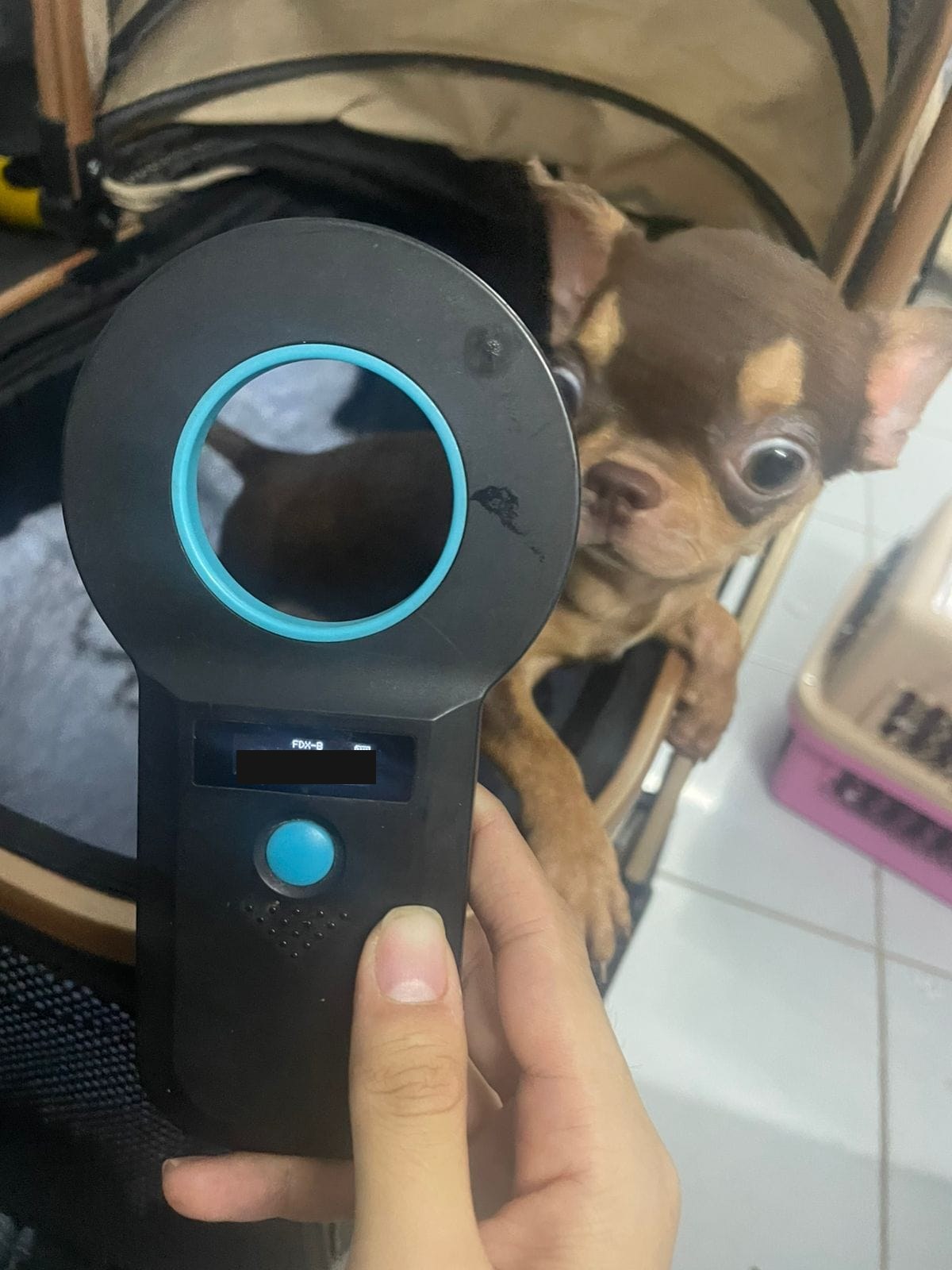
The chip has to comply with ISO 11784 and ISO 11785, and it has to go in before the rabies vaccination. A vaccine given to an unchipped pet isn’t recognised, and the sequence restarts with a new dose. A chip that isn’t ISO-compliant is accepted only if the owner brings a reader that can scan it. The ISO-compliant pet microchip guide lists what to check before the vet appointment.
Rabies Vaccination and the Titer Test
The vaccine has to be given by a licensed vet after the microchip. A first (primary) vaccination counts as valid from 21 days after the course is completed, and a booster keeps that validity only if it is given before the previous dose lapses. If coverage lapses, the next dose becomes a new primary vaccination and the titer test has to be repeated at least 30 days after it. The result stays valid for the animal’s lifetime, but only while the vaccination stays current — which makes the rabies vaccine validity guide worth reading before the first booster falls due.
The titer test measures neutralising antibodies in a blood sample taken at least 30 days after vaccination. The result must be 0.5 IU/ml or higher, and the test has to be run by a laboratory designated by the EU. There is none in Vietnam. The European Commission’s list of designated laboratories outside the EU shows which laboratories can run the test for a pet from Vietnam. The rabies antibody titer test guide explains the test itself.
The wait that follows is where older guides go wrong. They count 90 days to the day of entry. Current French guidance counts at least 90 days from the blood draw to the day the health certificate is issued. In practice that means the certificate can’t be signed early to line up with a day-90 flight: sign no earlier than day 90 after the draw, then travel inside the 10-day validity. A result below 0.5 IU/ml means a fresh sample and a new 90 days.
The Health Certificate
An official veterinarian completes the certificate on the model in Annex III, Part 1 of Implementing Regulation (EU) 2026/705. It records the microchip, the rabies vaccination and the titer result, and it is written in French and English — the language of the country of entry plus English. French customs set out the current model in its June 2026 information note.
The certificate is valid for 10 days from the day it is issued until the customs check in France. After that check it stays valid for six months of onward travel in the EU, or until the rabies vaccination expires, whichever comes first, provided customs has endorsed it on arrival. Because of the 10-day window, it is the last document to produce, not the first. The animal health certificate guide shows how the document works across destinations.
In Vietnam, the state veterinary authority signs the certificate through a regional Livestock and Veterinary Sub-Department (Chi cục Chăn nuôi và Thú y vùng). The applicant files the quarantine registration together with the importing country’s certificate model, and under Circular 01/2026/TT-BNNMT the office has one working day to check the file and one more working day from the start of inspection to issue the certificate when no laboratory sampling is needed.
The Owner Declaration and the Five-Day Rule
France applies the EU’s non-commercial rules: no more than five animals, no sale or transfer of ownership, and the owner travels with the pet. If the pet flies separately, the owner — or someone the owner authorises in writing — has to travel within five days of it, before or after. The authorisation uses the declaration in Annex V, Part 1 of Regulation 2026/705, and the European Commission confirms that the authorised person can be a member of the carrier’s staff. The owner’s name still goes on the certificate. The EU five-day owner-pet rule covers what happens when the gap runs longer.
If the gap runs past 5 days, the movement no longer counts as non-commercial and falls under commercial rules, which are considerably more complex.
What Happens at the French Border
France checks pets from Vietnam at customs, not at a veterinary border post. The owner or authorised person presents the animal and its documents to customs officers before leaving the international zone of the airport. No import permit is issued in advance, no appointment is needed, and nothing has to be sent ahead. For pets from countries that require the titer test, the check is systematic: documents first, then identity. Officers endorse the certificate at the same time, which starts the six-month onward validity. Which airports handle this is covered in the France pet import FAQ.
When a record doesn’t match — a missing titer test, an expired vaccination, a chip number that differs from the certificate — officers can order the pet returned to its country of origin, placed in quarantine or, in the most serious cases, euthanised, all at the owner’s expense (Rural Code, articles L236-9 and L236-10). Those outcomes belong to files that don’t match. A file that matches is checked once and cleared, which is the case for verifying every date and number before the flight rather than at the counter.
Rules That Sit Outside This Checklist
Meeting every requirement above doesn’t help a dog that France classifies as an attack dog. Category 1 dogs can’t enter or even transit, and Category 2 dogs arrive under strict conditions that continue after landing. The guide to France’s dog categories sets out where the line falls.
Cats face no breed ban, with one practical exception. Bengal and Savannah cats need a pedigree from a studbook recognised by the French agriculture ministry. Without it, France treats the animal as a hybrid that needs a separate import permit from the regional environment directorate (DREAL). Early-generation Savannahs, F1 to F4, count as non-domestic animals and need a CITES permit as well.
Once a pet is in France, the rules change from import to residence. A dog or cat that will stay more than three months has to be registered in the national identification database, I-CAD, through a vet visit within eight days of arrival.
Before Booking a Flight From Vietnam
- Implant the microchip before or on the same day as the rabies vaccine, with the vaccine given at 12 weeks or older.
- Draw blood on day 31 or later, then count 90 days from that draw to the day the certificate will be issued.
- Confirm the certificate is on the current EU model (Regulation 2026/705).
- Issue the certificate no more than 10 days before landing, in French and English.
- Check a dog against France’s category rules and a cat against the Bengal and Savannah rule.
- Keep the chip number, vaccination date and titer result identical across every document.
Whether the pet travels in the cabin, in the hold or as cargo depends on weight, breed and airline, and the guide to flying pets to France works through each option.
Last updated 17 Oct 2026
Compiled by our specialists from the regulations in force on the date above, for reference only. Rules may change after this date. Please verify with the competent authorities or contact us for the most accurate information.
Official sources cited in this guide
- food.ec.europa.eufood.ec.europa.eu
- June 2026 information notedouane.gouv.fr
- Circular 01/2026/TT-BNNMTvanban.chinhphu.vn