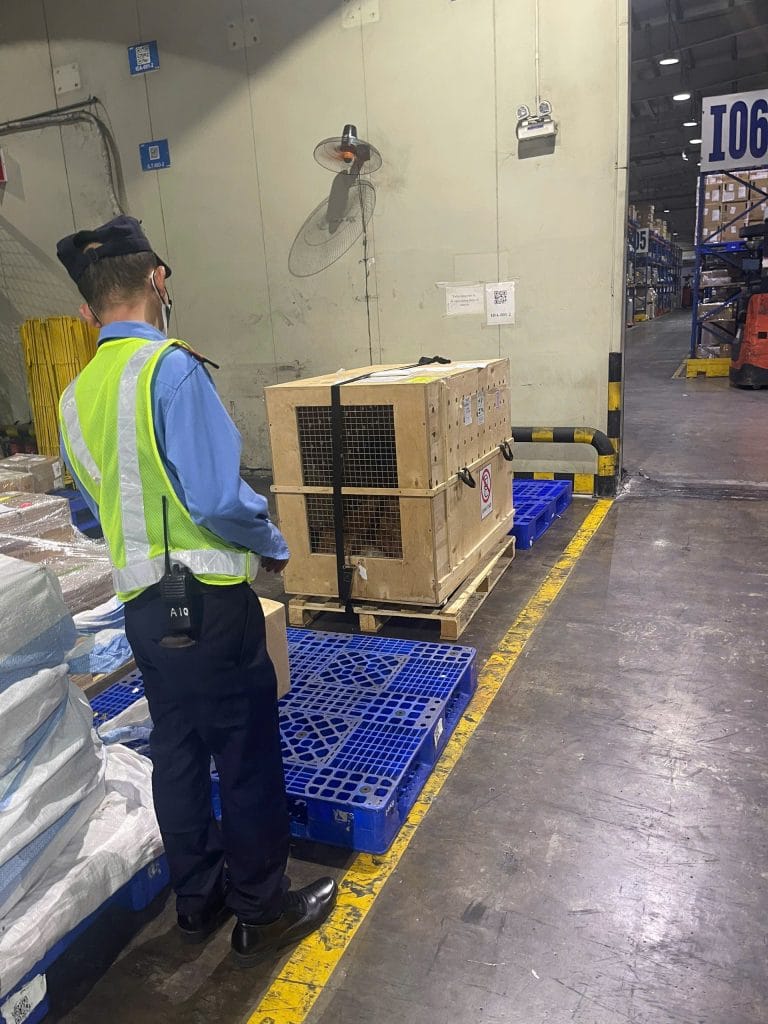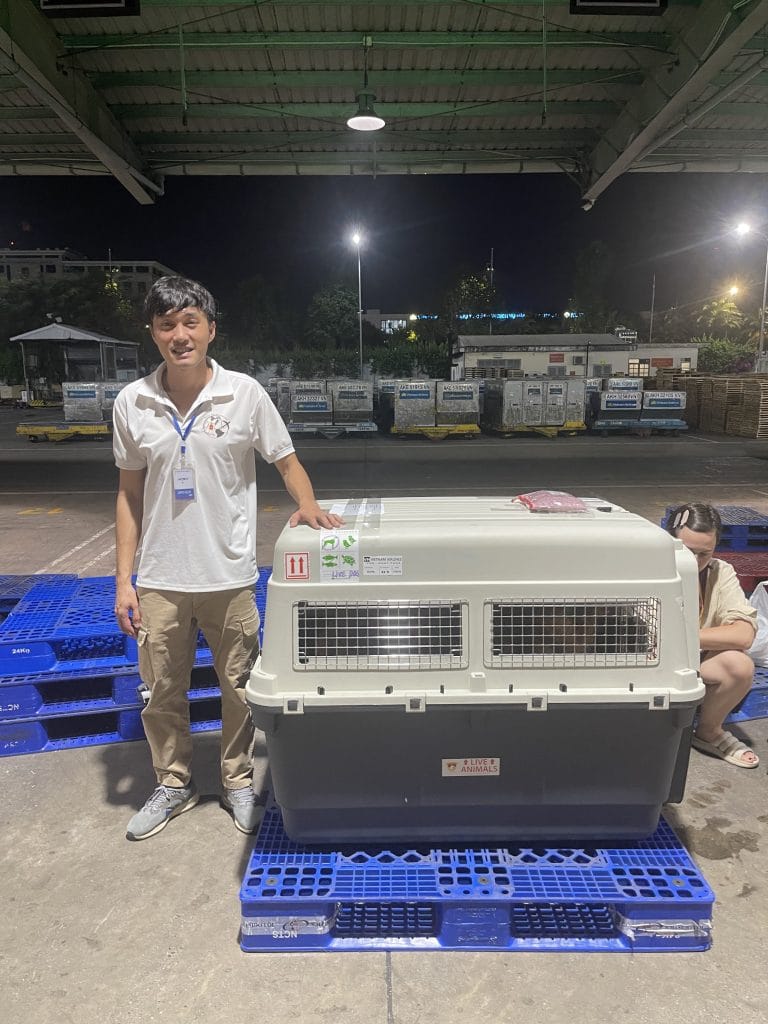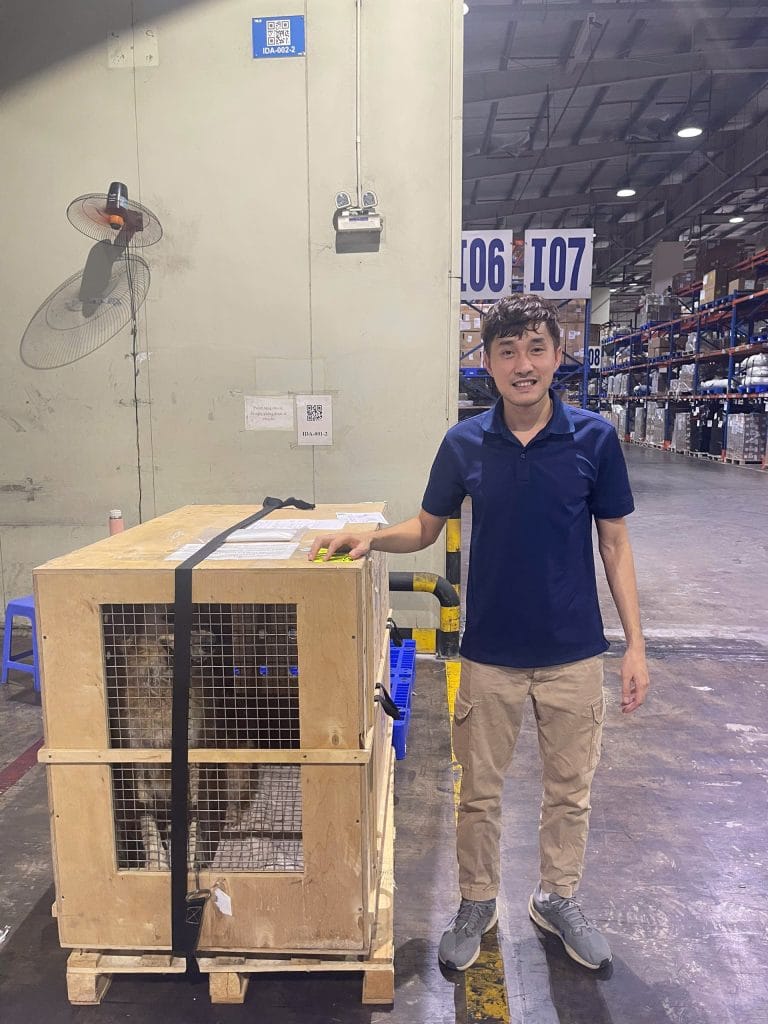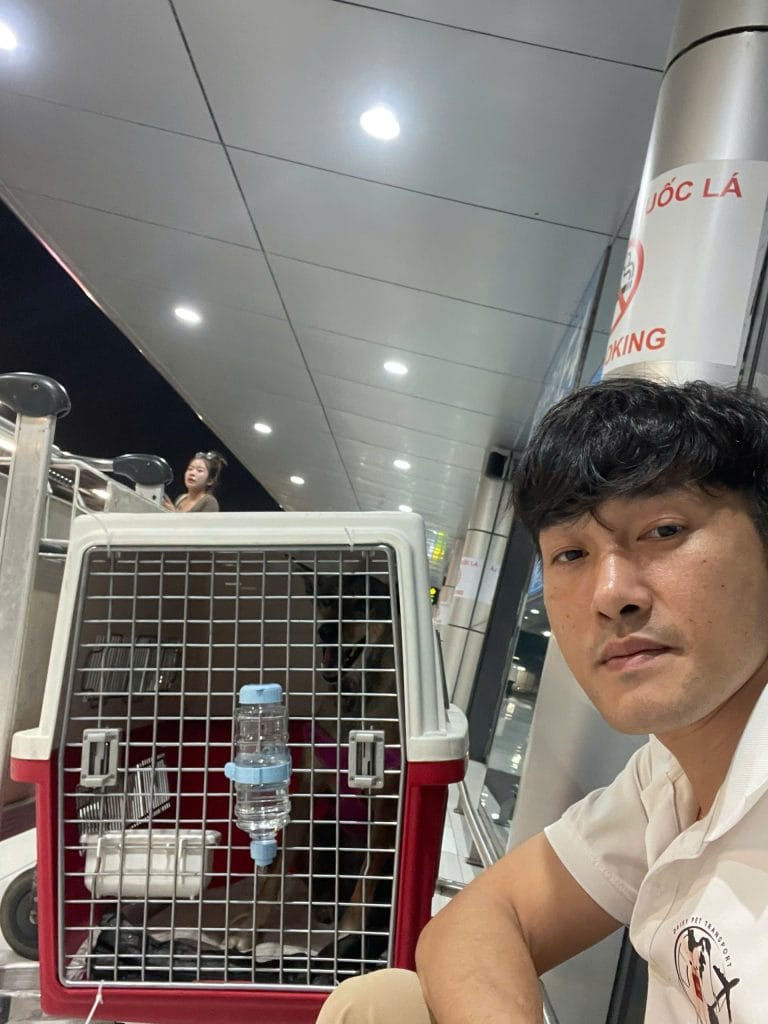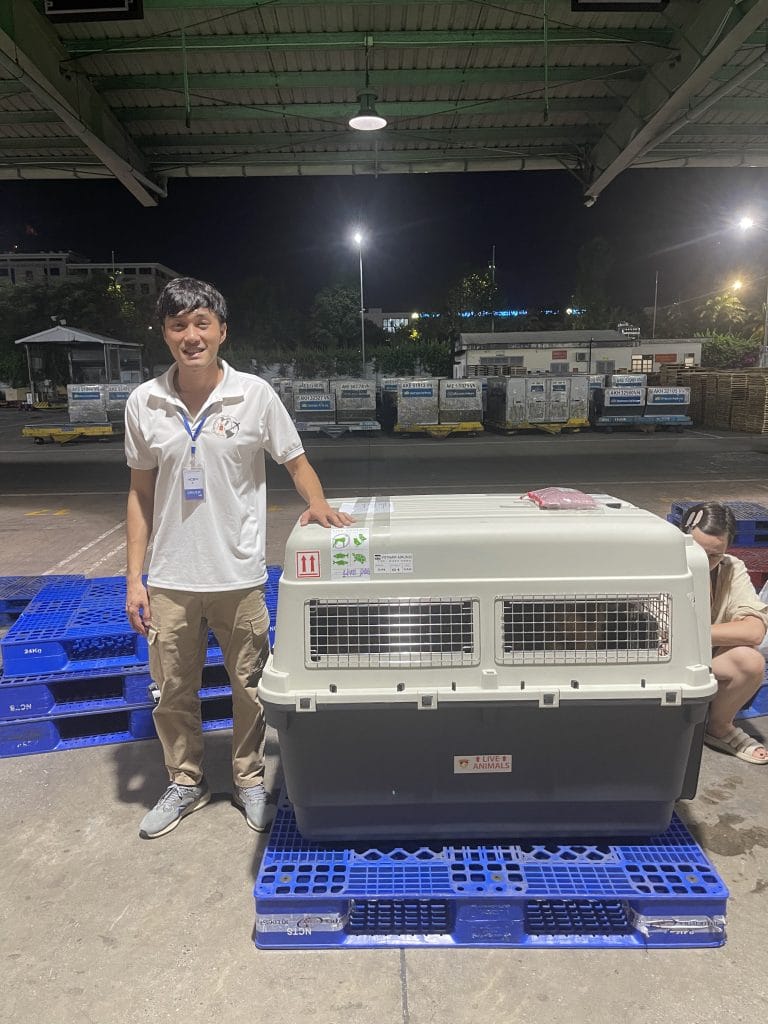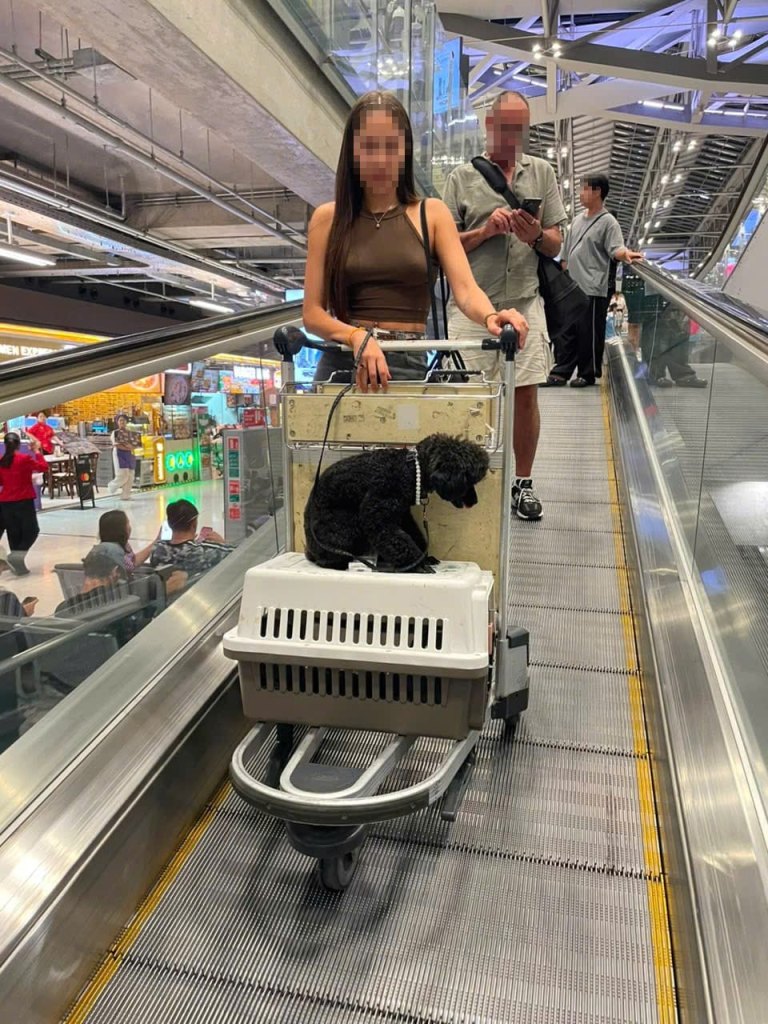
Older guides on this route often say every pet from Vietnam to Europe has to travel as manifest cargo. For Paris that is no longer the whole picture. Two airlines list nonstop service between Vietnam and Paris, and Vietnam Airlines includes France in its pet fee tables for both the cabin and checked baggage. The question stops being whether there is a way and becomes which way fits this particular animal. France’s import rules are identical for all three — the choice belongs to the airline. The rules themselves are in the France pet shipping guide.
Cabin, Hold or Cargo: What Decides It
A pet can fly with its owner in the cabin, fly with its owner in the hold as checked baggage, or fly separately as manifest cargo under its own air waybill. Weight, breed and whether the owner is on the same flight decide which of the three is open.
| Mode | How it works | Vietnam Airlines limit | Air France limit |
|---|---|---|---|
| Cabin | Pet in a carrier on the cabin floor, owner on the same flight | 6 kg with the carrier; carrier no larger than 35 × 30 × 20 cm | Under 8 kg with the carrier |
| Hold with owner | Checked baggage, owner on the same flight | 32 kg with the crate | Up to 75 kg with the crate |
| Cargo | Separate booking, handled at the cargo terminal | Above 32 kg, or when the pet flies separately | Above 75 kg, or unaccompanied, through Air France KLM Martinair Cargo |
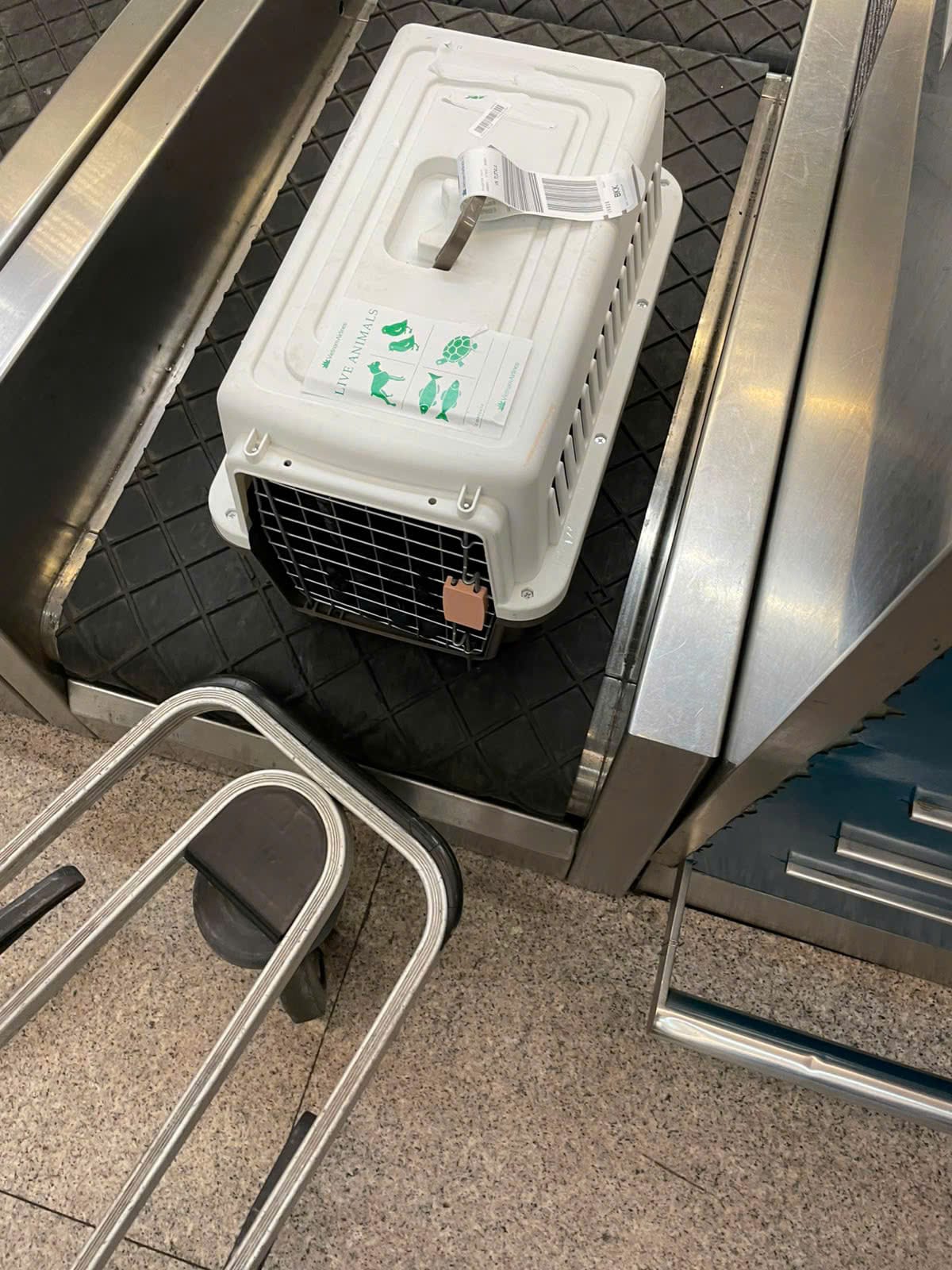
The figures come from Vietnam Airlines’ pet travel page and Air France’s pet page. Vietnam Airlines requires a rigid container in both the cabin and the hold, with one end fully open and barred, and accepts wooden containers for cats only. The cabin carrier limit is small: because the pet has to be able to stand, sit and lie down inside, cabin travel in practice suits only very small animals.
Two Airlines Fly Vietnam to Paris Nonstop
Vietnam Airlines flies Hanoi to Paris nonstop on the Airbus A350, and both Vietnam Airlines and Air France list nonstop Ho Chi Minh City to Paris service. Flight time is roughly 12 to 13 hours either way. Schedules change by season, so the timetable is worth confirming when booking. For a pet the nonstop matters for a practical reason: there is no transit airport where a crate is unloaded, held on the ground in the heat and loaded again. On the A350, Vietnam Airlines carries cabin pets in economy and premium economy only, two per cabin section per flight, and a pet in the cabin means the owner may be moved from the seat they selected.
Routes through Istanbul, Doha, Dubai and other hubs are possible, and each hub airline has its own weight limits and breed rules. The airlines that carry pets to Europe are compared in a separate guide.
Four Pets, Four Answers
The same route gives different answers depending on the animal. The fees are Vietnam Airlines’ published Zone C rates for France, checked on its website on 29 September 2026, excluding VAT.
| Pet | Total weight | Vietnam Airlines | Air France |
|---|---|---|---|
| Small cat, 2.5 kg, in a 1.3 kg rigid carrier | 3.8 kg | Cabin, $600 per flight sector | Cabin, within the 8 kg limit |
| Dog, 7 kg, in a 3 kg crate | 10 kg | Hold, $400 (9–16 kg band) | Hold, over the 8 kg cabin limit |
| Golden Retriever, 28 kg, in a 12 kg crate | 40 kg | Cargo, over the 32 kg limit | Hold, under the 75 kg limit |
| Pug, 8 kg, in a 4 kg crate | 12 kg | Refused, on the breed list | Refused in the hold, snub-nosed breed |
Two things stand out. On Vietnam Airlines the cabin costs twice the hold fee for a small animal, since the hold rate for pets up to 9 kg is $300 against $600 in the cabin. And the mode is set by the weight of pet and crate together, so a crate that is heavier than expected can move a pet from one row of the table to the next. Total costs across the whole shipment are in the pet relocation cost guide for Europe.
A pet that will fly back to Vietnam later brings a second consideration, because the titer and certificate choices made now decide how easy the return is. Those are covered in the guide to pet travel from France to Vietnam.
Breeds That Change the Answer
Airline breed lists apply before France’s rules do. Vietnam Airlines’ list of animals it won’t carry names snub-nosed dogs and cats in general, the Pug, French Bulldog, Bulldog, Boxer, Shih Tzu and Pekingese among others, four cat breeds (Burmese, Exotic, Himalayan and Persian), and a run of breeds that France itself regulates: the American Staffordshire Terrier, Pit Bull, Tosa and Rottweiler, the last two with their crosses. Air France’s page also bars snub-nosed dogs and cats whose build makes hold travel unsuitable.
France’s agriculture ministry adds that Category 2 dogs may fly only on Air France flights and freight flights, and Category 1 dogs can’t fly to France at all. What that means for each dog is set out in the guide to France’s banned dog breeds.
A snub-nosed dog is not out of options, only out of these two. The cargo division of a hub airline may carry it under conditions. Turkish Cargo, for example, asks for a crate one size larger, ventilation on all four sides, a signed indemnity letter and ground temperatures below 27°C at both ends. From Vietnam the last condition is the hard one, and it narrows the realistic departure windows to cooler months and early mornings.
Booking Rules, Check-In and Heat
Vietnam Airlines requires the pet to be booked at least 24 hours before departure through one of its branches, and it caps the hold at nine pets per flight and three per passenger. Two pets may share a crate only if they have lived together and weigh no more than 14 kg combined. Passengers should be at the airport at least two hours before departure and sign a waiver of liability, which can be downloaded and filled in beforehand.
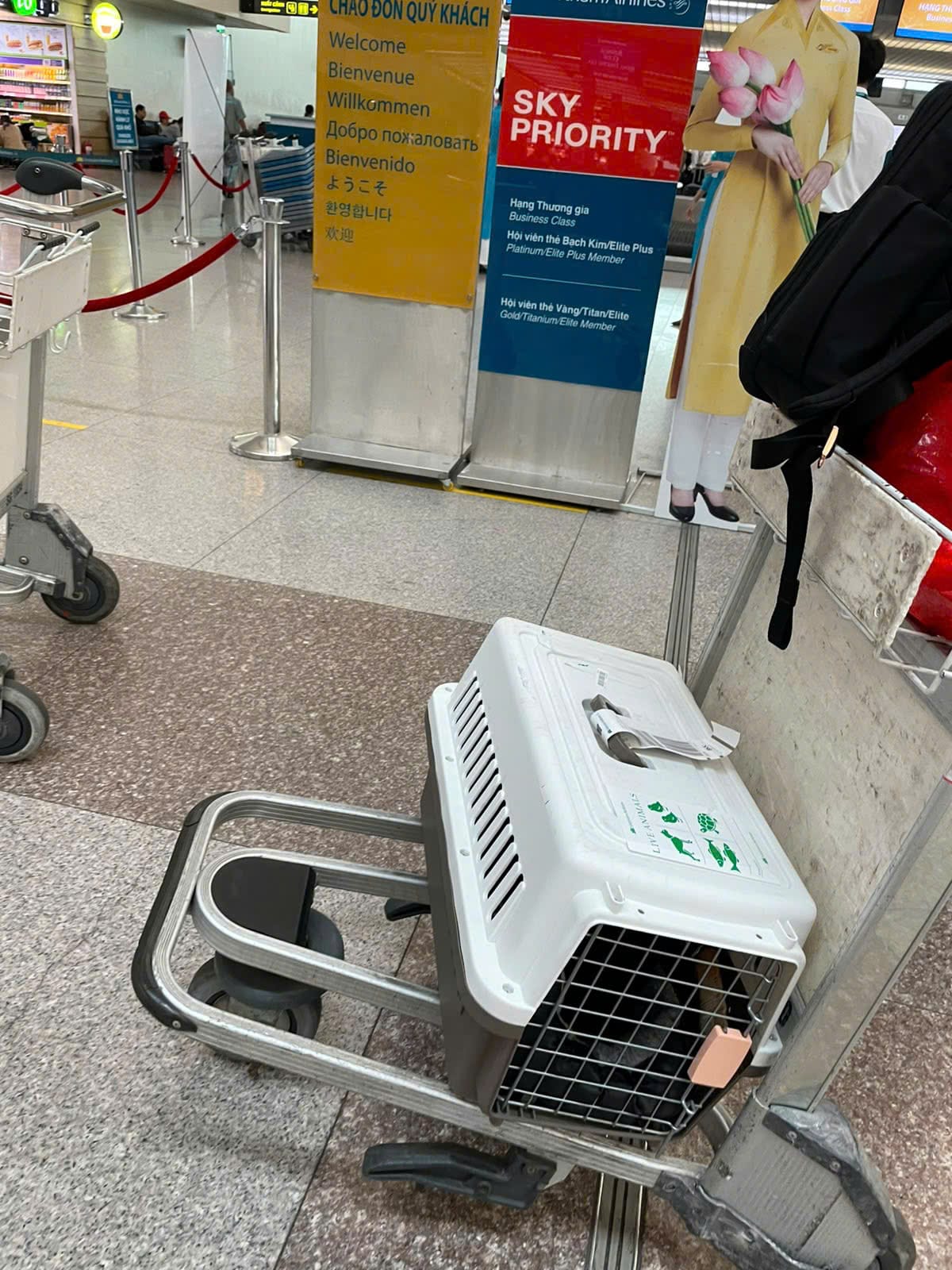
Heat can end a booking. Vietnam Airlines may require a certificate of adaptation or refuse to carry a pet if the weather is excessively hot or cold, and hold space is limited, so the date is best secured early. A cargo pet is different again: it is checked in at the cargo terminal, on its own booking, and the owner or an authorised person has to travel within five days of it, as the EU five-day owner-pet rule requires.
What Happens on Arrival in Paris
For a pet in the cabin or the hold, the owner walks it through French customs with the certificate before leaving the international zone. The France pet import law guide sets out that check step by step. A cargo pet faces the same requirement: the animal and its documents have to be presented to customs. Air France states that cargo pets are checked in at its cargo facility on airport grounds rather than the passenger terminal, and it recommends that a licensed IPATA agent books the transport. Expect collection to happen on the freight side, and confirm the facility and its hours with the airline or agent before landing.
Before You Book
- Weigh the pet in its carrier or crate and compare the total with the airline’s cabin, hold and cargo limits.
- Check the breed against the airline’s list first, then against France’s dog categories.
- Book the pet onto the reservation as early as possible; Vietnam Airlines caps pets per flight, and heat can close a date.
- Plan the certificate’s 10-day validity around the flight date, not the other way round.
- For cargo, agree the owner’s travel date within five days of the pet’s and prepare the written authorisation.
Last updated 3 Oct 2026
Compiled by our specialists from the regulations in force on the date above, for reference only. Rules may change after this date. Please verify with the competent authorities or contact us for the most accurate information.
Official sources cited in this guide
- Vietnam Airlines’ pet travel pagevietnamairlines.com
- Air France’s pet pagewwws.airfrance.fr