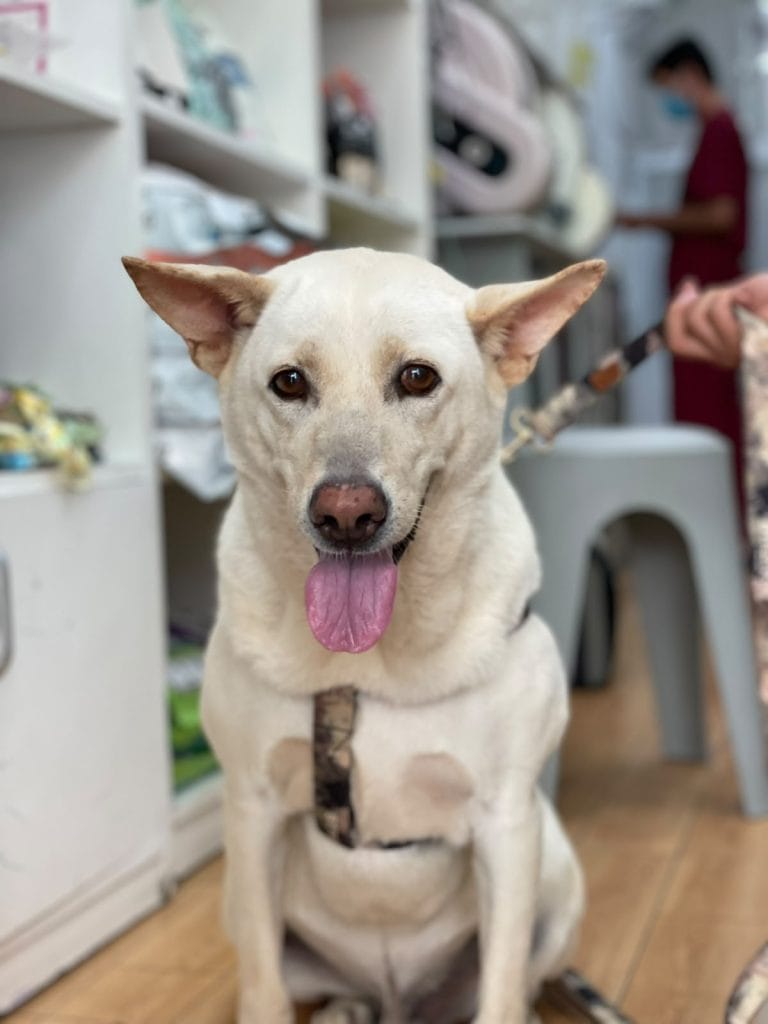
The Question Every Pet Owner Asks
If you are relocating a dog from Vietnam to the United States, one fact becomes immediately apparent: U.S. dog import regulations are dramatically more complex, more expensive, and more time-consuming than the rules for cats.
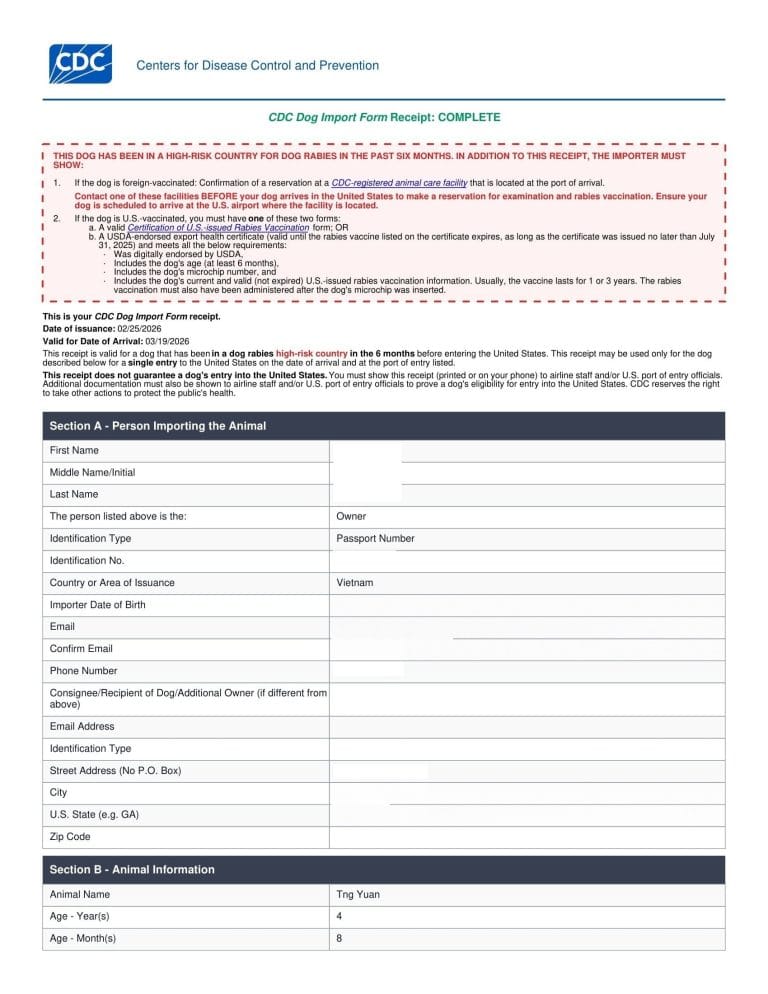
Dogs from Vietnam require a microchip, a Rabies Neutralizing Antibody Titer Test (RNATT), a CDC import permit (applied for online — you receive a barcode receipt first, then use that receipt together with your flight ticket and pet photos to email the ACF and confirm the reservation), and arrival at only 1 of 8 designated airports with a pre-booked Animal Care Facility (ACF). For the full step-by-step process, see our CDC Dog Import Form guide and ACF reservation guide. Cats, by contrast, have no federal health certificate requirement from either the CDC or APHIS — cats only need to appear healthy at the US port of entry.
This is not arbitrary. The disparity is rooted in decades of epidemiological science, a hard-won public health milestone, and a recent crisis involving fraudulent documentation. This article explains why.
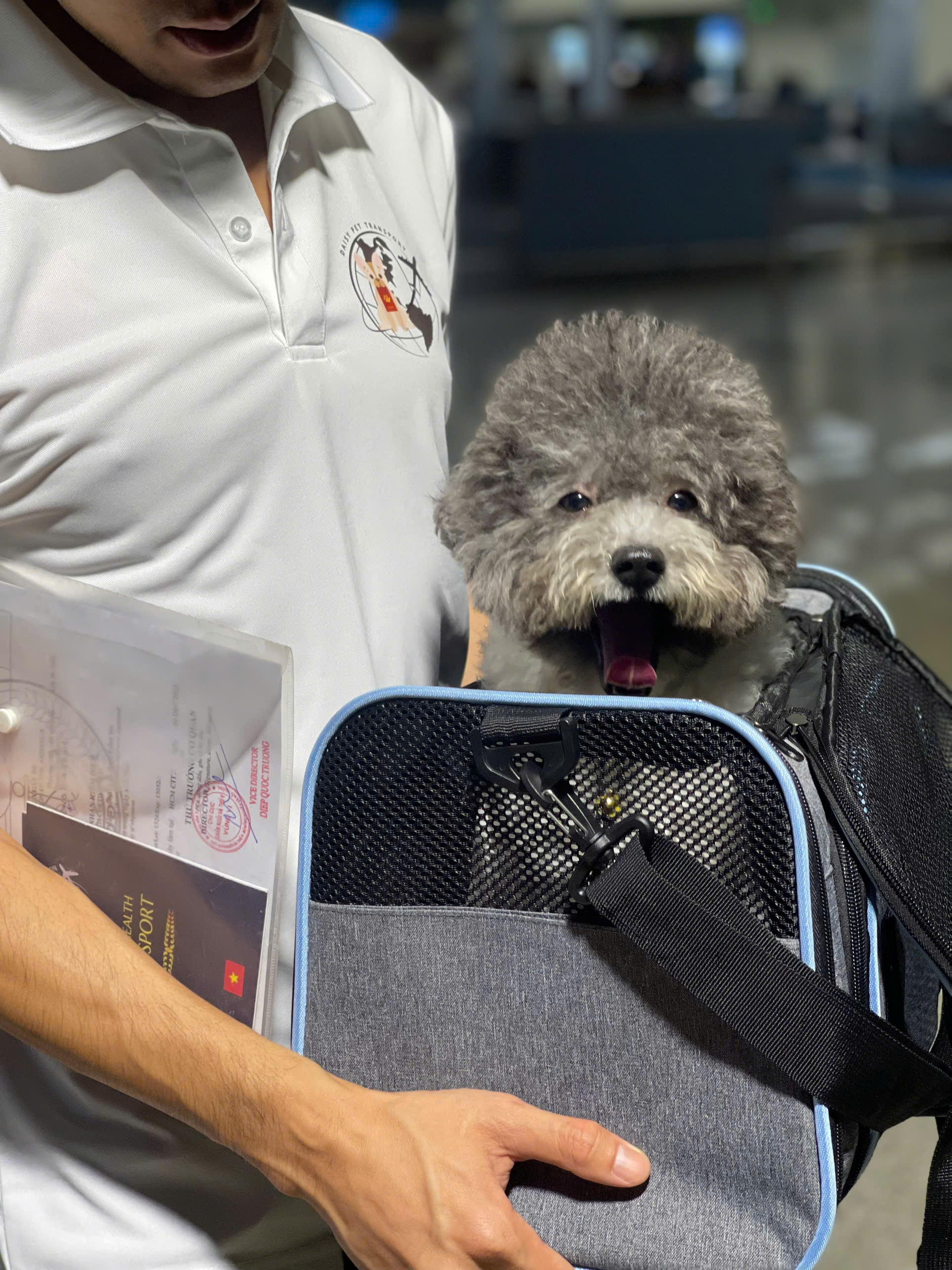
1. The Science: Dog-Maintained Rabies Virus Variant (DMRVV)
The single most important factor behind the regulatory divide is the existence of a Dog-Maintained Rabies Virus Variant (DMRVV) — a strain of rabies that is uniquely sustained within dog populations.
Dogs: A Reservoir Species
Dogs are classified as a reservoir species for DMRVV. This means the virus can circulate, replicate, and transmit continuously within dog populations without requiring any other animal species as an intermediary. A single infected dog introduced into a community can trigger an independent chain of transmission among other dogs — and ultimately to humans.
According to the CDC, canine rabies remains endemic in more than 100 countries worldwide, causing an estimated 59,000 human deaths annually (Source: World Health Organization).
Cats: An Incidental Host
Cats, in stark contrast, are not a reservoir species for any rabies variant. There is no feline-maintained rabies virus variant in existence. When a cat contracts rabies, it is invariably through spillover — infection acquired from another species such as bats, raccoons, skunks, or dogs (Source: NIH/PubMed).
Because cats cannot independently sustain a rabies cycle within their own population, the importation of a cat — even from a high-risk country — does not carry the same systemic threat of reintroducing an entirely self-sustaining disease chain.
In simple terms: An infected dog can start an epidemic. An infected cat is a dead-end host — tragic, but epidemiologically contained.
2. The History: How the U.S. Eliminated Canine Rabies in 2007
In 2007, the United States officially declared the elimination of the dog-maintained rabies virus variant (DMRVV) from its territory — the culmination of over 50 years of systematic public health intervention (Source: CDC MMWR Report).
This achievement was built on:
- Mandatory vaccination campaigns across all 50 states.
- Dog licensing and registration systems to ensure accountability.
- Stray dog population control programs in urban and rural areas.
- Surveillance networks for early detection of rabies cases.
The CDC considers the preservation of this “Canine Rabies-Free” status a top-tier public health priority. Any reintroduction of DMRVV through an imported dog would potentially undo decades of work and cost millions of dollars in emergency response, quarantine operations, and public vaccination campaigns.
This is precisely why the regulatory burden falls disproportionately on dogs: every imported dog from a high-risk country represents a potential vector for reintroduction.
3. The Crisis: Fraudulent Documentation (2020–2024)
The theoretical risk became a practical emergency in recent years. During and after the COVID-19 pandemic, international dog importations to the U.S. surged — and with them, a wave of fraudulent and falsified rabies documentation.
Key findings reported by the CDC and the American Kennel Club (AKC):
- Dogs deemed ineligible for entry due to fraudulent paperwork increased by 52% compared to pre-pandemic levels (Source: AKC).
- Multiple cases of rabies-positive dogs successfully entering the U.S. using falsified vaccination certificates were documented (Source: CBS News).
- Some international rescue organizations were identified as sources of dogs with invalid or fabricated health records.
- Puppies too young to have been effectively vaccinated were imported with age-falsified documentation.
These incidents directly precipitated the sweeping regulatory overhaul effective August 1, 2024, which introduced the current system of mandatory CDC Dog Import Forms, barcode Receipts, microchip verification, minimum age requirements (6 months), and the ACF inspection protocol.
Cats were not implicated in any of these fraud cases, nor do they pose the same reservoir risk — which is why no equivalent regulatory tightening was applied to feline imports.

4. Regulatory Comparison: Dogs vs. Cats (2026)
| Requirement | 🐕 Dogs (Canine) | 🐈 Cats (Feline) |
|---|---|---|
| Epidemiological Role | Reservoir species (maintains DMRVV) | Incidental host (spillover only) |
| Microchip | Required (15-digit ISO) | Not required (recommended) |
| Minimum Age | 6 months (strictly enforced) | No federal requirement |
| Rabies Titer Test (RNATT) | Required (≥ 0.5 IU/mL from CDC-approved lab; blood drawn ≥ 30 days after first valid vaccine AND ≥ 28 days before US entry) | Not required |
| CDC Import Permit | Required (online form + photography) | Not required |
| Ports of Entry | Restricted to 8 ACF-designated airports | All U.S. airports permitted |
| ACF Reservation | Mandatory (booked after CDC receipt is received) | Not required |
| Post-Arrival Booster | Mandatory U.S. rabies booster at ACF | Not required |
| Estimated Timeline | 4–6 months preparation | 2–4 weeks preparation |
| Estimated Cost | $2,500 – $4,500 | $1,500 – $2,500 |
Data compiled from CDC, APHIS-USDA, and AVMA guidelines. Last verified: May 2026.
5. What This Means for Pet Owners Relocating from Vietnam
Vietnam is classified by the CDC as a High-Risk Country for Dog Rabies. This designation triggers the most stringent tier of import requirements for dogs — including the full RNATT protocol, restricted ports of entry, and mandatory ACF processing.
For dog owners, this means:
- The preparation process should begin a minimum of 4–6 months before the intended travel date.
- Every document in the chain — from microchip certificate to CDC Receipt — must be precisely sequenced and cross-verified.
- A single documentation error can result in denial of entry or a mandatory 28-day quarantine at the owner’s expense.
- Before booking any flights, confirm your routing works for your pet — certain transit hubs (notably Hong Kong) have specific restrictions. See our airlines guide before committing to a ticket.
For cat owners, the process is substantially simpler:
- No RNATT, no CDC Import Form, no ACF reservation.
- No federal health certificate requirement from CDC or APHIS — cats only need to appear healthy at the US port of entry. Note: most airlines require a veterinary health certificate (issued within 10 days) as an airline requirement; some US states also have their own entry requirements for cats.
- Arrival at any U.S. airport is permitted — cats are not restricted to the 8 ACF-designated airports that apply to dogs.
Frequently Asked Questions
Why doesn’t the CDC require RNATT for cats?
Because cats are not a reservoir species for the dog-maintained rabies virus variant (DMRVV). The RNATT requirement specifically targets the risk of reintroducing DMRVV — a risk that does not apply to felines.
Can my cat still be denied entry to the U.S.?
Yes. While federal documentation requirements are minimal, cats must appear healthy upon arrival. If a CDC officer observes signs of illness or a potential zoonotic disease, the cat may be examined, quarantined, or denied entry at the owner’s expense.
Is the 6-month minimum age requirement for cats as well?
No. The 6-month minimum age is a federal requirement exclusively for dogs. There is no federal age minimum for cats, though most airlines require cats to be at least 8–12 weeks old for transport.
Will cat import rules become stricter in the future?
As of May 2026, there is no indication from the CDC that feline import regulations will be tightened to match canine rules. However, individual U.S. states may impose their own requirements, including mandatory rabies vaccination.
Why are only 8 airports allowed for dogs from Vietnam?
Dogs from high-risk countries must arrive at airports equipped with a CDC-registered Animal Care Facility (ACF). Only 8 U.S. airports currently operate an authorized ACF capable of performing the required post-arrival examination and rabies booster administration (updated 2026-09-25, per CDC’s own approved-care-facilities list — DFW and SEA were newly added; note SEA only accepts cargo shipments).
Official Sources & References
- CDC: Bringing a Dog into the United States
- CDC: Bringing an Animal into the United States
- AVMA: Rabies Resources
- WHO: Rabies Fact Sheet
- Federal Register: CDC Final Rule on Dog Importation (2024)
Need Professional Guidance?
Whether you are relocating a dog or a cat, understanding the regulatory landscape is the first step toward a safe, compliant arrival. If you need assistance navigating the CDC requirements for your specific case, our team is available to provide a detailed assessment as part of our end-to-end pet shipping from Vietnam to the USA service.
Last updated 15 Oct 2026
Compiled by our specialists from the regulations in force on the date above, for reference only. Rules may change after this date. Please verify with the competent authorities or contact us for the most accurate information.
Official sources cited in this guide
- CDCcdc.gov
- World Health Organizationwho.int
- NIH/PubMedpubmed.ncbi.nlm.nih.gov
- AKCakc.org
- CBS Newscbsnews.com
- AVMA: Rabies Resourcesavma.org
- Federal Register: CDC Final Rule on Dog Importation (2024)federalregister.gov