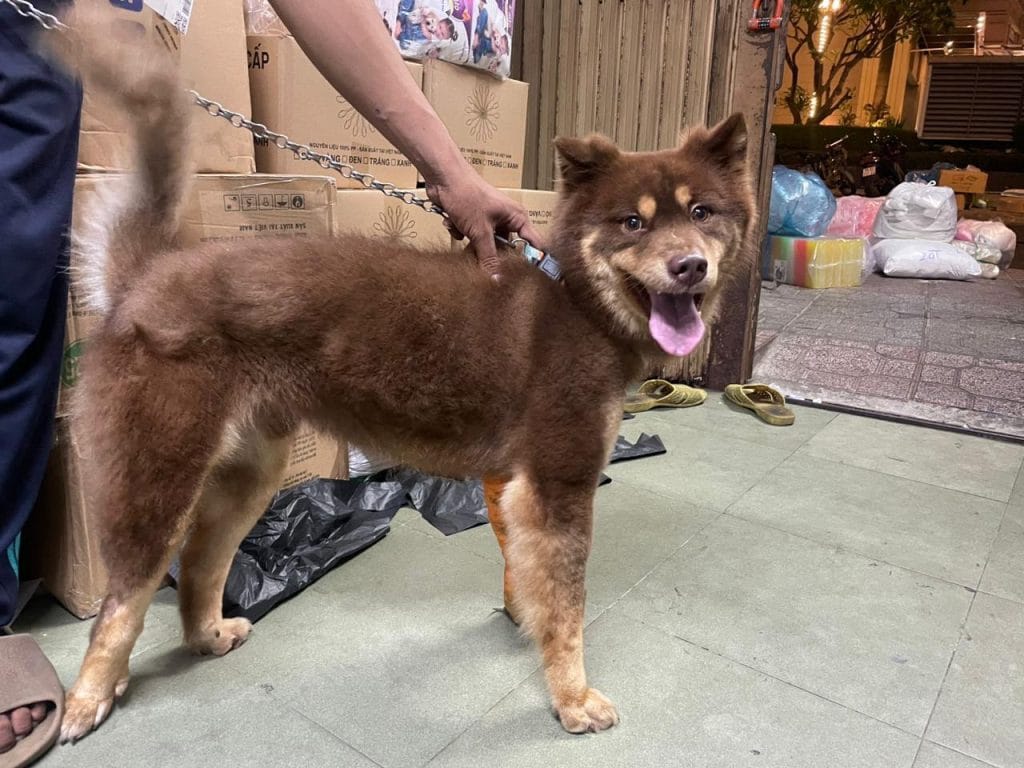
On the surface, this is a simple story — one dog, one flight, Saigon to Houston. That’s what the move looks like from the outside, and it’s exactly the wrong way to picture it. Behind that single sentence sits a precise plan built on a lot of hands-on operational experience: a destination airport that legally cannot accept the dog, a biological clock that no amount of money can speed up, and a transit country that can turn your pet away at the gate if you choose the wrong one. Moving a dog from Vietnam to the USA isn’t a plane ride — it’s logistics and compliance, and the flight is the easy part.
Here is what that really looks like, from start to finish: first the dog, then the 100 days of work behind him.
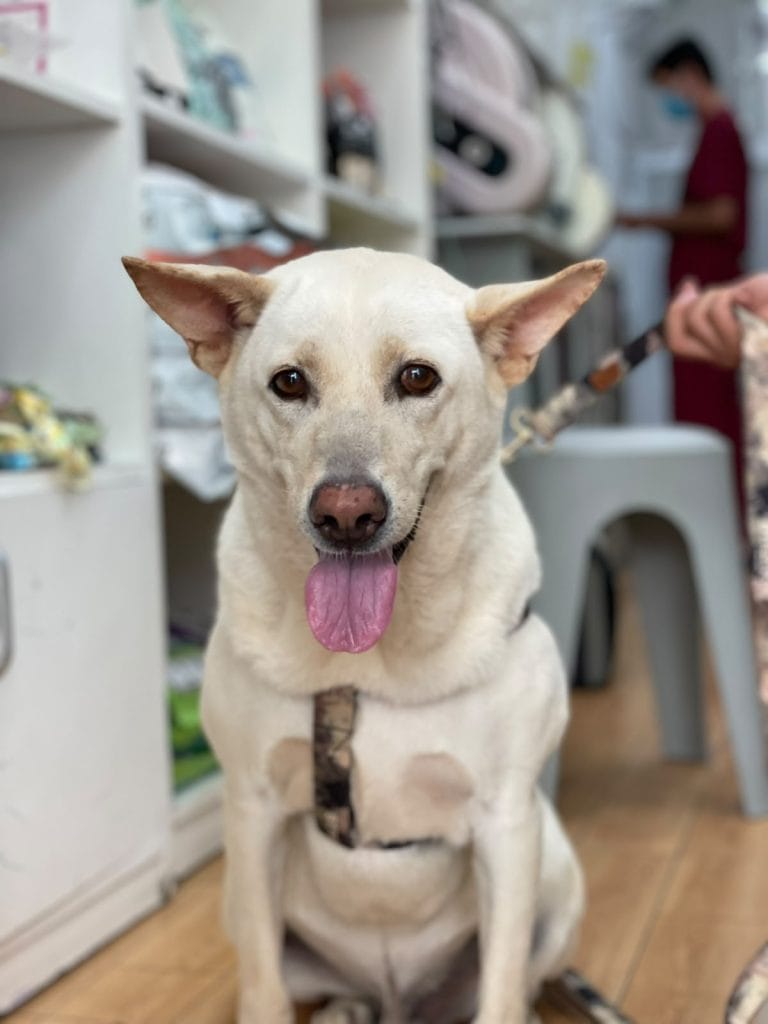
Meet Pun
Pun is a 25 kg mixed-breed dog with the build of a guard dog and the heart of a shadow. He greets the front door before the doorbell finishes ringing, naps in the exact center of the room so no one can slip out unnoticed, and has never quite forgiven the existence of suitcases. “He’s not a difficult dog,” his owner Bao Ngan says with a laugh, “he just likes to know where everyone is at all times — preferably within paw’s reach.”
When the boxes came out for the move, Pun did what Pun does best: he claimed them. Bao Ngan fondly recalls coming home to find him stretched across a half-packed suitcase, chin on the lid, watching her with the quiet suspicion of a dog who has done the math. She was relocating to Houston, Texas — and for her, leaving Pun behind was never a question to be answered, only a logistics problem to be solved.
It was a bigger problem than she expected. Bao Ngan had already been told, by someone else, that Pun could simply fly straight into Houston. It was only when she came to us that she learned the truth: Houston has no facility approved to receive a dog from Vietnam, and booking that route would have meant a refused flight and a heartbroken restart. “What sold me wasn’t a promise,” she shares. “It was the first hard problem they caught before I ever paid for a ticket.”
That problem — and everything it set in motion — is the real story. Here is the plan behind Pun’s move, day by day.
The timeline at a glance
| Date (2026) | Milestone | Why this date matters |
|---|---|---|
| Mar 15 | Booking: Saigon → Houston, Texas | Day 0 — the route is audited for feasibility before anything else. |
| Mar 20 | Microchip implanted, then rabies vaccine (same day) | The chip must come before the vaccine, or the CDC won’t recognize it. |
| Apr 20 | RNATT blood drawn & shipped to a CDC-approved lab | Must be drawn at least 30 days after the rabies vaccine. |
| Apr 24 | Laboratory receives the sample | Transit and processing begin. |
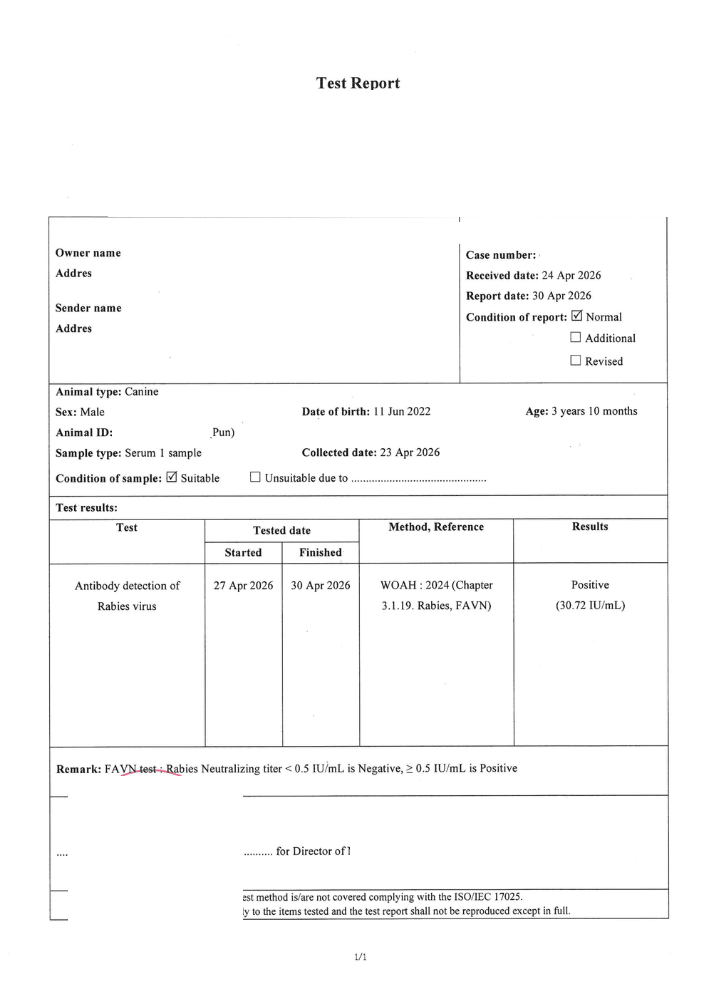
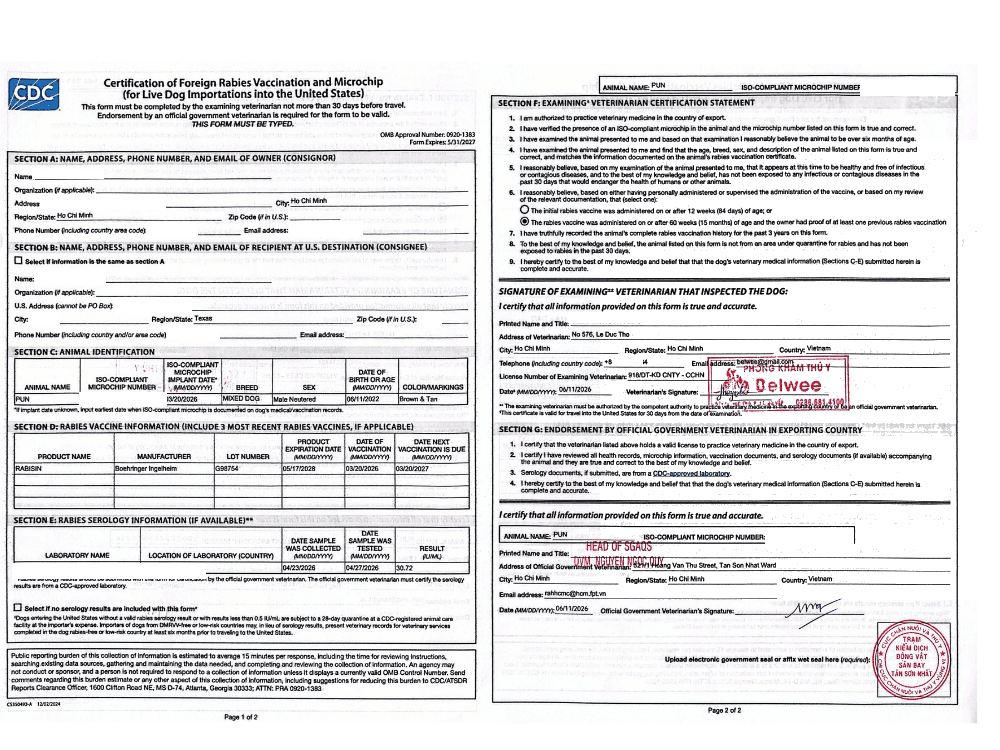
| Apr 30 | RNATT result: 30.72 IU/mL (pass) | Far above the 0.5 IU/mL line — clears the 28-day quarantine, valid for life. |
| Early May | Flight booked: EVA Air, SGN–TPE–LAX | Booked only after the titer passed — never before. |
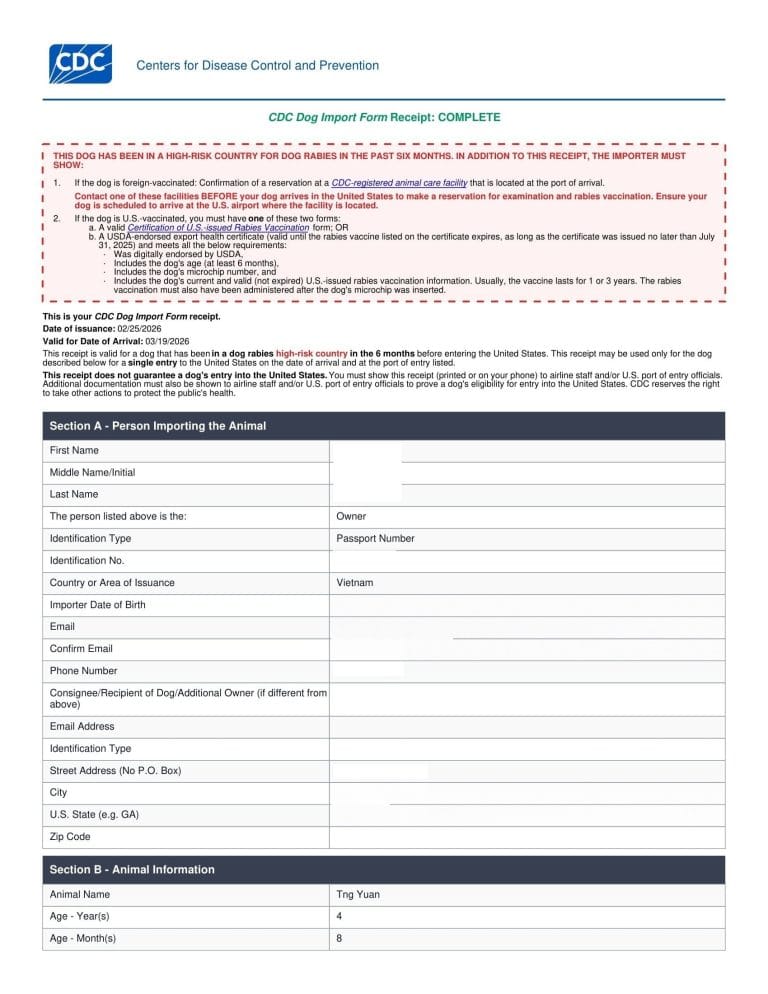
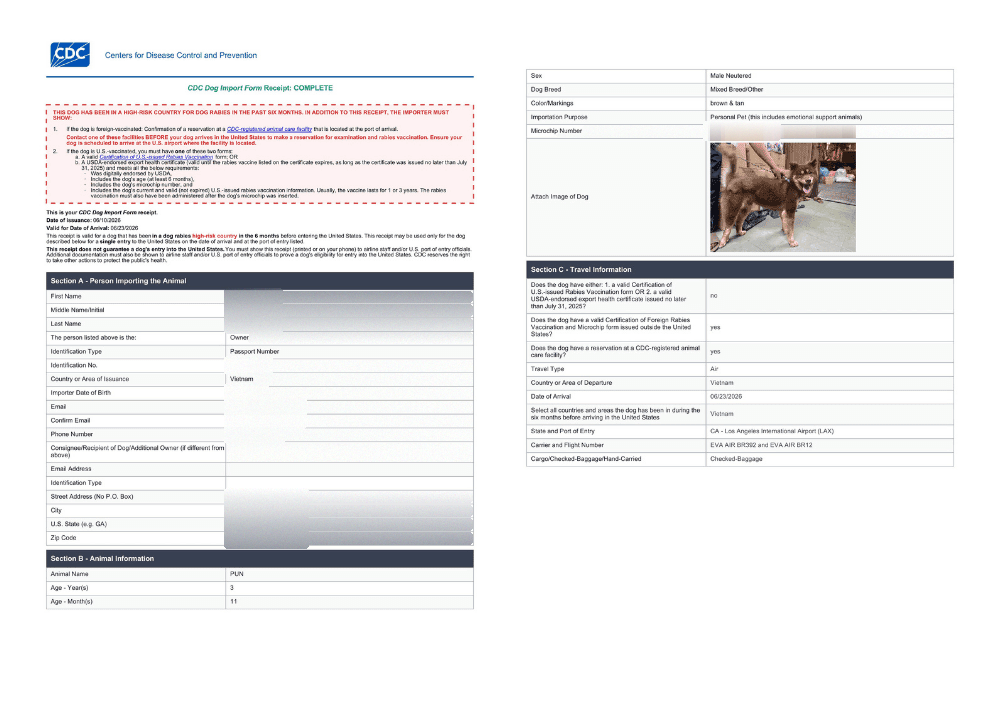
| Jun 10 | CDC Dog Import Form submitted online | Barcode receipt issued by email in ~15 minutes. |
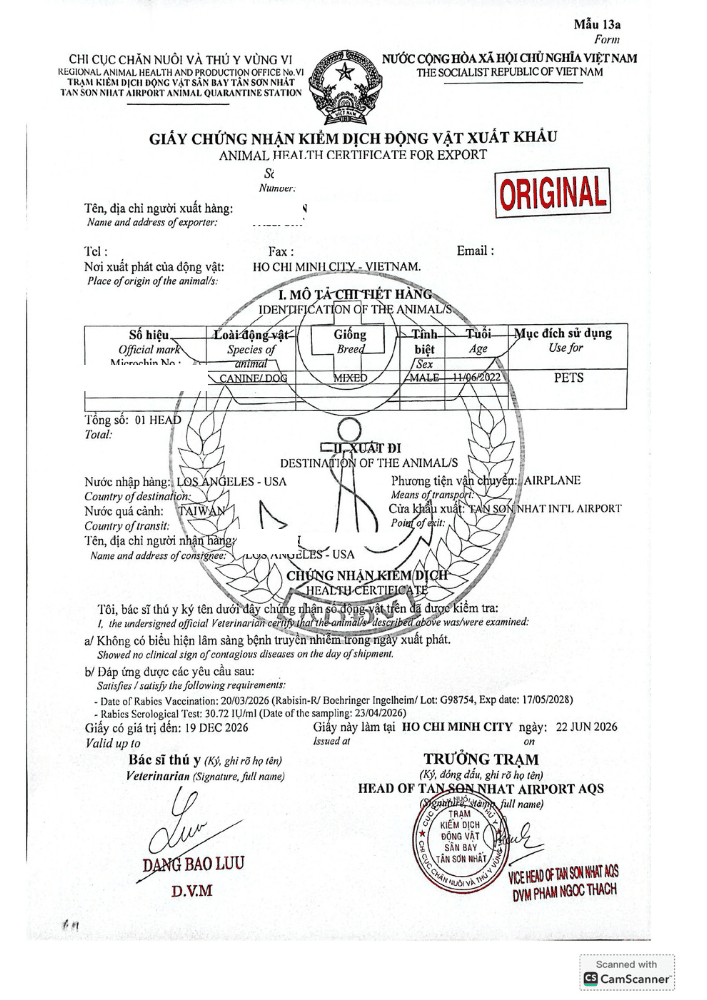
| Jun 11 | Export inspection; Health Certificate + CFRVM endorsed; ACF reserved at LAX | Government vet endorses the file; the ACF booking needs the CDC receipt. |
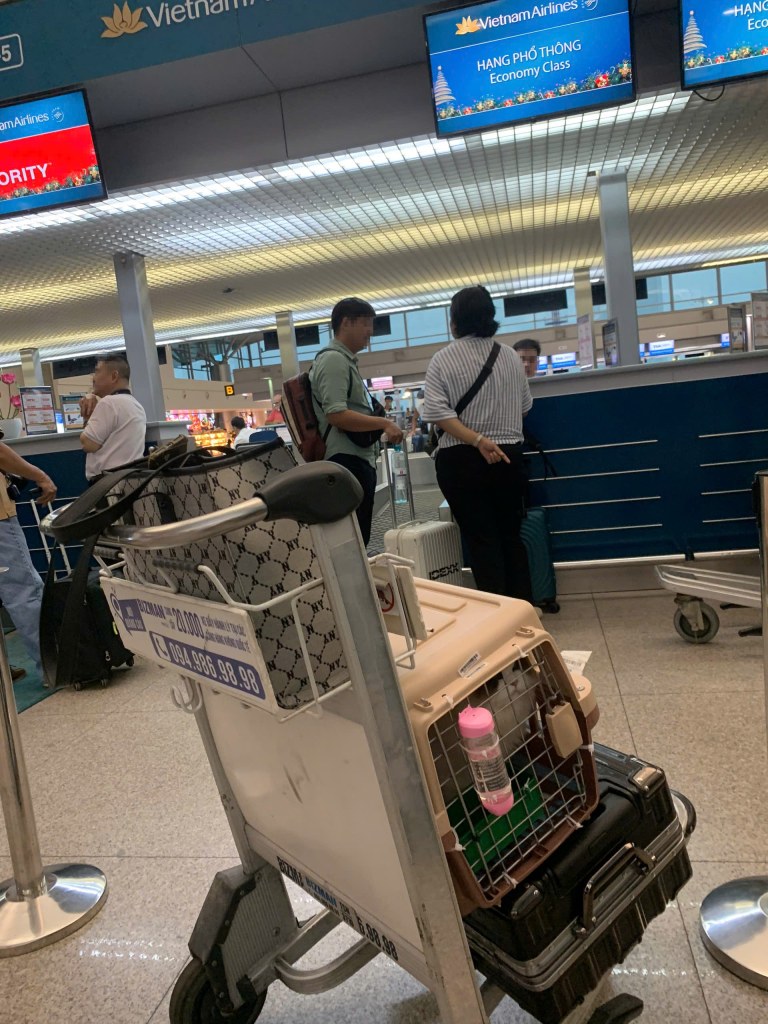
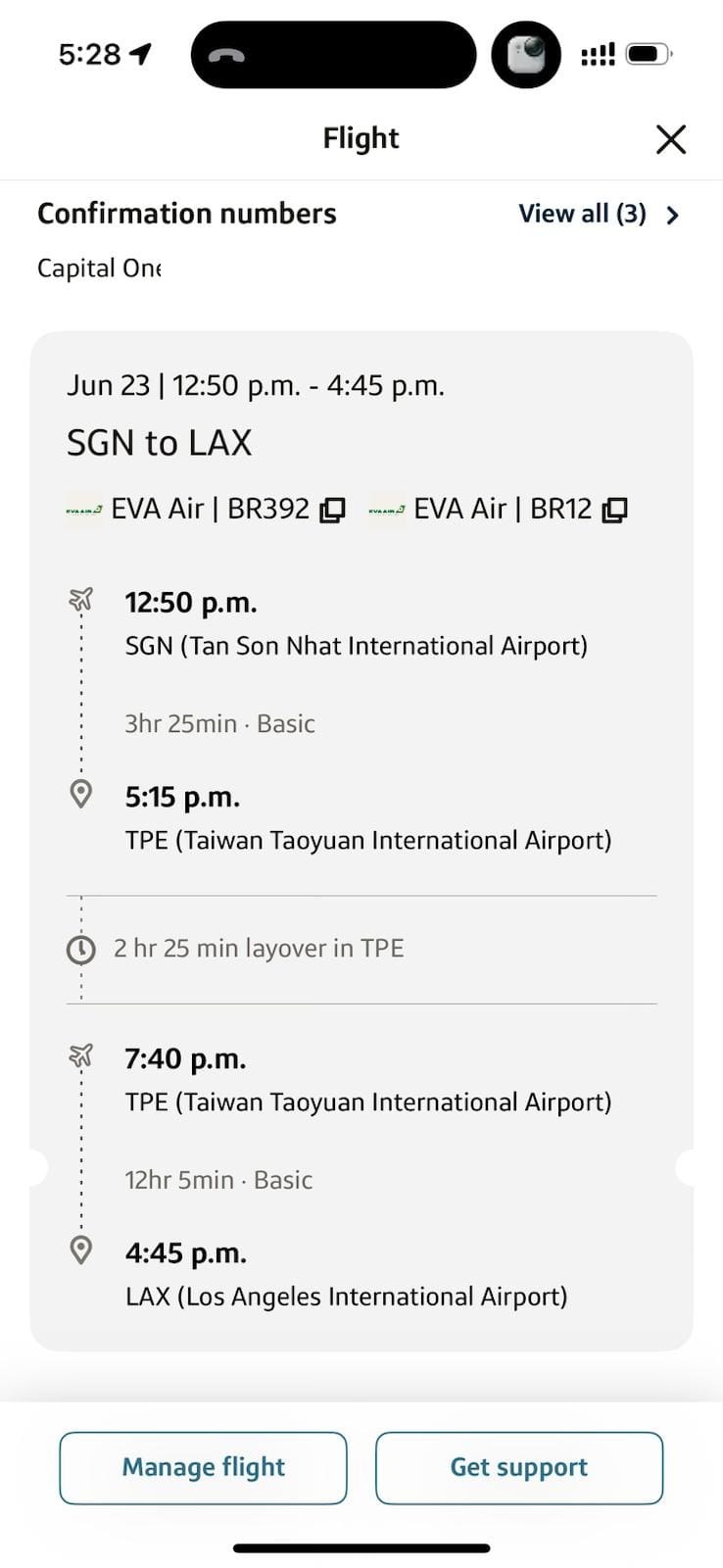
| Jun 23 | Departure: EVA Air SGN–TPE–LAX (checked baggage) | Transit through Taiwan — which allows checked baggage; Hong Kong does not. |
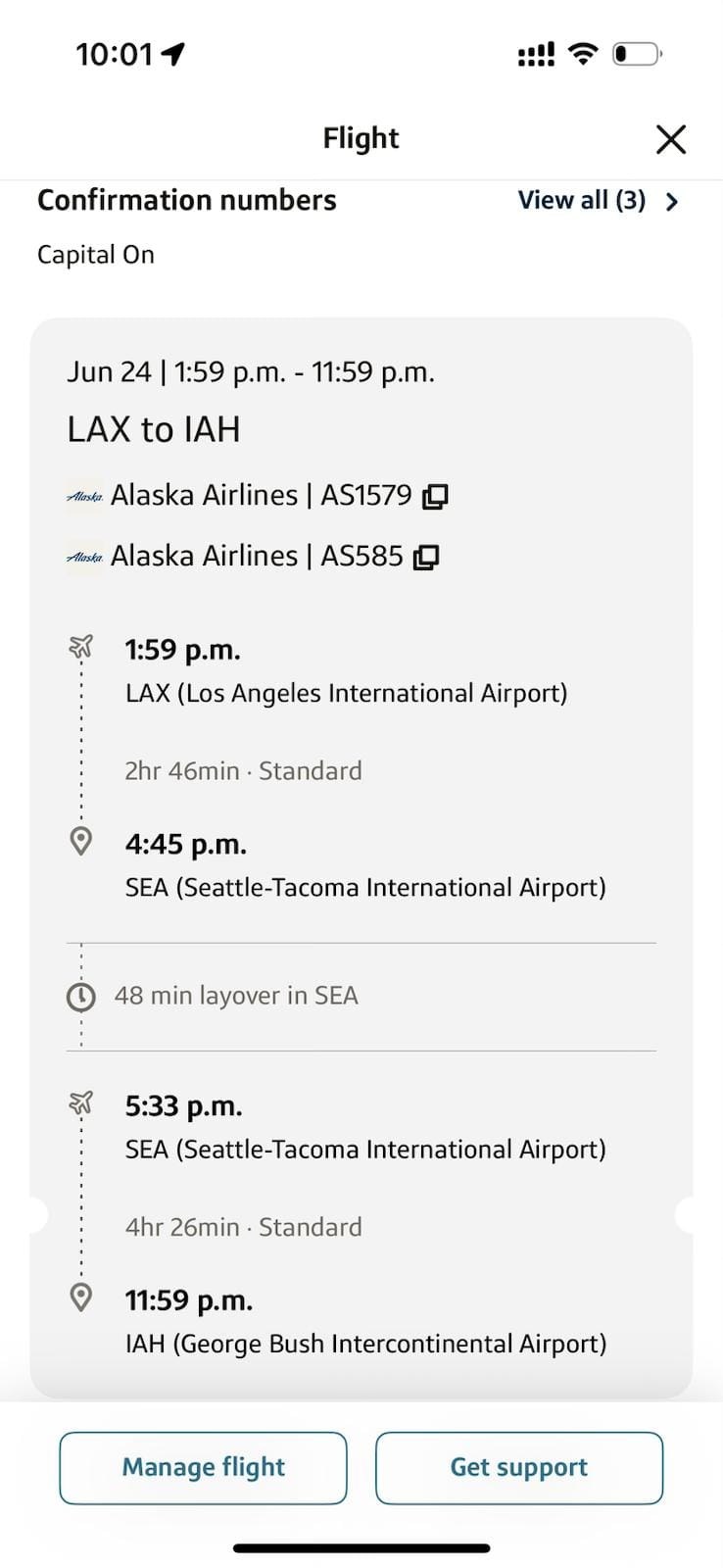
| Jun 24 | Domestic LAX–Seattle–Houston (Alaska Airlines); reunion | Crate limits re-checked, slot re-reserved for the US carrier. |
Two things stand out in that table. First — the gap from March 20 to April 30, the rabies-to-titer window, is the single longest stretch, and none of it can be rushed. Second — the heavy paperwork did not begin until 13 days before the flight. That order is deliberate, and it’s where most DIY attempts go wrong.
Day 0 — The route audit that changed the ticket
Bao Ngan booked on March 15. The first thing we did was not paperwork — it was an audit of whether the route was even legal. It wasn’t. A dog leaving Vietnam can only enter the US through one of eight airports with a CDC Animal Care Facility (ACF): JFK, LAX, MIA, ATL, PHL, IAD, DFW, and SEA. Houston (IAH) is not one of them. The full set of entry requirements behind this pathway is laid out in our Pet Shipping from Vietnam to the United States guide.
So the plan rewrote itself on day one: fly Pun to Los Angeles — an ACF airport — clear CDC there, then connect domestically to Houston. Catching this at the start is the difference between a smooth move and a refused dog at check-in.
Days 5–46 — The medical clock (the part you cannot speed up)
On March 20, Pun was microchipped and then given his rabies vaccine — in that order, on the same day. A month later, on April 20, his blood was drawn for the rabies antibody titer (RNATT) and shipped to a CDC-approved laboratory. The lab received it on April 24, and on April 30 the result came back: 30.72 IU/mL, well clear of the 0.5 IU/mL pass mark.
This six-week window is the real length of a Vietnam–USA dog move. The vaccine has to settle, the blood has to be drawn on the right side of the 30-day mark, and the lab needs its own time. The practical takeaway: start the titer the moment you know you’re moving — it is the clock everything else waits on.
Early May — Booking, but only after the titer passed
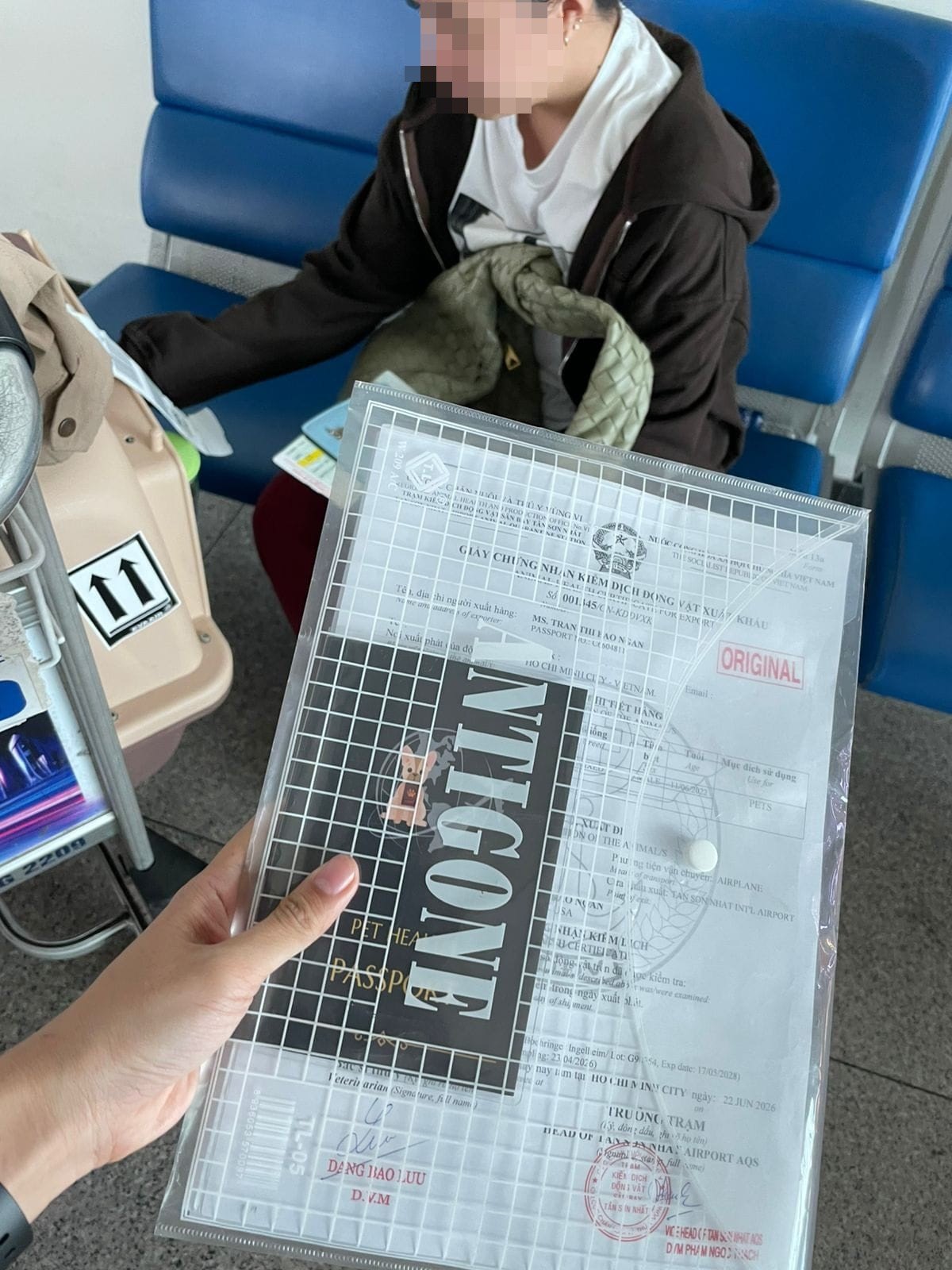
With a passing result in hand, we booked Pun on EVA Air as checked baggage, routed Saigon–Taipei–Los Angeles. The order matters: a titer that comes back low resets the entire timeline, and a non-refundable ticket bought too early becomes a non-refundable mistake. We book flights after the result, not before.
The routing itself was a decision, not a default. A dog flying checked baggage can only transit a country that lets a live animal stay in checked baggage. Taiwan does — Hong Kong does not, forcing the animal onto manifest cargo and refusing it if the ticket says otherwise; we break down which carriers and routes actually work in our Airlines for Pet Shipping from Vietnam to the USA guide. Pun weighed 25 kg; with his IATA crate (81 × 57 × 59 cm) the load was 30 kg, and after ticketing we called EVA directly to reserve his place. Buying a seat for yourself does not reserve space for your dog — that’s a separate call, and the slots are limited.
June 10–11 — The 13-day paperwork sprint
Only now, with the flight fixed, did the time-sensitive documents begin — because most of them are valid for a short window and must land close to departure:
- June 10 — CDC Dog Import Form. Submitted online with Bao Ngan’s passport, US address, phone, Pun’s details, and the flight information. The barcode receipt arrived by email in about 15 minutes. (A note on terms: this is the CDC Dog Import Form — not a “permit.”) Our step-by-step guide to the CDC Dog Import Form walks through every field.
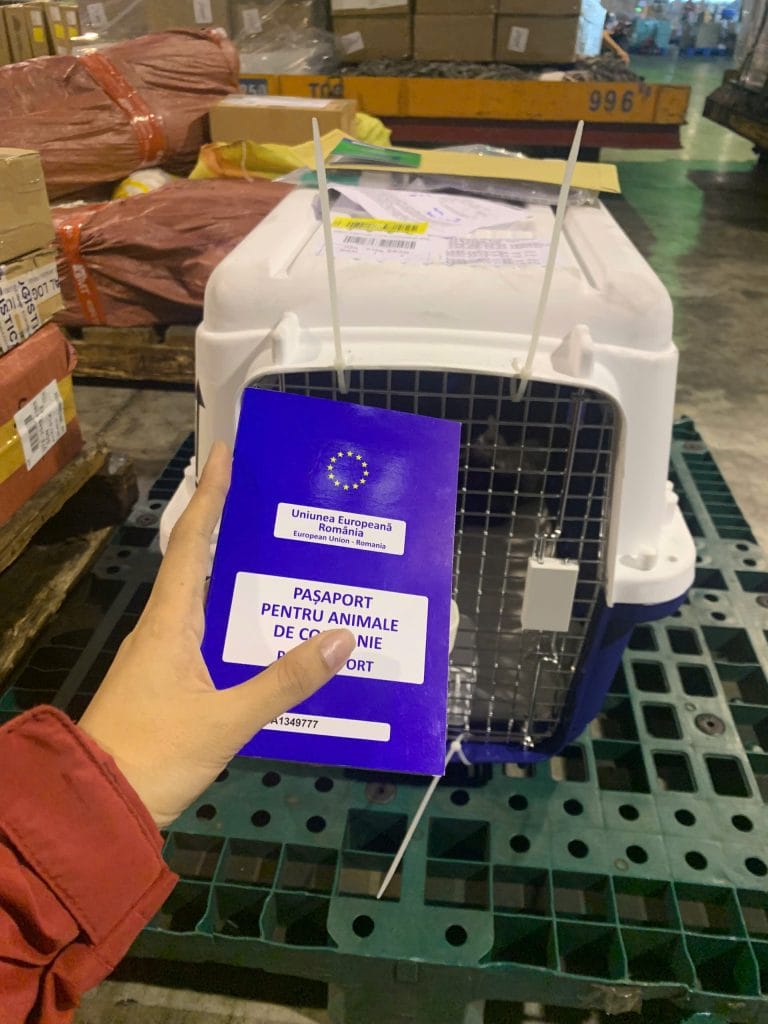
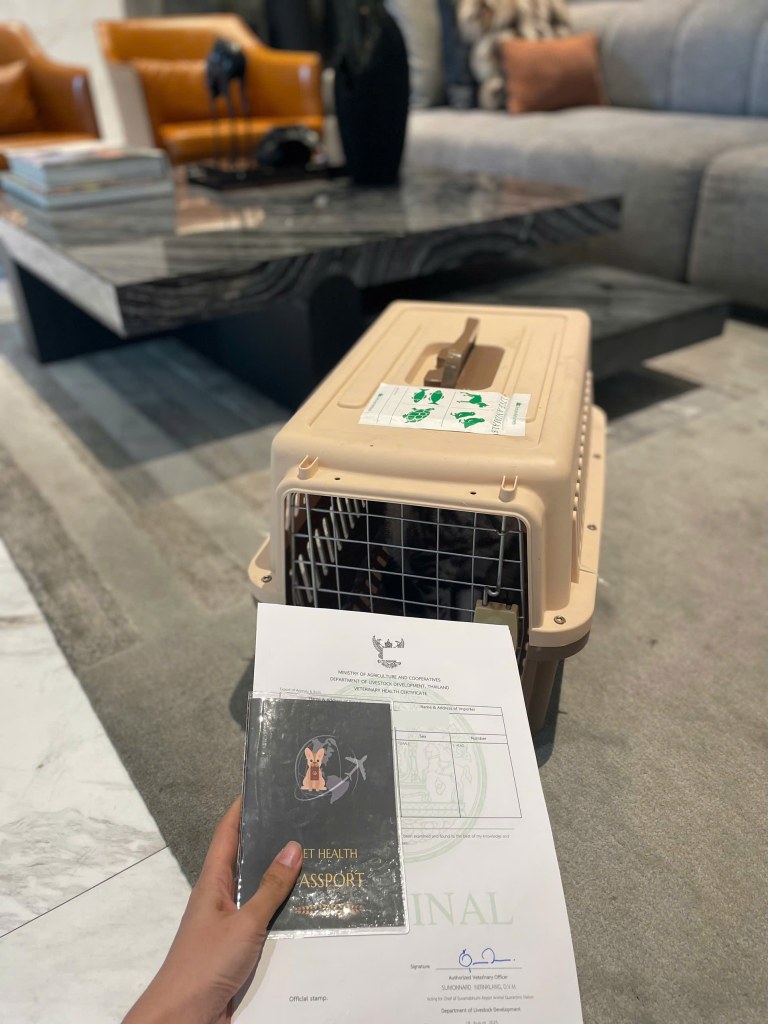
- June 11 — Export inspection & endorsement. Vietnam’s government veterinarian examined Pun and stamped both the Health Certificate and the CFRVM — the Certification of Foreign Rabies Vaccination and Microchip.
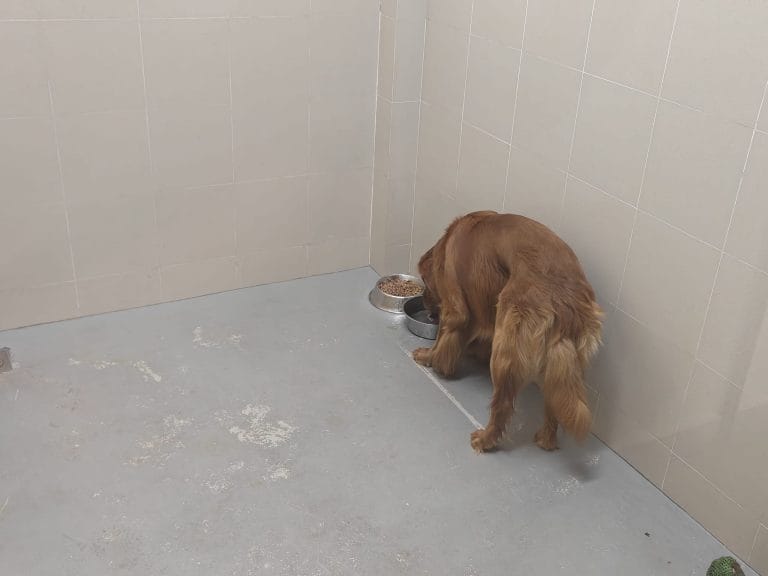
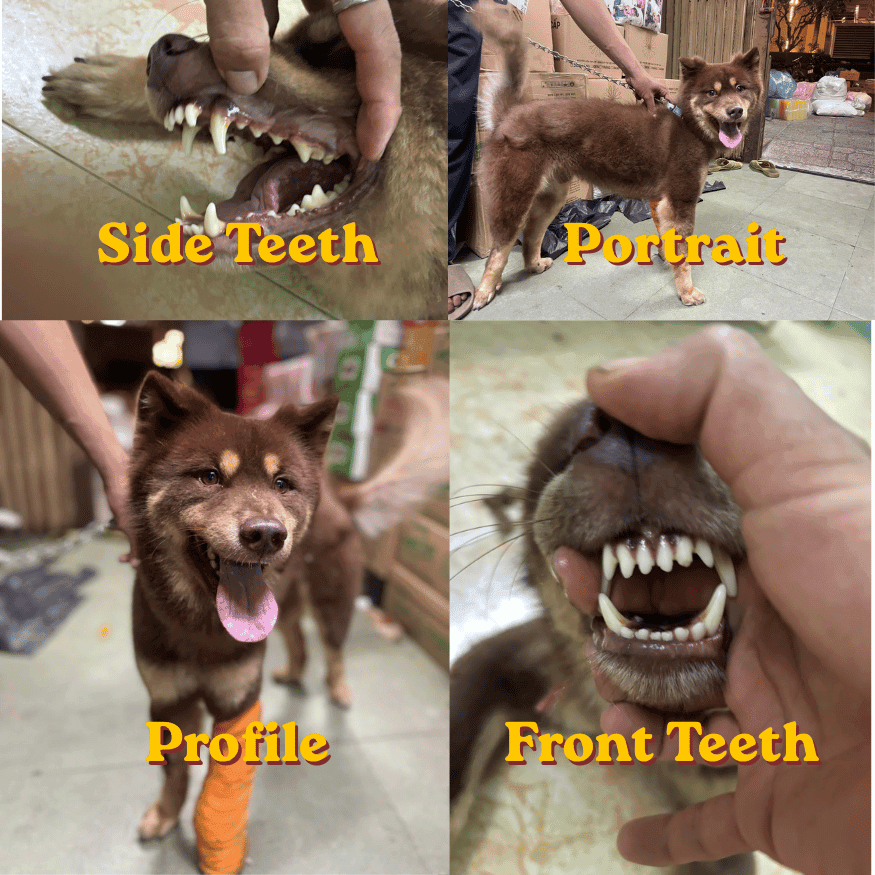
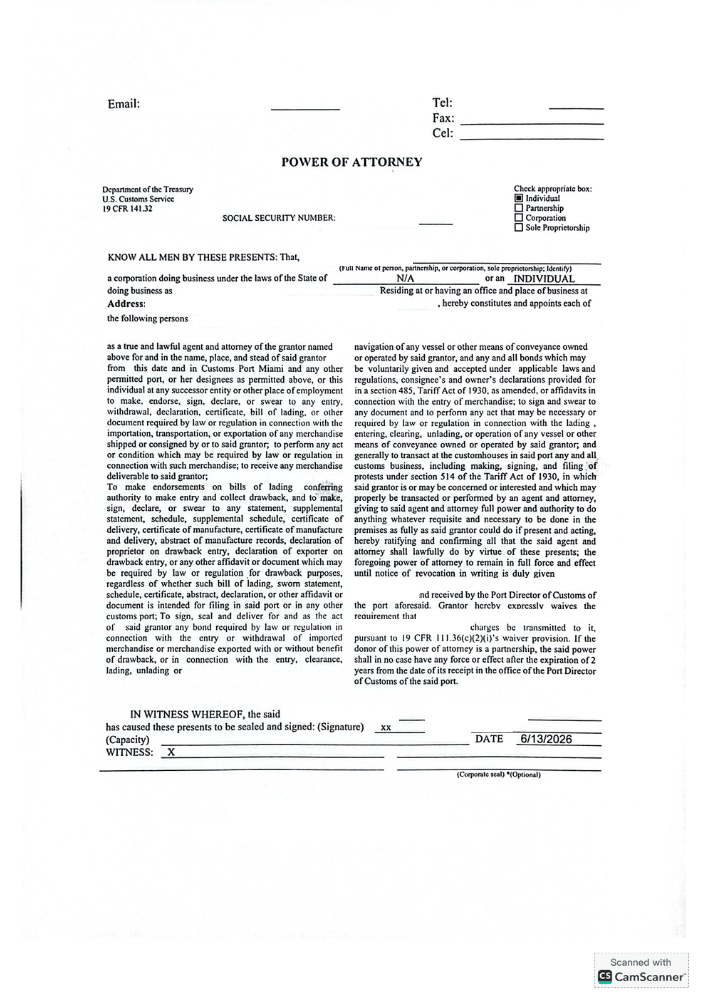
- ACF reservation at Rue’s Kennels (LAX). Booked with the flight details, vaccination record, RNATT report, CDC receipt, and four photos — front teeth, side teeth, profile, portrait — to confirm Pun was at least six months old and healthy. The facility also required Bao Ngan’s green card, Social Security number, and a Power of Attorney for customs. The CDC third-party fee at the ACF runs $1,000–$1,500, paid at the facility — one line item among several we itemize in our Cost to Ship a Dog or Cat to the USA guide.
Document gallery — Pun’s real paperwork (click to open)
June 23–24 — Departure, the last leg, and home
On June 23, Pun flew EVA Air from Saigon to Los Angeles via Taipei. The next day he took the domestic connection on Alaska Airlines, LAX–Seattle–Houston. The same discipline applied to the domestic leg — we re-confirmed his crate against Alaska’s weight and size limits before paying, and called to reserve his place after ticketing. A crate that passes on EVA can still be refused by a US domestic carrier; that detail is checked, never assumed.
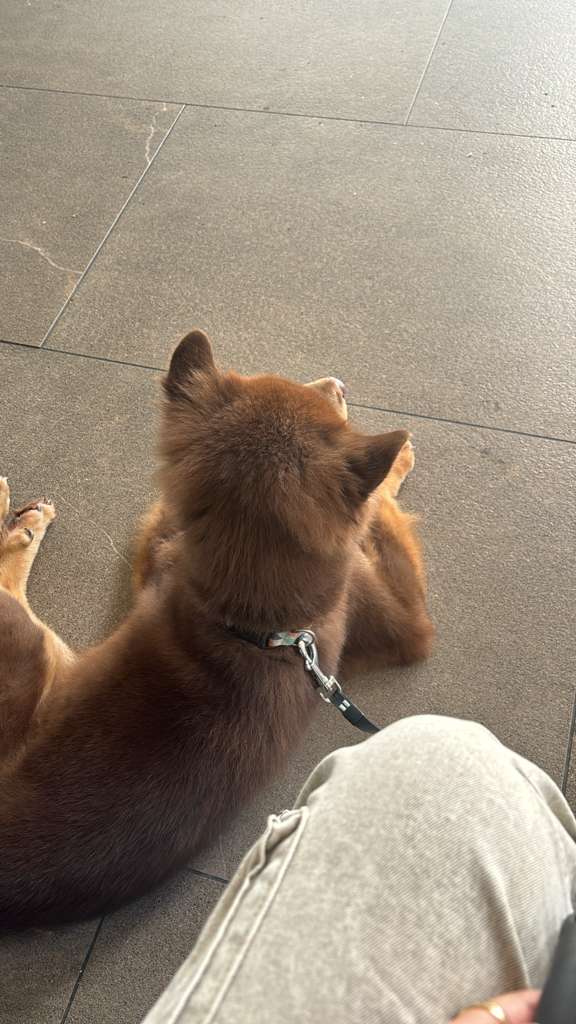
He arrived healthy, cleared every check, and walked straight back to Bao Ngan. After 101 days and a file thick with paperwork, the part that mattered took a single moment.
What Pun’s timeline tells you about your own
- Plan for about three months, driven by the titer. The rabies-to-RNATT window alone is roughly six weeks and cannot be compressed — start it first.
- Confirm your destination is an ACF city. If it isn’t, build a domestic connection from one of the six — as we did from LAX to Houston.
- Book the flight only after the titer passes, and check transit-country rules before accepting any itinerary.
- Save the document sprint for the final two weeks, when the health certificate and inspection are still inside their validity window.
That is what sits behind one quiet sentence — “we shipped a dog from Saigon to Houston.” The flight was the easy part.
The LAX handoff Pun went through is documented step by step in Devil’s case, including the reservation cost breakdown and a new fee this route now carries.
Last updated 15 Oct 2026 · First published 27 Jun 2026