Cats flying from Vietnam to the United States face a materially simpler regulatory pathway than dogs. There is no CDC Dog Import Form, no Animal Care Facility (ACF) reservation, no mandatory rabies titer test, and no high-risk country classification that triggers additional federal requirements. The CDC’s enhanced dog importation framework — which dominates most discussion of Vietnam–USA pet transport — simply does not apply to cats. What cats do require is a set of airline and USDA documentation requirements that must still be prepared correctly. This guide covers everything relevant to cat-specific transport on the Vietnam–USA route.
For context on why cats and dogs are treated so differently by US regulations, see our analysis at why US dog regulations are stricter than cat regulations. For a full cost breakdown of the Vietnam–USA route, see our USA pet shipping cost guide 2026.
Part 1: What the CDC Does and Does Not Require for Cats
The CDC’s enhanced importation framework that applies to dogs — including the CDC Dog Import Form, the high-risk country classification, and the ACF reservation requirement — specifically applies to dogs (Canis lupus familiaris). Cats are regulated under separate, much lighter CDC guidance.
What the CDC requires for cats entering the USA:
- The cat must appear healthy upon arrival. CDC inspectors (or CBP acting on behalf of CDC) will conduct a visual health inspection at the port of entry. A cat showing signs of illness may be held for further veterinary examination at the owner’s expense.
- No CDC form is required. Unlike dogs, cats are not subject to the online declaration and barcode receipt system.
- No mandatory rabies vaccination for CDC purposes. The CDC recommends that cats be vaccinated against rabies but does not require proof of rabies vaccination for entry into the USA at the federal level. Note that individual states may have their own requirements — California, for example, requires rabies vaccination for cats.
- No ACF reservation required. Cats do not need to be processed through a CDC-registered Animal Care Facility and therefore are not restricted to the eight ACF airports that apply to dogs. Cats can arrive at any US airport with appropriate cargo handling facilities.
These lighter federal requirements do not mean cat transport is entirely straightforward. Airlines and USDA APHIS have their own requirements that still require careful preparation.
Part 2: What Airlines Require for Cats on the Vietnam–USA Route
While the CDC requirements for cats are minimal, airlines impose their own documentation and handling requirements as a condition of accepting the animal as manifest cargo. These requirements are set by the individual airline and the IATA Live Animals Regulations, and they do not differ significantly between cats and dogs in terms of documentation.
- ISO-compatible microchip: Most airlines operating the Vietnam–USA cargo route require an ISO 11784/11785 15-digit microchip as a condition of acceptance. While not federally required for cats by US law, it is effectively mandatory for air cargo.
- Rabies vaccination: Most airlines require proof of current rabies vaccination regardless of federal requirements. Ensure the vaccination has not expired and is documented on a veterinary certificate.
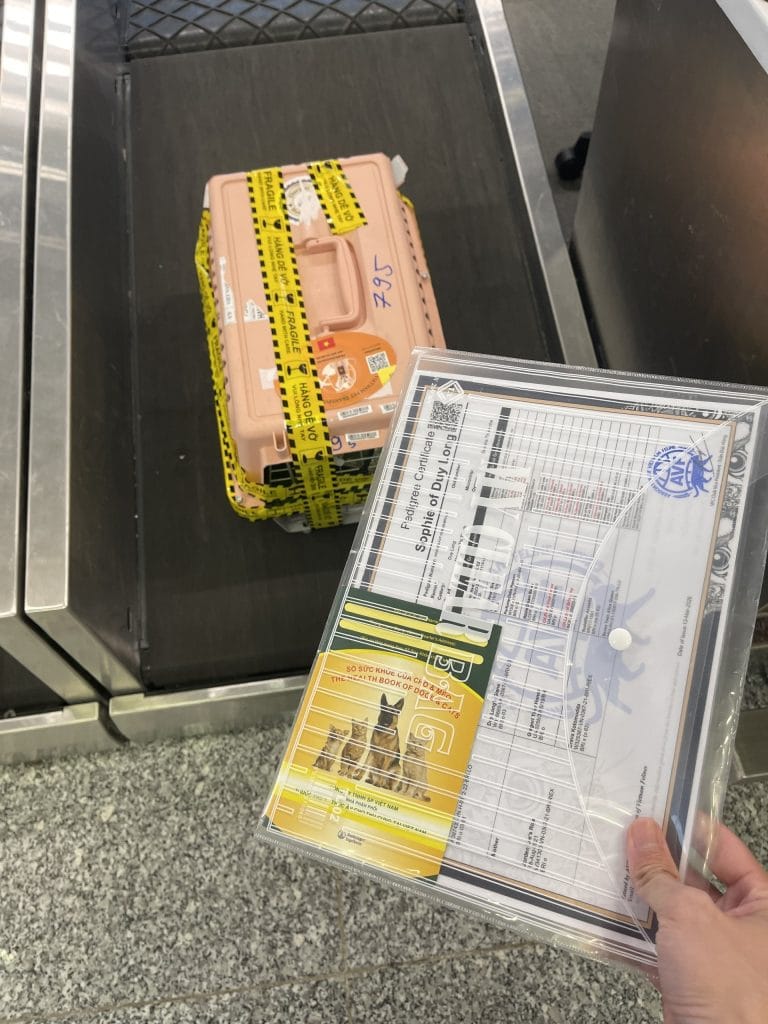
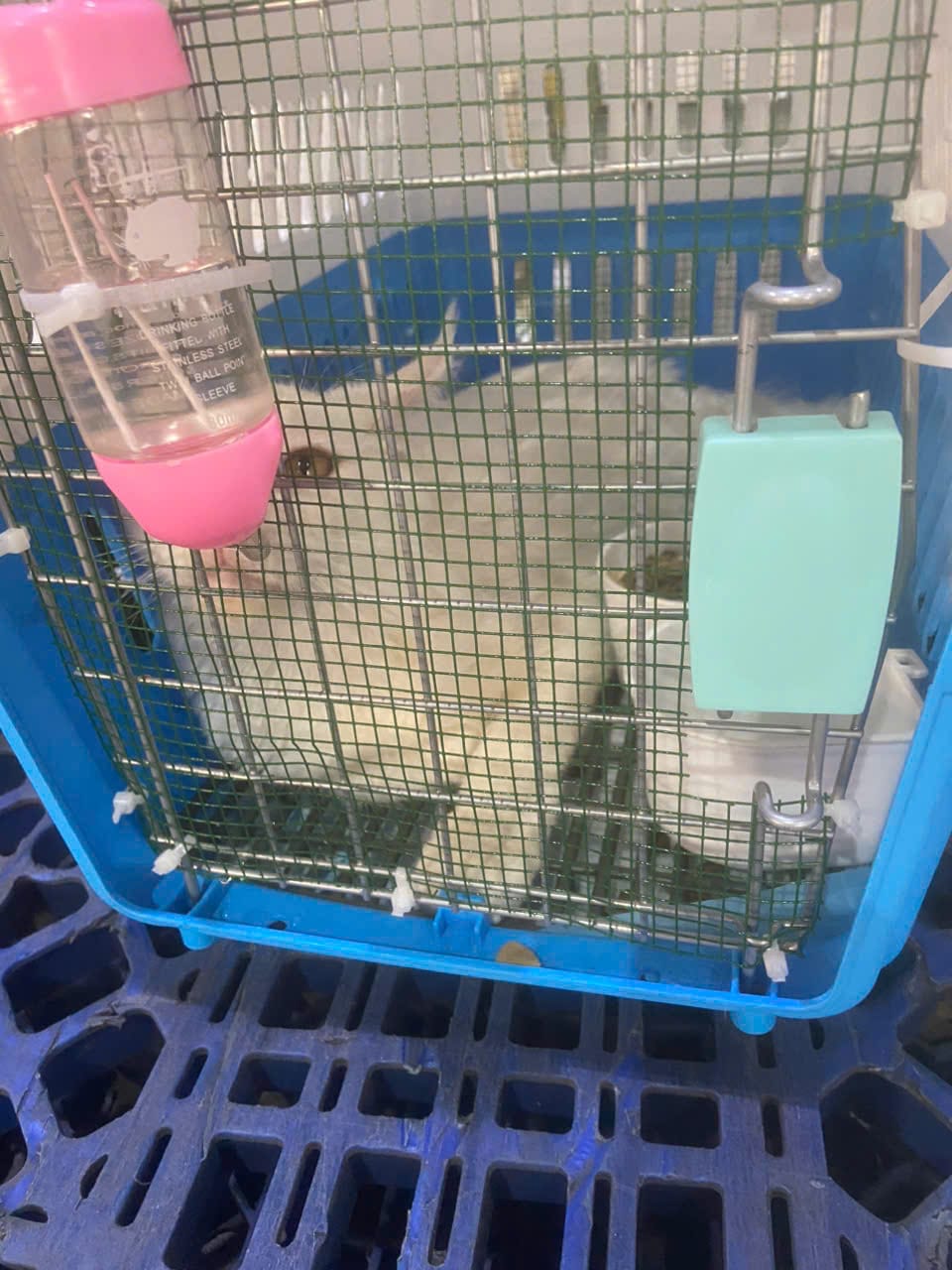
- IATA-compliant crate: The cat must travel in a crate that meets IATA Container Requirement 1 (CR1) specifications — appropriate size for the cat to stand, turn, and lie down; ventilation on multiple sides; secure door with metal hardware. See our IATA crate requirements guide for sizing details.
- Health certificate (airline requirement, not federal): Most airlines require a veterinary health certificate dated within 10 days of the flight (some require within 7 days — confirm with the specific carrier). This is an airline requirement, not a CDC or APHIS federal requirement. Some US states also require a health certificate for cats entering that state — check the destination state’s requirements.
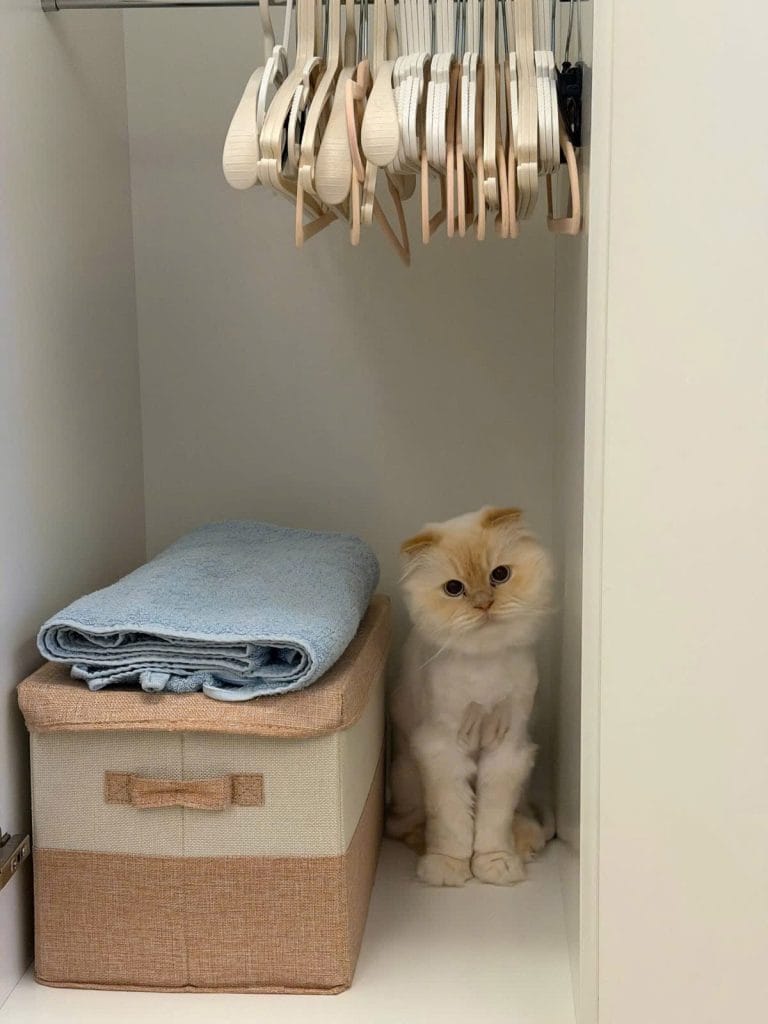
- Breed restrictions: Flat-faced (brachycephalic) cat breeds — Persian, Exotic Shorthair, Himalayan, Scottish Fold — face restrictions or outright bans in cargo on many airlines due to respiratory risk during transport. Confirm the cat’s breed status with the carrier before booking. See our breed restrictions guide.
Part 3: USDA APHIS Requirements for Cats
USDA APHIS plays a different role from CDC in cat imports. While CDC manages the health risk from rabies and zoonotic diseases, USDA APHIS manages agricultural and veterinary biosecurity at the border. For cats, USDA’s role is primarily conducted through the port of entry inspection.
Unlike many other countries (which require an import permit for cats), the USA does not generally require a USDA import permit for cats entering as personal pets. However, USDA inspectors at the port of entry will review the cat’s documentation and conduct a physical inspection. A veterinary health certificate is expected to be available and will be reviewed.
Part 4: The Documents a Cat Needs for the Vietnam–USA Route
| Document | Issued By | Timing |
|---|---|---|
| Microchip implantation record | Veterinary clinic in Vietnam | Before all other documentation |
| Rabies vaccination certificate | Veterinary clinic in Vietnam | At least 30 days before flight; within validity period at time of arrival |
| Core vaccine records (FVRCP) | Veterinary clinic in Vietnam | Current at time of travel |
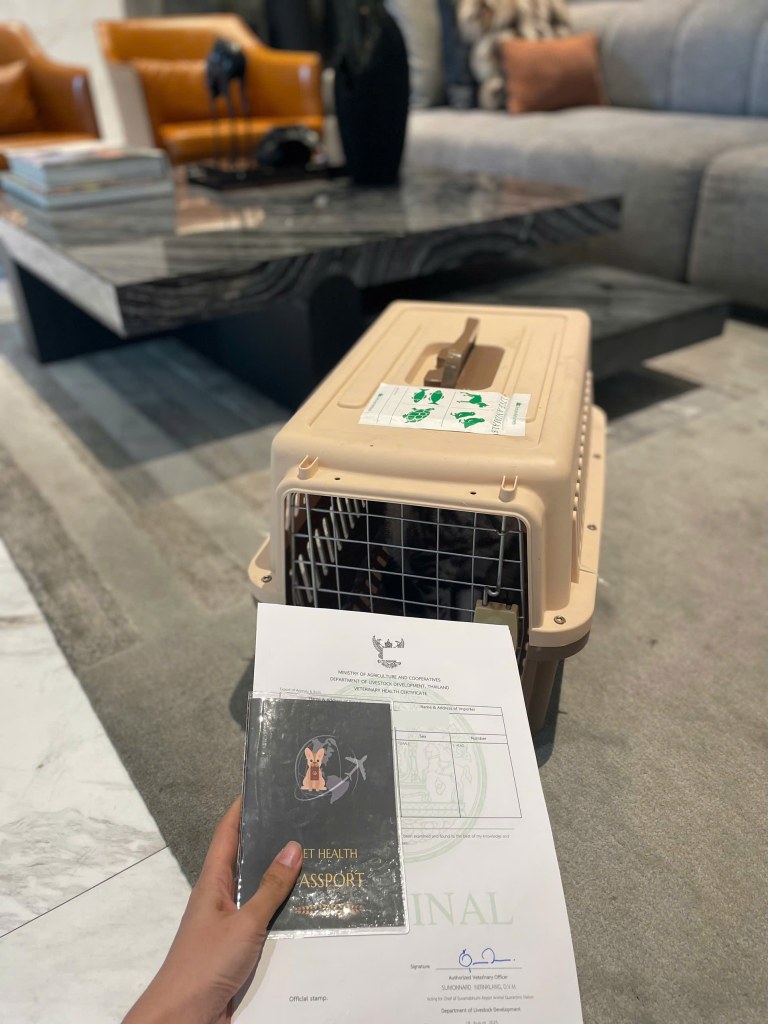
| Veterinary health certificate (airline requirement — not a federal CDC/APHIS requirement) | Licensed veterinarian in Vietnam | Within 7–10 days before the flight (confirm with airline); some US destination states require this independently |
| DAH Export Health Certificate | Vietnam animal quarantine authority — regional Animal Health Office or airport station (government vet signature) | Within 5 days before the flight |
| IATA-compliant crate | Owner / pet relocation company | Measured and confirmed before airline booking |
| Airline cargo booking confirmation | Airline cargo department | Confirmed well in advance; subject to embargo periods and capacity |
Note what is not on this list compared to a dog shipment: no CDC Dog Import Form, no FAVN/RNATT titer test, no ACF reservation, no Certification of Foreign Rabies Vaccination and Microchip form. The documentation burden for a cat is substantially lower, which typically translates to a shorter preparation timeline and lower total cost.
Part 5: Timeline for Cat Transport, Vietnam to USA
Because cats are not subject to the FAVN/RNATT titer test (which requires a 30-day wait after vaccination before the blood draw, then several weeks for lab results), the preparation window is significantly shorter than for dogs.
- 3–4 weeks before departure (minimum — earlier is fine if you have the time): Confirm microchip is ISO-compatible. Update all vaccinations including rabies. Source and size the IATA crate. Contact airlines to confirm cargo acceptance and check embargo periods.
- 2 weeks before departure: Book airline cargo space. Confirm routing (Vietnam → transit hub → US arrival airport).
- 7–10 days before departure: Complete veterinary health certificate.
- 3–5 days before departure: Obtain DAH Export Health Certificate (signed by government veterinarian).
- Departure day: Present all documents to cargo carrier. Cat travels in IATA crate.
For the equivalent dog timeline (considerably longer if starting from scratch), see our full Vietnam to USA pet shipping timeline.
Part 6: Can My Cat Travel In-Cabin?
In-cabin travel for cats is possible on the Vietnam–USA route, but only on the specific airlines that permit it for transpacific flights and only within that carrier’s weight and carrier-size limits — typically small cats under 8kg including the carrier bag. Most airlines flying this route still restrict cats to manifest cargo or checked baggage for the international leg (which involves at least one transit hub — Seoul, Taipei, or Tokyo — and flight segments of 4–14 hours), so confirm the specific carrier’s in-cabin policy before booking.
Cats on the Vietnam–USA route travel as manifest cargo in the temperature-controlled hold — the same pathway used for dogs. The transit hub stops are the primary welfare consideration, as layover quality at the intermediate cargo facility varies. Korean Air via Seoul Incheon (ICN) and EVA Air via Taipei Taoyuan (TPE) are generally considered the most reliable options for cat cargo on this route, with competent transit handling at both hubs. See our airlines guide for the Vietnam–USA route for detailed carrier comparisons.
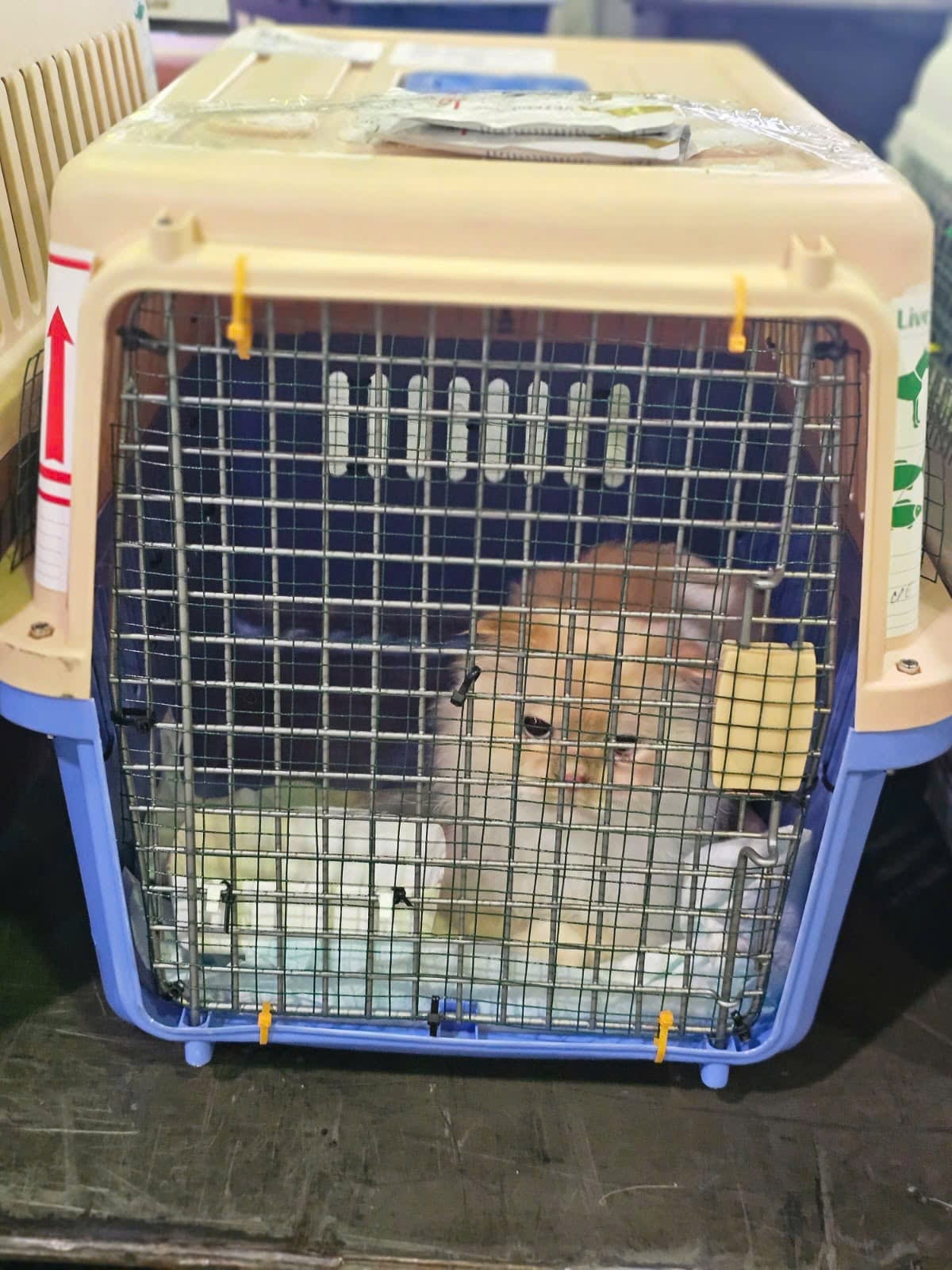
Planning Your Cat’s Move to the USA
At Daisy Pet, cat shipments on the Vietnam–USA route are handled under the same professional framework as dog shipments — with the specific documentation requirements adjusted accordingly. The lighter CDC requirements do not mean the process can be managed ad hoc; the airline coordination, DAH export health certificate, and transit logistics still require careful professional management as part of our end-to-end pet shipping from Vietnam to the USA service. For answers to common questions about the Vietnam–USA process, see our USA pet import FAQ 2026.
Last updated 15 Oct 2026
Compiled by our specialists from the regulations in force on the date above, for reference only. Rules may change after this date. Please verify with the competent authorities or contact us for the most accurate information.