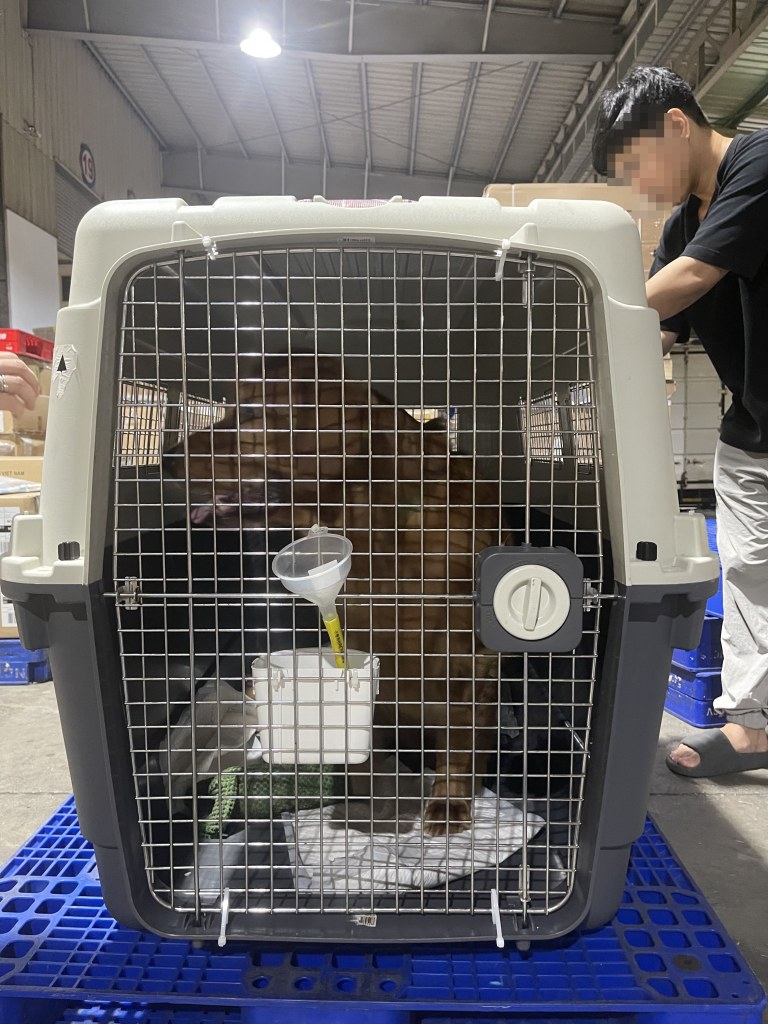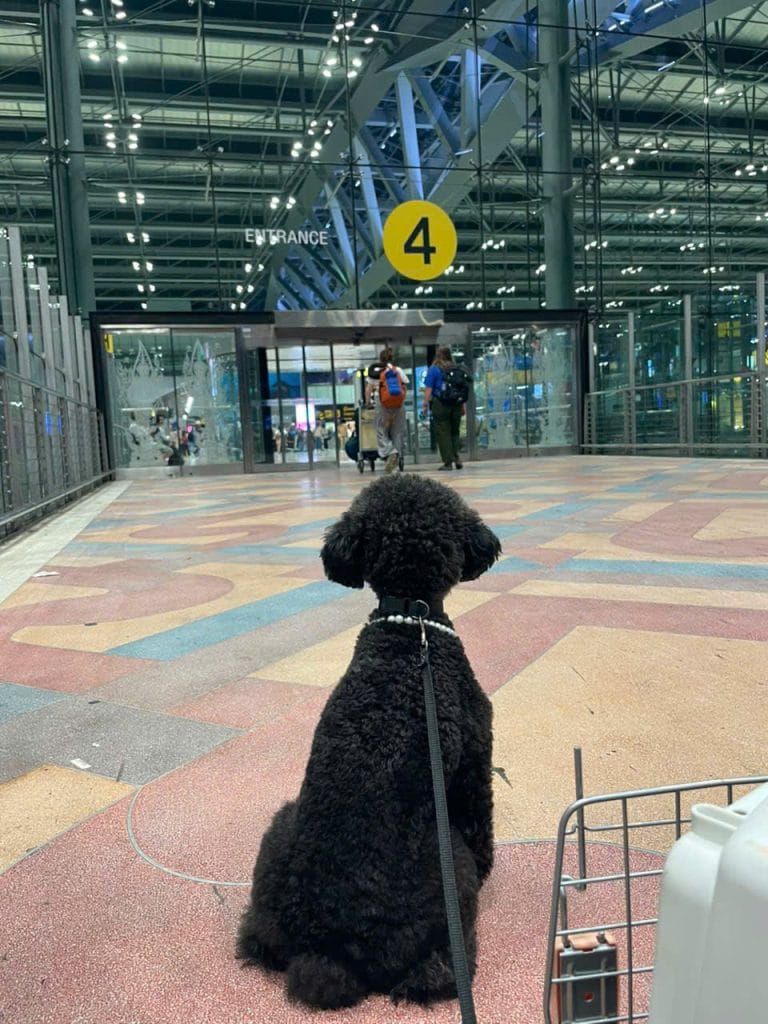
Taking your pet to Thailand and back is possible, but each leg follows different rules. Thailand sets the rules for the way in: no titer test and no quarantine for pets with correct papers. Your home country sets the rules for the way back, and many ask for a rabies blood test months before the pet arrives. Plan that test before your pet leaves home, or a short trip can turn into a four-month wait.
Quick answers: pet to Thailand and back
- Can my pet come back home after Thailand? Yes, to almost every country. How long it takes depends on your home country, not on Thailand.
- What must I do before leaving home? Keep the rabies vaccine valid and do any titer test your country needs. US dog owners also need a USDA-endorsed rabies form.
- Which countries are hardest to return to? Australia and New Zealand. A pet that has been in Thailand first needs about six months in a country they approve.
- I forgot the titer test. What now? Test in Thailand at NIAH. For the EU and the UK, expect about four months before the pet can fly home.
- What does Thailand ask when my pet leaves? An export permit and a health certificate from the airport quarantine station, issued a few days before the flight.
Why is getting a pet back from Thailand harder?
Thailand’s entry rules focus on vaccines and paperwork. Its Department of Livestock Development (DLD) asks for an import permit, a health certificate and vaccines. It does not ask for a titer test.
Your home country looks at the trip the other way. The US, the UK, the EU, Japan and Australia do not list Thailand as rabies-free or low-risk. So they ask for proof that your pet is protected: a rabies blood test, called a titer test, a waiting period after it, or both.
That proof takes weeks or months to build. It is the part to plan first, before the outbound flight.
What to do before your pet leaves home
Do these steps with your own vet before you fly to Thailand. Each one is quicker and cheaper at home than from Thailand.
- Microchip: an ISO microchip, implanted before the rabies vaccine. Most countries do not count a vaccine given before the chip.
- Rabies vaccine: valid for the whole trip, with boosters on time. In practice, Thai quarantine stations treat a rabies vaccine as valid for 12 months, even a three-year vaccine. Plan a booster within 12 months before your pet leaves Thailand.
- Titer test: if your home country needs one, take the blood sample at home, at least 30 days after the rabies vaccine. Send it to a laboratory your country accepts. Waiting periods run from the sample date, so they pass while you are in Thailand.
- US dogs: a USDA-accredited vet completes the Certification of U.S.-Issued Rabies Vaccination. USDA must endorse it before the dog leaves the US.
- EU pets: your vet records the rabies vaccine and the titer result in the EU pet passport before you leave the EU.
- Originals: carry the vaccination record, the titer report and every endorsed form on both legs.

None of these steps is needed to enter Thailand. They are for the flight home.
Which countries are easy or hard to return to?
The table shows what each home country asks of a pet coming back from Thailand. The “before you leave” column is the step that saves the most time.
| Home country | Before you leave home | If you skipped it | Quarantine on return |
|---|---|---|---|
| US (dogs) | USDA-endorsed U.S.-issued rabies form | Titer test and arrival at 1 of 8 airports with a CDC animal care facility | None with correct papers |
| US (cats) | No federal papers | — | None |
| Canada | Valid rabies certificate | — | None for pets |
| UK | Titer test at an accepted lab | Titer at NIAH, then a three-month wait from the blood sample | None with correct papers |
| EU | Titer recorded in the EU pet passport | Titer at NIAH, certificate issued at least 90 days after the sample | None with correct papers |
| Japan | Two rabies shots and a titer at a lab Japan designates | Sample sent abroad, then a 180-day wait | Up to 12 hours if the wait is complete |
| Singapore | Titer at a lab Singapore accepts | Sample sent abroad, at least 90 days before export | 30 days |
| Hong Kong | Titer at a lab Hong Kong recognises | Sample sent abroad, then a quarantine waiting list | At least 30 days |
| Malaysia | No titer needed | — | 14 days |
| Vietnam | Rabies 30 days to 12 months before the flight | — | None |
| Australia | Not possible directly | 180 days in an approved country first | 10–30 days |
| New Zealand | Not possible directly | About six months in an approved country first | At least 10 days |
Easy: the US with the rabies form, Canada and Vietnam. Easy on paper but with 14 days of quarantine: Malaysia. Plan months ahead: the UK, the EU, Japan, Singapore and Hong Kong. Very hard: Australia and New Zealand.
Returning to the US with a dog
The US Centers for Disease Control and Prevention (CDC) lists Thailand as high-risk for dog rabies. A dog vaccinated in the US can come back through any US airport with the USDA-endorsed Certification of U.S.-Issued Rabies Vaccination. It must be at least six months old and have a CDC Dog Import Form receipt (CDC: U.S.-vaccinated dogs).
Without that form, the dog follows the rules for foreign-vaccinated dogs: a titer test and one of eight airports with a CDC-registered animal care facility. USDA APHIS also asks every dog from Thailand for a screwworm inspection by a DLD vet within 5 days before the dog arrives in the US. The full route is in our guide to bringing a pet from Thailand to the USA. Cats need no federal US paperwork.
Returning to the UK
Thailand is not on Great Britain’s list of approved countries. A pet coming back needs a Great Britain pet health certificate signed by a DLD vet and a titer test. GOV.UK sets a three-month wait “from the date the blood sample was taken” (GOV.UK: bring a pet to Great Britain).
A sample taken before you leave, at a laboratory GOV.UK accepts, starts that clock early. The result stays valid while the rabies boosters stay on time. Pets enter Great Britain as cargo on an approved route, as our guide to taking a pet from Thailand to the UK explains.
Returning to the EU on an EU pet passport
Since 22 April 2026, EU pet travel follows Delegated Regulation (EU) 2026/131. After a short stay, a pet can re-enter on its EU pet passport. The passport must show that the rabies vaccine and the titer test were done before the pet left the EU (European Commission).
After a longer stay, or a booster given in Thailand, the pet returns on an EU animal health certificate signed by a DLD vet. What the passport does and does not cover is in our guide to pet passports in Thailand.
Returning to Australia or New Zealand
Australia does not accept pets directly from Thailand, even pets that left from Australia. The Department of Agriculture, Fisheries and Forestry (DAFF) asks for 180 days of residence in an approved country first, then quarantine at Mickleham (DAFF: cats and dogs returning to Australia).
New Zealand works the same way: about six months in a country it approves, then at least 10 days of quarantine. For owners based in Australia or New Zealand, a pet holiday in Thailand is rarely practical.
Malaysia to Thailand and back by car
Day trips with a pet across the Malaysia–Thailand border are not practical. Malaysia’s quarantine service (MAQIS) quarantines pets from Thailand for 14 days. It also needs an import permit and a quarantine place booked in advance. By land, pets that need quarantine can enter Malaysia only at Padang Besar.
One more condition needs checking. Malaysia’s Department of Veterinary Services (DVS) asks that the pet was not imported into the exporting country in the six months before its health certificate. Read literally, a pet that entered Thailand less than six months earlier does not qualify. Ask MAQIS before you travel.
Already in Thailand without a titer test?
This happens often. In January 2026, an owner who had flown a cat from the EU to Chiang Mai asked online what to do. The flight home was days away, and the cat had no titer test.
The answer depends on the home country:
- EU or UK: the test can be done in Thailand. NIAH, the DLD’s laboratory in Bangkok, is accepted by both. Plan 21 days for the result, then the wait from the blood sample. The pet flies about four months after the test.
- US, dog without the USDA form: a titer test (NIAH is on the CDC list) and arrival through an animal care facility airport.
- Japan, Singapore, Hong Kong: NIAH results are not accepted. The sample goes to a laboratory abroad, which adds weeks.
- Australia, New Zealand: the pet must first live in an approved country.
If you cannot stay that long, a friend or a boarding facility in Thailand can keep the pet until it is ready. The pet then flies home on its own booking. How the test works is set out in our guide to the rabies titer test.
How long does a round trip with a pet take?
- Getting ready to enter Thailand: about four to six weeks from zero. The rabies vaccine needs 21 days before the flight (we plan 30). The import permit needs at least 7 working days (we apply about 30 days ahead).
- Time in Thailand: the DLD sets no minimum stay. Your home country’s waiting period is what counts.
- Leaving Thailand: a few days, once the home country’s papers are ready. The export exam is 1–5 days before the flight, Monday to Friday.
- Shortest round trip: a few weeks for the US with the rabies form, Canada, Vietnam and an EU passport with the test done at home. Three months from the blood sample for the UK. 180 days from the sample for Japan.
The permit form for the way in is covered in our guide to applying for the Thailand import permit.
Costs for both legs are in our guide to pet relocation costs for Thailand.
Will Thai customs charge duty, and must my pet leave within six months?
Thai Customs treats a pet as goods to declare. Owners arriving at Suvarnabhumi usually pay import duty of about 1,500–2,000 baht per pet, based on the value the officer sets. The quarantine station also charges 500 baht per pet on arrival.
Thai Customs describes a temporary import procedure, with a bond that the goods leave within six months. Its published list does not clearly include animals, and older embassy guidance says something different. Do not count on a refund. Ask at the customs counter on arrival and keep every receipt.
Does my visa affect my pet?
No. The DLD does not ask about your visa. The import permit application asks for a copy of your passport and an address in Thailand, and a hotel address works. A tourist visa, a Destination Thailand Visa (DTV) or a retirement visa changes nothing for the pet. It only decides how long you can stay.
Every entry condition, from vaccines to age, is explained in our guide to Thailand’s pet entry requirements.
What leaving Thailand involves
Start with your home country’s papers. The DLD issues its export papers to match them.
- Export permit (Form R.9): for one trip, from one named airport.
- Health certificate: signed by a DLD vet after an exam at the airport quarantine station. It uses the destination’s own form where one exists.
- Where and when: at Suvarnabhumi, in the CE-1 building of the Free Zone, Monday to Friday, without an appointment. Other airports work by appointment.
- Fee: 250 baht per pet plus 10 baht per permit, in cash.
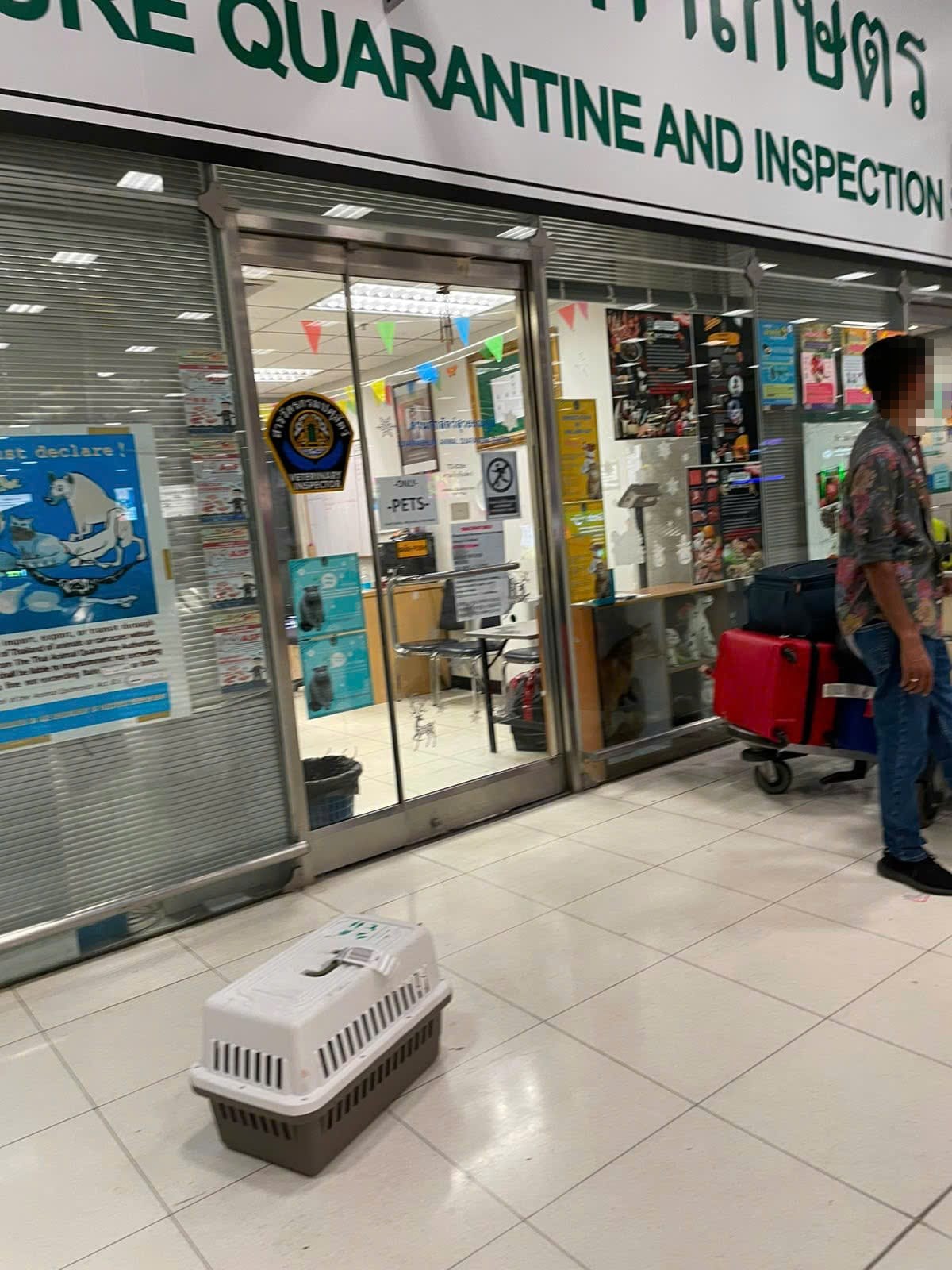
Both papers are short-lived, so the exam is booked a few days before the flight. Station steps and rules by destination are in our guide to pet export from Thailand. Daisy handles the Thai side through its partner agent in Thailand, and arrival through a partner agent in the destination country.
Book your pet on the return flight separately
Airlines approve a pet for each flight, not for your whole holiday. In June 2026, an airline’s approval for a cabin pet from Bangkok to Abu Dhabi stated: “Approval only covers your one-way trip.” The return leg needed the documents checked again.
Book the pet on the return flight as soon as your own ticket is confirmed. Which airlines carry pets, and how, is in our guide to airlines that fly pets to Thailand.
Living in Thailand: short trips abroad and back
The same planning works in reverse for owners based in Thailand. In August 2026, two owners flew four show cats from Bangkok to Ho Chi Minh City for a cat show, with return tickets three days later. Daisy handled the Vietnam side. The cats left on DLD export papers issued two days before the flight.

A short trip out of Thailand needs three sets of papers:
- Leaving Thailand: a DLD export permit and health certificate for the destination.
- At the destination: that country’s own rules. Vietnam, for example, needs no advance permit for one or two pets.
- Back into Thailand: a new Thai import permit. Each entry needs its own permit, so apply before you leave Thailand.
Ask Thai Customs for a re-import document when the pet leaves. Thai tariff rules exempt goods brought back within one year with that document. The Vietnam leg is described in our guide to flying a pet from Thailand to Vietnam.
FAQ: pet to Thailand and back
Can I take my dog to Thailand on vacation and bring it back?
Yes. Thailand does not require a titer test or quarantine. Check your home country’s return rules before you go, because some need a titer test months before the pet comes back.
Does my pet need a new Thai import permit after a trip abroad?
Yes. Each entry into Thailand needs its own import permit, applied for at least 7 working days before the flight. We apply about 30 days ahead.
Can the titer test be done in Thailand?
Yes, at NIAH in Bangkok. The EU, the UK and the US accept NIAH results. Japan, Singapore, Hong Kong, Australia and New Zealand do not.
How long can my pet stay in Thailand?
The DLD sets no time limit for the pet. You do not renew the import papers while the pet is in Thailand. Leaving needs a new export permit.
Does Thailand quarantine pets on arrival?
Not if the papers are correct. The station checks them and releases the pet the same day. The DLD keeps the right to hold a pet that seems unwell.
For the full picture of moving a pet to or from Thailand, see our pet relocation guide for Thailand.
Last updated 3 Nov 2026
Compiled by our specialists from the regulations in force on the date above, for reference only. Rules may change after this date. Please verify with the competent authorities or contact us for the most accurate information.
Official sources cited in this guide
- CDC: U.S.-vaccinated dogscdc.gov
- GOV.UK: bring a pet to Great Britaingov.uk
- European Commissionfood.ec.europa.eu
- DAFF: cats and dogs returning to Australiaagriculture.gov.au