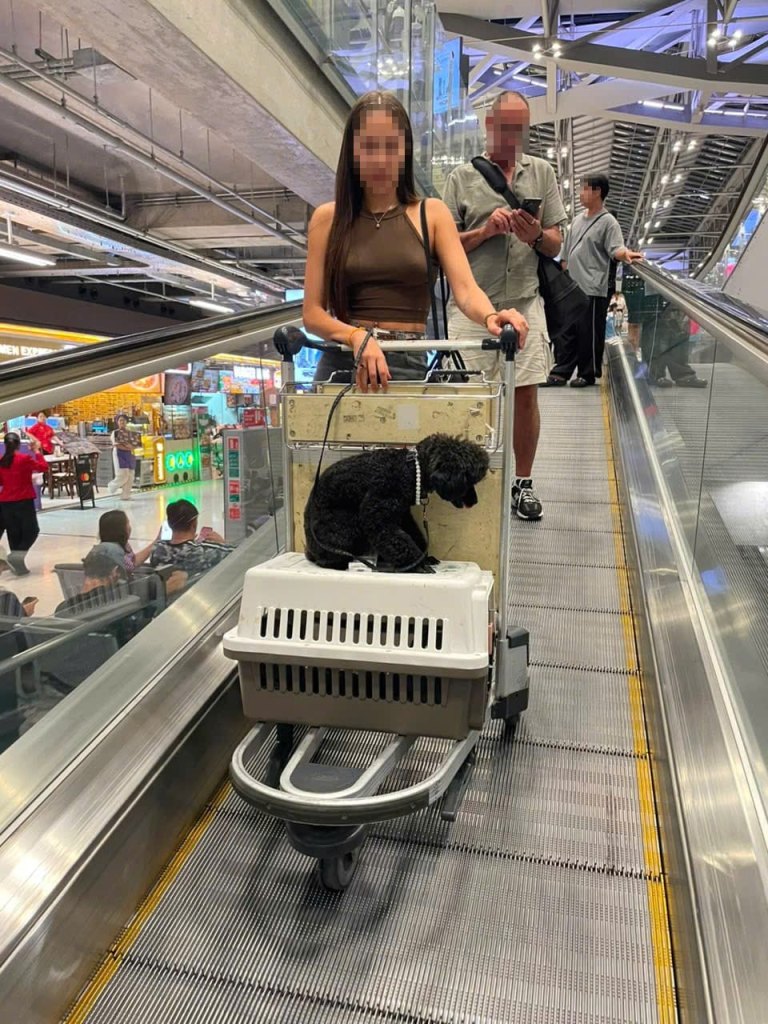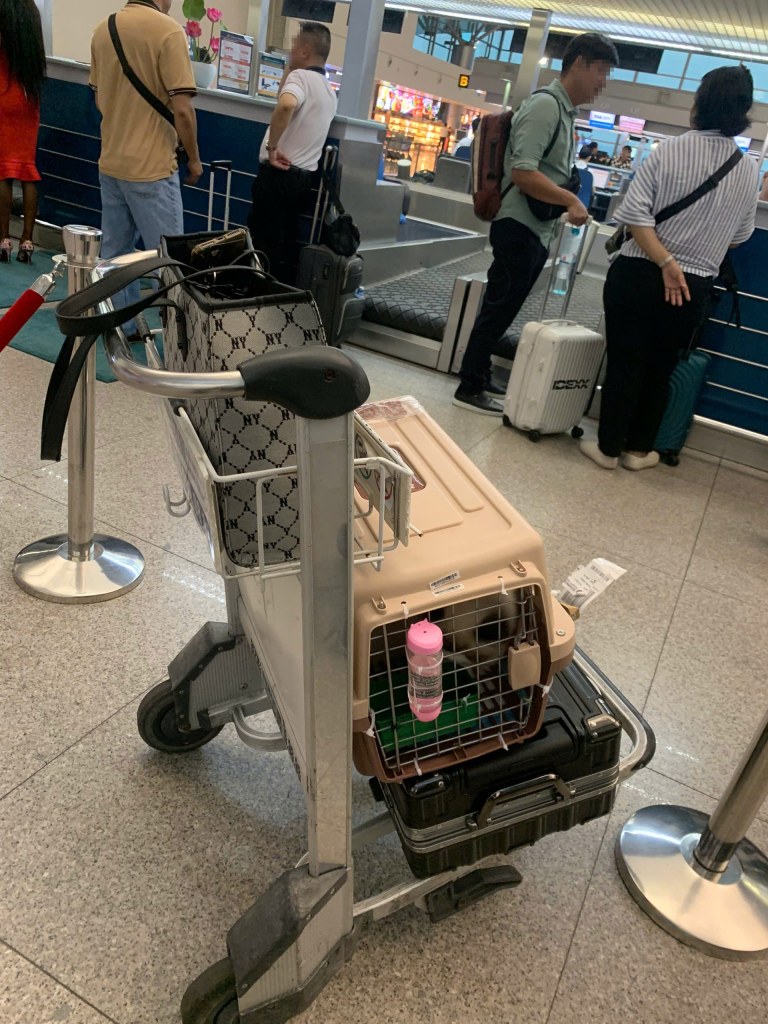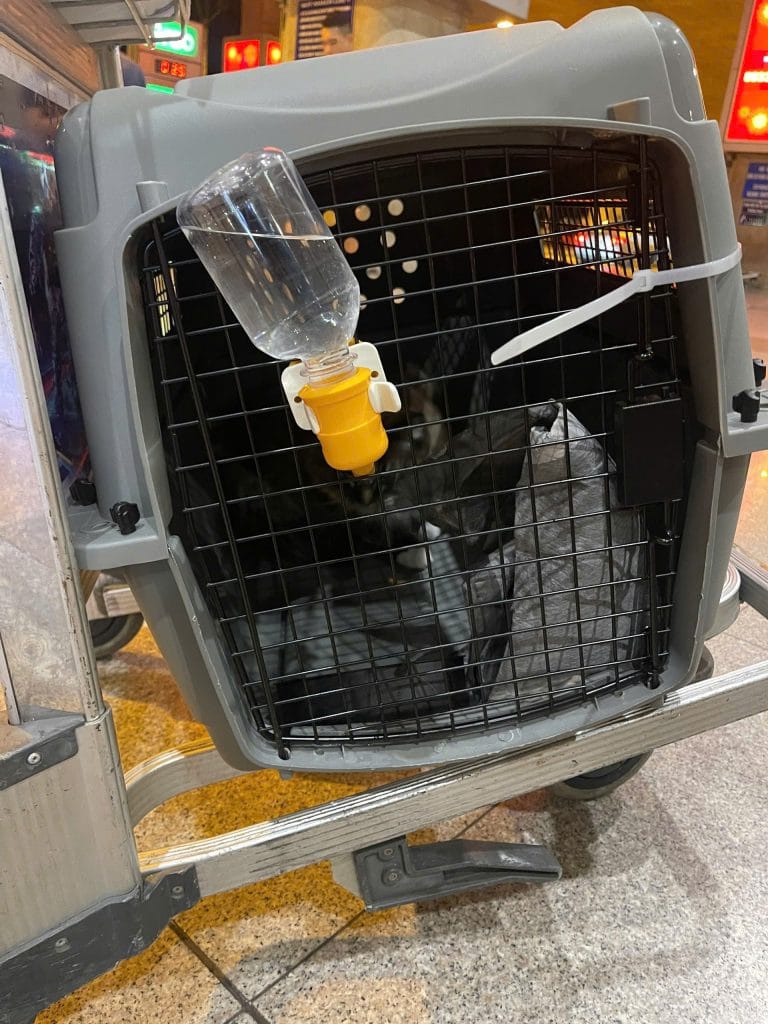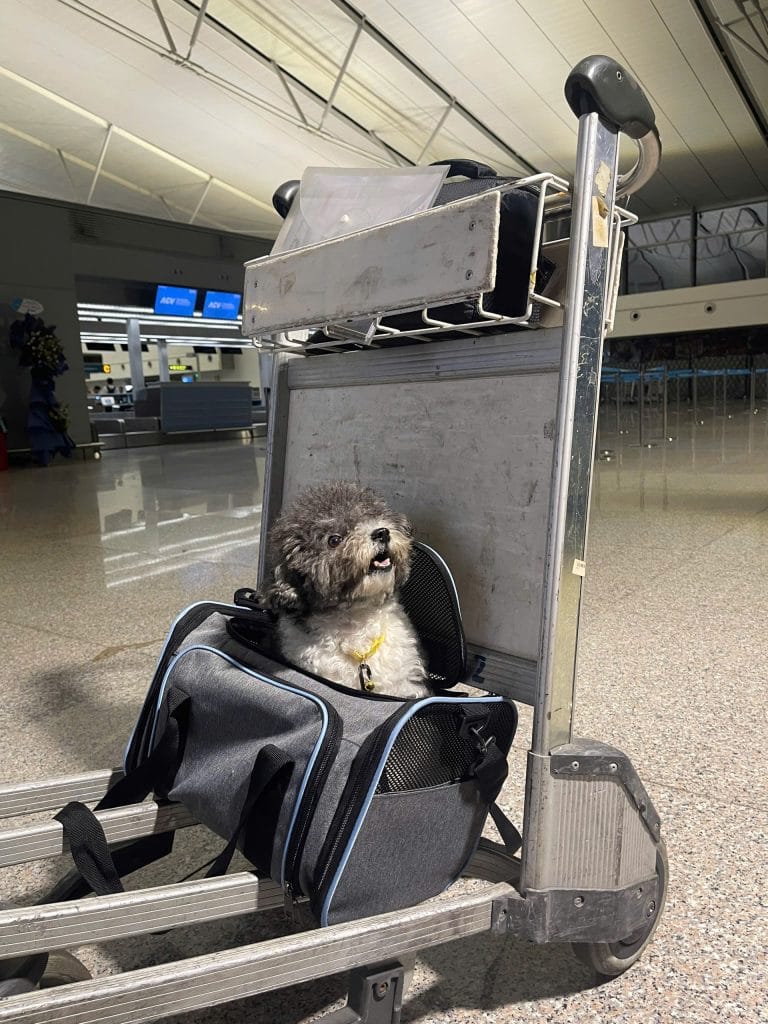
The short answer is yes — Thailand allows dogs and cats from most countries in the world. What makes Thailand stand out is what it doesn’t require: no mandatory quarantine and no rabies antibody titer test (RNATT/FAVN). With the right documents prepared in the right order, the entire process can be completed in 4–6 weeks.
This guide explains exactly what Thailand requires, what it doesn’t, and how to prepare — regardless of which country you’re traveling from.
Who Regulates Pet Import in Thailand?
Thailand’s pet import rules are set and enforced by the Department of Livestock Development (DLD), under the Ministry of Agriculture and Cooperatives. The DLD issues Import Permits, defines the health documentation standards, and conducts arrival inspections at designated airports.
For permit applications and inquiries at Suvarnabhumi Airport — the main entry point for pets arriving from Vietnam — contact DLD’s Animal Quarantine Station at qsap_bkk_import@dld.go.th. Official information is published at dld.go.th.
The 4 Requirements Thailand Always Enforces
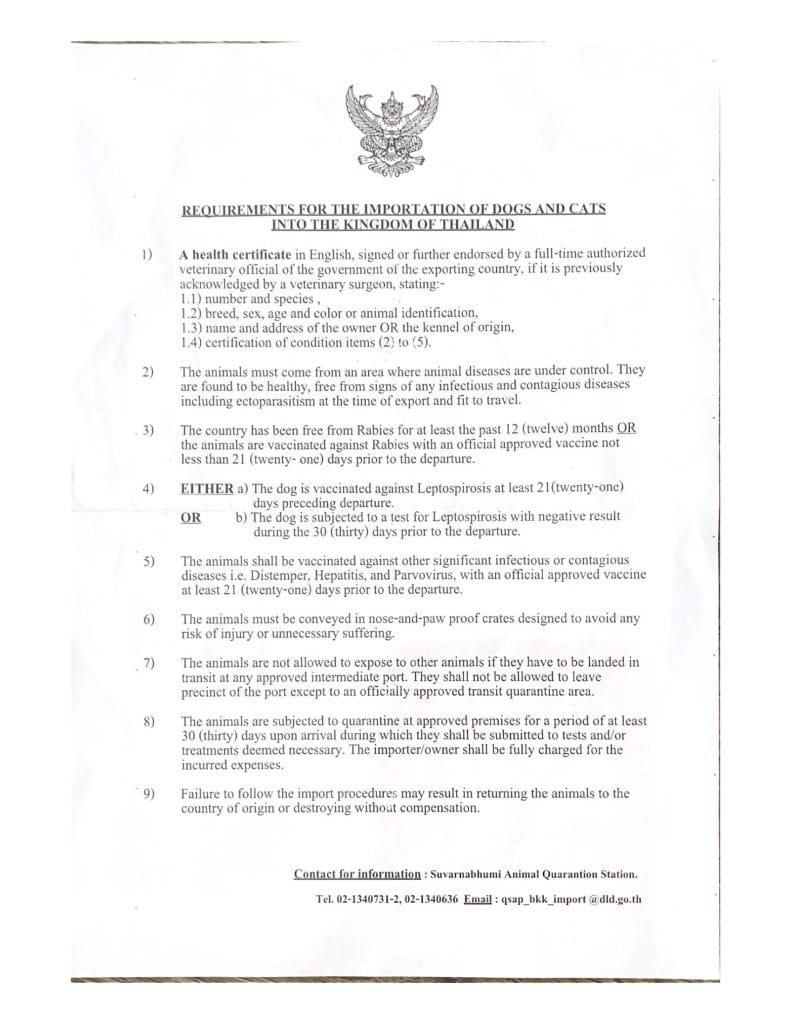
These four requirements apply to all dogs and cats entering Thailand, regardless of origin country. For the full walkthrough of each one — including exact wording, deadlines, and edge cases — see our Thailand pet import laws guide. Here is the short version:
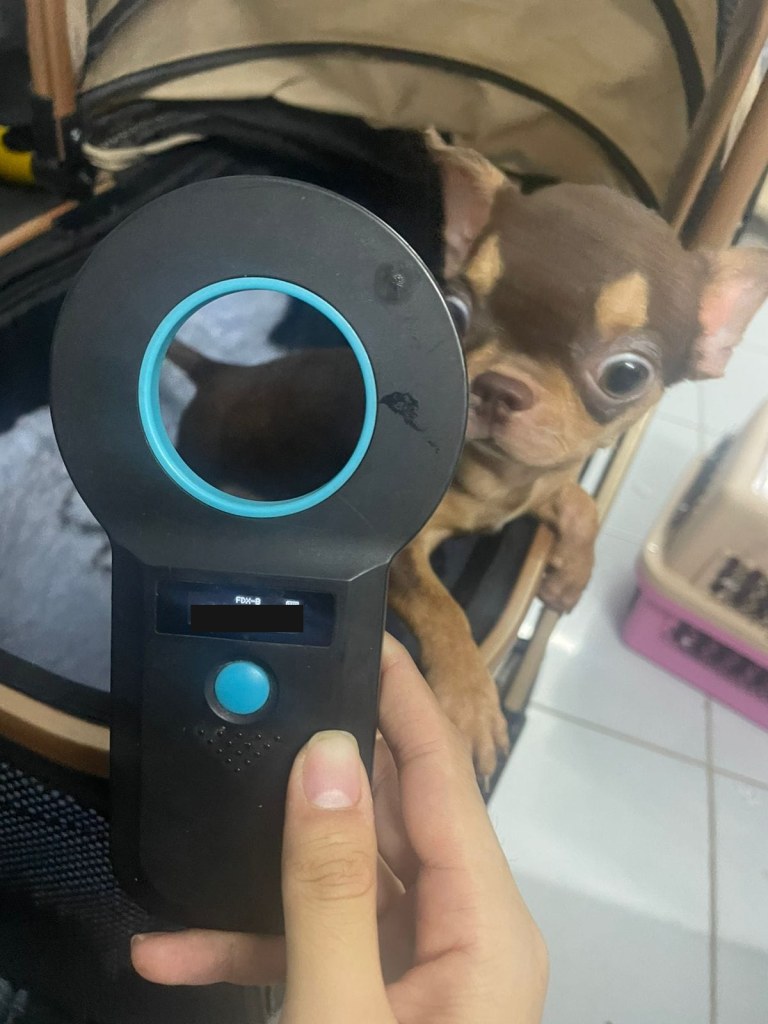
- ISO Microchip (15-digit): Must be implanted before the rabies vaccine — reversing the order invalidates every document that follows.
- Core Vaccinations: Rabies, plus Canine Distemper, Hepatitis, Parvovirus, and Leptospirosis for dogs (Feline Panleukopenia for cats). Thailand’s legal minimum wait after a first rabies dose is 21 days, but Daisy Pet’s operating standard is 30 days as a safety buffer — unless your pet already has a valid, unexpired rabies vaccine on record, in which case there’s no wait at all. The primary dose requires the pet to be at least 12 weeks old. A dog without a valid Leptospirosis vaccine needs a negative Leptospirosis test within 30 days of departure instead.
- Export Animal Health Certificate: Issued by your country’s government veterinary authority (not a private clinic) within 10 days of departure. The document name varies by country: USDA APHIS Certificate (USA), AHC issued by an OV (UK), DAFF Export Certificate (Australia), DAH Certificate (Vietnam).
- DLD Import Permit: Free. DLD offers two official routes — apply by email at least 7 working days before you fly, or apply in person at the Animal Quarantine Station counter on arrival with your original documents ready. In practice, book the advance route: some airlines refuse to board a pet without a permit already issued, regardless of what DLD itself allows. We learned that the hard way — see what happened when one of our own clients arrived without it.
| Requirement | Specification | Status |
|---|---|---|
| ISO Microchip | 15-digit ISO 11784/11785 — implanted before rabies vaccine | Required |
| Core Vaccinations | Rabies (30 days recommended if first dose/lapsed, no wait if already valid; pet ≥12 weeks old) + Distemper/Hepatitis/Parvovirus/Leptospirosis (dogs) or Panleukopenia (cats) | Required |
| Export Health Certificate | Issued by government vet authority, within 10 days of departure | Required |
| DLD Import Permit | Free — apply by email ≥7 working days ahead; on arrival also allowed (cabin/checked baggage only), but risky if your airline asks for the permit at check-in | Required |
| Rabies Titer Test (RNATT/FAVN) | — | Not required |
| Mandatory Quarantine | — | Not required (if documents are complete) |
What Thailand Does NOT Require
No rabies antibody titer test (RNATT/FAVN). Unlike Japan, Taiwan, Australia, or New Zealand, Thailand does not require a blood titer test confirming measurable rabies antibody levels. A current rabies vaccine is fully sufficient. This eliminates a 3–6 month waiting period and several hundred dollars in laboratory costs that other destinations impose.
No mandatory quarantine. If your documentation is complete and correct on arrival, your pet is inspected at the DLD counter at the airport and released to you directly the same day, for a processing fee of 500 baht per pet. If any document is incomplete or doesn’t meet requirements, DLD can fine the owner or return the pet to its country of origin at the owner’s expense — with proper preparation, this is entirely avoidable.
Can I Bring Any Breed or Species?
Thailand’s DLD imposes no breed bans for dogs or cats — all breeds are permitted from a regulatory standpoint. However, airlines enforce their own restrictions, particularly for brachycephalic (snub-nosed) breeds such as English Bulldogs, French Bulldogs, Pugs, Shih Tzus, Persian cats, and similar flat-faced breeds. These breeds face embargoes on some carriers due to heat and respiratory risk during transport. Always confirm your specific breed is accepted by your chosen airline before booking any flight.
DLD allows a maximum of 5 pets per import for personal (non-commercial) purposes. In practice, airlines typically accept only 1–2 pets per flight, so airline policy is usually the binding constraint, not the DLD limit.
Which Airports Accept Pets?
Pets entering Thailand must arrive through one of six DLD Animal Quarantine Stations: Suvarnabhumi (BKK), Don Mueang (DMK), Phuket (HKT), Chiang Mai (CNX), Samui (USM), or Krabi (KBV). Land border crossings are not approved for pet import, regardless of origin country.
How Long Does Preparation Take?
A minimum of 4 weeks if your pet already has a valid rabies vaccine; if this is a first dose or a lapsed one, Daisy Pet’s 30-day post-vaccination buffer sets the pace instead. Either way, 6 weeks is strongly recommended, which also covers the Import Permit processing time (as little as 7 working days if you file in advance) and the health certificate’s 10-day validity window landing close to your actual departure date. For the full week-by-week sequence, see our Thailand 4–6 week preparation timeline.
Traveling from Vietnam?
If you’re relocating your pet from Vietnam, the same four DLD requirements apply. The health certificate is issued by Vietnam’s Sub-Department of Animal Health (DAH/SDAH), and direct AVIH flights are available from both Ho Chi Minh City (SGN) and Hanoi (HAN). Vietnam Airlines, Thai Airways, and Bangkok Airways all operate AVIH on these routes.
For the complete Vietnam-specific process — including airline comparison, AVIH booking, and the full 6-week schedule — see the Vietnam to Thailand pet shipping guide.
How Much Does It Cost?
Thailand is one of the more cost-efficient international destinations because the DLD Import Permit is free and the only official government charge is a 500-baht processing fee collected on arrival — total costs typically run $150–$750 USD depending on pet size and whether you handle documentation yourself or use a full-service provider. The primary variable is the airline AVIH surcharge, which scales with the combined weight of your pet and the travel crate. For the complete itemized breakdown, see our Thailand pet relocation cost guide.
Frequently Asked Questions
Can I bring my dog to Thailand as a tourist?
Yes — DLD does not distinguish between tourists and long-term residents. As long as the four required documents are complete and valid, entry is permitted. Note that the DLD Import Permit specifies the entry airport and travel date, so it must accurately reflect your actual itinerary.
Can I take my dog to Thailand from the USA, UK, or Australia?
Yes. Thailand accepts pets from all three countries under the same four DLD requirements. The format of the health certificate differs — USDA APHIS Health Certificate for the USA, an OV-issued Animal Health Certificate for the UK, and a DAFF Export Certificate for Australia — but the core requirements are identical: microchip, core vaccinations, government health certificate, and DLD Import Permit.
Do cats have the same requirements as dogs in Thailand?
The same four categories of documents apply — microchip, core vaccinations, health certificate, and DLD Import Permit — but the vaccine list differs: cats only need Rabies and Feline Panleukopenia, while dogs also need Distemper, Hepatitis, Parvovirus, and Leptospirosis.
What happens if I arrive without the DLD Import Permit?
DLD itself allows you to apply for the Import Permit on arrival at the Animal Quarantine Station counter, as long as your original health certificate, vaccination records, and application form are ready for inspection — this is an official DLD process, not a workaround. The real risk is the airline: some carriers won’t let a pet board without proof that a permit has already been issued, regardless of what DLD allows, and short-transit connections make on-arrival processing risky. If your documents are incomplete on arrival, DLD can fine the owner or return the pet to its country of origin at the owner’s expense. For a real example of what this looks like when an airline enforces it strictly, see our case of a client denied boarding over a missing permit. Applying at least 7 working days in advance is the safer default.
Can I get the Thailand Import Permit at the airport instead of applying in advance?
Yes — this is an official DLD option, not just a workaround. You’ll need your original health certificate, vaccination records, and application form ready for inspection on arrival, and short-transit connections aren’t recommended since processing time varies with how many pets arrive at once. That said, check with your airline before booking: some require proof of an already-issued permit before they’ll let your pet board, even though DLD itself doesn’t require it.
Can my dog fly in the cabin on the way to Thailand?
On most international routes to Thailand, pets travel as AVIH (Accompanied Baggage in Hold) — in a pressurized, temperature-controlled hold compartment on the same flight as the owner, not in the passenger cabin. For a full comparison of airlines and their AVIH policies on Thailand routes, see the Thailand airline guide.
Is there a weight limit on pets entering Thailand?
The DLD itself does not impose a weight limit. The binding constraint is the airline: most carriers accept AVIH up to a combined weight of 32 kg (pet plus crate), beyond which the animal must travel as Manifest Cargo under a separate air waybill. Confirm your airline’s specific limit before booking. For further questions, see the Thailand pet shipping FAQ.
Last updated 18 Oct 2026
Compiled by our specialists from the regulations in force on the date above, for reference only. Rules may change after this date. Please verify with the competent authorities or contact us for the most accurate information.
Official sources cited in this guide
- dld.go.thdld.go.th