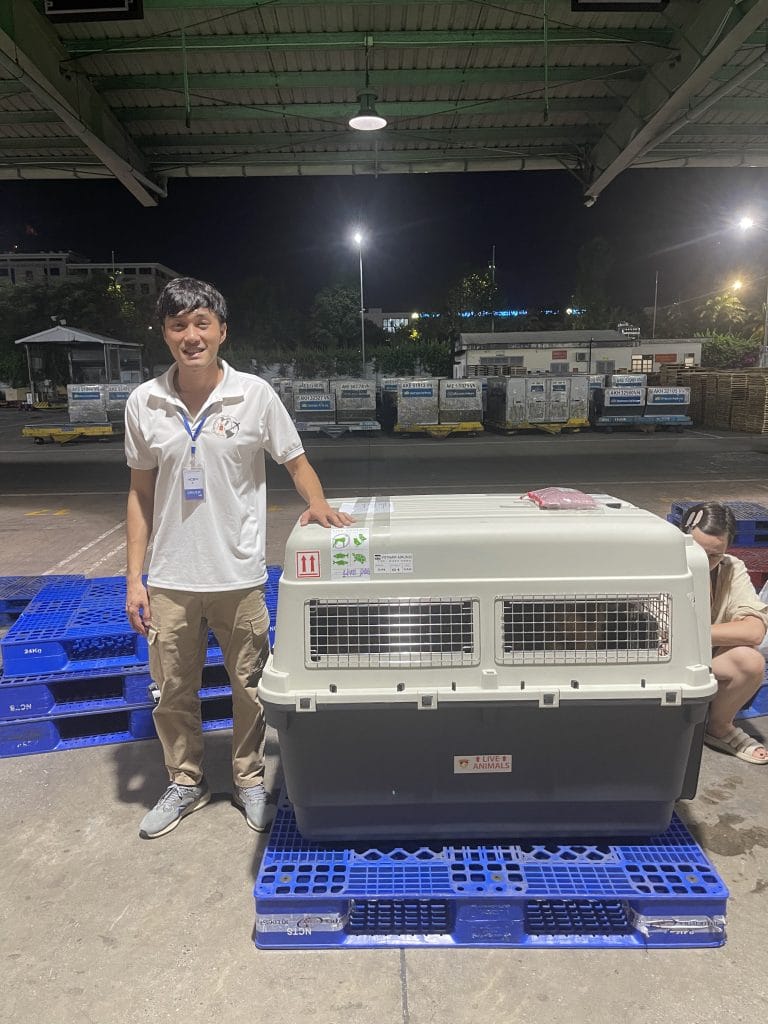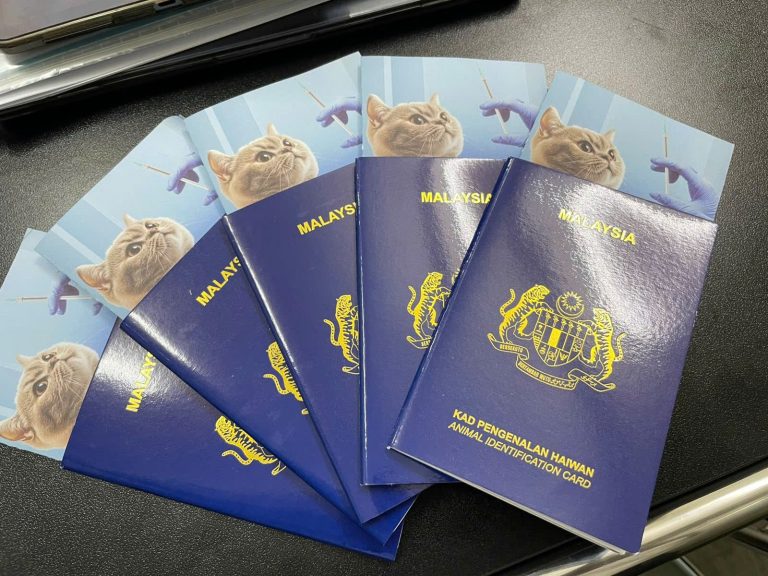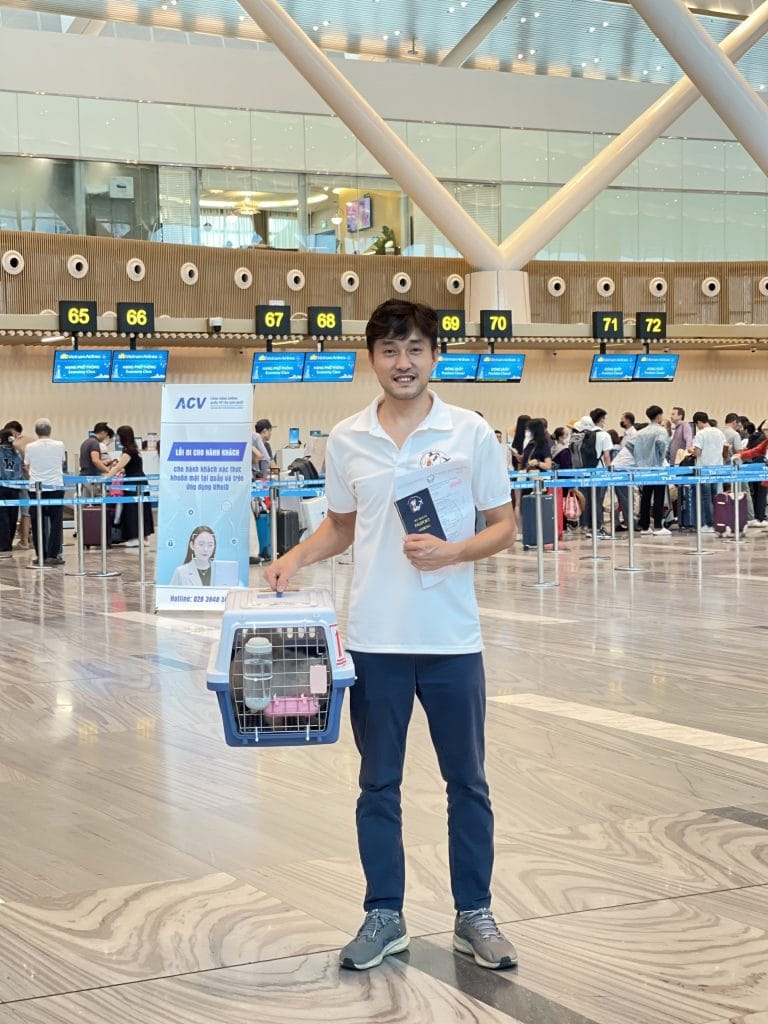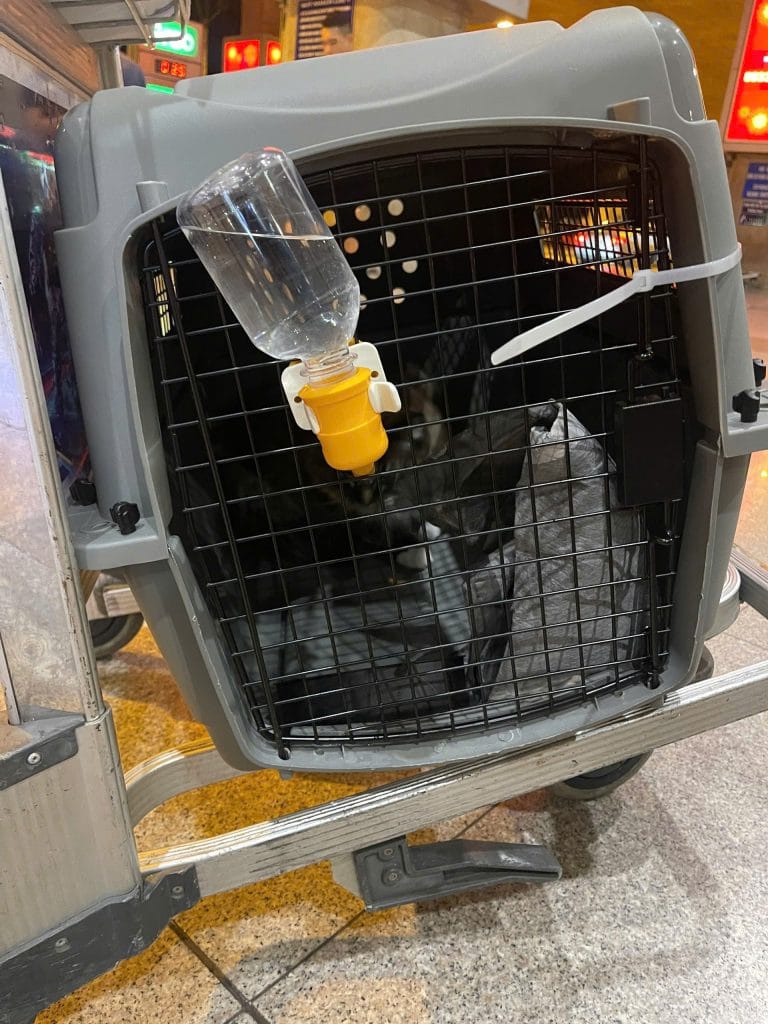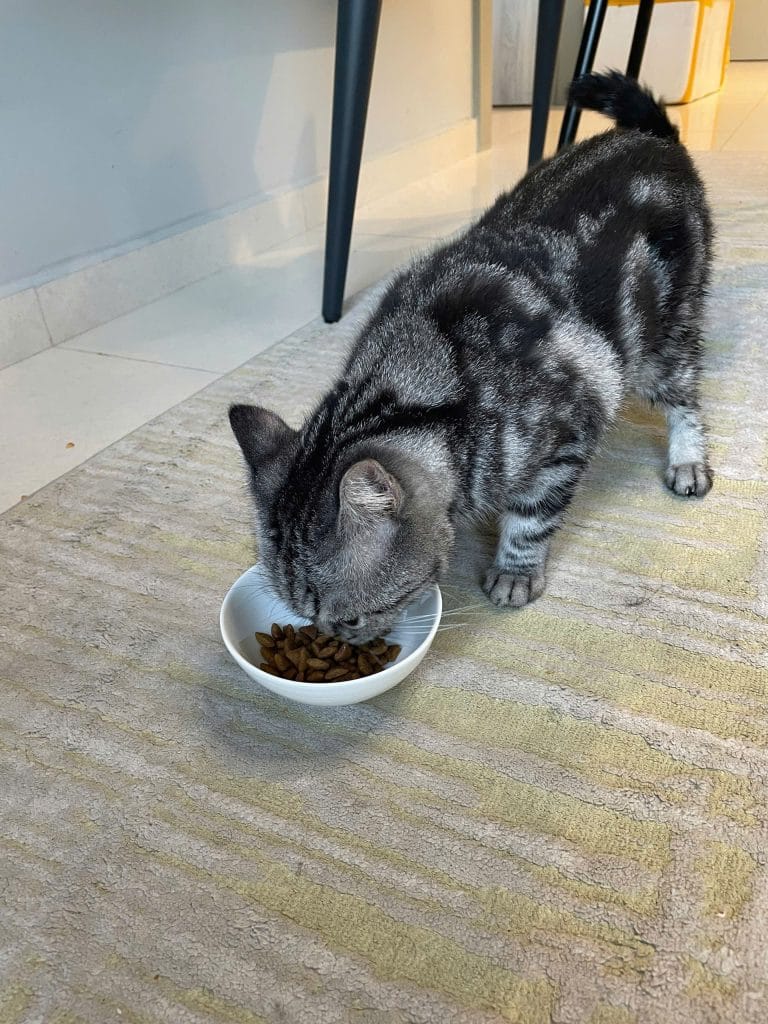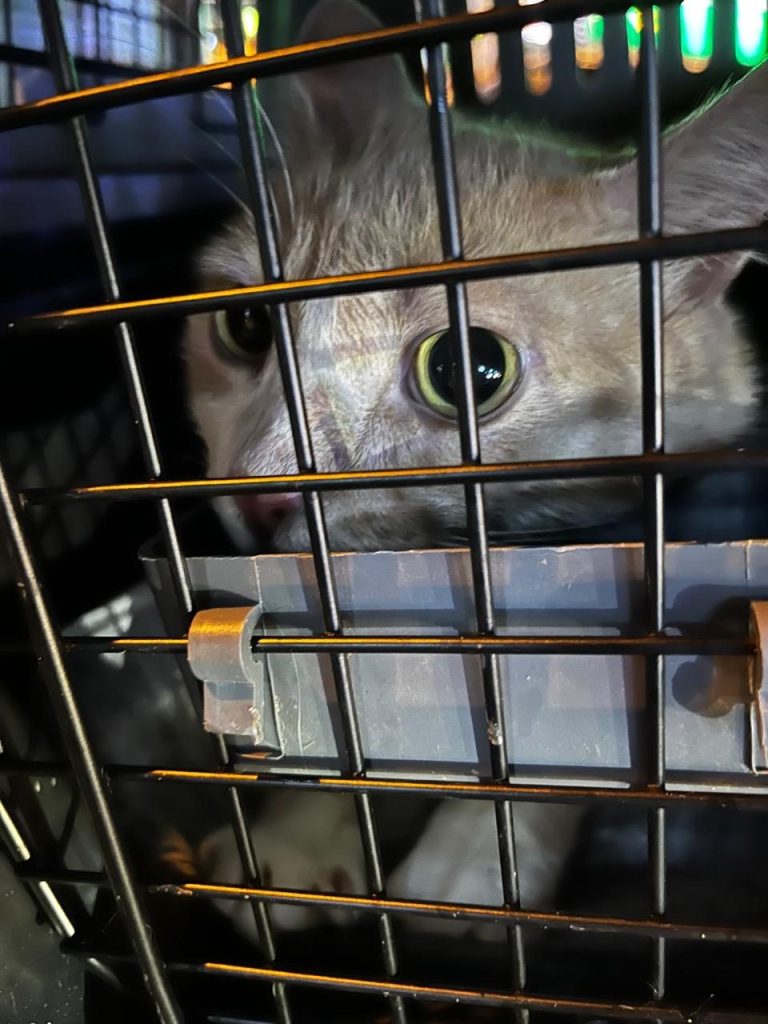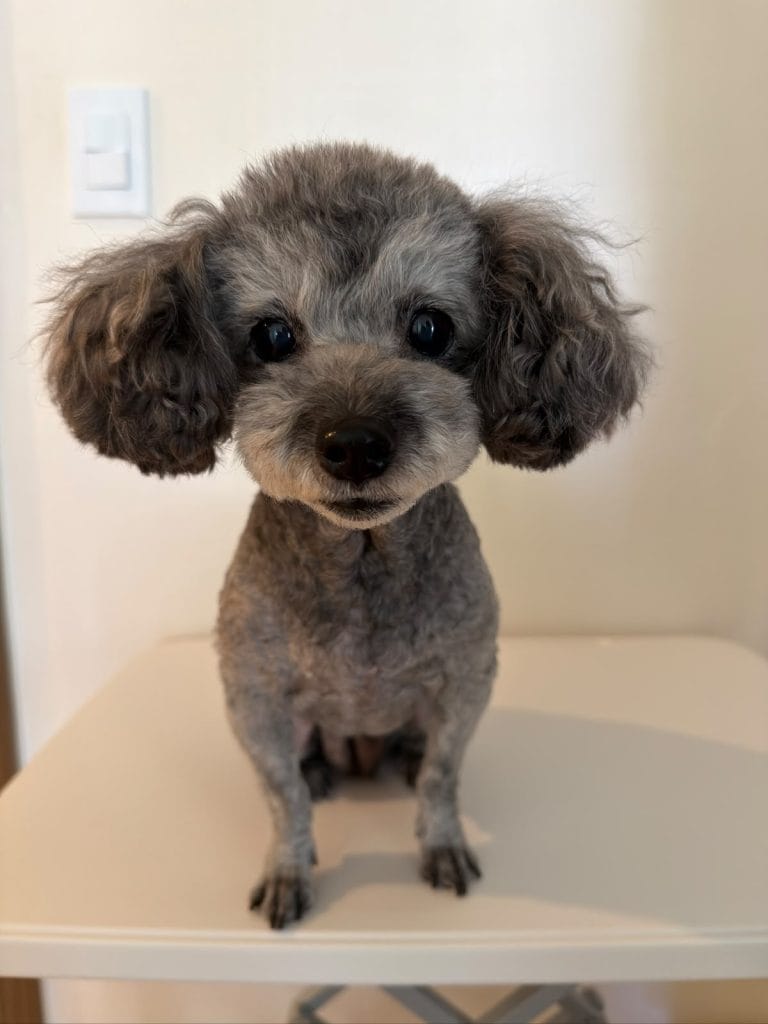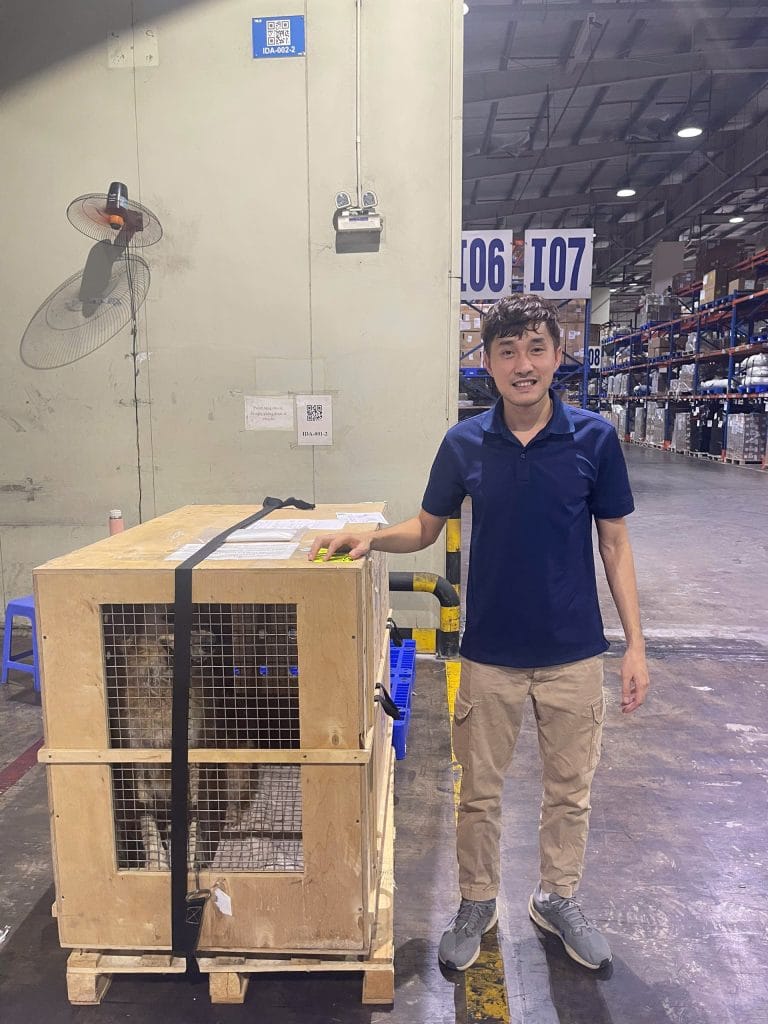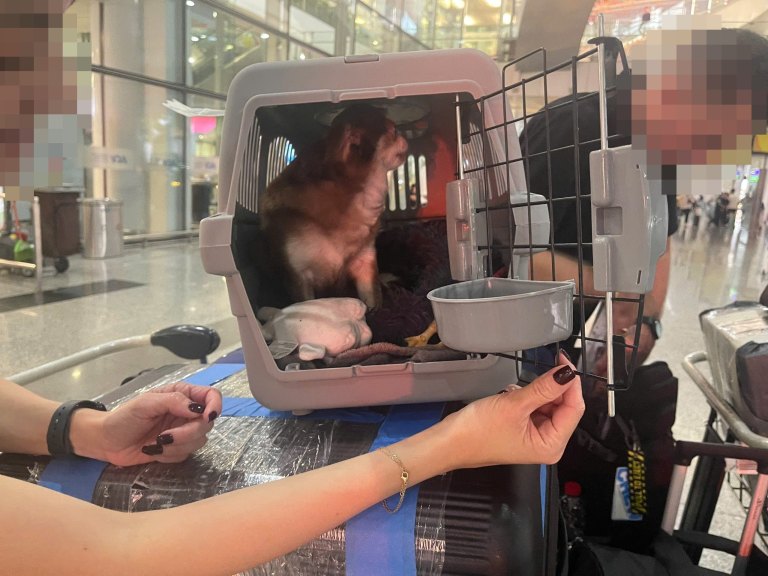
Bringing pets from Japan to Vietnam involves three sets of rules: Japan’s export check, Vietnam’s import inspection and your airline’s pet policy. Japan’s Animal Quarantine Service (AQS) inspects the pet at the departure airport and issues its export certificate. Vietnam sets the chip and rabies conditions, and the airline decides how the pet flies.
Quick Answers: Can You Bring a Pet from Japan to Vietnam?
- Is it allowed? Yes. Vietnam asks for no import permit, no titer test and no quarantine stay when you bring one or two pets of your own.
- Can my pet fly with me? Yes. Vietnam Airlines takes a small pet in the cabin. ANA and Japan Airlines (JAL) carry pets as checked baggage on your flight.
- Are there direct flights? Yes. All three airlines fly nonstop from Tokyo, and Vietnam Airlines also flies from Osaka, Nagoya and Fukuoka.
- How long does it take? About five weeks if the pet needs a new rabies vaccine. About three weeks if the vaccine is still valid.
- Who issues the export paperwork? AQS, part of Japan’s Ministry of Agriculture, Forestry and Fisheries (MAFF). The inspection is free.
- Can my pet come back to Japan later? Yes, but the preparation starts before you leave Japan.
The rules Vietnam applies to every arriving pet sit in our Vietnam pet import service guide.
What Must Your Pet Meet Before You Fly from Japan?
Any item below can stop the move. Check them before you book vet visits or tickets. This guide covers dogs and cats. Rabbits and other pets follow different rules, and few airlines carry them.
Vietnam’s Entry Conditions
- Microchip: required by Vietnam. Use a 15-digit ISO 11784/11785 chip, implanted before the rabies vaccine.
- Rabies vaccine: at least 30 days before the flight. On landing day, the shot must be under 12 months old.
- Age: vets give the rabies shot from 12 weeks. Add the 30-day wait, and a puppy or kitten can fly at about four months.
- Not needed: a rabies titer test (RNATT). Bringing three or more pets at once moves you into Vietnam’s commercial import procedure.
A 3-year rabies vaccine counts for 12 months only in Vietnam. The reason is explained in why a 3-year rabies vaccine may be expired for travel.
Cats in Japan Often Have No Rabies Shot
Yearly rabies vaccination is compulsory for dogs in Japan but not required for cats. Many cats in Japan have never been vaccinated. Ask your clinic early whether it can give the vaccine. The 30-day wait only starts after the shot.
Airline Limits That Can Stop the Trip
- Vietnam Airlines: refuses a long list of breeds in the cabin, the hold and cargo. It includes short-nosed dogs such as Pugs, Shih Tzus and French Bulldogs, plus Persian, Himalayan, Exotic and Burmese cats.
- ANA: takes no short-nosed dogs as checked baggage from 1 May to 31 October. The list covers 13 breeds, including Bulldogs, Boxers and Pugs. In the same period, ANA refuses covered crates.
- JAL: does not carry Bulldogs or French Bulldogs on any flight.
Breeds that face limits on flights into Vietnam are listed in our restricted dog breeds guide.
Which Flights Can Take a Pet from Japan to Vietnam?
Japan’s export check is the same whether the pet flies in the cabin, as checked baggage or as cargo. The airline decides which of these it offers.
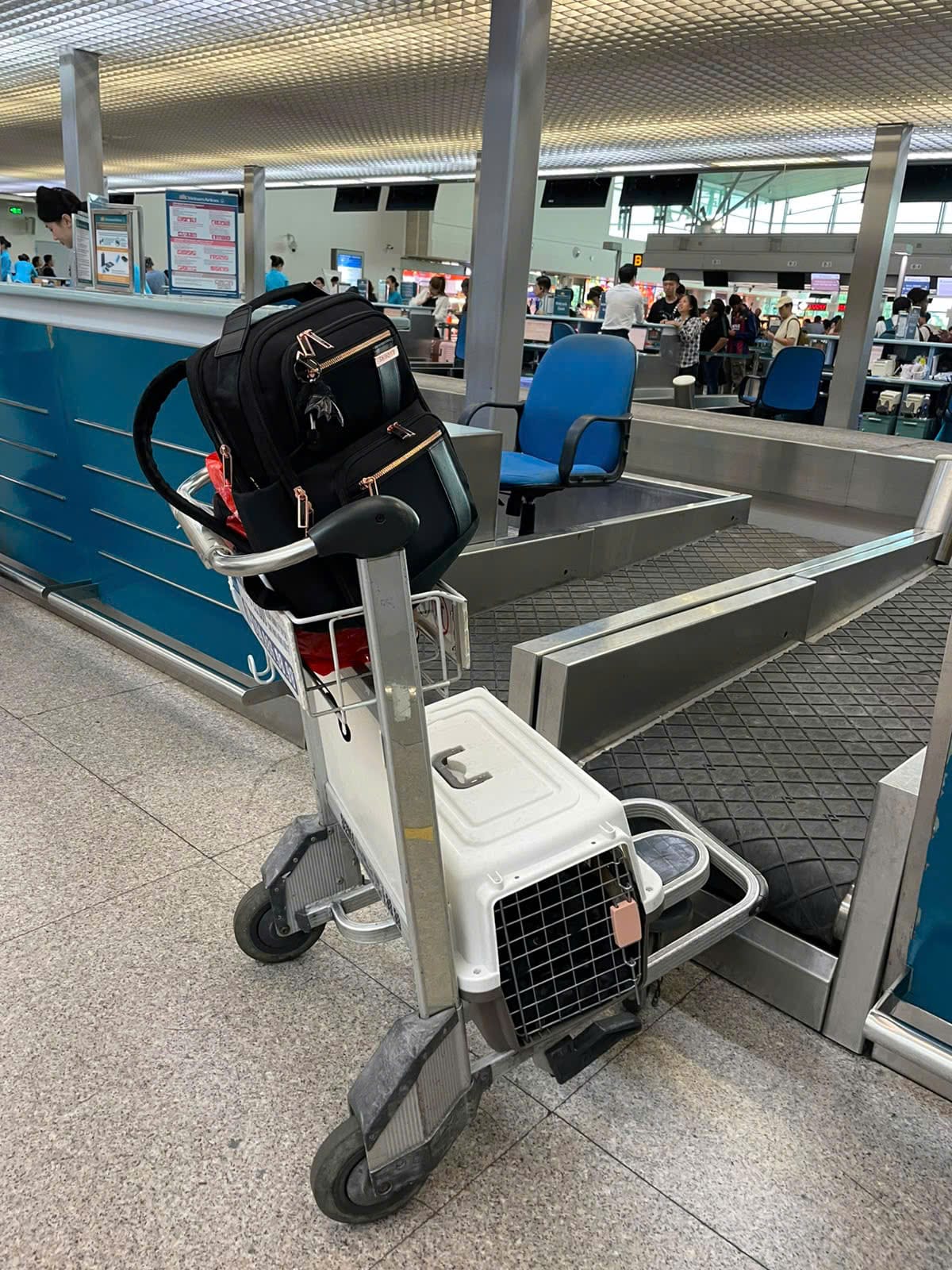
- Vietnam Airlines: nonstop from Narita, Haneda, Kansai, Nagoya and Fukuoka. A dog or cat from 10 weeks old can fly in the cabin if pet and carrier weigh 6 kg or less, in a carrier up to 35 × 30 × 20 cm. Heavier pets travel as checked baggage, up to 32 kg with the crate.
- ANA: nonstop from Narita and Haneda. Pets travel as checked baggage only, apart from assistance dogs.
- JAL: nonstop from Narita and Haneda. Pets travel as checked baggage. You check the pet in at the same counter as you and collect it at baggage claim.
Vietnam Airlines lists its cabin and checked-baggage rules on its pet travel page for Japan.
Other carriers that fly pets into Vietnam are compared in our Vietnam pet airline comparison.
Flying to Da Nang
Vietnam Airlines flies nonstop to Da Nang from Narita and Kansai. Da Nang airport has its own quarantine station, so the pet is cleared there. If you land in Hanoi or Ho Chi Minh City first, the pet is cleared at that first airport.
When Does a Pet Fly as Cargo?
A pet travelling alone, or one above the checked-baggage limit, flies as cargo on an air waybill. In Japan, AQS lets you do the quarantine steps yourself. Export customs for cargo usually needs a customs broker.
In Vietnam, a cargo pet must be received by an agent. Only a company with a customs account can file the customs declaration, so an owner cannot do it alone.
Carrier sizes for cats are in our guide to bringing a cat to Vietnam.
Weight points for large dogs are in our guide to bringing a dog to Vietnam.
Bringing a Pet from Japan to Vietnam in 6 Steps (About Five Weeks)
The timeline below assumes your pet still needs its rabies shot. If the chip and vaccine are already in place, start at Step 2. The rest takes about three weeks.
A day-by-day plan that fits any departure country is in our Vietnam pet import timeline.
Step 1 (Day 1): Microchip, Then the Rabies Vaccine
Who: you and a vet clinic in Japan.
The vet reads or implants the chip first, then gives the rabies vaccine. Ask for a vaccination certificate that shows the chip number. If the pet may return to Japan one day, decide now. That return needs extra steps in Japan before you leave, described below.
Step 2 (Days 2–7): Book the Flight and Apply to AQS
Who: you, or an agent if the pet flies as cargo.
Ask the airline to confirm space for the pet before you buy the ticket. Each flight takes only a few pets.
Then apply for the export inspection through NACCS, Japan’s online system, or by email to the AQS office at your departure airport. Apply at least 14 days before departure, and write your preferred inspection date in the remarks. From 1 January 2027, the 14 days become mandatory for dogs. AQS confirms the slot by email. You cannot book a slot before you apply. The steps are on MAFF’s export page for dogs and cats.
Haneda inspection slots are often full, so apply early. If someone else will bring the pet to AQS, prepare a power of attorney.
Step 3 (About a Week Before Departure): Send Copies to Vietnam, Update Your City Records
Who: you send the copies; the agent in Vietnam checks them.
Email scans of your passport, ticket or air waybill, vaccination certificate and chip number. Daisy Pet needs them two working days before departure at the latest. The agent compares the names, dates and chip number across all documents.
If you are leaving Japan for good, tell your city about the move. In Chuo City, Tokyo, owners with registered microchip details update that registration instead of notifying the public health centre (Chuo City guidance). Each municipality sets its own procedure.
Step 4 (Within 10 Days Before Departure): AQS Export Inspection
Who: an AQS veterinary officer inspects; you bring the pet.
Bring the pet in its crate, your photo ID and every original certificate. At Narita, Haneda and Kansai, an AQS veterinary officer does the health check. You do not need a separate certificate from a private clinic there. Appointments run from 8:30 to 16:30, and the check takes about an hour. For an early-morning flight, book the day before.
AQS then issues the Export Quarantine Certificate in English, free of charge. AQS may contact your vet to confirm a certificate, and it refuses forged documents. Vietnam accepts the AQS certificate as issued, with no consular legalisation. MAFF answers common export questions in its dog and cat export FAQ.
Step 5 (Day 31 or Later): Form 3, Then the Flight
Who: the agent files the declaration; you check the pet in.
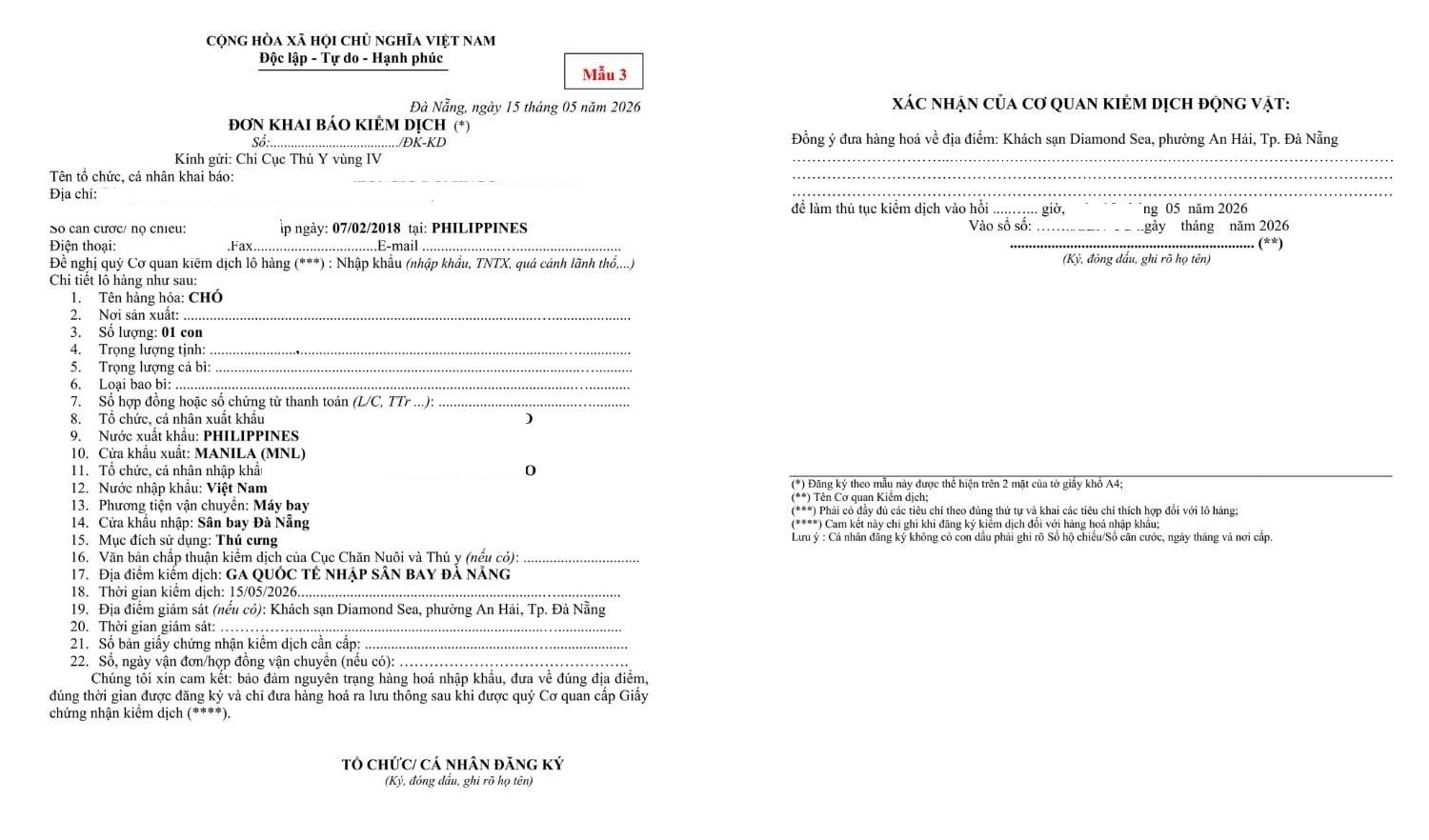
The agent lodges Form 3 at the quarantine station of your arrival airport. Daisy Pet lodges it roughly two days before landing, leaving time to correct mistakes. Form 3 is a request for inspection, not an import permit.
Our Form 3 guide goes through the declaration line by line.
Carry the original AQS certificate and vaccination record in your hand luggage. For cargo, the agent attaches them to the crate.
Step 6 (Arrival Day): Inspection, Form 15a and Customs
Who: the airport quarantine station, then you or the agent.
If the pet flew with you, take it to the quarantine counter in the arrivals area. If it flew as cargo, the agent clears it at the cargo terminal.
The quarantine officer reads the original AQS certificate and vaccination record, scans the chip and checks the pet’s health. A pet that passes receives Form 15a, Vietnam’s import quarantine certificate, which stays valid for 60 days.
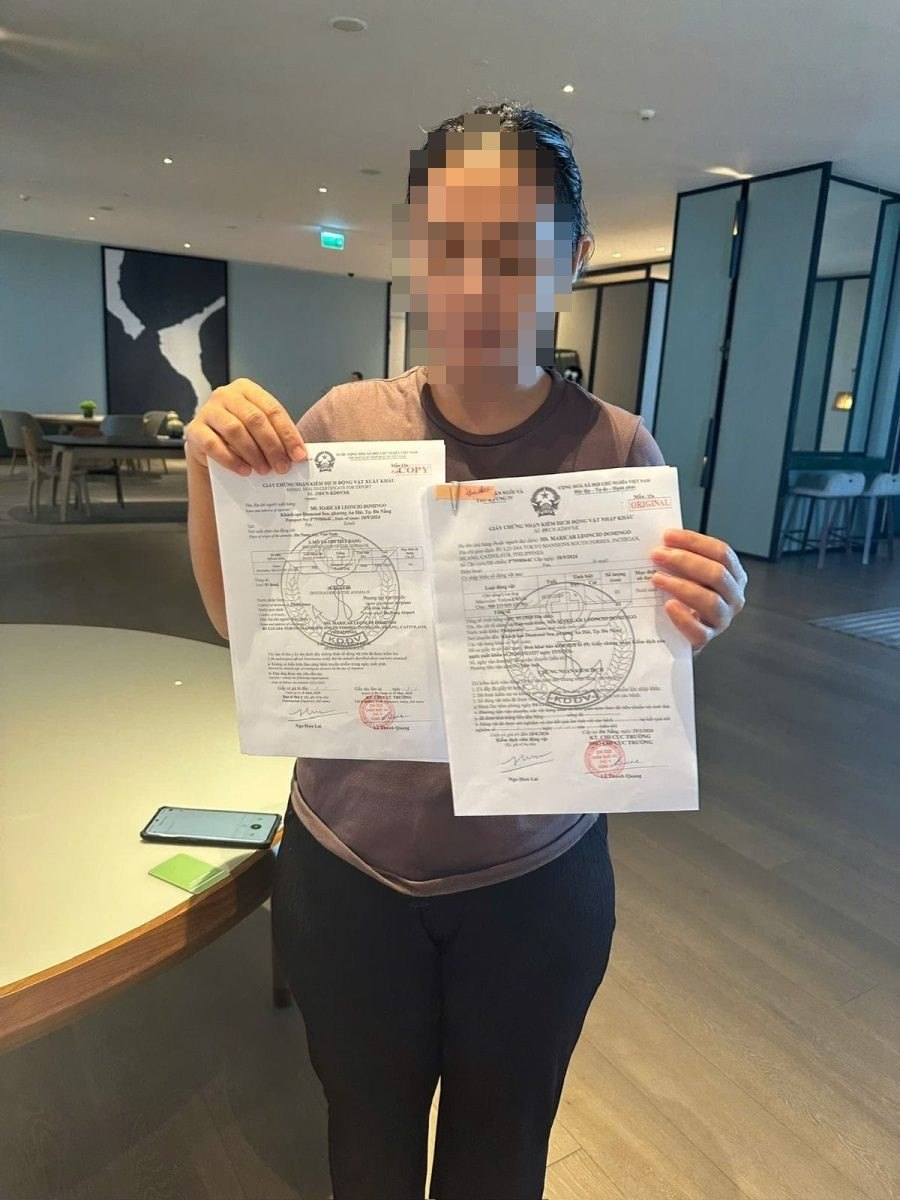
Under Vietnam’s rules, an accompanied pet gets Form 15a within one working day of the inspection. When the officer takes samples, the deadline is one working day after the results arrive. Import duty and the quarantine fee follow, even for a single pet.
Quarantine stations work at Tan Son Nhat in Ho Chi Minh City, Noi Bai in Hanoi and Da Nang. When a document fails the check, the station decides what happens next. Matching chip numbers and an in-date rabies shot avoid most of these cases.
What Does Bringing a Pet from Japan to Vietnam Cost?
You pay three groups of costs, each to a different party.
- In Japan: clinic visits for the chip and rabies vaccine, and an airline-approved carrier or crate. The AQS inspection is free. A cargo pet adds the customs broker’s fee.
- The flight: Vietnam Airlines charges USD 400 for the cabin and USD 200–300 for checked baggage, by weight, before VAT. ANA and JAL charge ¥25,000 (USD 250) per crate on flights between Japan and Asia (ANA pet rules).
- In Vietnam: the clearance agent, the quarantine fee and import duty. Cargo pets add terminal charges at the airport.
Typical totals by pet size appear in our cost guide for shipping a pet to Vietnam.
Can Your Pet Return to Japan Later?
Yes. Japan lists Vietnam as a non-designated region, so the full import rules apply. You avoid the 180-day hold only by preparing in Japan before you leave.
- Before leaving Japan: microchip, then a first rabies vaccine from 91 days of age, inactivated or recombinant only. A second vaccine follows at least 30 days later. Then a blood test at a MAFF-designated lab must show at least 0.5 IU/ml.
- At the export inspection: show these certificates to AQS, which records them on the export certificate. Keep that certificate safe.
- While in Vietnam: keep rabies boosters within their validity. The blood test stays valid for 2 years from the sampling date. After that, it must be repeated.
- Before flying back: notify AQS at least 40 days before arrival. Get a health certificate on MAFF’s recommended Form RE, signed by a vet within 10 days of departure and endorsed by Vietnam’s government vet.
- On arrival in Japan: if everything is in order, the pet is released within 12 hours. If not, Japan can hold it for up to 180 days.
The advance notice is explained in our guide to submitting Japan’s NACCS notification.
Japan’s full entry rules are in our guide to Japan’s pet import requirements and timeline.
FAQ: Bringing a Pet from Japan to Vietnam
Can my pet fly in the cabin from Japan to Vietnam?
Yes, with Vietnam Airlines, if the pet and its carrier weigh 6 kg or less. ANA and JAL carry pets as checked baggage only.
Do I need an import permit or a titer test to bring a pet from Japan to Vietnam?
No. For one or two pets, Vietnam checks the microchip, the rabies vaccine and the AQS export certificate. It issues no permit in advance and does not ask for a titer test.
How early should I apply for the AQS export inspection?
At least 14 days before departure, through NACCS or by email. The 14 days become mandatory for dogs from 1 January 2027, and Haneda slots fill up fast.
Does the AQS certificate need consular legalisation for Vietnam?
No. Vietnam accepts the original AQS export certificate as issued. Bring the original on the flight.
My cat has never had a rabies shot. Can it still fly to Vietnam?
Yes, once a vet gives the rabies vaccine at least 30 days before the flight. Ask your clinic early, because the wait only starts after the shot.
Can I bring my pet back to Japan after living in Vietnam?
Yes. Prepare before leaving Japan: two rabies shots and a blood test at a MAFF-approved lab. Without them, Japan can hold the pet for up to 180 days on return.
More answers on Vietnam’s import rules are in our Vietnam pet import FAQ.
Last updated 17 Oct 2026
Compiled by our specialists from the regulations in force on the date above, for reference only. Rules may change after this date. Please verify with the competent authorities or contact us for the most accurate information.
Official sources cited in this guide
- vietnamairlines.comvietnamairlines.com
- maff.go.jpmaff.go.jp
- Chuo City guidancecity.chuo.lg.jp
- ANA pet rulesana.co.jp