Vietnam
Canada

Pet Shipping from Vietnam to Canada 2026 Complete Guide

Canada: no quarantine on arrival, no rabies antibody test required. Vietnam pets can clear Canadian customs and go home with their owner on the same day they land — if the six-week preparation is done correctly.

Last updated 14 Oct 2026i
A tabby cat and a grey-and-white cat sitting on a wooden floor
No quarantine on arrival
Know this first

Key Facts Before Shipping a Pet to Canada

Before you start, understand these 4 points of pet importation into Canada to avoid costly mistakes.

01

No Quarantine

CFIA sets no mandatory quarantine for personal pet dogs and cats arriving from Vietnam.

02

Rabies Certificate

From 3 months of age, pets need a valid rabies vaccination certificate in English or French, or with an official translation.

03

No Permit or Titer Test

Vaccinated personal pets need no import permit and no rabies titer test (RNATT) on the standard route.

04

Personal Pets Only

Commercial dogs from high-rabies-risk countries, Vietnam included, are banned; the owner must be the importer.

Canada Pet Import Requirements (CFIA & CBSA Compliance)

Document errors at the CBSA inspection point can result in your pet being held at the cargo terminal at your expense.

Rabies Vaccination Certificate

Issued by a licensed veterinarian. Must be in English or French. Must include: your pet’s info, microchip number, vaccine brand,serial number, vaccination date, and certificate expiry date. If this is your pet’s first rabies vaccination (or a lapse after expiry), Daisy Pet’s standard 30-day wait begins from vaccination date

Animal Health Certificate

Issued by a licensed Vietnamese veterinarian after a pre-travel health examination. Confirms the pet is free from clinical signs of disease and fit for transport. Airlines require this certificate to be issued within 10 days of departure — time this carefully relative to your flight booking. See our Animal Health Certificate guide

Microchip: Airline Requirement

CFIA does not federally mandate microchipping for personal pet imports. However, every airline on the Vietnam-to-Canada route requires an ISO 11784/11785-compliant chip. Implant the chip before the rabies vaccination — the vaccination certificate must reference the chip number in place at time of vaccination.

Breed-Specific Legislation (Provincial)

Canada has no federal breed ban. However, Ontario prohibits pit bull-type dogs under the Dog Owners’ Liability Act, and Winnipeg, Manitoba has similar restrictions. Verify the regulations for your destination province and city before finalizing travel arrangements.

Step by step

The 6-Week Preparation Roadmap

Without a RNATT requirement, the Canada route compresses to 6 weeks — the minimum driven by Daisy Pet’s standard 30-day post-vaccination wait

01

WEEK 1 — Microchip & Rabies Vaccination

Implant ISO 11784/11785 microchip first, then administer rabies vaccination. Daisy Pet’s 30-day wait begins from vaccination date. Mark this date — it is the hardest constraint in the entire timeline.

02

WEEK 2–4 — Airline Research, Crate & Training

Contact Airline cargo divisions directly. Purchase an IATA-compliant crate and begin crate familiarization — 3–4 weeks of training before departure reduces stress significantly during the long transit.

03

WEEK 5 — Pre-Travel Health Exam & Certificate

Licensed Vietnamese vet conducts the pre-travel health examination and issues the Animal Health Certificate. Time this carefully — airlines require the certificate within 10 days of departure.

04

WEEK 6 — Confirm Booking & Final Review

Confirm airline booking in writing. Cross-check all documents: microchip numbers match on both certificates, rabies certificate is in English or French, 30-day wait has passed, expiry date covers arrival day.

05

DEPARTURE DAY — Check-In at Cargo Terminal

Arrive at the cargo terminal — not the passenger terminal — at least 3–4 hours before departure. Attach the document pouch to the crate. Live Animal stickers and orientation arrows on all sides of the crate.

06

ARRIVAL — CBSA Inspection & Direct Release

Present original documents to CBSA officer at YYZ, YVR, or YUL. Pay inspection fee (CAD $36.95 for the first pet, plus GST/HST) and cargo terminal handling fee. Pet is released directly to you — no quarantine, no waiting days.

Airline Options: Vietnam to Canada

There are no direct flights from Vietnam to Canada. All pets travel through an Asian connecting hub

Airline Hub Route In-Cabin Brachycephalic Restrictions Summer Embargo Risk Reliability
Korean Air
Hub

Seoul Incheon (ICN)

Route

SGN/HAN → ICN → YYZ/YVR

In-Cabin

Available (qualifying segments)

Brachycephalic Restrictions

Moderate — confirm by breed

Summer Embargo Risk

Moderate

Reliability

High

Cathay Pacific
Hub

Hong Kong (HKG)

Route

SGN/HAN → HKG → YYZ/YVR

In-Cabin

Available (qualifying segments)

Brachycephalic Restrictions

Moderate — confirm by breed

Summer Embargo Risk

Moderate

Reliability

High

Air China
Hub

Beijing (PEK)

Route

SGN/HAN → PEK → YYZ/YVR

In-Cabin

Confirm per segment

Brachycephalic Restrictions

High — most breeds restricted

Summer Embargo Risk

High

Reliability

Moderate

Three Shipping Methods for a Long-Haul Route

Canada is a long-haul route, so most pets travel checked baggage or cargo rather than in-cabin.

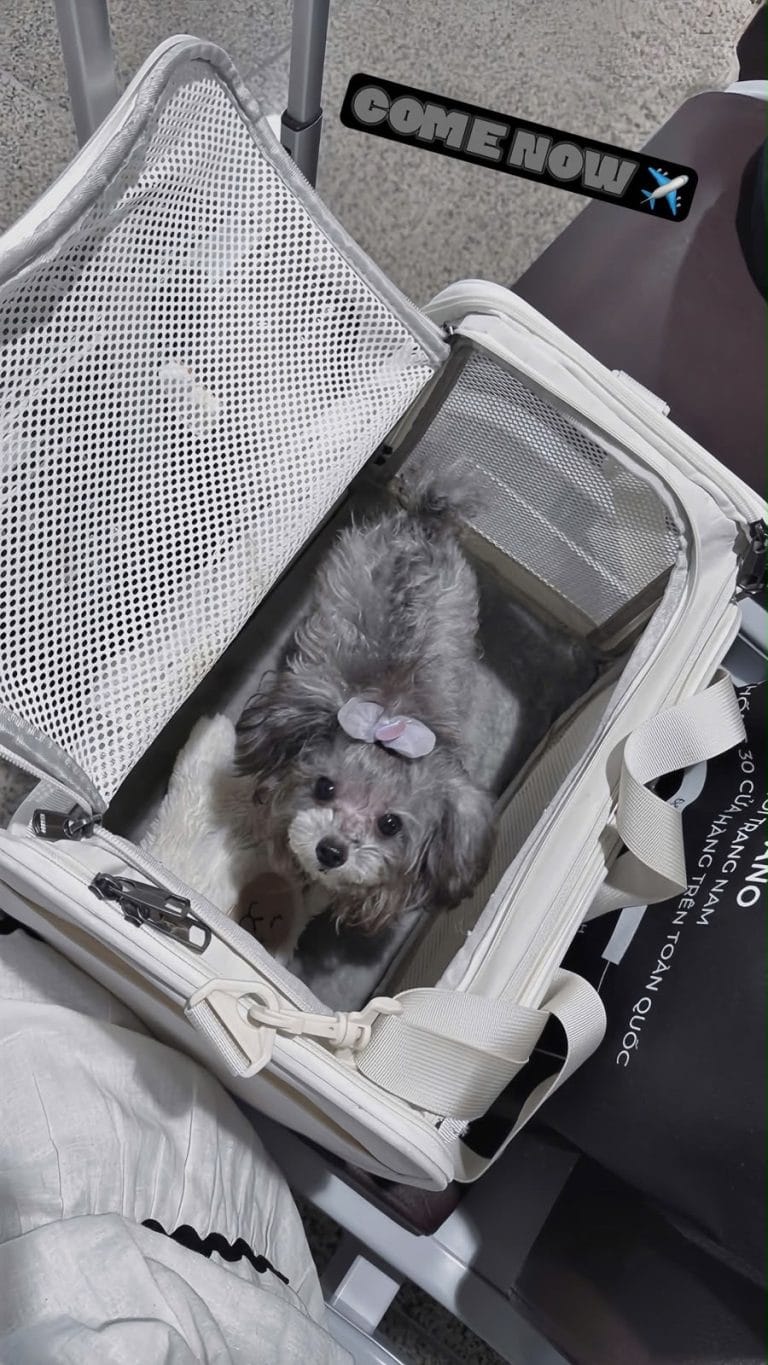
Poodle in a soft-sided travel bag at the airport

In-Cabin (PETC)

Travels in the cabin with the owner, in a soft-sided carrier under the seat.

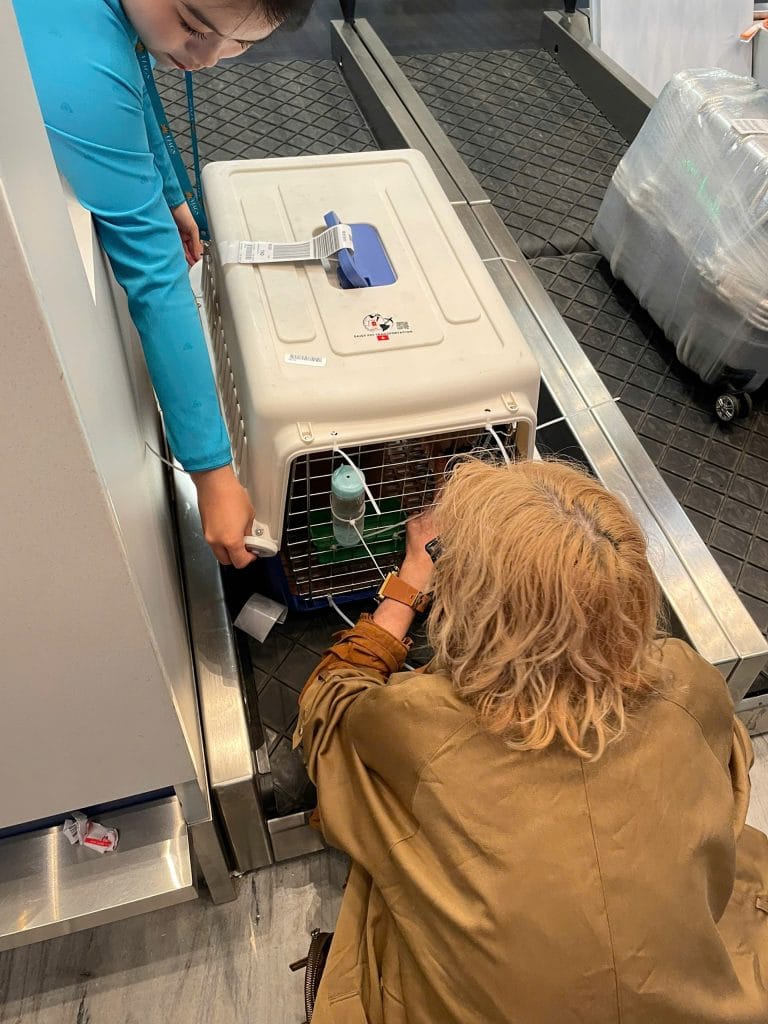
Pet owner checking in a dog crate at the airline counter

Checked Baggage (AVIH)

Flies on the same flight as the owner, in the temperature-controlled hold.

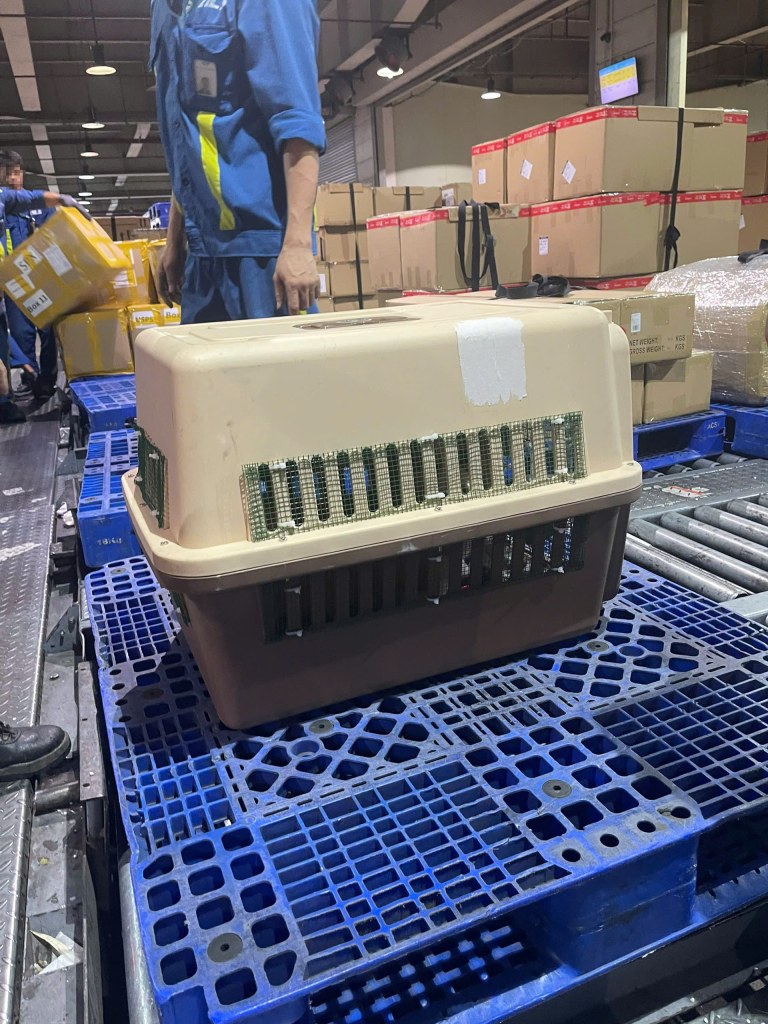
Pet crate on a pallet in the airport cargo warehouse

Manifest Cargo

Does not fly with the owner, with fewer limits on weight and size.

Welfare Standards That Apply

Applied to every pet flying the Canada route.

Age and Cabin Limits Vary by Carrier

Eight weeks and fully weaned is the floor for carriage, and some airlines set it higher. Cabin allowances count pet and crate together. Pregnant animals are not accepted.

Sedation Is Not Used

IATA and IPATA both advise against sedation, and a pet known to be sedated can be refused at the counter. Crate conditioning on a six-week schedule does that work instead.

How Daisy Pet Supports Your Canada Relocation

Pet owners work with a single point of contact while we manage every stage — from the first vet appointment to CBSA clearance on arrival day.

Owner Services

  • Travel Planning: Airline booking via Korean Air, Cathay Pacific, or Air China — in-cabin or manifest cargo based on your pet’s size and route
  • Documentation: Rabies certificate verification, Animal Health Certificate coordination, CBSA clearance guidance
  • Logistics: Cargo terminal check-in support, crate labeling, live animal documentation package preparation

Pet Services

  • Essential kit: ISO microchip implantation, IATA-compliant travel crate, crate familiarization guidance
  • Veterinary coordination: Rabies vaccination scheduling, pre-travel health examination, Animal Health Certificate
  • Timeline management: 30-day vaccination wait tracking, 10-day certificate window coordination, departure day checklist

Pricing Transparency

Canada’s no-quarantine arrival means costs are limited to preparation, transport, and the CBSA inspection fee — no facility fees, no nightly rates.

What is Included

  • Flight & Logistics: In-cabin or Manifest Cargo booking, Air Waybill (AWB), and freight charges
  • Export Documents: Rabies certificate coordination, Animal Health Certificate, microchip implantation
  • Origin Customs: Full export customs declaration and terminal warehouse fees in Vietnam
  • Veterinary Coordination: Vaccination scheduling, health examination, and 10-day certificate timing

What is NOT Included

  • Travel Crate: IATA-compliant crate (quoted separately based on breed and size)
  • CBSA Inspection Fee: CAD $36.95 for the first pet (plus GST/HST), CAD $6.16 each additional pet — payable at port of entry
  • Cargo Terminal Handling: USD $100–300 airline cargo terminal processing fee at Canadian airport
  • Ground Transport: Post-arrival transport from Canadian airport to final destination

FAQs — Pet Shipping from Vietnam to Canada

Does Canada require quarantine for pets from Vietnam?+
No. Canada does not quarantine personal pet dogs and cats on arrival from Vietnam. Upon landing at YYZ, YVR, or YUL, your pet goes from the aircraft to a CBSA inspection point. If documents are in order, the CBSA officer releases your pet to you the same day — typically within 1–3 hours of the flight landing. This is the single most significant difference from Australia, Japan, and the EU.
Does Canada require a rabies antibody test (RNATT)?+
No. Despite classifying Vietnam as a high-risk rabies country, CFIA does not require a rabies neutralizing antibody titre test for personal pet imports. Only a valid rabies vaccination certificate is required. This omission compresses the minimum preparation timeline to 6 weeks — compared to 6+ months for countries that mandate the test. See our full FAQ for more details on what Canada does and does not require.
Can my small pet travel in-cabin to Canada?+
Yes — small pets that meet the carrier’s weight and carrier size requirements can travel in-cabin on qualifying flights. Korean Air and Cathay Pacific both offer in-cabin pet options on segments of the Vietnam-to-Canada route. Confirm acceptance, weight limits, and soft carrier specifications directly with the airline’s cargo or passenger division for each flight segment before booking. In-cabin is not available on all aircraft types or all segments.
How long does preparation take for the Canada route?+
The minimum preparation timeline is 6 weeks, driven by Daisy Pet’s standard 30-day post-vaccination waiting period after a first or lapsed rabies vaccination. A comfortable timeline is 8 weeks. If your pet already has a current, valid rabies vaccination, the 30-day wait does not apply and the timeline can compress to 2–3 weeks. See our 6-week Canada pet shipping timeline for the complete roadmap.
How much does it cost to ship a pet from Vietnam to Canada?+
Total costs range from approximately USD $1,200 to $5,500 depending on pet size and whether you use a professional service. Canada adds no quarantine costs — the only mandatory arrival payment is the CBSA inspection fee of CAD $36.95 for the first pet (plus GST/HST). See our Canada pet shipping cost guide for a full breakdown by pet size and scenario.
Are there breed bans in Canada for imported dogs?+
Canada has no federal breed ban. However, Ontario bans pit bull-type dogs under the Dog Owners’ Liability Act, and Winnipeg has similar municipal restrictions. Most other provinces and cities have no breed-specific legislation. Verify the regulations for your specific destination. See our import laws guide for a province-by-province summary.

Last updated 14 Oct 2026

Compiled by our specialists from the regulations in force on the date above, for reference only. Rules may change after this date. Please verify with the competent authorities or contact us for the most accurate information.

Airplane Texture 1

Ready to Relocate Your Pet to Canada?

Tell us about your pet, breed, and destination province. Our team will review your case and provide a clear 6-week plan with a detailed cost breakdown within 24 hours.

GET A QUOTE CONTACT US