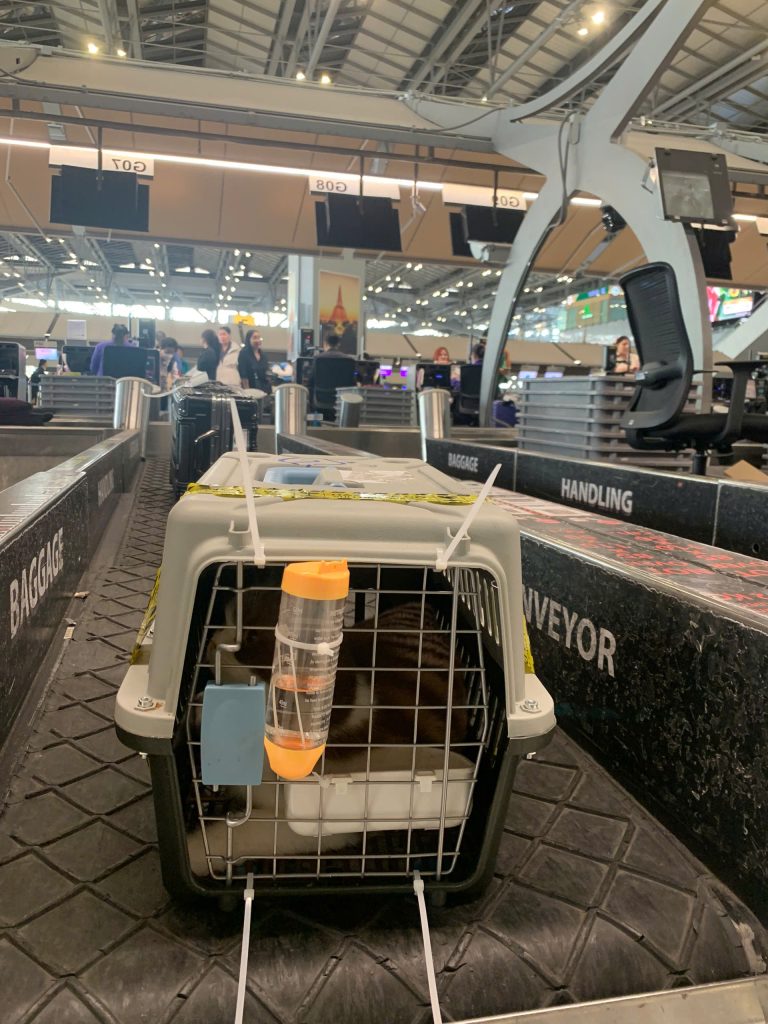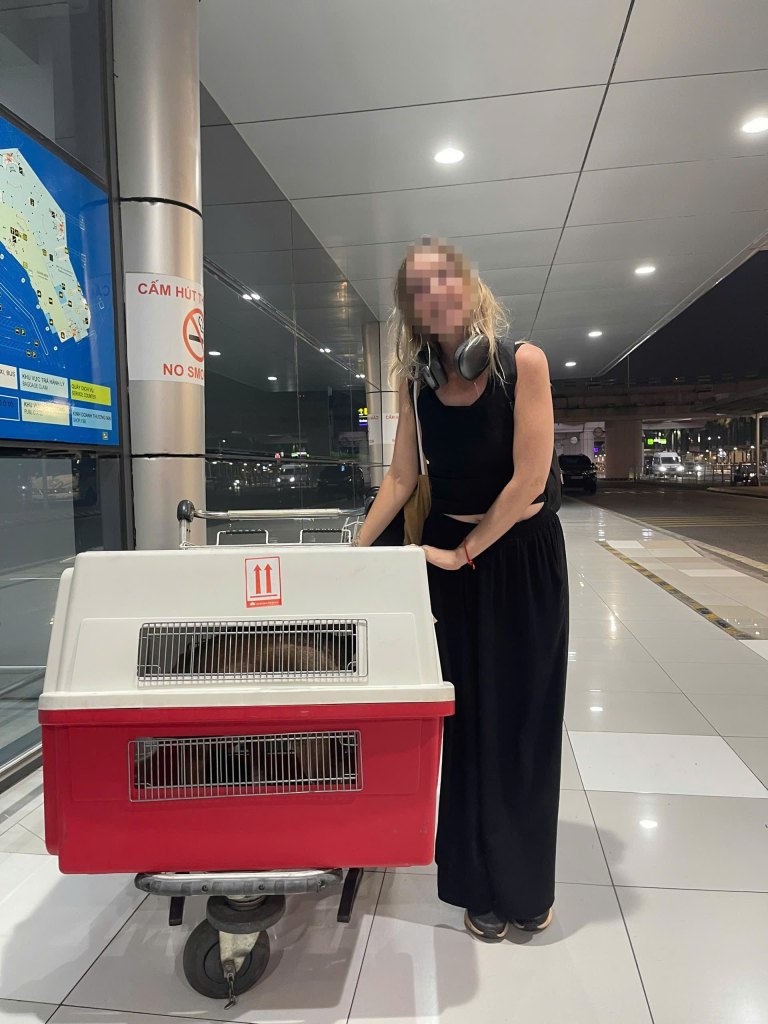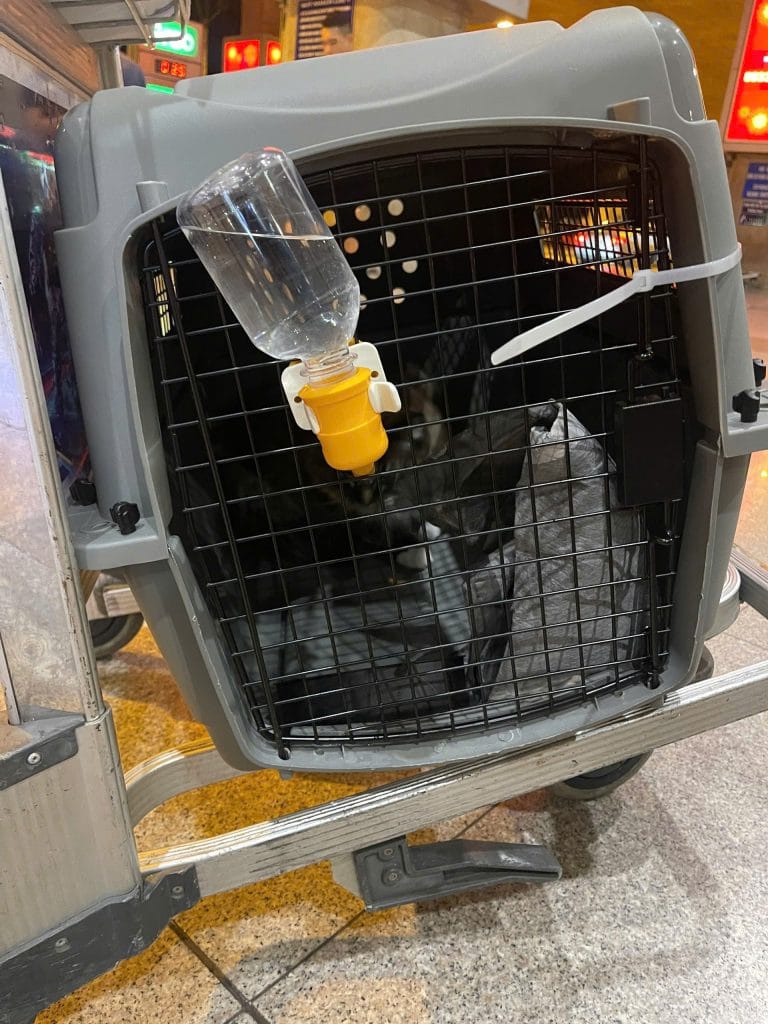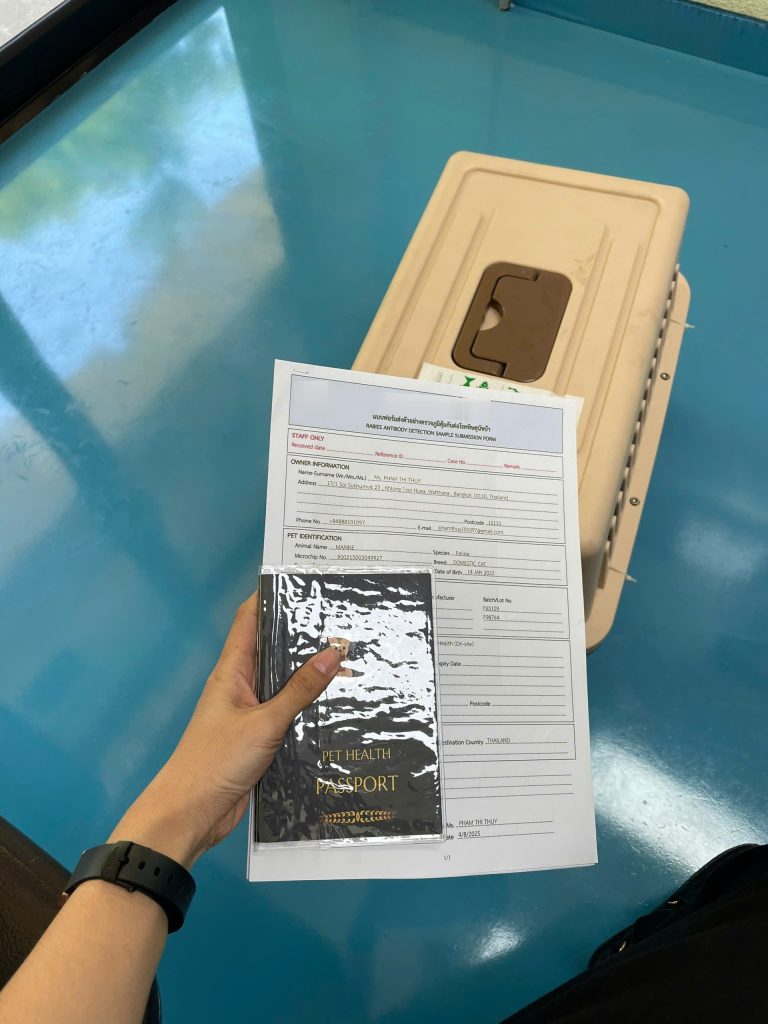
Canada does not quarantine your dog or cat. That one sentence separates it from countries such as Australia, where a pet from Vietnam spends at least 10 days in a government quarantine facility, or Taiwan, where the 7-day quarantine is waived only if the rabies blood sample was drawn at least 180 days before arrival. Under the Canadian Food Inspection Agency (CFIA) framework, a personal pet from Vietnam clears the border through a document check and a visual inspection by a Canada Border Services Agency (CBSA) officer — typically under 30 minutes. No quarantine days. No facility booking. No daily holding fees. For a complete overview of the relocation process, refer to our comprehensive guide, Pet Shipping to Canada.
For the return trip — bringing a pet from Canada back to Vietnam — the process is different; see our guide on bringing a pet from Canada to Vietnam.
That said, the paperwork still demands precision. Vietnam is classified as a high-risk country for dog rabies under CFIA’s risk tiering. If the rabies vaccination certificate is missing a serial number, signed by the wrong person, or written in a language other than English or French, a CBSA officer has the authority to deny entry. This guide breaks down exactly what CFIA requires, what CBSA checks at the border, and what traps cost Vietnamese pet owners the most time and money.
The Two Governing Bodies: CFIA and CBSA
Most countries have one agency that handles pet imports. Canada has two, and understanding which body controls what prevents a lot of confusion.
CFIA (Canadian Food Inspection Agency) sets the import standards — what vaccinations are required, what the health certificate must say, which countries face stricter rules, and when an import permit is needed. Think of CFIA as the rule-writer. They publish the requirements and issue import permits for edge cases.
CBSA (Canada Border Services Agency) enforces those rules at the border. CBSA officers inspect your pet and documents when you arrive. They can approve entry, request additional documentation, or deny entry. They charge the border inspection fee (CAD $36.95 for the first pet, plus applicable GST/HST — CAD $6.16 for each additional pet).
| Body | Role | When You Interact |
|---|---|---|
| CFIA | Sets import requirements, issues permits | Before departure — determining what documents you need |
| CBSA | Enforces at border, collects inspection fee | Upon arrival in Canada — document check + visual inspection |
Core Import Requirements for Dogs and Cats from Vietnam
Vietnam does not appear on CFIA’s list of rabies-free countries (which includes Australia, Japan, the UK, and a handful of others). This means every dog and cat from Vietnam — regardless of age beyond 3 months — must meet the standard documentation package below.
1. Rabies Vaccination Certificate (Mandatory for Pets 3 Months and Older)
This is the document CBSA officers scrutinize most carefully. It must be written in English or French — a certificate issued in Vietnamese is accepted only when it comes with an official translation (done by a certified translator, or by a non-certified translator accompanied by a notarized affidavit). The certificate must include all of the following fields:
- Animal identification: species, breed, sex, age or date of birth, coat color, distinguishing markings, and weight
- Vaccine details: trade name of the rabies vaccine, batch/serial number, and stated duration of immunity (1-year or 3-year)
- Date of vaccination: the exact date the shot was administered
- Veterinarian details: name, signature, license number, and clinic contact information of the administering vet
- Validity: the certificate must be current at the time of arrival — not at the time of departure
First-time vaccination timing: If this is your pet’s first rabies shot, or if a previous vaccination has lapsed, plan for a minimum wait of 30 days after vaccination before travel. This is Daisy Pet’s standard buffer for this route — it absorbs clinic delays, holidays, and paperwork corrections without putting your booking at risk. Build this buffer into your timeline — booking a flight within a month of a first rabies shot is a common and expensive mistake.
2. Microchip (Not Federally Required, But Practically Mandatory)
CFIA does not list microchipping as a federal import requirement for personal pets. In practice, however, every major airline that carries cargo from Vietnam to Canada — Air Canada, Korean Air, Cathay Pacific — requires an ISO 11784/11785-compliant microchip before accepting a pet for shipment. The microchip number should also appear on the rabies vaccination certificate to link the document to the animal.
Get your pet microchipped before the rabies vaccination so the chip number appears on the certificate from the start. Re-issuing a certificate to add a chip number later is possible but adds time and vet fees.
3. Veterinary Health Certificate: Not a CFIA Requirement for Personal Pets
For a personal pet from Vietnam, CFIA’s standard pathway does not add a separate health certificate on top of the rabies vaccination certificate above — that certificate is the primary document CFIA checks, regardless of your pet’s age. The “8 months” figure that shows up in some guides is a different rule: it applies only to commercial dogs (imported for sale, breeding, or fostering), which must be at least 8 months old to be eligible for import at all. It does not create a health-certificate requirement for personal pets of any age.
A separate health certificate or additional paperwork does come into play when:
- The import is commercial in nature (for sale, breeding, fostering, or research) — note that commercial dog imports from high-risk rabies countries like Vietnam are currently banned outright, regardless of age (see the commercial ban section below)
- Your pet cannot be vaccinated for rabies due to a documented medical condition — this requires a formal import permit application, a veterinary letter, and rabies titer testing, not a standard health certificate
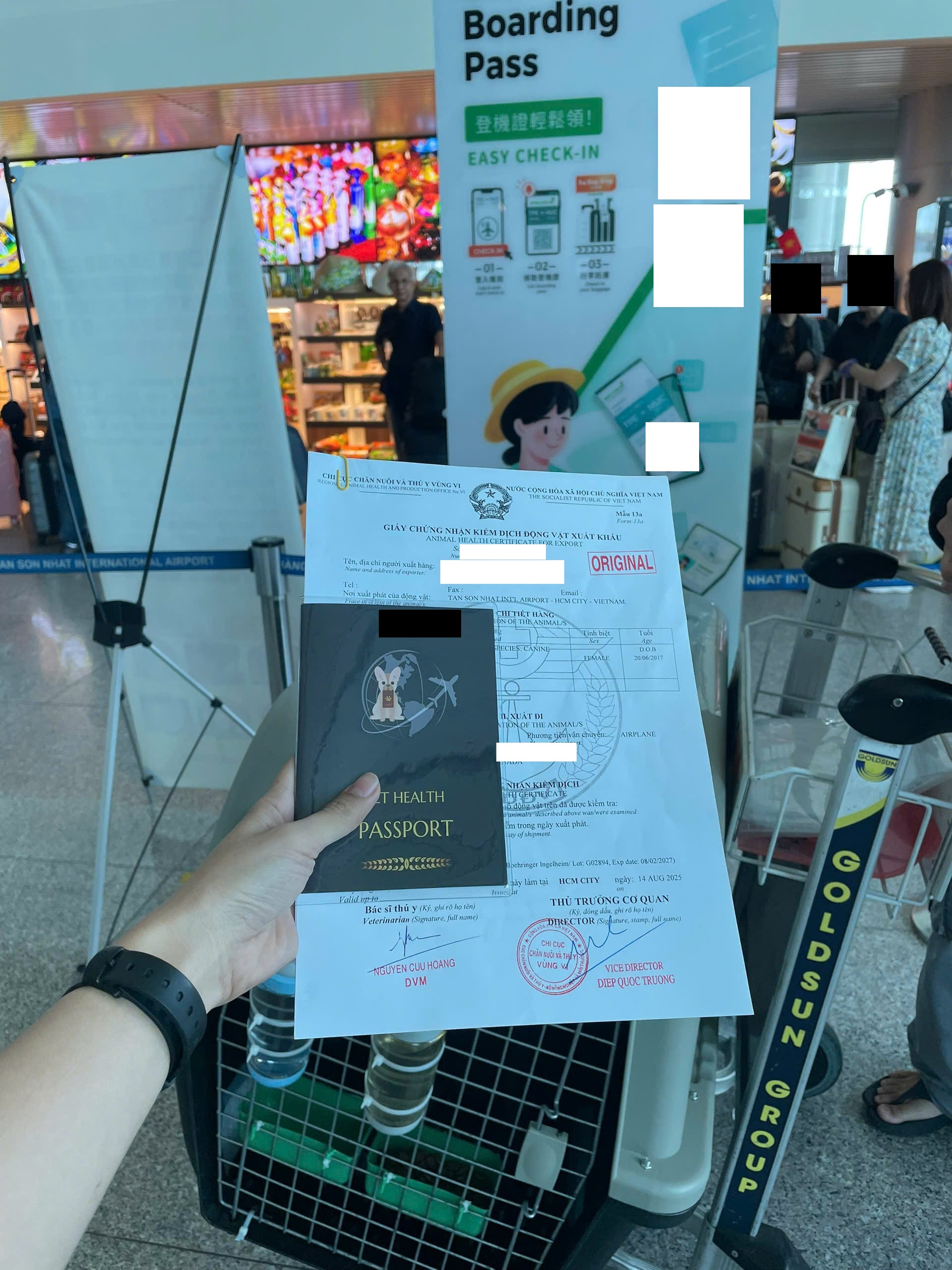
Your Vietnamese vet will still issue a standard Animal Health Certificate as part of Vietnam’s own export paperwork and to satisfy your airline’s carriage conditions — that requirement comes from Vietnamese export rules and the airline, not from CFIA. It’s worth carrying alongside the rabies certificate when you present your pet to the CBSA officer.
4. CBSA Border Inspection
Upon arrival at any Canadian port of entry — including major airports like Toronto Pearson (YYZ), Vancouver International (YVR), and Montreal Trudeau (YUL) — all pets must be presented to a CBSA officer. This is not optional. The inspection is brief: the officer reviews documents and does a visual check of the animal. Plan for a CAD $36.95 inspection fee (approximately USD $27) for the first pet, plus GST/HST — additional pets are CAD $6.16 each.
Vietnam-Specific Considerations: High-Risk Rabies Country Classification
CFIA groups countries into categories based on rabies risk. Vietnam sits in the “other” category — meaning it is not on the rabies-free list and not one of the frequently traveled countries (USA, Mexico) that have streamlined pathways. This classification has one practical consequence for personal pet imports: commercial dog imports are banned. CFIA has suspended the issuance of import permits for commercial dogs from high-risk rabies countries. This means dogs intended for sale, adoption through rescue organizations, breeding, or fostering cannot currently enter Canada from Vietnam under commercial classification. Personal pet imports — your own dog traveling with you — are not affected.
The rabies certificate requirements for your personal pet are the same regardless of this classification — Vietnam’s “other” status does not add extra paperwork on top of the standard rabies vaccination certificate described above. Keep the 30-day post-vaccination buffer in mind either way, since it’s Daisy Pet’s standard timing for this route, not a rule tied specifically to Vietnam’s risk category.
This commercial ban is worth knowing if you’re coordinating with a rescue organization that ships dogs internationally. The ban does not apply to your personal pet traveling as your companion or unaccompanied personal property.
Breed-Specific Legislation: No Federal Bans, But Check Your Province
Canada has no federal breed ban. CFIA does not restrict any specific dog or cat breed at the national level. However, several provinces and municipalities have enacted their own Breed-Specific Legislation (BSL), and these apply the moment your pet arrives in that jurisdiction.
| Jurisdiction | Restriction | Breeds Affected |
|---|---|---|
| Ontario (Province) | Ban on ownership | Pit Bull Terrier, Staffordshire Bull Terrier, American Staffordshire Terrier, American Pit Bull Terrier, and dogs “substantially similar” |
| Winnipeg (City) | Prohibition | Pit Bull-type dogs |
| Montreal (City) | Strict regulations (not outright ban) | Pit Bull-type dogs — permit, muzzle, and leash rules apply |
| Most other cities | No restrictions | All breeds permitted |
If you are relocating to Ontario with a dog that could be classified as a pit bull type, research the provincial regulations carefully before departure. CBSA may allow the dog to enter Canada, but provincial authorities can act independently. This is the one area where the “no quarantine” advantage does not remove all risk.
Pets Under 3 Months of Age
Puppies and kittens under 3 months arriving from Vietnam present a unique challenge: they cannot legally receive a rabies vaccination (most protocols require a minimum age of 12 weeks). CFIA’s approach for sub-3-month animals from non-rabies-free countries is to require documentation confirming the animal’s age (from a vet or breeder certificate). The puppy or kitten will then need to be vaccinated upon reaching 3 months of age in Canada and kept under controlled conditions until then. Given the complexity, we advise clients to delay travel until the animal is at least 4 months old and has completed its first rabies vaccination with Daisy Pet’s 30-day post-vaccination buffer observed.
Step-by-Step Compliance Roadmap for Vietnam → Canada
- Microchip your pet (ISO 11784/11785 standard) — do this first so the chip number appears on all subsequent documents
- Administer rabies vaccine — minimum 30 days before departure if first vaccination or after a lapse (Daisy Pet’s standard buffer); must be done by a licensed Vietnamese veterinarian
- Obtain rabies vaccination certificate in English or French — verify all required fields are complete
- Schedule a pre-travel veterinary exam — to obtain the Animal Health Certificate required by most airlines
- Book your airline cargo slot — with microchip confirmed and documents in hand (see our guide, Airlines for Pet Transport Vietnam to Canada)
- Arrive at CBSA with organized documents — rabies certificate, health certificate, your own ID; declare your pet immediately upon reaching the border officer
- Pay the CBSA inspection fee (CAD $36.95 for the first pet, plus GST/HST)
The practical takeaway for the Vietnam-to-Canada route: the absence of quarantine means your total preparation timeline is measured in weeks, not months. A realistic minimum from microchip to departure is 6–8 weeks (refer to our Pet Shipping Timeline Vietnam to Canada for detailed steps). Compare that to Australia’s 6-month minimum protocol — Canada is genuinely one of the more accessible destinations from Vietnam for pet owners who start the process correctly.
For a full breakdown of costs, see our guide on Pet Shipping Cost to Canada. If you have specific questions about your pet’s situation, Get a Quote to contact our team for a custom assessment.
Last updated 18 Oct 2026
Compiled by our specialists from the regulations in force on the date above, for reference only. Rules may change after this date. Please verify with the competent authorities or contact us for the most accurate information.
Official sources cited in this guide
- Canadian Food Inspection Agency (CFIA)inspection.canada.ca