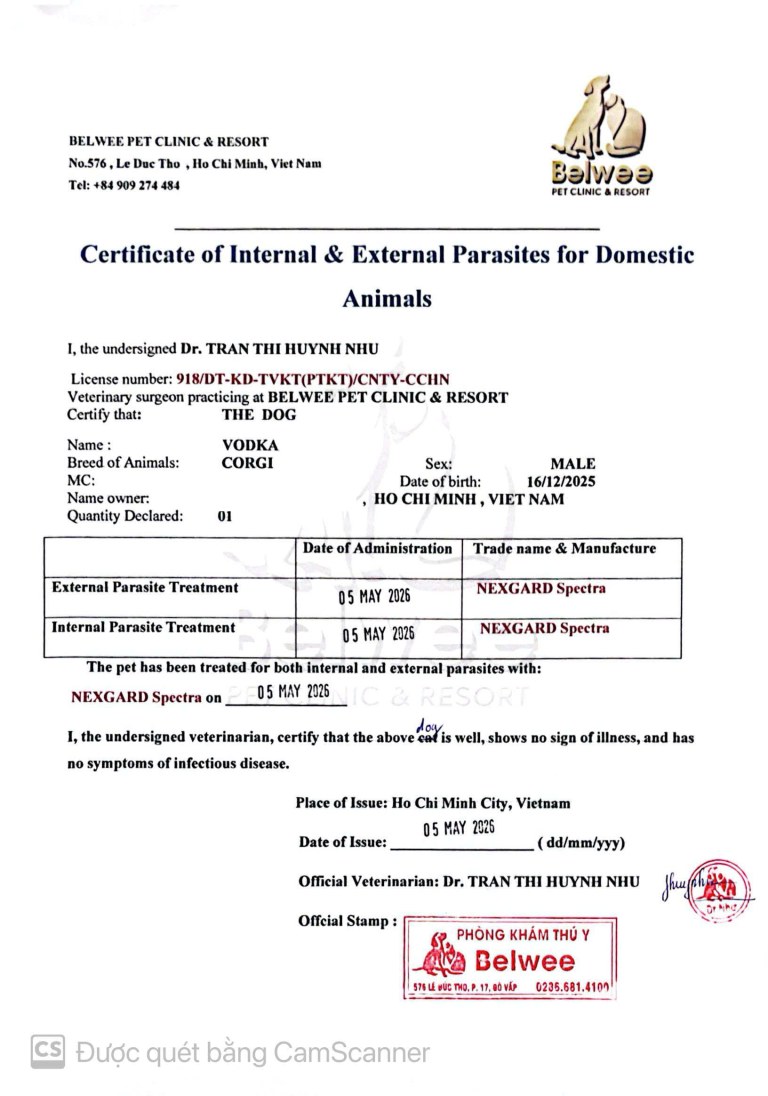
A signed health certificate feels like the finish line — paperwork done, flight booked, nothing left but the countdown. Then, three days before departure, your dog stops eating or your cat starts vomiting, and suddenly the entire relocation timeline is in question. This happens more often than owners expect, and how it is handled in the first 24 hours determines whether the trip is delayed by days or by months.
The rule that matters most here is simple: a health certificate reflects the pet’s condition on the day it was issued, not a permanent clearance to fly. If a pet’s condition changes after that exam, the certificate’s validity is called into question — regardless of how close the flight is.

Why a Signed Certificate Does Not Guarantee Boarding
Most government-endorsed health certificates are valid for a fixed window — commonly 10 days for the US and EU, sometimes as short as 5 days for stricter destinations — specifically because authorities recognize that an animal’s health can change quickly. Airlines layer their own fitness-to-fly assessment on top of that: ground staff at check-in are trained to visually assess the animal, and a pet showing lethargy, labored breathing, vomiting, or visible discomfort can be refused at the counter even with fully valid paperwork in hand. This is the same day-of-departure risk we cover in detail in can my pet be refused by the airline on the day of departure — illness is simply the most common trigger for it.
The Vet Re-Check: What Actually Happens
The moment a pet shows symptoms, the correct move is an immediate re-examination by a licensed veterinarian — not a wait-and-see approach hoping symptoms clear before the flight. In practice, this re-check determines one of three outcomes:
- Cleared to fly as scheduled: Minor, resolved issues (a single instance of stress-related loose stool, for example) may be documented and the vet confirms fitness to travel. This is the least common outcome once genuine symptoms have appeared.
- Cleared with a short delay: The vet recommends 3 to 7 days of observation or treatment before re-certifying. This is the most frequent outcome for mild respiratory symptoms, minor GI upset, or stress-related appetite loss.
- Travel postponed indefinitely: More serious conditions — infection, injury, or anything requiring ongoing treatment — mean the pet is not re-certified until fully recovered, which can push the timeline out by weeks.
The Document Expiry Cascade: The Real Risk Owners Miss
Here is the part that turns a minor illness into a major logistics problem: a delay caused by sickness does not just push back the flight — it can invalidate every document timed around the original date. This is where a short vet visit can quietly become a multi-month delay if the timeline was not built with any buffer.
- Health certificate expiry: If treatment and recovery take longer than the certificate’s validity window, a brand-new certificate — and often a brand-new vet exam — is required.
- Rabies titer test (FAVN/RNATT) timing: For countries requiring a titer test, the blood draw must occur a set number of days after vaccination, and results must be submitted within specific windows relative to travel. How long a result stays valid depends on the destination: the EU and UK accept it for as long as rabies boosters are never missed, Japan and South Korea for 2 years from the blood draw, and Singapore, Taiwan and the UAE for about 12 months. A delay of a few weeks therefore only becomes a problem when the titer result or the rabies vaccination is close to expiring; if it does, the test has to be repeated. We walk through these windows in detail in our guide to the rabies titer test (FAVN) for international pet travel.
- Import permit validity: Many countries issue import permits with a fixed travel window tied to the original planned date. A significant delay may require re-filing the permit application entirely, adding weeks to the timeline.
This cascade effect is precisely why we tell every client the same thing before departure prep even starts: build buffer time into the schedule, because urgent, compressed pet transport timelines leave zero room to absorb a health setback without blowing past a document’s expiry date.
What to Do the Moment You Notice Symptoms
Speed of communication matters more than almost any other factor in keeping a health delay small:
- Contact your relocation provider immediately — before the vet visit, if possible — so document expiry dates can be checked against the likely delay in parallel with treatment.
- Do not attempt to travel through mild symptoms. An animal that appears sick at check-in risks refusal on the spot, which wastes the flight cost entirely and still forces the same vet re-check afterward.
- Ask your vet directly about certificate and titer timing, not just whether the pet is “well enough” — a vet focused purely on clinical recovery may not flag that a titer result is about to age out of its acceptance window.
- Reassess every downstream document — permit validity, titer window, certificate expiry — the moment a new travel date is set, rather than assuming everything else still lines up.
Understanding how this kind of disruption fits into the bigger picture of transport risk is worth reading alongside this — see our broader breakdown of what happens if something goes wrong during pet transport. And if the illness turns out to be more serious and occurs mid-transit rather than before departure, liability and next steps are governed by a different set of rules, covered in who is liable if a pet gets sick or injured during transport.
Conclusion
If a pet gets sick before departure, the flight is delayed until a veterinarian re-certifies fitness to travel — and the real risk is not the illness itself but the document expiry cascade a delay can trigger if the original timeline had no buffer. Reporting symptoms immediately, getting a same-day vet re-check, and reassessing every travel document against the new date are what keep a minor health scare from turning into a multi-month setback.
Last updated 18 Oct 2026
Compiled by our specialists from the regulations in force on the date above, for reference only. Rules may change after this date. Please verify with the competent authorities or contact us for the most accurate information.