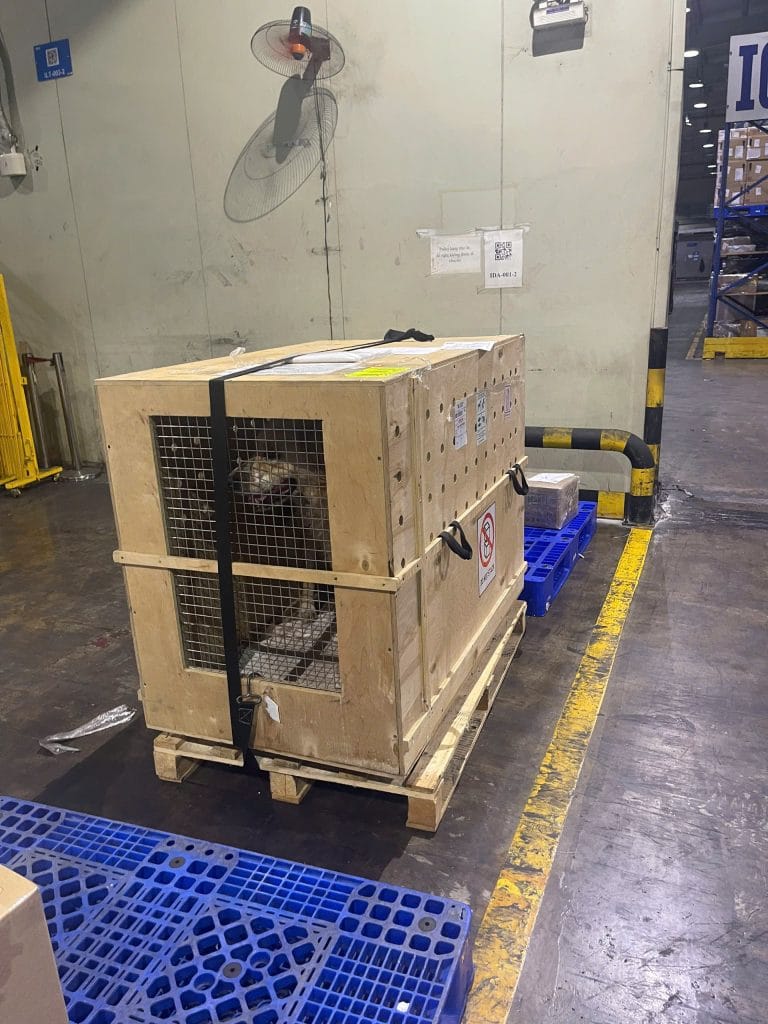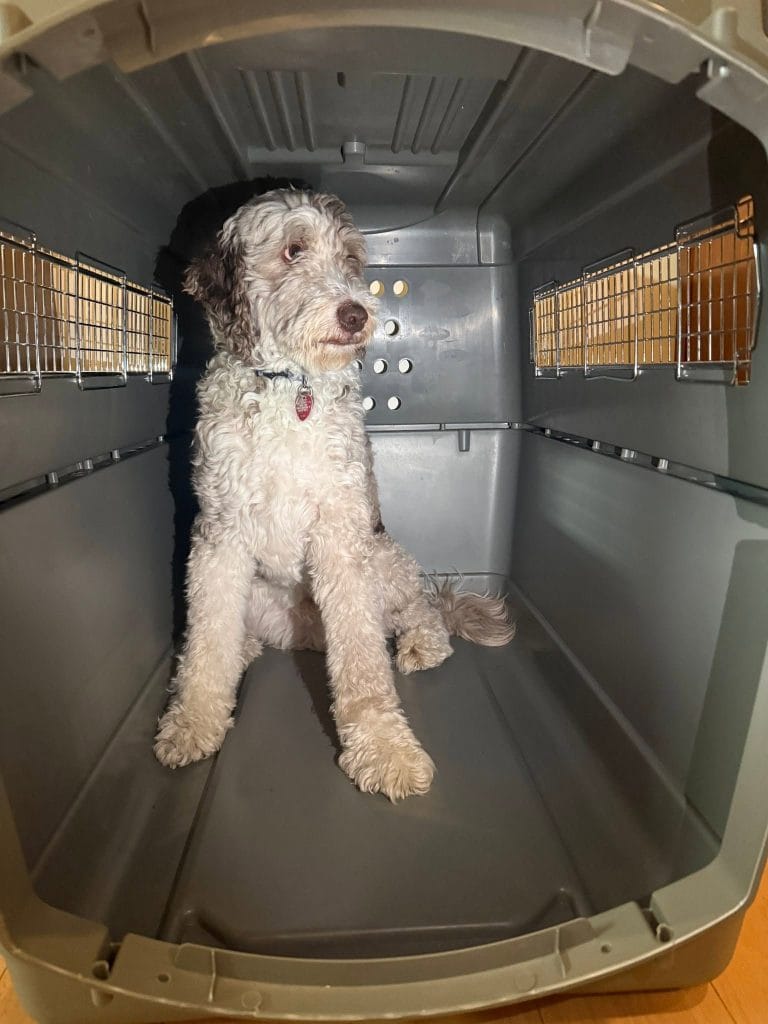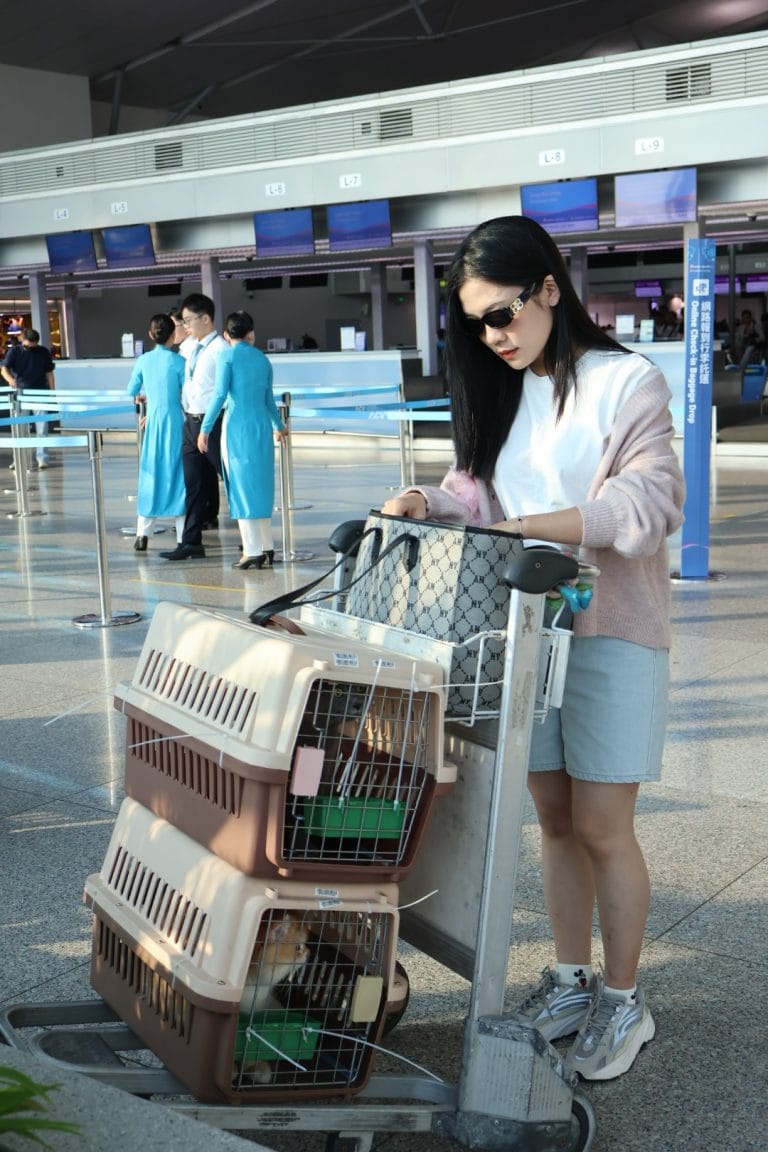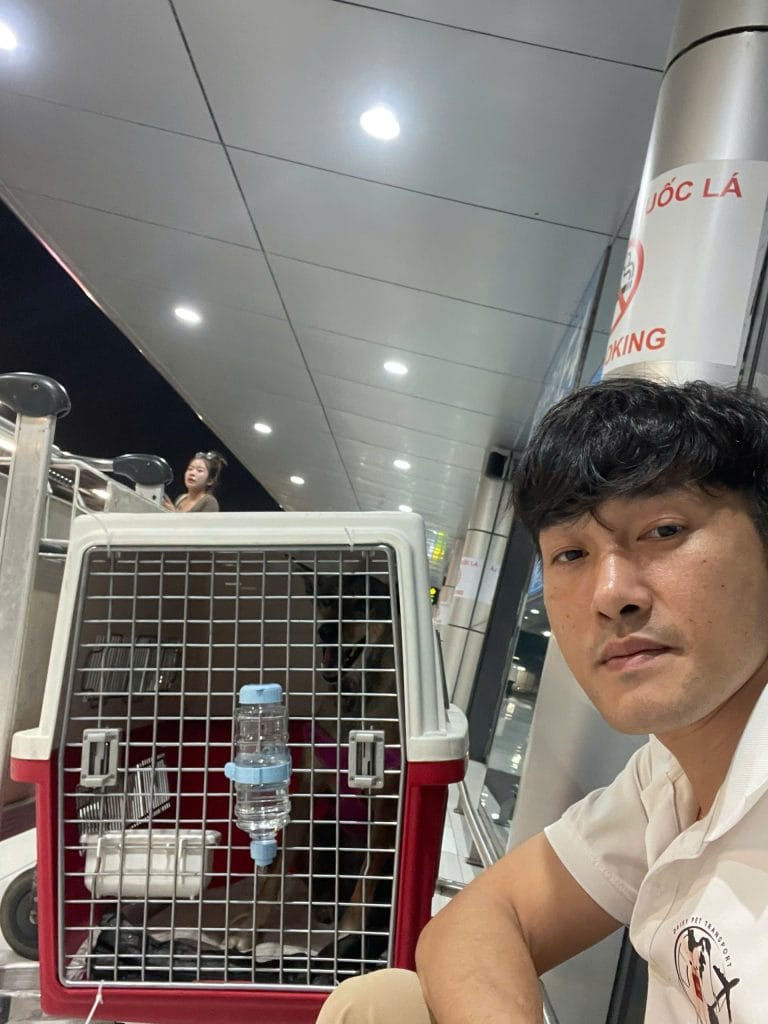
Search for a travel crate and almost every listing says “airline approved” or “IATA approved”. It reads like a certificate. It isn’t. IATA does not certify, approve or endorse any crate brand or model, and it says so in its own container rules. The words on the box are marketing. The real decision is made by airline staff at the counter, with your pet already there.
What those staff are checking comes down to one question: will this crate hold this pet safely, with enough air, for the whole journey in the hold? Every rule below traces back to that question—the size of the openings, the bolts, the door pins, the ventilation. Once you look at a crate that way, you can check most of it yourself before you book.
What “Airline Approved” Actually Means
The baseline is Container Requirement 1 (CR1) in the IATA Live Animals Regulations, 52nd edition, in force from January 2026. It sets the minimum for dog and cat crates: materials, openings, ventilation, fastening and inside size. The text is public in IATA’s CR1 container requirements (PDF).
Airlines then add their own rules on top. Lufthansa, for example, states that from 4 May 2026 crates travelling as checked baggage must have openings no larger than 25 × 25 mm for dogs and 19 × 19 mm for cats, or have them covered with mesh, and that non-compliant crates are refused at check-in. It also asks owners to re-check crates bought before 2024 (Lufthansa, animals in the cargo hold, checked October 2026).
So a crate is “approved” in only one sense: the airline accepted it on the day. The practical takeaway is to check the crate against CR1 first, then against your airline’s own page.
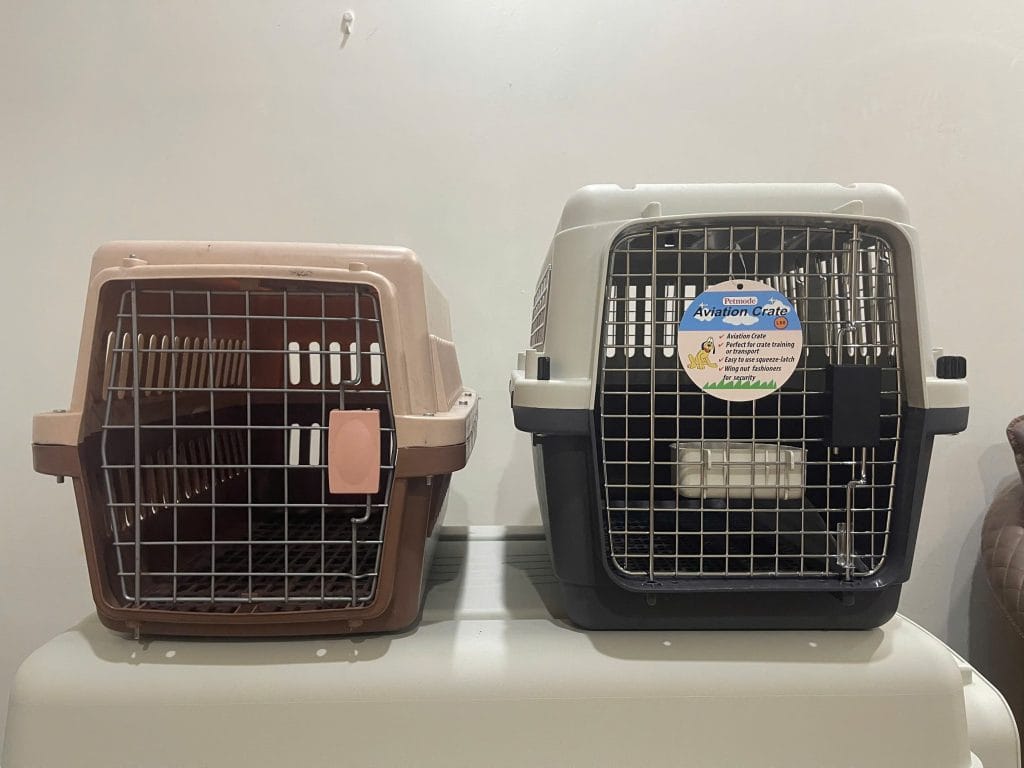
The 5-Point Self-Check Airlines Use
You need a tape measure, a torch and a few minutes. Check the crate empty first, then with your pet standing inside.
| Check | IATA CR1 minimum | Where pet-store crates often fail |
|---|---|---|
| Openings | At most 25 × 25 mm for dogs and 19 × 19 mm for cats, nose- and paw-proof | Wide decorative vents, large side windows |
| Fastening | Top and bottom bolted together; plastic clips must not be the only fastener | Snap clips only, missing bolts |
| Door | Locking pins enter the crate body at least 1.6 cm; a plastic door needs metal hinges and pins | Thin door, short plastic pins |
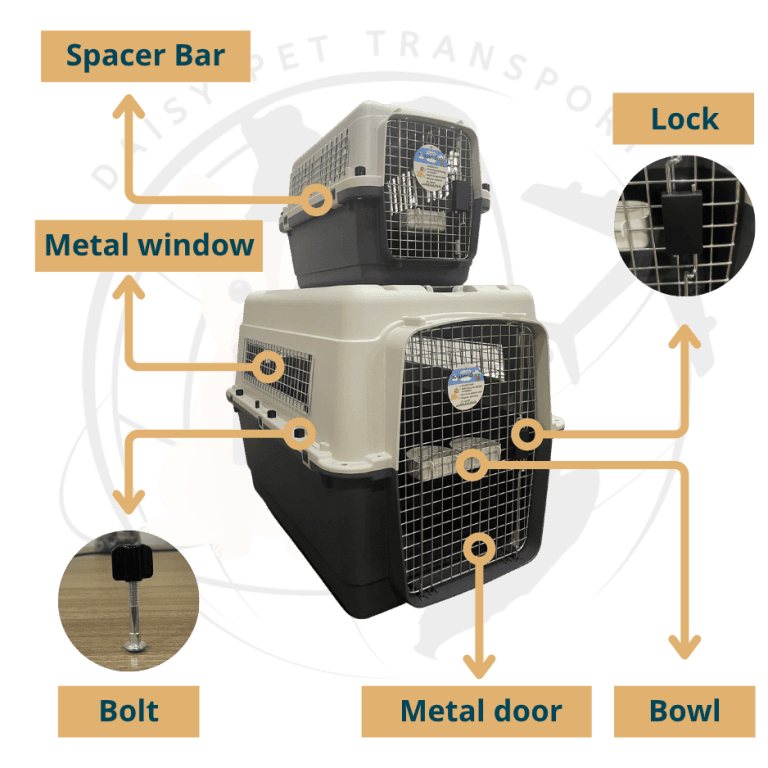
| Ventilation | All four sides, at least 16% of the four side walls; spacer bars on both long sides and the back | Vents on two sides only, no spacer bars |
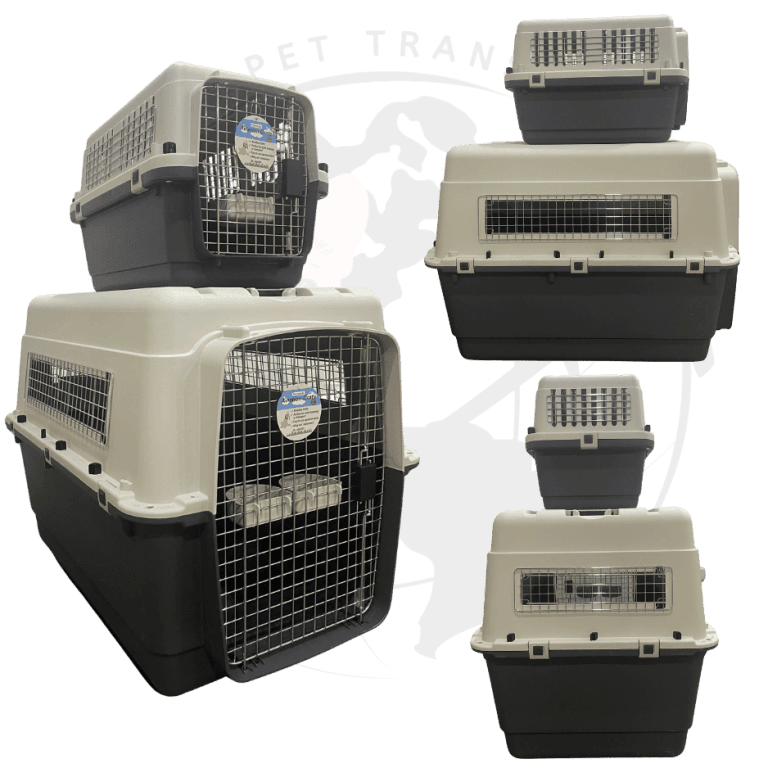
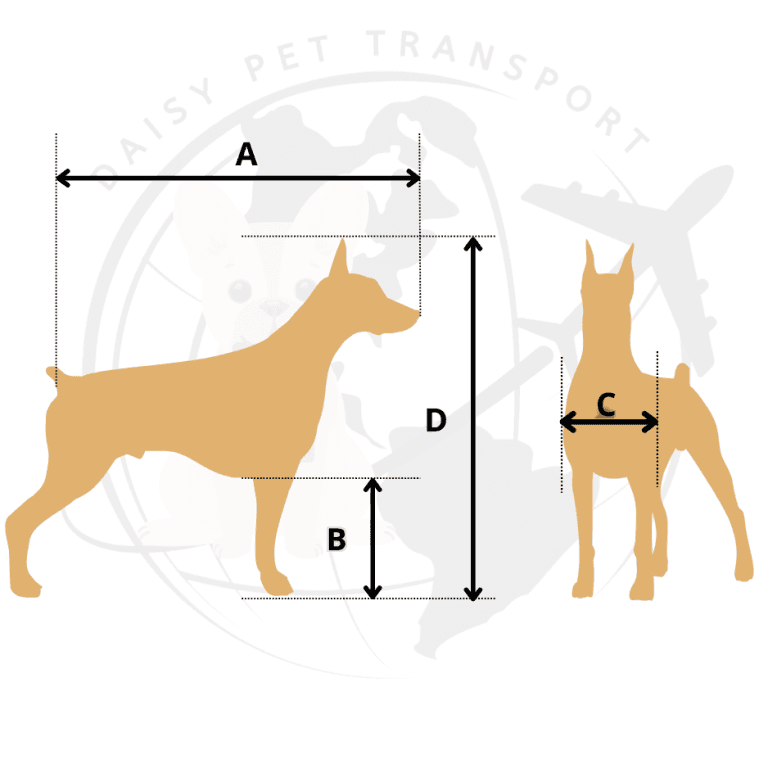
| Shell and size | Rigid shell, solid leak-proof floor, strong roof; inside at least A + ½B long, C × 2 wide, D + bedding high | Brittle plastic, cracked roof, crate too small |
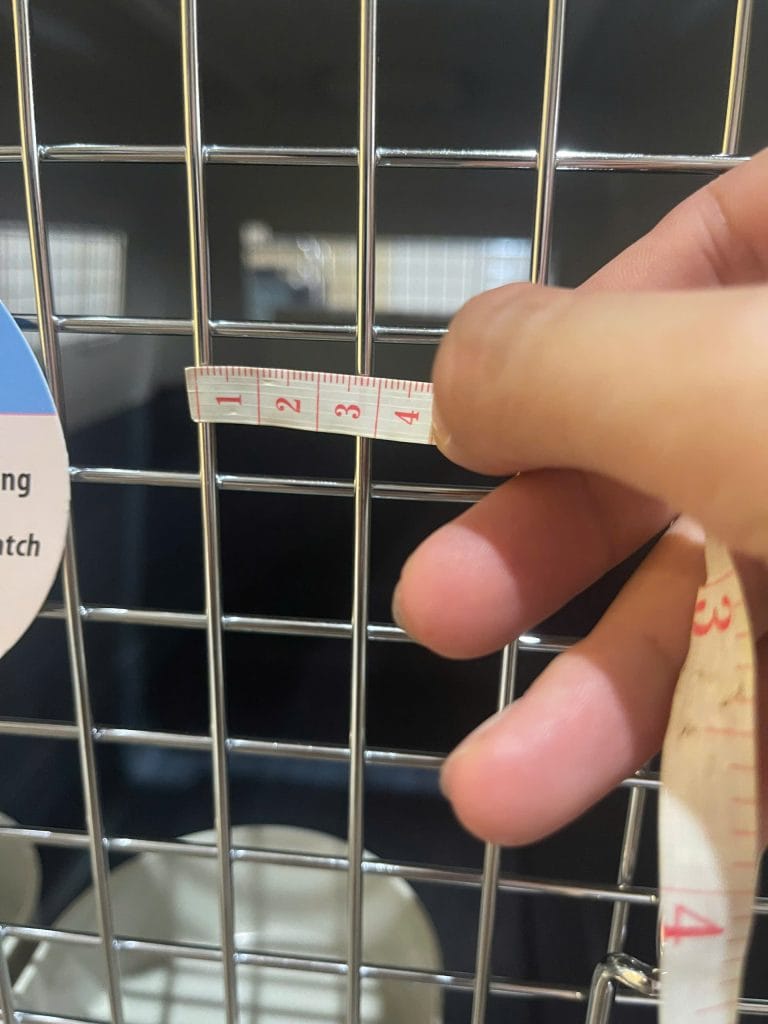
1. Openings: Measure the Largest One
Measure the largest opening on the crate with a ruler. The CR1 limit is 25 × 25 mm for dogs and 19 × 19 mm for cats, and IATA adds that openings may need to be smaller still, so that the pet cannot push its nose or a paw through. Oversized openings can be covered with welded wire mesh at least 2.5 mm thick for dogs (2.0 mm for cats), fixed so the pet cannot dislodge it.
2. Fastening: Bolts Around the Rim
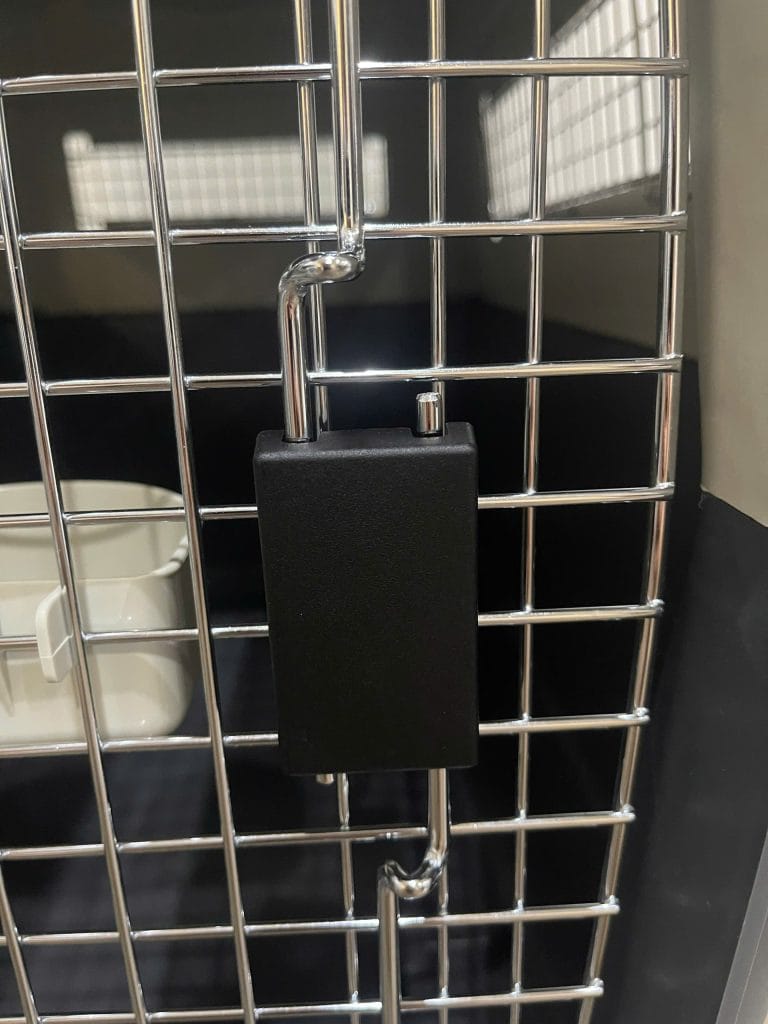
Look at the rim where the top and bottom halves meet. CR1 says plastic clips must not be the only fasteners and recommends metal nuts and bolts in every hole. Lufthansa goes further and states that a plastic locking mechanism will not be accepted. Bolt heads must not stick out on the inside, because the interior has to be smooth enough that the pet cannot bite or scratch at it.
3. Door: Pins, Hinges and Corners
Close the door and pull on it. The locking pins should go at least 1.6 cm into the crate body. A plastic door is acceptable only if its hinges and locking pins are metal. On rigid plastic crates, IATA also asks for removable fasteners such as cable ties in the four corners of the door frame.
4. Ventilation: All Four Sides
Count the sides that have openings: all four need them, adding up to at least 16% of the four side walls. Openings on the sides and back must sit in the upper two-thirds of the crate. Spacer bars along both long sides and the back keep other cargo from blocking the air, and one whole end, usually the door, must be welded wire mesh.
5. Shell and Size: Press, Look, Measure
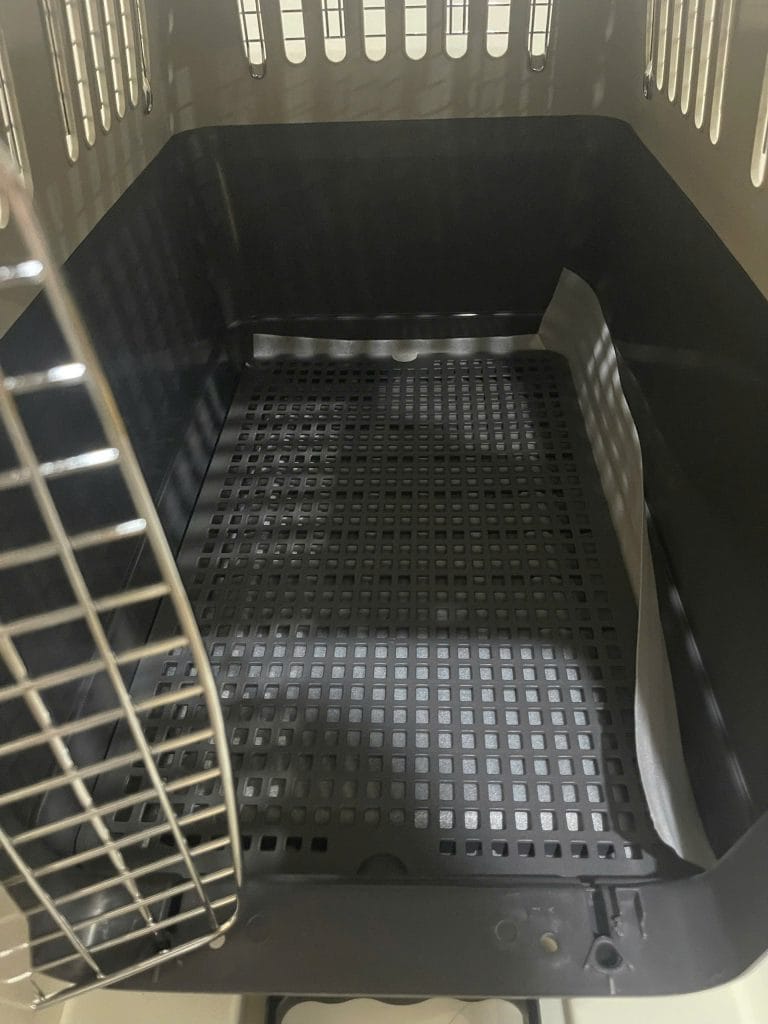
Press the roof and the walls. Cracks, chalky faded plastic or a roof that flexes are reasons to replace the crate. The floor must be solid and leak-proof, and any wheels must be removed or locked. Then check the size: the inside must be at least A + ½B long, C × 2 wide and D + bedding high, and the IATA crate size calculator does the arithmetic from your pet’s measurements.
Crate Check: 12 Questions Pet Owners Ask
These are the crate questions pet owners ask most often in pet travel groups, usually with a photo of the crate attached. Each answer is checked against CR1 and published airline rules. A photo shows a lot, but the final decision is always the airline’s at check-in, so read each verdict as a guide rather than a guarantee.
Crate Check #1: Mesh Tied Over Oversized Vents With Cable Ties
The crate has wide oval vents on the sides. The owner has covered them with welded mesh panels held on by cable ties. Will it pass?
Verdict: fixable, but confirm with the airline. CR1 allows welded wire mesh over openings, provided the mesh is at least 2.5 mm thick for dogs (2.0 mm for cats) and fixed so the pet cannot dislodge it. Lufthansa’s rule from 4 May 2026 also accepts oversized openings covered with mesh. The question staff will ask is about the fixing, not the mesh: can the pet push or bite it loose?
Practice varies at the counter. One owner flying Lufthansa from Chicago in October 2026 had crates retrofitted this way, with holes drilled for the cable ties, refused at first and accepted after about an hour of checks. Send a clear photo to your airline and ask for written confirmation before you book.
Crate Check #2: Mesh Held On With Tape
An owner flying cats has covered the side vents and the doors of older crates with fine mesh, taped around the edges. The same crates were accepted on an earlier flight with another airline.
Verdict: replace the tape with a secure fixing. CR1 asks for a mesh insert fixed so the animal cannot dislodge it, and tape that is already peeling at the corners does not meet that. For cats, the mesh must be at least 2.0 mm thick with openings no larger than 19 mm, and a second layer is allowed if both layers meet the standard. Acceptance by one airline also does not carry over to the next, because each airline checks against its own rules.
Cats also take longer than dogs to settle in a crate, so a replacement is best bought early. Carrier training for cats is covered in preparing a cat for air travel.
Crate Check #3: An Older Crate With 1-Inch Vents
The crate was bought a few years ago and flew without problems. The side vents are long strips with a plastic grille, and the openings measure about one inch.
Verdict: measure before you book. One inch is 25.4 mm, just over the 25 mm limit for dogs and well over the 19 mm limit for cats. “It flew fine last time” is not a test, because airlines are now stating the limit in millimetres and Lufthansa asks owners to re-check crates bought before 2024. If any opening is over the limit, cover it with compliant mesh or replace the crate.
A replacement crate also needs time before the flight. Your pet should be used to it well ahead of departure, and the six-week crate training timeline shows how to plan that.
Crate Check #4: The Wire Door Has Wider Gaps Than the Mesh
An owner flying a golden retriever has covered every side vent with 25 mm mesh, but the original chrome wire door still has a larger grid.
Verdict: the door counts too. CR1 applies the opening limit to every opening on the crate, and the door is usually the welded mesh end that IATA requires. If the door grid is wider than 25 mm for a dog, or 19 mm for a cat, it needs compliant mesh as well, or a door that meets the limit. This owner later reported that check-in staff barely looked at the crate, but a lenient check on one day says nothing about the next.
Crate Check #5: Vents in the Lower Half of the Crate
A heavy-duty crate has 34 mm vent holes, some of them in the lower half. The owner has covered them with metal mesh bolted on, flush with the inside.
Verdict: covering them was the right call. The holes were over the 25 mm limit, and CR1 places openings on the sides and back in the upper two-thirds of the crate, with extra ventilation in the lower third allowed only on the front and back. Bolted mesh that sits flush inside is a good example of a fixing the pet cannot undo, and the crate also kept its ventilation on all four sides.
Crate Check #6: Can I Drill Extra Holes for More Air?
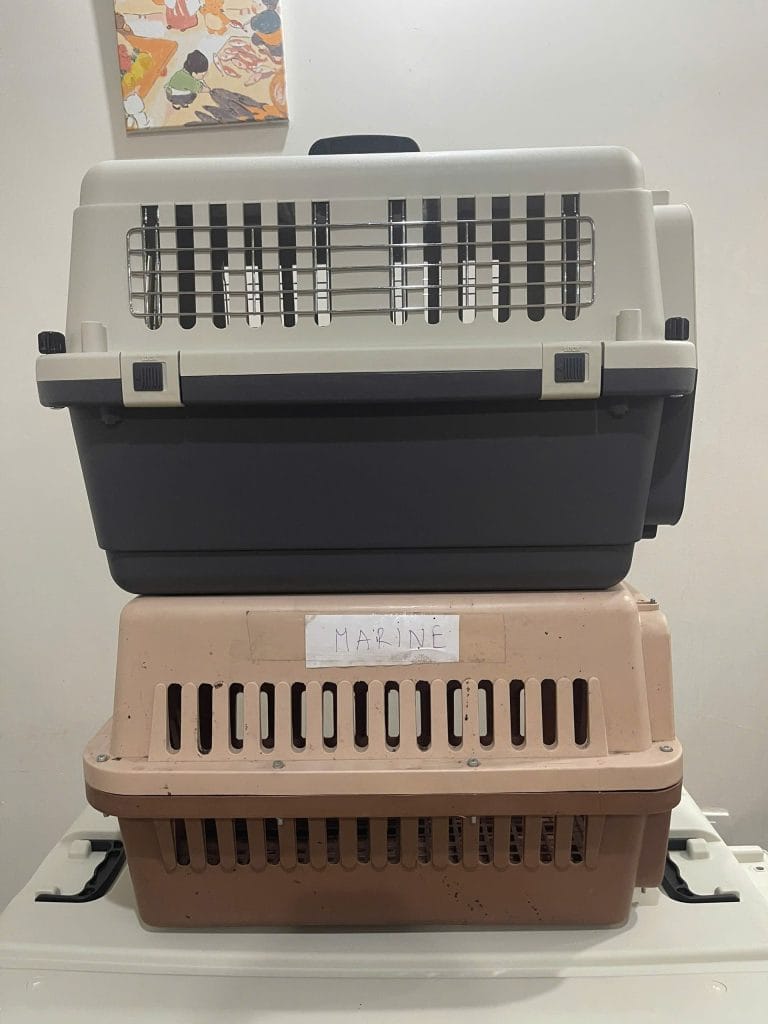
The crate only has vents on two sides. The owner wants to drill more holes in the back and the roof.
Verdict: possible, but rarely worth it. CR1 permits extra ventilation openings on the roof or sides, as long as they do not weaken the crate. Every new hole must still be within the size limit and nose- and paw-proof, and openings on the sides and back belong in the upper two-thirds. A row of home-drilled holes in thin plastic is exactly the kind of change staff look at closely. If a crate lacks ventilation on four sides, a crate built with it is the safer fix.
Crate Check #7: A Strong Dog Pulled Out a Vent Grille
Days before a long-haul flight, a large hound learned to pull the plastic grille out of the side vent of a 48-inch plastic crate and squeeze through the gap.
Verdict: treat it as a crate failure. CR1 requires the crate to be strong enough that the animal cannot damage it from inside, and IATA notes that some rigid plastic crates may not suit large dogs or dogs that are aggressive. A dog that has already escaped once will try again in the hold. The safer options are a crate with metal mesh fixed to the vents and door, or a crate built to the dog’s measurements, covered in wooden crates for air travel.
Crate Check #8: A Second-Hand Crate With Slots in the Roof
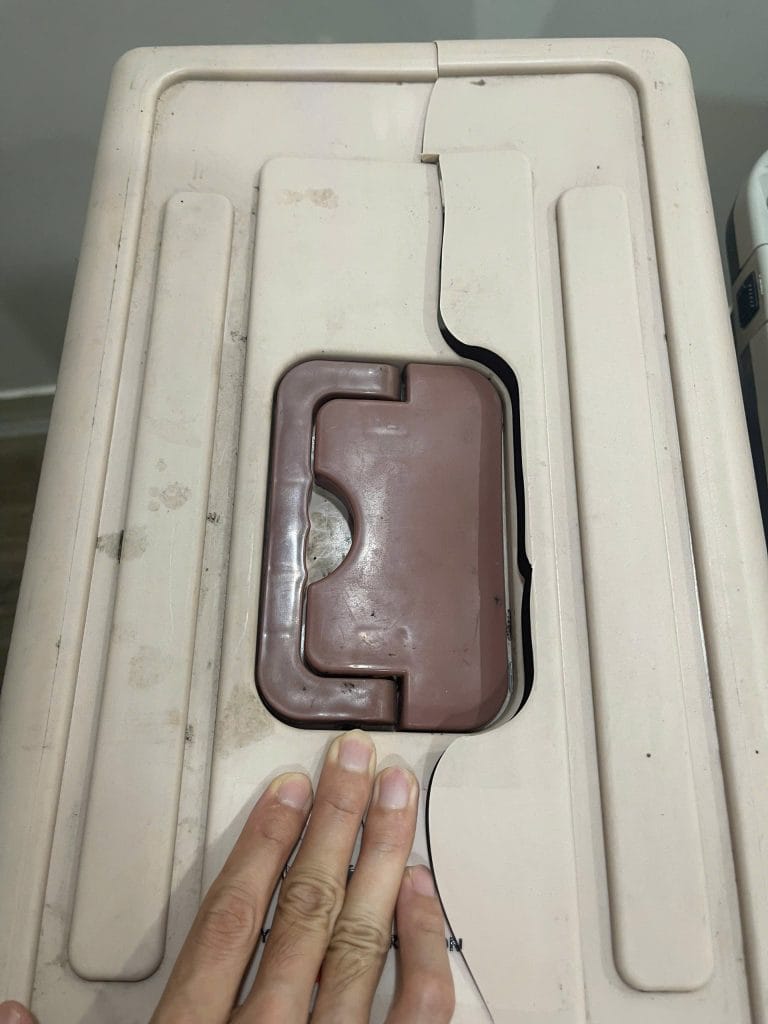
The crate came from a previous owner and has ventilation slots across the roof.
Verdict: check the roof before anything else. CR1 allows ventilation openings and welded mesh in the roof only if they do not reduce the strength of the crate. On a used crate, look for cracks around the slots, faded brittle plastic, missing bolts and a door that no longer closes square. Any one of these is a reason to replace it, because in the hold the crate may sit next to heavy baggage for hours. More on conditions in the hold is in whether flying in cargo is safe.
Crate Check #9: The Largest Plastic Crate Is Too Small, or Too Big for the Airline
One owner has two large dogs in plastic kennels of about 122 × 81 × 90 cm, a few centimetres over the maximum their airline lists. Another owner bought a smaller crate because the online booking form would not accept the larger size, then was turned away at check-in because the dog no longer fitted.
Verdict: size the crate to the dog first. The crate must let the pet stand, turn around and lie down, so never downsize it to satisfy a form. Airlines also publish a maximum kennel size for pets travelling as checked baggage, and larger kennels have to travel as manifest cargo. Call the airline’s special handling desk with the real dimensions before you buy, and ask for the answer in writing.
Short-nosed breeds need a crate 10% larger in every dimension, which often pushes them into the next size. The reasons, and the airlines that limit these breeds, are covered in flying a flat-faced dog or cat.
Crate Check #10: Is There a Weight Limit on the Crate Itself?
The owner of a large dog is worried that a heavy crate will be refused.
Verdict: the limit covers pet and crate. When a pet flies as checked baggage, airlines cap the combined weight: Vietnam Airlines at 32 kg, Qatar Airways in two bands up to 32 kg and 32–75 kg, Korean Air up to 45 kg. Above the limit, the pet moves to manifest cargo. A heavy wooden crate can push a large dog over the line, so weigh the empty crate when you plan, and check the current figure on your airline’s page. CR1 also requires forklift spacers at least 5 cm high once the crate and pet together weigh more than 60 kg.
Crate Check #11: Can I Rent a CR82 Crate?
The owner’s dog is on an airline breed list and they have been told to find a CR82 crate.
Verdict: check your airline’s exact rule first. Under the IATA LAR 52nd edition Addendum I (January 2026), Turkish Airlines (TK-03) still refers to CR82 for its breed list, while Lufthansa (LH-05) and Austrian (OS-04) ask for a CR1 crate with additional reinforcement. A crate rented for one airline’s rule may not meet another’s, so match the crate to the exact wording for your carrier.
Crate Check #12: Soft Carriers, in the Hold and in the Cabin
Owners ask whether a soft-sided bag can go in the hold, and why a soft carrier was refused in the cabin.
Verdict: soft carriers are for the cabin only. CR1 lists rigid materials for hold crates: fiberglass, metal, rigid plastics, welded wire mesh, solid wood or plywood. In the cabin, each airline sets its own size and weight limit, commonly 6–8 kg including the carrier, and the IATA pet crate requirements guide compares cabin carriers and hold crates in detail.
Cabin refusals in these groups tend to follow the same patterns. A puppy was taken off a flight because staff judged its 22 cm tall carrier too low for it to stand. A small dog and its bag came to 8.5 kg against Lufthansa’s 8 kg cabin limit for pet and carrier together. Another dog chewed through the mesh panel of its bag during take-off. Measure your pet standing in the bag, weigh the two together, and check the mesh before the day.
What Happens If Your Crate Is Refused at Check-In
A refused crate means the pet is not accepted on that flight. Lufthansa, for one, notes that only selected airports have shops selling animal crates, so buying a replacement on the spot is rarely possible. A missed flight can also cost more than a new ticket, because some travel documents are valid only for a set number of days.
The reassuring part is that almost every refusal reason in this guide can be found at home with a ruler and a torch. Check the crate against the five points, compare it with your airline’s own page, and send photos to the airline or your agent before you book. On flight day, the crate preparation checklist for flight day covers labels, water and bedding.
Frequently Asked Questions
Does “IATA approved” on the box mean an airline will accept the crate?
No. IATA does not certify, approve or endorse any crate brand or model. Airline staff check the crate against IATA CR1 and the airline’s own rules at check-in, and that check decides whether the crate is accepted.
Are cable ties enough to hold the two halves of a plastic crate together?
No. CR1 says plastic clips must not be the only fasteners holding the top and bottom together, and recommends metal nuts and bolts in every hole. Cable ties are used in addition, in the four corners of the door frame.
How do I know which crate size my pet needs?
Measure your pet’s length A, leg height B, shoulder width C and standing height D, then apply the IATA formula: length A + ½B, width C × 2, height D + bedding. Snub-nosed breeds need 10% more in every dimension. How to measure your pet walks through each measurement, step by step.
Does the crate need a water dish?
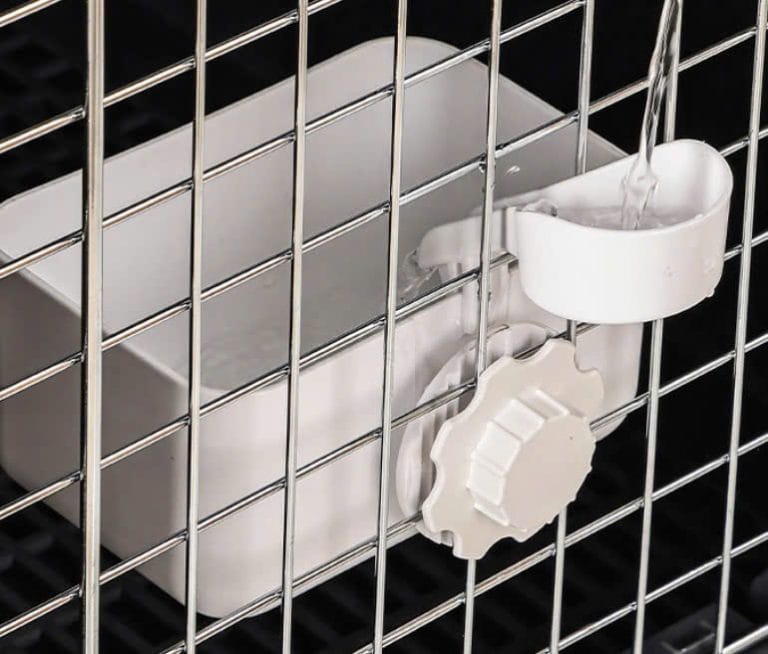
Yes. CR1 requires a water container fixed inside the crate that can be filled from outside without opening it. Lufthansa asks for both a water and a food dish attached to the inside of the door and fillable from outside.
Last updated 17 Oct 2026
Compiled by our specialists from the regulations in force on the date above, for reference only. Rules may change after this date. Please verify with the competent authorities or contact us for the most accurate information.
Official sources cited in this guide
- CR1 container requirements (PDF)iata.org
- Lufthansa, animals in the cargo holdlufthansa.com