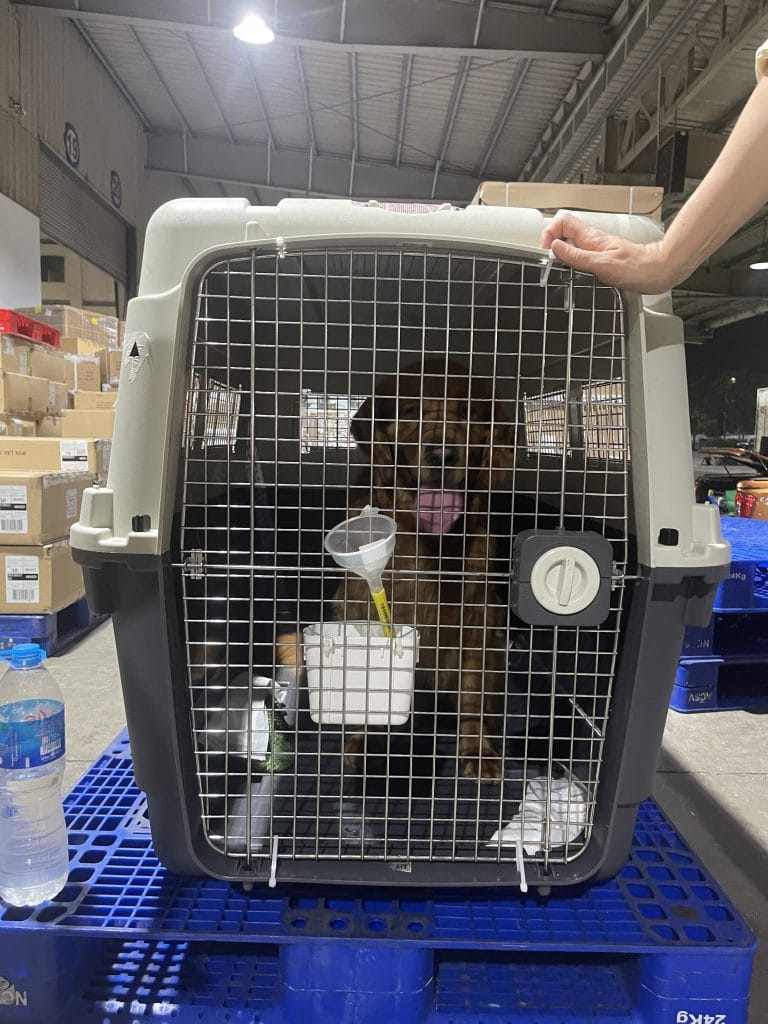
A pet can hold every certificate its destination asks for and still not be fit to fly. Import paperwork proves the animal is vaccinated, identified and free of the diseases a country is worried about. It says nothing about whether a heart, an airway or a nervous system can cope with hours in a crate, changes in temperature and the stress of handling.
That second question is what a fit-to-fly check answers. This guide explains how it differs from the official paperwork, what the vet examines, which conditions can stop a flight, and when to book it.
Four Documents That Are Easy to Confuse
Owners often hear “health certificate”, “fit to fly” and “shipper’s declaration” used as if they were one document. They are four different things, signed by different people, for different purposes.
| Document | Who signs it | What it confirms |
|---|---|---|
| Export quarantine certificate (Vietnam: Form 13a) | The state animal quarantine office at the airport | The animal meets export and destination disease requirements |
| Destination health certificate | An official veterinarian, on the importing country’s template | Import conditions such as microchip, rabies and parasite treatment |
| Fit-to-fly statement | A licensed veterinarian, usually in private practice | The animal is healthy enough to cope with the journey |
| Shipper’s Certification for Live Animals | The shipper, under IATA rules | The animal is in suitable condition and correctly packed for air transport |
The first two are about eligibility, and are explained in our guide to the animal health certificate for pet travel. The fit-to-fly statement is about the animal’s body. A dog with a heart condition can pass every import requirement and still be refused, or worse, if it flies.

What a Fit-to-Fly Examination Checks
There is no single international form, so the content varies between vets. The structured assessment used for flat-faced breeds, the IPATA Brachycephalic Fit-To-Fly Assessment, shows what a thorough check covers, and most of it applies to any pet.
- Medical history and medication: heart disease, breathing problems, seizures, diabetes or kidney disease, and any daily medication.
- Heart and lungs: listening for murmurs, irregular rhythm and abnormal breathing sounds.
- Breathing under light effort: how the animal breathes at rest and after a short brisk walk.
- Body condition: an overweight animal sheds heat less well and breathes harder in a crate.
- Behaviour in the crate: an animal that stays extremely agitated is under more strain.
- Breed-specific checks: flat-faced dogs and cats are scored for airway obstruction, as explained in flying a flat-faced dog or cat.
For older pets or those with a known condition, the vet may add blood tests, X-rays or a heart scan. That is a clinical judgement for the individual animal, not a fixed requirement.

Red Flags That Can Stop a Flight
Some conditions make a vet hesitate, and a few rule the flight out for now. These are the ones that come up most.
- Heart disease: a murmur, heart failure or heart medication. In the IPATA brachycephalic assessment, congestive heart failure on treatment is an automatic fail.
- Breathing problems: airway obstruction, a collapsing windpipe, feline asthma or noisy breathing at rest.
- Seizures: epilepsy that is not well controlled; the same assessment fails animals with more than one seizure in three months.
- Pregnancy or recent birth: IATA rules require an official veterinary certificate before a pregnant animal is carried, and animals that gave birth in the previous 48 hours are not accepted. Many airlines refuse pregnant animals outright; see whether pregnant pets can fly.
- Very young animals: under IATA guidance, puppies and kittens younger than eight weeks or not fully weaned do not fly, and some airlines set a higher minimum. Read more on age limits for young pets.
- Illness or injury: IATA notes that sick, injured or weak animals may not be suitable to travel. Treatment comes first, as explained in a pet falling ill before departure.
- Severe anxiety: an animal in extreme distress in its crate is under real physical strain; how to assess it is covered in whether anxious or aggressive pets can travel.
Age alone is not a red flag. There is no universal age at which a pet becomes unfit, but older animals are more likely to carry the conditions above, which is why Daisy asks for a fit-to-fly certificate from a licensed clinic for every senior pet.
Do Airlines Ask for a Separate Fit-to-Fly Letter?
IATA does not publish a standard fit-to-fly certificate. Apart from the rule for pregnant animals, the decision sits with each airline, and they fall into three patterns.
- A separate statement: Emirates SkyCargo lists a fit-to-fly statement among the documents for pets.
- A dated vet certification: Qatar Airways requires pets to be certified fit to fly by a veterinarian within 10 days of travel.
- The health certificate only: Vietnam Airlines and Singapore Airlines list a health certificate together with the export and import paperwork, without a separate letter.
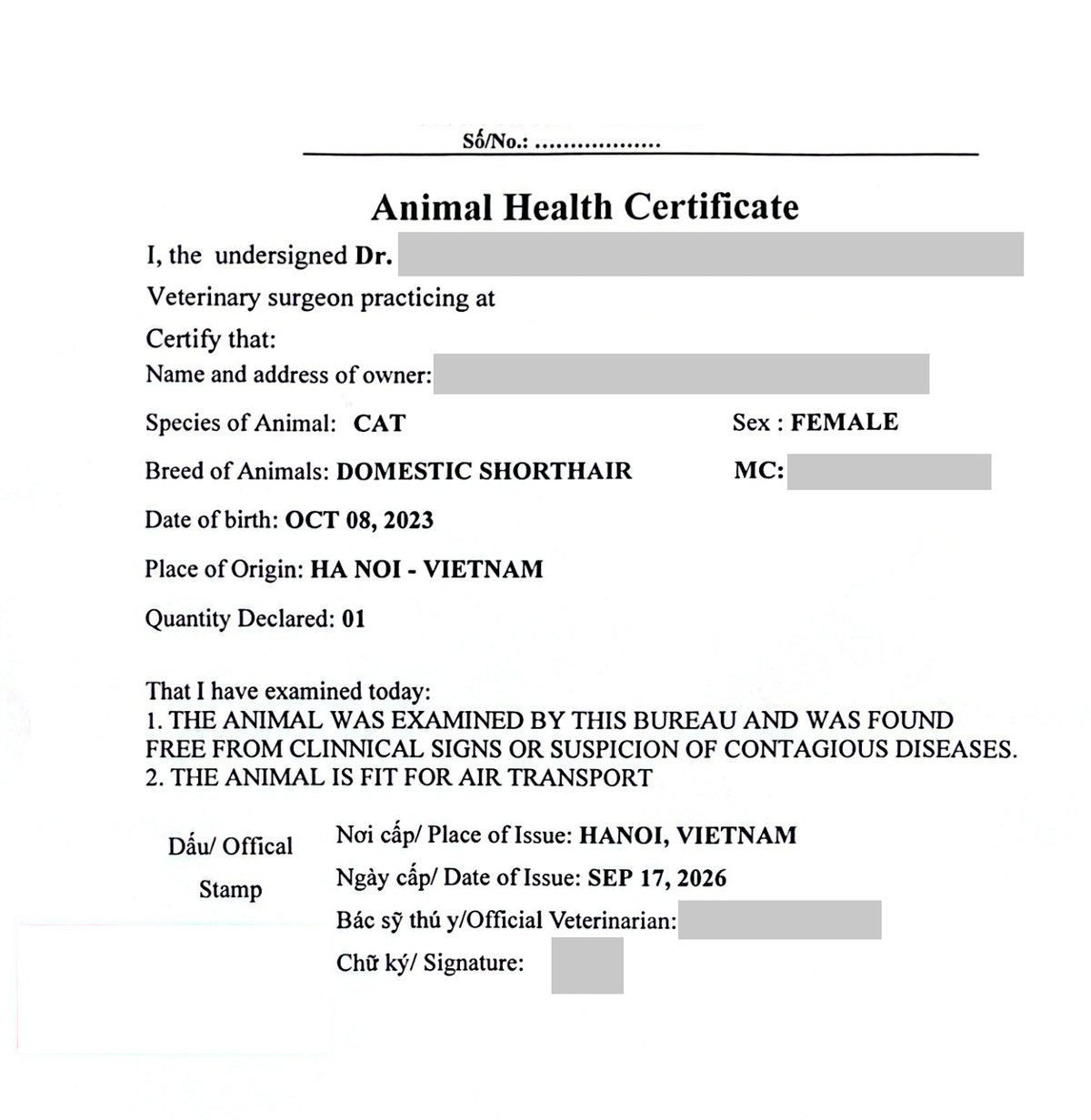
Because requirements change and differ by airline, they have to be checked for the specific carrier on the specific route. Even where no letter is required, the examination is worth doing: the airline’s live-animal acceptance excludes liability for deaths from the animal’s own condition, so the risk sits with the pet and its owner.
When to Book the Check
The timing is set by the shortest window that applies to the trip. Vietnam’s export quarantine certificate is valid for 180 days under Circular 01/2026, so it is rarely the limit. The short windows come from destinations and airlines: the EU accepts a health certificate issued no more than 10 days before entry, and Qatar Airways wants the fit-to-fly certification within 10 days of travel.
For a healthy young pet, one check inside that final window is usually enough. For a senior pet or one with a known condition, book a first assessment at the start of planning, before money is spent on paperwork, and a final check close to departure. A problem found early can be treated; a problem found at the counter cannot.
In Ho Chi Minh City, Daisy’s clients are examined at its licensed veterinary partner, Belwee International Animal Hospital, which can carry out imaging when the vet decides it is needed. A vet visit belongs at the other end of the journey too, as covered in pet care after a long flight.
Sedation Does Not Make an Unfit Pet Fit
When a pet is anxious or frail, owners sometimes ask whether a sedative would help it through the flight. IATA’s guidance advises against sedation, airlines may refuse an animal known to be sedated, and IATA rules allow it only with a vet’s approval and supervision.
The Merck Veterinary Manual notes that many vets avoid it because it can affect breathing and circulation.
A pet that cannot cope without sedation is a pet that should not fly yet. The reasoning is set out in why sedation is avoided before flights.
The fit-to-fly check is the first decision in a sequence that runs from booking to the first days after landing, set out in our pet travel safety and welfare guide.
Frequently Asked Questions
Is a fit-to-fly certificate the same as a health certificate?
No. A health certificate confirms the pet meets import requirements such as vaccination and identification. A fit-to-fly statement confirms the pet is healthy enough to cope with the journey itself.
Does IATA require a fit-to-fly certificate?
IATA does not publish a standard fit-to-fly certificate. It requires an official veterinary certificate for pregnant animals; otherwise, each airline decides whether to ask for a separate statement.
How long before the flight should the fit-to-fly check be done?
Inside the shortest window that applies to the trip, which is often 10 days before travel. Senior pets and those with a known condition should also have an early assessment at the start of planning.
Can an old dog or cat still fly?
Often, yes. Age alone does not rule a pet out; a vet’s examination of the heart, breathing and general condition decides whether that individual animal can cope.
Last updated 18 Oct 2026
Compiled by our specialists from the regulations in force on the date above, for reference only. Rules may change after this date. Please verify with the competent authorities or contact us for the most accurate information.
Official sources cited in this guide
- IATA’s guidanceiata.org
- Merck Veterinary Manualmerckvetmanual.com