Vietnam welcomes hundreds of cat arrivals annually at Tan Son Nhat (SGN) in Ho Chi Minh City and Noi Bai (HAN) in Hanoi. Under Vietnam’s Import Rules (Thông tư 01/2026/TT-BNNMT), cats require a microchip, a current rabies vaccination, a government-endorsed Health Certificate, and a pre-filed Import Quarantine Declaration Form before landing. Daisy Pet Transport has managed hundreds of cat relocations to Vietnam, and this guide outlines every step of the process.
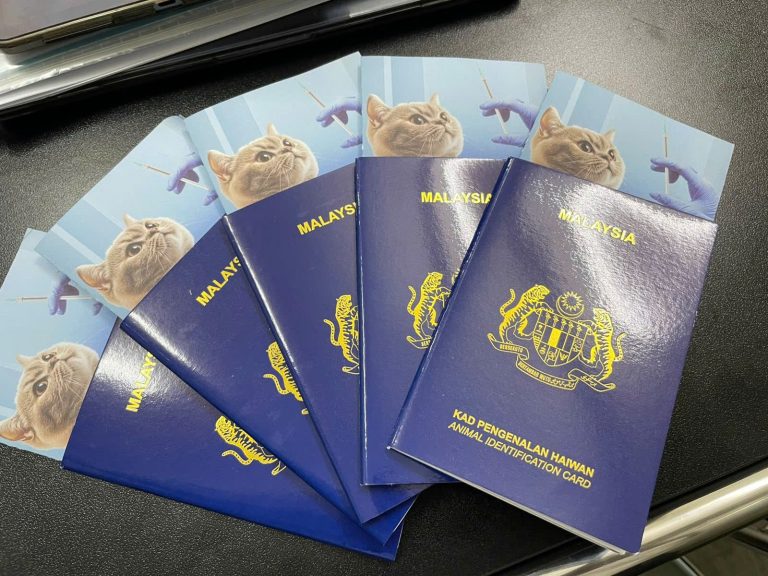
Whether you are relocating from the United States, Australia, Europe, or Asia, the entry requirements are uniform. However, navigating airline cargo desks, kennel dimensions, and customs clearance requires careful, route-specific preparation. Together, these records form your cat’s pet passport file — the compliance dossier every quarantine officer reviews as a single packet before releasing your cat at the airport.
| Category | Key Requirements & Regulatory Notes |
|---|---|
| 1. Export Process (in the departure country) | Depends on the export country: typically an ISO microchip, a rabies vaccination (at least 30 days before the flight, under 12 months old on arrival), a government-endorsed export health certificate, and an export permit where required. |
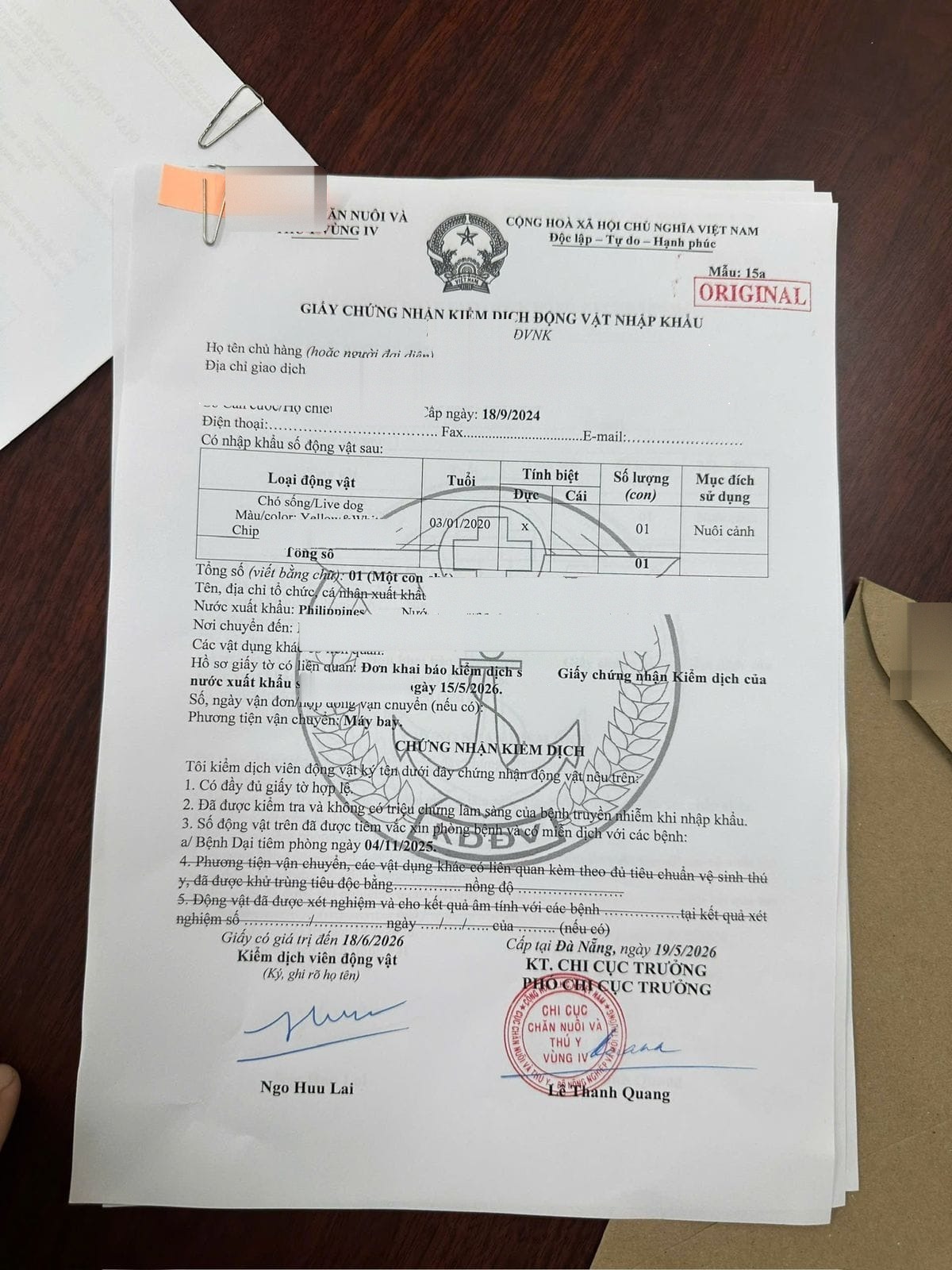
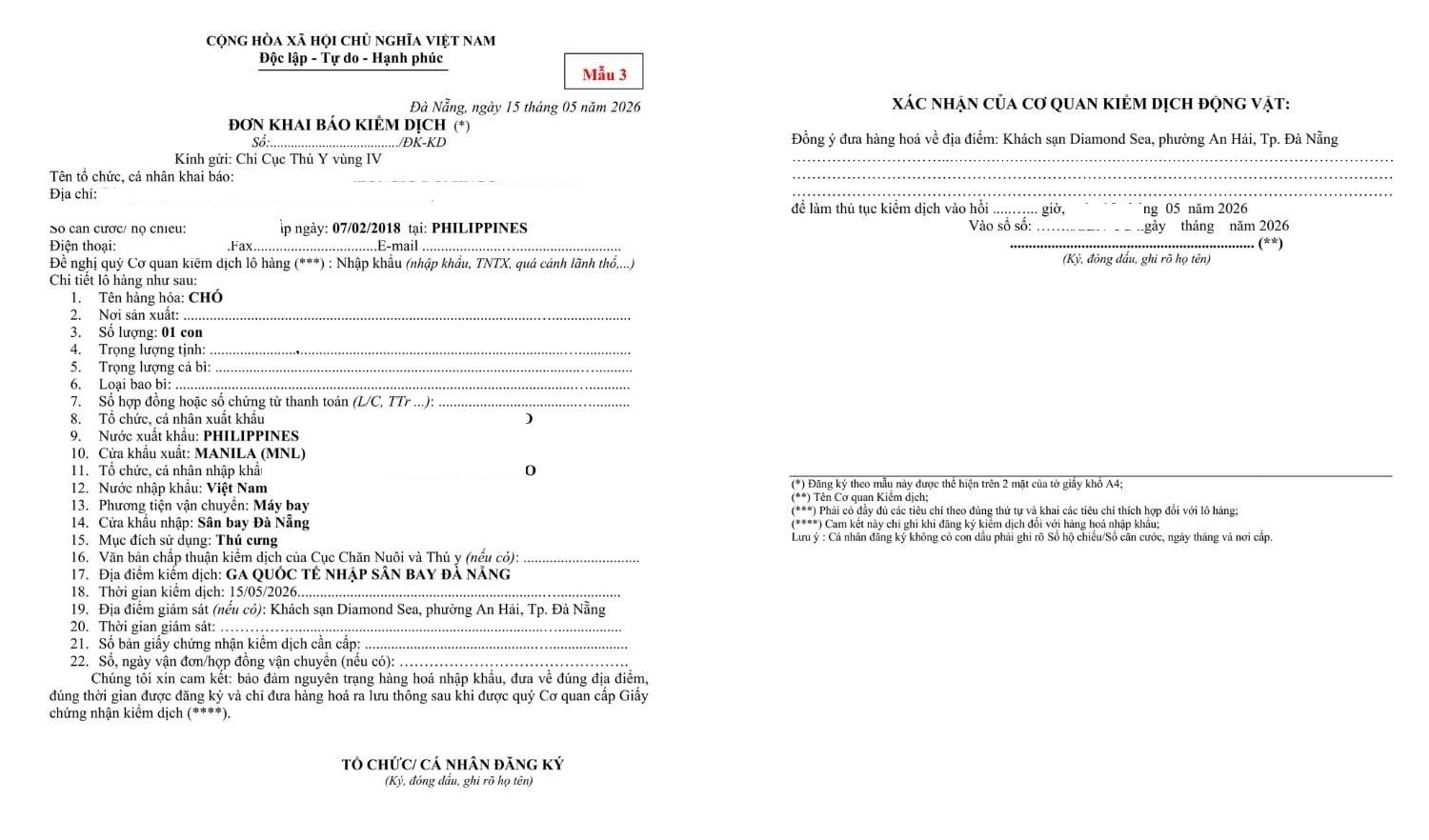
| 2. Import Process (Vietnam) | File Form 3 (Mẫu 3), the quarantine declaration, with the airport quarantine station (Sub-Dept No. I at HAN, No. VI at SGN); about 48 hours before landing is safest. It is not an import permit. The Import Animal Quarantine Certificate, Form 15a (Mẫu 15a), is issued only after the officer checks the documents, scans the microchip and examines the pet. Shipments of 3+ pets also need Form 19 (Mẫu 19) approved by Cục Chăn nuôi và Thú y first. |
| 3. Flights & Weather | Prioritize direct or short connection flights. Avoid extreme summer heat months due to airline Checked Baggage (AVIH) travel bans caused by runway heat risks. |
| 4. Preparation Timeline | A structured 30-day veterinary schedule executed in chronological order from Day 1 to Day 30. |
1. Veterinary Regulations for Shipping Pets to Vietnam
Vietnam’s pet import regulations under Thông tư 01/2026/TT-BNNMT apply equally to cats and dogs — the same microchip standard, the same rabies vaccination window, the same government-endorsed health certificate. On paper, there is no shortcut for feline travelers. In practice, however, most cats complete the Vietnam import process with significantly fewer logistical complications than dogs — and understanding why helps you plan the right way from the start. This guide covers every requirement, every advantage, and the one exception that flat-faced cat owners must plan around.
2. Flight Options and Tarmac Heat Risks When Shipping Pets to Vietnam
Vietnam’s Ministry of Agriculture and Environment enforces four mandatory requirements for every cat entering the country. Missing or incorrectly ordered documentation is the single most common cause of extended airport holds.
- ISO Microchip (implanted before rabies vaccine): Your cat must carry a 15-digit non-encrypted, ISO 11784/11785 compliant microchip. The order is legally significant — Vietnam’s import protocol and the US USDA/Canadian CFIA government endorsement process both require the microchip to be implanted before the primary rabies vaccination is administered. A cat vaccinated before being chipped creates a documentation conflict that can invalidate the endorsement.
- Rabies Vaccination & Minimum Age (16 weeks / 4 months minimum): The rabies vaccine must have been administered at a minimum age of 12 weeks. With the mandatory 30-day post-vaccination waiting period, the absolute minimum age for a cat to enter Vietnam is 16 weeks (4 months). The vaccination must have been given no less than 30 days and no more than 12 months before the date of arrival in Vietnam. Vietnam does not recognize 3-year vaccines if the dose was given more than 12 months ago — see below for a full explanation of why this catches so many cat owners off guard.
- Government-Endorsed Health Certificate: A certificate signed only by a private veterinarian is insufficient. The Health Certificate must bear the official stamp of the relevant government authority in your country of origin: USDA APHIS in the United States, CFIA in Canada, NParks in Singapore, or the equivalent competent authority elsewhere. The private vet examination must typically occur within 7–10 days before the departure flight; the government endorsement is then applied to that certificate before travel.
- Form 3 (Import Quarantine Declaration Form) — file before landing: You or your authorized agent should file Form 3 with Vietnam’s Regional Animal Health Office (Chi cục Thú y Vùng VI for SGN, Vùng I for HAN) before your cat reaches the border (for 1–2 pets traveling with the owner, the regulation also allows declaring directly at the airport quarantine office). The rule sets no fixed lead time; Daisy Pet files in person at the airport quarantine station about 48 hours ahead so the quarantine office can confirm it (for cargo and shipments of more than 2 pets, it has one working day to do so), or earlier if that falls on a weekend or public holiday. Form 3 applies to every pet import — personal (1–2 cats) and commercial alike. Without a pre-filed Form 3, airport clearance time increases significantly. See our full Form 3 filing guide for the step-by-step process.
- Form 19 — only if importing 3 or more pets: Form 19 is a separate advance registration application filed with Cục Chăn nuôi và Thú y before Form 3, and it only applies to commercial shipments of 3 or more pets under one airway bill. If you are bringing 1–2 cats for personal relocation, you skip Form 19 entirely. See our guide to importing 3+ pets for the full commercial process.
Moving from the US? The United States has its own export steps, including the USDA APHIS endorsement of the health certificate. See shipping a pet from the USA to Vietnam.
The “3-Year Vaccine” Trap: This is the number-one failure point for cat owners relocating from the United States, Canada, and most of Western Europe. Vietnam’s import regulation measures only one thing: the number of calendar months between the date the injection was administered and the date the cat arrives in Vietnam. Vietnam does not recognize 3-year rabies vaccines if the dose was given more than 12 months ago. Any injection administered more than 12 months before arrival is considered expired — regardless of whether the vaccine label says “3 years.”
Recommended additions (not legally required but strongly advised): Internal parasite treatment (deworming) and external parasite treatment (flea/tick) administered within 7 days of departure. Some airlines and some origin countries require treatment records; Vietnam does not, but the treatments reduce stress on the animal and eliminate any ambiguity during inspection.
3. Flying Your Cat in the Cabin (PETC): The Preferred Option
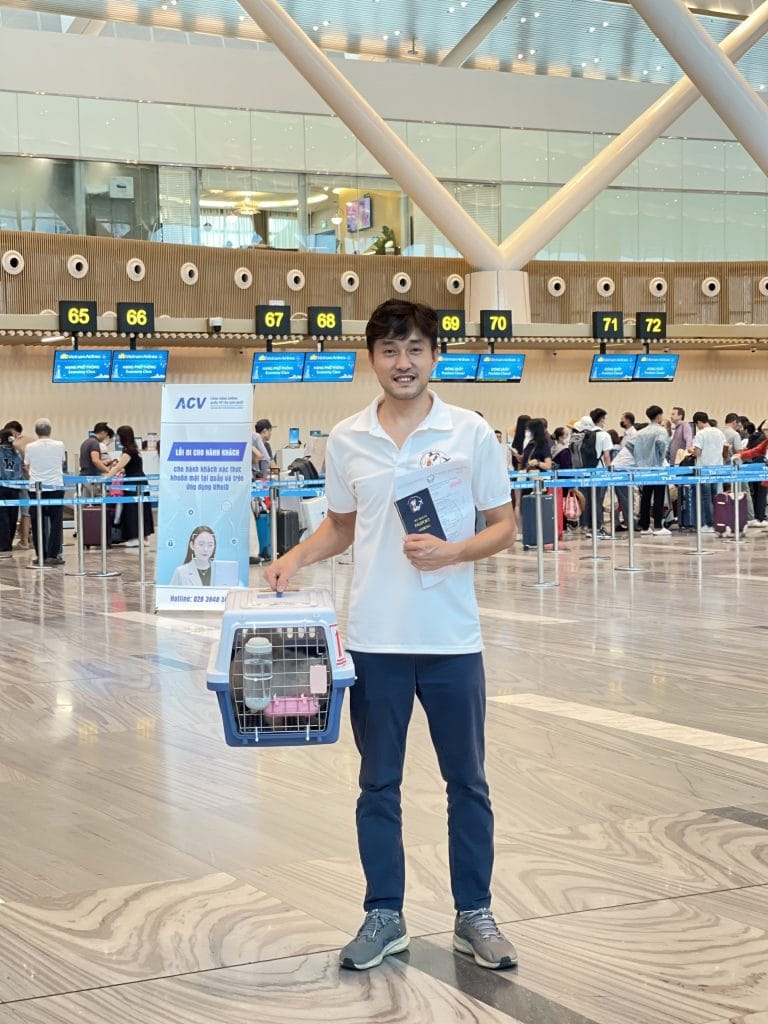
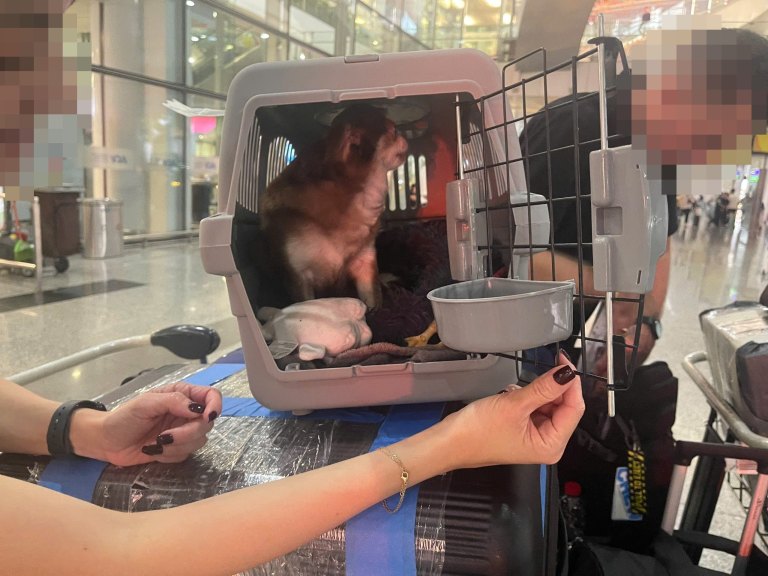
PETC — Pet in Cabin — means your cat travels in an approved soft-sided carrier stowed under the seat in front of you throughout the flight. For most cats flying to Vietnam, this is the optimal arrangement: the animal remains with its owner, avoids cargo handling entirely, and experiences the lowest-stress version of the journey.
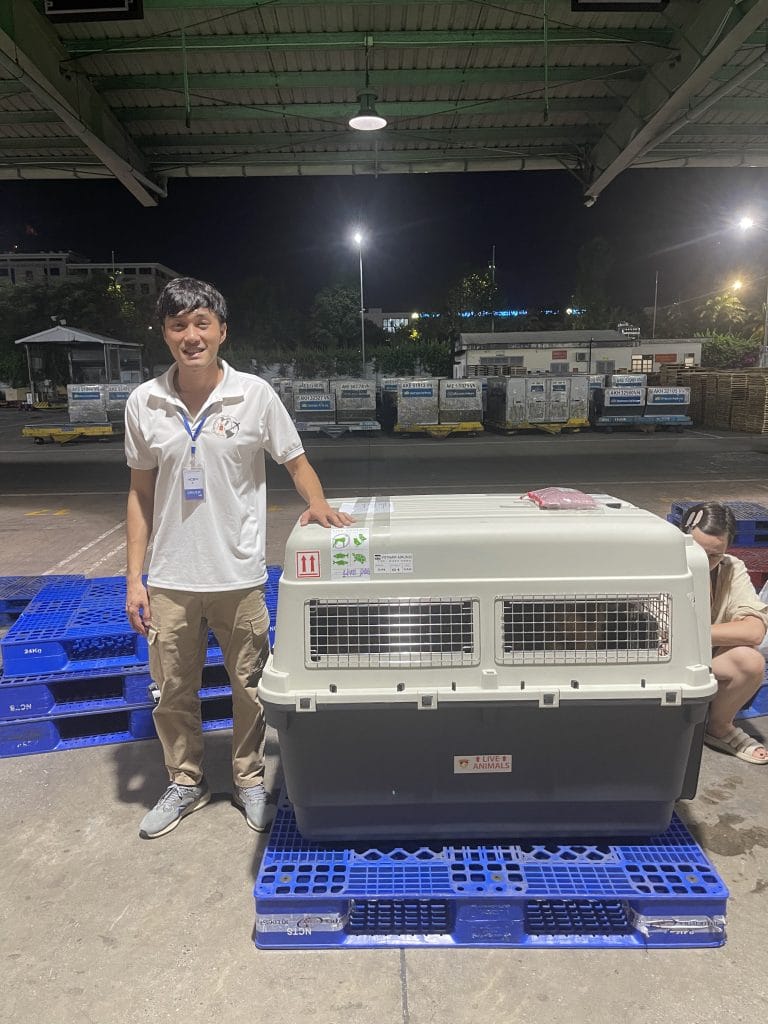
When cargo is the only legal option — as it is for cats leaving Australia — Franny’s cargo flight from Sydney to Vietnam shows what that process looks like in practice.
Carrier requirements that airlines enforce at check-in:
- Soft-sided, ventilated on at least two sides
- Your cat must be able to stand, turn around, and lie down naturally without touching the top of the carrier
- Absorbent mat or liner inside — airlines may inspect this
- Dimensions must fit under the seat of your specific aircraft type — check with the airline for the exact measurements applicable to your booked flight, not the general policy page
- Carrier must be airline-approved — confirm your specific carrier model is accepted before departure
How to add PETC to your reservation: PETC is not available online at most airlines — you must call the airline’s reservations line directly and add the service to your existing booking. This is a paid service, typically $50–200 USD depending on airline and route. PETC slots are limited per flight, so add this as early as possible after purchasing your ticket.
The weight verification most owners miss: Weigh your cat inside the fully assembled carrier — with the absorbent mat inside and carrier zipped shut — not your cat alone. A 5 kg cat in a 2 kg carrier is a 7 kg total, right at the Qatar Airways limit. A 5 kg cat in a heavier structured carrier could trigger an upgrade to AVIH. Do this calculation before booking, not at the check-in counter.
4. Import Quarantine and Customs Clearance Process in Vietnam
Brachycephalic — flat-faced — cat breeds require a fundamentally different transport strategy. If you own a Persian, Exotic Shorthair, Himalayan, or certain Scottish Fold or British Shorthair lines, standard PETC planning does not apply to your situation.
Cost reference: AVIH and PETC clearance fees run approximately $350 – $450 USD; Manifest Cargo clearance costs approximately $950 – $1,150 USD due to additional airway bill processing and cargo terminal handling. See our full Vietnam Pet Shipping Cost Breakdown for airline-by-airline rates and route pricing.
Brachycephalic breeds include (but are not limited to): Persian, Himalayan, Exotic Shorthair, and certain varieties of Scottish Fold. These cats must travel as Manifest Cargo on most international routes to Vietnam.
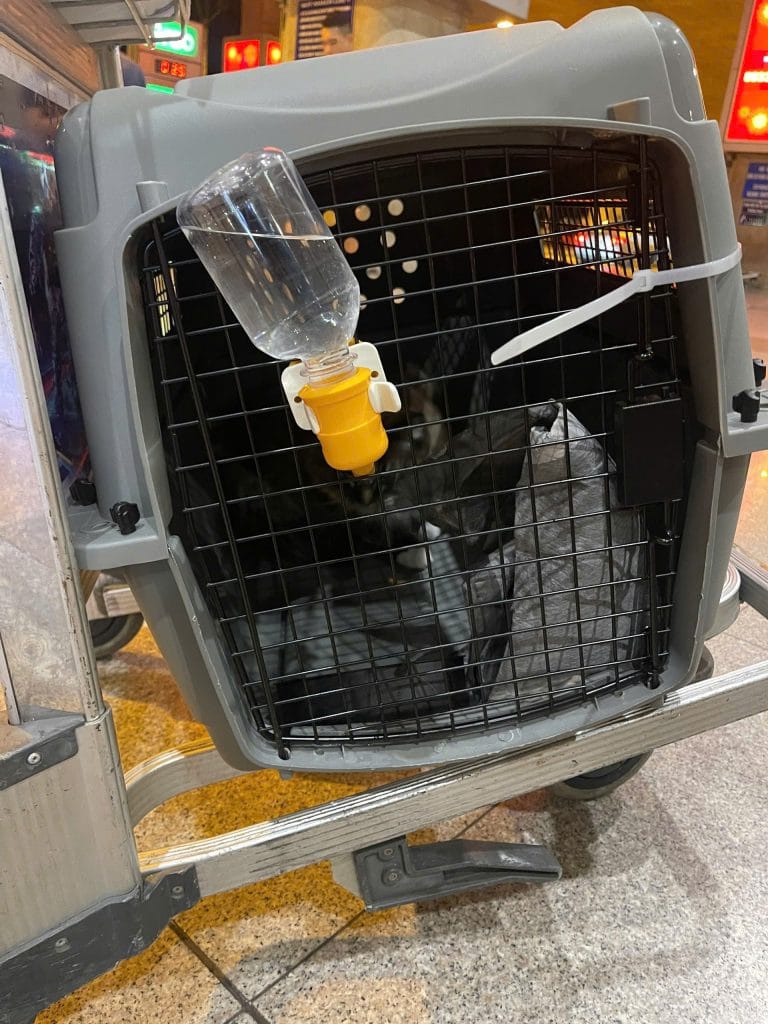
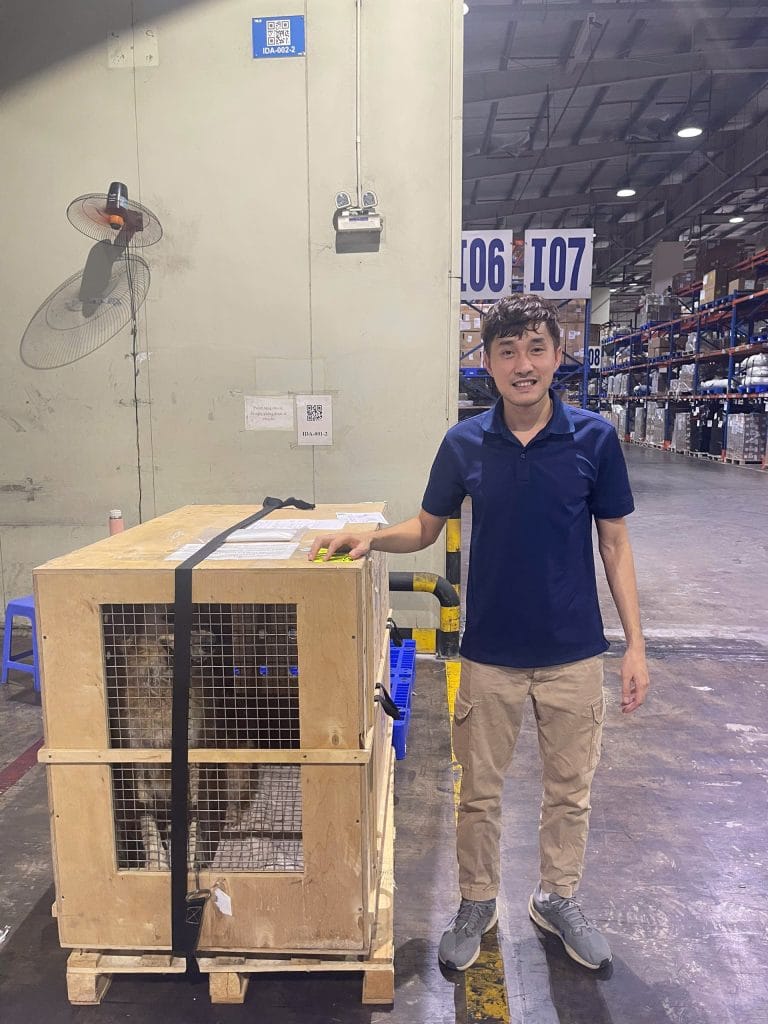
The solution: Manifest Cargo through specialized routing. Carriers such as Qatar Cargo, Singapore Airlines Cargo (SIA Cargo), and Vietnam Airlines Cargo offer temperature-controlled live animal shipping as Manifest Cargo — a completely separate logistics stream from passenger baggage. Your cat travels in a rigid IATA-compliant crate, handled by trained cargo staff throughout, with climate control maintained in dedicated animal sections.
5. Plan Ahead: Do the Rabies Titer Test Before You Leave
Vietnam does not require a Rabies Neutralising Antibody Titre Test (RNATT) for pet import. However, if you plan to move to Australia, Japan, Singapore, the US, or EU from Vietnam later, completing RNATT at your origin country before arriving in Vietnam eliminates any future 180-day quarantine wait — the test result carries lifetime validity with annual boosters maintained.
Cost and logistics: RNATT costs approximately $150–300 USD at an OIE-accredited laboratory. The sample must be drawn after the rabies vaccine has been in effect for at least 30 days. Turnaround is typically 10–21 days.
Bringing a dog instead? See our Bringing Your Dog to Vietnam guide. For flat-faced breeds like Persian or Himalayan cats, check airline restrictions for brachycephalic breeds before booking.
Last updated 16 Oct 2026
Compiled by our specialists from the regulations in force on the date above, for reference only. Rules may change after this date. Please verify with the competent authorities or contact us for the most accurate information.