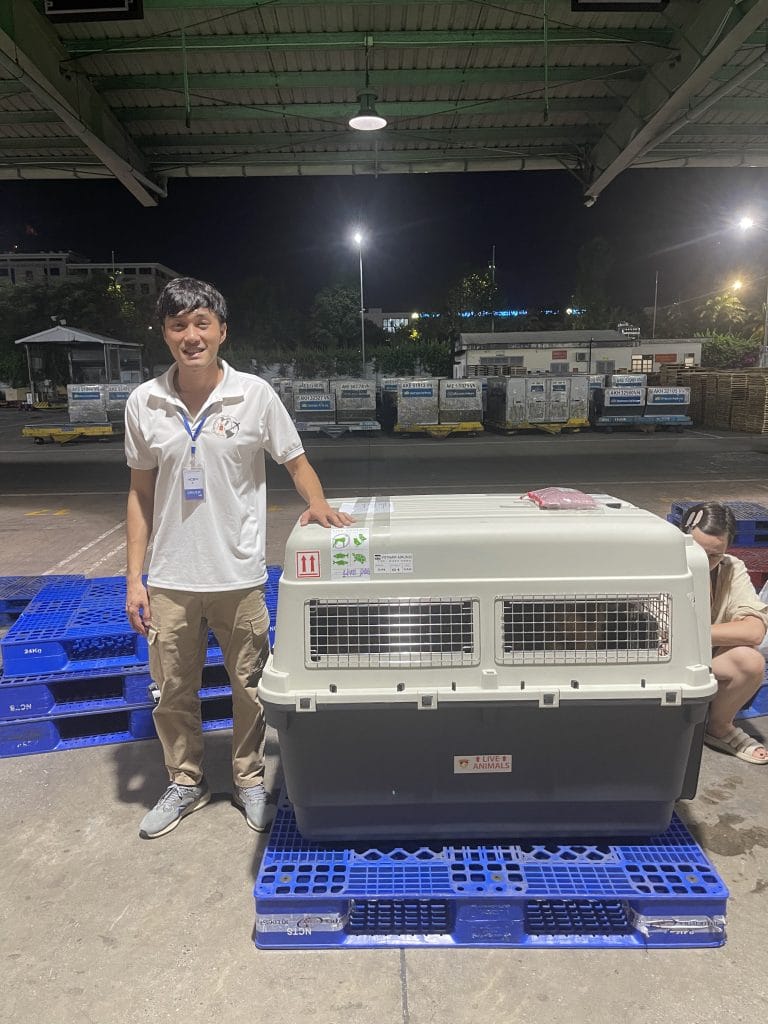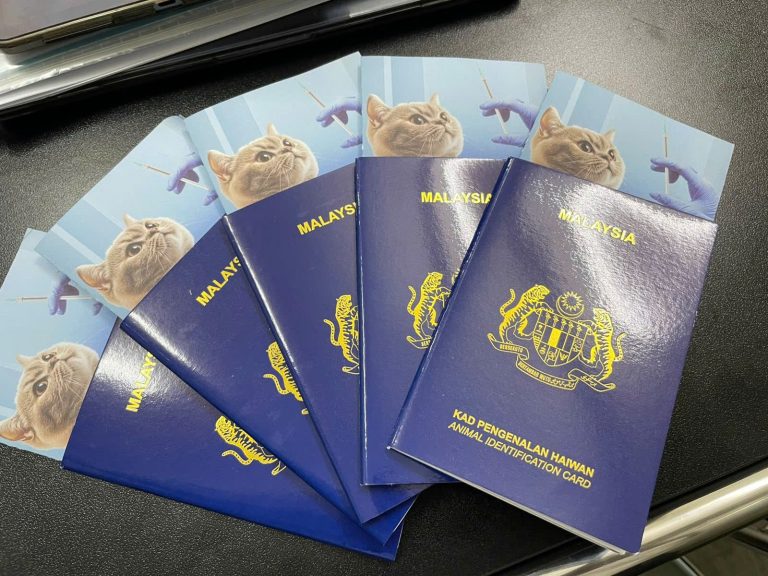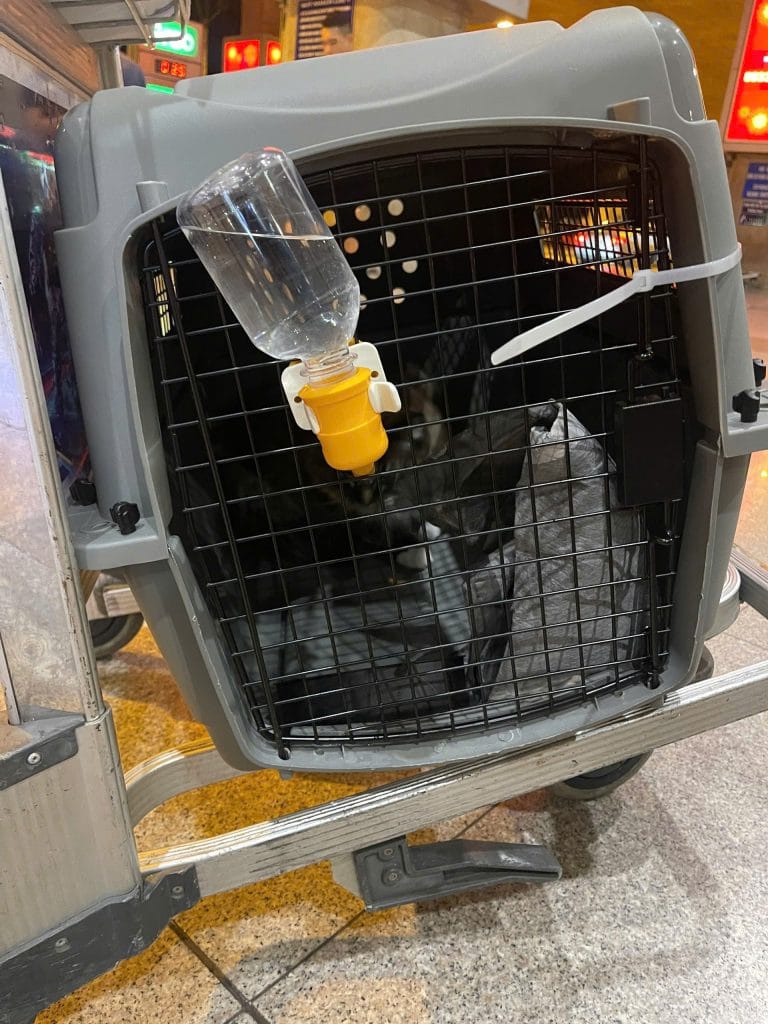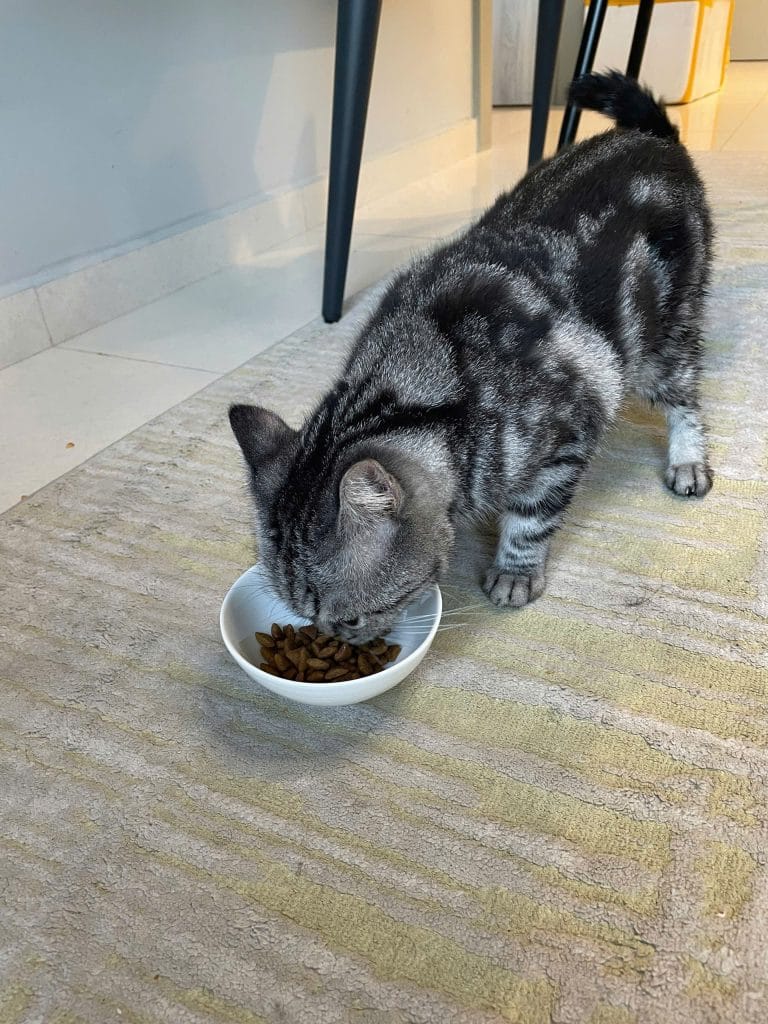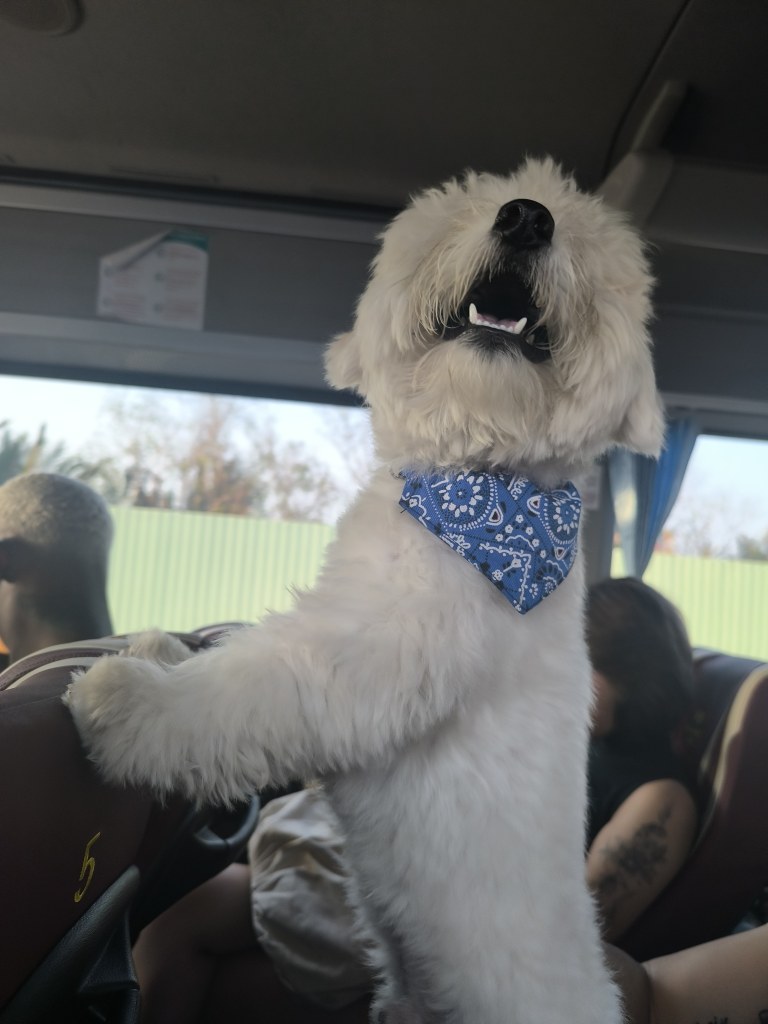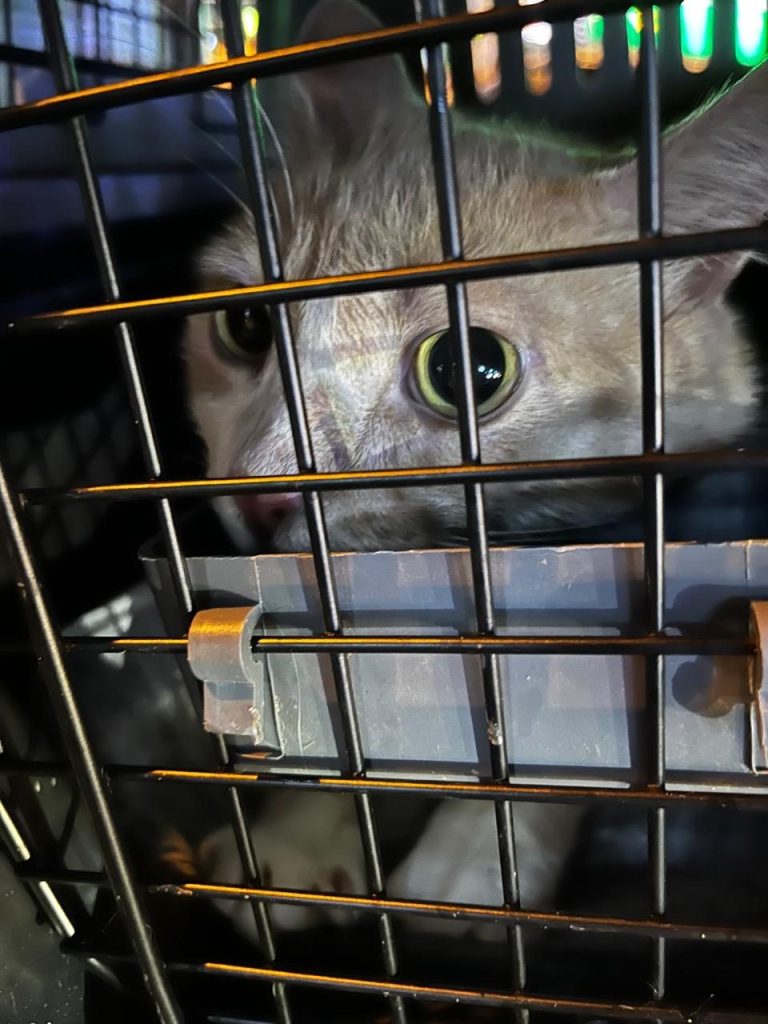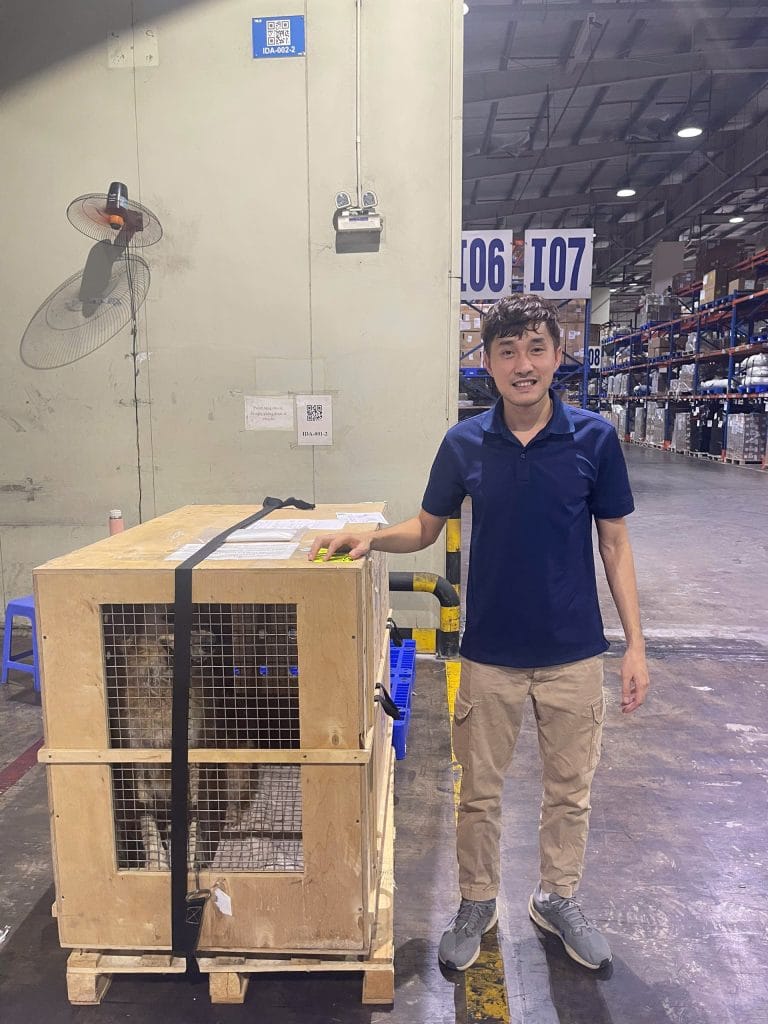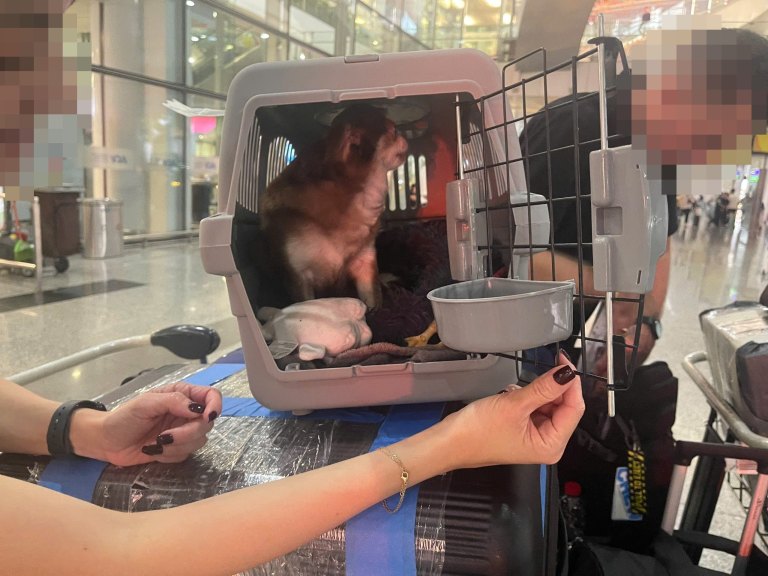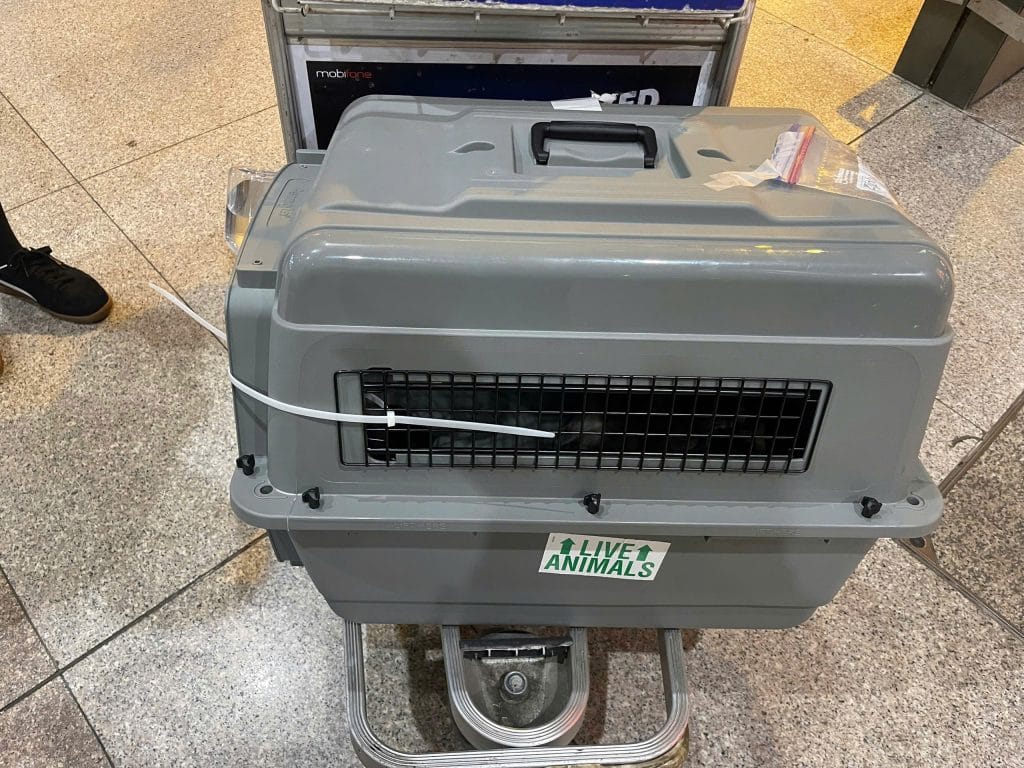
To bring pets from USA to Vietnam, you meet three sets of rules: US export rules, Vietnam’s import conditions and your airline’s pet policy. The US issues one health certificate, valid for 30 days before departure, and Vietnam checks it with the pet on arrival. The airline decides the route: cats can fly nonstop from San Francisco, but dogs must connect through Asia.
Short Answer: Can You Bring a Pet from the USA to Vietnam?
- Is it possible? Yes. One or two personal pets need no Vietnamese import permit, no rabies titer test and no quarantine stay.
- Can my pet fly with me? Yes. Pets can travel in the cabin or as checked baggage on your ticket. Large pets, or pets flying without you, go as manifest cargo.
- Is there a nonstop flight? Only for cats. Vietnam Airlines flies nonstop from SFO to SGN, but it does not transport dogs on its US flights.
- How long does it take? About five weeks if the pet needs a new rabies vaccination. About two to three weeks if its vaccination is still valid.
- Can I do the US paperwork myself? Yes. A USDA-accredited vet near you files the health certificate online.
- Can my dog return to the US? Yes, if a CDC rabies form is endorsed before the dog leaves. Plan it at the first vet visit.
Every arriving pet, from any country, must meet the conditions in our guide to importing pets into Vietnam.
What Must Your Pet Meet Before You Book?
Check these points before you pay for vet work or tickets. Each one can stop the move.
What Does Vietnam Require?
- Microchip: required. The quarantine officer scans it on arrival. Some US clinics still use older 9- or 10-digit chips, so ask your vet whether your pet has a 15-digit ISO chip.
- Rabies vaccination: given at least 30 days before the flight, and no more than 12 months old on the day the pet arrives.
- Minimum age: the rabies vaccine is given from 12 weeks of age. With the 30-day wait, the earliest departure is at about four months.
- Health certificate: the USDA-endorsed export certificate described in Step 4. Vietnam sets no validity window of its own.
- Not required: no rabies titer test (RNATT), no Vietnamese import permit and no quarantine stay for one or two personal pets. Three or more pets in one shipment follow Vietnam’s commercial import track.
Many US clinics give a 3-year rabies vaccine. Vietnam still counts it for 12 months from the injection date. A pet vaccinated 14 months before arrival needs a booster at least 30 days before the flight. Our page on how long a rabies shot stays valid explains why the label and the import rule differ.
Which Airline Limits Can Stop the Trip?
- Dogs on the nonstop: Vietnam Airlines does not transport dogs on flights between Vietnam and the United States. Dogs must connect through Asia.
- Cabin weight: the nonstop carrier allows a cat and carrier up to 6 kg. Korean Air and Asiana allow up to 7 kg, carrier included.
- Breeds: Korean Air does not carry short-nosed breeds in the hold. The nonstop carrier does not accept Burmese, Exotic, Himalayan or Persian cats.
- Summer heat: US rules do not allow dogs and cats in airport holding areas above 85°F (29.5°C) for more than four hours in a row. Airlines add their own limits, so summer departures from hot states are often refused.
Before booking anything, check your pet against our list of dog breeds restricted on flights to Vietnam.
How Can Your Pet Fly from the USA to Vietnam?
There are three ways to fly. The choice depends on the species, the weight with the carrier, and whether you fly too.
In the Cabin, With You
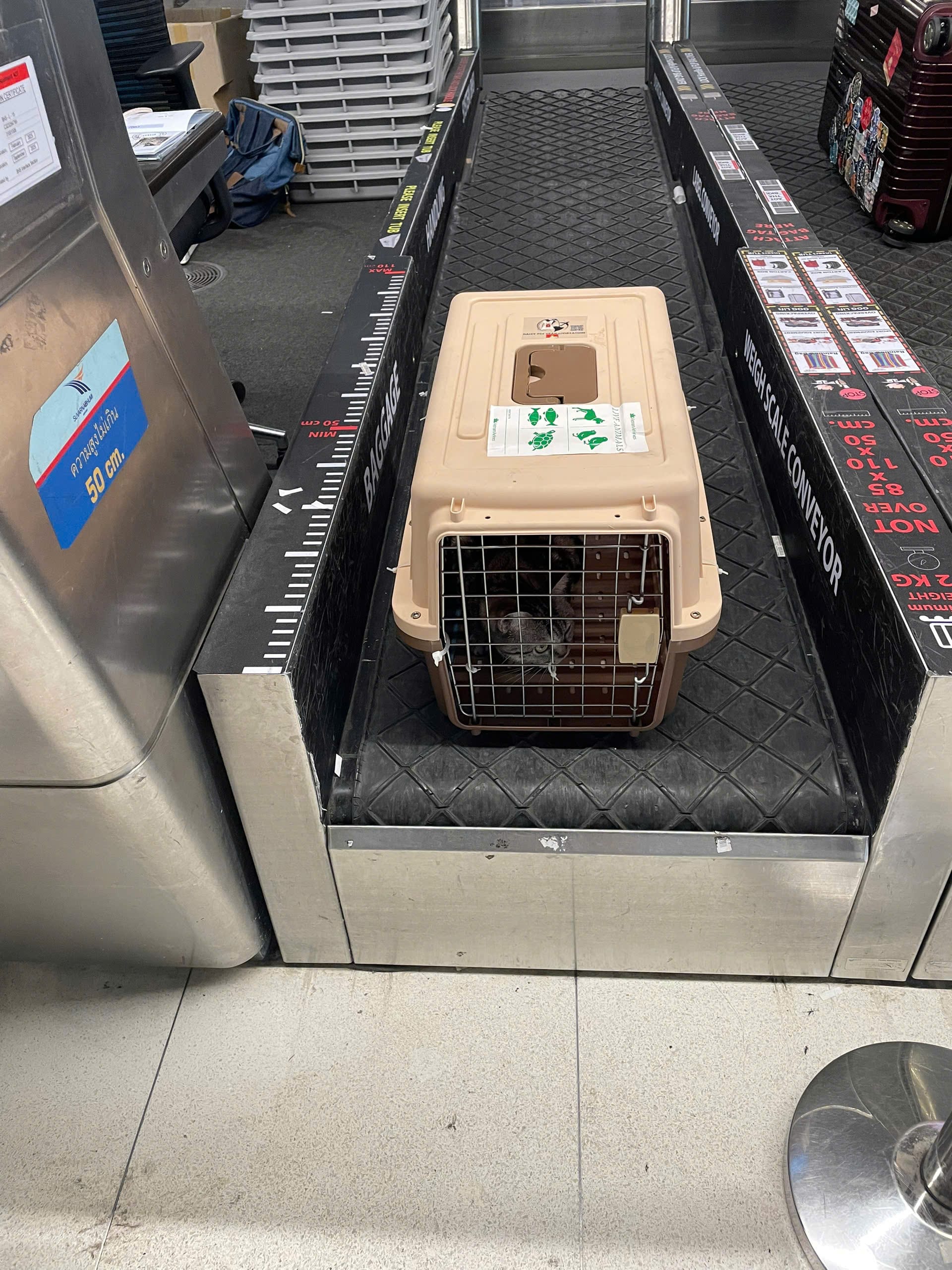
A cat up to 6 kg with its carrier can fly in the cabin on the nonstop from San Francisco. The carrier must not exceed 35 × 30 × 20 cm. Book the pet at least 24 hours before departure. These limits come from Vietnam Airlines’ pet travel rules.
Small dogs and cats up to 7 kg can fly in the cabin with Korean Air or Asiana. Both connect at Incheon (ICN) in Seoul.
Carrier and packing tips for cats are in our guide to bringing a cat to Vietnam.
As Checked Baggage, on Your Flight
Heavier pets fly in the hold on your ticket. On the nonstop, cats can go up to 32 kg with the crate. Korean Air and Asiana take dogs and cats up to 45 kg, crate included.
EVA Air (via Taipei) and Japan Airlines and ANA (via Tokyo) carry pets in the hold only. EVA changes its pet rules by season. The Japanese carriers have suspended live animal cargo in past summers.
As Manifest Cargo, Without You
Large dogs, and pets flying without their owner, travel as manifest cargo on their own air waybill. A US shipper books the space and checks the pet in at the cargo terminal. In Vietnam, an agent must receive the pet. The customs declaration needs a declarant with a customs account, which a private owner does not have.
The weight points where a dog moves from checked baggage to cargo are covered in our guide to bringing a dog to Vietnam.
Starting Far From an International Airport?
Many owners first take a domestic US flight. If it is on a separate ticket, ask both airlines how the pet will be transferred. Pet places on every flight are limited, so confirm space before you buy any ticket.
A side-by-side view of carriers is in our comparison of airlines for pet imports.
6 Steps to Bring a Pet from the USA to Vietnam (About Five Weeks)
The plan starts with a pet that has no microchip and no valid rabies vaccination. If both are already in place, skip Step 1 and bring the dates forward. Steps 2 to 6 then take two to three weeks.
The same plan for every departure country is in our step-by-step import timeline for Vietnam.
Step 1 (Day 1): Microchip and Rabies Vaccine at a USDA-Accredited Vet
Who: you and the vet.
First, ask the clinic whether the signing vet is USDA-accredited. Accreditation under the National Veterinary Accreditation Program belongs to the vet, not to the clinic. The vet implants the chip first, then gives the rabies vaccine. A vaccine given before the chip does not count.
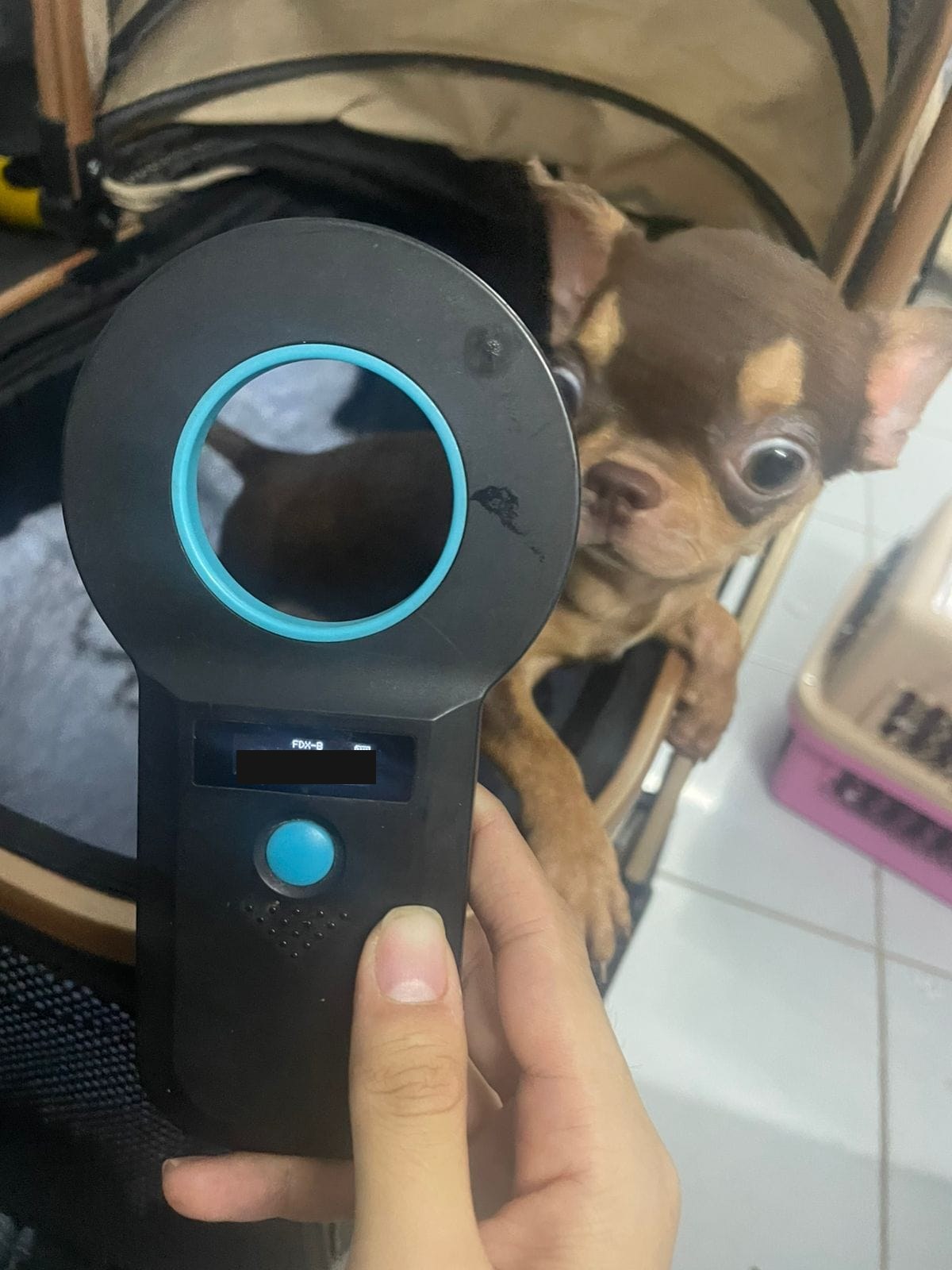
Ask the clinic to write your name exactly as it appears on your passport. If your dog may return to the US, tell the vet now. A CDC rabies form must be endorsed before the dog leaves.
Step 2 (Days 2–3): Confirm Space With the Airline, Then Buy the Ticket
Who: you, or a US shipper for cargo.
Ask the airline to confirm space for the pet on your chosen flight. Buy your ticket only after it confirms. For cargo, the shipper books the space. Then buy the carrier or IATA-compliant crate and start crate training.
Step 3 (Day 15): Send Your Documents to the Agent in Vietnam
Who: you send them; the agent checks them.
Send copies of your passport, your ticket or air waybill, the vaccination record and the microchip number. Send them at least three working days before departure. The agent checks that names, dates and chip numbers match.
Step 4 (Day 29): Health Exam and USDA Certificate Through VEHCS
Who: the vet examines and files; APHIS endorses.
Within 30 days before departure, the vet examines the pet. The vet then completes the Veterinary Health Certificate for Export of Dogs and Cats from the United States of America to Viet Nam. This form was revised in September 2025. It records the microchip, the exam and the rabies vaccine.
The vet files the certificate in VEHCS, the online export system of USDA’s Animal and Plant Health Inspection Service (APHIS). For Vietnam, APHIS accepts electronic signatures and endorses the certificate digitally, so nothing is mailed. APHIS charges $101 per certificate because Vietnam needs no lab test. The vet’s fee is separate.
Print the endorsed certificate. The printed copy must travel with the pet. APHIS keeps the current form on its pet travel page for Vietnam.
For a dog that may return, the vet completes the CDC rabies form at the same visit. It must be at least 28 days after a first rabies vaccine.
Step 5 (Days 30–32): Form 3, Then Departure
Who: the agent files the declaration; you or the shipper check the pet in.
About 48 hours before landing, the agent files Form 3 with the airport quarantine station in Vietnam. It is a quarantine declaration, not an import permit.
How the declaration works is explained in our walkthrough of Vietnam’s quarantine declaration.
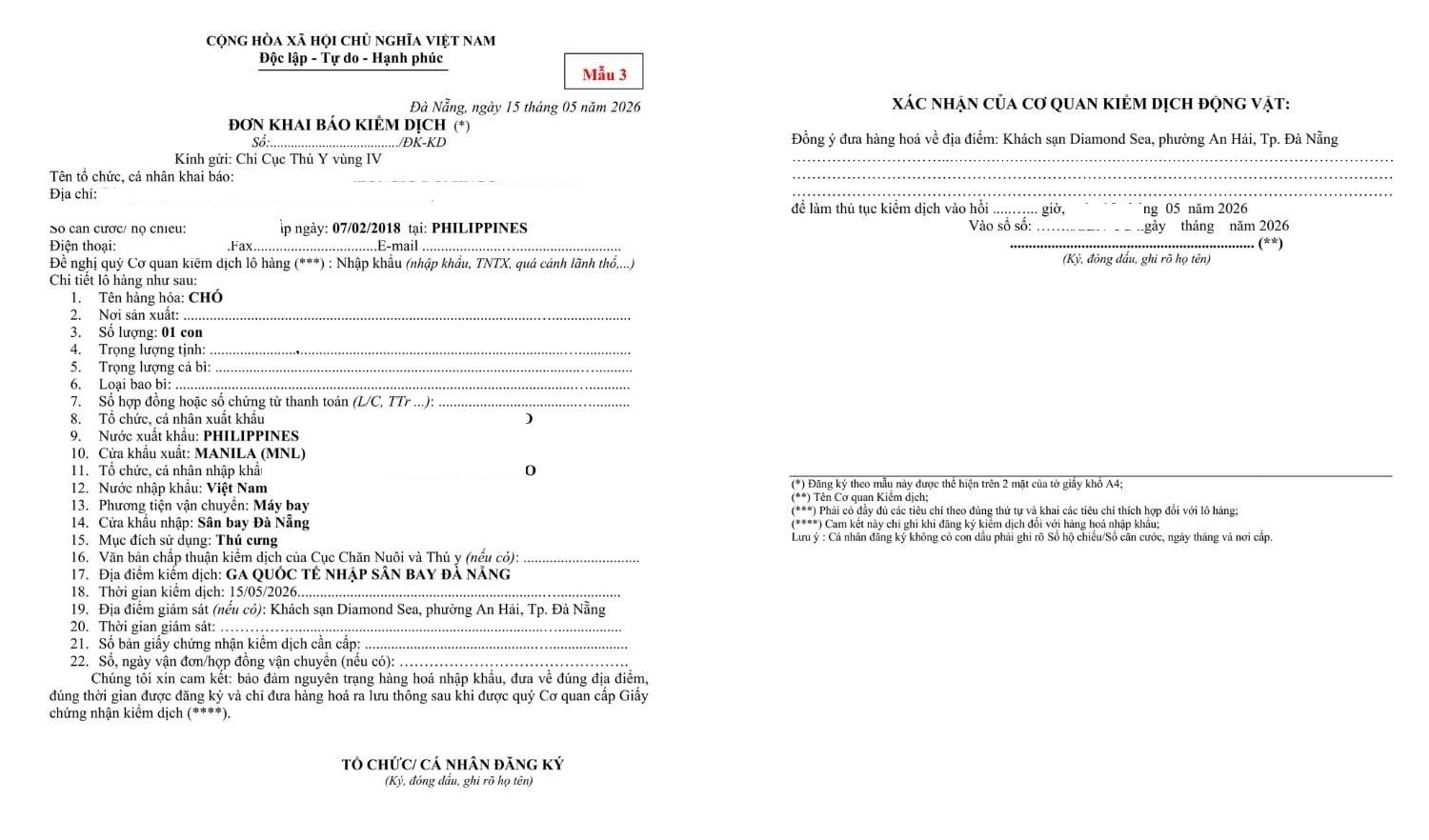
On Day 32, the pet departs, 31 days after its rabies vaccine. Keep the original documents with you. For cargo, the shipper attaches them to the crate.
Step 6 (Arrival Day): Quarantine, Form 15a and Customs
Who: the airport quarantine station, then you or the agent.
A pet flying with you is checked at the airport quarantine station when you land. A cargo pet is cleared at the cargo terminal. The agent, named as consignee on the air waybill, collects it.
The officer checks the original USDA certificate and vaccination record. Next, the officer scans the microchip and examines the pet. If the pet passes, the officer issues Form 15a, the import quarantine certificate. It is valid for 60 days.
You then pay the quarantine fee and import duty. Duty applies to one or two pets as well. Customs then releases the pet. The whole inspection is completed at the airport before the pet leaves it.
Flights from the US usually land at Tan Son Nhat (Ho Chi Minh City) or Noi Bai (Hanoi). Da Nang also has an airport quarantine station.
If a pet does not pass, the quarantine officer decides what happens next. There is no fixed list of outcomes. One chip number on every document and a valid rabies date are your best protection.
What Does Bringing a Pet from the USA to Vietnam Cost?
There is no single price for shipping a pet from the USA to Vietnam. Each side of the move is billed separately.
- In the US: vet visits, the microchip and rabies vaccine, the accredited vet’s exam, the $101 APHIS endorsement and the carrier or crate. A dog that may return also needs the CDC form.
- The flight: a per-pet fee paid to the airline for cabin or checked baggage. For manifest cargo, air freight is charged on the chargeable weight of pet and crate, plus the shipper’s handling.
- In Vietnam: the agent’s clearance service, the quarantine fee, import duty, cargo terminal handling for cargo, and delivery home if needed.
Current ranges by route and pet size are in our breakdown of pet shipping costs to Vietnam.
Can Your Dog Return to the US Later?
Vietnam is on CDC’s list of countries at high risk for dog rabies. A dog returning from Vietnam needs the right US documents. The easiest route is open only to a dog that left with them.
- The document: the Certification of U.S.-issued Rabies Vaccination, a CDC form. A USDA-accredited vet completes it, and USDA endorses it before the dog leaves the US. It cannot be issued afterwards.
- What does not replace it: the USDA export certificate for Vietnam. CDC does not accept USDA export certificates issued after 31 July 2025 for this purpose.
- How long it works: as long as the US rabies vaccination on the form stays valid, usually 1 or 3 years. The dog can use it for several trips.
- On each return: the dog must be at least 6 months old and needs a CDC Dog Import Form receipt for that trip. With both documents, it can land at any US airport.
If the US vaccination expires while the dog lives in Vietnam, the dog returns as a foreign-vaccinated dog. That route needs a reservation at a CDC-registered animal care facility, and only some airports qualify. CDC sets out the rules for US-vaccinated dogs from high-risk countries.
The stricter route is explained in our guide to moving pets from Vietnam to the USA.
Each return also needs a new receipt, as shown in our guide to completing the CDC Dog Import Form.
Cats are different. CDC does not require proof of rabies vaccination for cats entering the United States. Some states and airlines set their own rules.
FAQ: Bringing a Pet from the USA to Vietnam
Can my dog fly nonstop from San Francisco to Ho Chi Minh City?
No. Vietnam Airlines does not transport dogs on its US flights. Cats can take the nonstop in the cabin or as checked baggage, while dogs connect through Seoul, Taipei or Tokyo.
Does Vietnam require a rabies titer test or an import permit for pets from the USA?
No. One or two personal pets need a microchip, a valid rabies vaccination and the USDA-endorsed certificate. There is no titer test, no import permit and no quarantine stay.
Is a 3-year rabies vaccine accepted for Vietnam?
Vietnam counts every rabies vaccine for 12 months from the injection date. If a 3-year vaccine is older than that on arrival, the pet needs a booster at least 30 days before the flight.
How long is the USDA health certificate valid for Vietnam?
It is valid for 30 days from its date of issue to the date of departure. The vet files it through VEHCS, and APHIS charges $101 to endorse it.
Can my dog return to the US after living in Vietnam?
Yes. The easiest route needs the CDC Certification of U.S.-issued Rabies Vaccination, endorsed before the dog leaves the US. Without it, the dog returns under CDC’s stricter rules for foreign-vaccinated dogs.
Do I need an agent in Vietnam if my pet flies with me?
Not always. For a pet in the cabin or checked baggage, you can be the person named on Form 3. For manifest cargo, an agent is required, because the customs declaration needs a declarant with a customs account.
Questions about Vietnam’s side that apply to every route are answered in our frequently asked questions on importing pets.
Last updated 16 Oct 2026
Compiled by our specialists from the regulations in force on the date above, for reference only. Rules may change after this date. Please verify with the competent authorities or contact us for the most accurate information.
Official sources cited in this guide
- Vietnam Airlines’ pet travel rulesvietnamairlines.com
- aphis.usda.govaphis.usda.gov
- US-vaccinated dogs from high-risk countriescdc.gov