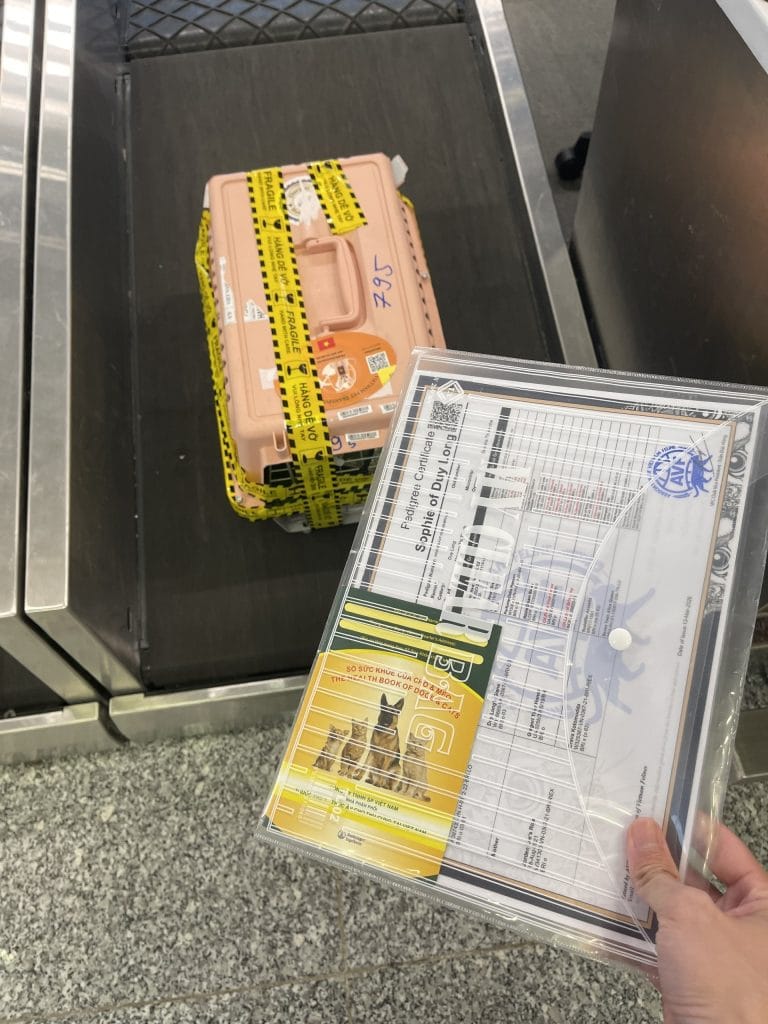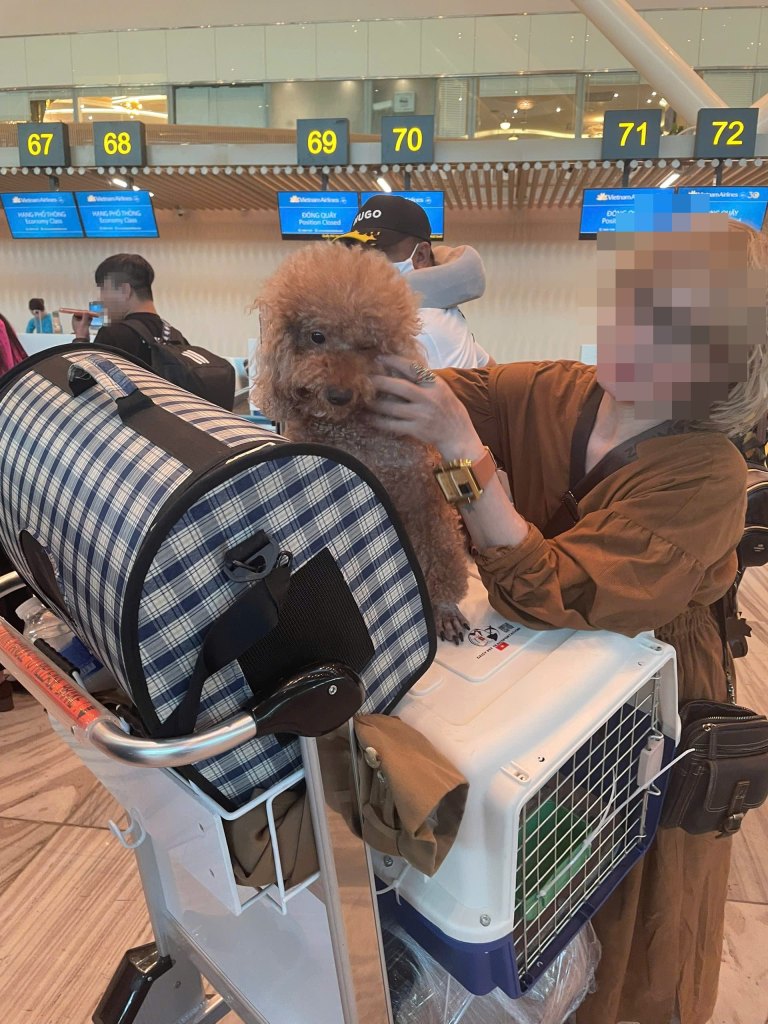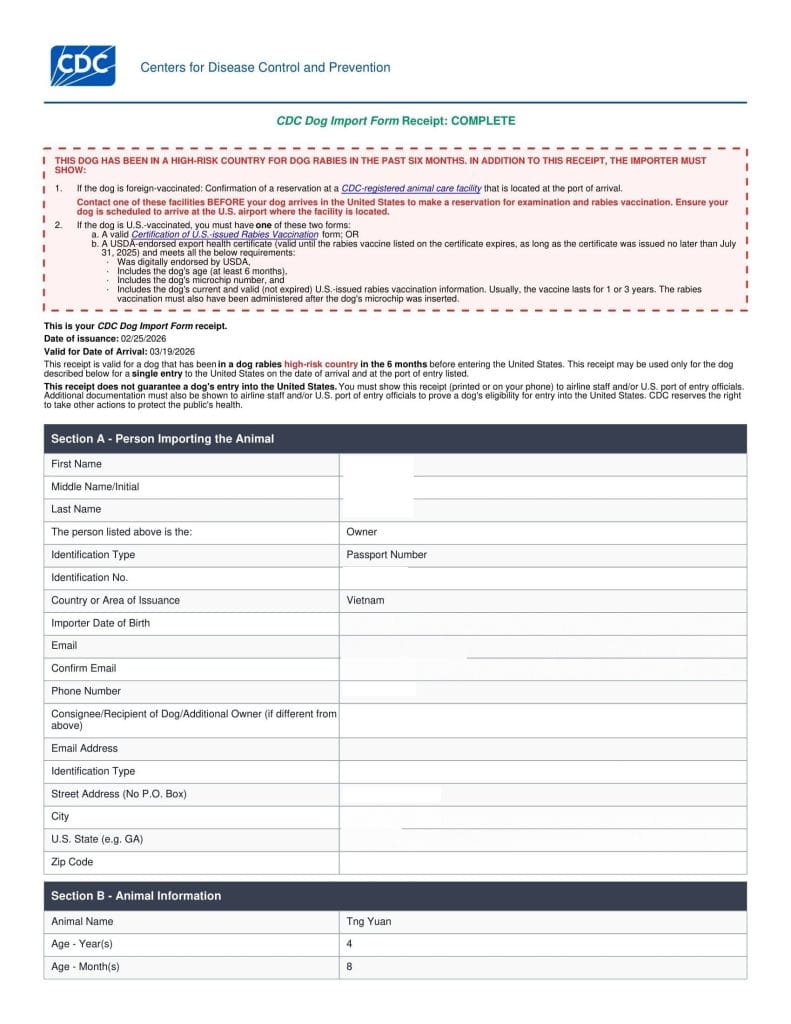
Every dog entering the United States must be accompanied by a CDC Dog Import Form receipt — without it, the airline will not accept the cargo booking and US Customs and Border Protection will deny entry at the port. For dogs vaccinated in Vietnam, a country the CDC classifies as high-risk for dog rabies, this form is the final step in a layered compliance chain that must be built in a specific sequence. This guide walks through every field, every prerequisite, and the exact submission process.
This guide covers the CDC form process only. For the full regulatory framework, see our USA Pet Import Laws 2026 guide. For ACF reservation instructions (completed after you receive your CDC barcode receipt), see our ACF Booking Guide.
Who needs the CDC Dog Import Form? Every dog entering the United States needs a CDC Dog Import Form receipt, regardless of the country of origin — but the supporting documents differ. Dogs from a CDC high-risk country for dog rabies (Vietnam is on this list) face the most demanding pathway, requiring a rabies titer test and an Animal Care Facility reservation; dogs from low-risk or rabies-free countries complete the same form but skip those extra steps. This guide focuses on the high-risk pathway that applies to every dog vaccinated in Vietnam.
Part 1: What the CDC Dog Import Form Is and Why Vietnam Changes Everything
The CDC Dog Import Form is an online declaration submitted through the CDC’s importation portal by the person importing the dog — the owner, shipping agent, or authorised representative. After submission and email verification, the system issues a receipt with a machine-readable barcode unique to that dog and that specific journey. This receipt is a mandatory travel document, not a formality.
Vietnam’s high-risk classification means dogs vaccinated there face the most demanding CDC import pathway. The CDC Dog Import Form submission is the first step in the final documentation phase. The underlying documentation must be complete before submission: a Certification of Foreign Rabies Vaccination and Microchip form endorsed by an official government veterinarian (valid for 30 days from the date of the vet’s signature), and a valid FAVN/RNATT rabies titer result of ≥ 0.5 IU/mL from a CDC-approved laboratory. The blood draw for the titer test must satisfy two conditions simultaneously: at least 30 days after the first valid rabies vaccination (after microchip implant), and at least 28 days before the US entry date. A passing titer result is valid for the dog’s lifetime as long as the vaccination schedule is never interrupted. After receiving the barcode receipt, you gather all remaining documents — the receipt itself, your airline flight ticket, vaccination booklet, and pet photographs — and use that complete package to email the ACF to reserve your slot.
The correct sequence is: CDC Dog Import Form submission → barcode receipt → gather all docs (receipt + flight ticket + vaccination + photos) → email ACF to book slot → ACF confirmation → departure. Attempting to contact the ACF before the CDC receipt is in hand creates incomplete reservation requests and delays.
Part 2: What to Prepare Before Opening the Form
Every field in the CDC form requires data that must come from official records. Attempting to submit without these ready leads to errors that may require re-submission and a new receipt.
| Item Required | What to Have Ready |
|---|---|
| Dog’s microchip number | 15-digit ISO 11784/11785 chip number, exactly as it appears on the vaccination certificate. The microchip must have been implanted before the rabies vaccination — not after. |
| Rabies vaccination details | Date of vaccination, vaccine product name and batch number, expiry date, and the name and licence number of the administering veterinarian. |
| FAVN/RNATT titer result | Result ≥ 0.5 IU/mL from a CDC-approved lab. Lab name, report date, and sample collection date. See our FAVN/RNATT titer guide for Vietnam lab options. |
| Target US arrival airport | Select the specific US airport (JFK, LAX, MIA, ATL, PHL, IAD, DFW, or SEA) where the dog will enter. The ACF reservation is made separately after the barcode receipt is in hand — not before submitting this form. |
| Flight information | Full flight itinerary — each flight number, departure date from Vietnam, transit details, and US arrival date. Cargo Air Waybill (AWB) number if available. |
| Dog’s photo | One photo showing the dog’s face and full body against a plain background. Format: .jpg, .jpeg, or .png. Maximum file size: 10 MB. For dogs under 12 months, the photo must have been taken within the 15 days before the flight. A dental photo is not required by the CDC form — tooth photos are a separate requirement from the ACF facility to verify the dog is at least 6 months old; prepare this separately and submit it when contacting the ACF to book your slot. |
| Importer contact details | Full legal name of the importer, a valid and accessible email address, phone number, and the US address where the dog will reside after arrival. |
Part 3: Completing the Form — Step by Step
Step 1 — Access the official CDC form. Navigate directly to the official CDC Dog Import Form. The system was updated on 5 February 2026; the interface is new but all underlying requirements are unchanged. Do not use third-party form services or unofficial portals.
Step 2 — Enter the dog’s identification details. Complete all fields marked with a red asterisk. Enter the dog’s name, breed, sex, date of birth, and the exact 15-digit microchip number. Upload the dog’s photo (.jpg, .jpeg, or .png, maximum 10 MB) showing face and full body — dogs under 12 months must use a photo taken within 15 days of the flight. If shipping more than one dog, each dog requires a completely separate form submission and will receive a separate receipt.
Step 3 — Enter importer information. Provide the full legal name, email address, US phone number, and US residential address. The email address field is critical — all confirmation messages and the final receipt are sent here. Verify spelling carefully. Use an address you can check reliably in the days before departure.
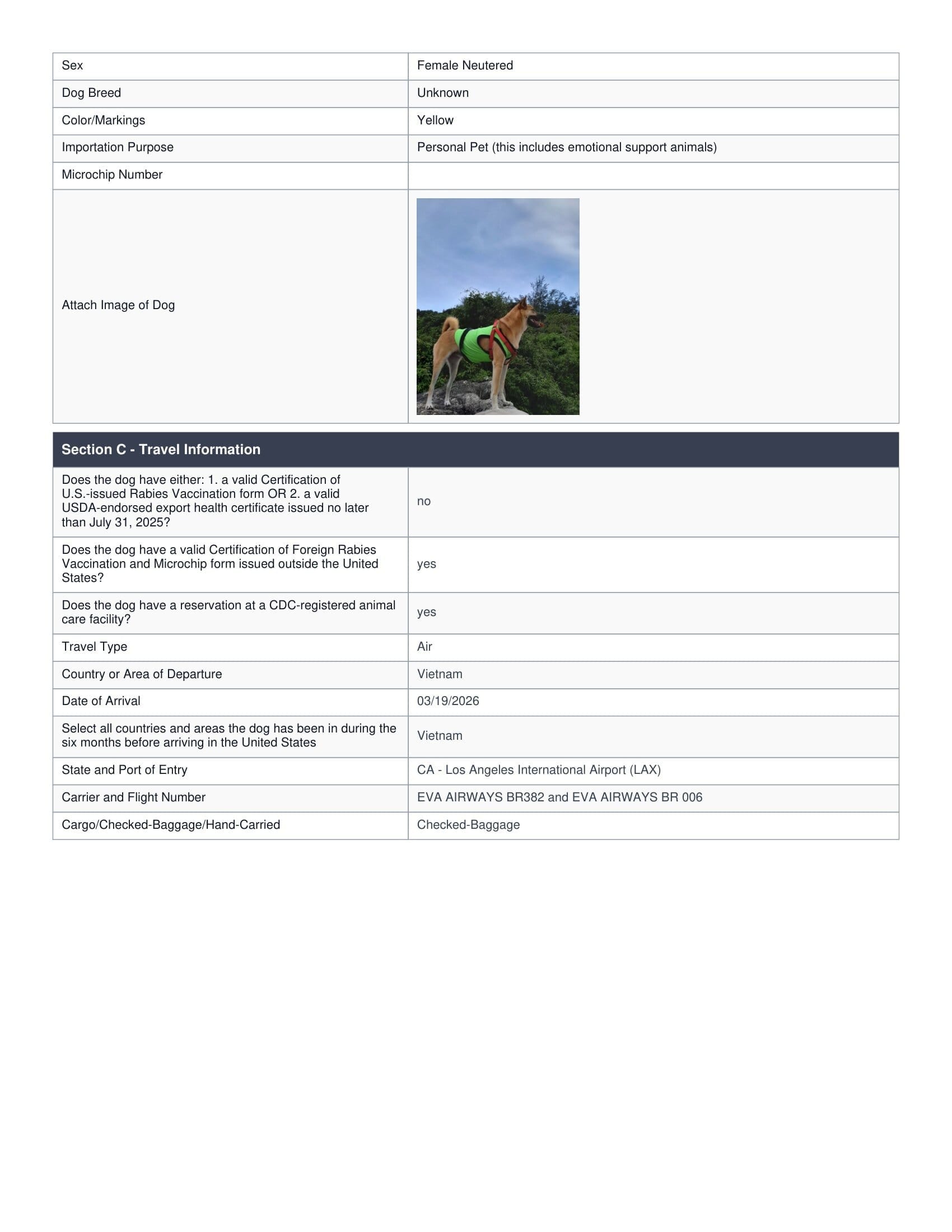
Step 4 — Enter travel details. Input the full flight itinerary, including each flight number, the departure date from Vietnam, and the date of arrival in the United States. Select the US arrival airport from the dropdown. Only airports with a CDC-registered ACF appear as options — confirm this matches the airport where your ACF reservation is held.
Step 5 — Declare supporting documentation. For the foreign-vaccinated high-risk country pathway (which applies to all dogs vaccinated in Vietnam), the form requires confirmation that: the Certification of Foreign Rabies Vaccination and Microchip form has been completed and endorsed by an official government veterinarian; and a valid FAVN/RNATT titer result is on file. Select your target US entry airport. The ACF reservation is made separately after you receive this barcode receipt — not required to submit this form.
Step 6 — Submit and complete email verification. After clicking submit, an automated email is sent to the address you provided. This email contains a verification link that must be clicked before the receipt is generated. If the verification email does not arrive within a few minutes, check spam or junk folders. If the email address was entered incorrectly, the form must be resubmitted.
Step 7 — Save and print the receipt. Once the verification link is clicked, the receipt is generated and emailed within approximately 15 minutes. Download it immediately and save the digital file as a backup. Print at least two physical copies on white paper with clear contrast. The barcode must be scannable — a blurred or low-contrast printout will cause delays at check-in and customs. The receipt must be presented to the airline at cargo acceptance and to CBP at the US port of entry.
Part 4: The Two Pathways for Dogs Departing Vietnam
All dogs arriving in the USA from Vietnam fall into one of two CDC pathways. The form fields, required supporting documents, and ACF process differ between them.
| Pathway | Applies To | Additional Documents Required Alongside CDC Form |
|---|---|---|
| Foreign-Vaccinated from High-Risk Country | Dog received its rabies vaccination in Vietnam or has been in Vietnam within the past 6 months | Certification of Foreign Rabies Vaccination & Microchip (vet signature + official government vet endorsement) + FAVN/RNATT titer ≥ 0.5 IU/mL + confirmed ACF reservation |
| US-Vaccinated, Returning via High-Risk Country | Dog received its rabies vaccination in the USA but has been residing in Vietnam in the past 6 months | Certification of US-issued Rabies Vaccination (USDA-accredited vet + USDA-endorsed before the dog left the USA) |
Note: USDA-endorsed export health certificates issued after 31 July 2025 are no longer accepted for re-entry under the US-vaccinated pathway. If your dog had an export health certificate from an earlier departure, confirm its validity before relying on it.
Part 5: Rules That Catch People Out
Timing of submission. The CDC form requires your planned flight itinerary and US arrival airport. In practice, it is submitted once the core documentation (titer, vaccination certificate, microchip) is finalised — typically 7–14 days before departure. The CDC form does not require a confirmed flight ticket to submit — you need the flight details (carrier, flight number, arrival date, US port of entry) but the CDC system does not verify booking confirmation. However, the ACF reservation is a separate step that typically requires a confirmed flight ticket when you contact the facility. After receiving the barcode receipt, email the ACF with the full document package (receipt + flight ticket + vaccination booklet + one face-and-body photo of the dog) to confirm the slot. A dental photo of your dog is not part of the CDC form submission — it is required by the ACF to verify the dog is at least 6 months old; include it in your ACF reservation email.
Email verification cannot be skipped. The barcode receipt is not generated until the verification link in the confirmation email is clicked. This step is automated, not manual. If the verification email is not actioned, no receipt exists, and the airline will not accept the dog for transport.
Separate form per dog. There is no multi-dog submission. A shipment of two dogs requires two separate form submissions, two separate verification emails, and two separate receipt barcodes.
Flight changes invalidate the receipt. The receipt is linked to the specific flight itinerary submitted. If the flight is rescheduled, cancelled, or changed after receipt issuance, a new submission is required. Do not assume the old receipt remains valid.
The receipt must be presented to the cargo carrier before flight day. Airlines operating the Vietnam–USA cargo route require sight of the CDC barcode receipt at the time of cargo booking acceptance — not just at the cargo drop-off on the day of departure. Build this into your timeline. See our airlines guide for carrier-specific cargo acceptance policies.
Part 6: What Happens After the Barcode Receipt Is Issued
The barcode receipt travels with the dog from Vietnam to the US port of entry. At the originating airport, it is presented to the cargo carrier to confirm the shipment is CDC-compliant. In transit hubs (Seoul Incheon, Taipei Taoyuan, Tokyo Narita depending on the routing), the receipt stays with the Air Waybill documentation.
On arrival at the US airport, CBP scans the barcode and cross-references the dog’s details against the CDC record. The dog is then transferred to the ACF for examination and rabies revaccination. Dogs with a valid FAVN/RNATT titer on file are typically cleared within a few hours. Dogs without a valid titer begin a 28-day quarantine at the ACF. For the complete description of the arrival process, see our guide on what happens when your dog arrives at the US airport.
CDC Dog Import Form — FAQ
Is the CDC Dog Import Form free?
Yes. The form is submitted online through the official CDC portal at no cost — there is no government filing fee. The costs in a US dog import come later: the rabies titer test, the Animal Care Facility reservation, and airline freight.
Does every dog entering the United States need the CDC Dog Import Form?
Yes. Since the CDC overhaul of 1 August 2024, every dog entering the US needs a CDC Dog Import Form receipt, regardless of country of origin — including dogs returning to the US. Only the supporting documents differ between high-risk and low-risk countries.
How long does it take to receive the barcode receipt?
The receipt is emailed within about 15 minutes after you click the verification link in the confirmation email. The real lead time is preparing the prerequisite documents (titer result, endorsed vaccination form), not the form itself.
Do cats need the CDC Dog Import Form?
No. The form applies to dogs only. Cats have no CDC import form requirement and are not subject to the high-risk dog pathway.
Can I submit one form for two dogs?
No. Each dog requires a separate submission, a separate email verification, and its own barcode receipt. There is no multi-dog form.
What happens if my flight changes after I get the receipt?
The receipt is tied to the specific itinerary you submitted. If the flight is rescheduled, cancelled, or changed, you must submit a new form and obtain a new receipt — the old one is no longer valid.
Managing This as Part of a Full Relocation
At Daisy Pet, CDC form submission is coordinated as part of the full documentation package — we prepare the supporting Certification of Foreign Rabies Vaccination and Microchip form, coordinate the FAVN/RNATT titer at a CDC-approved laboratory, submit the CDC form to obtain the barcode receipt, and then use the receipt along with the flight ticket and pet documentation to complete the ACF email reservation. Owners do not need to navigate the CDC portal directly. The CDC form is one step in our end-to-end pet shipping from Vietnam to the USA service. For a cost breakdown of the full Vietnam–USA service, see our USA pet shipping cost guide 2026.
Last updated 15 Oct 2026
Compiled by our specialists from the regulations in force on the date above, for reference only. Rules may change after this date. Please verify with the competent authorities or contact us for the most accurate information.
Official sources cited in this guide
- survey.1cdp.cdc.govsurvey.1cdp.cdc.gov