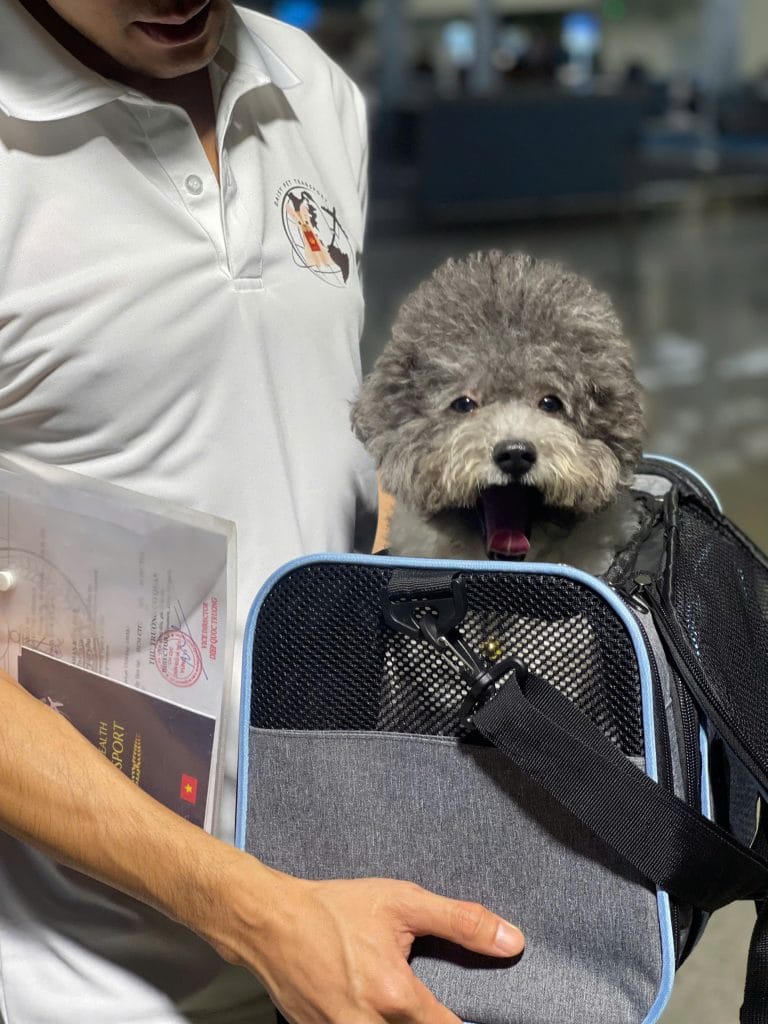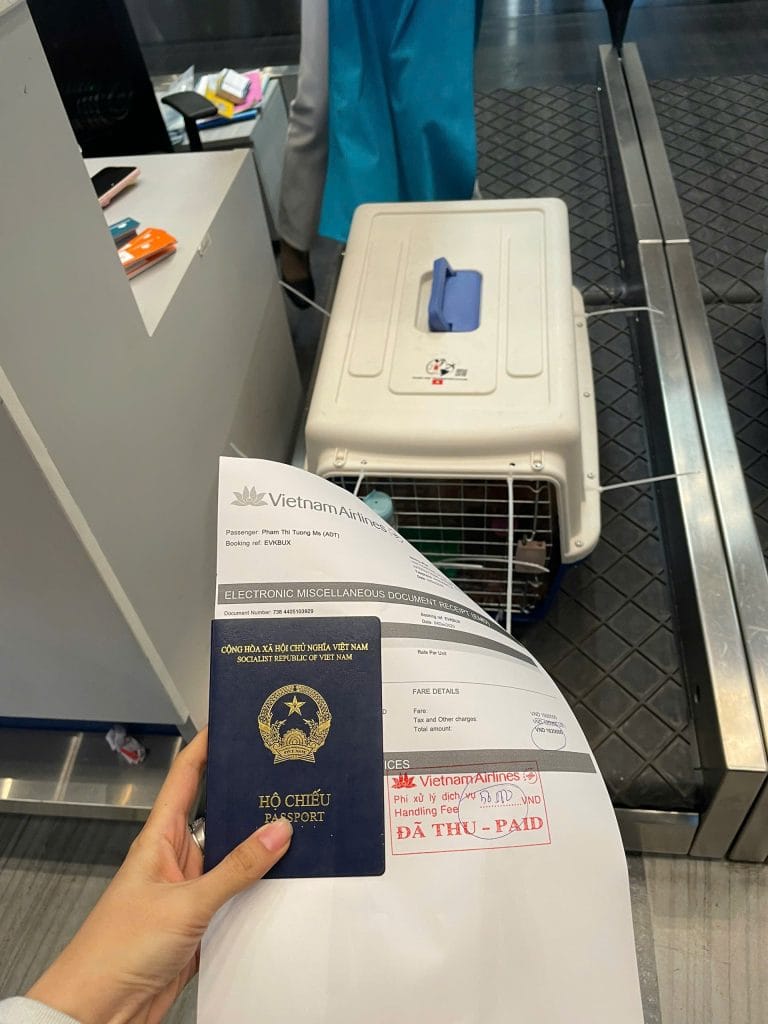
To bring a dog or cat from Vietnam to Hong Kong, you must meet Vietnam’s export rules, Hong Kong’s import rules and the airline’s rules for live animals. Hong Kong’s Agriculture, Fisheries and Conservation Department (AFCD) sets the hardest part: the pet flies as cargo and spends at least 120 days in quarantine. Vietnam requires a valid rabies vaccination and an export certificate, and the airline decides which crates and breeds it accepts.
Short Answer: Can You Bring a Pet from Vietnam to Hong Kong?
- Is it possible? Yes. AFCD issues a Special Permit once a quarantine space is confirmed for your pet.
- Can the pet fly with you? No. It flies as manifested cargo on its own air waybill. The cabin and checked baggage are not allowed.
- How long is the quarantine? At least 120 days. Pets from Vietnam have no way to shorten it.
- How long before the flight? AFCD estimates the wait for a government quarantine space at about 3 months for dogs and 6 months for cats.
- Is a rabies titer test needed? No titer test is needed for pets from Vietnam.
- Who is involved? AFCD and a quarantine centre in Hong Kong. In Vietnam: a vet, the animal health office at the departure airport and the airline.
Why Do Pets from Vietnam Spend 120 Days in Quarantine?
AFCD sorts every country into four groups by rabies risk. Vietnam is not on the lists for Group I, Group II or Group IIIA, so it falls into Group IIIB. Group IIIB carries the longest quarantine of the four. AFCD can extend that period if a pet shows signs of disease or its history is unclear.
- Group I and Group II: no quarantine if all conditions are met. Examples are Japan, the United Kingdom, Singapore and Taiwan.
- Group IIIA: at least 30 days. The group covers Mainland China, Hungary, Lithuania, Macao, Malaysia and Thailand.
- Group IIIB: at least 120 days. Every country not listed above, including Vietnam.
A pet living in Vietnam cannot use the 30-day route. Group IIIA rules require the rabies vaccination and the blood test to be done by a vet in a Group I, II or IIIA country, or in Hong Kong. AFCD publishes the current lists on its import of dogs and cats page.
What Does Your Pet Need Before You Apply?
Check these points before you pay for anything. If one is missing, AFCD will not approve the quarantine space.
- Age: at least 60 days old. Females must not be more than 4 weeks pregnant.
- Microchip: one that an ISO or AVID reader can scan. The number, date of birth and sex must appear on the vaccination record. See how a microchip for international travel links every document.
- Full vaccination: distemper, infectious hepatitis and parvovirus for dogs. Panleucopaenia and cat flu for cats. The last dose must be given at least 14 days and no more than 1 year before the pet arrives.
- Rabies vaccination: required by Vietnam to issue the export certificate. Daisy schedules a first shot at least 30 days before the flight.
- Breed: Hong Kong bans some dogs and limits two cat breeds. Details are below.
What Counts as “Full Vaccination”?
AFCD’s guideline G122 sets the schedule for dogs and cats entering quarantine.
- First dose: at 8 weeks old or later.
- Second dose: 2 to 4 weeks after the first, when the pet is over 10 weeks old. If the gap runs past 4 weeks, the two-dose course starts again.
- Boosters: within 18 months of the previous dose, or sooner if your vet advises. A missed booster means the two-dose course starts again.
An adult pet on yearly boosters only needs its last dose to fall in the 14-day to 1-year window. Our guide to core vaccines for travelling pets explains what each vaccine covers.
Which Dogs and Cats Can Hong Kong Refuse?
- Banned dogs: the Pit Bull Terrier type (also called the American Staffordshire Terrier), Japanese Tosa, Dogo Argentino, Fila Brasileiro and any cross of these breeds.
- Staffordshire Bull Terrier: allowed, but you must send a statutory declaration of the breed with the application.
- Bengal cats: allowed only with papers showing 5 or more generations of domestic ancestry.
- Savannah cats: the standard import terms do not cover them. Ask AFCD before you plan anything.
AFCD suggests asking it directly when a dog’s breed is unclear. Other countries’ lists are compared in our guide to dog breeds banned from import.
6 Steps to Bring a Pet from Vietnam to Hong Kong
The order matters. You apply to AFCD first, wait for a quarantine space, and only then book the flight.
- Month 1: vaccinations complete; application sent to AFCD.
- About 3 months (dog) or 6 months (cat): waiting for a quarantine space.
- Space offered: Special Permit issued; flight booked.
- Last 14 days: health certificate and Vietnam export documents.
- Flight day: cargo flight; AFCD notified 24 hours ahead.
- Day 1 to day 120: quarantine, then release.
Step 1 (Month 1): Complete the Vaccinations
Who: your vet in Vietnam.
The vet brings the core vaccines and the rabies vaccination up to date and records them with the microchip number. AFCD needs a copy of this record before it approves anything. If the rabies shot is the pet’s first, count 30 days from that date before any flight date. Our guide on rabies vaccine validity explains how the dates are counted.
Step 2 (Month 1): Apply to AFCD and Join the Quarantine Waiting List
Who: you, or a person in Hong Kong you authorise on Form UN110. Daisy’s partner agent in Hong Kong can act as that representative.
Send AFCD these documents by email (icsenquiry@afcd.gov.hk), in person or by post, as listed on its Group IIIB import page:
- Form AF240: the Special Permit application.
- Form PC100: the quarantine booking, with your first and second choice of centre.
- Vaccination record: a copy showing the microchip number.
- ID: a copy of your passport or Hong Kong ID.
When the documents are in order, AFCD gives you a reference number and puts the pet on the waiting list. AFCD runs two quarantine centres: the Kowloon Animal Management Centre in Kai Tak and the Hong Kong Animal Management Centre in Pokfulam. The waiting time is about 3 months for dogs and 6 months for cats, and it changes with demand.
A private option exists. The SPCA’s Licensed Quarantine Centre in Tsing Yi has 7 spaces for dogs and 14 for cats. You book it directly with your AFCD reference number. If the SPCA confirms a space, AFCD removes the pet from the government waiting list.
Step 3 (When a Space Is Offered): Get the Special Permit and Book the Flight
Who: AFCD issues the permit; you or your representative completes it.
AFCD emails you when a space is free and holds it for one week. It also gives an import period, and the pet must land within it. To finish the permit, you pay the fee and, for a government centre, sign Form UN111 on the pet’s health and vet care.
- Fee: HK$432 for the first animal and HK$102 for each extra animal on the same permit.
- Processing: at least 3 working days once everything is in order.
- Validity: 6 months, for one shipment only.
- Copies: AFCD sends two. Keep the white original for arrival. The airline may ask for the yellow copy at check-in.
Do not book the flight before the permit is issued. AFCD repeats this on its import pages. Our pet import permit guide compares how other countries time their permits.
Step 4 (Last 14 Days): Health Certificate and Vietnam Export Documents
Who: a vet, the animal health office at the departure airport, and Daisy.
- Hong Kong health certificate: issued no more than 14 days before export by a government vet or a registered vet. It must show the microchip number and be in English or Chinese, one per animal. AFCD recommends its own template, form VC-DC3B.
- Vietnam export certificate: the regional animal health office examines the pet, checks the rabies record and issues Form 13a. Read how the animal health certificate for pets leaving Vietnam works.
- Parasite treatment: Daisy treats every pet for internal and external parasites before it leaves Vietnam. Hong Kong does not require this; it is our standard.
Check every date and the microchip number before the vet signs. AFCD warns that a changed or incomplete certificate can lead to quarantine of up to 6 months.
Step 5 (Flight Day): Manifested Cargo and the 24-Hour Notice
Who: Daisy books the cargo space and checks the pet in; you or your representative notifies AFCD.
The pet must take the fastest and most direct route. The pet flies from Tan Son Nhat in Ho Chi Minh City, Noi Bai in Hanoi or Da Nang, depending on the flight the airline confirms. A pet from Da Nang sometimes travels to Ho Chi Minh City or Hanoi first. The crate must meet the IATA Live Animals Regulations, as explained in our IATA pet crate guide.
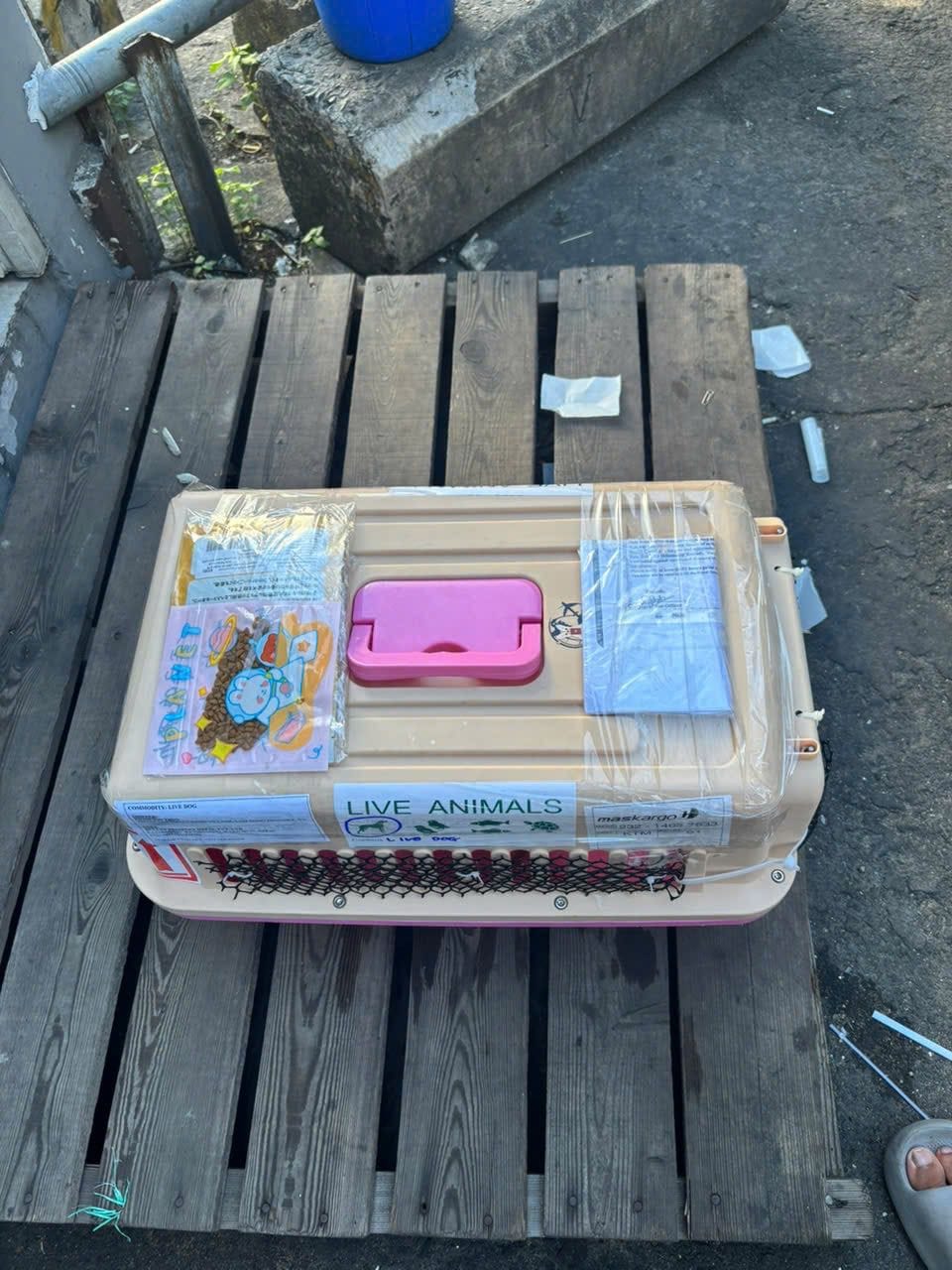
At least 24 hours before landing, during office hours, someone must notify AFCD’s airport office (+852 2182 1001, foii_airport@afcd.gov.hk). AFCD’s offices at the airport cargo terminals open 24 hours a day.
Step 6 (Arrival to Day 120): Clearance, Escort and Quarantine
Who: AFCD officers, your representative and the quarantine centre.
- Clearance: the officer checks the original permit, vaccination record and health certificate, and scans the microchip.
- Transfer: you arrange a vehicle to the quarantine centre. An AFCD officer escorts the pet on the way.
- Care inside: the government centres clean, feed dry food and keep the pets secure. They do not provide vet care, grooming or exercise.
- Vet: you name a private vet in Hong Kong when the pet is admitted, and you pay that vet’s fees.
- Visits: registered visitors may come daily from 10:00 to 12:00 and 14:00 to 16:00.
- Fees: HK$90 a day for a dog and HK$46 a day for a cat, paid in advance or monthly.
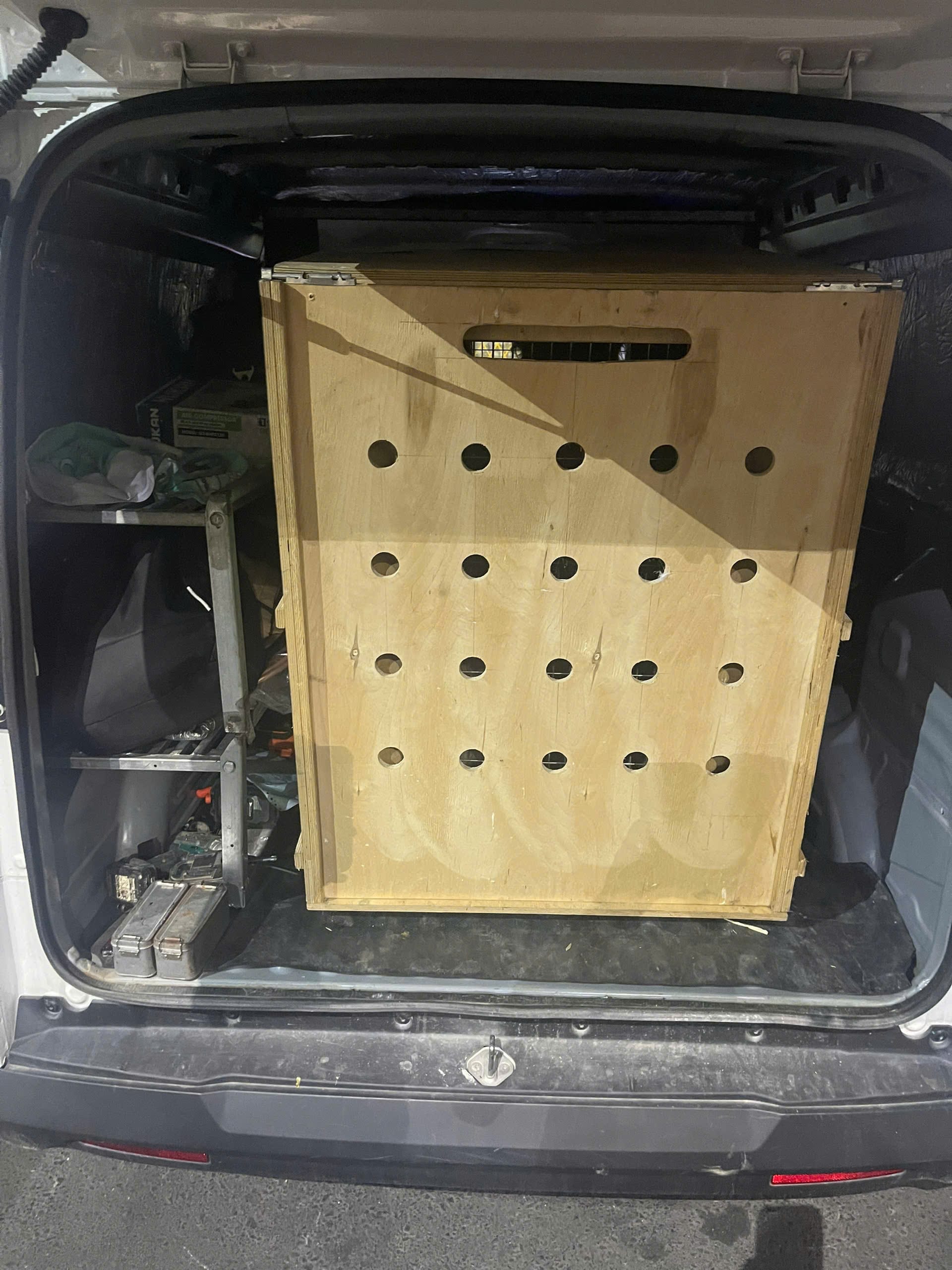
Dogs aged 5 months or more also need a Hong Kong dog licence. AFCD arranges a rabies vaccination and the licence on arrival, and implants a local microchip if the existing one does not meet Hong Kong’s standard. The owner pays for these. When the quarantine ends, the centre sends a letter with the release date.
How Much Does It Cost to Bring a Pet from Vietnam to Hong Kong?
The two largest parts are the cargo flight and the quarantine stay. At a government centre, the quarantine alone is about HK$10,800 for a dog and HK$5,520 for a cat. The permit, vet visits in quarantine and the dog licence are added on top. The full breakdown is in our cost guide for pet relocation to Hong Kong.
Special Situations
- A short stay: a pet coming for a few months spends most of that time in quarantine. A pet that leaves Hong Kong also needs a new permit to come back.
- A dog and a cat together: one permit can cover both, at HK$432 plus HK$102. The waiting lists are separate, so the cat usually waits longer.
- Transit through Hong Kong: a pet that changes planes in Hong Kong needs a transshipment permit, flies as cargo and may stay up to 24 hours. Our article on how pets are handled during layovers covers transit hubs.
- A pet that has lived abroad: different rules apply if the pet has lived at least 180 days in a Group I or Group II country. Ask AFCD which group applies before you plan the move.
FAQ: Bringing a Pet from Vietnam to Hong Kong
Can my pet fly in the cabin from Vietnam to Hong Kong?
No. AFCD requires pets from Vietnam to arrive as manifested cargo on their own air waybill. Excess baggage and hand-carried pets are not allowed, whatever the pet’s size.
Is there any way to shorten the 120-day quarantine?
No, not for a pet coming from Vietnam. The 30-day route is only for Group IIIA countries, and its vaccination and blood test must be done outside Vietnam.
Does Hong Kong require a rabies titer test for pets from Vietnam?
No. Hong Kong asks for a microchip, full core vaccination, a health certificate and a Special Permit. The rabies vaccination is still needed, because Vietnam requires it for the export certificate.
How early should I apply to AFCD?
Apply as soon as the vaccinations are up to date. AFCD estimates the wait for a government quarantine space at about 3 months for dogs and 6 months for cats.
Can I visit my pet during quarantine?
Yes. At the government centres, owners and registered representatives may visit daily from 10:00 to 12:00 and 14:00 to 16:00.
Can I bring a Pit Bull to Hong Kong?
No. Hong Kong bans the Pit Bull Terrier type, Japanese Tosa, Dogo Argentino, Fila Brasileiro and their crosses, for import and for transit.
For the AFCD permit and the full move, see how Daisy handles pet shipping from Vietnam to Hong Kong.
Last updated 18 Oct 2026
Compiled by our specialists from the regulations in force on the date above, for reference only. Rules may change after this date. Please verify with the competent authorities or contact us for the most accurate information.
Official sources cited in this guide
- afcd.gov.hkafcd.gov.hk