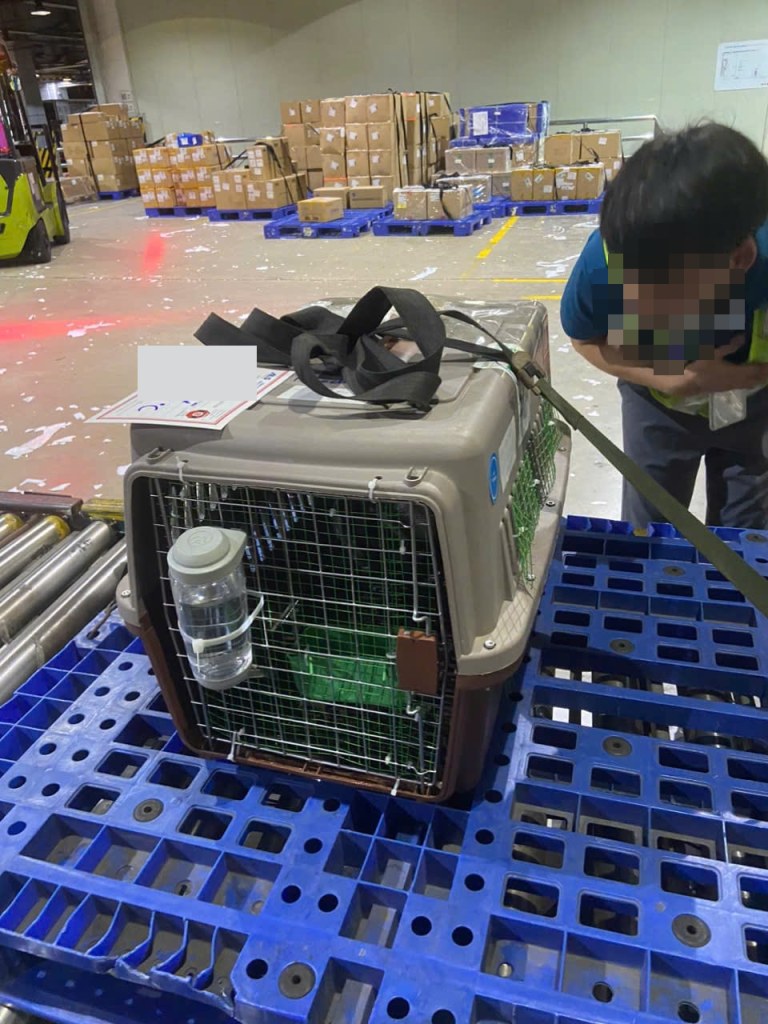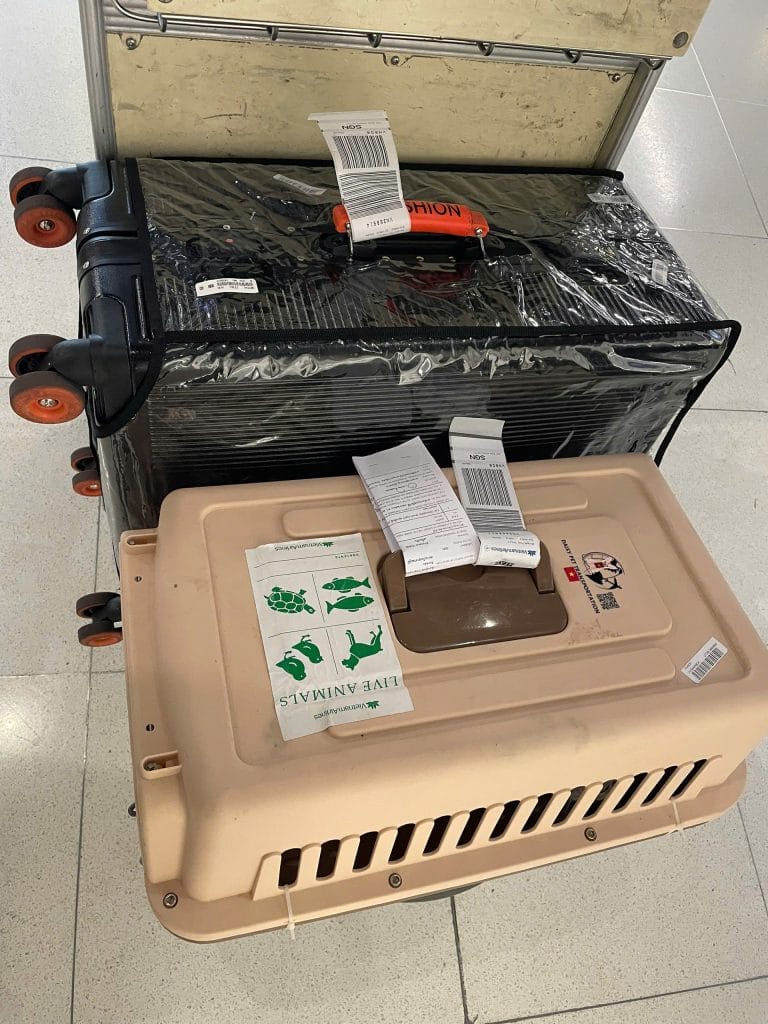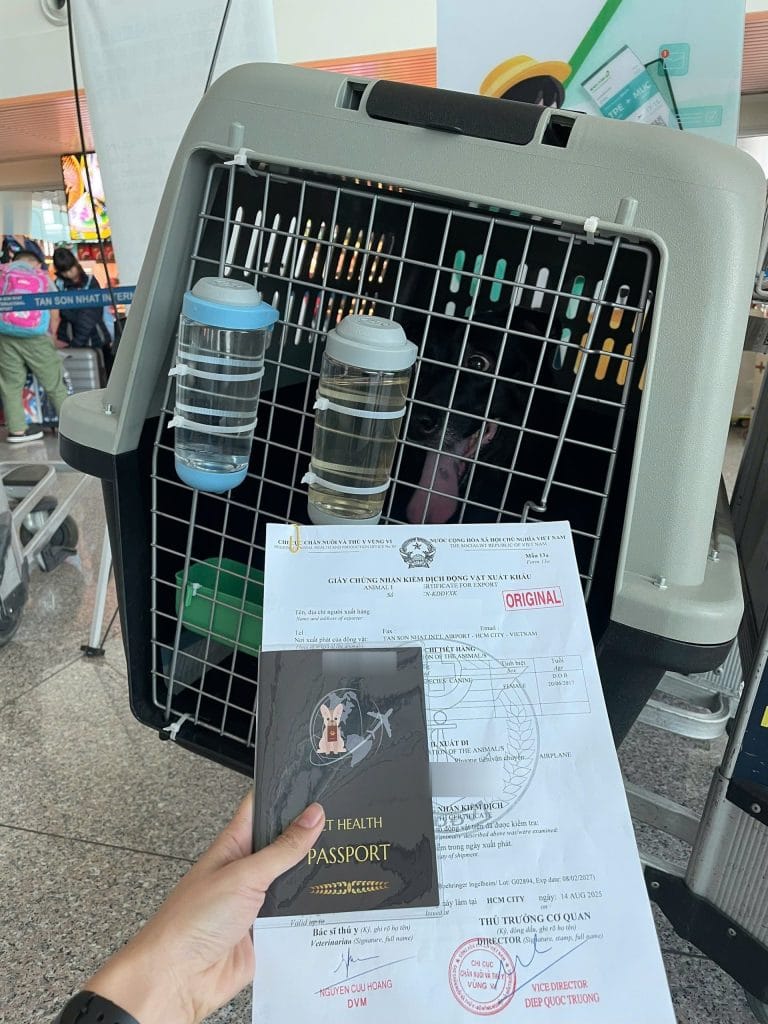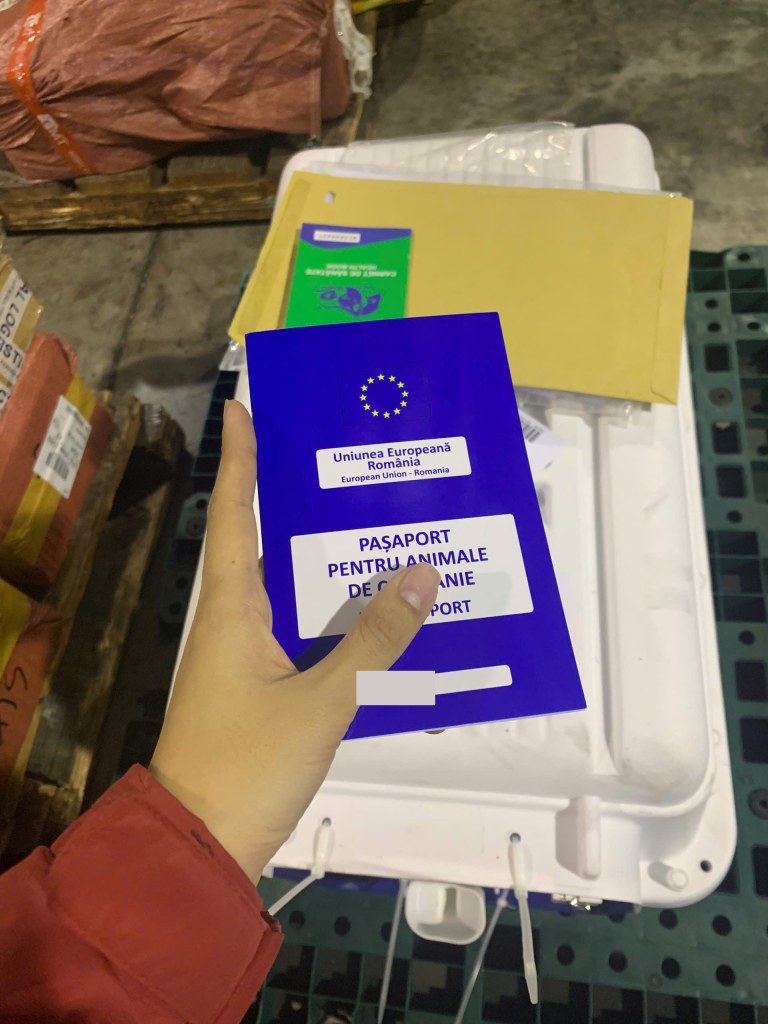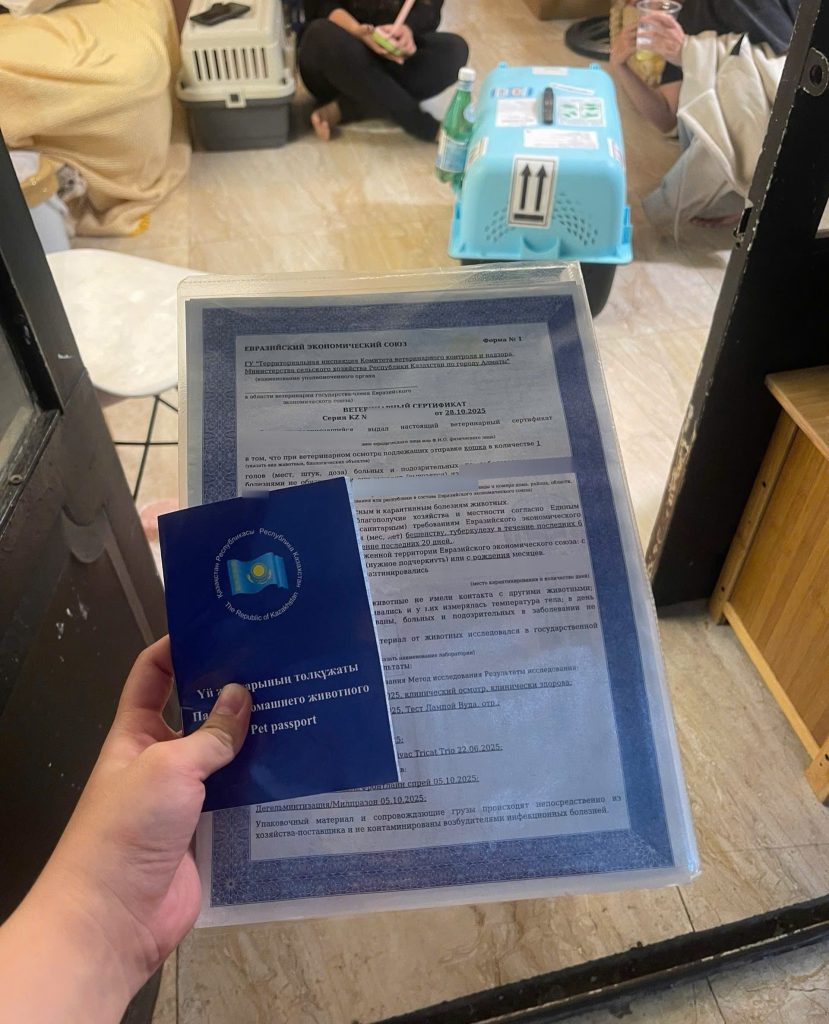
Bringing a dog or cat from Vietnam to the European Union involves crossing one of the strictest biosecurity borders in the world. Under the European Commission’s DG SANTE regulations — updated with Commission Delegated Regulation (EU) 2026/131, effective 22 April 2026 — the requirements are rigid, and the timeline is exceptionally long. Unlike some countries where you can prepare a pet for travel in a few weeks, importing a pet to the EU from Vietnam takes about 4 to 5 months of precise biological sequencing, counted from the rabies vaccination.
This guide breaks down the official EU requirements, explaining exactly what is required for non-commercial pet transport, highlighting common traps, and detailing why shortcuts often result in pets being turned away at the EU border. For step-by-step timing, see the EU pet shipping timeline. For costs, see Pet Relocation Cost to Europe 2026. For the most common questions, see our EU Pet Import FAQ.
Vietnam’s Classification: The “Unlisted Third Country” Status
The EU classifies all foreign countries based on rabies risk. Countries with low, controlled rabies risk are on the EU’s list of countries exempt from the titer test — these countries enjoy a simplified protocol. Vietnam is not on that list. It is an “Unlisted Third Country,” which imposes the strictest tier of EU import requirements:
- Pets must undergo a mandatory Rabies Antibody Titer Test (RNATT).
- The blood sample must be taken at least 90 days before the health certificate is issued. The count begins on the blood draw date — not the result date.
- There is no exemption for young puppies or kittens. The absolute minimum age for a pet to enter the EU from Vietnam is approximately 7 months.
The 6 Mandatory Pillars of EU Pet Import Law
1. ISO Microchip Validation (The Foundation)
Every pet entering the EU must be identified with a 15-digit ISO 11784/11785 compliant microchip. The microchip scanner at the border must read the exact 15-digit number printed on the health certificates — even a one-digit discrepancy results in entry refusal.
⚠️ Crucial Timing: The microchip must be implanted BEFORE or on the same day as the primary rabies vaccination. Any vaccination given before the microchip is implanted is completely invalid for EU travel.
2. Primary Rabies Vaccination
The pet must receive an inactivated or recombinant rabies vaccine after reaching at least 12 weeks (84 days) of age. The vaccine becomes valid for travel only after 21 days have passed. Booster vaccinations must be administered before the previous vaccination expires — missing this by even one day resets the entire titer test timeline.
3. The Rabies Titer Test (RNATT) Challenge
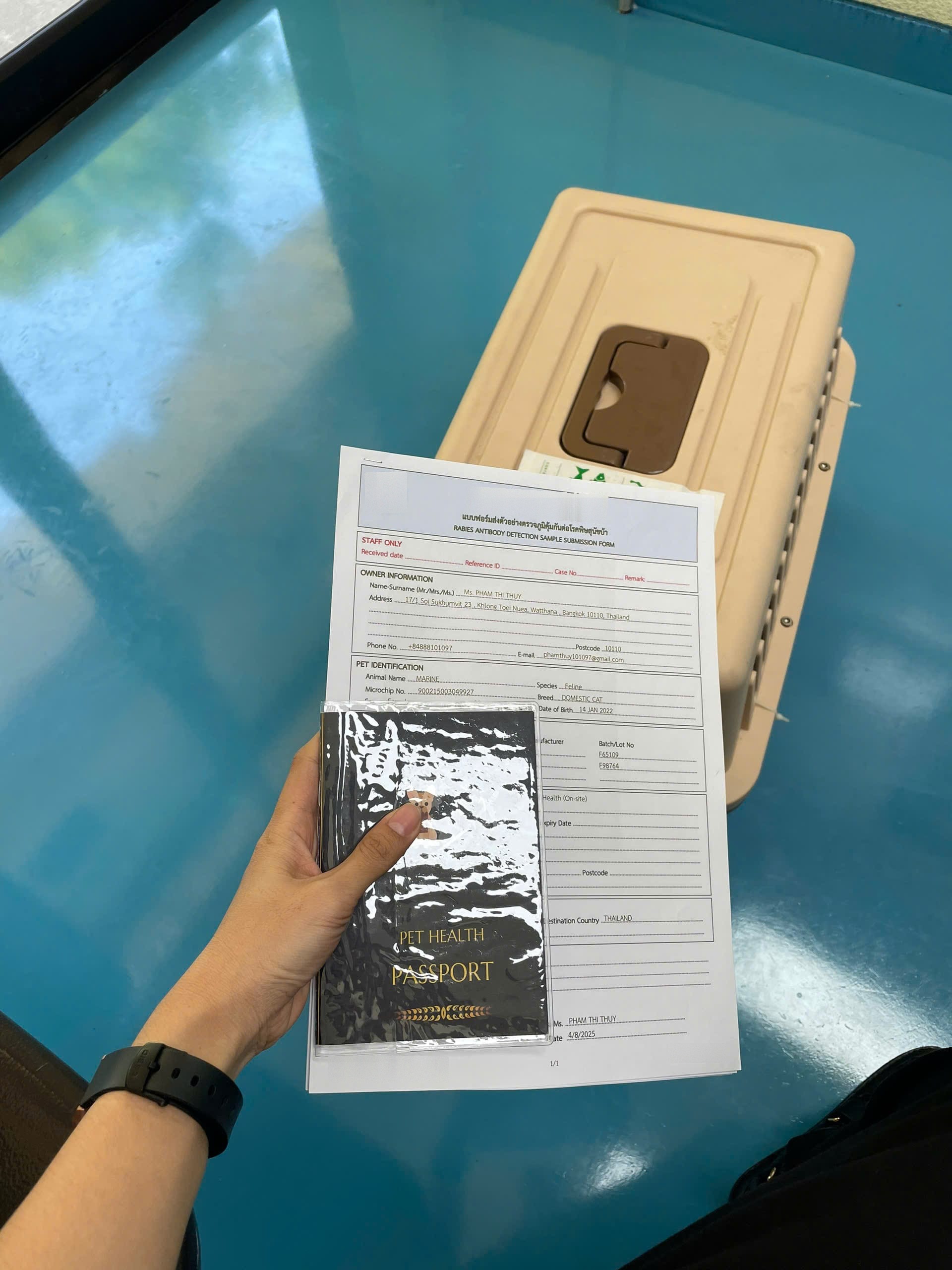
Because Vietnam is an unlisted country, an authorized veterinarian must draw a blood sample at least 30 days after the rabies vaccination. This serum must be sent to an EU-approved laboratory — there are no such labs in Vietnam, so the sample is shipped abroad to a laboratory on the EU’s designated list.
The test must show a neutralizing antibody level of at least 0.5 IU/ml. The 90-day count begins on the date the blood was drawn, not when results arrive, and runs to the day the health certificate is issued. If the test fails, revaccinate, wait 30 days, redraw — and restart the 90-day clock from the new blood draw date. In one real case, two Pomeranian puppies named Fuji and Yuki had their blood drawn on a single day and still cleared the 90-day wait with three weeks to spare — see the full case study.
4. The EU Health Certificate & Owner’s Declaration
The pet must be accompanied by an official Animal Health Certificate on the new model in Commission Implementing Regulation (EU) 2026/705, written in the language of the first EU country of entry plus English, valid for 10 days until the entry check, and endorsed by Vietnam’s Department of Animal Health (Cục Thú y). This must confirm the microchip number, vaccination details, RNATT blood draw date and result, and Echinococcus treatment where applicable.
Alongside the certificate, the owner must sign a declaration confirming the movement is “non-commercial” (not for sale, adoption, or transfer of ownership).
5. The 5-Day Rule — and Why It’s a Trap
For a movement to be considered “non-commercial,” the pet must travel within 5 days before or after the owner’s own flight. If you fly to Paris on Monday and your dog arrives on Sunday (6 days later), the movement no longer counts as non-commercial and falls under commercial rules, which are considerably more complex.
This rule has significant logistics implications when pets travel with a relocation service while owners travel separately. See the dedicated guide on the EU 5-Day Owner-Pet Travel Rule for full details on timing, authorized persons, and what to do if flights are disrupted.
6. Echinococcus Tapeworm Treatment (Dogs Only)
If your final destination is in Finland, Ireland, Malta, or Norway, your dog must receive an official tapeworm treatment containing Praziquantel exactly 24 to 120 hours (1 to 5 days) before the scheduled arrival time. This must be certified by a vet in the health certificate. If the route connects through one of these countries, time the treatment inside the same window. Cats are fully exempt from this requirement. For the full breakdown of accepted products and dosing windows across every major destination, see our guide to internal and external parasite treatment.
National Breed Bans: A Critical Pre-Planning Check
While EU biological laws are unified, breed restrictions are set by individual countries. There is no EU-wide breed ban. However:
- Germany: Federal law completely bans import of Pit Bull Terriers, American Staffordshire Terriers, Staffordshire Bull Terriers, and Bull Terriers. A Pit Bull flown from Vietnam to Frankfurt will be refused entry at the border — no exceptions.
- France: Classifies powerful dogs into Category 1 (banned — dogs resembling Pit Bulls or Mastiffs without official pedigree) and Category 2 (restricted with conditions — pedigree Am. Staff, Rottweiler, Tosa).
- Denmark: Bans 13 breeds including Pit Bull, Tosa, Am. Staff, and Dogo Argentino.
Research the specific breed laws of your destination country before beginning the vaccination and titer process. A banned breed cannot enter regardless of documentation completeness.
Does the EU Require Quarantine?
Unlike Japan or Australia, the European Union does not operate post-arrival quarantine detention facilities. Provided the pet arrives with all correct documentation — including a passing titer test and a verified 90-day waiting period — they are cleared at the Travellers’ Point of Entry (TPOE) to go home immediately.
Non-compliance can result in: temporary isolation pending resolution, refusal of entry and return to origin at the owner’s expense, or in severe cases, euthanasia. Under the EU checks rules that apply from 2026, documents and microchip are checked systematically for every pet arriving from Vietnam, and the costs of holding or returning a pet fall on the owner.
Key Updates: What Changed in April 2026
Commission Delegated Regulation (EU) 2026/131 has applied since 22 April 2026, replacing Regulation 576/2013. The practical requirements for pets from Vietnam remain the same — microchip, rabies vaccination, titer test, 90 days between the blood draw and the certificate — but the health certificate now follows the new model in Implementing Regulation (EU) 2026/705.
Have questions about a specific step? Our EU Pet Import FAQ covers the most common scenarios from Vietnam. For airlines and logistics, see the Airlines for Pet Transport to Europe guide. For full service, visit our Pet Shipping to Europe destination page.
Last updated 17 Oct 2026
Compiled by our specialists from the regulations in force on the date above, for reference only. Rules may change after this date. Please verify with the competent authorities or contact us for the most accurate information.
Official sources cited in this guide
- EU-approved laboratoryfood.ec.europa.eu