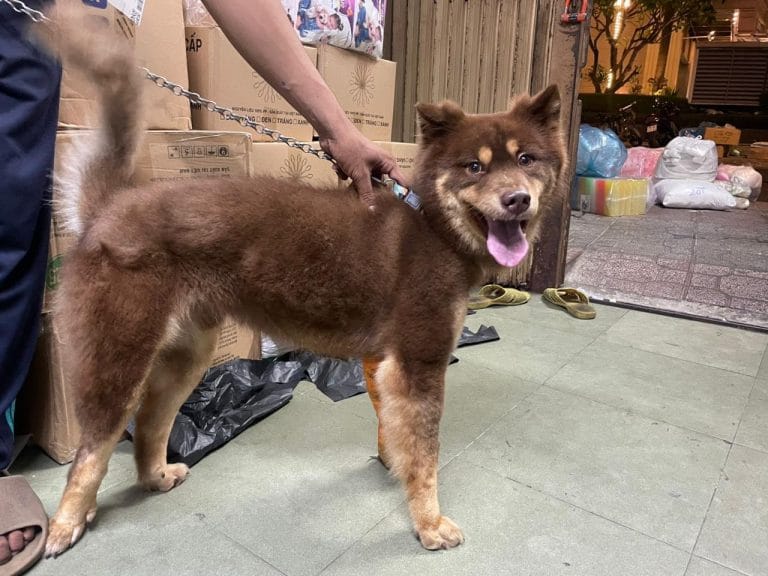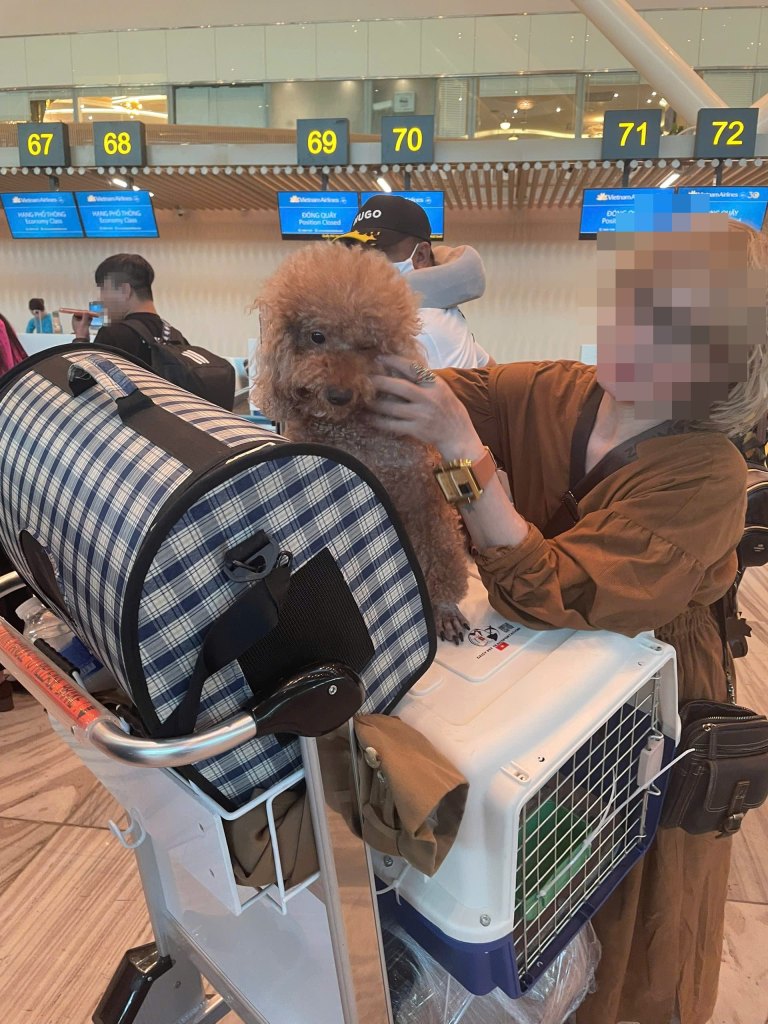
Relocating a pet to the United States is a demanding logistical operation that requires strict adherence to international biosecurity laws and meticulous timeline planning. This case study documents the real-life journey of Ki, a red apricot poodle, who traveled from Tan Son Nhat International Airport (SGN) in Ho Chi Minh City to Los Angeles International Airport (LAX). Handled end-to-end by Daisy Pet Transport, Ki’s relocation demonstrates how a challenging compliance framework can be executed seamlessly with professional oversight.
1. Initial Assessment and Timeline Planning
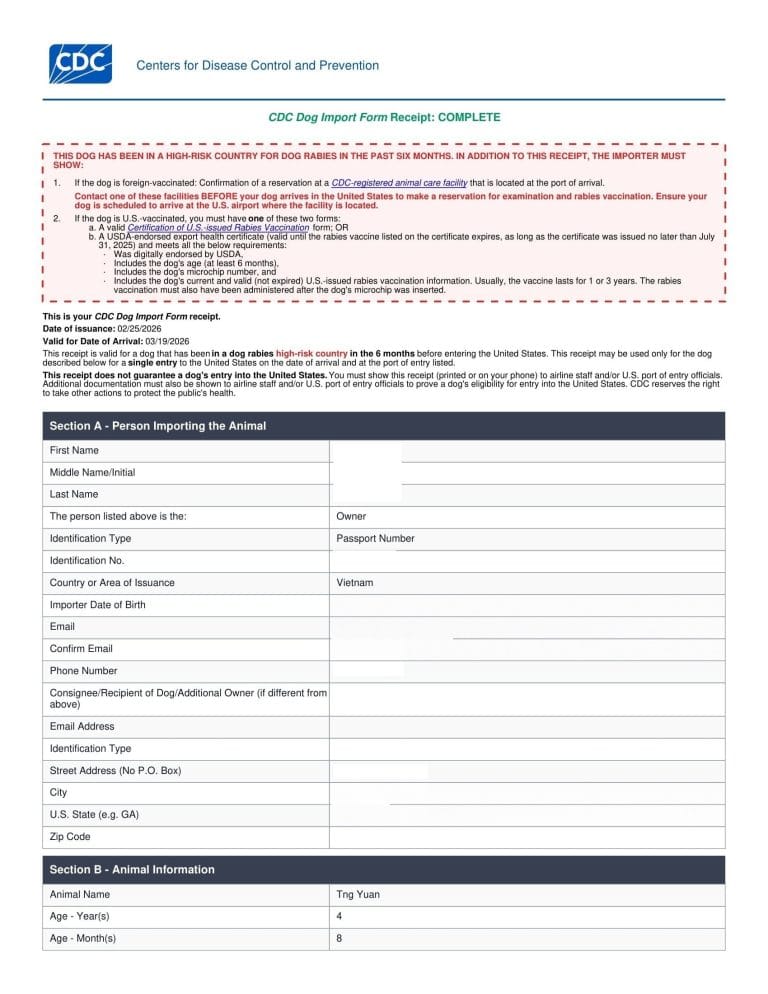
Before any booking or clinical work began, our team conducted a comprehensive assessment of Ki’s medical background, age, and vaccination history. Because the U.S. Centers for Disease Control and Prevention (CDC) classifies Vietnam as a high-risk rabies country, dogs originating from Vietnam cannot simply fly with a standard vet check. They must complete the CDC Dog Import Form — a free online declaration that generates a barcode receipt required for airline acceptance and CBP clearance.
To prevent biosecurity holds, we established a strict chronological timeline. Under CDC rules, the rabies vaccine must be active, and a blood titer test must prove sufficient antibodies. Any sequencing mistake—such as drawing blood too early after vaccination—would invalidate the documentation and push the travel date back by months. See our complete biosecurity overview in the Pet Transport to the United States guide.
2. Compliance Preparation: Microchip, Vaccination & RNATT Titer
Building a compliant file for Ki was the most critical part of the U.S. export process. Daisy Pet Transport coordinated the necessary clinical steps in Ho Chi Minh City:
- Verification of Ki’s ISO-compliant microchip (which must be implanted prior to rabies vaccination).
- Administration of an approved rabies vaccine, followed by a mandatory 30-day wait before the RNATT blood draw.
- Conducting the Rabies Neutralising Antibody Titer Test (RNATT) blood draw and shipping the serum sample to a CDC-approved US laboratory.
- Compiling the laboratory results and official vaccination history to submit the CDC Dog Import Form online.
The real bottleneck in this phase is the RNATT lab result, not the CDC form itself — blood samples from Vietnam are shipped to a CDC-approved US laboratory, and results typically take 3 to 5 weeks. Read about blood testing rules in our Rabies Titer Test (FAVN) Guide.
3. DAH Export Documentation in Vietnam
With Ki’s CDC Dog Import Form barcode receipt in hand, we shifted our focus to local export compliance. The Vietnamese government requires all departing animals to undergo veterinary inspection before leaving the country.
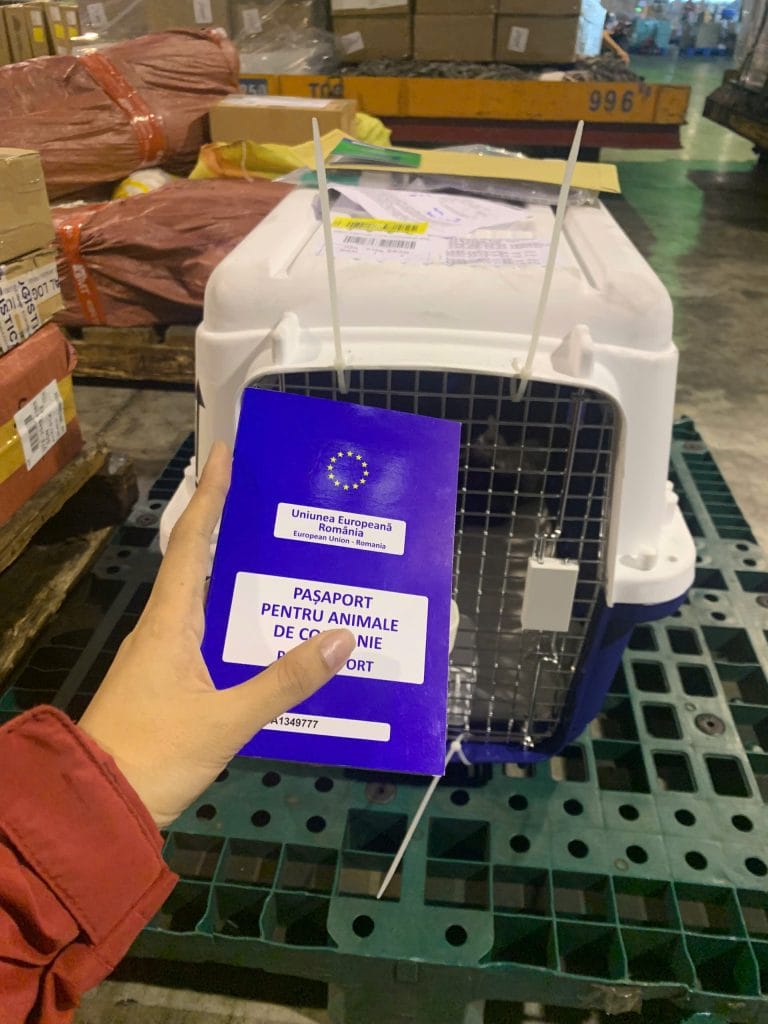
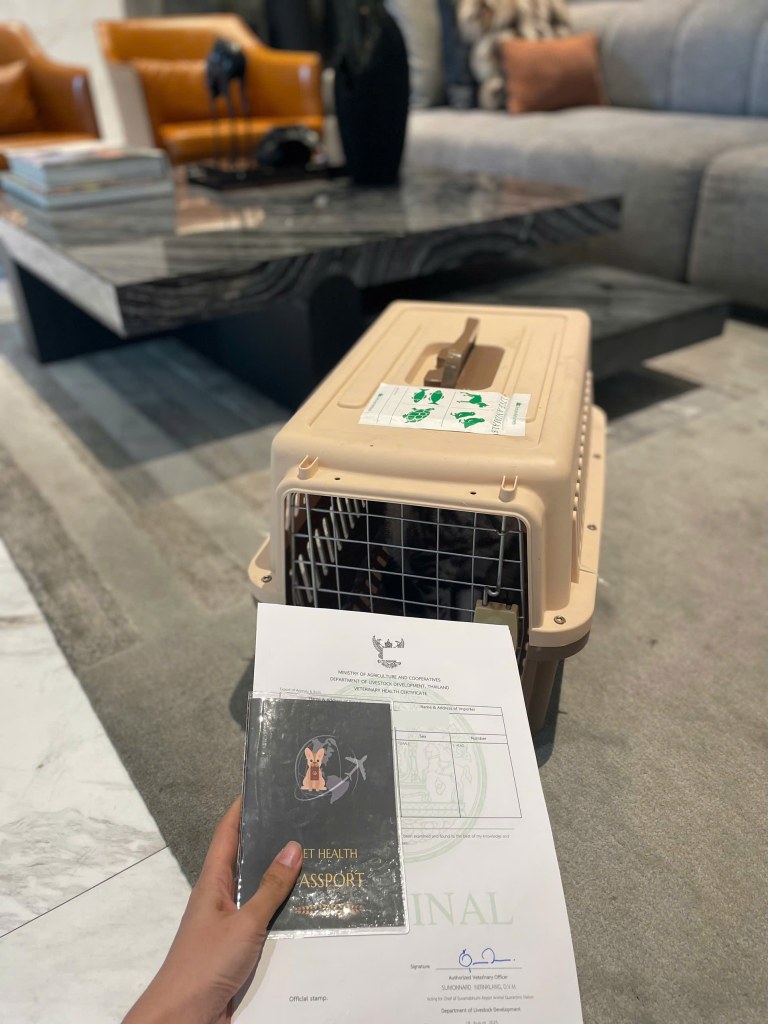
Daisy Pet Transport managed the entire government filing process, presenting Ki at the regional **Department of Animal Health (DAH)** checkpoint for physical microchip scanning and clinical assessment. We secured the official Animal Export Health Certificate, ensuring all microchip numbers, owner information, and vaccine batch details matched Ki’s CDC records identically. Any discrepancy here would result in the airline refusing boarding. See how to verify government papers in the Animal Health Certificate Guide.
4. IATA-Compliant Travel Crate Selection
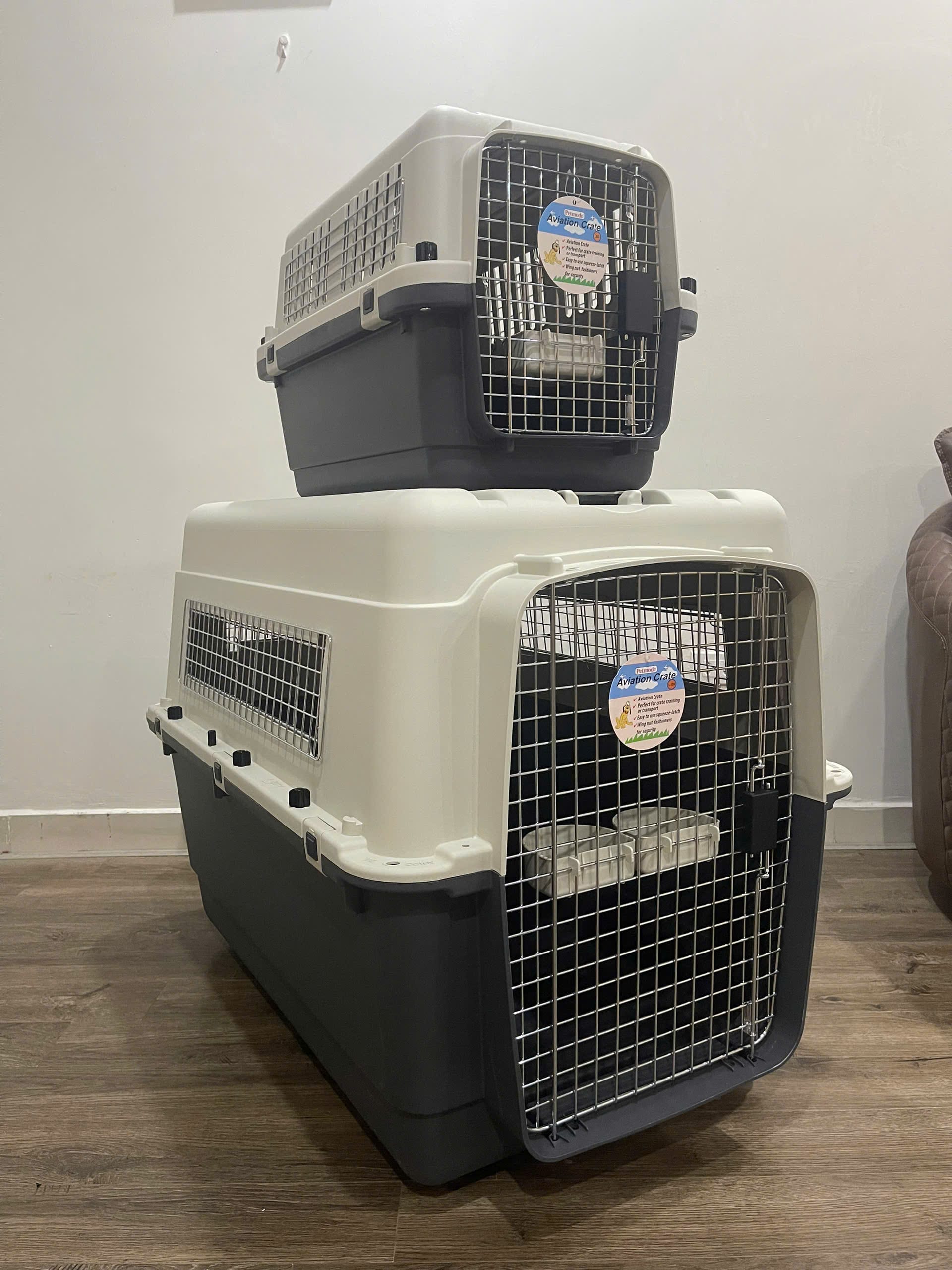
The crate is one of the most important pieces of a safe, comfortable journey. This isn’t a suggestion — it’s a hard requirement from the airline, and a crate that falls short of IATA standards gives the carrier grounds to refuse the shipment outright.
The core IATA CR1 standards we build every crate around:
- Enough room for the dog to stand fully upright, turn around, and lie down flat
- A rigid shell — hard plastic, wood, or metal — strong enough to hold up under handling
- Ventilation on multiple sides for consistent airflow
- Securely fitted food/water dishes and proper floor lining
For Ki, we measured her snout-to-tail length, standing height, and shoulder width against the IATA Live Animals Regulations (LAR) formula, then fitted the crate with a metal-bolted shell and double water dishes attached to the door. Read more about crate compliance in Is My Pet Crate Airline Approved?.
A note from the field: genuinely IATA-compliant crates are still hard to source reliably in Vietnam. Confirm you’re buying from a vendor who can show real compliance, not just a crate that looks the part — see our guide on telling a compliant crate from a standard one.
5. Airline Operations with ANA (All Nippon Airways)
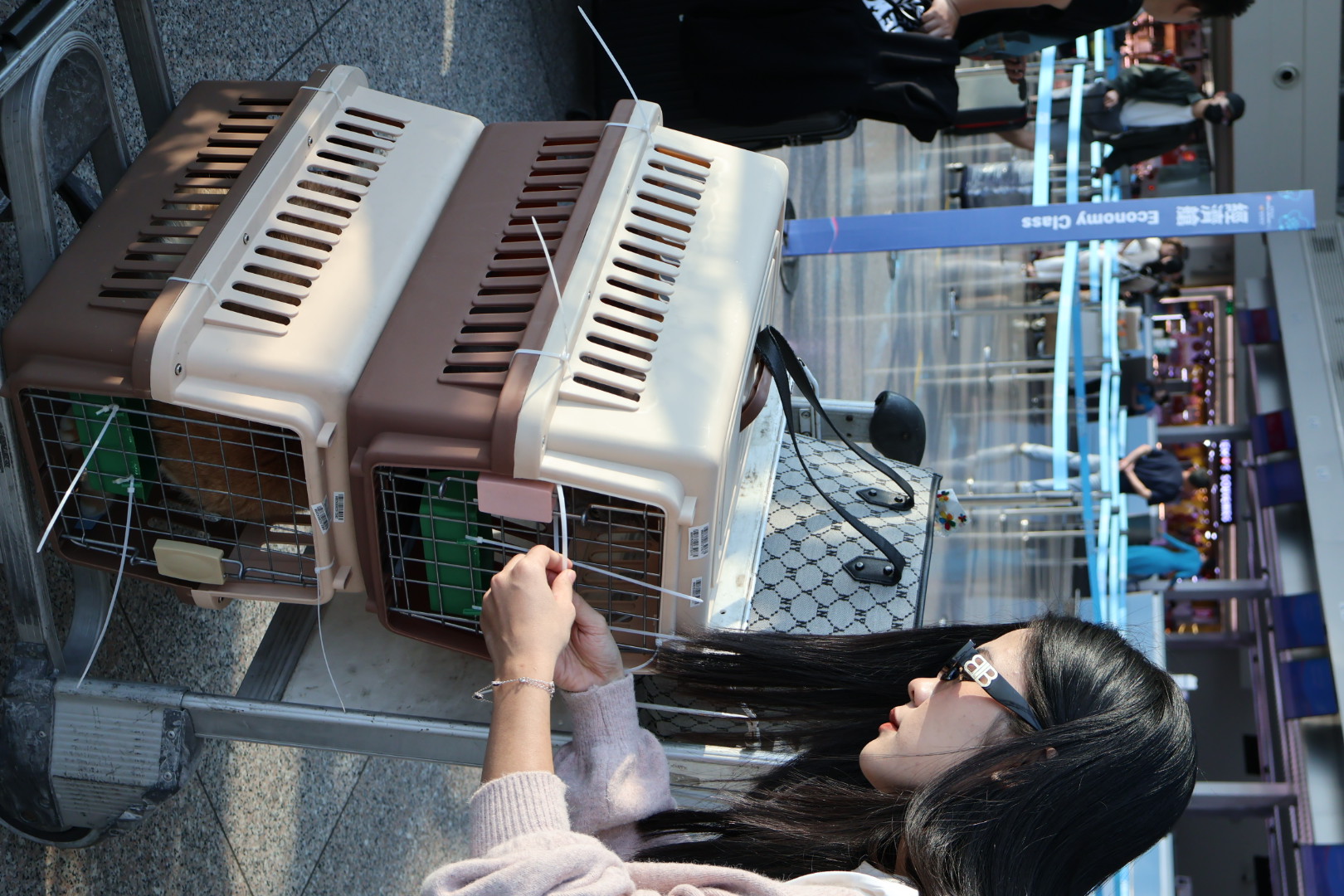
For the flight routing, we selected **ANA (All Nippon Airways)**. ANA enforces a highly reliable live animal transit protocol, transporting pets as accompanied checked baggage (AVIH) in temperature-controlled, pressurized cargo compartments. We coordinated directly with ANA’s cargo desk at Tan Son Nhat Airport (SGN) to book Ki’s slot, confirming the airline’s specific summer heat restrictions and check-in timeline.
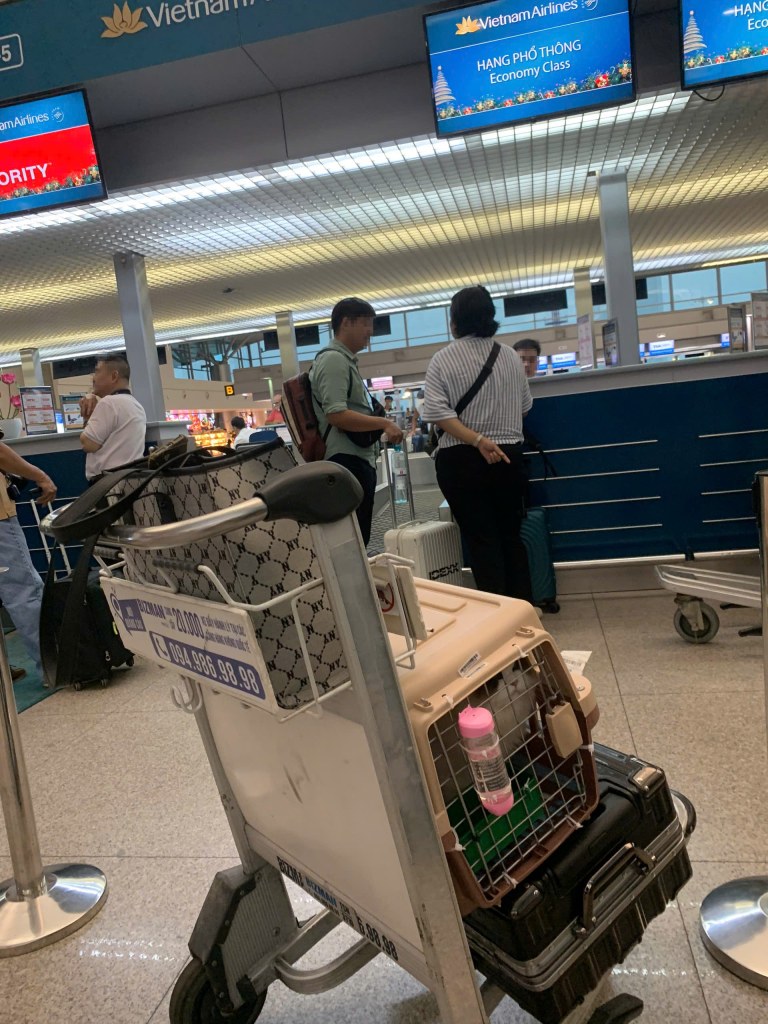
On departure day, Daisy Pet specialists assisted the family at the SGN check-in counter, managing the weigh-in, crate tagging, and live animal liability waivers. Once cleared, Ki was safely handed over to ANA’s trained ground handlers for transfer to the aircraft cargo hold.
6. Transit in Tokyo and Border Entry at LAX
Ki’s route included a brief layover at Tokyo Narita Airport. During transit, ANA ground crews monitored the live animal hold, ensuring ventilation and pressurized settings remained active. For biosecurity reasons, transit authorities do not allow owners to visit pets during the layover. ANA agents confirmed Ki’s stable condition prior to the final transpacific leg to Los Angeles.
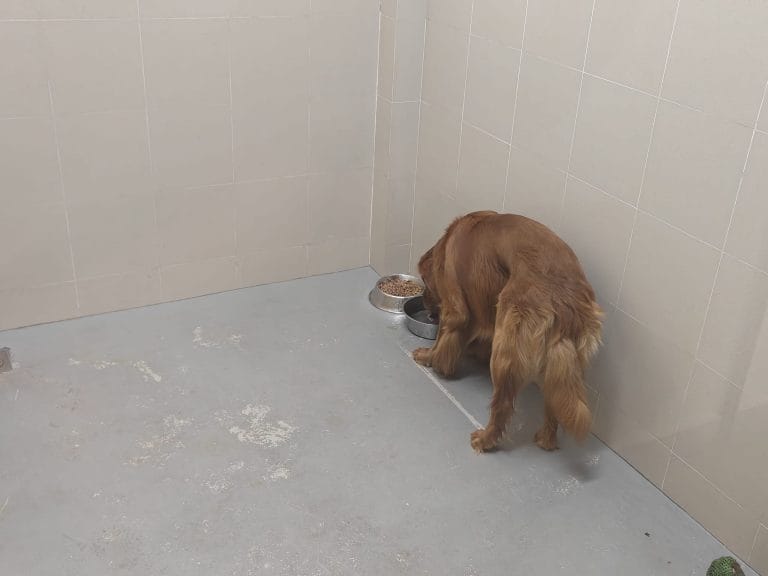
Upon landing at LAX, Ki was transferred to one of LAX’s two CDC-registered Animal Care Facilities (ACF), where a licensed veterinarian scanned her microchip, reviewed her CDC Dog Import Form barcode receipt and RNATT titer result, and administered the mandatory US-issued rabies booster on site. With a valid titer on file, Ki was cleared and released to her family the same day — no quarantine required. Learn more in our Pet Relocation Vietnam to USA Guide.
Conclusion
Ki’s successful relocation to Los Angeles proves that importing a dog from a high-risk rabies country is entirely viable when biosecurity laws, airline protocols, and cargo timelines are managed with precision. By planning ahead and utilizing professional relocation services, pet owners can avoid border complications and give their companions a safer, more comfortable journey.
Ki is not the only dog to clear this same LAX process: Devil, an 8-year-old dog, went through the same Animal Care Facility reservation a year later, plus a newly announced warehouse fee this route now carries.
Last updated 18 Oct 2026 · First published 20 Jan 2026