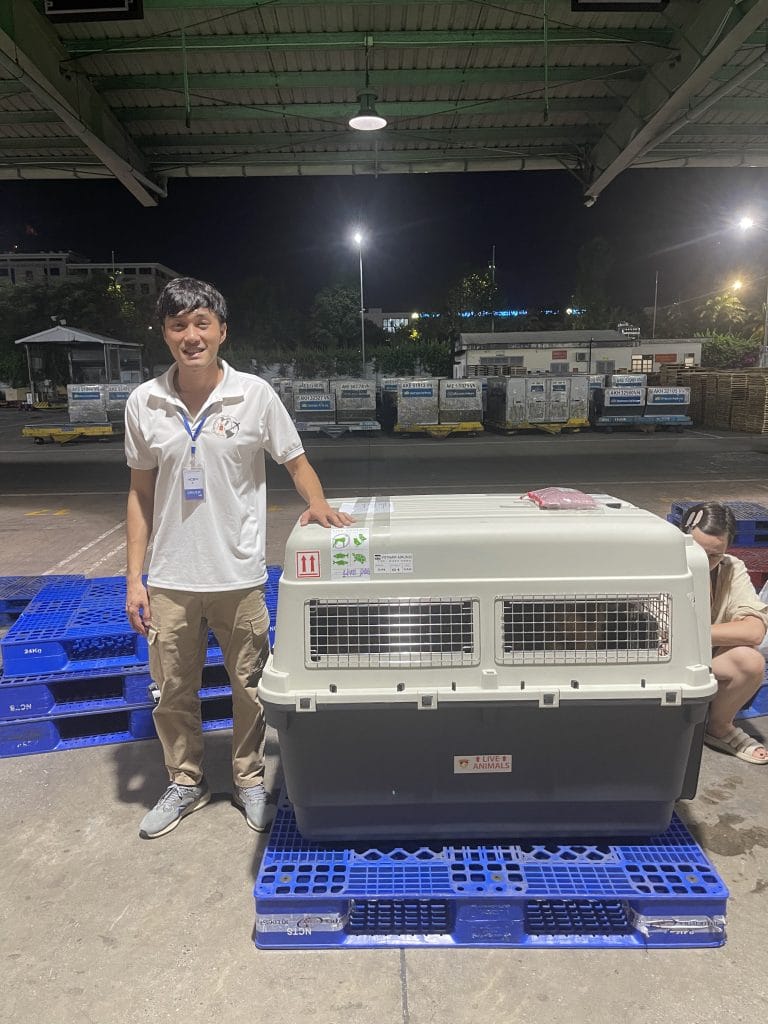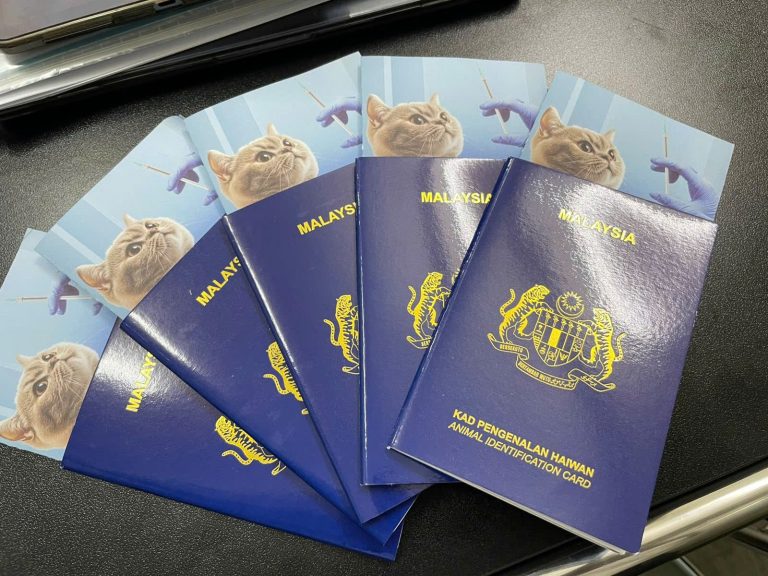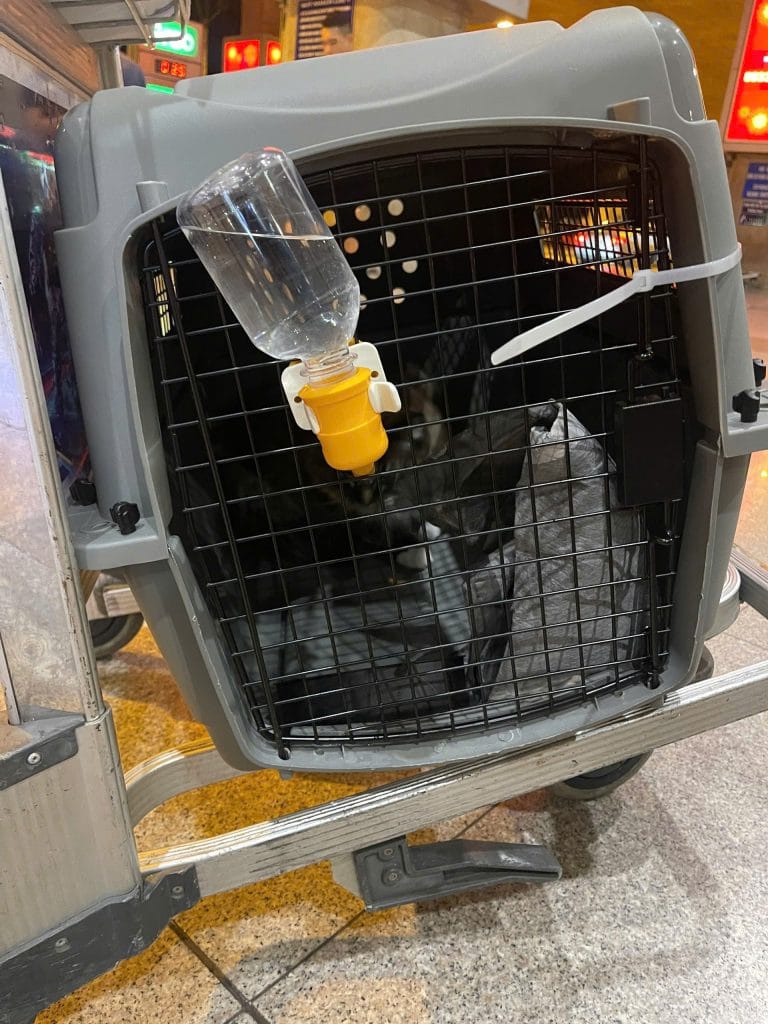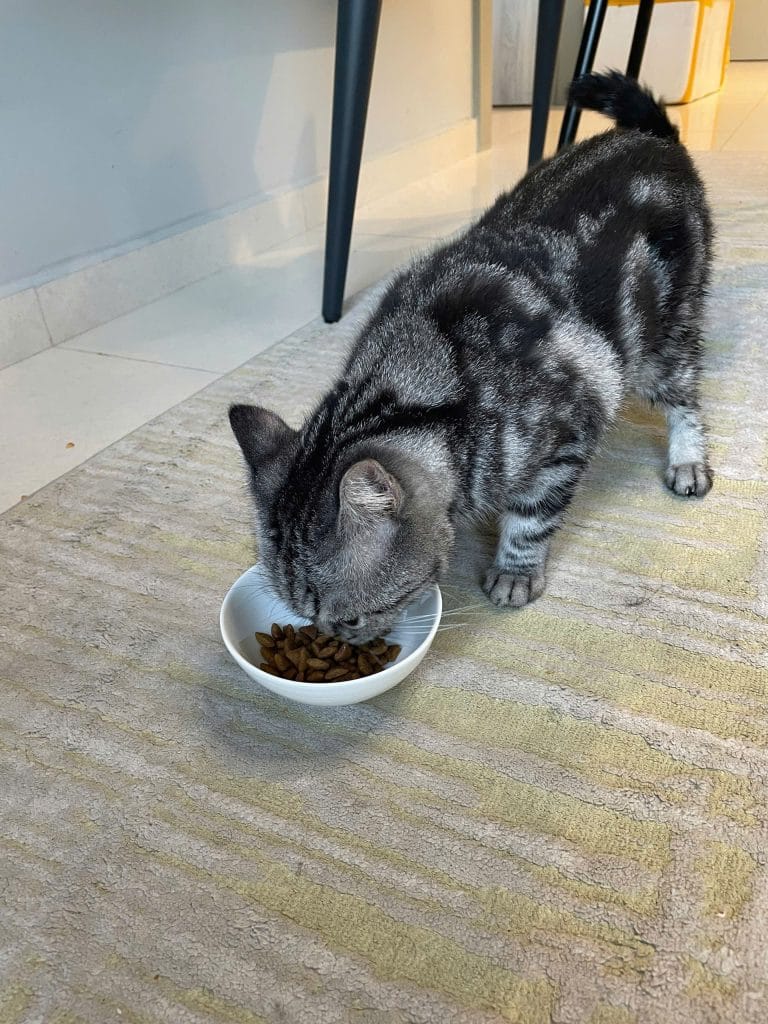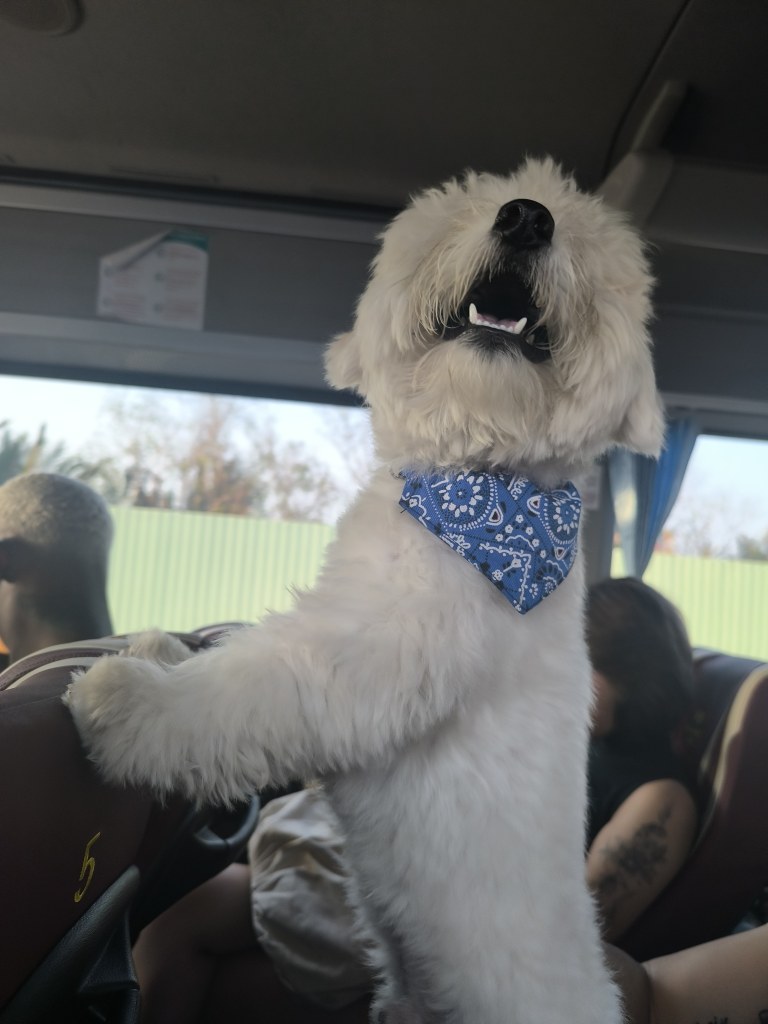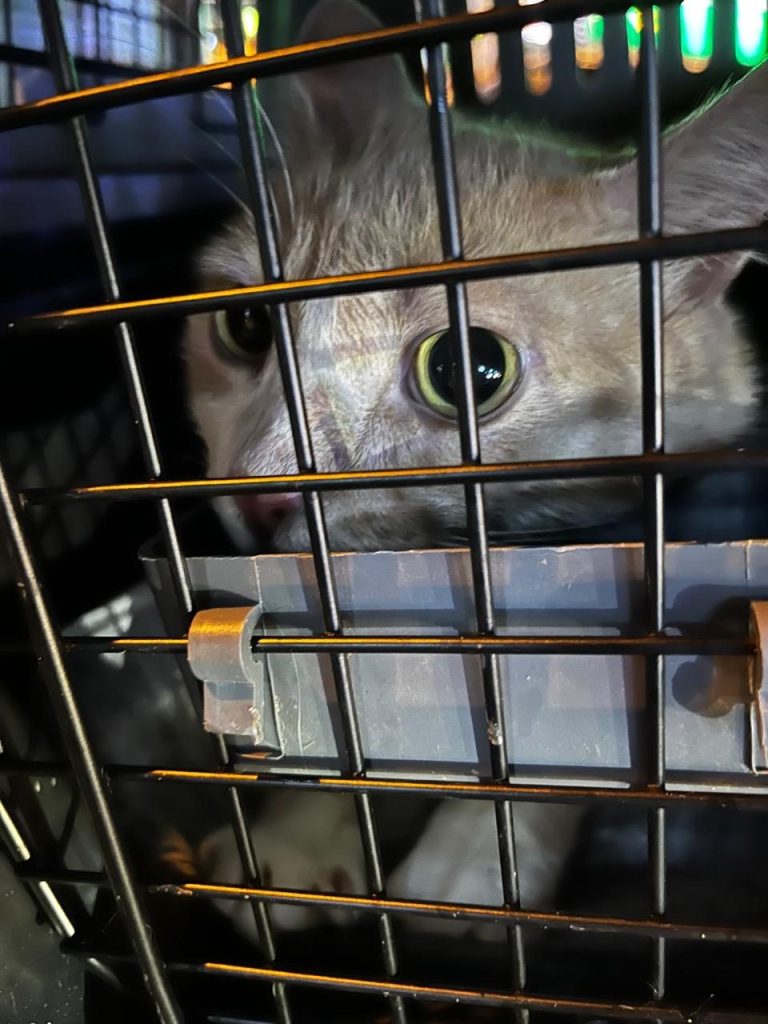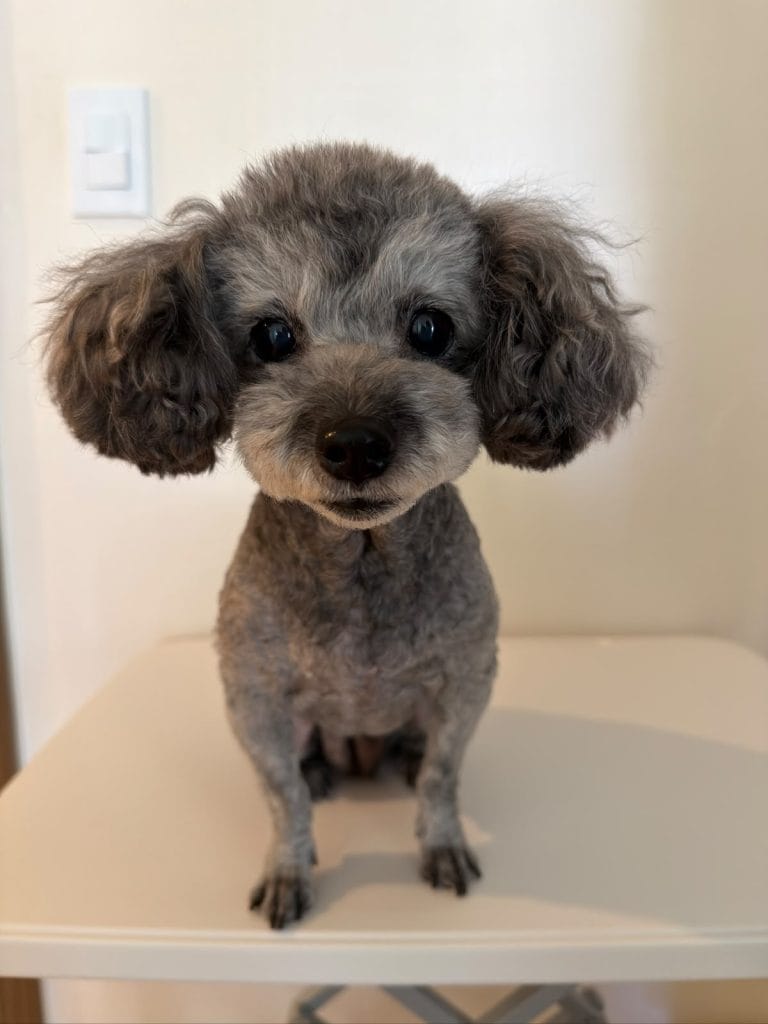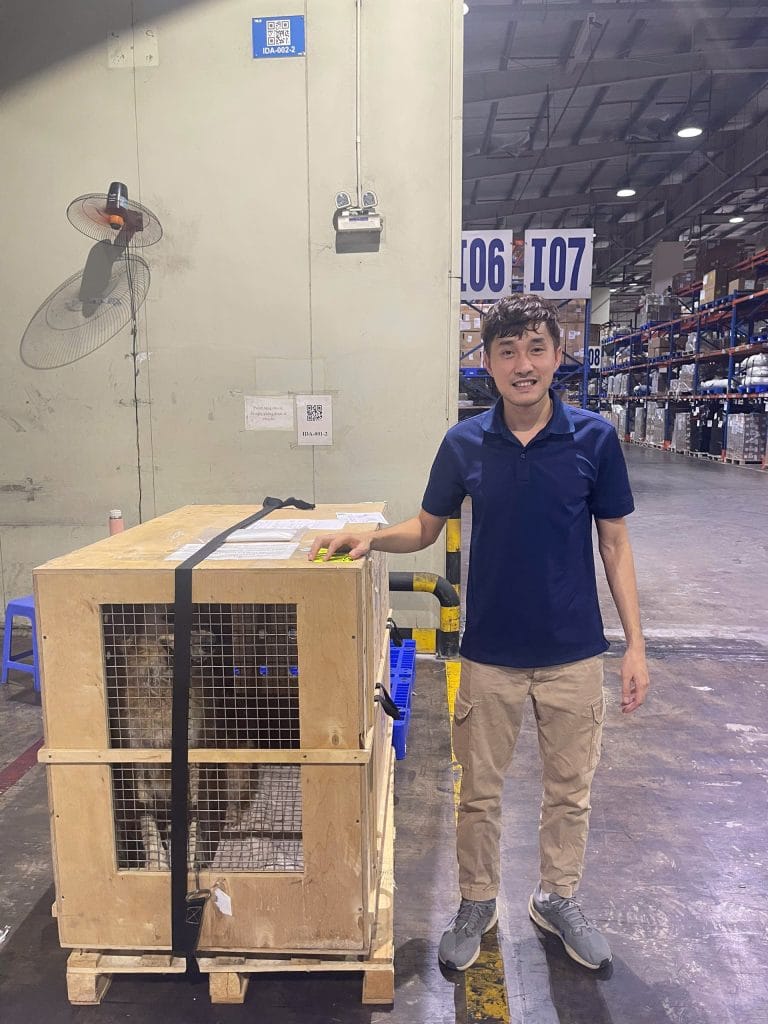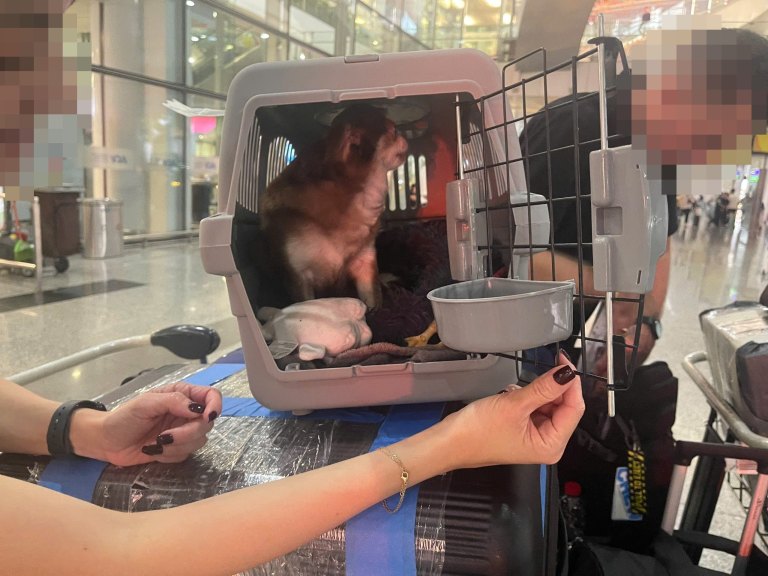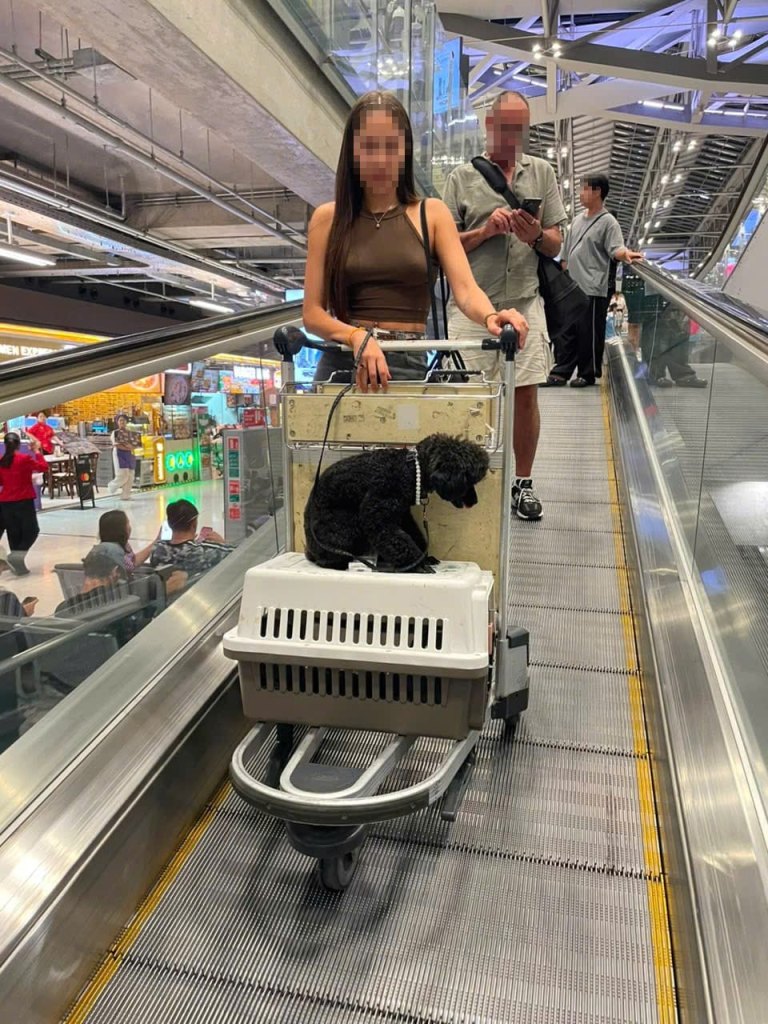
To bring a dog or cat from Thailand to Vietnam, you meet three sets of rules: Thailand’s export rules, Vietnam’s import rules and the airline’s conditions. Thailand issues an export permit and a health certificate at the airport quarantine station a few days before the flight. Vietnam checks the microchip and the rabies vaccination on arrival, and Vietnam Airlines is the only airline that flies pets direct.
Short answer: can you bring a pet from Thailand to Vietnam?
- Is it possible? Yes. Vietnam does not issue an import permit for one or two personal pets.
- What does Thailand require? An export permit (Form R.9) and a health certificate. Both come from the Department of Livestock Development (DLD) station at the airport your pet leaves from.
- Can the pet fly with you? Yes, on Vietnam Airlines. A pet of up to 6 kg with its bag flies in the cabin, and up to 32 kg with its crate in the hold. Heavier pets fly as cargo.
- How long does it take? The first rabies vaccine must be given more than 30 days before departure. A pet starting from zero needs about five to six weeks.
- Can the pet go back to Thailand later? Yes. It needs a new Thai import permit, applied for before the flight.
The rules for pets entering Vietnam from any country are in our Vietnam pet import requirements.
What must be ready before you book the flight?
Check these points first. One missing item can stop the trip at the Thai station or at check-in.
- Microchip. Use an ISO chip. The Thai station reads ISO and AVID chips only. The same number must appear on every document.
- Rabies vaccination. Thailand’s station asks for the first rabies vaccine more than 30 days before departure. Vietnam accepts it if it is no more than 12 months old on arrival. Thai vets record a three-year vaccine as valid for one year, so plan a booster within 12 months. See how rabies vaccine validity is counted.
- Age. The Thai station’s page for Vietnam sets a minimum of four months.
- Vaccination book. Each entry shows the date, the vaccine product, and the vet’s full name, licence number and signature. Bring the original and a copy.
- Breed and weight. Vietnam Airlines refuses a list of breeds, including snub-nosed cats such as Persians, Exotics, Himalayans and Burmese. Get the airline’s answer in writing before you pay for vet work.
Vietnam has no national breed ban. Our page on breed restrictions for Vietnam explains where the limits come from.
Not needed: a rabies titer test (RNATT), a Vietnamese import permit or quarantine in Vietnam. This applies to one or two personal pets. Three or more pets in one shipment follow Vietnam’s commercial import process, explained in shipping multiple pets to Vietnam.
How can your pet fly from Thailand to Vietnam?
Vietnam Airlines flies direct from Bangkok Suvarnabhumi (BKK) to Ho Chi Minh City, Hanoi and Da Nang, and, on this winter’s schedule, from Phuket to Ho Chi Minh City; check the Phuket flight when you book. Choose the way your pet flies first, because it decides who handles each step.
In the cabin with you
Vietnam Airlines takes a dog or cat in the cabin if pet and bag weigh 6 kg or less. The bag must fit within 35 × 30 × 20 cm. An economy cabin takes up to two pets per flight, so book at least 24 hours ahead, and earlier in busy periods. The cabin fee on Thailand routes is USD 300 per flight sector, before VAT (Vietnam Airlines: travelling with pets).
In the hold on your ticket
Vietnam Airlines carries pets as checked baggage if pet and crate weigh 32 kg or less. Thailand is in its Zone A, so the fee is USD 100 up to 9 kg, USD 150 from 9 to 16 kg and USD 250 from 16 to 32 kg, before VAT. The pet lands with you and is inspected at your arrival airport.
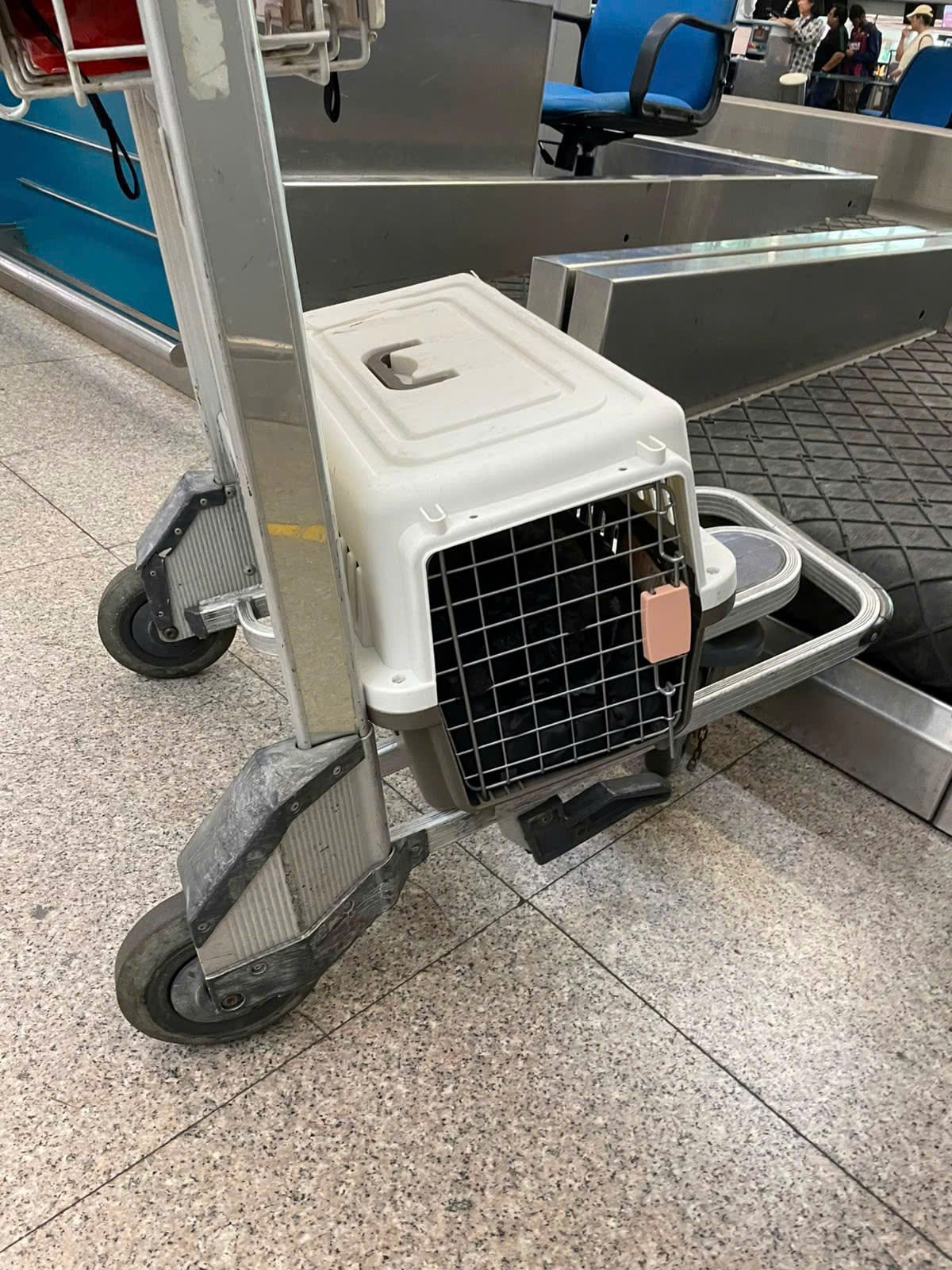
Thai Airways does not carry pets in the cabin. It also does not accept pets as checked baggage on A320 aircraft, and its Vietnam routes are scheduled with the A320 this winter, so check the aircraft type before you book. For a trip with your pet, plan on Vietnam Airlines.
As manifest cargo, without you
A pet over 32 kg, or a pet flying alone, travels as manifest cargo on its own air waybill. The pet arrives at the cargo terminal in Vietnam. There, an agent must file the customs declaration, because an individual owner cannot. Size the crate with our guide to an IATA-compliant pet crate.
Thai AirAsia, Thai Vietjet, Vietjet and Thai Lion Air do not carry pets on international flights. Don Mueang (DMK) has only these airlines to Vietnam, so pets leave from Suvarnabhumi. Compare the airlines that fly pets into Vietnam in our overview of airlines for pet imports.
From Chiang Mai, Phuket or to Da Nang
- Chiang Mai: no airline that carries pets flies direct to Vietnam. The pet goes to Bangkok first and leaves Thailand from Suvarnabhumi. The export papers are then issued in Bangkok.
- Phuket: the export papers come from the quarantine station at Phuket airport, which works by appointment.
- Da Nang: a pet on the direct Bangkok–Da Nang flight is inspected at Da Nang airport by Regional Animal Health Office No. 4.
If the pet clears in Ho Chi Minh City or Hanoi and continues inside Vietnam, it needs a domestic quarantine certificate. Options for that last leg are in our page on domestic pet transport within Vietnam.
By road through Laos
Some owners in Chiang Mai or Isan ask about driving through Laos. Laos requires a permit from its livestock department even for a pet only passing through. On Vietnam’s side, the border gates with an animal quarantine unit are Nam Can, Cha Lo, Lao Bao and Bo Y; Cau Treo has none. We have not handled a pet on this road, so check every border office before you plan it. The Thai–Cambodian land border has been closed since 23 June 2025.
6 steps to bring a pet from Thailand to Vietnam (about five weeks)
The plan assumes the pet has no microchip yet. If the chip and a valid rabies vaccination are in place, start at Step 2.
- Day 1: microchip and rabies vaccination.
- Days 2–14: book the flight and the bag or crate.
- Days 15–30: bag or crate training, and a check of every document.
- Days 30–33: exam at the DLD station in Thailand (Monday to Friday) for the export permit and health certificate. Form 3 goes to Vietnam about 48 hours before landing.
- Days 32–35: flight and landing, with inspection, Form 15a, duty and customs on arrival.
Step 1 (Day 1): microchip, then the rabies vaccine
Who: you and a vet clinic in Thailand.
The vet implants the chip first and then gives the rabies vaccine. Ask the vet to write the chip number in the vaccination book. Keep the dog’s or cat’s other core vaccinations up to date as well. If the pet may later return to Thailand or move on to a third country, tell us now. We then plan the next country’s rules from the first visit.
Step 2 (Days 2–14): book the flight and the bag or crate
Who: you, or Daisy Pet on your behalf.
- Cabin: add the pet to your Vietnam Airlines booking and use a soft bag within the size limit.
- Checked baggage: add the pet to your flight and choose a crate in which it can stand, turn and lie down.
- Cargo: the agent books space with the airline’s cargo service.
Start bag or crate training now, so the pet is calm in it by flight day. From Day 15 to Day 30, keep the training going and check every document: one chip number everywhere, and a rabies vaccination more than 30 days old on the day of the flight.
Step 3 (Days 30–33): Thai export permit and health certificate
Who: you, or the partner agent we work with in Thailand, at the DLD Animal Quarantine Station (AQS).
A government vet at the station examines the pet and issues two documents:
- Export permit (Form R.9): allows the pet to leave from that airport only. The DLD manual gives it 9 days, but a permit issued in August 2026 expired after 8, so count on 8 days.
- Veterinary health certificate: the DLD general form, valid for 10 days. Vietnam has no special form for Thailand.
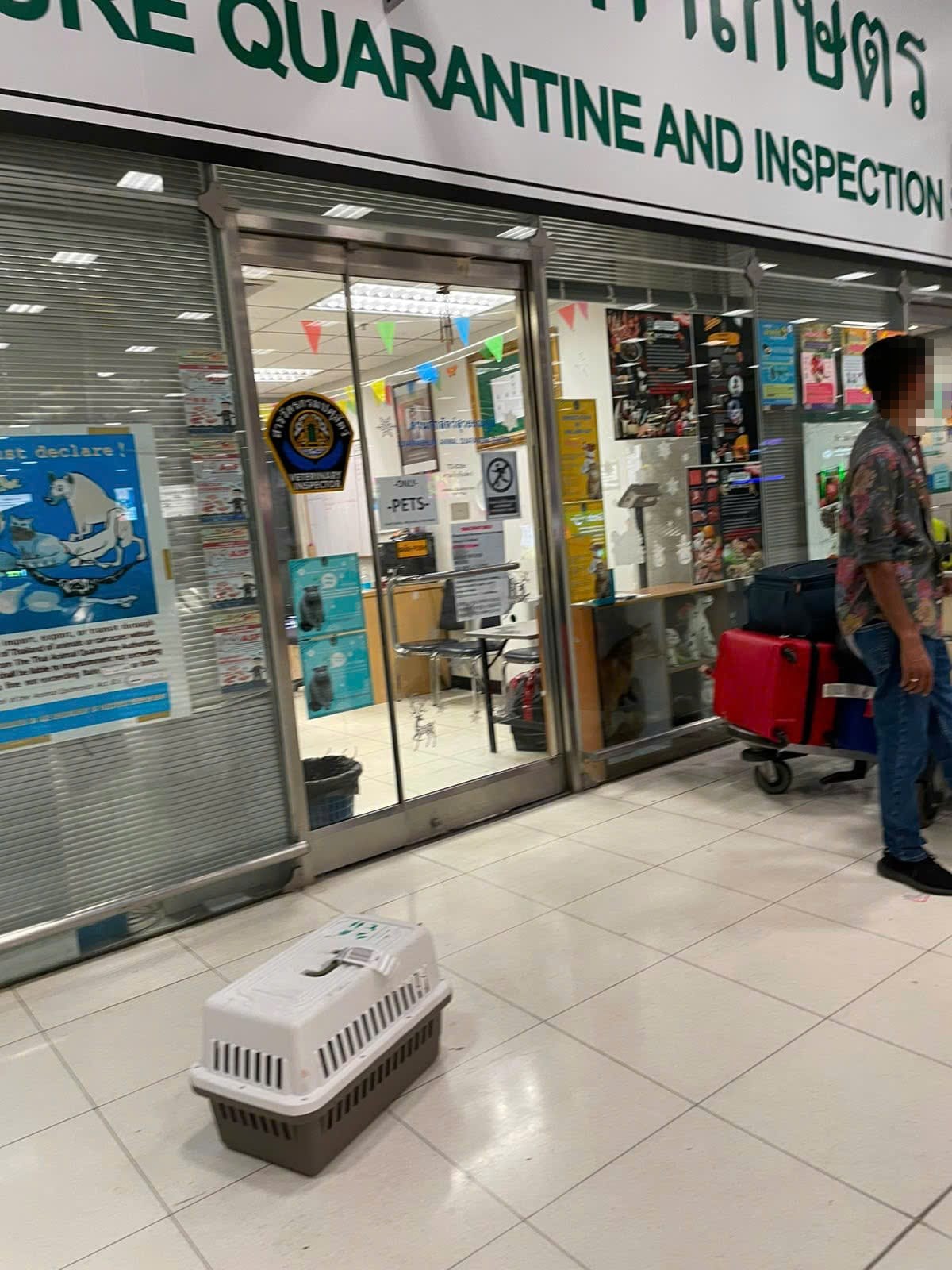
At Suvarnabhumi, the station in the CE-1 building of the Free Zone examines pets without an appointment, Monday to Friday, 08:30–12:00 and 13:00–15:30, and is closed on Thai public holidays. Its page says 1–5 days before departure; in practice the exam is usually done about two working days before the flight. The visit takes about 2–3 hours. Bring the pet, your passport and the vaccination book, each in original and copy. The fee is 250 baht per pet plus 10 baht per shipment, in cash (AQS Suvarnabhumi: export to Vietnam).
Someone else can go for you with an original letter of authorisation and copies of both passports. Bring the pet clean, because the station can refuse to examine a dirty pet. If the flight moves past the export permit’s validity (count on 8 days), the papers must be issued again. The e-Movement application is in our guide to the papers Thailand issues when a pet leaves, and the station at each departure airport is listed in our guide to pet export from Thailand.
Step 4 (Days 30–33): Form 3 in Vietnam
Who: Daisy Pet, or you if the pet flies with you.
Form 3 is the quarantine declaration. It goes to the quarantine station at your arrival airport about 48 hours before landing, with copies of the Thai documents. Filing about 48 hours ahead leaves time to fix a mistake. Form 3 asks to be inspected; it is not an import permit. See our guide to Vietnam’s Form 3.
Step 5 (Days 32–35, flight day): check-in at Suvarnabhumi
Who: you and the airline, or the agent for cargo.
The original export permit, health certificate and vaccination book travel with the pet. If the pet flies with you, keep them in your hand luggage. For cargo, they travel attached to the crate. A pet that arrives without the originals can be refused entry to Vietnam.
Step 6 (Days 32–35, on arrival): inspection, Form 15a, duty and customs
Who: the airport quarantine station, customs, and the agent for cargo.
Vietnam’s airport quarantine stations always have an officer on duty. The officer checks the original documents, scans the microchip and examines the pet. A pet that passes receives Form 15a, the import animal quarantine certificate, valid for 60 days.
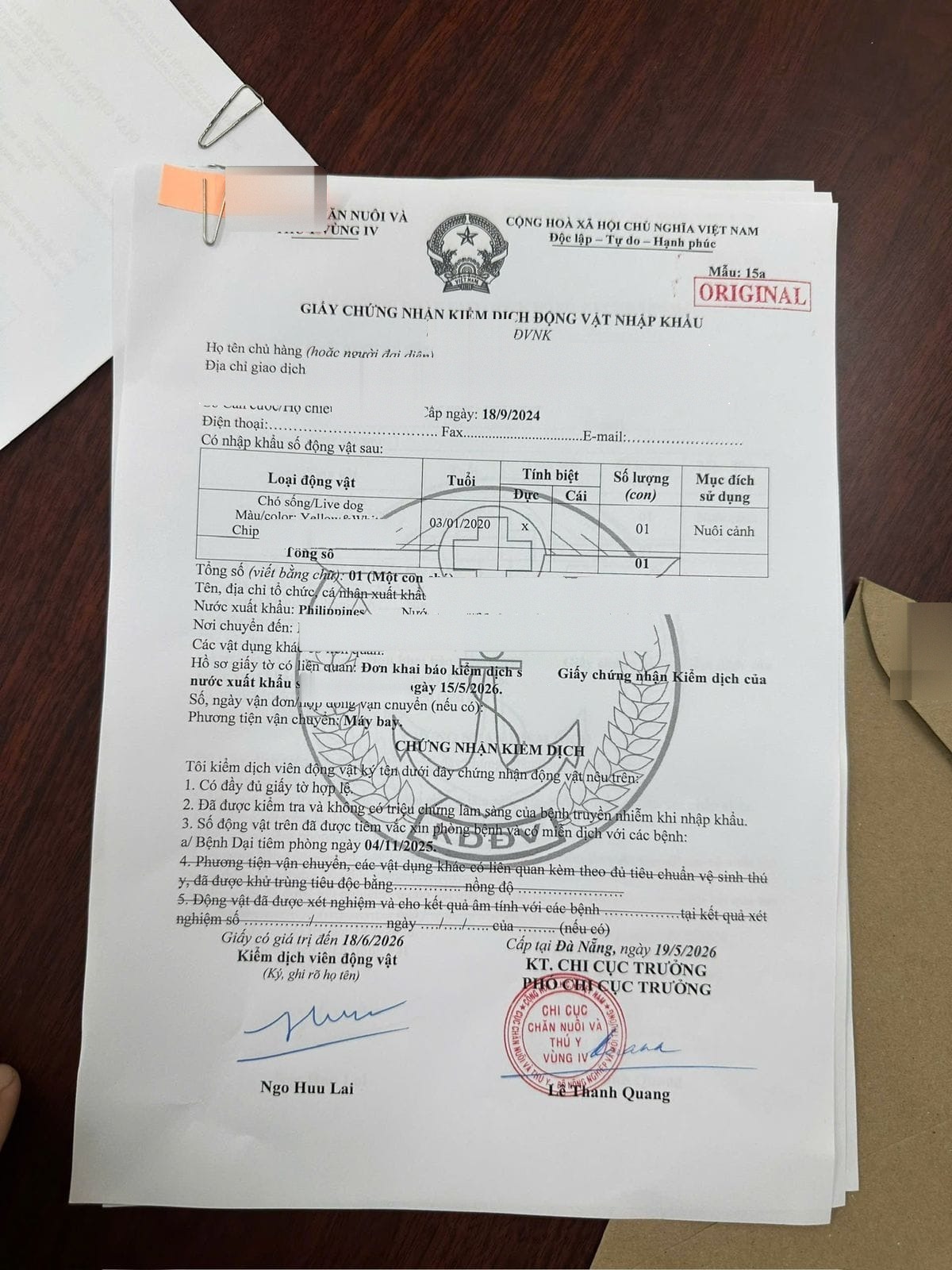
For a pet travelling with its owner, Circular 01/2026/TT-BNNMT (Article 14.1) allows one working day from the inspection to issue Form 15a. If samples must be tested, the certificate follows within one working day of the result. Complete documents and a pet that meets every condition keep clearance short.
Import duty is then paid, and it applies to one or two pets as well. A cargo pet is cleared at the cargo terminal, where customs inspects the shipment before release.
Why cargo needs an agent in Vietnam: the cargo customs declaration must be filed by a declarant with a customs account. An individual owner does not have one. You can still be named as consignee on the air waybill, and you then sign in person at the cargo terminal.
If the pet does not pass: there is no fixed list of outcomes. The officer decides based on the pet and the documents. What you control is the paperwork: one chip number everywhere, a valid rabies date and the originals with the pet.
What does it cost to bring a pet from Thailand to Vietnam?
Several parties charge at both ends, so the total depends on the pet’s size and how it flies. Costs fall into three groups:
- In Thailand: the vet visits, microchip and vaccines, then 250 baht per pet and 10 baht per shipment at the quarantine station. When the partner agent we work with in Thailand handles the export, we quote that side per case.
- Airfare: Vietnam Airlines charges USD 300 for the cabin and USD 100–250 for the hold, by weight, before VAT. Cargo is charged on the crate’s chargeable weight.
- In Vietnam: Daisy Pet’s clearance service for a pet flying with its owner is about USD 350 per pet. It covers Form 3, the arrival inspection, the government quarantine fee and Form 15a. Import duty is paid separately. Clearance for a cargo pet is quoted per case.
Current ranges by route and pet size are in our pet shipping cost guide for Vietnam.
Can your pet go back to Thailand later?
Yes. A pet returning to Thailand enters as a new import. The main conditions are:
- Thai import permit: applied for by email to the quarantine station at your Thai arrival airport, at least 7 working days ahead. Some airlines check it at check-in, so have it in hand about two weeks before the flight. Our guide to the Thailand pet import permit walks through the form.
- Vietnamese export health certificate: issued by Vietnam’s regional animal health office, and valid for Thailand’s 10-day window.
- Vaccinations: rabies at least 21 days before the flight (we plan 30). Dogs also need distemper, hepatitis, parvovirus and leptospirosis; cats need panleukopenia.
- On arrival in Thailand: 500 baht per pet plus 10 baht per application at the quarantine station, plus Thai import duty on the declared value, usually about 1,500–2,000 baht per pet.
- Re-import paper: a pet that returns within one year may be exempt from that duty, but only if a re-import document was made at Thai Customs when it left. Ask Customs about it before the flight out of Thailand.
Tell us early if the pet may go back, so the first trip’s paperwork fits the return.
A recent case: four cats from Bangkok, August 2026
In August 2026, two owners flew four show cats from Bangkok to Ho Chi Minh City on a direct Vietnam Airlines flight. The cats were a Siberian, a Toyger, a Norwegian Forest Cat and a Selkirk Rex. The Suvarnabhumi station issued the R.9 permits and DLD health certificates two days before the flight. Daisy Pet filed Form 3 with the quarantine station at Tan Son Nhat, and the cats were inspected at the arrival terminal.
Their vaccination books showed rabies and a combination vaccine. None had a feline leukaemia (FeLV) vaccine, and Vietnam’s quarantine did not ask for one. The owners flew home with the cats three days later.
FAQ: bringing a pet from Thailand to Vietnam
Does Vietnam require an import permit, titer test or quarantine for pets from Thailand?
No. For one or two personal pets, Vietnam requires a microchip, a valid rabies vaccination and the Thai health certificate. No import permit, titer test or quarantine is needed.
Where do I get the Thai export permit, and what does it cost?
At the DLD Animal Quarantine Station of the airport your pet leaves from. At Suvarnabhumi, a vet examines the pet 1–5 days before departure and issues the export permit and health certificate. The fee is 250 baht per pet plus 10 baht per shipment.
Can my cat fly in the cabin from Bangkok to Ho Chi Minh City?
Yes, on Vietnam Airlines, if cat and bag weigh 6 kg or less and the bag fits 35 × 30 × 20 cm. The fee is USD 300 per flight sector, before VAT. Thai Airways and the low-cost airlines do not carry pets in the cabin.
Does my cat need an FeLV vaccine to enter Vietnam?
No. Vietnam’s quarantine checks the microchip and the rabies vaccination. The four cats we cleared from Bangkok in August 2026 had no FeLV vaccine and entered normally. Keep the other core vaccines up to date for the airline and for any later trip.
Can I fly my pet from Chiang Mai to Vietnam?
Not direct with a pet. The pet flies to Bangkok first and leaves Thailand from Suvarnabhumi on Vietnam Airlines. The Thai export papers are then issued in Bangkok.
How long does airport clearance take when a pet lands in Vietnam?
For a pet travelling with its owner, the rules allow one working day from the inspection to issue Form 15a. Complete original documents and a pet that meets every condition keep it short.
For questions about Vietnam’s side that apply to every route, see our Vietnam pet import FAQ.
Last updated 3 Nov 2026
Compiled by our specialists from the regulations in force on the date above, for reference only. Rules may change after this date. Please verify with the competent authorities or contact us for the most accurate information.
Official sources cited in this guide
- Vietnam Airlines: travelling with petsvietnamairlines.com
- AQS Suvarnabhumi: export to Vietnamaqs-suvarn-dld.go.th