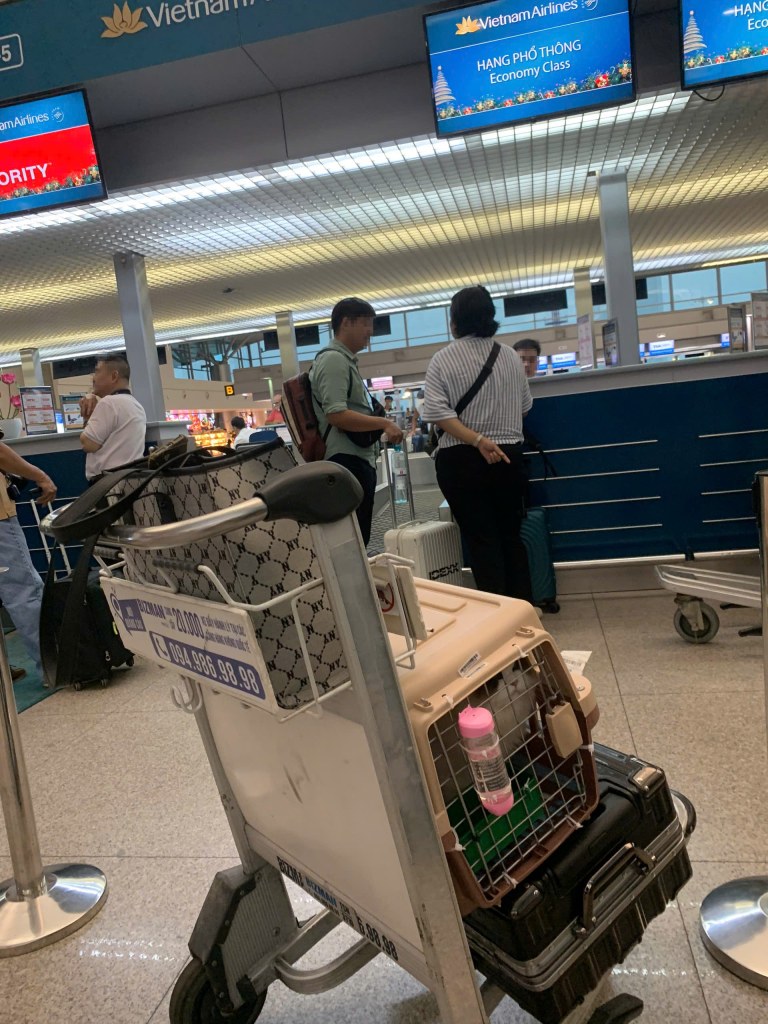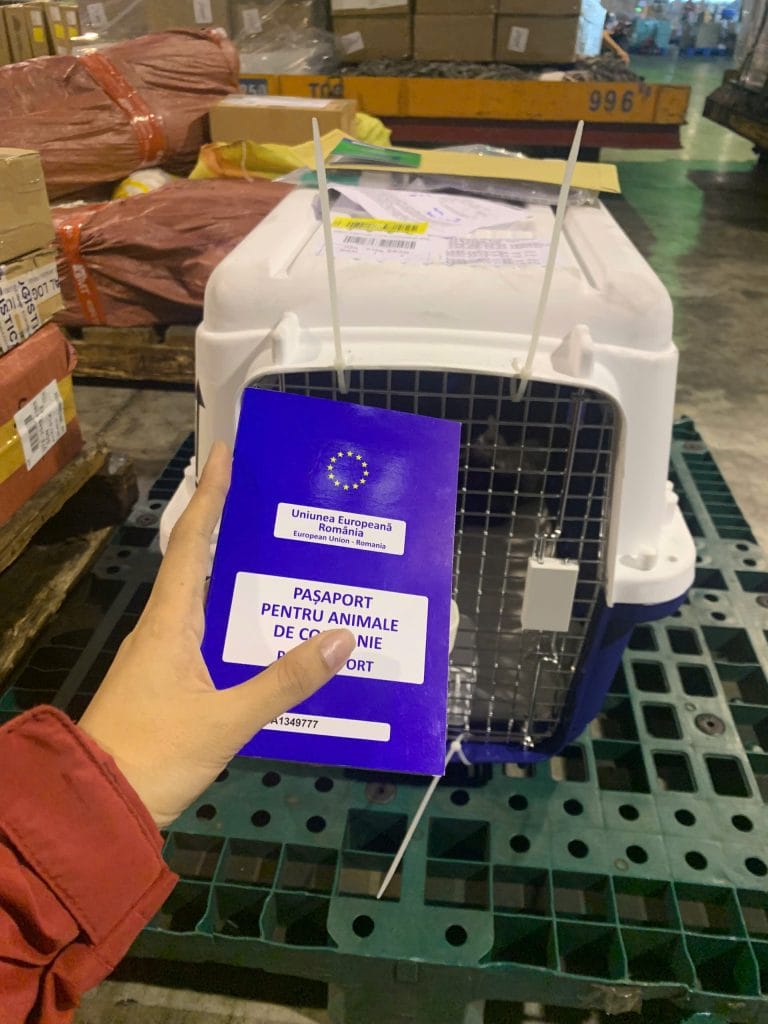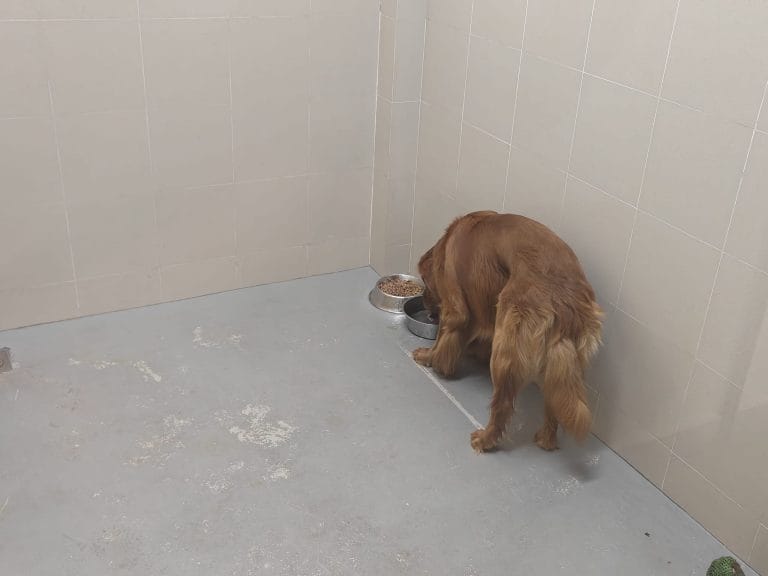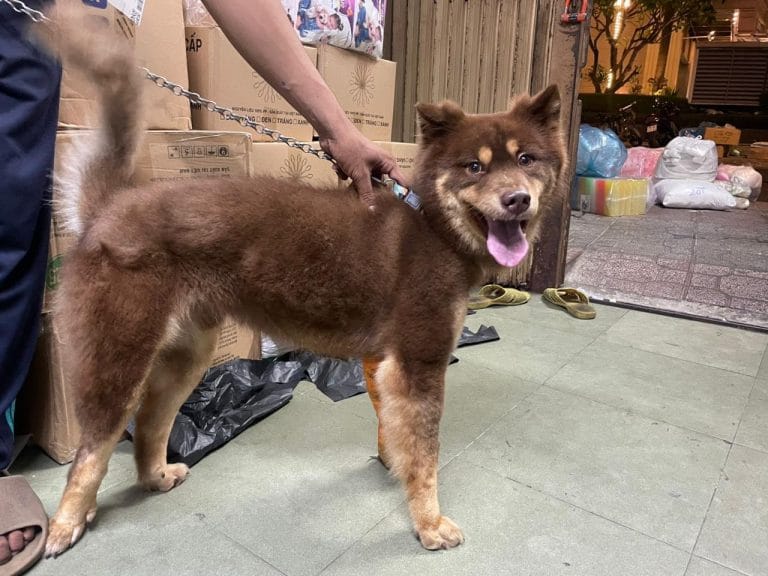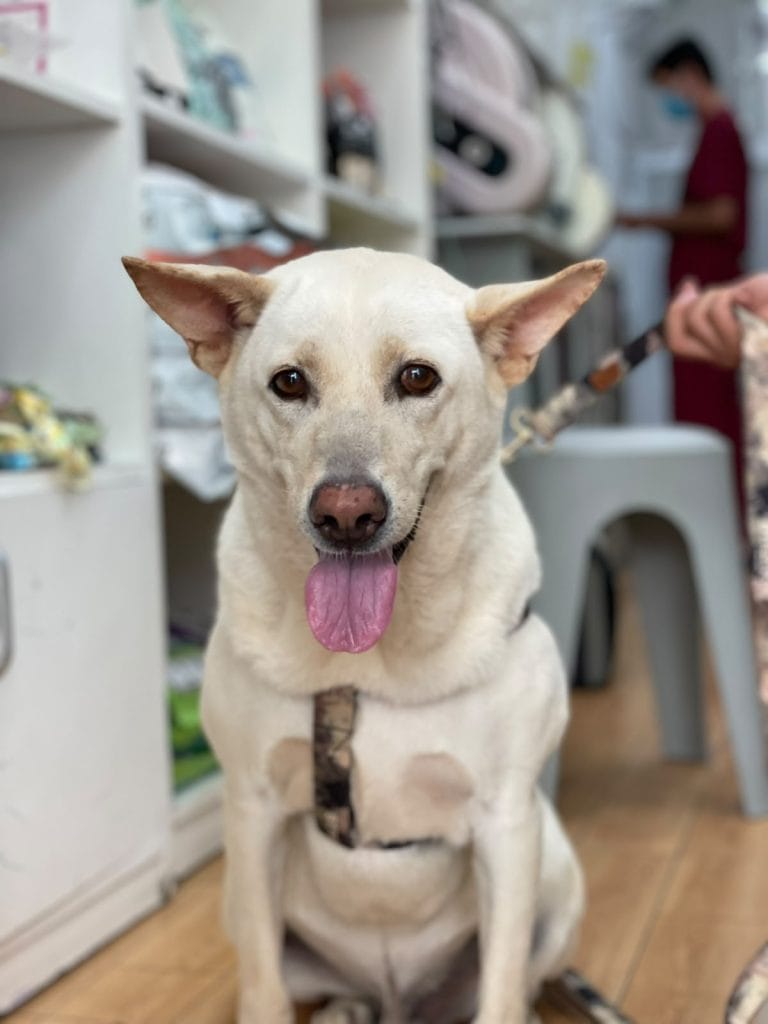
Devil is eight years old, weighs 25 kilograms, and had never left Vietnam before this trip. On paper, that combination — senior age, mixed breed, a two-flight itinerary through Taipei — is exactly the kind of case that invites more questions from an airline and a government agency, not fewer. Vietnam sits on the CDC’s list of countries at high risk for dog rabies, and that single classification is why almost every step of Devil’s journey to Los Angeles took the shape it did: an extra layer of paperwork, a mandatory reservation most owners have never heard of, and, in this case, an airline booking that got cancelled without warning.
Meet Devil, a Senior Dog Making the Trip Home to California
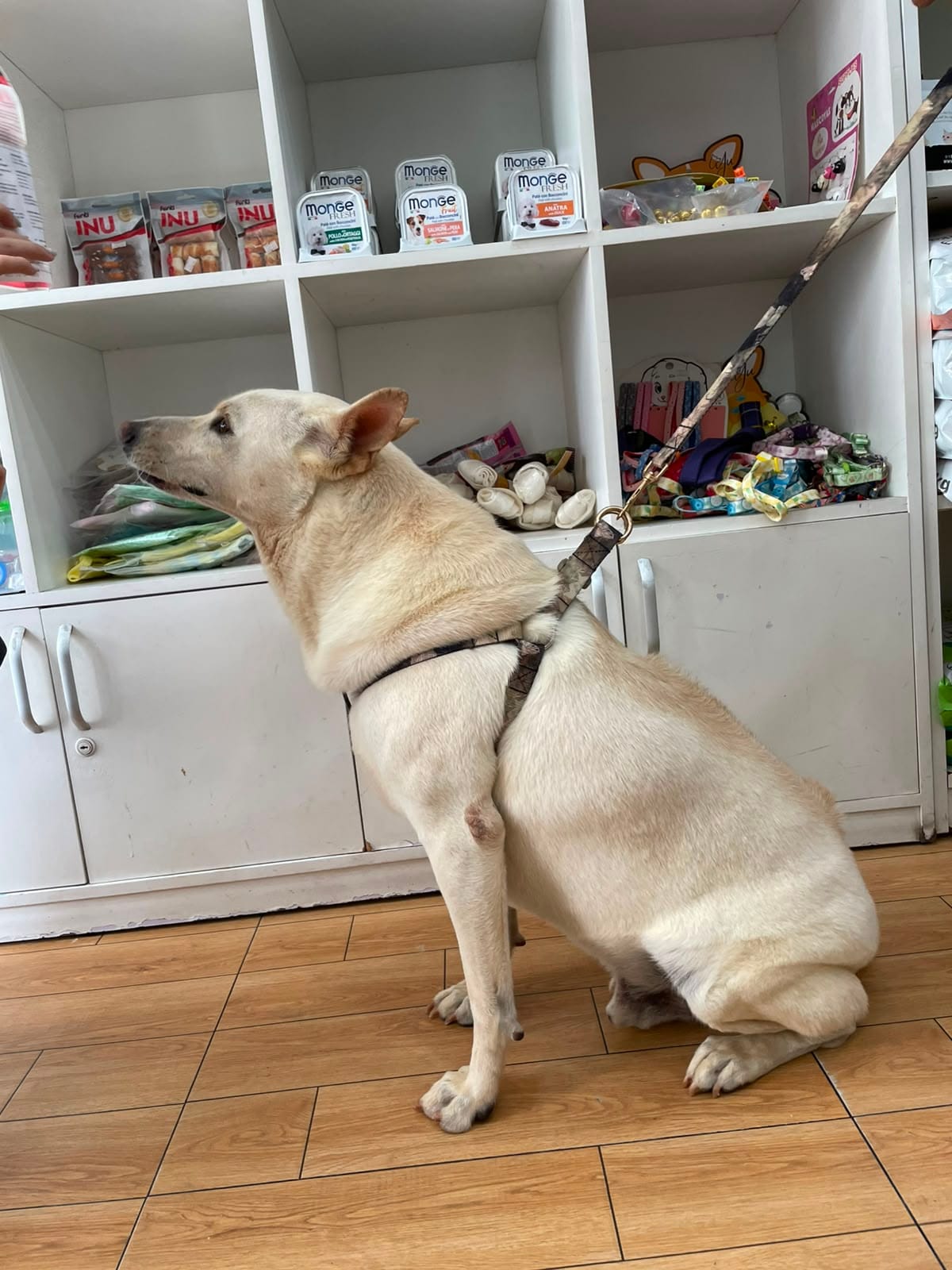
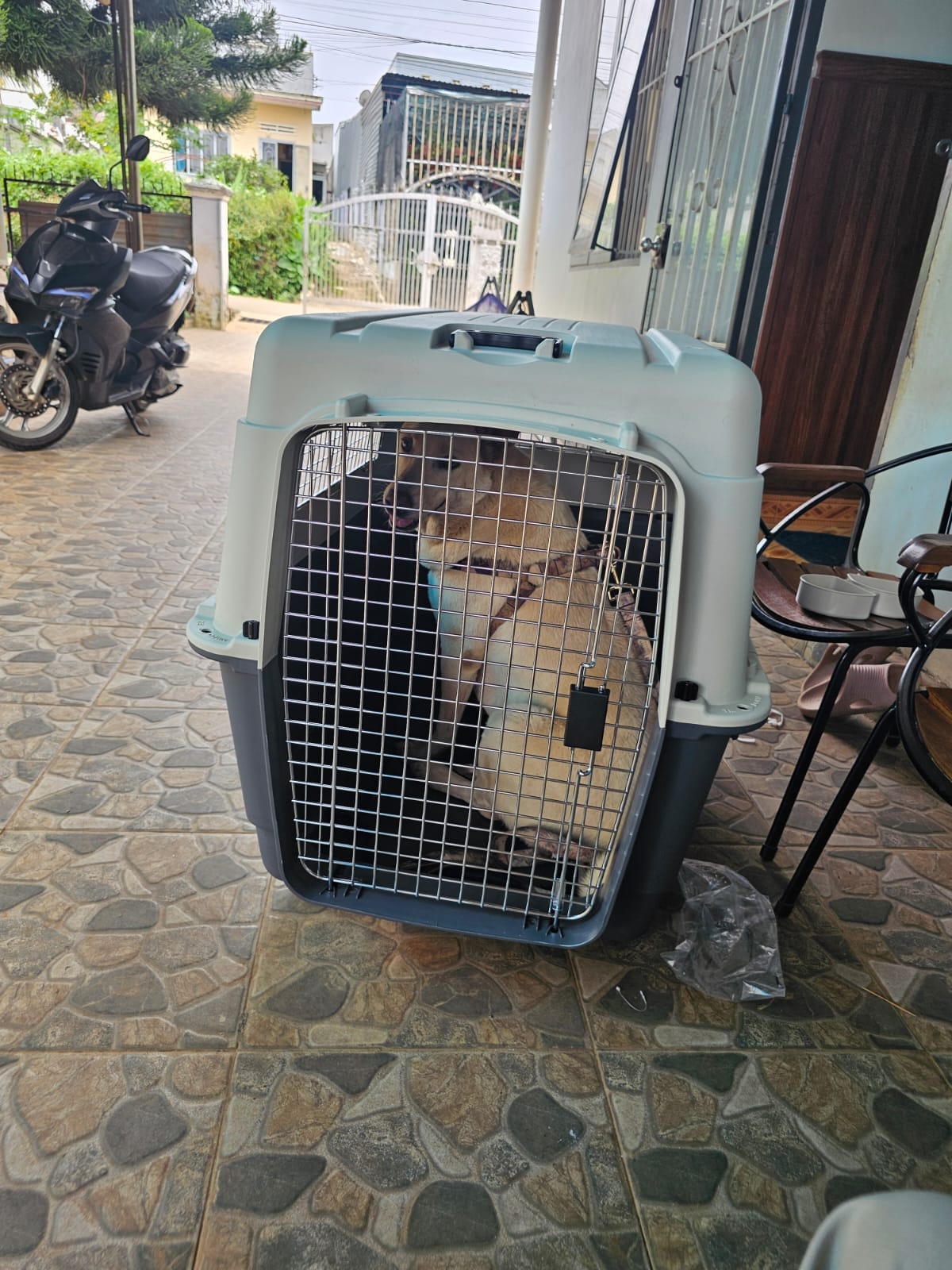
Devil’s owner lives in Northern California, roughly a seven-hour drive from Los Angeles International Airport — part of the wider jump from Vietnam to the United States that her family had been planning for months. While Devil stayed in Vietnam with a family member in Lâm Đồng province, his owner flew back in late August specifically to handle his paperwork in person and bring him home on the same set of tickets, rather than shipping him alone. He weighed 25 kilograms at intake, cream-colored and neutered, and — going by the training video his family sent — far more food-motivated than nervous about his travel crate. His family joked that he adjusted to it so fast he treated it like a bedroom, unlike dogs that need two weeks of coaxing just to walk in on their own.
Why a Country Classification Decides Almost Everything
The CDC does not evaluate an individual dog’s health record when it decides how much paperwork a shipment needs — it evaluates the exporting country. Vietnam is one of the countries the CDC classifies as high-risk for dog rabies, and that classification triggers requirements owners flying from low-risk countries never encounter. For Devil, that meant:
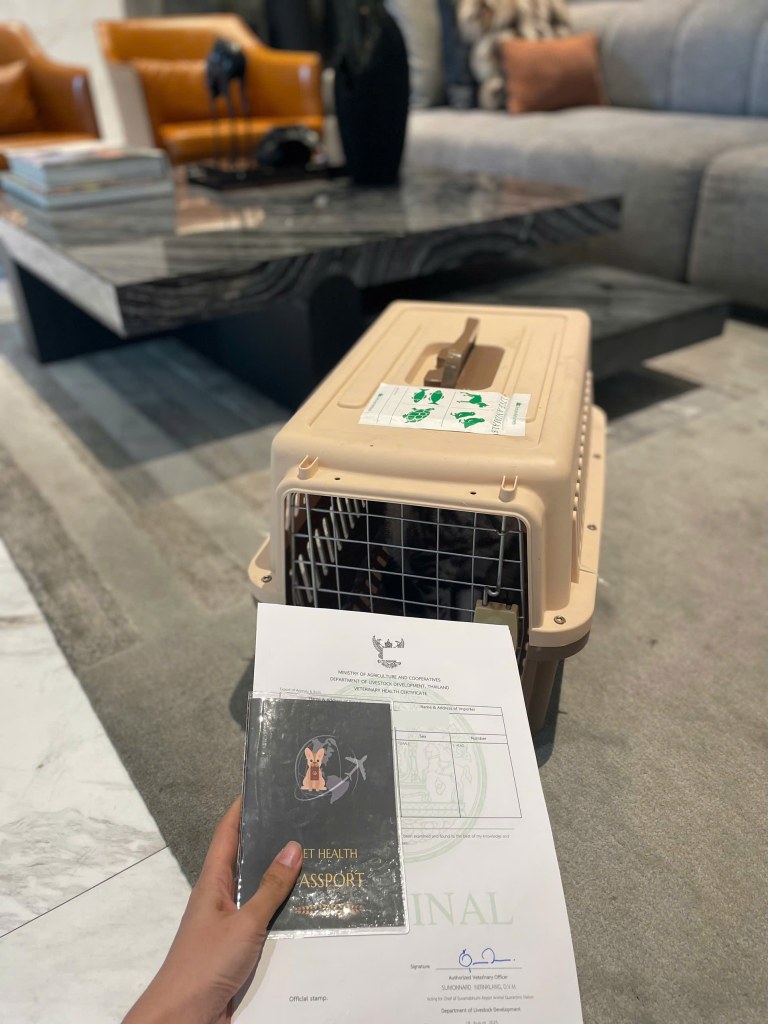
- A government-endorsed CFRVMR: the Certification of Foreign Rabies Vaccination and Microchip, signed by an examining vet and countersigned by an official government vet, valid for only 30 days before travel.
- A booster rabies vaccine with prior history on file: Devil’s form shows the vaccine was administered as a booster, not a first-time shot, because he already had documented prior vaccinations.
- A rabies antibody titer test: blood drawn, spun into serum, and sent to a CDC-approved lab. See our full guide to the RNATT/FAVN titer test for how the result is read.
- An ISO-compliant microchip, implanted before the rabies vaccination it’s tied to on the certificate.
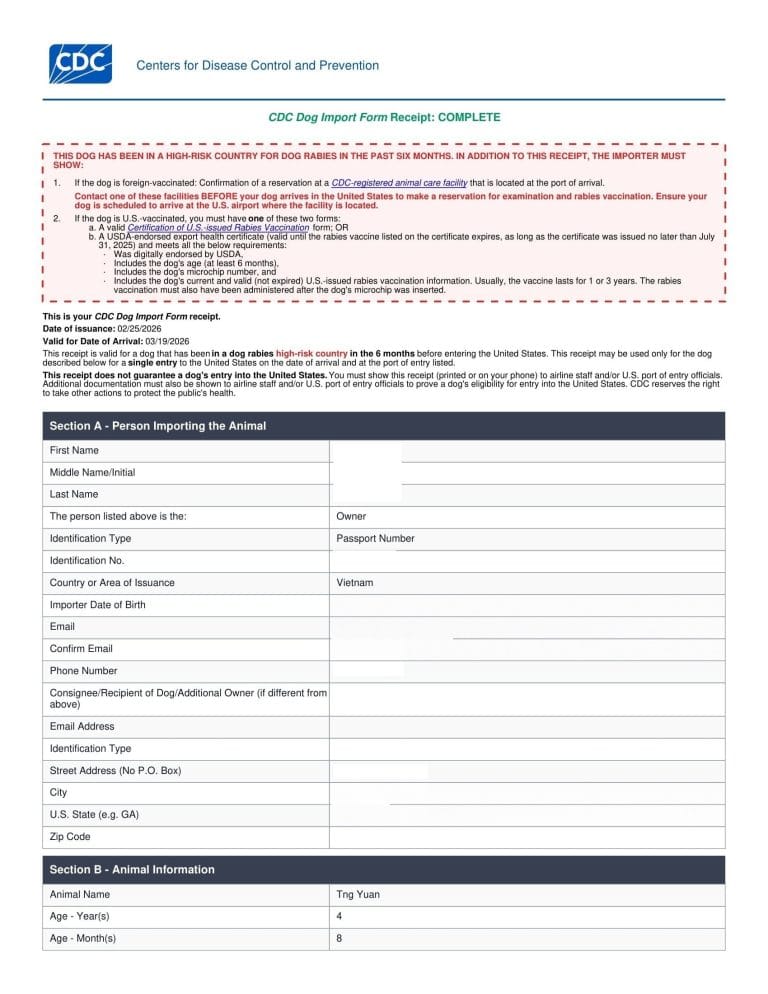
- A CDC Dog Import Form and, separately, a confirmed reservation at a CDC-registered Animal Care Facility (ACF) at the port of arrival — required for foreign-vaccinated dogs from high-risk countries regardless of titer result.
The titer result is what decides how that last requirement plays out in practice. A result under 0.5 IU/mL, or no result at all, means a 28-day quarantine at the owner’s expense. Devil’s result came back at 30.72 IU/mL — roughly 60 times the minimum — and that is why his stop at the Animal Care Facility was a same-day process rather than a month-long one.
Two Months of Preparation Before One Dog Could Fly
- June 16: intake call, weight confirmed at 25–26 kilograms.
- June 18: rabies booster administered at a Ho Chi Minh City clinic.
- Early July: an IATA-compliant crate, 100 × 67 × 75 cm, arrives from Hà Nội; Devil starts crate training at home.
- July 21: blood drawn in Đức Trọng, Lâm Đồng, then couriered to Ho Chi Minh City for export to a CDC-approved lab in Thailand.
- August 3: titer result returns at 30.72 IU/mL.
- August 20: Vietnam’s export permit approved.
- August 25: the CDC Dog Import Form is completed — with one identity-detail typo caught and corrected by the owner herself before submission.
- August 26–27: CFRVMR endorsed by a Ho Chi Minh City government veterinarian; Animal Care Facility reservation confirmed with a deposit and a balance payment.
- September 10–11: government health check at the Sub-Department of Animal Health, Region VI, near Tân Sơn Nhất — Devil, by his family’s account, was visibly nervous around the examining vet.
- September 13: final document and crate check at Daisy Pet’s office, ahead of a 01:50 departure the next morning.
- September 14: departs Ho Chi Minh City on EVA Air BR382, transits Taipei, and lands in Los Angeles on BR6 — as checked baggage, not manifest cargo.
The Real Cost of the Animal Care Facility Reservation
Most owners underestimate this side of the ledger because it rarely gets itemized anywhere public. Here is what Devil’s Animal Care Facility reservation and Los Angeles handling actually cost, documented in full:
| Item | Amount (USD) |
| ACF reservation deposit (paid August 26, non-refundable) | $514.80 |
| ACF reservation balance (paid August 27) | $1,389.45 |
| Rue’s Kennels warehouse and customs pickup fee (new) | $390.00 |
| Total, ACF + LAX handling | ≈ $2,294 |
That figure excludes the vet fees, the titer test and courier, the IATA crate, domestic transport inside Vietnam, and the airline’s own excess-baggage charge for the dog — those vary case to case. What’s above is the part that’s fixed, documented, and, as it turned out, still changing.
Lesson One: Why We Reconfirm Every Airline Booking Twice, Not Once
Five days before Devil’s departure, our team made what has become a routine reconfirmation call to EVA Air’s cargo desk, about a booking made weeks earlier and already confirmed by the airline itself. The reservation had been silently cancelled — no email, no call, nothing that would have surfaced on its own. Pet bookings sit in a part of an airline’s system that changes for reasons that have nothing to do with the passenger — aircraft swaps, weight-and-balance limits, temperature embargoes — and a cancellation doesn’t always trigger a notification. We’ve seen other owners find out only at the check-in counter, hours from a flight they could no longer make. That’s why every booking now gets reconfirmed on a fixed schedule: once 24 hours after it’s made, and again 48 hours before departure. On day five, Devil’s booking was still fixable; the version of this story where nobody calls back ends with a missed flight.
Lesson Two: Why We Don’t Handle Your Card Details for the ACF Reservation
The Animal Care Facility reservation form only accepts payment by credit card, split into a non-refundable deposit and a balance due once the paperwork clears. When an owner is short on time, it’s tempting to hand the card number over and let someone else fill in the form — which is what happened in Devil’s case, and it worked, but it meant relaying a card number, expiry date, CVV, and billing zip code over chat more than once, after one card was declined for exceeding a transaction limit. That’s not a workflow worth repeating. We publish a step-by-step guide to the ACF reservation form so owners can complete it themselves, on their own device, with their own card — the form isn’t complicated once you know which document goes in which box, and it keeps payment details where they belong.
Lesson Three: A New Fee at LAX for Warehouse Pickup, Even on Checked-Baggage Flights
Devil flew as checked baggage, not manifest cargo — but arriving from a rabies high-risk country still routed him through the bonded cargo and customs warehouse at LAX instead of a normal baggage carousel, because that’s where a CDC-registered facility like Rue’s Kennels takes custody of the dog. For Devil’s shipment, Rue’s Kennels issued an official notice that this warehouse-and-customs handling now carries its own $390 charge, separate from the ACF reservation fee. We’d seen this fee appear informally on a few recent shipments before Devil’s case, but this was the first time it arrived with a written notice rather than a number mentioned in passing. Anyone routing a dog into LAX from a high-risk country should budget for it now instead of being surprised by it at pickup.
The Reunion: Devil Lands in Los Angeles
Devil and his owner landed at LAX on the morning of September 14 aboard BR6, the second leg of a trip that had started in Ho Chi Minh City the night before, by way of Taipei. Pet release at LAX runs on its own schedule — dogs typically clear the Animal Care Facility process in the afternoon, regardless of when the flight lands — so she waited nearby before going back to collect him. “I could see him in the crate, then they brought him inside,” she wrote. “He’s fine.” By the next afternoon, Devil was back at a hotel with his family, recovering from a very long day with a light meal and a nap.
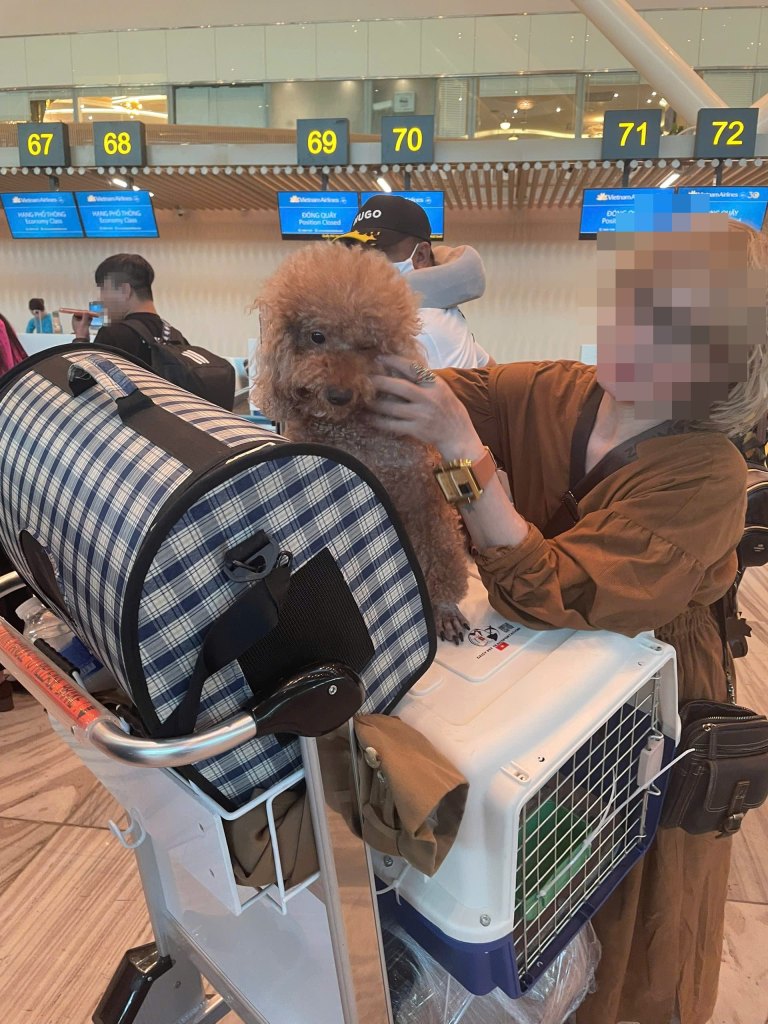
Devil’s case is a reminder that flying a senior dog across the Pacific is entirely possible, but very little of the difficulty is about the dog. It’s a paperwork sequence set by a country classification, a reservation system that runs on its own clock, and two outside providers — an airline and an Animal Care Facility — whose rules can change with little warning. Other Vietnam-to-US cases we’ve handled, like Ki the poodle’s flight to the same airport, follow the same pattern.
So does Mimi’s longer road to Miami, retold in Denied Boarding Twice: the flight itself is rarely the hard part.
Last updated 16 Oct 2026 · First published 16 Sep 2026