In March 2026, as conflict escalated across the Middle East, a Vietnamese pet owner working abroad needed his dog and cat brought home from Dubai — and the situation on the ground meant he could not fly back to manage it himself. This case study documents how that relocation was carried out while airlines were cancelling flights and non-essential government offices were shutting their doors, and why the choice of carrier mattered more on this route than it normally would.
1. A Familiar Route, in Conditions Daisy Pet Hadn’t Handled Before
The Dubai-to-Vietnam route is one this team handles routinely — see the full Dubai to Vietnam relocation guide for the standard requirements. What made this file different wasn’t the paperwork; the UAE export process and Vietnam’s import rules hadn’t changed. The obstacle was the environment around them. Tied up by work commitments abroad, the owner couldn’t return to Vietnam to handle the move himself, and with conflict spreading across the region, he wanted his dog and cat out of Dubai rather than wait to see how the situation developed.
Getting them there meant working through conditions the team hadn’t planned around before: airlines pulling flights from their schedules with little notice, and government offices considered non-essential temporarily closing their doors for safety.
2. Collecting the Dog and Cat from Their Dubai Hotel
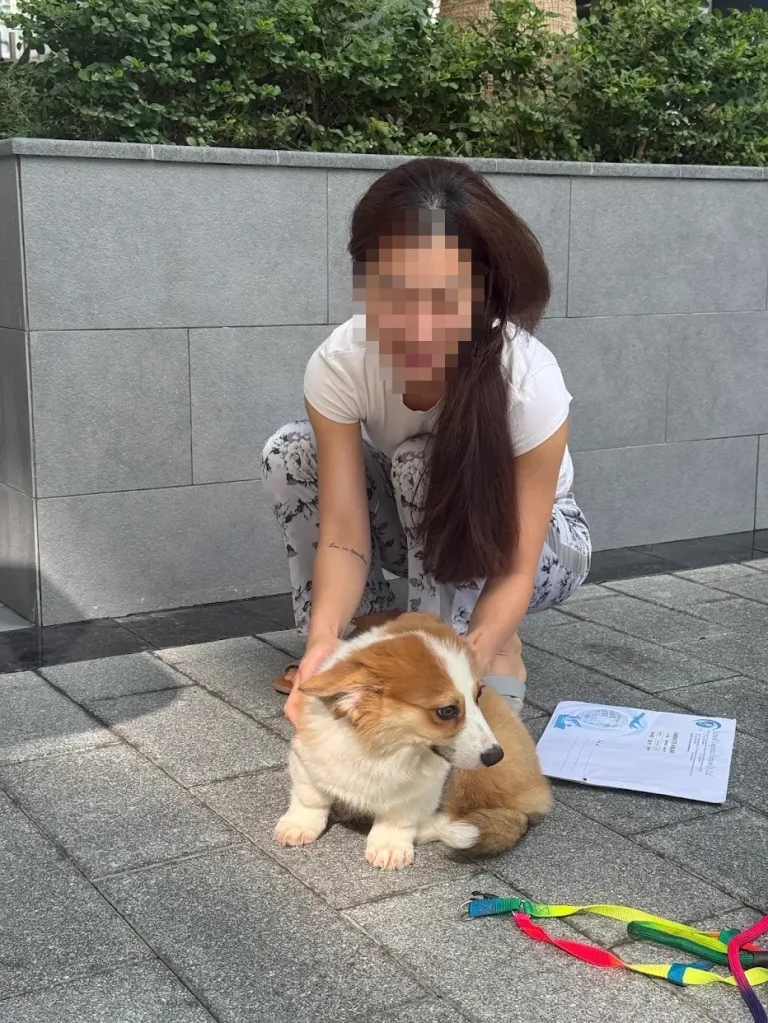
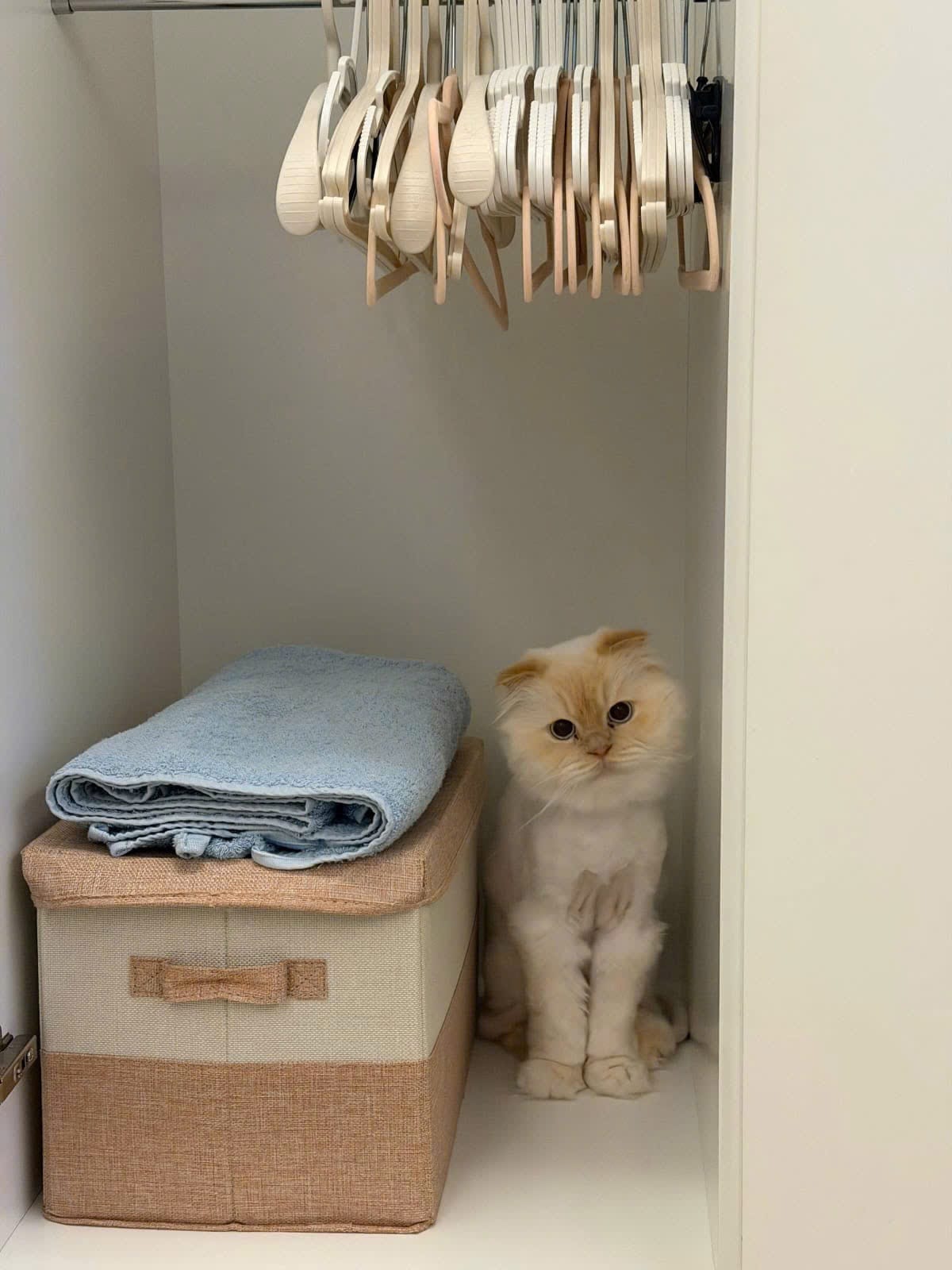
While the relocation was being arranged, the dog and cat were staying at a pet hotel in Dubai rather than an empty apartment. Daisy Pet’s team went to the hotel in person to collect both animals ahead of departure, instead of leaving the handover to a courier unfamiliar with the file.

3. Why the Airline Choice Carried More Weight Than Usual
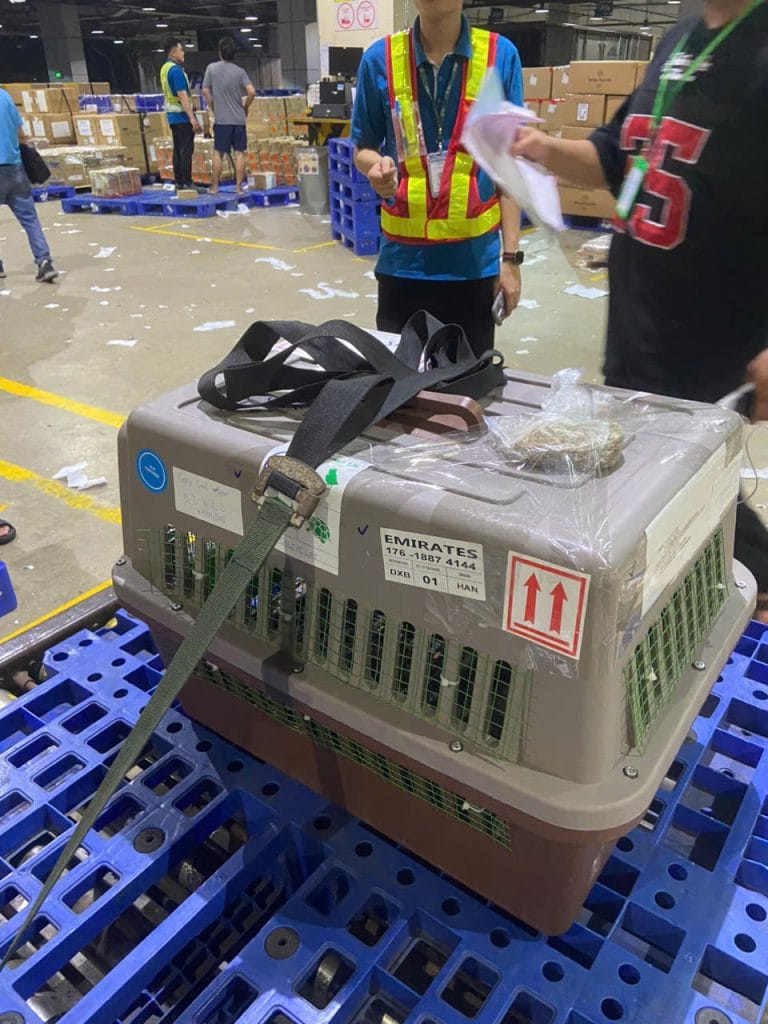
On a normal day, several carriers can fly the Dubai-Vietnam route — see our guide to airlines flying pets to the UAE for the regular options. When flights are being cancelled and cargo capacity is unpredictable, the calculation changes: the deciding factor isn’t price or schedule, it’s which airline can actually keep flying. Emirates was selected specifically for that reason — a carrier large enough, and stable enough, to keep operating through the disruption.
Standing as a long-term priority partner on Emirates cargo bookings meant the request had a better chance of being heard at a moment when capacity was scarce — the same relationship that also helped move a Corgi puppy in another Emirates-route case study.
4. Two Confirmed Slots While Other Bookings Were Falling Through
After a direct conversation with Emirates staff, the airline confirmed two cargo slots for 23 March, Dubai to Ho Chi Minh City — a booking that held even as other flights around it were being cancelled or pushed back. Securing air freight capacity on a fixed date, on a route the same carrier was actively restricting elsewhere, isn’t something an owner can typically arrange alone; it depends on an existing relationship with the airline, not just a booking request.
5. Completing MOCCAE Procedures Without a Normal Operating Window
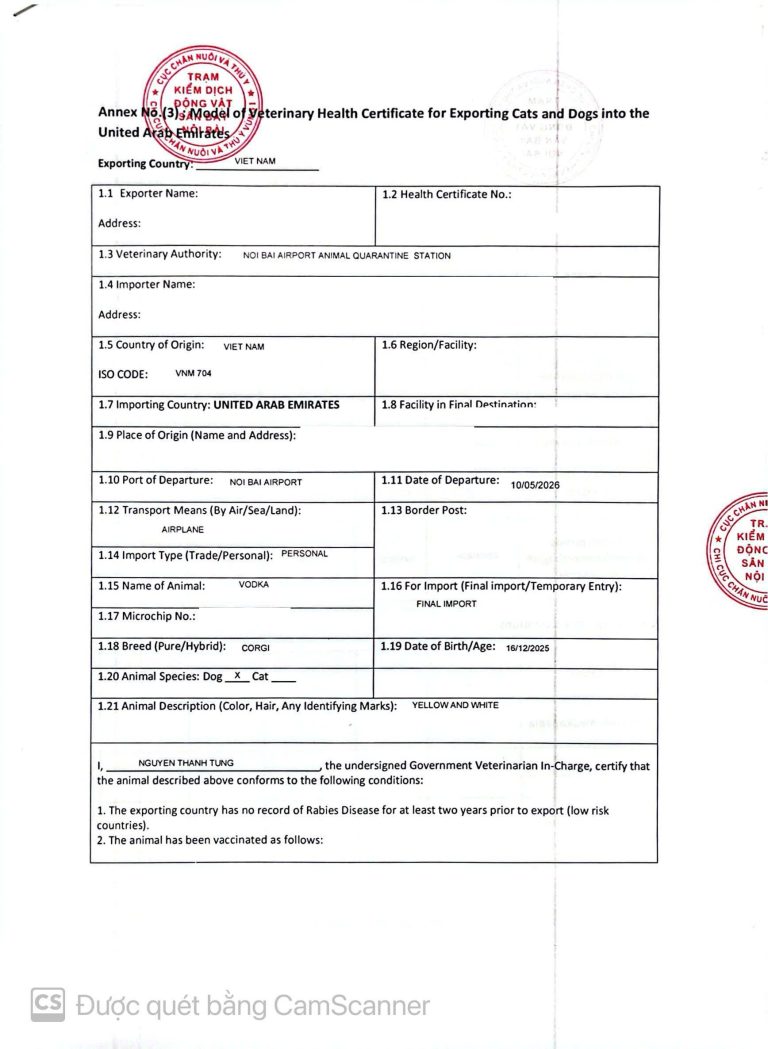
Before departure, both pets still had to go through the same UAE quarantine and export clearance every animal leaving Dubai follows, coordinated with MOCCAE, the UAE’s Ministry of Climate Change and Environment — see our UAE pet import regulations guide for what that process normally involves. The difference this time was timing: with several supporting government functions running on reduced hours or closed outright, there was no slack in the schedule and no room to redo a step that came back wrong.
6. Preparing the IATA Travel Crates
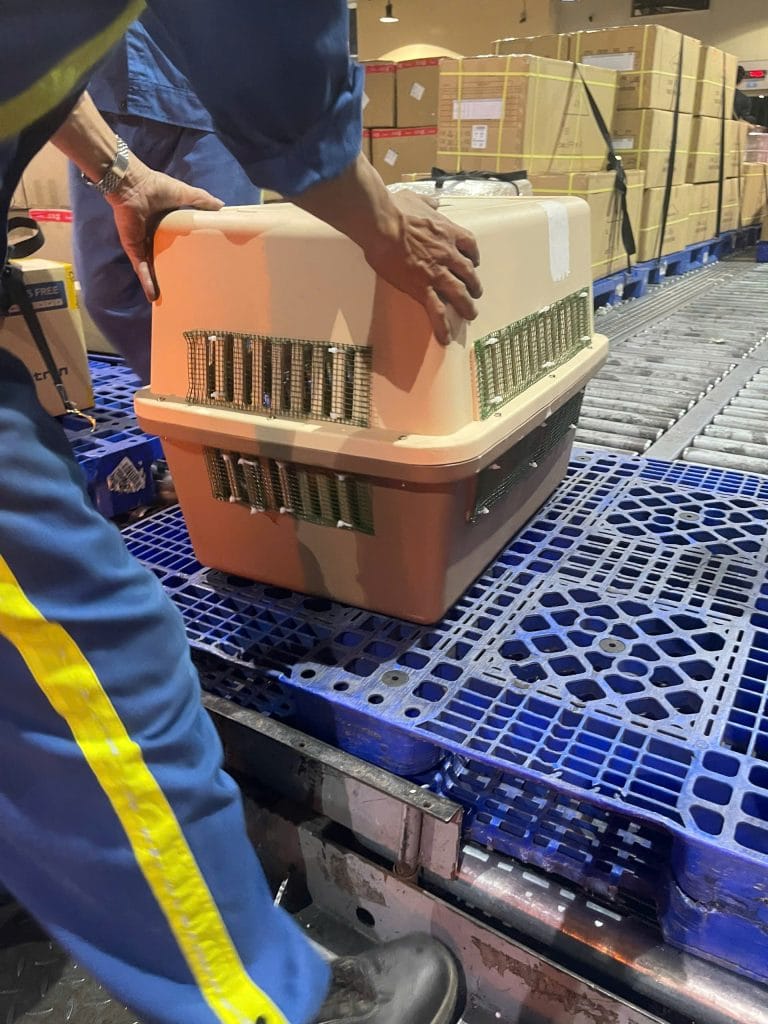
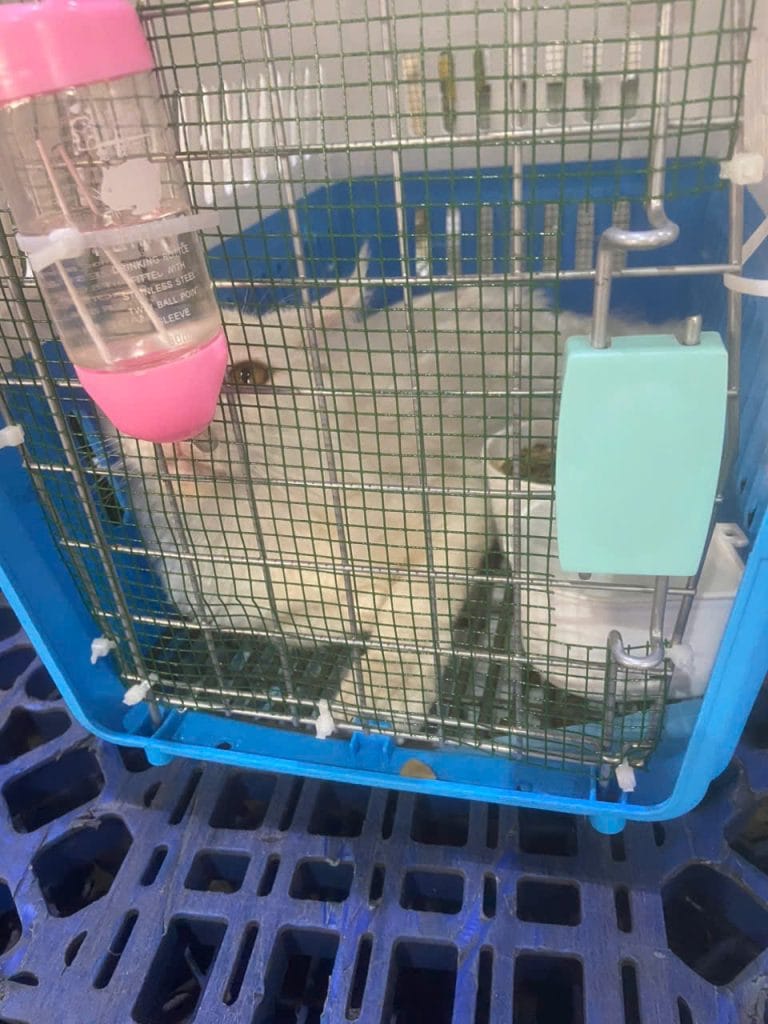
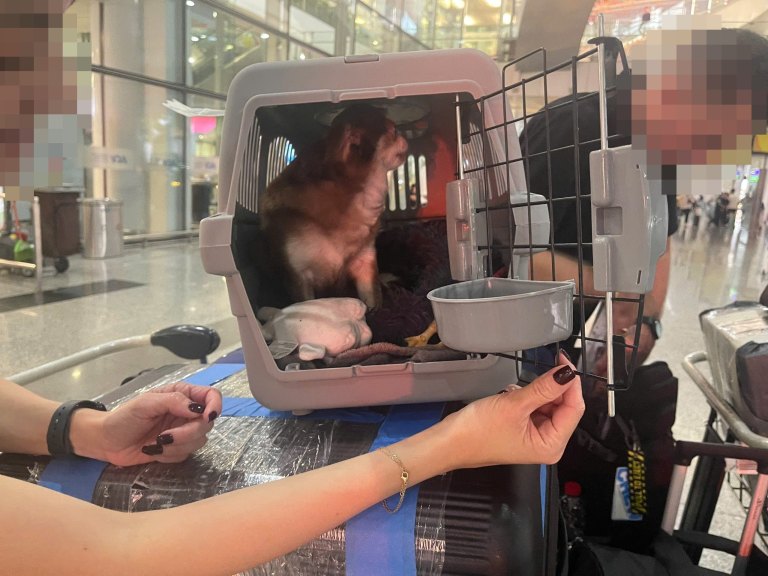
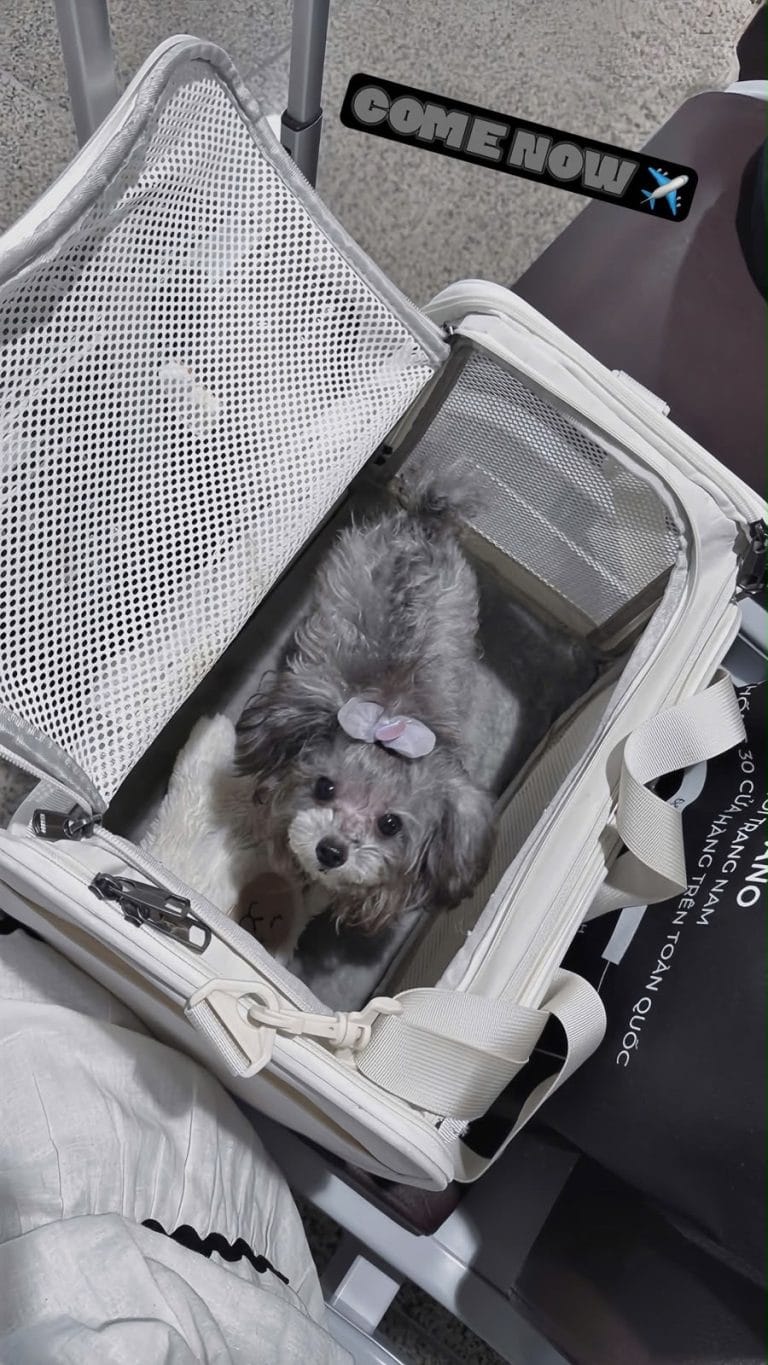
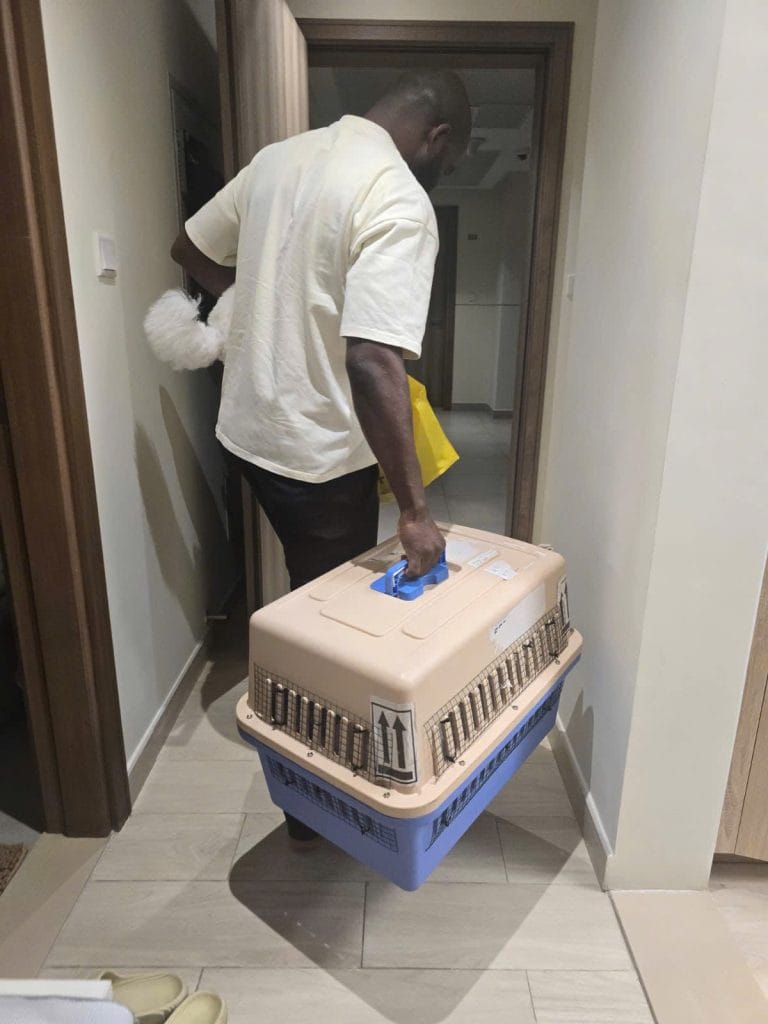
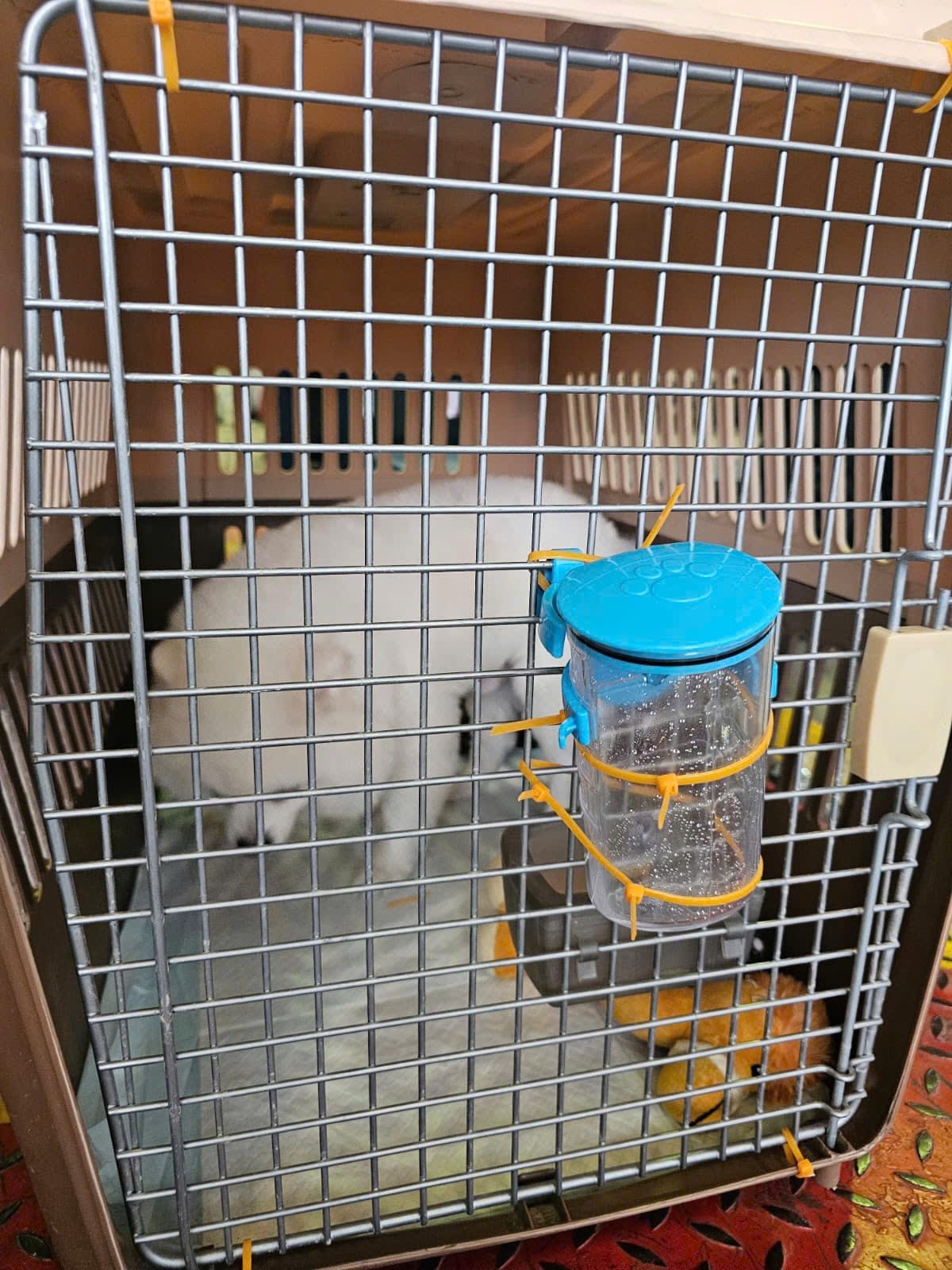
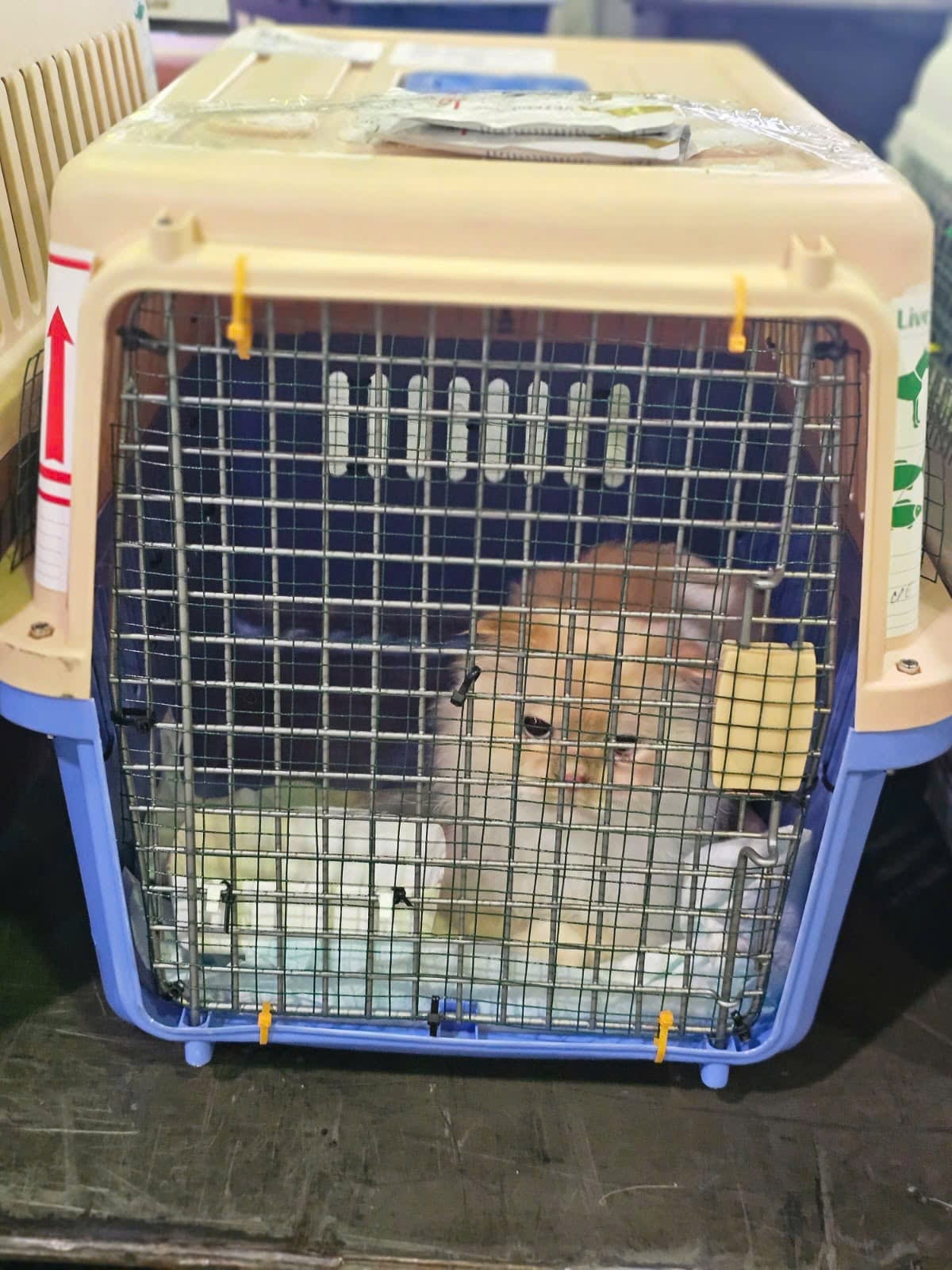
Ahead of the flight, the dog and cat were each fitted into their own travel crate, built to IATA standard: enough room to stand fully upright, turn around, and lie down flat, a rigid shell, ventilation openings on multiple sides, and securely fitted food and water fixtures. Flying two pets on the same booking meant two separate crates, sized and checked individually rather than assumed to match.
7. The Part That Doesn’t Show Up in a Timeline: Ground Safety During Conflict
Picking pets up, driving them to a quarantine appointment, and getting them checked in for a flight is routine work. During an active regional conflict, the same tasks carried an extra layer of judgment that has nothing to do with paperwork — deciding, day by day, whether it was actually safe to move at all. That call gets made repeatedly in the run-up to a departure like this one, and it never appears on a permit or a health certificate — but it was as much a part of getting these two pets home as the flight itself.
8. Landing in Ho Chi Minh City, and the Drive to Vinh Long
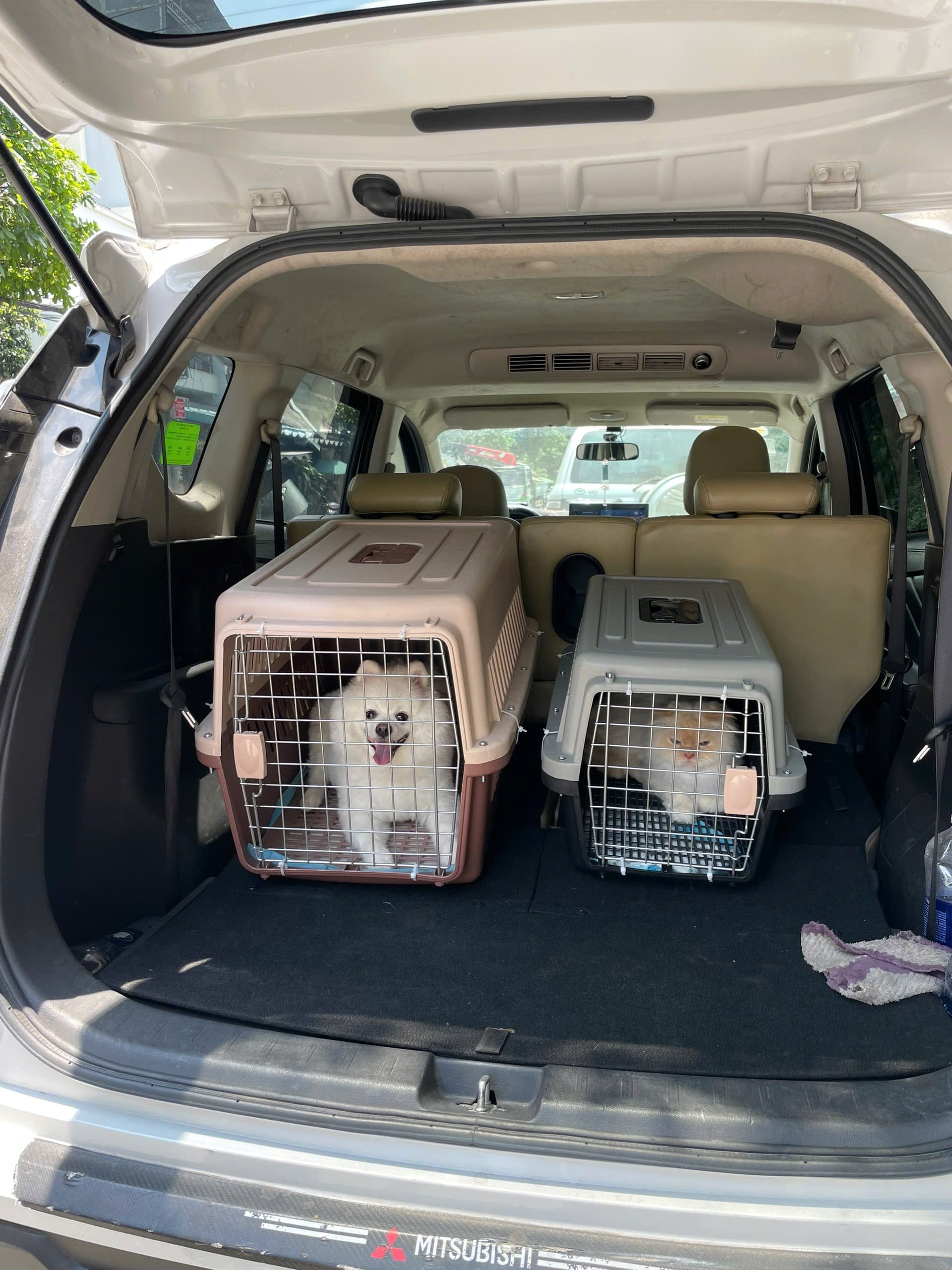
The flight landed at Tan Son Nhat International Airport at 19:38 on 23 March. From there, the dog and cat went through standard quarantine inspection and customs clearance on arrival. The following morning, at around 10:00, the team collected them, cleaned out the travel crates, and let them rest and rehydrate before the final leg home. By 12:30, they were on the road to the family’s house in Vinh Long province — the one place the owner himself couldn’t take them to.
Not every Dubai-to-Vietnam arrival goes through Ho Chi Minh City, and not every one is this straightforward once the animals are on the ground — a Chihuahua’s landing at Noi Bai played out as two family members split between two different queues, one holding the pet and the other holding the paperwork.
Conclusion
Nothing about this relocation moved faster because of the conflict around it — if anything, every step took more coordination than it would on an ordinary day. What held the timeline together was the same thing that matters on any route: choosing a carrier that could actually operate, working inside whatever window the moment allowed, and treating the pets’ safety as non-negotiable even when cutting a corner would have been the easier option. Owners relocating pets to or from the region can check current requirements in our UAE pet relocation guide.
Last updated 16 Oct 2026 · First published 26 Aug 2026