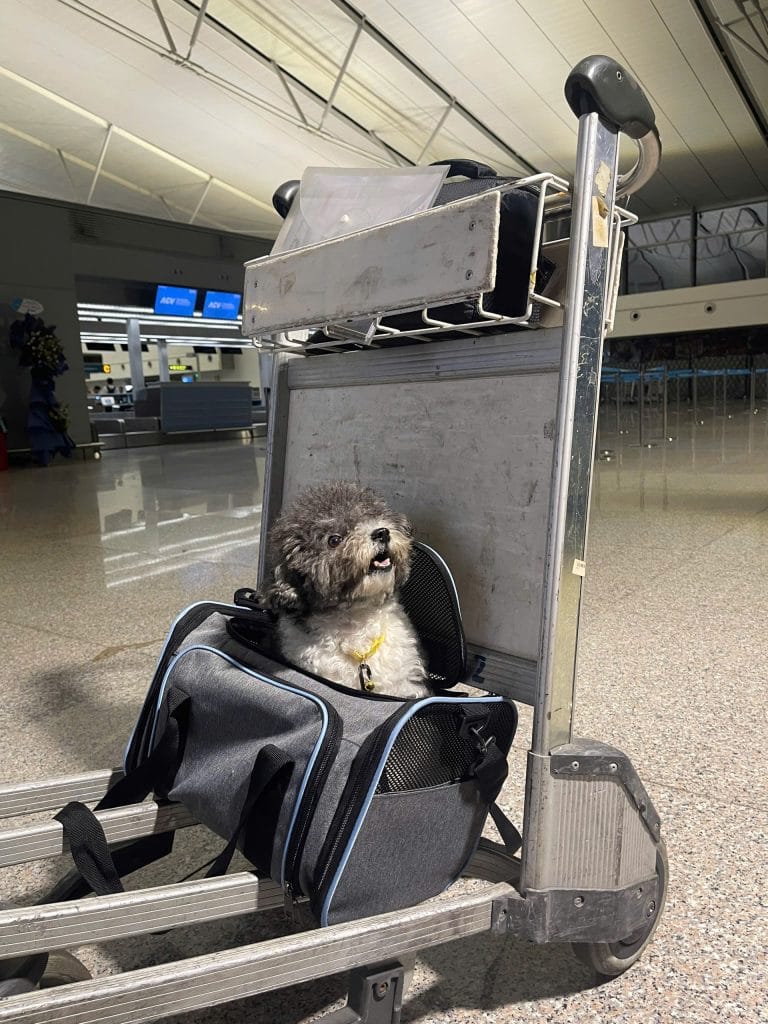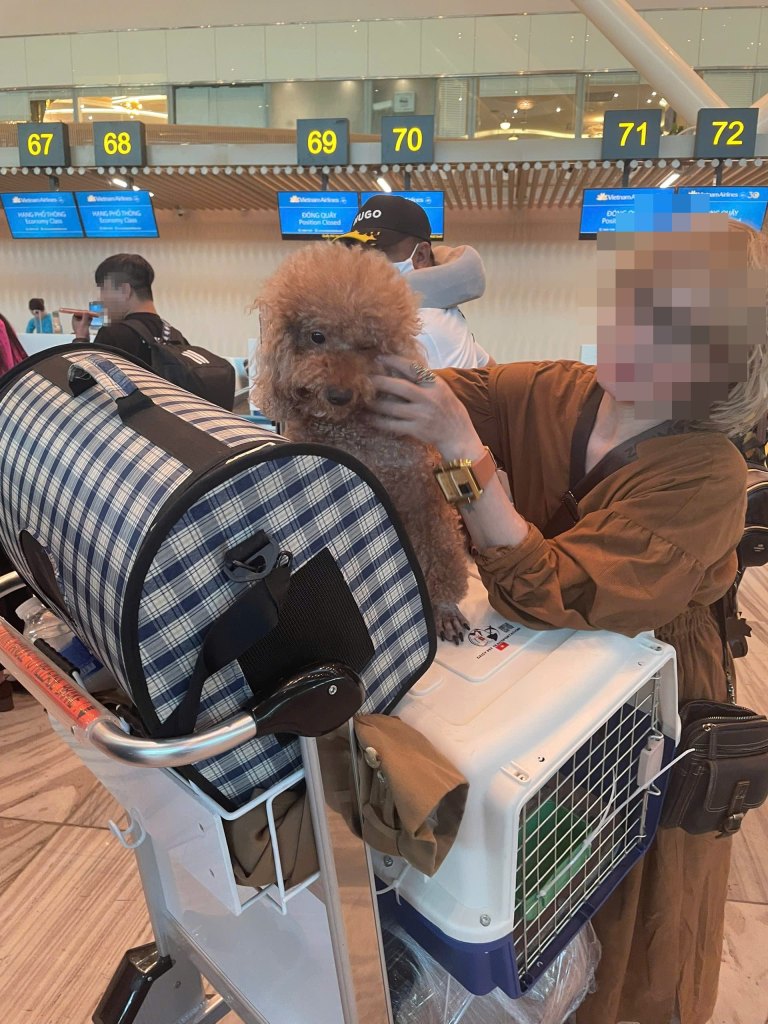
Among Southeast Asian destinations, Thailand stands out as one of the more approachable countries for pet import — no rabies antibody titer test (RNATT/FAVN) required, and no mandatory quarantine if your documentation is complete. But that accessibility comes with a caveat most owners miss: Thailand’s livestock authority — the Department of Livestock Development (DLD) — requires an Import Permit before your pet is released to you, and incomplete documentation on arrival can mean a fine or your pet being returned to its country of origin.
This guide consolidates the official requirements from the Department of Livestock Development (DLD), Thailand, so you know exactly what to prepare before flying your pet from Vietnam to Thailand.
Who Regulates Pet Import in Thailand? The DLD
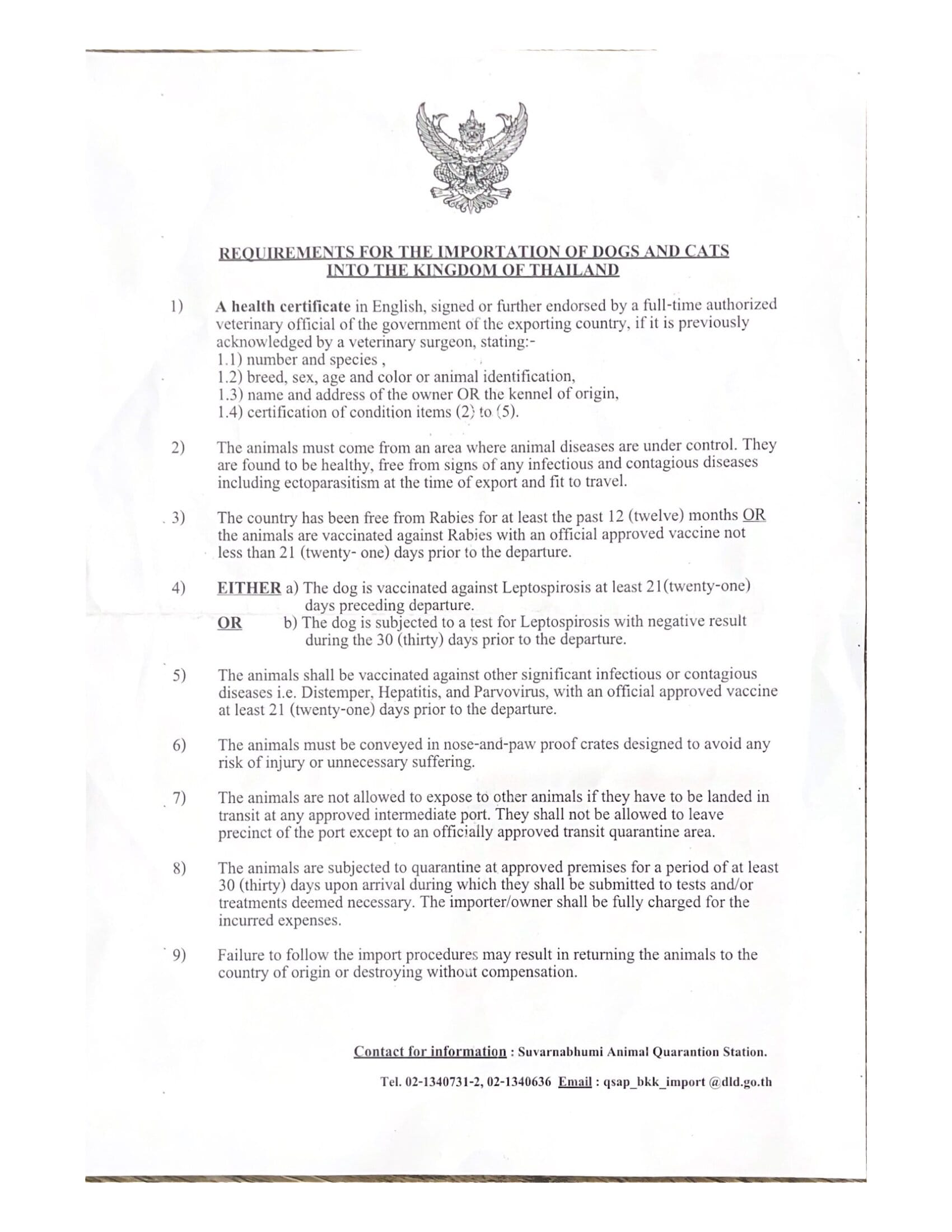
The Department of Livestock Development (DLD), under the Ministry of Agriculture and Cooperatives, is the sole authority for all animal import matters in Thailand. They issue Import Permits, set health requirements, and conduct document checks at entry ports when your pet lands.
Official website: dld.go.th — for pets arriving through Suvarnabhumi Airport, the main entry point from Vietnam, import inquiries go to the Animal Quarantine Station at qsap_bkk_import@dld.go.th.
Mandatory Import Requirements (Dogs & Cats)
Here are all requirements the DLD mandates for dogs and cats imported from Vietnam:
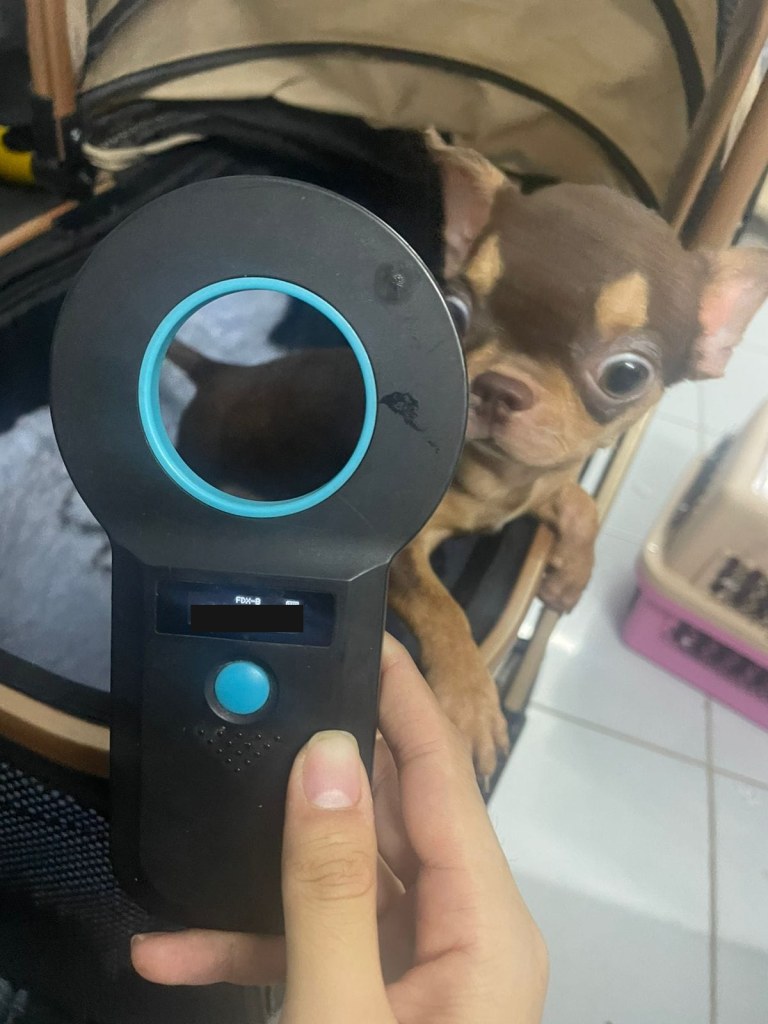
1. ISO Microchip (11784/11785)
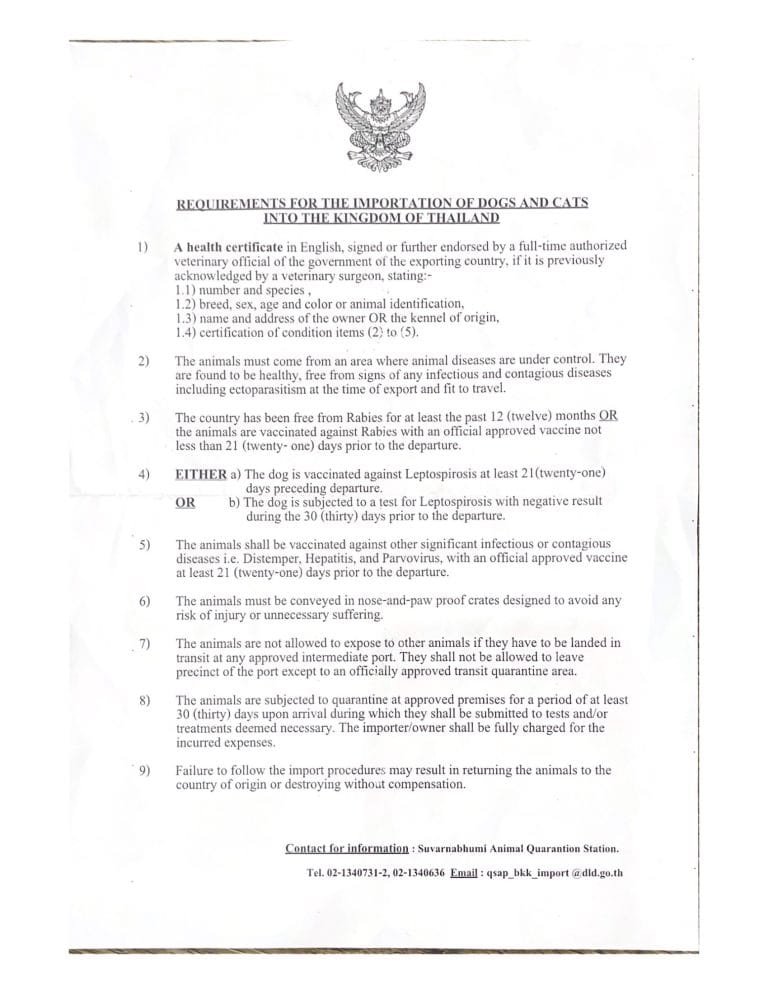
Your pet must be implanted with a 15-digit ISO 11784/11785 microchip before rabies vaccination. The chip number is the anchor for all health records and must match exactly across every document. If the chip was implanted after vaccination, the sequence is considered non-compliant and the documents are invalid.
2. Rabies Vaccination
The rabies vaccine must be given at least 21 days before departure — that’s DLD’s legal minimum. Daisy Pet’s operating standard is 30 days, applied as a safety buffer against holiday closures, clinic delays, or paperwork corrections, and it applies to every country we work with, not just Thailand. This only applies to a primary (first-ever) dose or a dose given after a previous vaccine has lapsed — if your pet already has a valid, unexpired rabies vaccine on record, there’s no wait at all; a booster just needs the previous vaccination record submitted alongside it. For a primary dose, the pet must be at least 12 weeks old at the time of vaccination. DLD’s published guidance doesn’t state a hard upper limit on how old the vaccine can be, but as a safety margin we recommend traveling on a vaccine that’s still within its manufacturer-labeled duration (commonly 12 months for an annual dose).
3. Core Non-Rabies Vaccinations
Beyond rabies, DLD requires each animal to be current on the core vaccines for its species, on the same 21-day legal minimum / 30-day Daisy Pet buffer schedule as above: dogs need Canine Distemper, Canine Hepatitis, Canine Parvovirus, and Leptospirosis; cats need Feline Panleukopenia. A dog without a valid Leptospirosis vaccine needs a negative Leptospirosis test result within 30 days of departure instead.
4. Animal Health Certificate (Export Health Certificate)
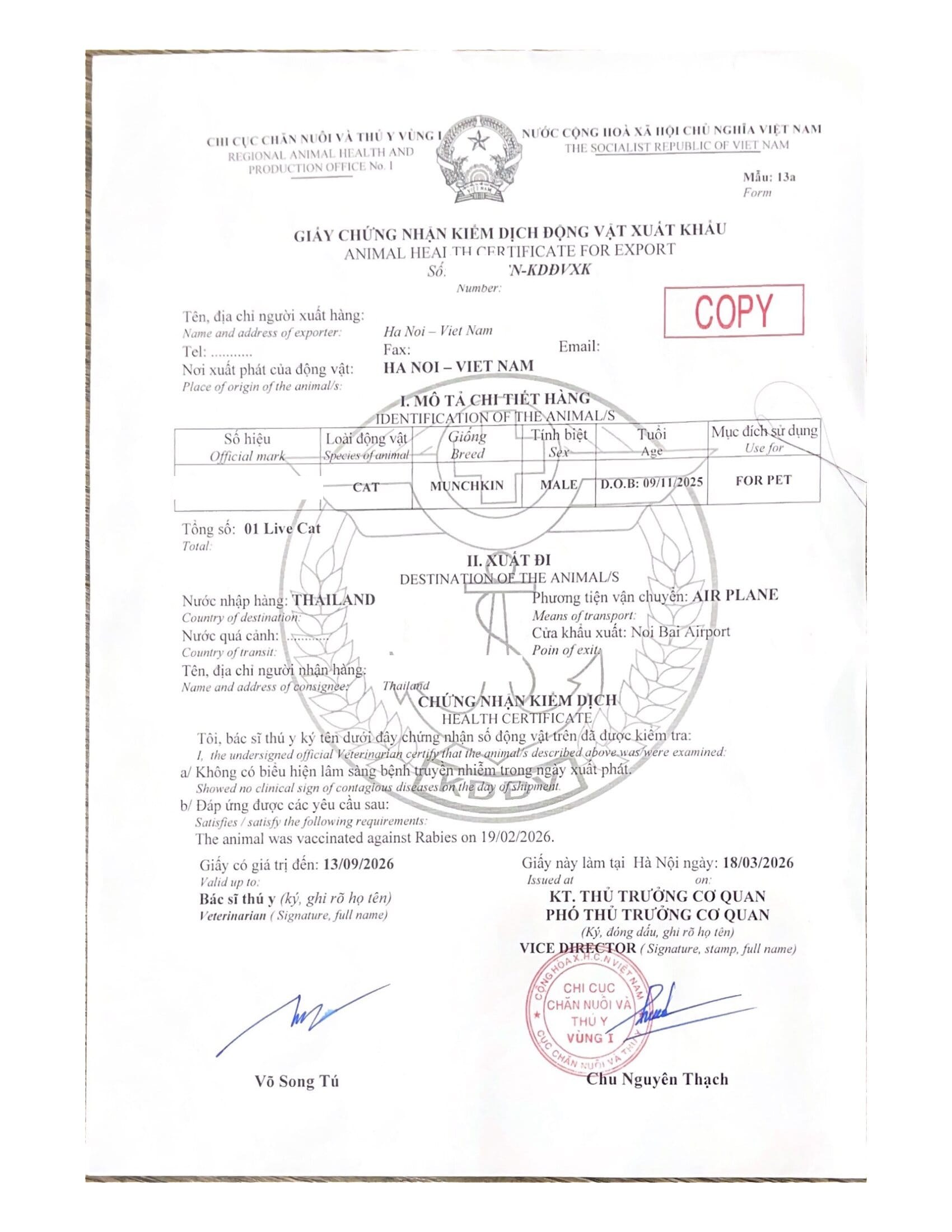
The health certificate must be issued by Vietnam’s Sub-Department of Animal Health (SDAH), under the Department of Animal Health (DAH), within 10 days of departure. It must include the microchip number, vaccination details, health status, country of origin, and destination country. Certificates from private veterinary clinics are not accepted by DLD.
5. DLD Import Permit
This is the step most owners overlook. DLD offers two official routes to get one: apply by email at least 7 working days before your flight (the permit is issued within 7 working days of a complete application and is valid for 60 days), or apply in person at the Animal Quarantine Station counter on arrival, with your original health certificate, vaccination records, and application form ready for inspection. The permit itself is free; every pet then pays a 500-baht processing fee at the Animal Quarantine Station counter on arrival, whichever route you use.
In practice, apply in advance whenever you can. The on-arrival option is an official DLD process, not a workaround — but some airlines won’t board a pet without proof that a permit has already been issued, regardless of what DLD itself allows, so relying on it adds real risk on the airline side even when DLD would accept it.
6. No RNATT/FAVN Titer Test Required
Thailand does not require a rabies antibody titer test (RNATT/FAVN) for dogs and cats imported from Vietnam. This is a significant advantage compared to Japan or Taiwan, substantially reducing both preparation time and cost.
Quarantine: Not Required If Documentation Is Complete
This is Thailand’s most important differentiator from developed-country destinations: if all documents are valid and complete, your pet clears the Animal Quarantine Station counter and is released to you the same day, for a 500-baht processing fee. If documentation is incomplete or doesn’t meet requirements on arrival, DLD’s stated consequence is a fine or having the pet returned to its country of origin, at the owner’s expense — entirely avoidable with proper preparation.
Approved Entry Ports
Pets from Vietnam may only enter through a DLD-designated Animal Quarantine Station: Suvarnabhumi (BKK), Don Mueang (DMK), Phuket (HKT), Chiang Mai (CNX), Samui (USM), or Krabi (KBV). Land border entry is not permitted.
Number of Pets Per Import
DLD allows a maximum of 5 pets per import for personal (non-commercial) purposes. In practice, airlines typically accept only 1–2 pets per flight, so airline policy is usually the binding constraint.
Complete Requirements Summary
| Requirement | Details | Mandatory? |
|---|---|---|
| ISO Microchip | 15-digit, implanted before rabies vaccine | Required |
| Rabies Vaccine | 30 days recommended if first dose/lapsed (21-day legal minimum), no wait if already valid; pet ≥12 weeks old for primary dose | Required |
| Core Vaccines | Distemper/Hepatitis/Parvovirus/Leptospirosis (dogs) or Panleukopenia (cats), same 30-day/21-day schedule as rabies | Required |
| Health Certificate | Issued by DAH Vietnam, within 10 days of departure | Required |
| DLD Import Permit | Free — apply by email ≥7 working days ahead; on arrival also allowed (cabin/checked baggage only), but risky if your airline asks for the permit at check-in | Required |
| RNATT/FAVN Titer Test | Not required | Not needed |
| Mandatory quarantine | Not required if docs complete | Not needed |
The Most Common Mistake: Treating the Import Permit as Optional
In practice, the most common reason pets run into trouble at Thai airports is not a missing vaccine — it’s the DLD Import Permit. Many owners assume the Vietnamese health certificate is sufficient. It isn’t. The health certificate proves your pet is healthy at departure; the Import Permit is Thailand’s authorization to allow entry. They are two entirely separate documents, and DLD can process the permit on arrival if you show up with everything else in order — but some airlines won’t let you board without one already issued, which is a business risk on top of the legal requirement. This isn’t theoretical — read what happened when one of our own clients was denied boarding over a missing permit, and what it cost to fix.
If you’re planning to bring your pet to Thailand and aren’t confident about the documentation sequence, Daisy Pet’s professional documentation service covers the full process — from vaccination scheduling to DLD permit coordination.
Next Steps for Thailand Pet Relocation
Once the legal requirements are clear, the practical next steps are timeline and budget planning: see the 4–6 week preparation timeline or review the complete cost breakdown by category to estimate your total spend.
Frequently Asked Questions
Does my pet need quarantine in Thailand? No — if documentation is complete (microchip, core vaccinations, DAH health certificate, DLD Import Permit), your pet clears the airport quarantine counter directly without quarantine, for a 500-baht processing fee.
How long does the DLD Import Permit take? DLD’s official minimum is 7 working days before departure if you apply by email in advance; processing itself typically takes 3–7 working days. Given the risk that airlines may refuse boarding without a permit already in hand, we recommend applying as early as your travel plans allow.
Do cats face the same requirements as dogs? The same four categories of documents apply — microchip, core vaccinations, health certificate, DLD Import Permit — but the vaccine list differs: cats need Rabies and Feline Panleukopenia, while dogs also need Distemper, Hepatitis, Parvovirus, and Leptospirosis.
Last updated 18 Oct 2026
Compiled by our specialists from the regulations in force on the date above, for reference only. Rules may change after this date. Please verify with the competent authorities or contact us for the most accurate information.
Official sources cited in this guide