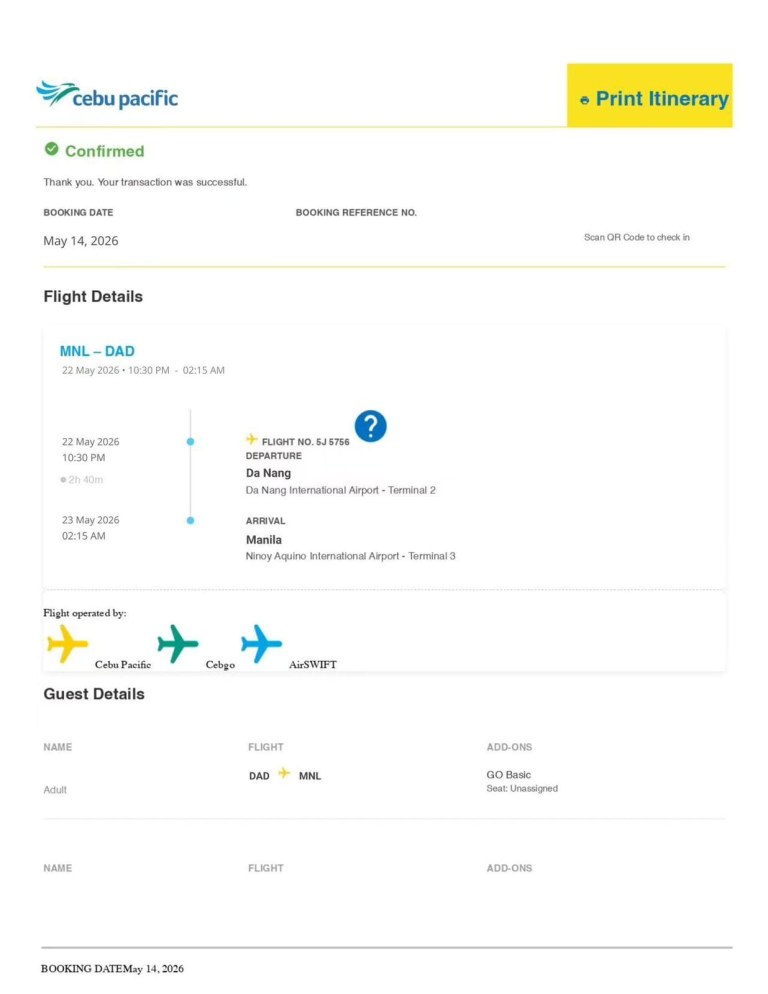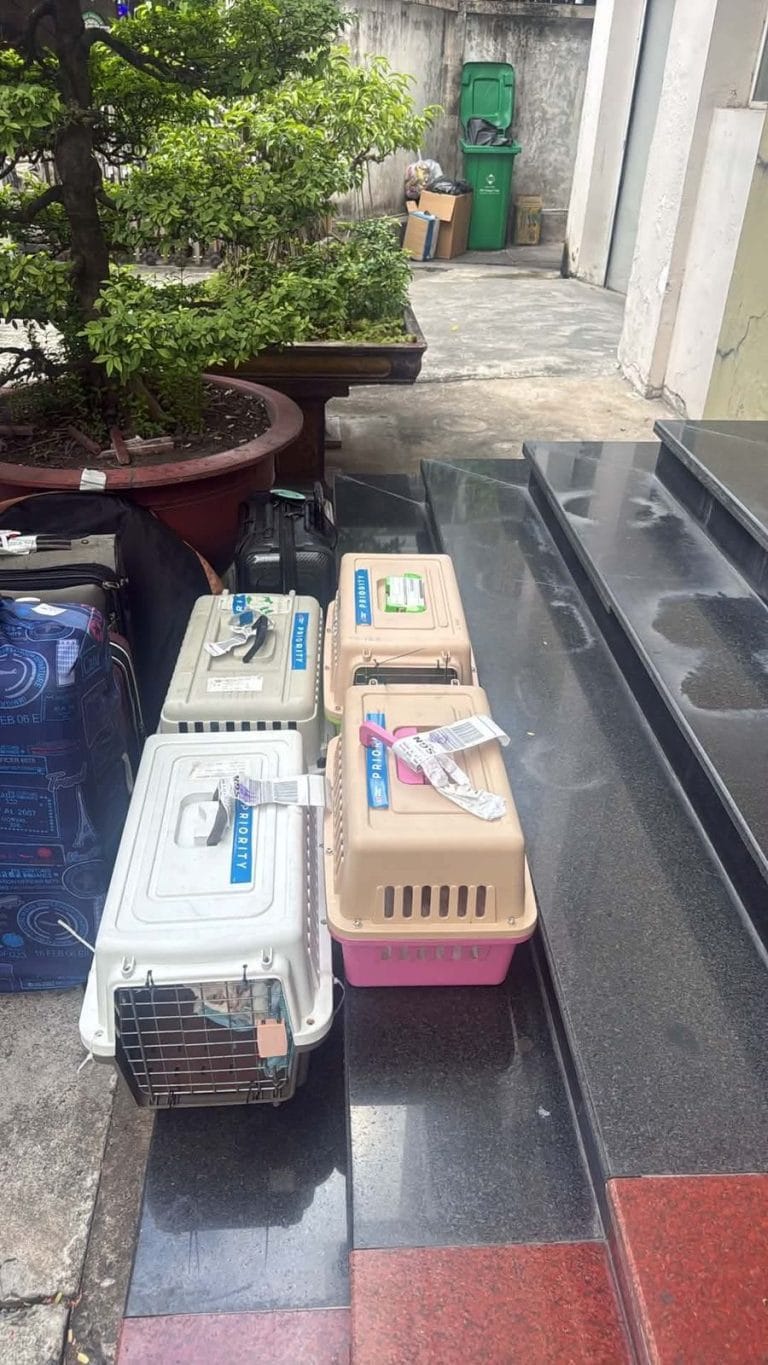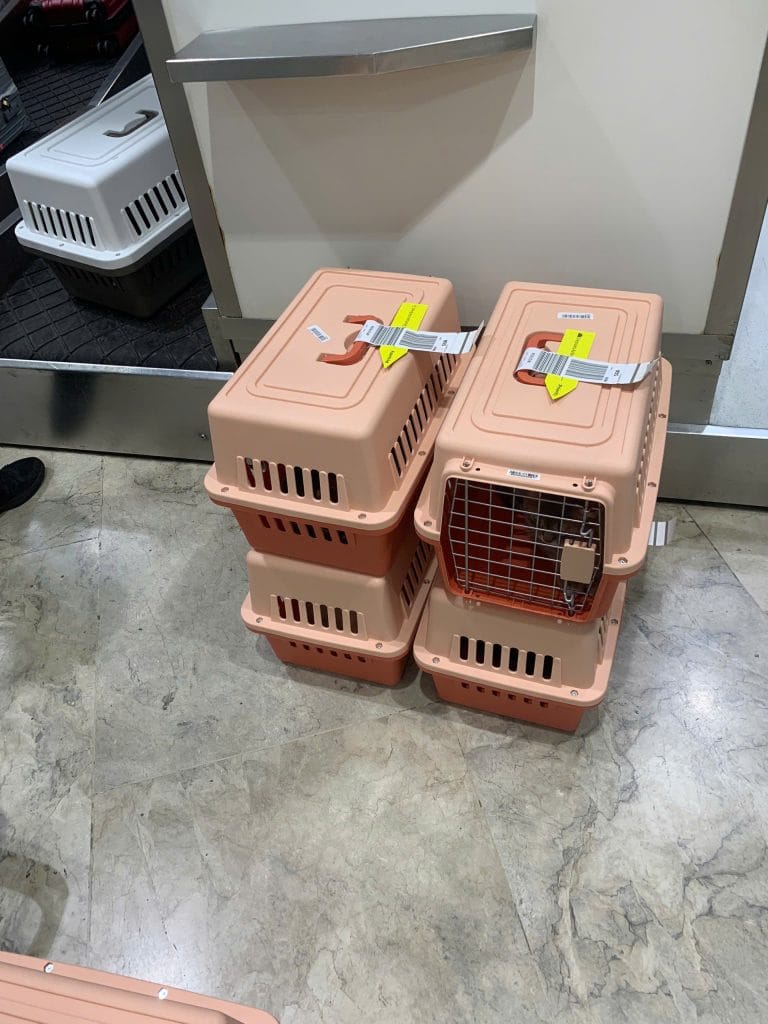
The import of dogs and cats into the Philippines is regulated by the Bureau of Animal Industry (BAI), a division of the Department of Agriculture. Under the National Veterinary Quarantine Services Division (NVQSD), the BAI enforces strict sanitary and phytosanitary rules to safeguard the country’s animal health profile. Every pet entering the country must follow a designated medical and administrative sequence with no exemptions.
Understanding these laws is critical: a single document discrepancy, an incorrect vaccination window, or an unreadable microchip will trigger immediate quarantine at the port of entry or deport the pet back to Vietnam. This guide provides the complete legal and veterinary compliance framework for our pet shipping to the Philippines services. For a step-by-step timeline, see our companion Philippines Pet Relocation Guide.
Part 1: The Regulatory Bodies — BAI and NVQSD
The legal framework for pet relocation is administered by two primary government bodies under the Department of Agriculture:
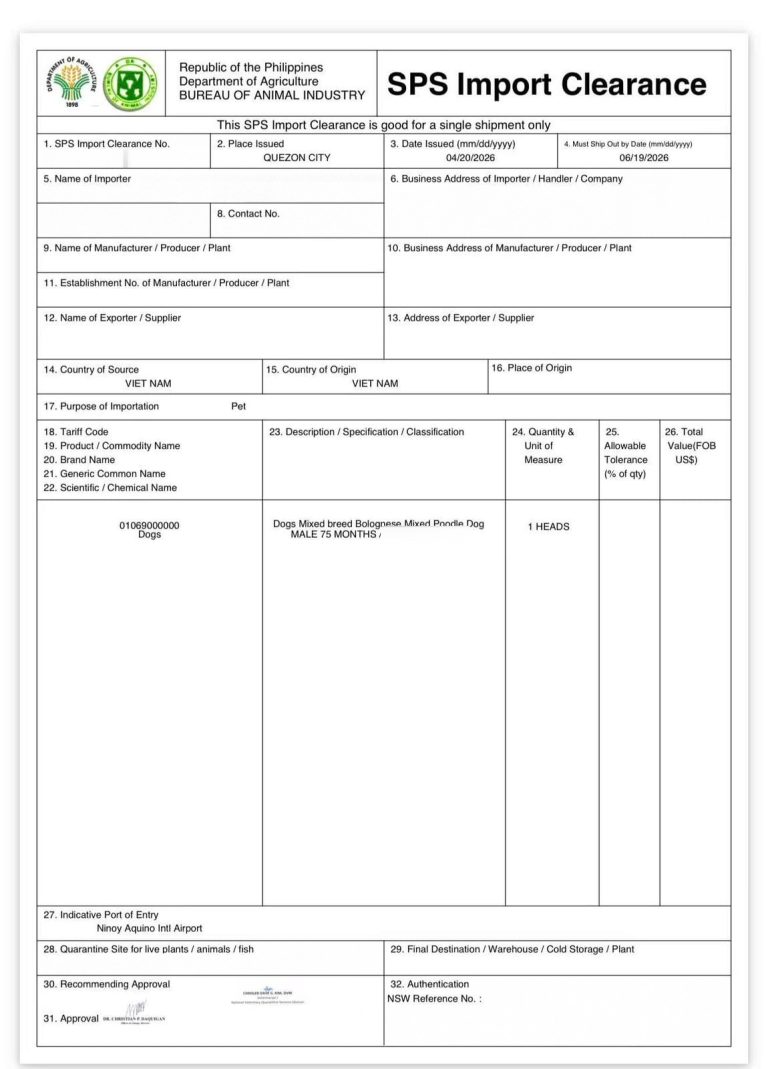
- Bureau of Animal Industry (BAI): Formulates the animal health policies and issues the official Sanitary and Phytosanitary Import Clearance (SPSIC).
- National Veterinary Quarantine Services Division (NVQSD): Operates the veterinary border control at Manila’s Ninoy Aquino International Airport (NAIA) and manages the quarantine inspection protocols.
Part 2: Microchip Specifications (The Crucial First Step)
Under BAI regulations, every imported dog and cat must be identified with a microchip. The microchip is the legal foundation of the pet’s profile, linking them to all veterinary records. The requirements include:
- ISO Standard: The microchip must conform to ISO standard 11784 or 11785 (15-digit FDX-B transponder). AVID 9-digit chips or non-ISO chips are legally invalid.
- Implantation Sequence: The microchip must be implanted before any primary vaccinations are administered. Any vaccinations given before chip implantation are legally invalid.
- Verification: The 15-digit number must be recorded precisely on all documents, including the SPSIC permit and the export Veterinary Health Certificate (VHC).
Part 3: Mandatory Vaccination Protocols and Timing
The BAI enforces strict vaccination requirements to prevent the introduction of infectious diseases. The mandatory schedule includes:
- Rabies Vaccination: The pet must be vaccinated against Rabies at least 30 days and at most 1 year prior to travel. This biological window is strictly enforced.
- Canine Core Vaccines: Dogs must have valid vaccinations against Canine Distemper, Hepatitis (CAV-2), and Parvovirus (DHLPP). Breed has no bearing on national import approval — the Philippines does not maintain a banned-breed import list — but the breed must still be declared accurately; see our companion guide on banned and restricted dog breeds in the Philippines.
- Feline Core Vaccines: Cats must have valid vaccinations against Feline Rhinotracheitis, Calicivirus, and Panleukopenia (FVRCP).
- Age Rule: Pets must be at least 4 months old at the time of export. The rabies shot cannot be given before 12 weeks of age, followed by the mandatory 30-day waiting period.
Part 4: Sanitary and Phytosanitary Import Clearance (SPSIC)
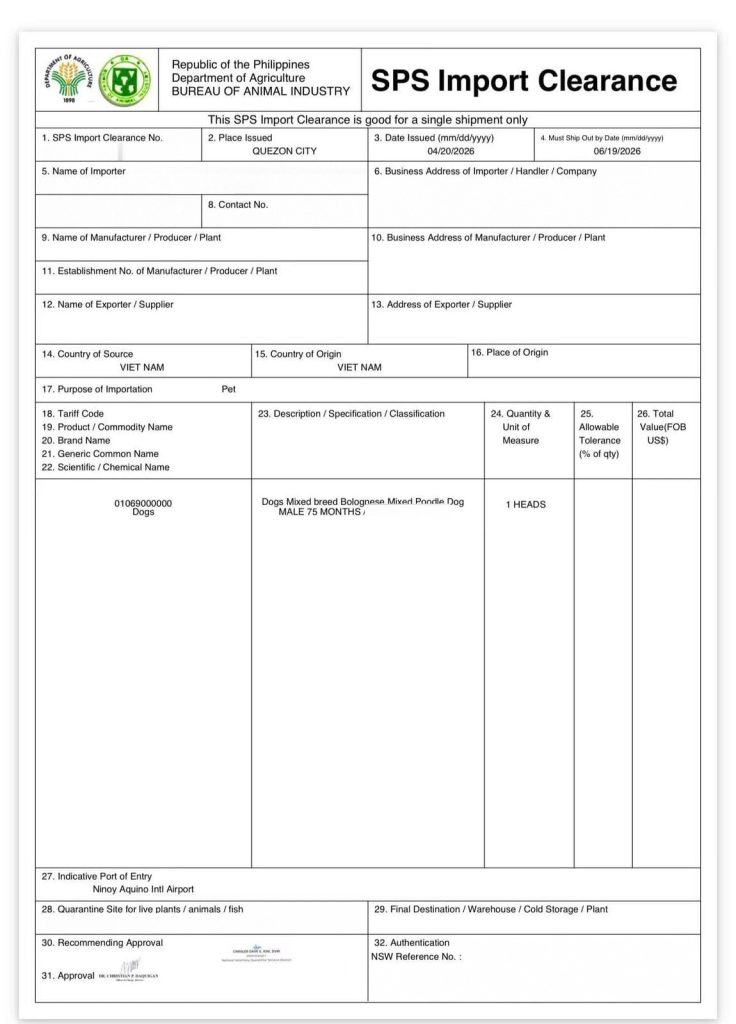
The Sanitary and Phytosanitary Import Clearance (SPSIC) is the primary legal document required for importing pets. It is issued through the InterCommerce online portal and is governed by strict rules:
- Validity: The SPSIC is valid for exactly 60 days from the date of approval. Your pet must arrive in Manila within this validity window. For more information about SPSIC applications, check our Philippines pet import FAQ.
- Content: The permit specifies the authorized importer, the exact pet details (microchip, breed, description), and the exporting country.
- Filing: The application must be filed online before departure. Original paper copies must be printed and carried with the pet’s travel documents.
- Head Limit & Rabies Titer Test: A maximum of 3 pets can be imported per application. If a single shipment carries MORE than 3 pets, NVQSD requires a Rabies Titer Test for the entire shipment — for 1–3 pets, no titer test is required, only a valid SPSIC, complete vaccinations, and a VHC valid within 10 days (confirmed directly by NVQSD, 02 Sep 2026).
In one real case, a Devon Rex cat named Lady Arwen flew from Ho Chi Minh City to Manila on day ten of her family’s 60-day SPSIC window — see the full case study for how her SPS Import Clearance and export certificate were filed under a different family member’s name than the one on her pet booklet.
Part 5: Parasite Treatments and DAH Health Certification
Before departure, a two-step sanitary clearance must be completed by Vietnamese veterinary authorities:
- Parasite Treatments: Between 10 and 14 days before the flight, the pet must be treated for both internal parasites (using Milbemycin or equivalent) and external parasites (using Fipronil or equivalent).
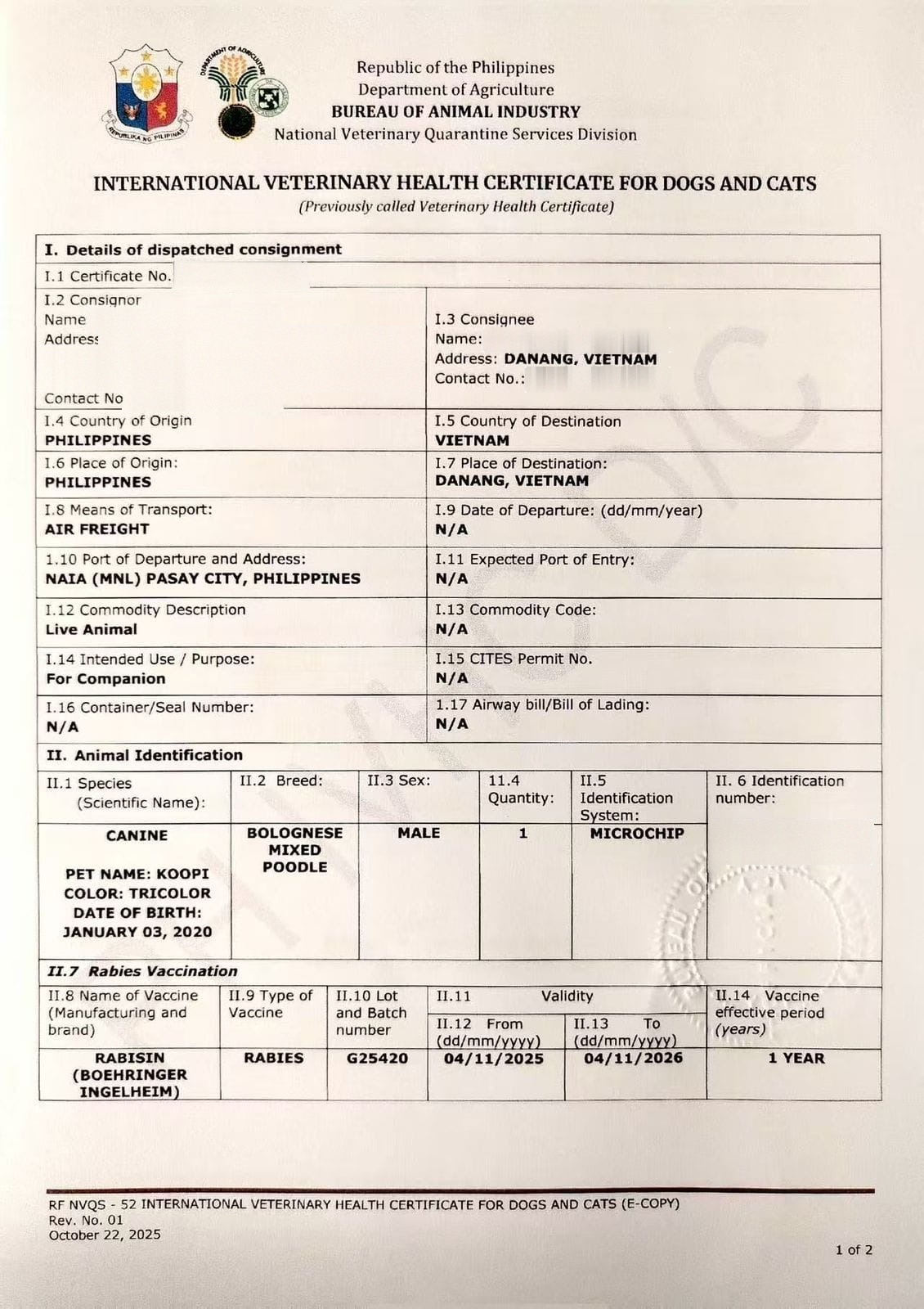
- Veterinary Health Certificate (VHC): Within 10 days of travel, a clinical exam must be conducted, and the official VHC must be issued and endorsed (stamped) by Vietnam’s Department of Animal Health (DAH).
Part 6: Arrival Inspection and Quarantine Release at NAIA
Upon landing at NAIA in Manila, your pet will be transferred to the quarantine station for inspection. A quarantine officer will verify the original VHC from Vietnam, the printed SPSIC, and check the microchip. If all documents comply, the pet is released immediately. There is no mandatory quarantine for pets with perfect paperwork.
If the microchip is unreadable, vaccinations are expired, or the SPSIC is invalid, your pet may be subjected to mandatory quarantine at your expense, re-exported, or tested. Working with a specialist like Daisy Pet ensuring a smooth, compliant transition through NAIA.
Frequently Asked Questions
What is the minimum age for a pet to travel to the Philippines?
Under BAI regulations, pets must be at least 4 months (16 weeks) old to travel. The primary rabies vaccine must be given at 12 weeks, followed by a mandatory 30-day biological waiting period before export.
Can I apply for the SPSIC import permit myself?
Yes, individual owners can apply for the SPSIC via the official InterCommerce portal. However, the system is complex, and any errors in microchip recording or owner details will result in permit rejection. Professional agents handle this to avoid administrative issues.
Is there a quarantine on arrival in the Philippines?
No. The Philippines does not impose quarantine on dogs and cats from Vietnam, provided they arrive with a valid SPSIC permit, ISO microchip, valid rabies and core vaccinations, and a DAH endorsed VHC.
How long before the flight must the DAH health certificate be endorsed?
The Veterinary Health Certificate (VHC) must be endorsed by the exporting authority (DAH) within 10 days of the flight date. If your flight is delayed beyond this 10-day window, you must repeat the clinical exam and obtain a new certificate.
Does my pet need a Rabies Titer Test?
Not if you are importing 1 to 3 pets in one shipment — a valid SPSIC, complete vaccinations, and a valid VHC are sufficient. A Rabies Titer Test is only required when a single shipment carries more than 3 pets, regardless of the country of origin (confirmed directly by NVQSD, 02 Sep 2026).
Related: Pet Shipping to the Philippines: The Complete 2026 Guide — a comprehensive logistical overview covering airline pathways, AVIH options, cargo terminal clearance, and cost estimation.
Last updated 15 Oct 2026
Compiled by our specialists from the regulations in force on the date above, for reference only. Rules may change after this date. Please verify with the competent authorities or contact us for the most accurate information.
Official sources cited in this guide
- Bureau of Animal Industry (BAI)bai.gov.ph