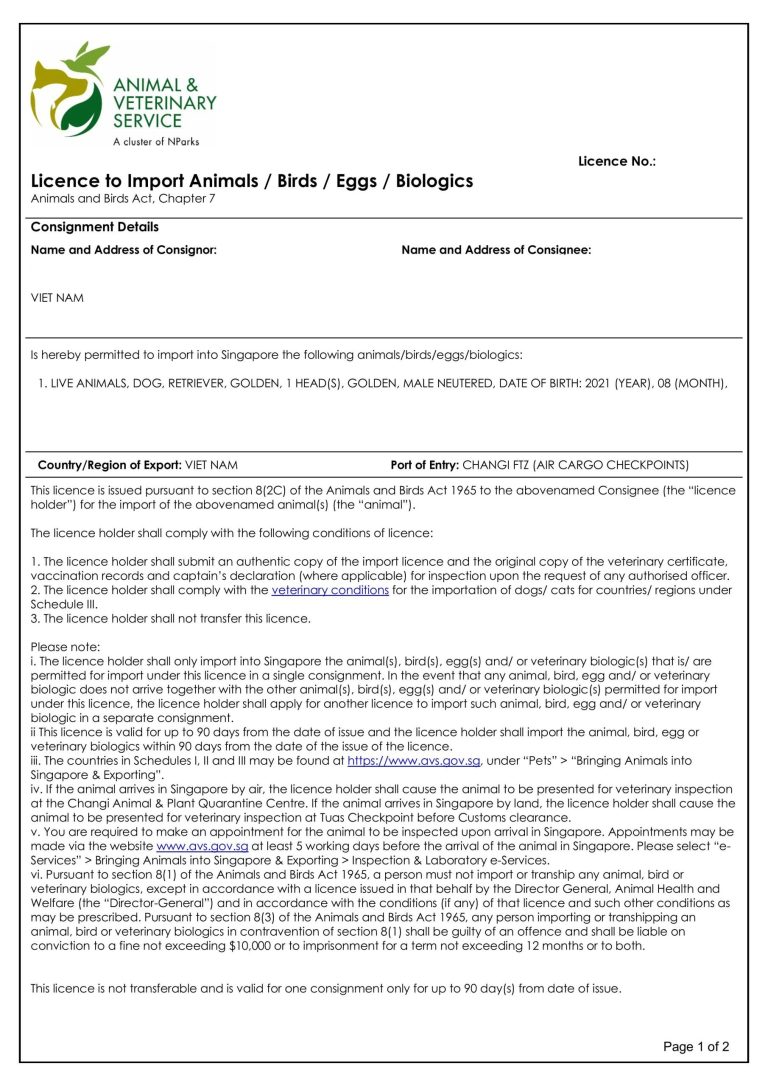
Vietnam is classified as a Schedule III country by Singapore’s Animal & Veterinary Service (AVS) — the highest-risk rabies category. This classification triggers the most stringent import pathway: a process spanning a minimum of 4–5 months across 8 sequential steps that cannot be shortened or reordered. (Wrapping up your posting? Bringing a pet from Singapore to Vietnam follows a different set of requirements.)
The most common failure in Singapore pet relocation is not missing paperwork — it is running out of time to plan. This guide is your operational roadmap to understanding every milestone and starting correctly from day one. See our full pet transport to Singapore service overview.
Master Timeline: Key Milestones at a Glance
Before diving into each step, here is the full overview. This table shows the standard timeline for a pet relocating from Vietnam to Singapore:
| Phase | Timing | Primary Action |
|---|---|---|
| Kickoff | Week 1 (Day 1) | Implant ISO microchip → Vaccinate → Book AQC slot immediately |
| Blood test | Day ≥28 after rabies vaccine | Draw blood for RNATT → Ship to an approved overseas lab |
| Licensing | Day 90–120 | Register PALS licence → Apply for Import Permit (≥30 days before flight) |
| Final documents | 7 days before flight | Clinical exam → DAH Health Certificate → Book CAPQ inspection |
| Flight day | Month 4–5 | CAPQ inspection at Changi → Transfer to AQC Sembawang |
| Mandatory quarantine | +30 days after arrival | 30 days at AQC → Pet released to owner |
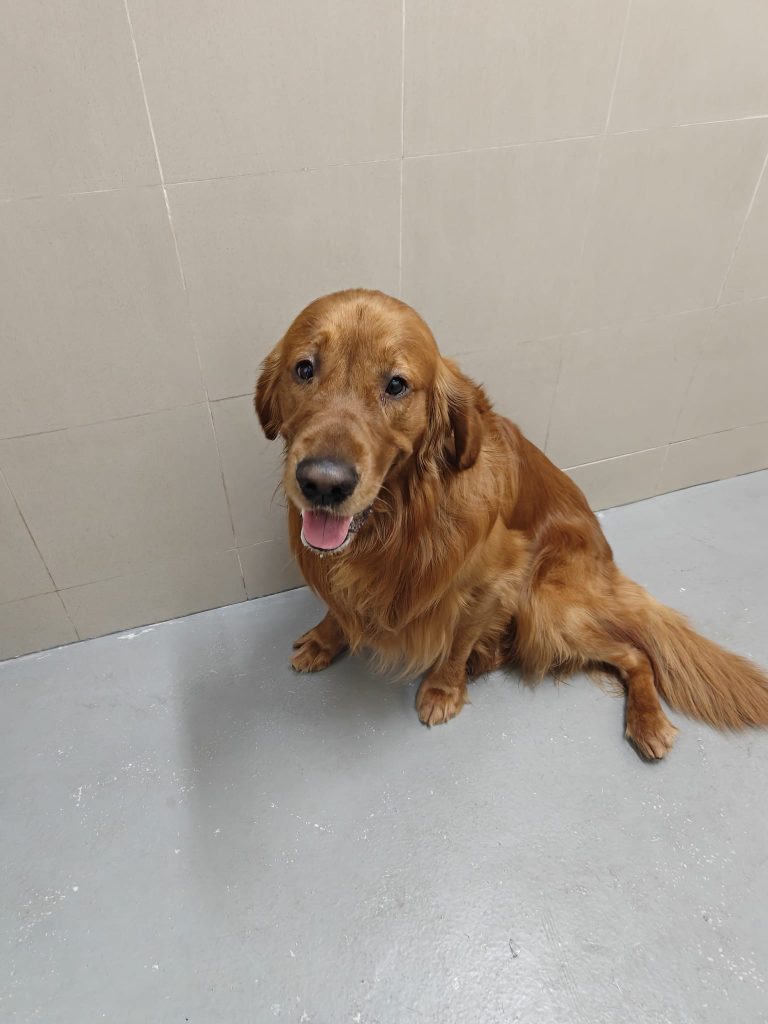
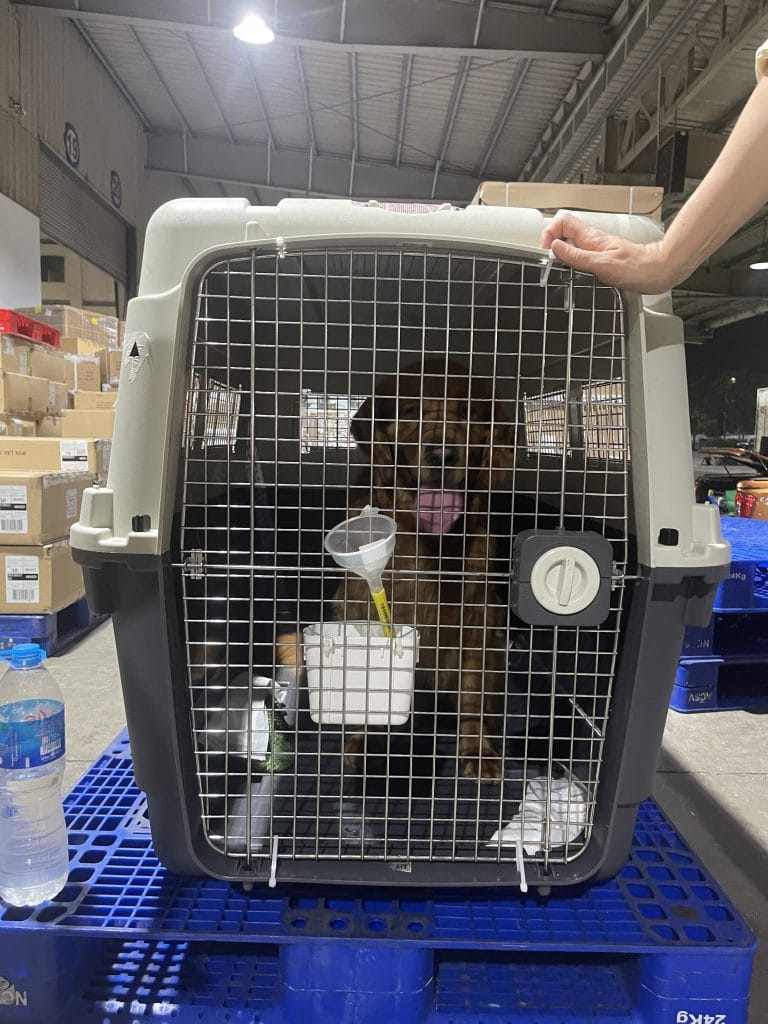
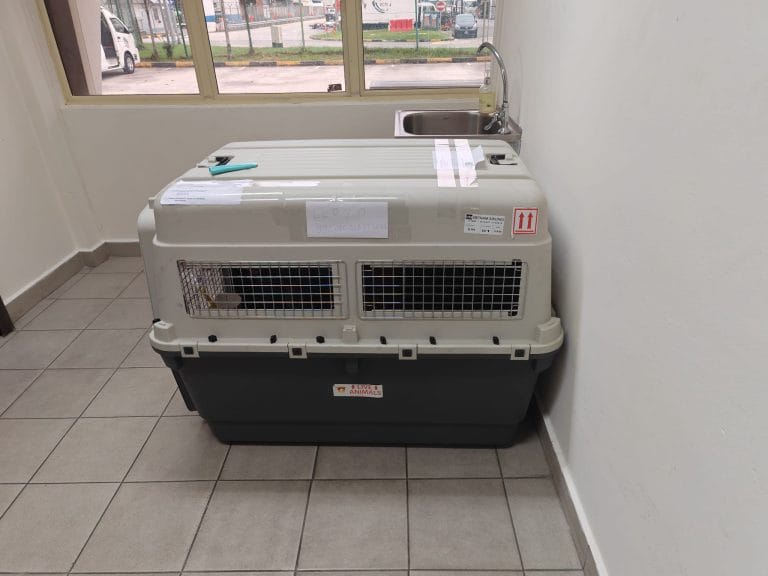
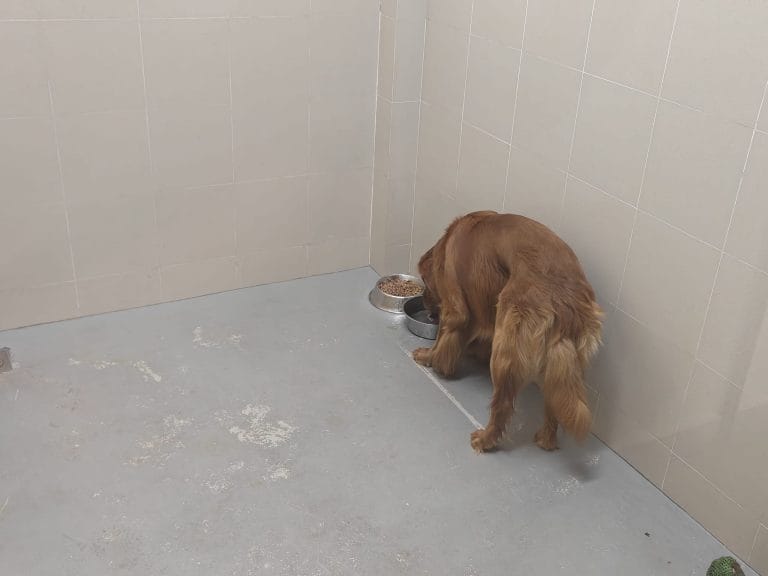
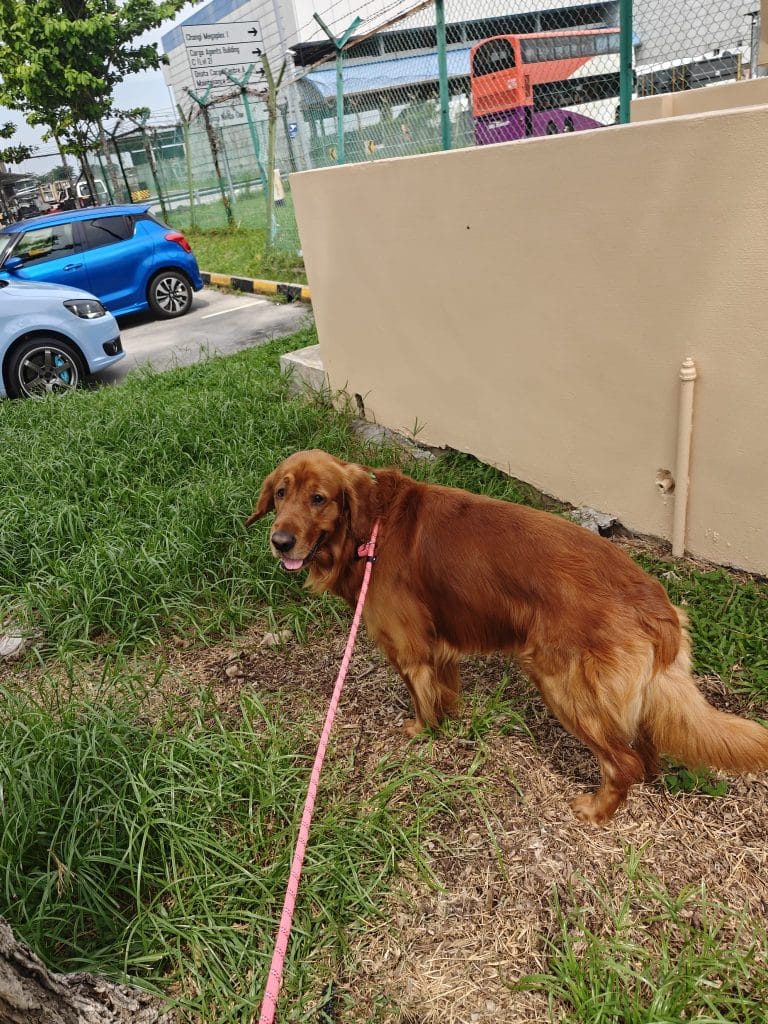
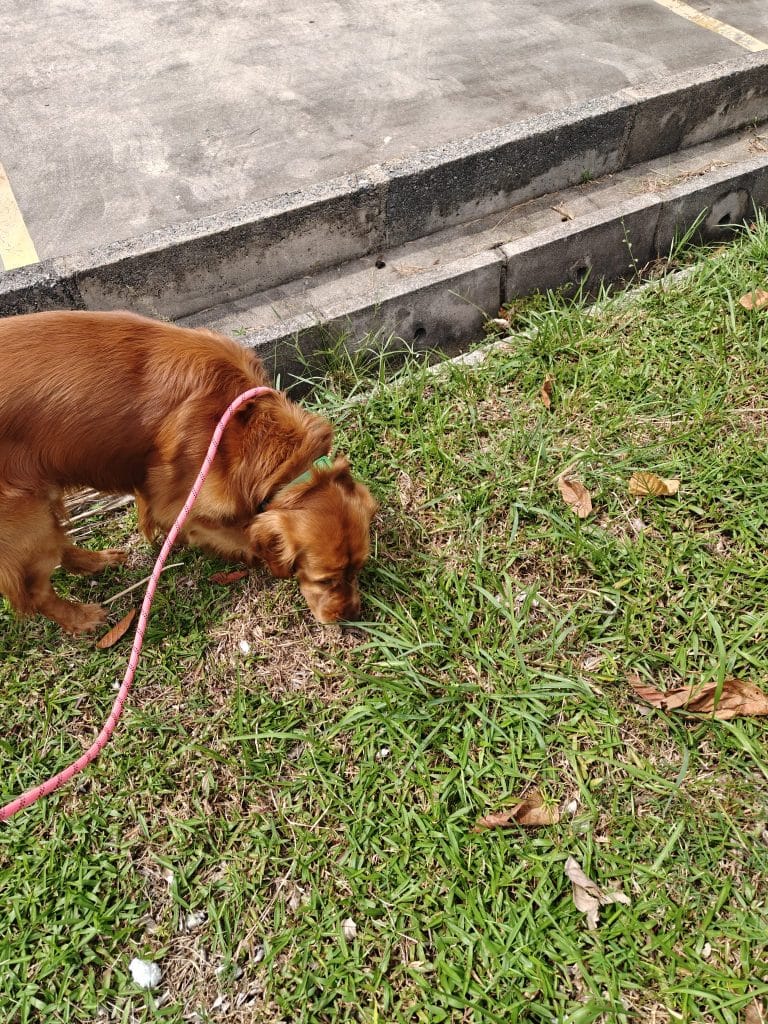
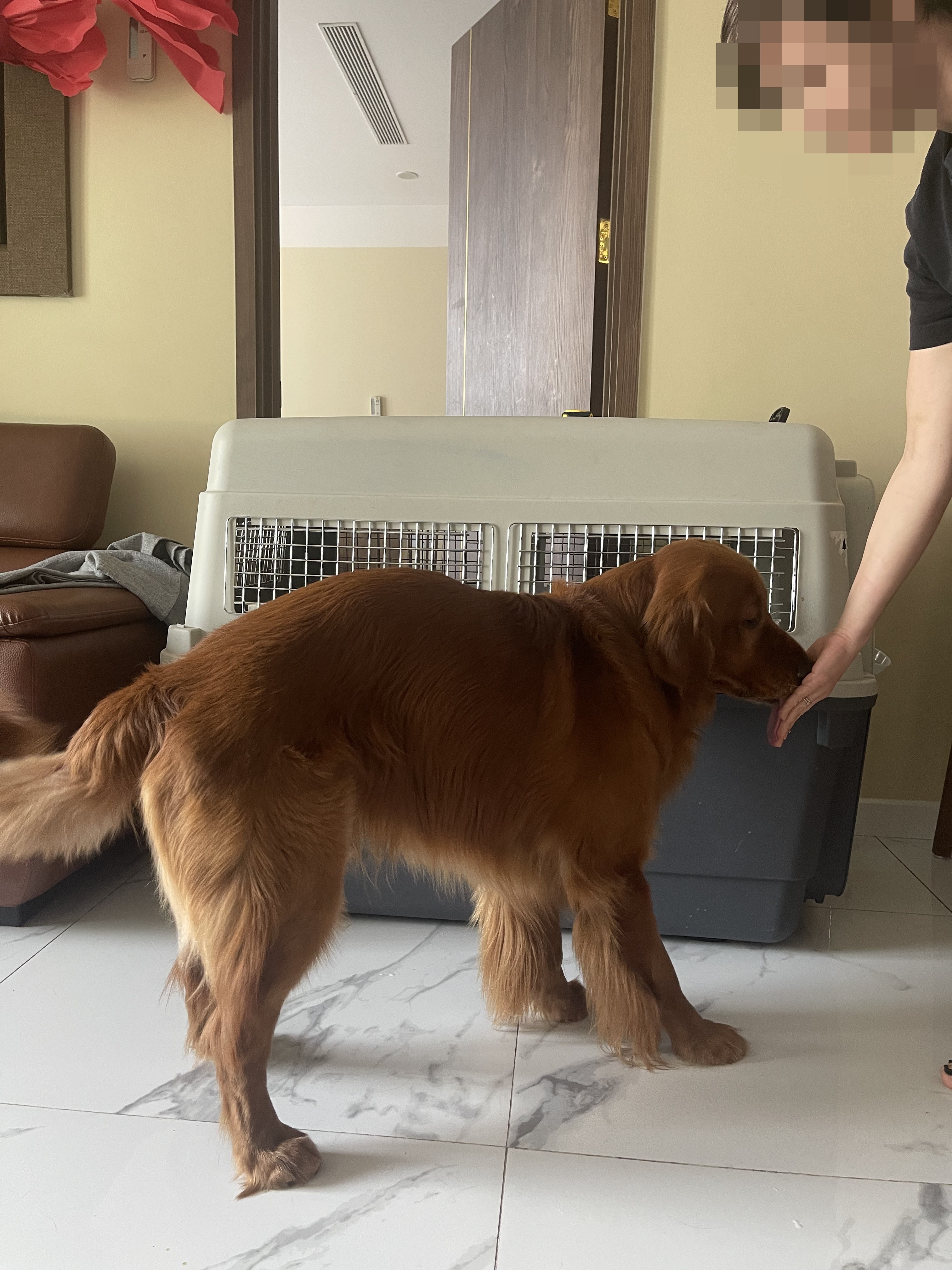
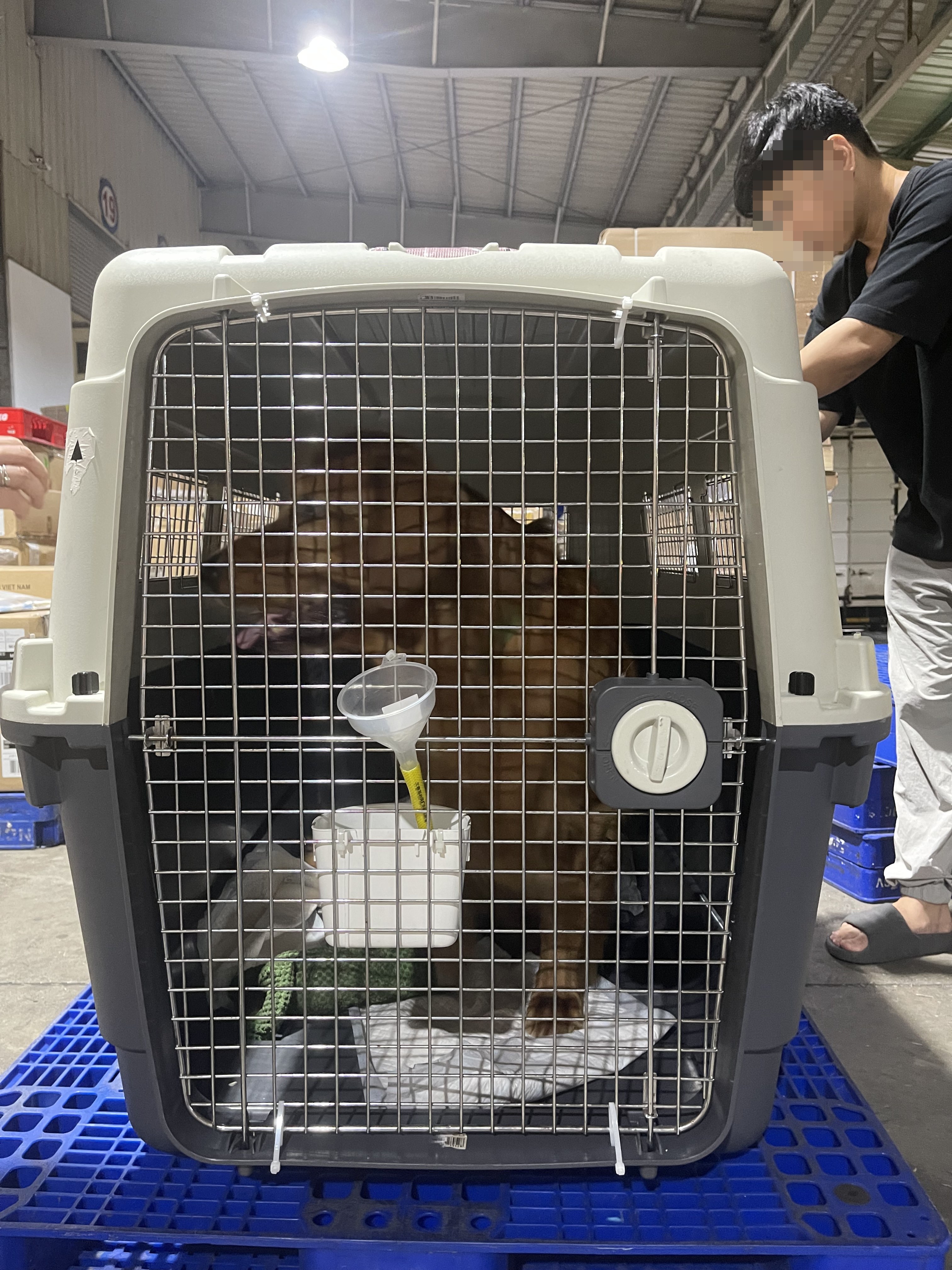
Minimum total time: ~4–5 months. The hard constraint is the 90-day rule: RNATT blood must be drawn at least 90 days before the flight date — this is a biological requirement set by AVS with no exceptions. To see exactly how this timeline plays out in practice, read Lloyd’s Golden Retriever case study — a real-world Hanoi-to-Singapore relocation timeline from microchip to AQC release.
Step 1: ISO Microchip Implantation (Day 1 — Non-negotiable first step)
The microchip must conform to ISO 11784/11785 (15-digit transponder) and must be implanted BEFORE any vaccinations. AVS is unambiguous: if the rabies vaccine was administered even one day before the chip was implanted, that vaccination is declared invalid and must be repeated from scratch after chipping.
Immediately after implantation: photograph the chip card and record the chip number precisely. Every document going forward must state this number with zero errors — one wrong digit can result in document rejection at Changi CAPQ and an extended quarantine.
Step 2: Complete Vaccination Course (Immediately after microchipping)
Singapore is one of the few countries requiring both rabies AND core combination vaccines — unlike Japan, the EU, or the USA, which require only rabies for import. The mandatory vaccine list:
- Dogs: Rabies + Canine Distemper + Canine Hepatitis (CAV-2) + Canine Parvovirus.
- Cats: Rabies + Feline Rhinotracheitis (FVR) + Calicivirus + Panleukopenia (FPV).
Ask your veterinarian to record the product name, batch number, and expiry date for every vaccine in the vaccination booklet. AVS frequently rejects records that only have stickers without handwritten batch number confirmation.
Step 3: Book Your AQC Quarantine Slot Immediately (Week 1–2)
This is the step most self-managed pet owners overlook — and it produces the most serious consequences. The Animal Quarantine Centre (AQC) in Sembawang is the only facility authorised to receive pets from Vietnam, and capacity is strictly limited. During peak relocation season (August–December), slots are fully booked 3–4 months in advance.
Daisy Pet’s golden rule: Book your AQC slot via the QMS system in the very first week, in parallel with microchipping and vaccination — do not wait for RNATT results. By then, it may already be too late. Read our detailed guide on how to book an AQC quarantine slot in Singapore.
Step 4: Rabies Antibody Titer Test — RNATT (≥30 days after rabies vaccination)
This is the timeline’s most critical non-negotiable constraint. Blood must be drawn at least 30 days after the rabies vaccination, and the draw must occur within a window of 90 to 365 days before the flight date. The result must confirm a neutralising antibody level of ≥ 0.5 IU/ml.
Because Vietnam has no WOAH-approved titer test laboratory, blood samples must be shipped to an approved laboratory overseas. Processing typically takes 3–4 weeks. Learn more about the RNATT requirements in Singapore’s import regulations.
Step 5: PALS Registration and Import Permit Application (≥30 days before flight)
Singapore requires a unique two-step licensing process — no other country in our database has an equivalent requirement:
- Step 5A — PALS (Pet Animal Licensing System): Register a pet licence for your animal in Singapore. PALS approval is a prerequisite for the Import Permit. See the full PALS pet licence registration guide for the step-by-step process and common errors to avoid.
- Step 5B — Import Permit via GoBusiness: Submit the application at least 30 days before the pet’s arrival date. The permit is valid for 90 days once issued. See our full guide on the Singapore two-step licensing process.
Step 6: DAH Health Certificate (Within 7 days before flight)
The export health certificate must be issued by a government-approved veterinarian in Vietnam and endorsed by the regional Animal Health Office (Chi cục Chăn nuôi và Thú y vùng). Its validity window is only 7 days from the date of issue to the flight date. Schedule the clinical examination precisely to avoid wasting a certificate.
Simultaneously, book the border inspection at CAPQ (Changi Animal & Plant Quarantine) at least 5 working days before the pet’s arrival. This booking step is frequently missed and causes incidents directly at the Singapore border.
Step 7: Flight Day — CAPQ Inspection at Changi
The pet arrives at Changi Airport and is immediately directed to CAPQ where an AVS officer inspects all documentation. Original documents required: Import Permit, PALS Licence, Health Certificate, RNATT results, vaccination records, and the Customs In-Payment permit (9% GST). After clearance, the pet is transported to AQC Sembawang — airport-to-facility transport costs SGD 75.
Any missing document can result in the pet being held at Changi or the quarantine period being extended. See our guide on airlines that transport pets from Vietnam to Singapore to choose the right flight.
Step 8: Mandatory 30-Day Quarantine at AQC Sembawang
The final and unavoidable phase. Pets from Vietnam (Schedule III) must complete a minimum 30-day quarantine at AQC — no exceptions, and no home quarantine option is available for this classification. Fees from 1 December 2026: SGD 36/day (fan-fitted room) or SGD 44/day (air-conditioned room). For a detailed look at what happens each day during the 30-day stay at AQC — routines, visiting hours, and what to prepare — see our dedicated guide.
Owners may visit their pets during designated visiting hours at AQC. After the full 30 days, the pet is released directly to the owner at the facility gate. Read our comprehensive guide on what happens during quarantine at AQC Sembawang.
Frequently Asked Questions About the Timeline
What is the absolute minimum timeline?
Approximately 120 days (~4 months) from microchip implantation to the flight date, plus 30 days of quarantine at AQC. In practice, 5 months is more realistic once lab turnaround and permit processing times are included.
What happens if the RNATT result fails?
A rabies booster vaccination is required, followed by a 30-day wait and a new blood draw. The entire 90-day clock resets from the new blood draw date. This is why Daisy Pet always reviews a pet’s vaccination history before recommending a timeline.
Can I handle the entire process myself?
From April 2026, AVS Singapore requires that only AVS-recognised pet agents may conduct clearance procedures at CAPQ Changi. Self-managing owners face a significant barrier at the most critical final step. Contact Daisy Pet Transport to be supported through the full journey.
For answers to the 19 most common questions about Singapore pet import — costs, documents, AQC booking, and more — see our complete Singapore pet import FAQ.
Last updated 18 Oct 2026
Compiled by our specialists from the regulations in force on the date above, for reference only. Rules may change after this date. Please verify with the competent authorities or contact us for the most accurate information.
Official sources cited in this guide
- Singapore’s Animal & Veterinary Service (AVS)nparks.gov.sg