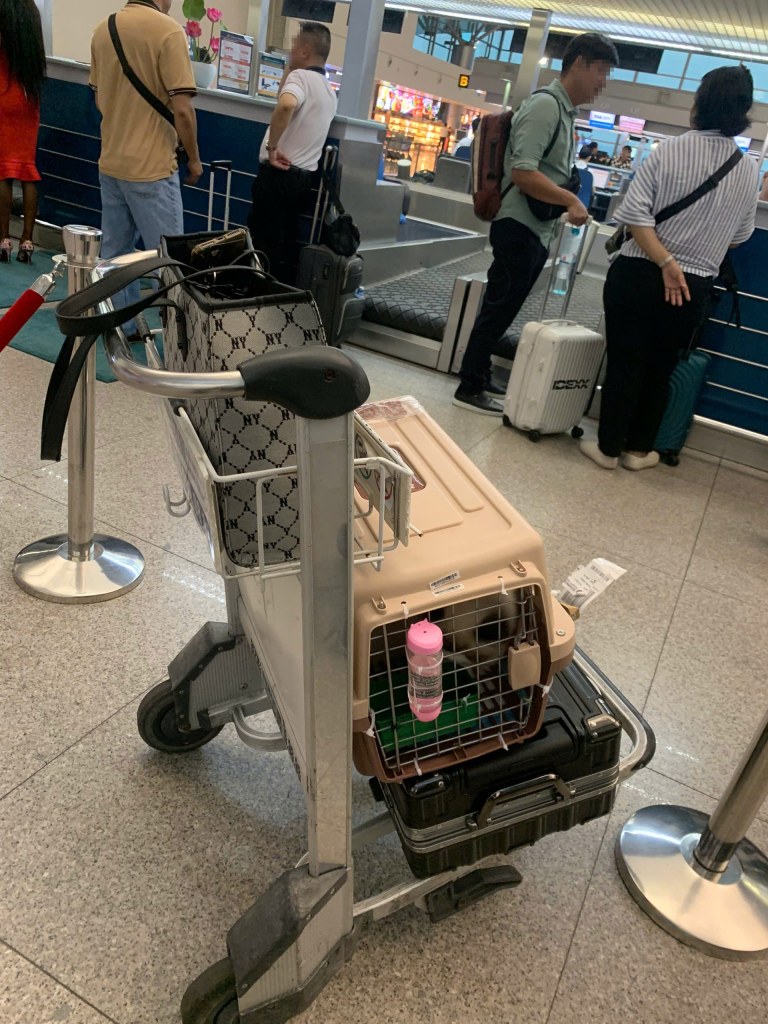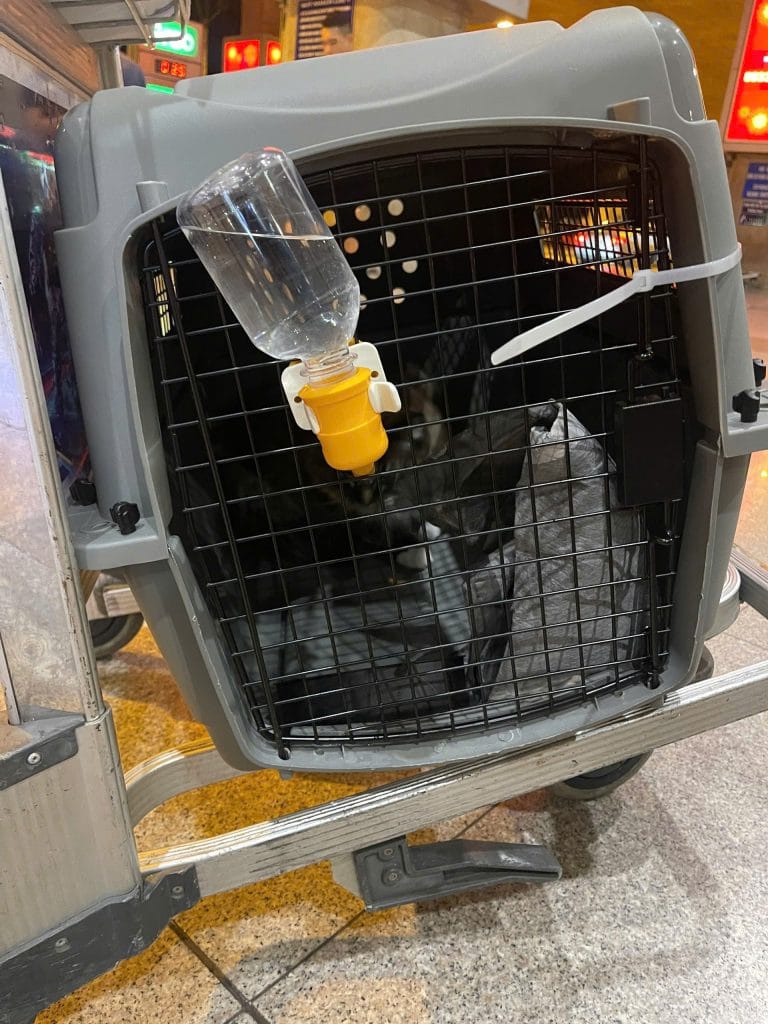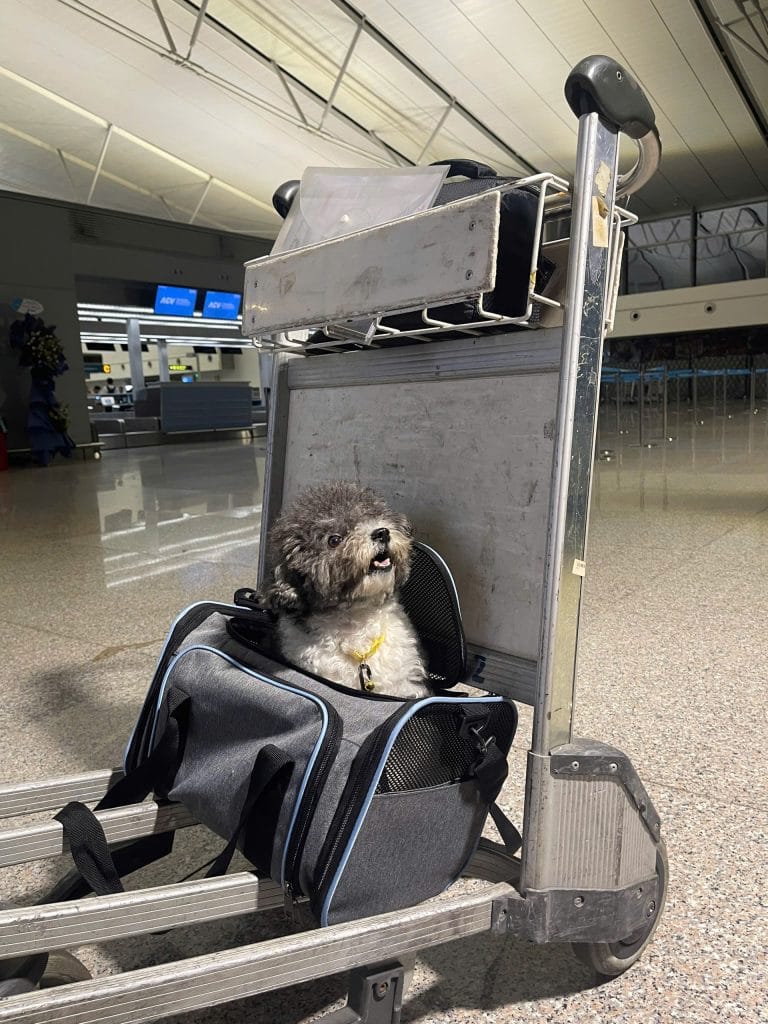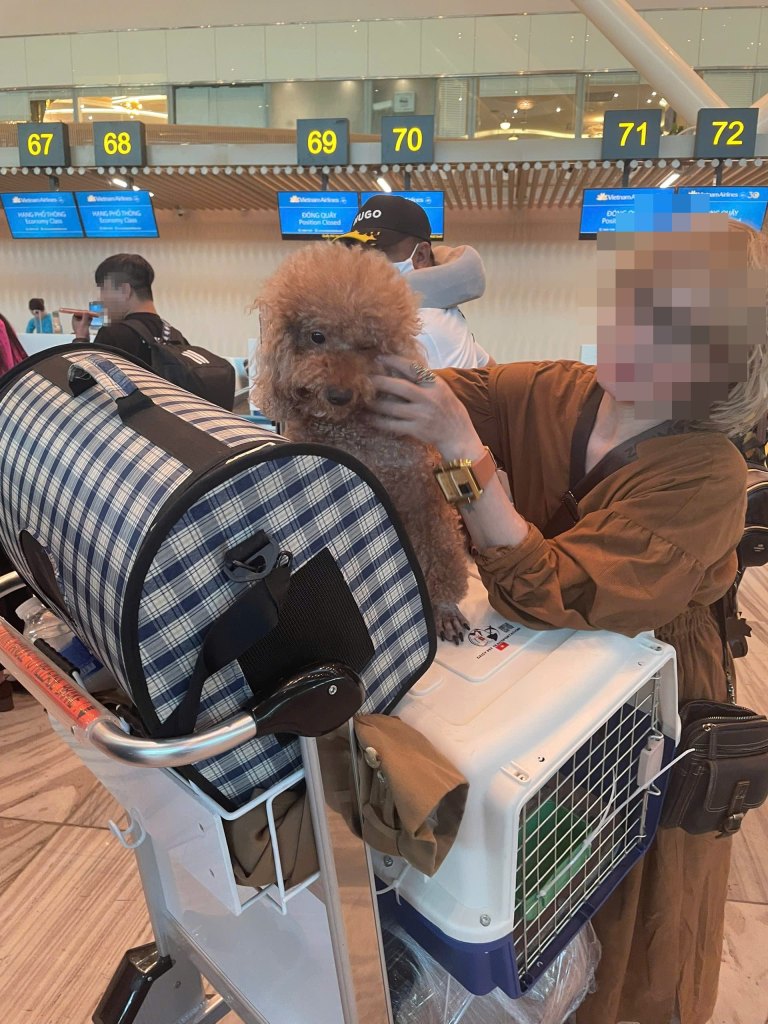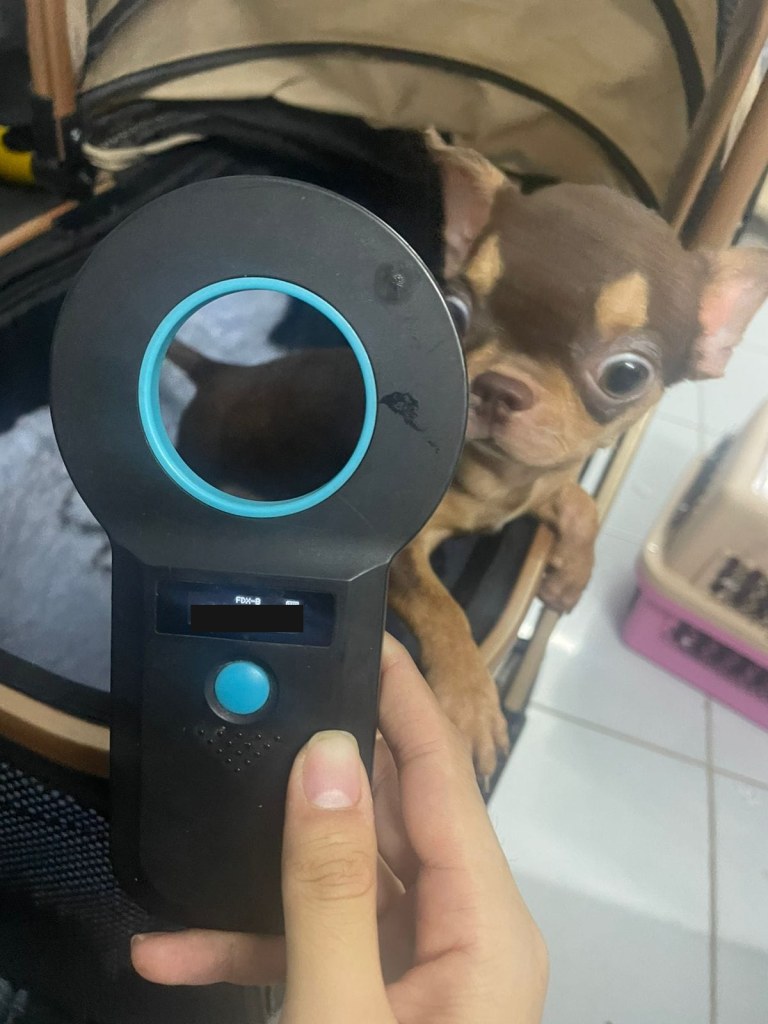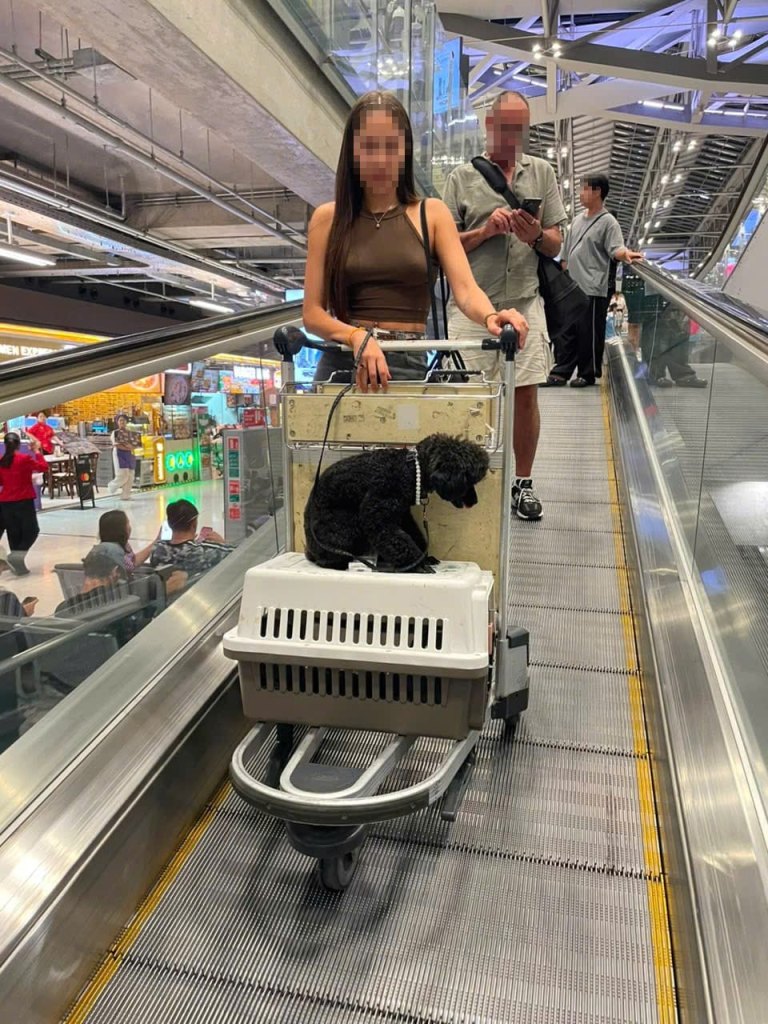
Moon, a black poodle from Da Nang, was supposed to fly to Bangkok as AVIH — checked into the hold on the same flight as her owner — on an ordinary Friday afternoon. Every document was in order — microchip, current rabies vaccine, Vietnam’s export health certificate. At the Vietnam Airlines check-in counter, staff refused to let her board. Not because anything was wrong with Moon. Because of one document neither we nor her owner had in hand: Thailand’s DLD Import Permit.
This was not a first-time mistake from a team new to the route. We have handled many pet relocations to Thailand using the same working assumption — that the import permit could be sorted out at the Animal Quarantine Station counter on arrival if needed — and it had never failed before. This time it did, and it is worth explaining exactly what happened, because the gap between what Thailand’s own rule actually allows and what an individual airline is willing to accept is exactly where this went wrong.
What Happened at Check-In
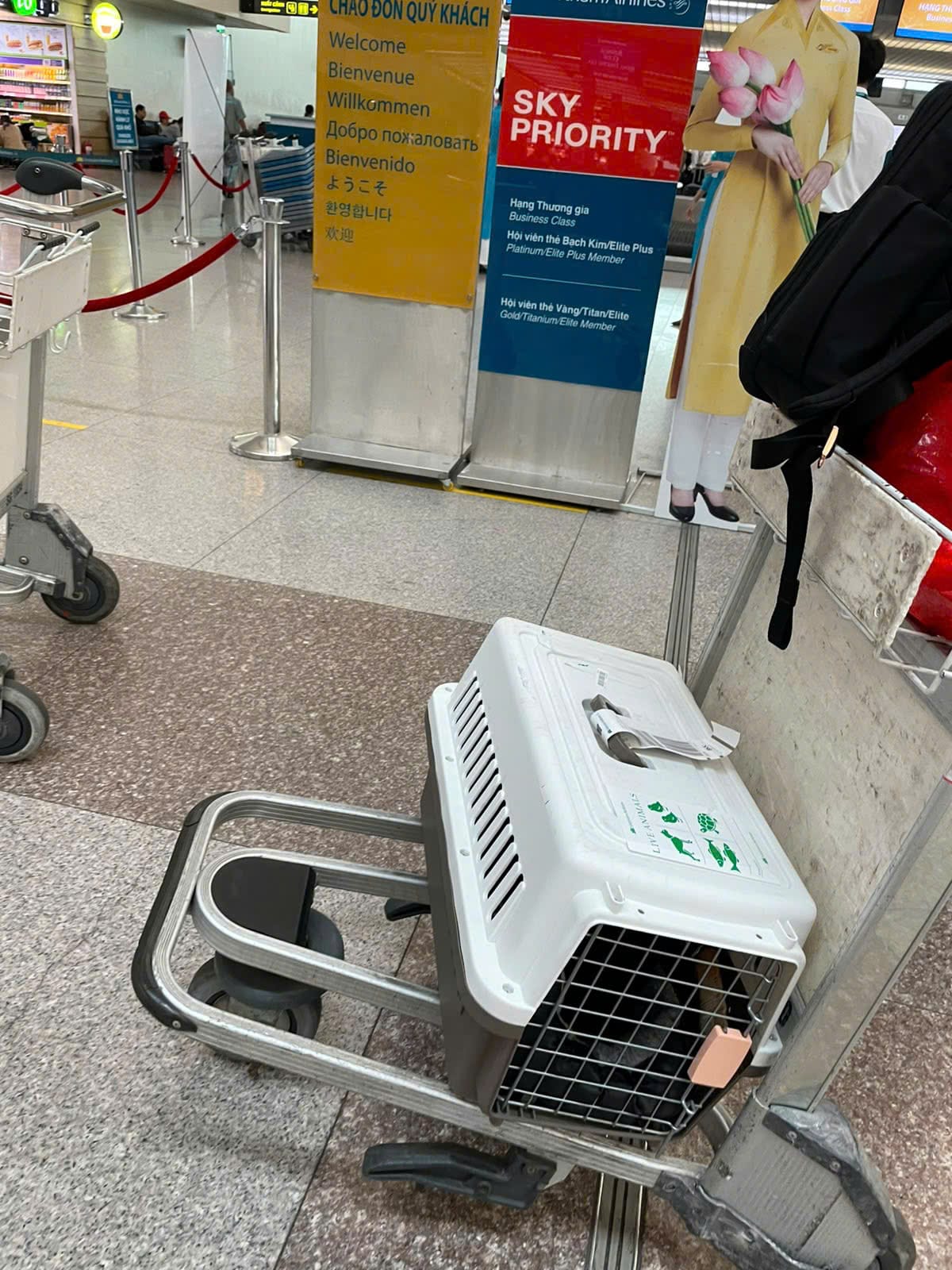
All of Moon’s paperwork was reviewed at the counter and none of it was the problem. The agent explained that Vietnam Airlines required an Import Permit issued in advance before they would board a pet, regardless of what happens at the Thai side on arrival. When we explained that our previous Thailand trips had cleared the DLD counter at the airport without a pre-issued permit, the agent called their Bangkok station for confirmation. The answer came back the same: no permit, no boarding. Moon did not fly that day.
The Document We Treated as Optional
What We Used to Believe
On earlier trips, Thai animal quarantine officers at the airport had cleared individual pets traveling with their owner even without a permit issued beforehand — and each time, it worked. That wasn’t luck or leniency: Thailand’s DLD genuinely does offer an on-arrival application route alongside the advance one. Over enough repetitions, though, we started treating that route as the default, rather than as a fallback for when the advance route wasn’t possible.
What the Rule Actually Says
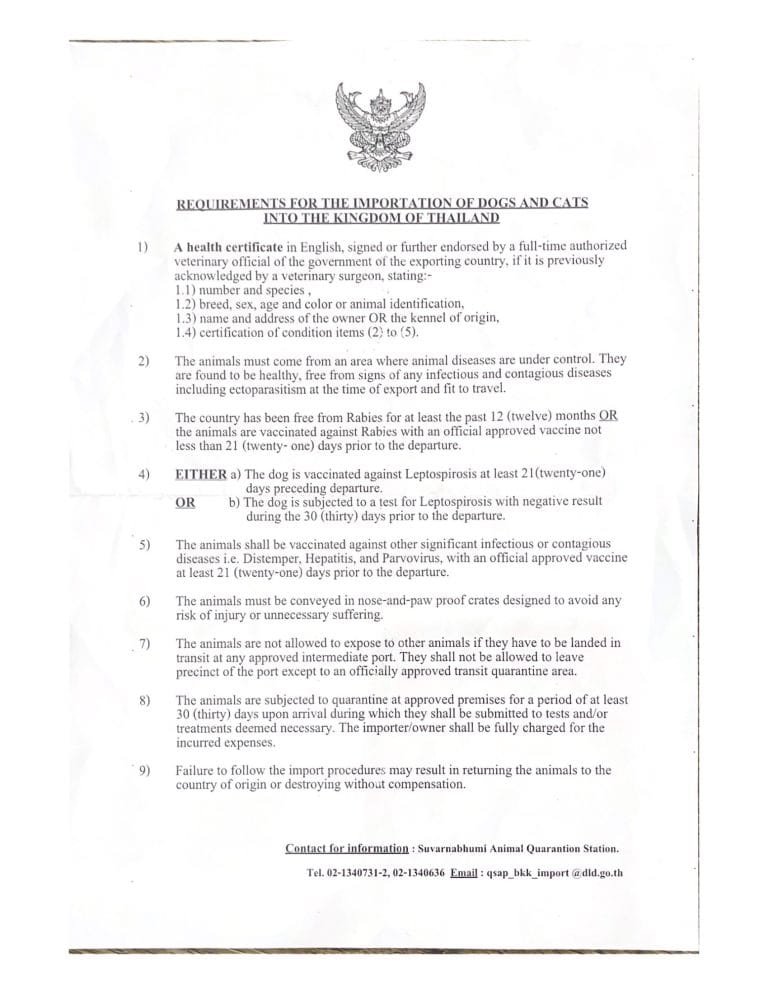
Our own DLD Import Permit requirements guide — and the full list of DLD requirements we publish for owners — lay out both options DLD itself allows: apply by email at least 7 working days before departure, or apply in person at the Animal Quarantine Station counter on arrival with original documents ready. Both are legitimate under Thai regulation. What isn’t guaranteed is that your airline will accept the on-arrival route — Vietnam Airlines, in Moon’s case, would not board her without proof the permit had already been issued. We had correctly described DLD’s own rule for our readers; what we’d underweighted was that the airline’s rule can be stricter than DLD’s.
Why the Gap Existed
DLD’s on-arrival option depends on an Animal Quarantine Station officer being able to process your pet on the spot — workable, but with real caveats (DLD itself warns against short-transit connections, since processing time varies with how many pets arrive at once). An airline sees a different risk: if a pet is refused entry after the flight has already departed, the carrier is the one holding the liability, not the owner. That is very likely why Vietnam Airlines’ own Bangkok station gave the same answer as the check-in counter — no exceptions, regardless of what DLD itself would have allowed on arrival.
How We Fixed It in 24 Hours
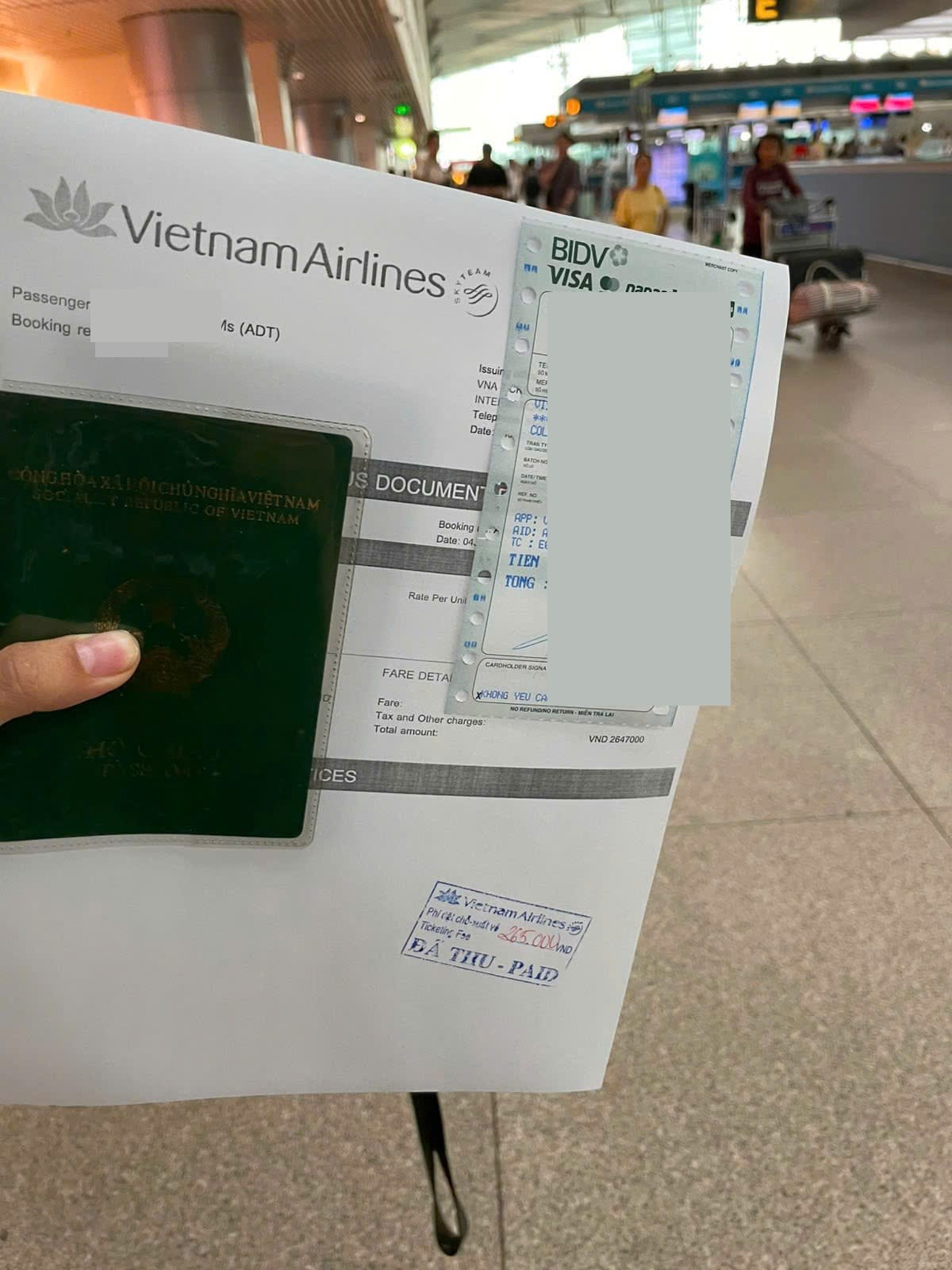
Moon’s owner still had commitments in Bangkok and flew on the original ticket as planned. We submitted the DLD Import Permit application immediately, and in parallel arranged a new Vietnam export health certificate — the original was tied to the original travel date, and the certificate is only valid for 10 days before departure, so a new travel date meant a new certificate. Moon was booked on the earliest available flight the next morning. The replacement airfare for that short-notice booking came to roughly 8,000,000 VND, which we covered in full. It was not in the original quote, and it should never have been necessary.
Delivery: Moon Lands in Bangkok
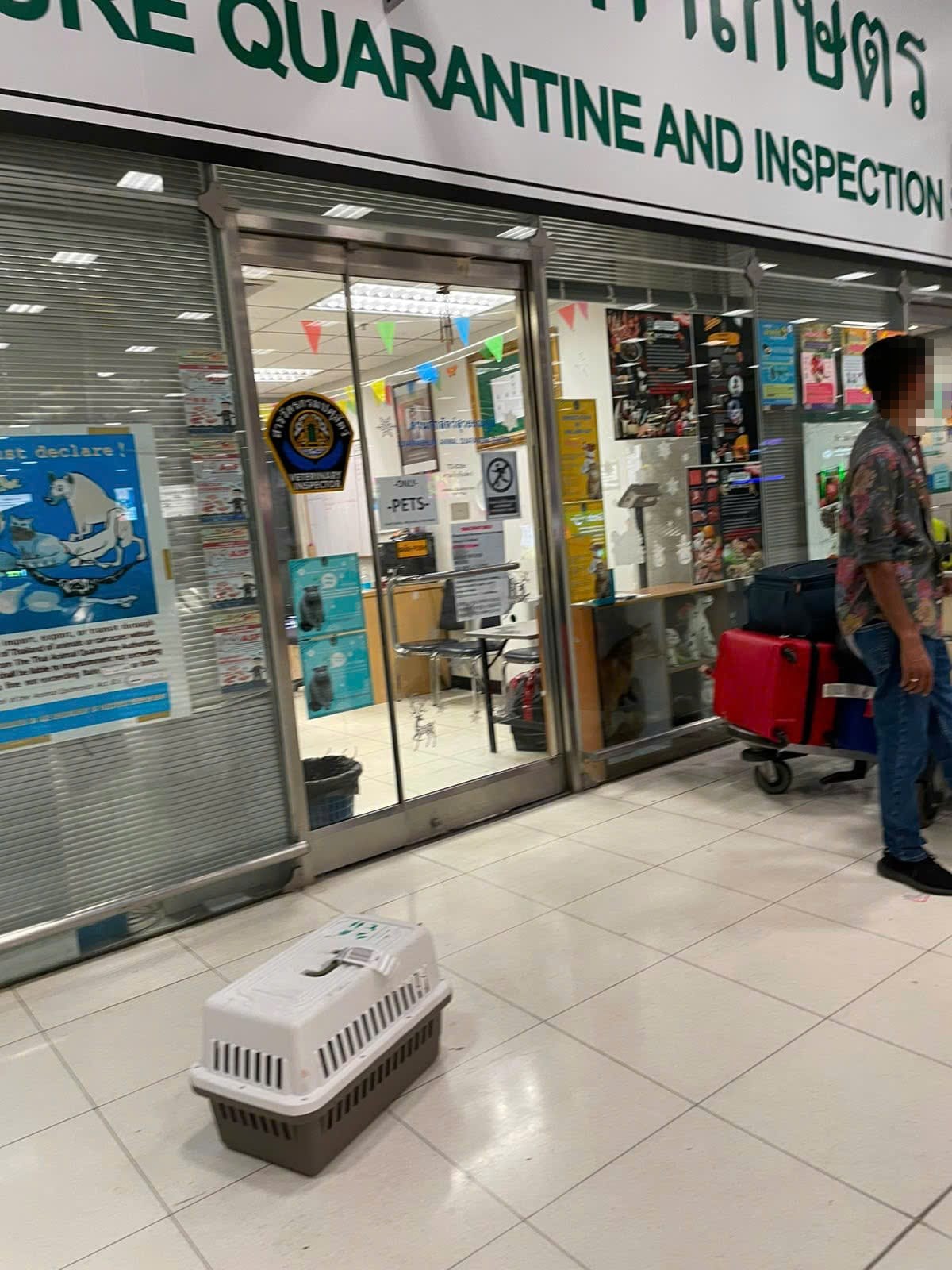
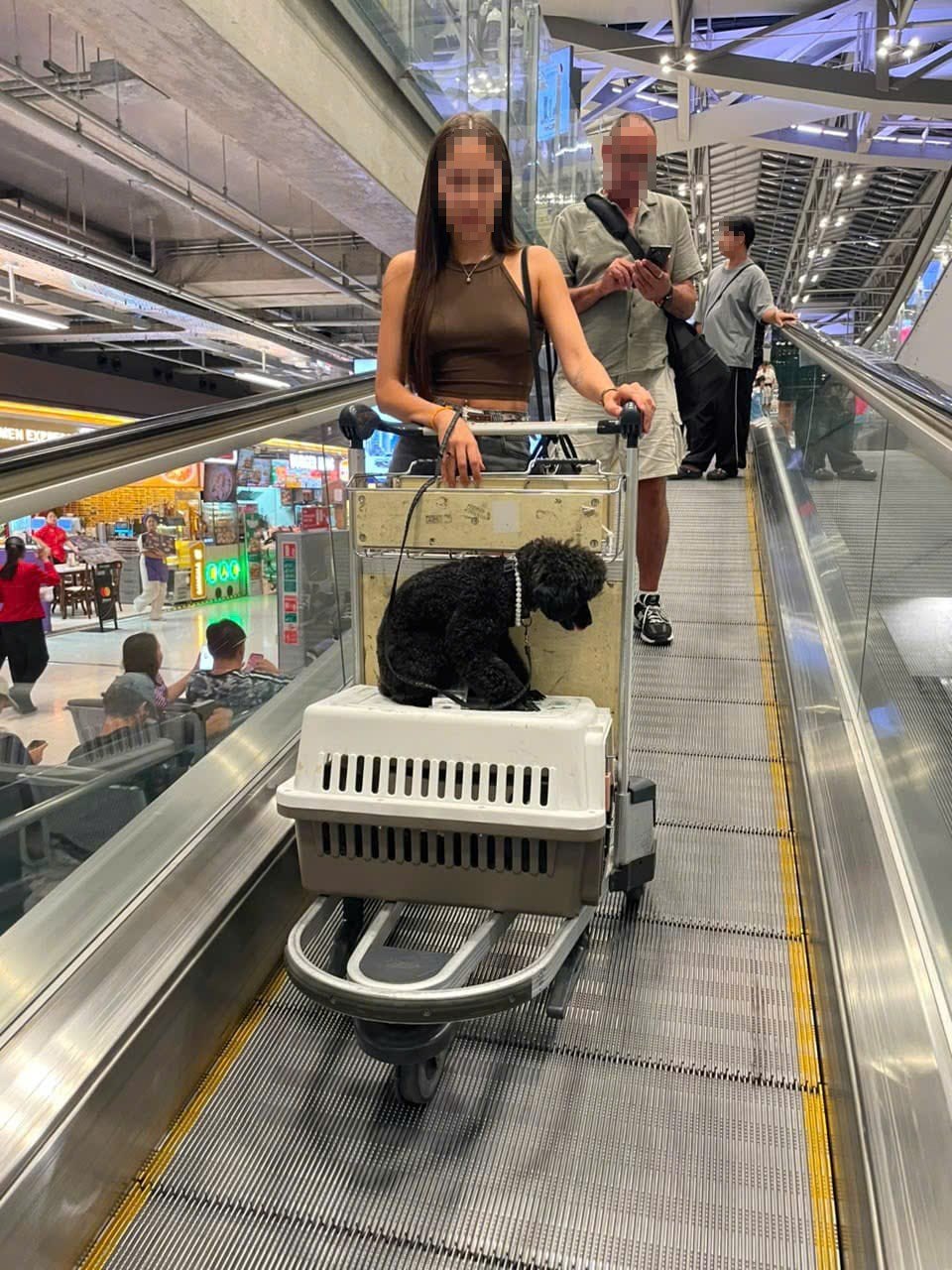
With the permit issued and the new health certificate in order, Moon cleared the DLD counter in Bangkok without incident. She waited briefly at the terminal while we coordinated the handover, then was reunited with her owner that same evening — about 30 hours later than originally planned, safe and unharmed, but later than any of us wanted.
Where We Got It Wrong — And What We Changed
To be clear about where the responsibility sits: this wasn’t Thai quarantine staff enforcing an obscure technicality — DLD’s rule was exactly as flexible as we thought it was. It was our own operating practice — treating the airline’s tolerance as if it were guaranteed, when Vietnam Airlines was always free to enforce a stricter standard than DLD itself requires, and this time they did. It had worked before. That is exactly why it was a risk we should not have kept taking.
Every case that touches a gap like this — where what a government process officially allows and what an individual airline is willing to accept don’t match — now defaults to the stricter, safer reading. For Thailand specifically, the DLD Import Permit is submitted the moment a booking is confirmed, not left for the airport. We would rather file paperwork that occasionally turns out to be unnecessary than repeat a check-in counter denial.
Practical Checklist If You’re Flying a Pet to Thailand
- Apply for the DLD Import Permit by email to qsap_bkk_import@dld.go.th (or the relevant airport’s Animal Quarantine Station) at least 7 working days before departure — ideally much earlier. DLD does allow applying on arrival, but don’t rely on your airline accepting that.
- Confirm your airline’s AVIH policy in writing before booking — see our Thailand airline guide for carrier-by-carrier comparisons.
- Time your Vietnam export health certificate to be issued within 10 days of your actual travel date, not earlier.
- Carry a printed copy of the import permit with your other travel documents — some counters will not accept a phone screenshot.
- Build in a buffer well beyond the permit’s 3–7 working day processing window; see our 6-week preparation timeline for how the sequence fits together.
If a rebooking like this ever becomes necessary, budget for it: our Thailand relocation cost guide covers typical planned expenses, but last-minute replacement airfare sits outside any standard quote.
Who This Applies To
This requirement does not depend on how your pet travels. Whether your pet flies as accompanied baggage (AVIH) or as manifest cargo, the DLD Import Permit is mandatory in every case — there is no exemption for pets traveling on the same flight as their owner. If you still have questions about your specific route, see our Thailand pet shipping FAQ.
Frequently Asked Questions
Can I get Thailand’s DLD Import Permit at the airport on arrival?
Officially, yes — DLD allows applying at the Animal Quarantine Station counter on arrival, with your original health certificate, vaccination records, and application form ready. The catch is that some airlines, including Vietnam Airlines in this case, won’t board a pet without proof a permit was already issued, regardless of what DLD itself allows. Applying by email at least 7 working days ahead is the safer default.
What happens if an airline denies boarding because a pet lacks the import permit?
The pet cannot travel until the airline is satisfied. In this case, it meant rebooking a flight for the next morning, re-issuing Vietnam’s export health certificate to match the new date, and covering the cost of last-minute replacement airfare.
Does a pet traveling as AVIH with its owner still need the DLD Import Permit?
Yes. The requirement applies regardless of whether a pet travels as AVIH or as manifest cargo. There is no exemption for pets accompanying their owner on the same flight.
Last updated 18 Oct 2026
Compiled by our specialists from the regulations in force on the date above, for reference only. Rules may change after this date. Please verify with the competent authorities or contact us for the most accurate information.