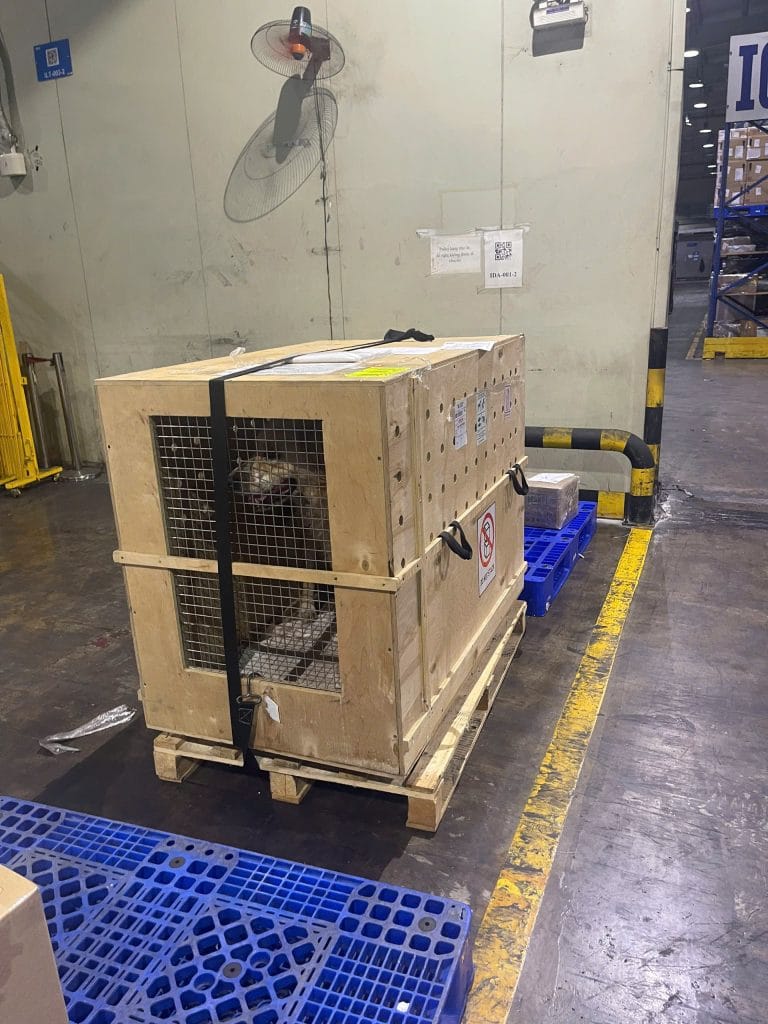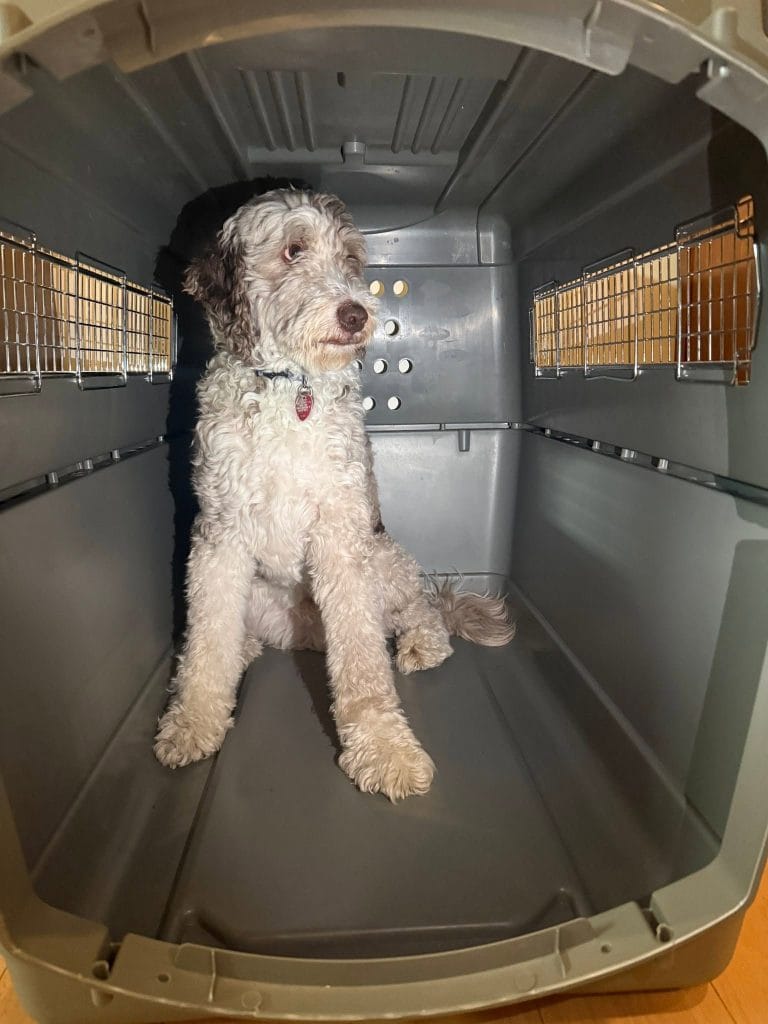
Ask ten pet owners preparing an international move whether two dogs can share one travel crate, and most will answer the same way: “Sure — it’ll save on freight.” That assumption is only half right. IATA does allow multiple pets in a single container — but the sizing math behind it is not what most owners expect, and it rarely delivers the savings people are counting on.
Here is what the Live Animals Regulations actually say, and why “sharing a crate” is usually a worse deal than it sounds. If you’re just getting started, read our guide to IATA crate requirements for pet air travel first to get the fundamentals down before weighing up a shared crate.
What IATA Actually Requires for Multiple Pets in One Crate
The rule exists — it is just narrower than most people assume. Three conditions have to be met at the same time, not just one:
| Requirement | Rule |
|---|---|
| Weight | Each animal must weigh under 14 kg (about 31 lbs). |
| Quantity | Up to 3 animals under 6 months old (weaned, at least 8 weeks), or up to 2 adult animals of comparable size. |
| Compatibility | The animals must already live together and be used to cohabiting — typically littermates, or a mother with her own weaned puppies or kittens. |
In practice, this narrows the eligible group down fast. Nursing litters and unweaned animals are not accepted for air transport at all, sharing or not. This is for young, small, closely bonded animals from the same household — nothing more.
What the Official Width Formula Actually Says
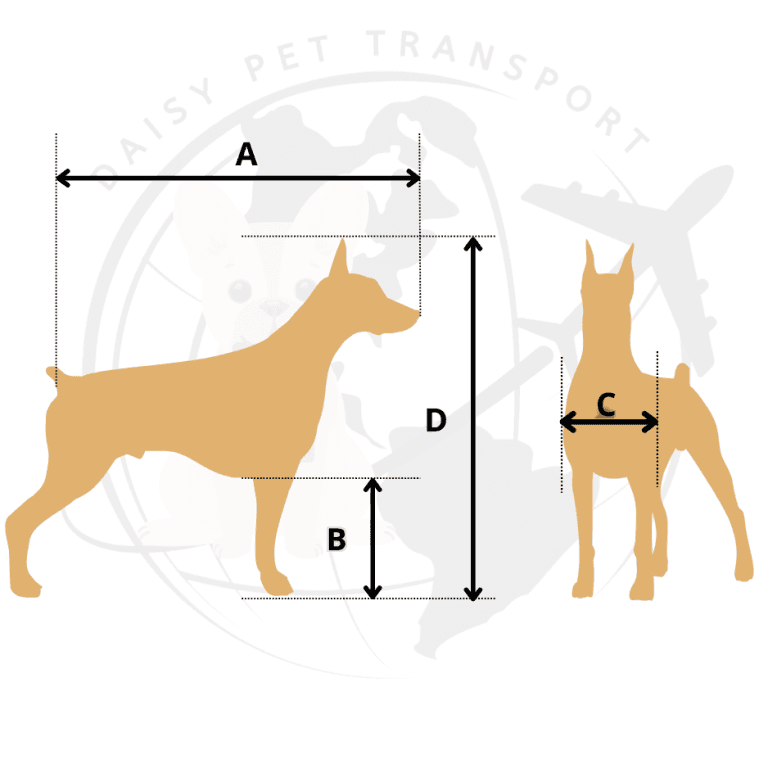
For a single pet, the IATA CR1 crate standard calculates minimum width as C × 2 — the shoulder width doubled. Per IATA’s Live Animals Regulations (Edition 52, January 2026), the formula for a shared container is:
| Animals sharing one crate | Width formula | Vs. a solo crate |
|---|---|---|
| 1 (solo) | C × 2 | — |
| 2 | C × 3 | 1.5× wider |
| 3 | C × 4 | 2× wider |
Length and height are calculated the same way as for a single animal — they don’t change. On paper, that’s a modest increase: adding a second pet to the crate should only make it 1.5 times wider, not double or triple the whole box. If the formula were followed to the letter, sharing would often be the cheaper option.
Why Real Crates Don’t Follow the Formula That Cleanly
Here’s the part the formula doesn’t account for: nobody manufactures a crate shaped like the formula’s output.
Say a small dog’s solo crate measures roughly 50 × 33 × 33 cm. Apply the width-only math for a second dog, and the formula technically allows something like 50 × 50 × 33 cm — only the width nudged up, length and height untouched.
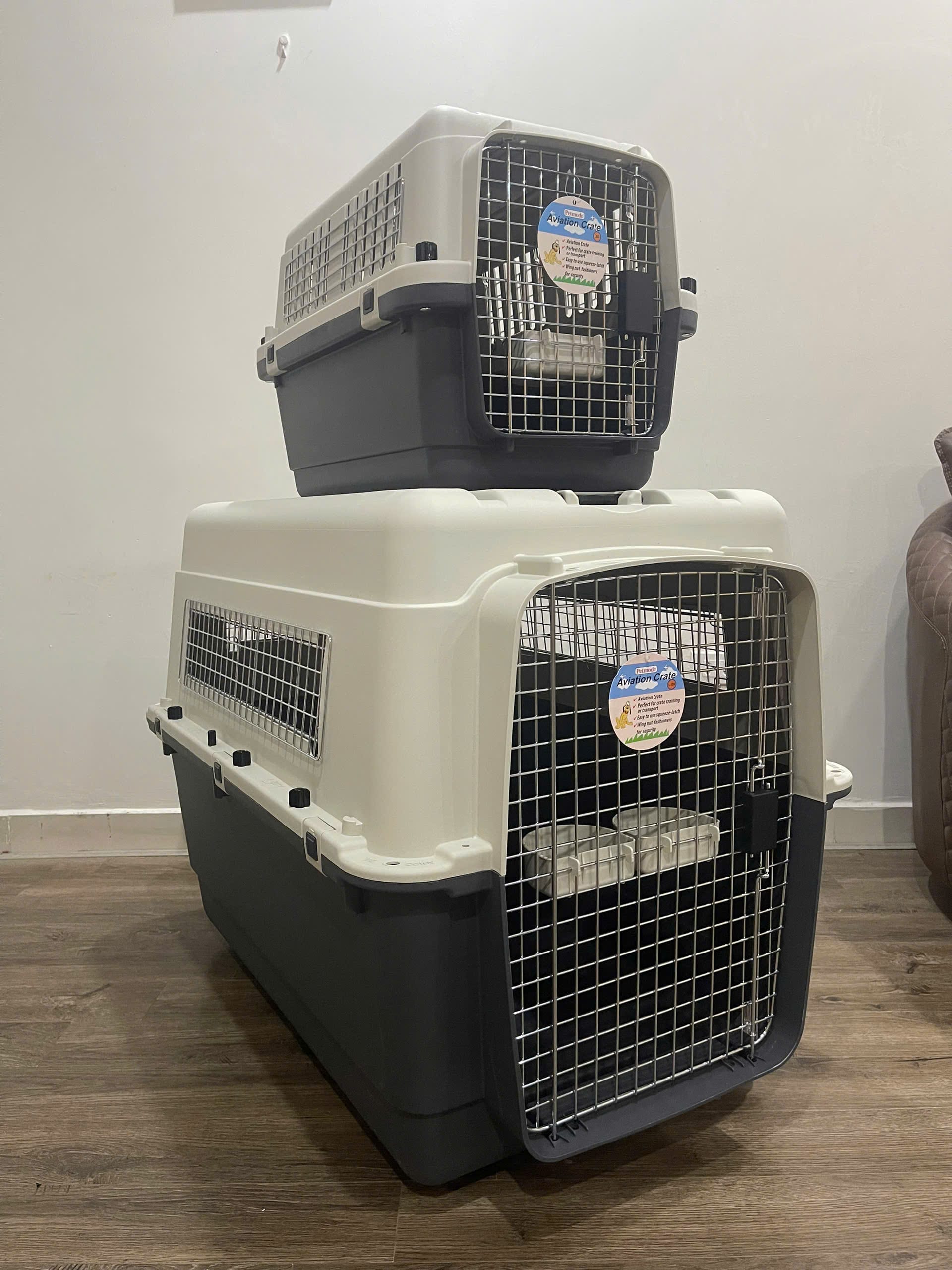
Have you ever seen a molded plastic crate with a width equal to its length (50 × 50 cm) in pet stores? Absolutely not. That flat, square design has almost no practical application, so no manufacturer produces molded plastic crates in those dimensions. Furthermore, a flat design is structurally weak and cannot withstand stacking and heavy handling in cargo holds.
Therefore, if you want to put two Poodles in a commercially available pre-molded crate, you will actually have to purchase an oversized crate measuring 120 × 82 × 90 cm. This crate ends up with massive excess length and height.
💡 Expert Insight: On paper, the formula only asks for 1.5× the width. In practice, the commercially available crate you buy grows in every direction — length, width, and height.
Why This Rarely Saves Money
Airlines charge cargo freight by volume weight (Length × Width × Height / 6000), not actual weight on the scale — the same formula that makes oversized crates so costly, as covered in our IATA crate size calculator.
Let’s run a real-world cost calculation for a Vietnam–Philippines route with an assumed Vietnam Airlines checked baggage rate of $10/kg:
- Scenario 1 (Two Poodles in two separate crates): Freight per crate =
(50 × 33 × 33) / 6000 × $10 ≈ $90. Total freight for both crates =$90 × 2 = $180. - Scenario 2 (Two Poodles sharing one 120 × 82 × 90 cm crate): Shared crate freight =
(120 × 82 × 90) / 6000 × $10 ≈ $1,476.
In terms of cost, sharing a crate is not cheaper — in fact, it is nearly 8 times more expensive than shipping the pets in two separate crates!
Who This Rule Actually Makes Sense For
The shared-crate option only works effectively in a single scenario: young, small, same-litter animals (for example, two or three 8-week-old kittens). Because each animal’s shoulder width is very small, the combined crate width still fits into standard, off-the-shelf molded plastic crate sizes, keeping freight charges optimized.
Before You Decide: A Practical Checklist
- Confirm each pet is individually under 14 kg.
- Confirm your headcount matches the age rule — up to 3 animals under 6 months old, or up to 2 adult animals.
- Confirm puppies or kittens are fully weaned and at least 8 weeks old — unweaned or nursing litters cannot be accepted for air transport at all.
- Confirm they are littermates, or a mother with her own weaned puppies or kittens, already living together.
- Ask your crate specialist for an actual manufacturer quote on the shared-crate dimensions before assuming it costs less than two separate crates.
- Check your specific airline’s operator variation — some carriers restrict multi-animal containers regardless of the IATA baseline.
Last updated 15 Oct 2026
Compiled by our specialists from the regulations in force on the date above, for reference only. Rules may change after this date. Please verify with the competent authorities or contact us for the most accurate information.