Relocating a pet across international borders is a journey governed by strict biosecurity protocols. Among the various veterinary steps, internal and external parasite treatments are often treated as minor checkmarks by owners. In reality, biosecurity agencies in countries like Australia, Singapore, and the United Kingdom treat these records with absolute, uncompromising scrutiny. A single incorrect active ingredient or a timing window missed by 24 hours can trigger immediate quarantine detention, costly re-treatments, or deportation at the airport.
At Daisy Pet Transport, we have managed hundreds of complex pet relocations. We understand that compliance is in the clinical details. This guide breaks down why parasite control is so heavily regulated, how the requirements vary by key destination countries, and how to decode commercial pet medications to ensure your dog or cat meets every regulatory standard without delay.
Why Biosecurity Agencies Stand Firm on Parasite Regulations
The primary driver behind strict parasite treatment regulations is the protection of local ecosystems and public health. Biosecurity departments are tasked with keeping invasive species, exotic pathogens, and zoonotic diseases (diseases transmissible from animals to humans) out of their countries. Ticks, fleas, and intestinal worms are not just nuisances; they are biological vectors.
For instance, external parasites like ticks can carry Ehrlichia canis (a bacterium causing canine ehrlichiosis) or babesiosis, which can devastate local livestock and domestic pet populations. Similarly, internal parasites like the tapeworm Echinococcus multilocularis pose a severe public health risk. If introduced to countries currently free of the parasite, it can establish a cycle in wildlife and domestic dogs, leading to alveolar echinococcosis in humans — a rare but highly dangerous disease. Consequently, official health certificates require precise active ingredients designed to eliminate these specific risks immediately prior to travel.
The Strict Standards of Major Destinations
Parasite protocols are far from universal. Different regions face different ecological threats, resulting in highly customized legal requirements. Below is the breakdown of the current 2026 standards for key travel corridors.
Australia (DAFF): The Zero-Tolerance Zone
The Australian Department of Agriculture, Fisheries and Forestry (DAFF) enforces the most rigorous parasite protocol in the world. For dogs, external parasite treatments must start at least 30 days before export and continue monthly until the flight. For cats, the treatment must start at least 21 days before export.
Pets from Vietnam cannot fly straight to Australia: they must first live for at least 180 days in a country Australia approves (usually Singapore), and the treatments described here are given in that country by a government-approved vet, not in Vietnam.
Crucially, DAFF prohibits the use of oral systemic parasiticides for tick control. Popular medications like the isoxazoline class — including Bravecto, NexGard, Simparica, and Credelio — as well as selamectin (Revolution) are NOT accepted as standalone treatments. DAFF requires contact-kill products (such as fipronil or permethrin sprays and spot-ons) because systemic products require the tick to bite the pet to die, which does not prevent the tick from entering the country attached to the skin.
For internal parasites, dogs and cats must receive two separate treatments at least 14 days apart. The second dose must be administered within 5 days of export. The medication must cover both nematodes (roundworms) and cestodes (tapeworms). Because many common commercial products do not cover cestodes, vets must often supplement with separate doses of praziquantel or fenbendazole.
United Kingdom & Europe: The Echinococcus Shield
For pets traveling to the United Kingdom, Ireland, Finland, Malta, or Norway, the focus is heavily on preventing the tapeworm Echinococcus multilocularis. The UK Animal and Plant Health Agency (APHA) requires all dogs (cats are exempt) to receive a certified tapeworm treatment.
This treatment must be administered by a veterinarian no less than 24 hours and no more than 120 hours (1 to 5 days) before the dog’s scheduled arrival time in the destination country. The medication must contain an approved dose of Praziquantel or an equivalent active ingredient officially recognized as effective against tapeworms. The vet must record the exact date, time, product name, and manufacturer in the pet’s official Export Health Certificate or EU Pet Passport.
Singapore (AVS): Recommended, Not Checked at the Border
The Animal & Veterinary Service (AVS) of Singapore does not make parasite treatment a mandatory border requirement for dogs and cats. Treating for internal parasites, ticks and fleas before the flight is still strongly recommended, because pets from Vietnam spend at least 30 days in quarantine at the Animal Quarantine Centre (AQC).
A pet that shows signs of parasites while at the AQC may be treated there at the owner’s expense. Treating before departure is cheaper and less stressful for the pet.
UAE: Within 14 Days · Vietnam: Recommended
For pets entering the United Arab Emirates (MOCCAE), internal and external parasite treatments must be given within 14 days before shipment. The internal product must contain praziquantel (for example Drontal), and the external product must contain fipronil or permethrin (for example Frontline).
For pets entering Vietnam, the law does not make parasite treatment mandatory. Treating for ticks and tapeworms within about 7 days of departure, with the details recorded on the health certificate, is still recommended.
Decoding Veterinary Parasiticides: Active Ingredients vs. Commercial Brands
To avoid compliance failures, it is critical to look past the marketing names on pet product packaging and analyze the active chemical ingredients. The table below provides a reference for the most common medications used in international relocation portfolios.
| Target Parasites | Approved Active Ingredients | Common Trusted Brands | Special Relocation Notes |
|---|---|---|---|
| Nematodes (Roundworms, Hookworms) |
Pyrantel, Febantel, Milbemycin Oxime | Drontal, Milbemax, Interceptor | Basic internal parasite clearance. Standard for all destinations. |
| Cestodes (Tapeworms) |
Praziquantel, Fenbendazole | Drontal Plus, Droncit, Milbemax | Required for dogs going to the UK, Ireland, Finland, Malta and Norway (praziquantel or an equivalent proven against Echinococcus), and for Australia and the UAE. Combo products like NexGard Spectra do NOT cover this class. |
| External Parasites (Ticks & Fleas) |
Fipronil, Imidacloprid, Permethrin | Frontline, Advantix, Seresto (collar) | Contact-kill parasiticides. Advantix contains permethrin and must NOT be used on cats. Australia does not accept tick collars. |
| Prohibited for Ticks (Australia Only) |
Afoxolaner, Fluralaner, Sarolaner, Selamectin | NexGard, Bravecto, Simparica, Revolution | Banned by Australia’s DAFF as primary tick control because they are oral or systemic. |
When selecting a product, the most common trap is relying on “all-in-one” medications. While convenient for domestic maintenance, a single chewable tablet rarely satisfies the biosecurity requirements of strict destinations. A separate, targeted approach is almost always required to achieve 100% compliance.
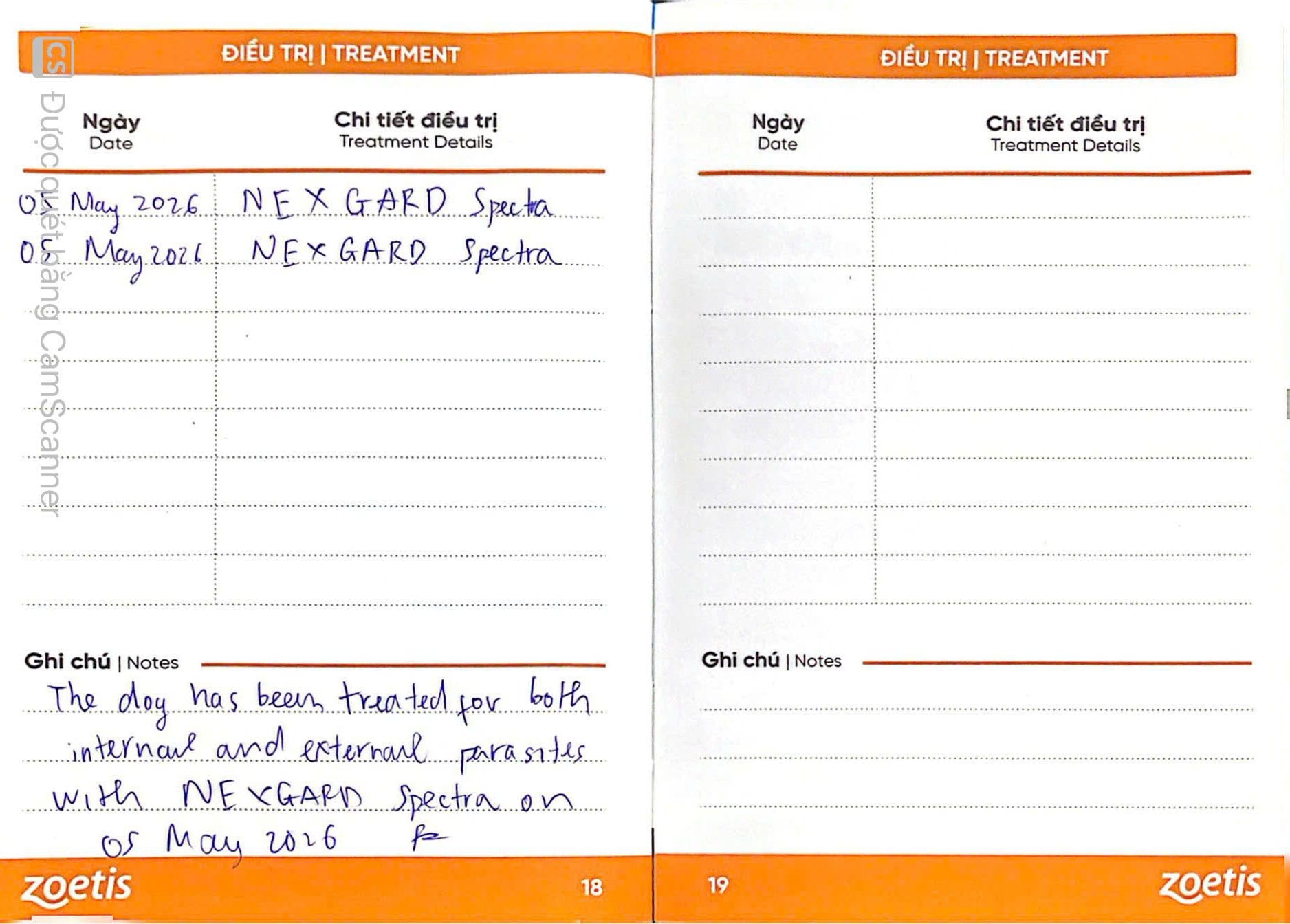
Common Pitfalls That Lead to Quarantine Rejections
Even with the correct medications, administrative errors can derail your pet’s travel plans. Through our veterinary coordination, we frequently correct these three common errors:
1. Rabies Steps Done Before the Microchip: In the eyes of biosecurity agencies, a pet does not legally exist until its ISO 11784/11785 microchip is scanned and recorded. Every rabies vaccination and rabies blood test must occur on or after the day the microchip was implanted and scanned; a rabies record dated before the chip does not count. For Australia, the official identity check in the transit country must come before every test and treatment, parasite treatments included.
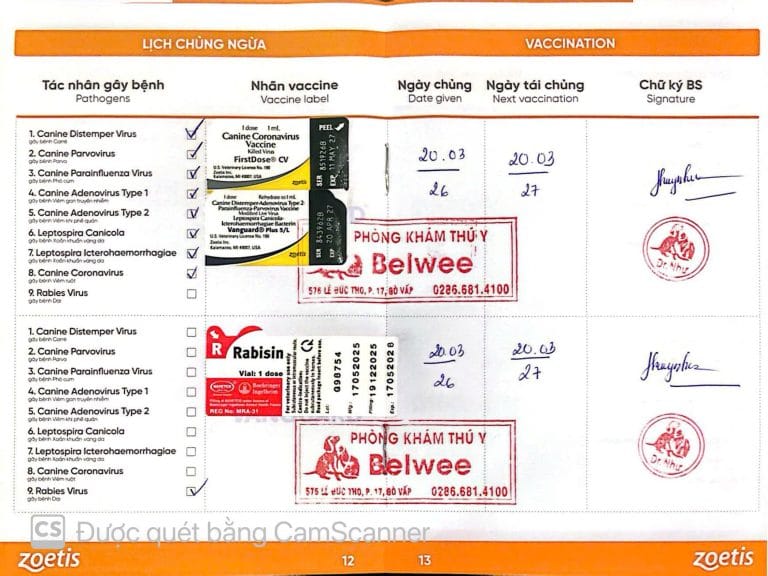
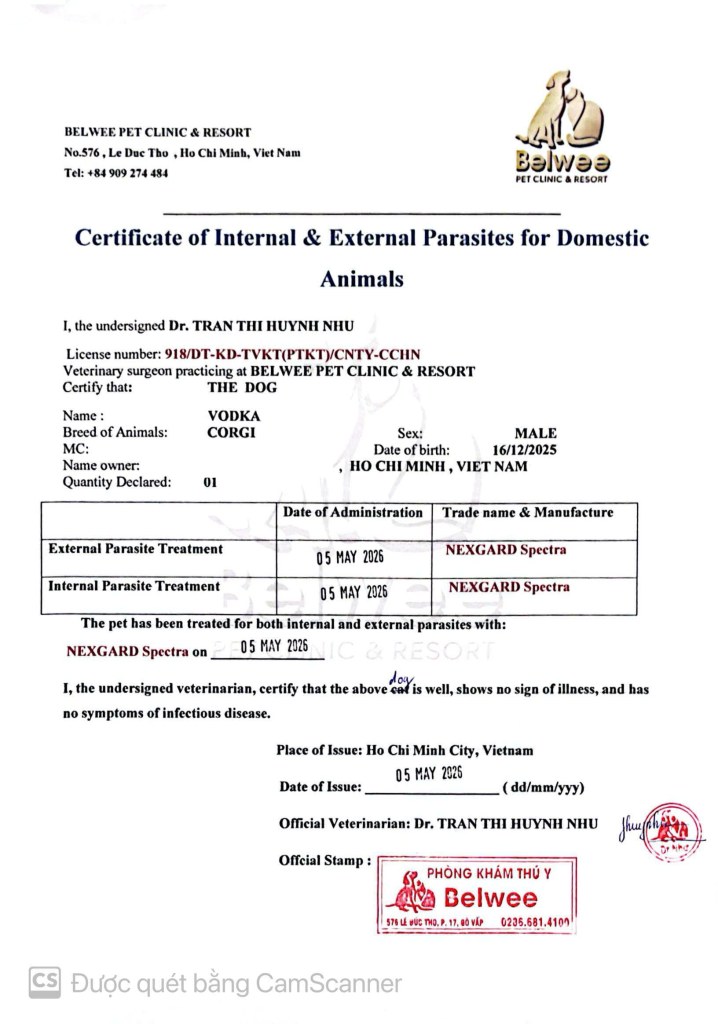
2. Missing Batch Stickers or Manual Lot Records: Biosecurity officers require traceability. When a treatment is administered, the veterinarian must peel the product’s batch sticker (showing the lot number and expiration date) from the packaging and apply it directly to the pet passport or health certificate. If the sticker is missing and the vet has not handwritten the lot details, the treatment is considered unverified. A handwritten record must also be accompanied by the vet’s official stamp and signature.
3. Timing Calculation Misalignment: Calculating timing windows can be confusing. For the UK tapeworm rule (24 to 120 hours), the countdown begins from the scheduled arrival time in the UK, not the departure time from Vietnam. If your flight is delayed or you transit through a third country, the window can shift. Our logistics team builds a buffer into the veterinary schedule to ensure that even with flight delays, the treatment remains valid upon landing.
Engineering a Defect-Free Travel Portfolio
Achieving compliance in international pet transport requires precision, foresight, and a deep understanding of veterinary pharmacology. At Daisy Pet Transport, we manage the entire process for you. Every pet leaving Vietnam with us receives internal and external parasite treatment at a veterinary clinic before departure, with a treatment certificate kept with the original documents, whether or not the destination country requires it. This is our own standard, not a rule of every destination. The vet prescribes and gives the treatment; we book the appointment, check the product, date and batch details on the record against the destination’s rules, and fit each timing window into the flight schedule. Our goal is to ensure your pet walks through customs at Tan Son Nhat, Changi, or Heathrow without a single query from biosecurity officers.
Last updated 17 Oct 2026
Compiled by our specialists from the regulations in force on the date above, for reference only. Rules may change after this date. Please verify with the competent authorities or contact us for the most accurate information.