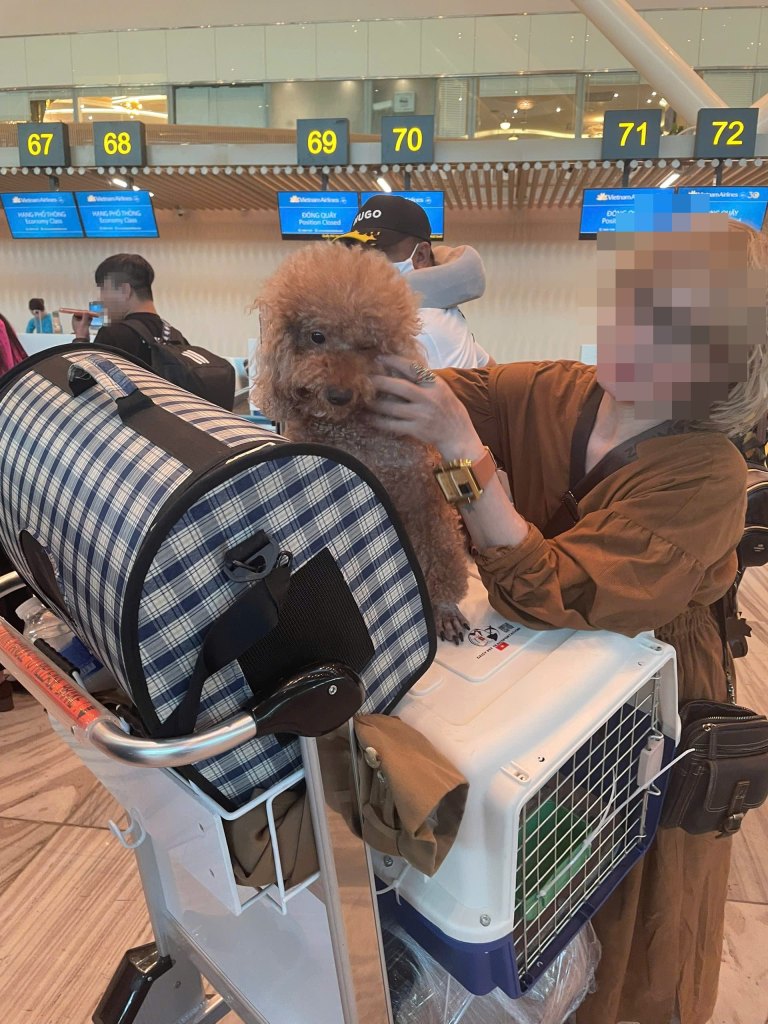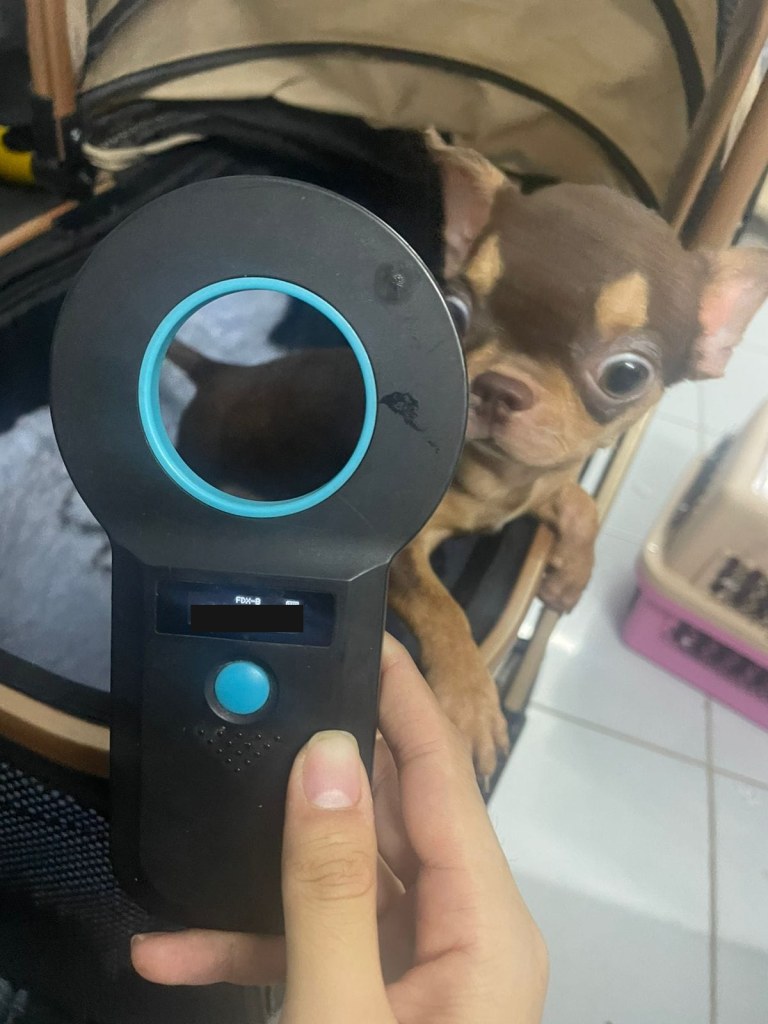
Thailand doesn’t require an RNATT titer test. There’s no mandatory quarantine. That sounds simple enough — and compared to Japan or Australia, it genuinely is. But Thailand is still a destination where we regularly field questions, mostly around the DLD Import Permit, document timing, and how to pick the right airline.
Below are 16 of the most frequently asked questions, answered based on official Department of Livestock Development (DLD) requirements and real-world experience. For the full regulatory overview, see our Thailand pet import laws 2026 guide.
Group 1: Documents & Import Permit
1. What is the DLD Import Permit and why is it mandatory?
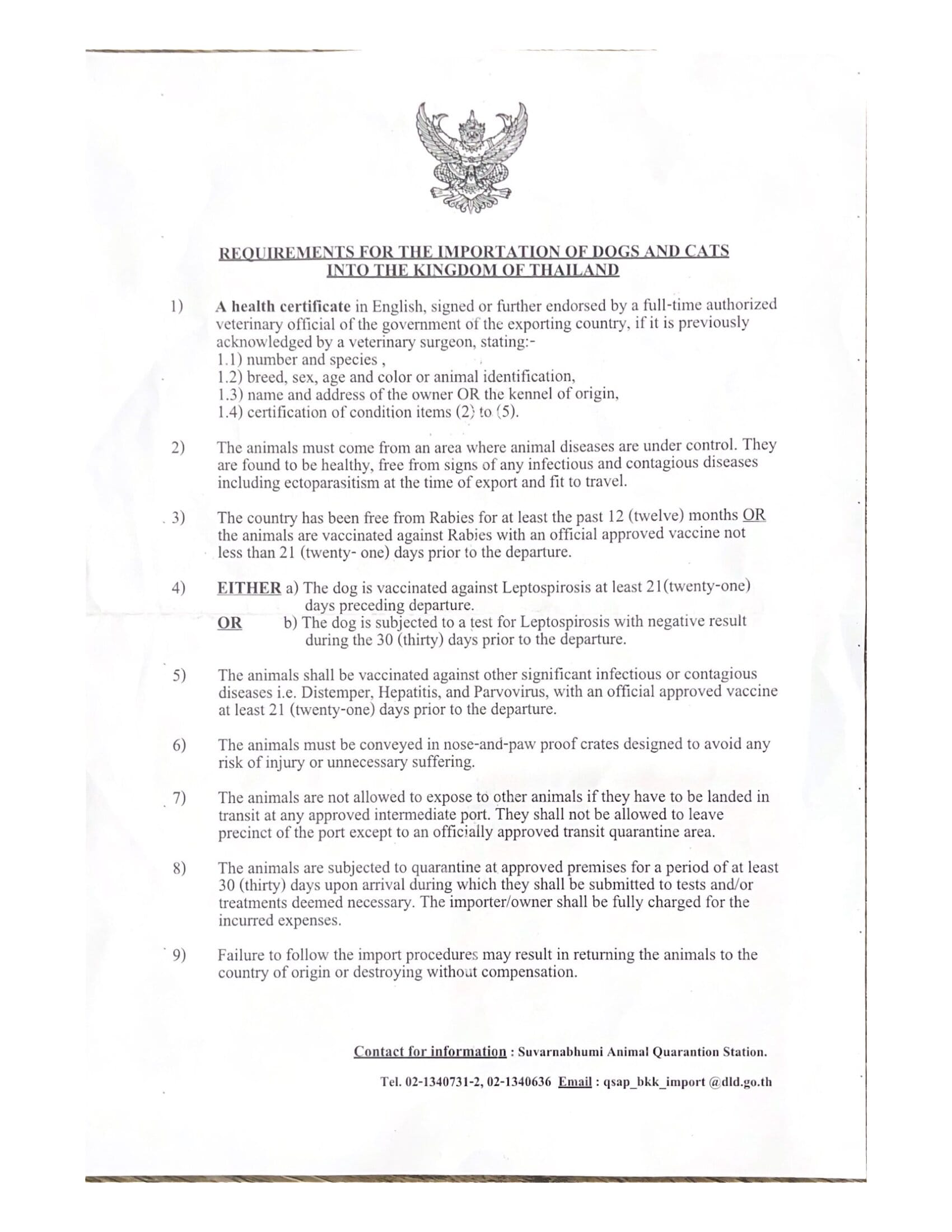
The Import Permit is authorization issued by Thailand’s Department of Livestock Development (DLD) that allows your pet to enter the country. It’s distinct from Vietnam’s health certificate — the health certificate proves your pet is healthy at departure; the Import Permit is Thailand’s authorization to let your pet in. DLD lets you apply either in advance by email or on arrival at the Animal Quarantine Station counter, but some airlines won’t board a pet without a permit already issued — and if documents are incomplete on arrival, DLD can fine the owner or return the pet to its country of origin. Read a real case of this happening for what it actually looks like.
2. How do I apply for the DLD Import Permit, and how long does it take?
Email qsap_bkk_import@dld.go.th (Suvarnabhumi’s Animal Quarantine Station — use the relevant airport’s address if entering elsewhere) with: a copy of your passport, your pet’s details (species, breed, age, microchip number), your planned travel date, and the entry airport. DLD’s minimum is 7 working days before departure, with processing itself typically taking 3–7 working days. We recommend applying as early as your schedule allows, since some airlines require the permit before they’ll let your pet board.
3. Does the DLD Import Permit cost anything?
The Import Permit application itself is free. There is a separate 500-baht Import License processing fee charged per pet at the Animal Quarantine Station on arrival — that fee applies to every pet regardless of when the permit was applied for. This still makes Thailand cheaper overall than countries like Taiwan (APHIA processing fees) or the UAE (MOCCAE permit fees).
4. How long is the Import Permit valid?
60 days from the date of issue. Verify that your flight date falls within the valid window. If you need to postpone beyond that, apply for a new permit.
5. Where do I obtain the Vietnamese health certificate?
From the Sub-Department of Animal Health (SDAH) in your province, under Vietnam’s Department of Animal Health (DAH). Private veterinary clinics do not have the authority to issue this certificate — DLD Thailand will not accept it. The certificate is valid for 10 days from the signing date; request it 8–12 days before departure.
Group 2: Vaccination & Health
6. How far in advance must the rabies vaccine be given before flying?
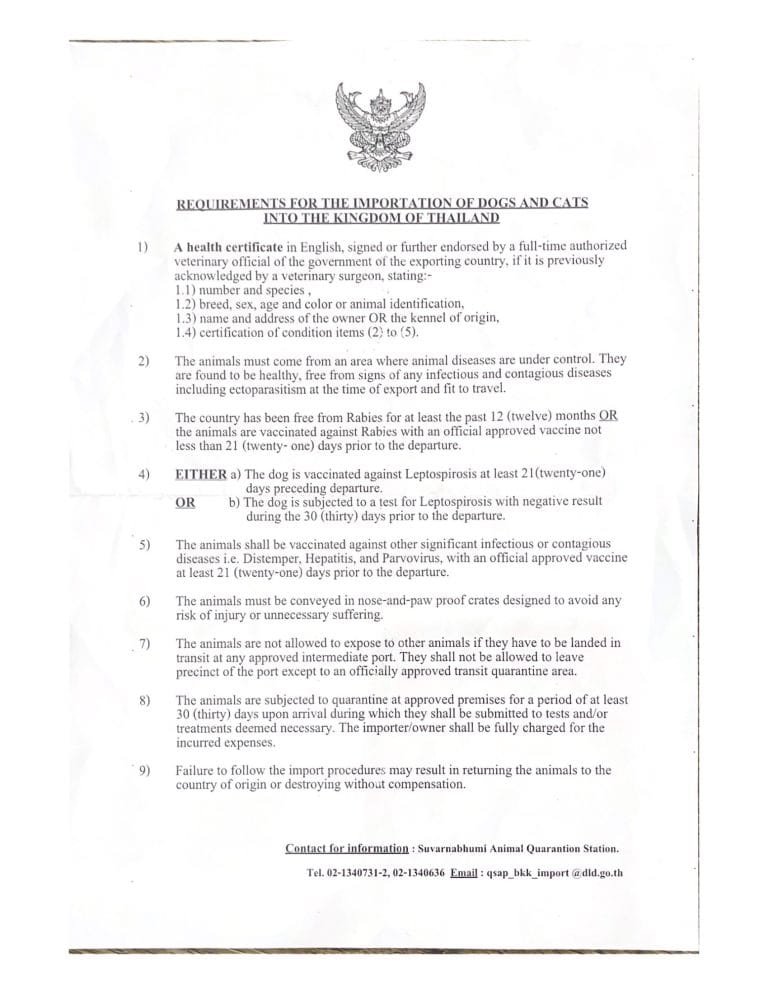
DLD’s legal minimum is 21 days before the flight date, but Daisy Pet’s operating standard is 30 days as a safety buffer — this only applies to a first-ever dose or one given after a previous vaccine lapsed. If your pet already has a valid, unexpired rabies vaccine, there’s no wait at all. For a primary dose, the pet must be at least 12 weeks old at the time of vaccination. DLD doesn’t publish a hard upper limit on vaccine age, but as a safety margin we recommend traveling on a vaccine still within its labeled duration — commonly 12 months for an annual dose.
7. Does Thailand require any vaccines besides rabies?
Yes. Dogs also need current Canine Distemper, Hepatitis, Parvovirus, and Leptospirosis vaccines, on the same 30-day Daisy Pet buffer (21-day legal minimum) as rabies; cats need Feline Panleukopenia. A dog without a valid Leptospirosis vaccine needs a negative Leptospirosis test within 30 days of departure instead.
8. Does Thailand require a rabies antibody titer test (RNATT/FAVN)?
No. This is one of Thailand’s biggest practical advantages — no RNATT required, which eliminates the $80–$150 USD test cost and, more significantly, eliminates the 3–6 month waiting period that applies to Japan or Taiwan.
9. Should the microchip be implanted before or after the rabies vaccine?
Before. This is the mandatory international sequence: implant microchip → administer rabies vaccine. If the vaccine was given before the microchip, the documentation cannot prove the vaccine was administered to the correct animal, and the records are considered non-compliant.
Group 3: Quarantine & Entry

10. Does my pet need to quarantine in Thailand?
No — not if documentation is complete and valid. Your pet is inspected at the airport quarantine counter and released to you the same day, for a 500-baht processing fee. If documentation is incomplete or a requirement isn’t met, DLD’s stated consequence is a fine or having the pet returned to its country of origin, at the owner’s expense.
11. Which Thai airports can pets enter through?
Only DLD Animal Quarantine Stations: Suvarnabhumi (BKK), Don Mueang (DMK), Phuket (HKT), Chiang Mai (CNX), Samui (USM), and Krabi (KBV). Land border crossings are not permitted.
12. How many pets can I bring per trip?
DLD allows up to 5 pets per import for personal (non-commercial) purposes. In practice, airlines typically accept only 1–2 pets per flight — airline policy is usually the binding constraint rather than the DLD limit.
Group 4: Airlines & Costs
13. Which airlines accept pets on flights to Thailand?
Three carriers have clear pet policies: Vietnam Airlines, Thai Airways, and Bangkok Airways — all permit AVIH (checked baggage). AirAsia and VietJet do not accept pets in the hold on international routes. Full details at our airlines guide for pet transport to Thailand.
14. How much preparation time is needed before flying?
A minimum of 4 weeks if your pet already has a valid rabies vaccine; if this is a first dose or a lapsed one, budget for Daisy Pet’s 30-day post-vaccination buffer instead. Either way, 6 weeks is recommended. This window also covers filing the DLD Import Permit well ahead of its 7-working-day minimum, and obtaining the DAH health certificate at the right moment (8–12 days before departure). See the full 6-week timeline guide.
15. What is the total cost to ship a pet to Thailand?
A small pet (<7kg) on a DIY basis: $150–$250 USD (covering vet, documents, the 500-baht arrival fee, and airline fee). A large dog via Manifest Cargo with full service: $470–$780 USD. Full breakdown at our Thailand pet relocation cost guide 2026.
16. Are the requirements the same for cats and dogs?
The same four document categories apply to both — microchip, core vaccinations, DAH health certificate, and Import Permit — but the vaccine list differs: cats need Rabies and Feline Panleukopenia, while dogs also need Distemper, Hepatitis, Parvovirus, and Leptospirosis.
Need Further Assistance?
If your situation involves specific variables — an unusual breed, a large dog, a tight timeline, or a multi-pet move — Daisy Pet’s team can assess your case and advise on feasibility before you begin preparing documents. Contact us for a free consultation.
Last updated 18 Oct 2026
Compiled by our specialists from the regulations in force on the date above, for reference only. Rules may change after this date. Please verify with the competent authorities or contact us for the most accurate information.
Official sources cited in this guide