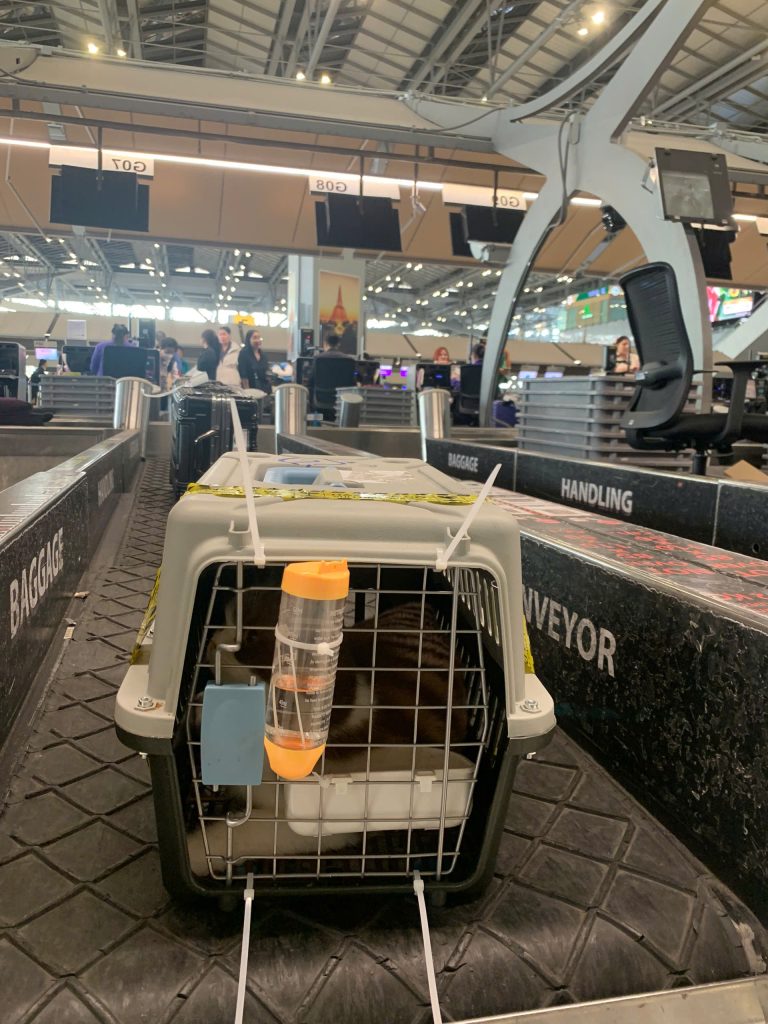
There are no direct flights between Vietnam and Canada. Every pet shipment from Ho Chi Minh City (SGN) or Hanoi (HAN) to Toronto Pearson (YYZ) or Vancouver (YVR) involves at least one connecting hub in Asia. The choice of airline and hub is not a minor logistical detail — it determines how long your pet is in transit, how many times the crate is handled, and whether the airline’s cargo division will actually accept your pet on the specific route and date you need.
This guide covers the three carriers that consistently handle pet manifest cargo on the Vietnam-to-Canada route, their hub operations, booking requirements, and the restrictions you need to verify before committing to a flight date.
How Pets Travel on the Vietnam-to-Canada Route
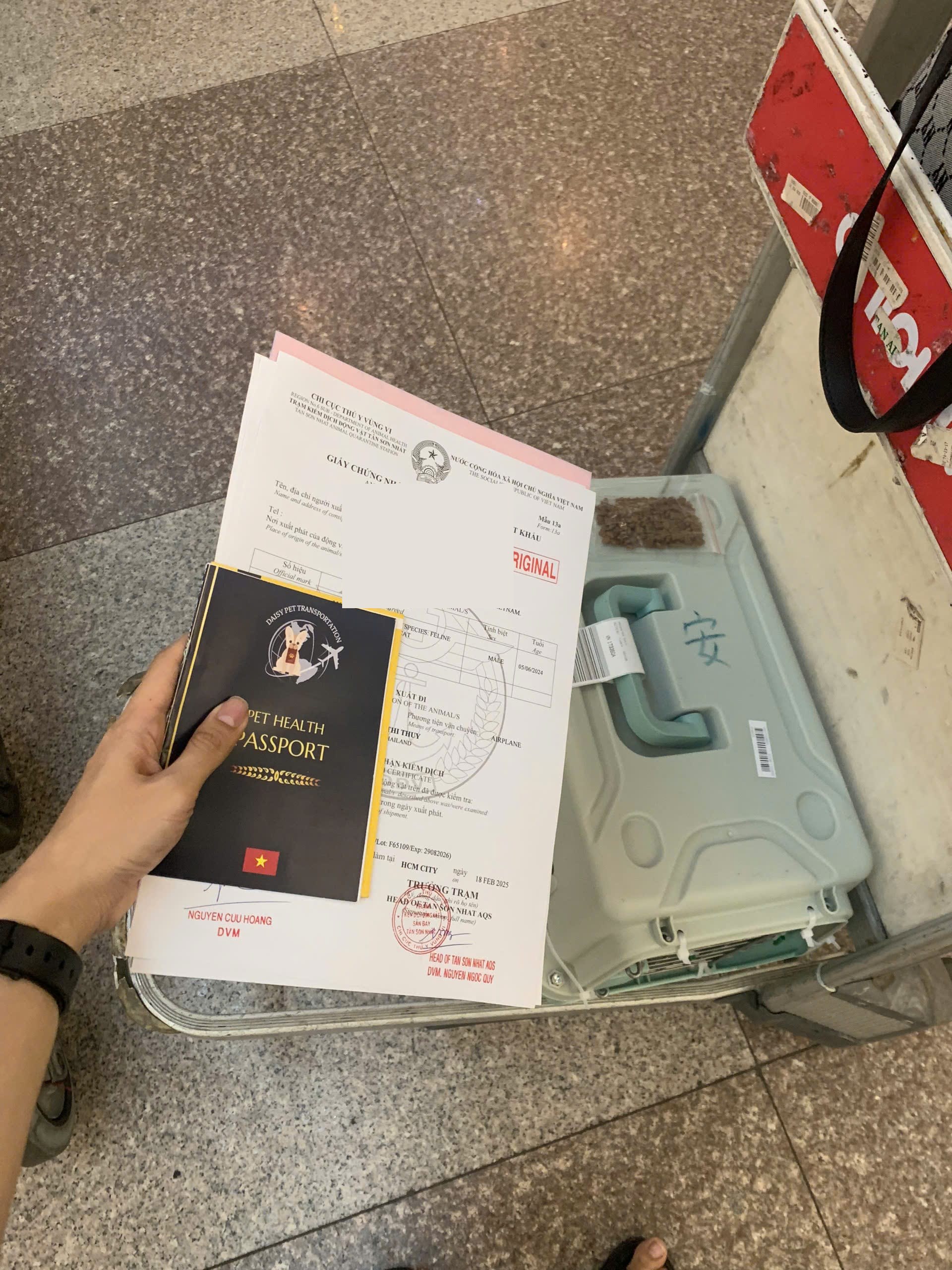
Pets traveling from Vietnam to Canada are shipped exclusively as Manifest Cargo — not as checked baggage, not in the passenger cabin. This means your pet is booked separately through the airline’s cargo division (not the passenger sales line), travels in the aircraft’s pressurized, temperature-controlled cargo hold, and is processed as a live animal shipment at each airport. For a bird’s-eye view of the entire relocation process, read our comprehensive Pet Shipping to Canada guide.
Manifest Cargo live animal shipments are governed by IATA Live Animals Regulations (LAR), which set standards for crate dimensions, labeling, documentation, ventilation, and in-transit care. All three carriers below comply with IATA LAR as a baseline. Additional carrier-specific restrictions apply on top of these standards.
Korean Air Cargo — Via Seoul Incheon (ICN)
Route: SGN or HAN → ICN → YYZ or YVR
Korean Air is generally considered the most reliable carrier for Vietnam-to-Canada pet shipments. The Seoul Incheon hub has a dedicated live animal handling facility and established protocols for long-haul connections. Transit times at ICN for live animal cargo are well-managed, and Korean Air Cargo’s booking process for pets is more standardized than some competitors.
Acceptance policy: Korean Air accepts dogs and cats as manifest cargo on both the Vietnam leg (SGN/HAN → ICN) and the transpacific segment (ICN → YYZ/YVR). Pets must travel in an IATA-compliant hard-shell crate. Combined weight (pet + crate) and dimensions must meet the aircraft’s cargo hold specifications for the specific aircraft type operating the route.
Brachycephalic breed restrictions: Korean Air restricts certain flat-faced (brachycephalic) breeds on some routes. Breeds commonly affected include French Bulldogs, English Bulldogs, Boston Terriers, Pugs, Pekingese, and Shih Tzus. If your dog or cat is a brachycephalic breed, confirm acceptance explicitly with Korean Air Cargo before booking — verbal confirmations are insufficient; request written confirmation.
Temperature embargo: Korean Air imposes seasonal temperature embargoes. During extreme heat periods (typically June–September), acceptance of pets on certain route segments may be suspended if ground temperatures at departure or arrival airports exceed airline thresholds. Check embargo status when booking summer departures.
Booking lead time: Contact Korean Air Cargo directly — at least 2–3 weeks before the desired departure date for a standard booking. Provide your pet’s exact dimensions (length, width, height of crate), combined weight, species, breed, and copies of vaccination documentation at the time of initial inquiry.
Cathay Pacific Cargo — Via Hong Kong (HKG)
Route: SGN or HAN → HKG → YYZ or YVR
Cathay Pacific has well-established live animal handling procedures at Hong Kong International Airport. The HKG hub handles a significant volume of live animal cargo, and Cathay Pacific Cargo’s documentation requirements are clearly defined. The Hong Kong transit point also benefits from a subtropical climate, which is relevant for temperature management of animals in transit.
Acceptance policy: Cathay Pacific accepts dogs and cats as manifest cargo. The carrier has specific approved crate models listed in its Live Animal acceptance guidelines — verify that your IATA crate model is on the approved list. Cathay Pacific also has a maximum combined weight limit per shipment that varies by aircraft type and route segment.
Brachycephalic breed restrictions: Cathay Pacific maintains a restricted breeds list that includes common brachycephalic dogs and cats. Some breeds are accepted with additional documentation (veterinary letter confirming fitness for air travel); others are not accepted at all on certain route segments. Confirm acceptance for your specific breed before proceeding.
Embargo periods: Cathay Pacific issues seasonal heat embargoes affecting live animal acceptance on specific routes. The HKG summer period (May–September) can trigger restrictions. Check the current embargo calendar with Cathay Pacific Cargo at the time of booking.
Booking process: Cathay Pacific Cargo bookings for live animals require advance notice of at least 2 weeks. The cargo division requires the pet’s measurements, weight, breed, vaccination records, and owner’s travel itinerary if the owner is traveling on the same booking.
Air China Cargo — Via Beijing (PEK)
Route: SGN or HAN → PEK → YYZ or YVR
Air China operates a major cargo hub at Beijing Capital International Airport (PEK). The carrier accepts live animal manifest cargo on the Vietnam-to-Canada routing, but has the most restrictive breed and temperature policies of the three carriers on this guide.
Acceptance policy: Air China accepts dogs and cats as manifest cargo, subject to more restrictive conditions than Korean Air or Cathay Pacific on certain breed categories. Standard IATA LAR crate requirements apply.
Brachycephalic breed restrictions: Air China has a published ban on transporting brachycephalic dog breeds on most international routes. This is more broadly applied than Korean Air’s or Cathay Pacific’s restrictions and affects a wider list of breeds. If your dog is a brachycephalic breed, Air China is likely not a viable option — confirm with their cargo division directly.
Temperature and seasonal embargoes: Air China issues temperature embargoes affecting live animal transport during summer months, particularly for routes transiting Beijing where summer temperatures can be extreme. The embargo periods and thresholds are more frequently triggered than on the ICN or HKG hubs.
Booking process: Air China Cargo bookings require 2–3 weeks advance notice. The carrier’s cargo booking process for live animals can be less standardized than Korean Air’s — confirm all details in writing before finalizing.
Booking Process: What to Expect
Booking pet manifest cargo is not the same as booking a passenger ticket. The process involves the airline’s cargo division — a separate entity from the passenger sales operation — and requires more lead time and documentation.
Step 1: Contact the cargo division directly. Do not call the passenger reservation line. Korean Air Cargo, Cathay Pacific Cargo, and Air China Cargo each have separate contact channels. In Vietnam, these are accessible through the airlines’ local cargo offices in Ho Chi Minh City and Hanoi.
Step 2: Provide pet specifications. The cargo agent will need: species, breed, age, sex, weight of pet alone, external dimensions of the IATA crate (length × width × height in centimeters), and combined weight (pet + crate + food/water accessories). Have these numbers ready before calling.
Step 3: Confirm breed acceptance. Explicitly ask whether your specific breed is accepted on the specific routing and date. Get confirmation in writing (email). A phone confirmation is not sufficient for airline cargo.
Step 4: Request space reservation. Unlike passenger seats, live animal cargo space is limited on each flight. Request a specific flight and date and receive a space confirmation. This is separate from the final booking and may require a deposit.
Step 5: Finalize booking with documentation. Approximately 5–7 days before departure, submit the final booking with copies of vaccination documentation and health certificate. The cargo agent will issue a booking confirmation with an airway bill number — keep this for tracking and CBSA clearance. Because these documents require precise scheduling, we recommend aligning your veterinary visits with our Pet Shipping Timeline Vietnam to Canada.
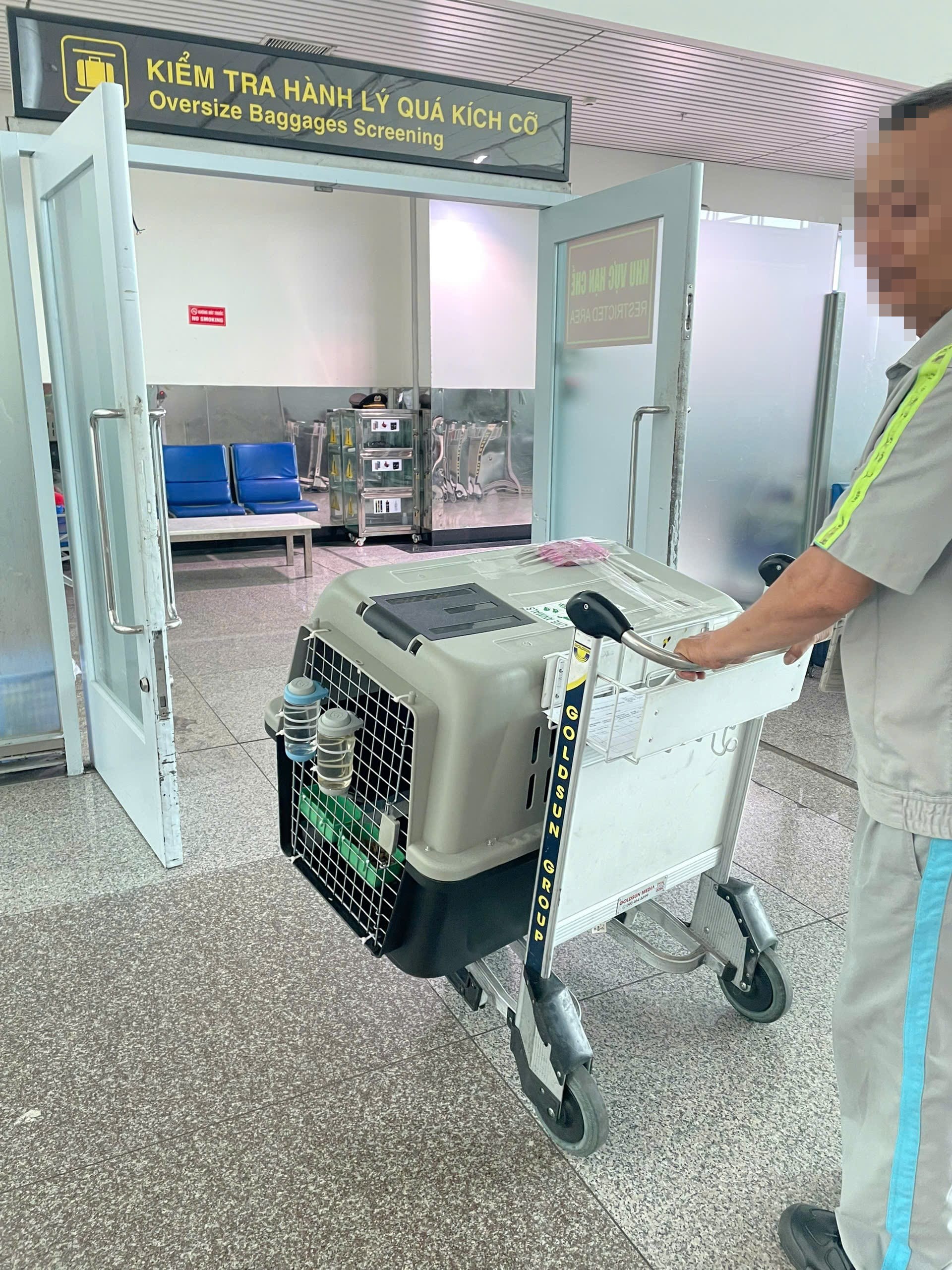
What to Attach to the Crate at Departure
At cargo terminal check-in, the following must be attached to or accompany the crate:
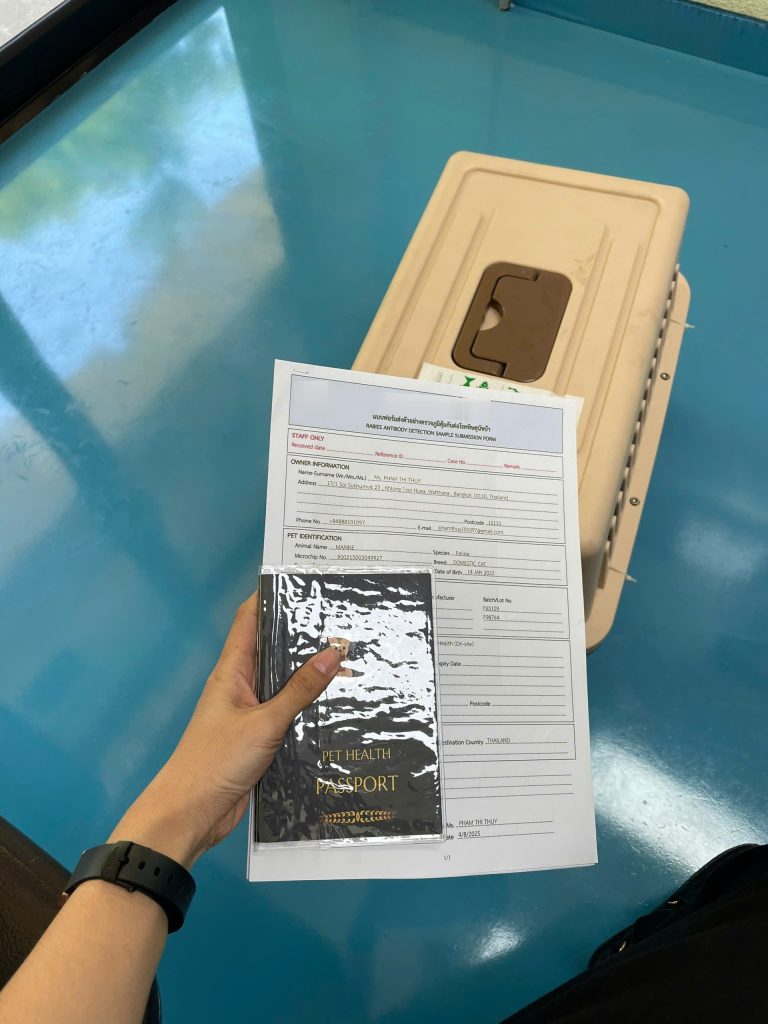
- Document pouch attached to the top of the crate containing original Animal Health Certificate and rabies vaccination certificate — you can read the detailed health criteria in our Canada Pet Import Laws Detailed guide
- “Live Animals” labels (mandatory under IATA), placed on several sides so handlers see them from any angle
- “This Way Up” orientation arrows on all four sides
- Owner contact information (name, phone, destination address) on a label attached to the crate
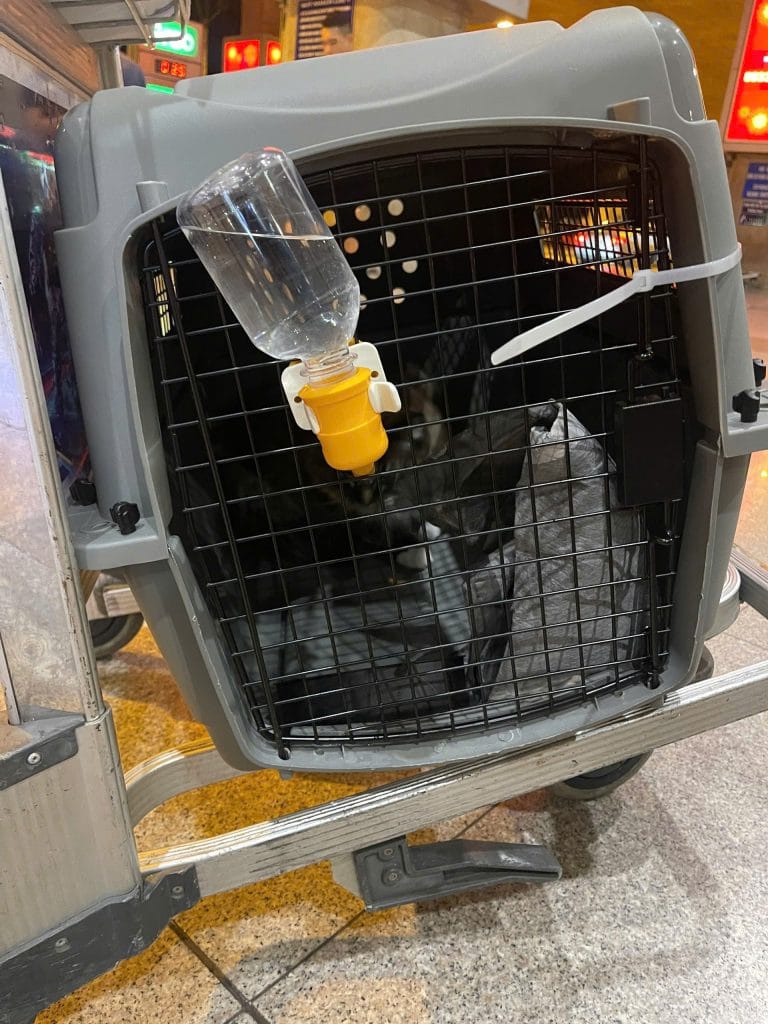
- Feeding and watering instructions attached to the crate (even if the instruction is “do not feed during transit”)
Arrive at the cargo terminal — not the passenger terminal — at least 3–4 hours before the scheduled departure time. Cargo check-in procedures for live animals take longer than passenger check-in.
Airline Comparison at a Glance
To see how these airline choices affect your overall budget, check our breakdown of Pet Shipping Cost Canada.
| Carrier | Hub | Reliability for VN→CA | Brachycephalic Restrictions | Summer Embargo Risk |
|---|---|---|---|---|
| Korean Air | Seoul ICN | High | Moderate — confirm by breed | Moderate |
| Cathay Pacific | Hong Kong HKG | High | Moderate — confirm by breed | Moderate |
| Air China | Beijing PEK | Moderate | High — most breeds restricted | High |
Ready to book? Contact our team for a personalized routing assessment.
Last updated 14 Oct 2026
Compiled by our specialists from the regulations in force on the date above, for reference only. Rules may change after this date. Please verify with the competent authorities or contact us for the most accurate information.