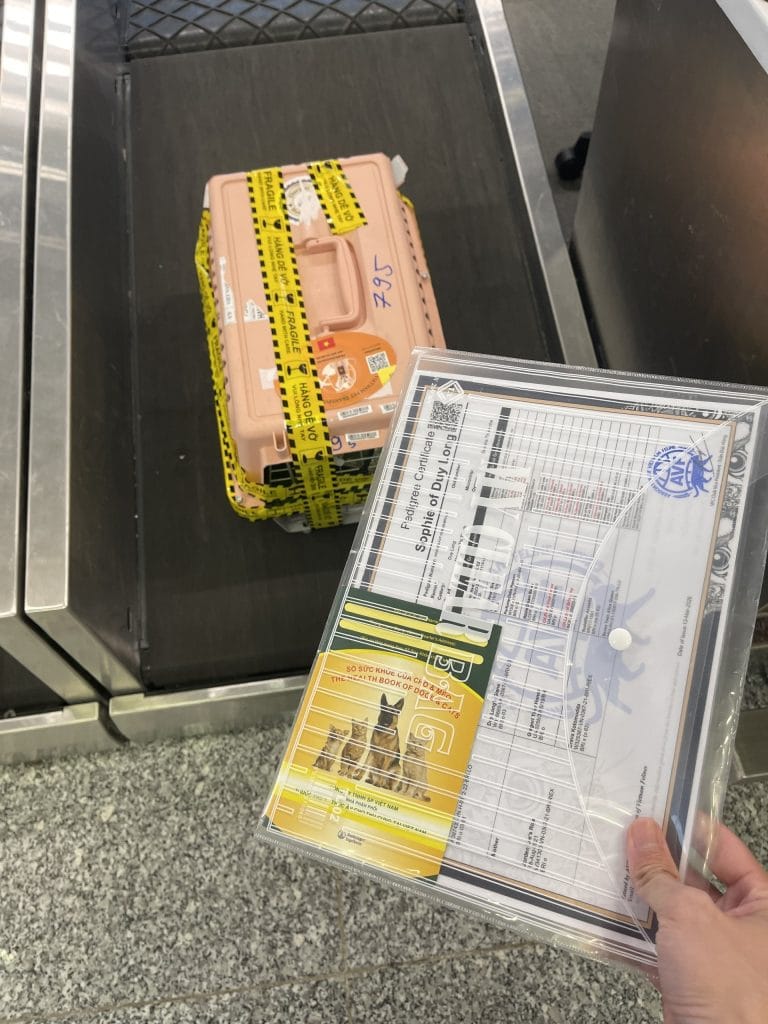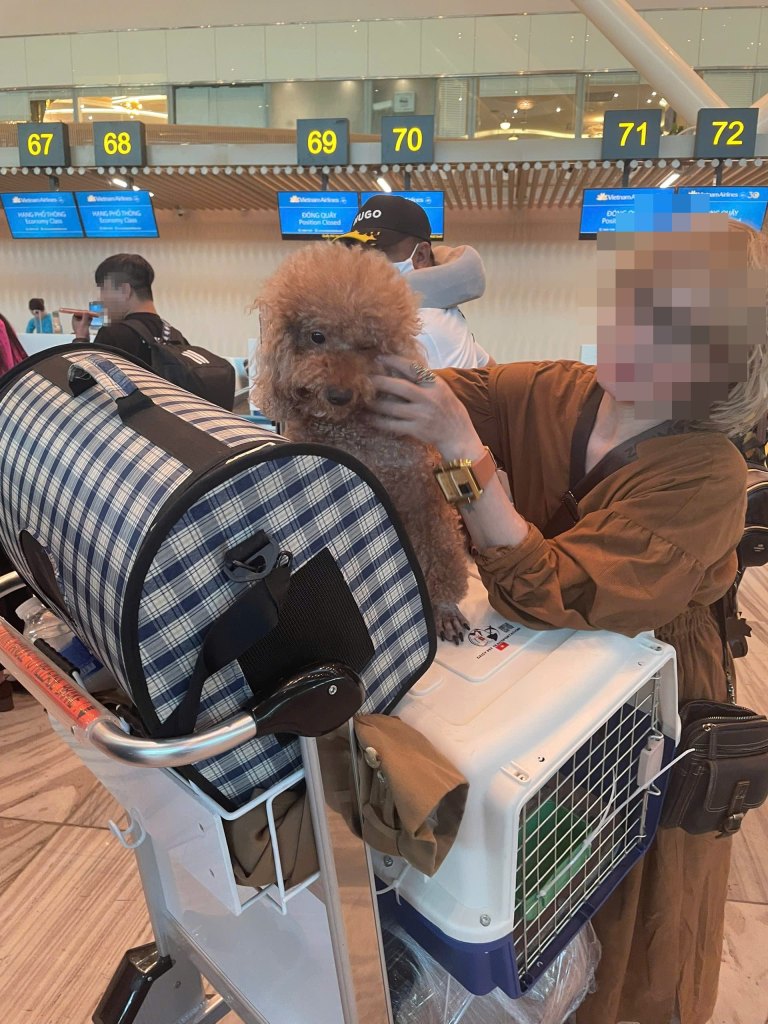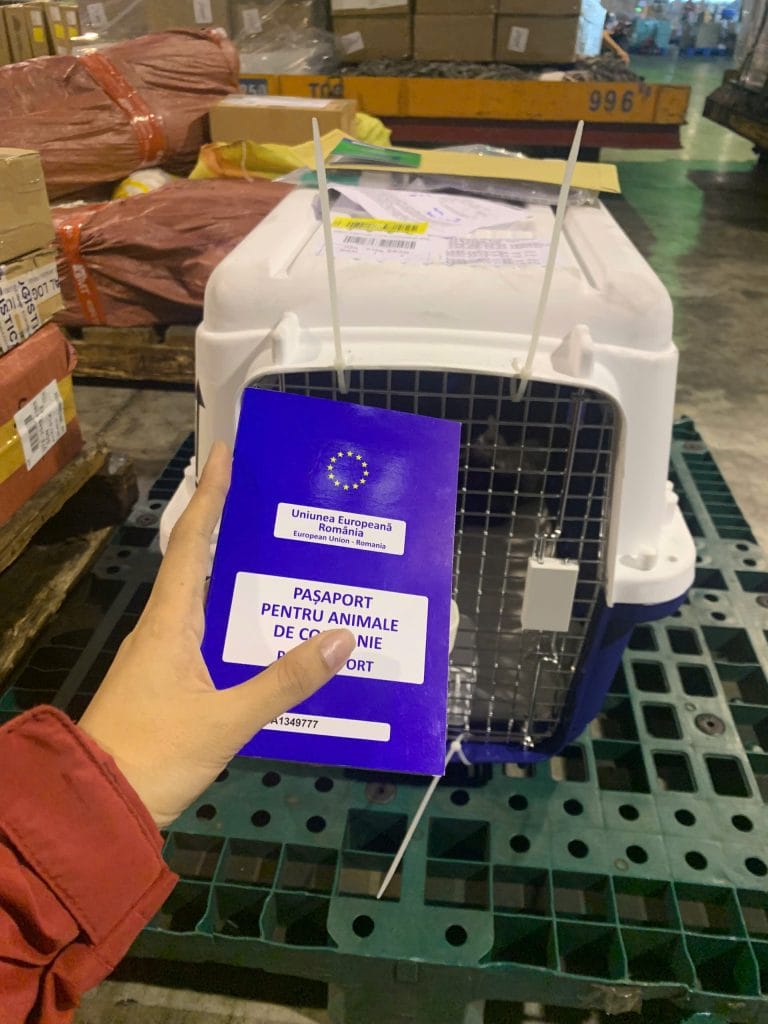
Selecting an airline to ship your pet from Vietnam to the United States is not a matter of finding the cheapest ticket. Technical variables directly determine whether your pet arrives safely and legally: carrier animal acceptance policies, landing at a CDC-approved Animal Care Facility (ACF) airport, transit terminal infrastructure, and seasonal weather conditions along the flight path.
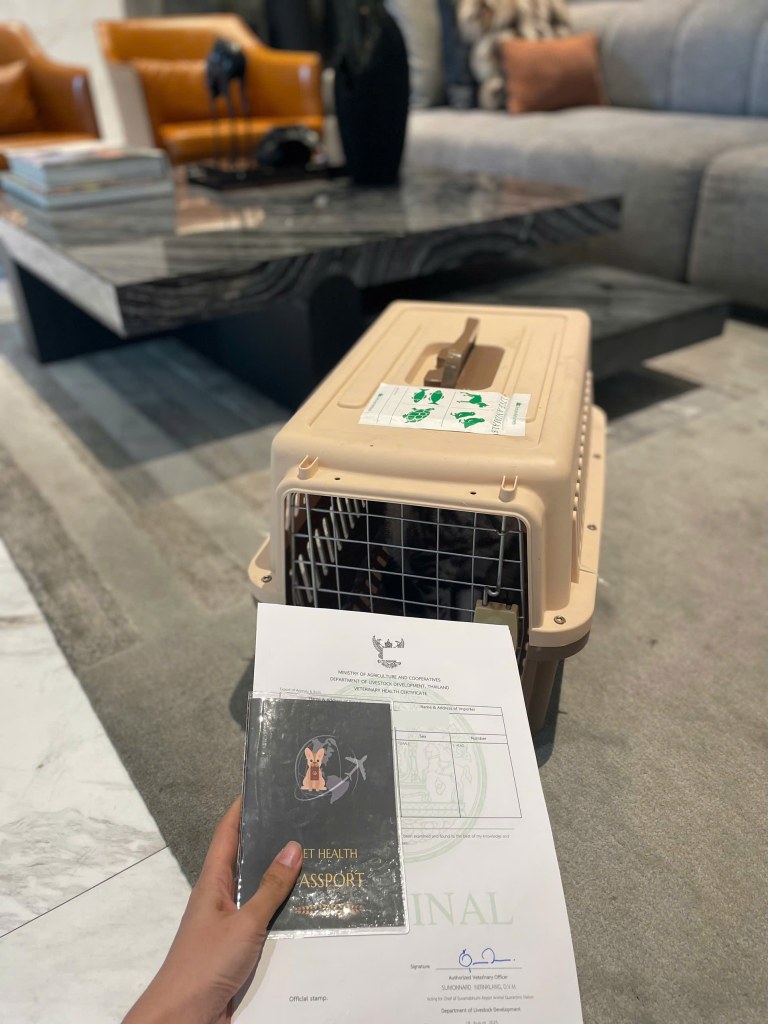
Before picking a carrier, ensure you understand full regulatory compliance through our CDC USA pet shipping regulations guide and review our Vietnam to USA pet shipping timeline.
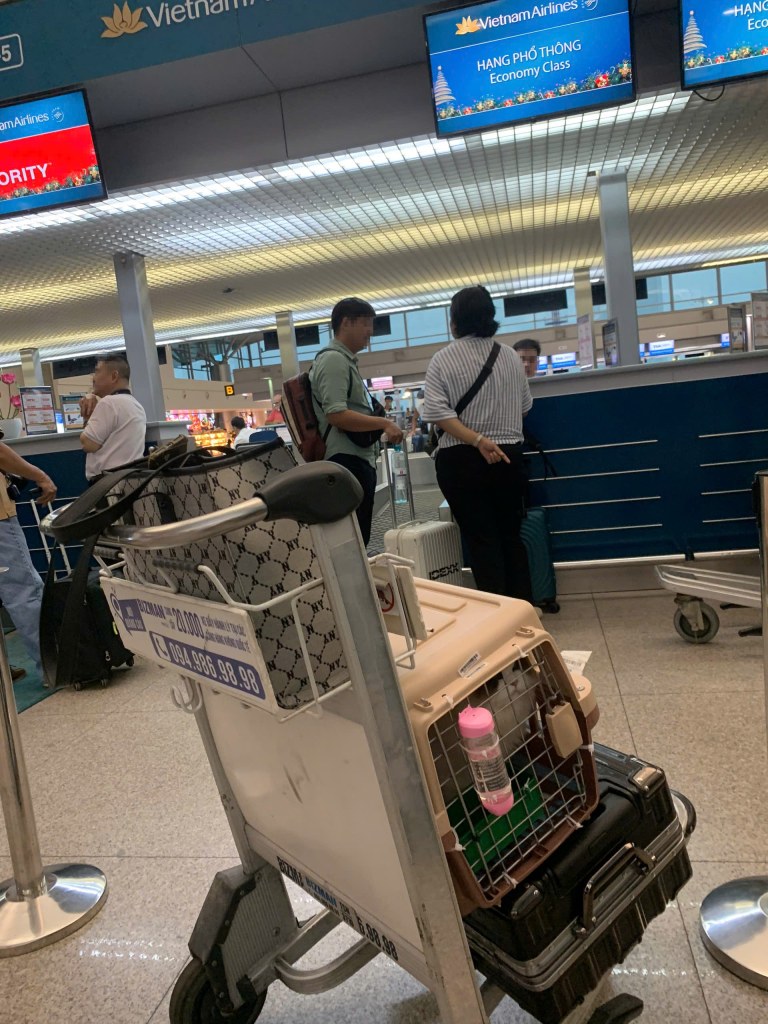
⚠️ Critical warning before purchasing tickets: The most common and expensive mistake pet owners make is purchasing personal passenger tickets first without verifying pet cargo feasibility. A prime real-world example: Hong Kong International Airport (HKG) strictly prohibits pets from transiting in-cabin or as checked baggage (AVIH). If you book a passenger flight connecting through Hong Kong expecting to bring your pet along, your dog or cat will be denied boarding at check-in in Vietnam, forcing costly emergency ticket cancellations and rebookings.
Part 1: 5 Critical Factors When Evaluating Airlines
When shipping a pet to the USA, ticket price is secondary. Five technical criteria dictate whether your pet’s journey will succeed:
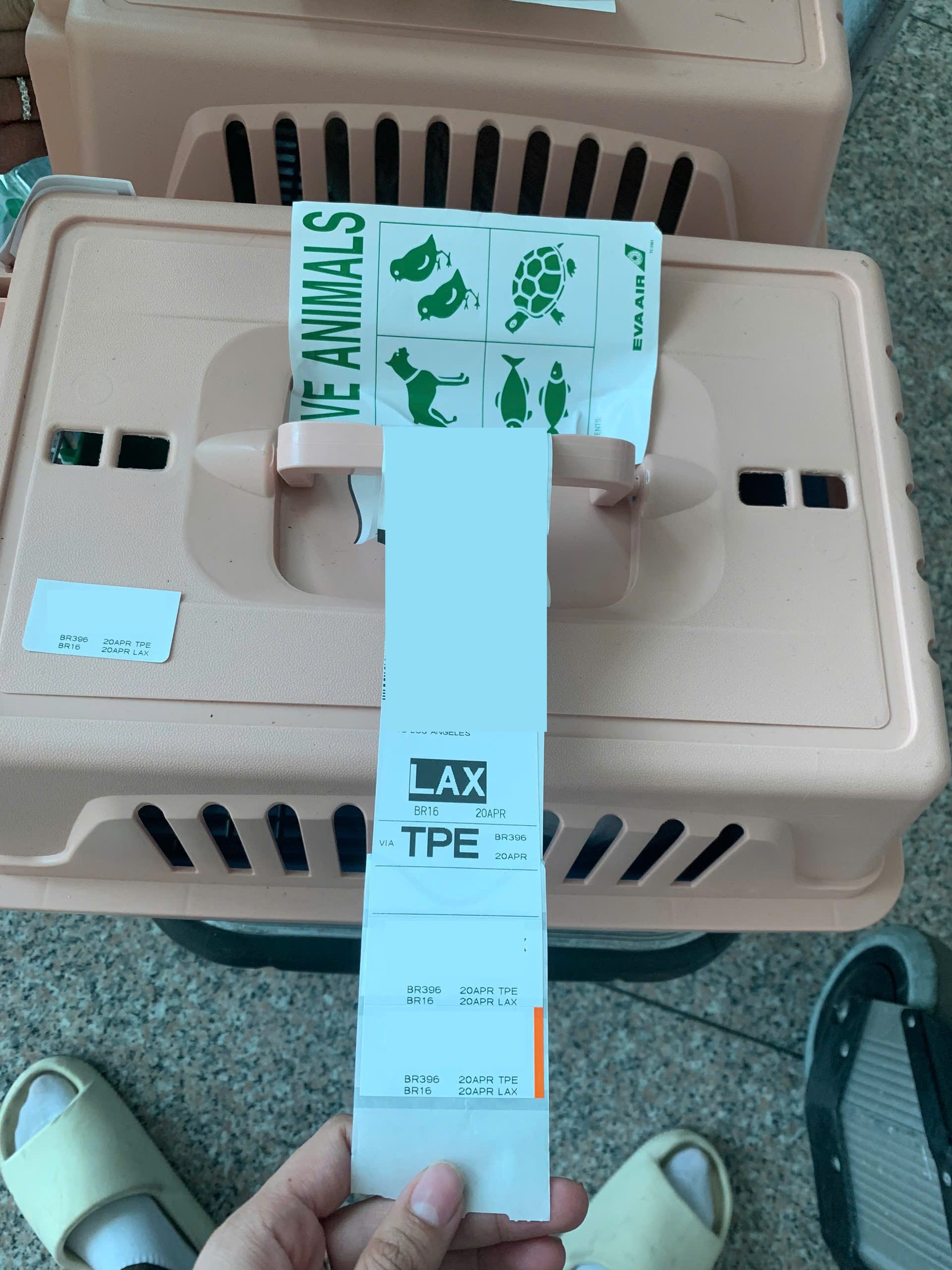
| Evaluation Criteria | Real-World Practical Importance |
|---|---|
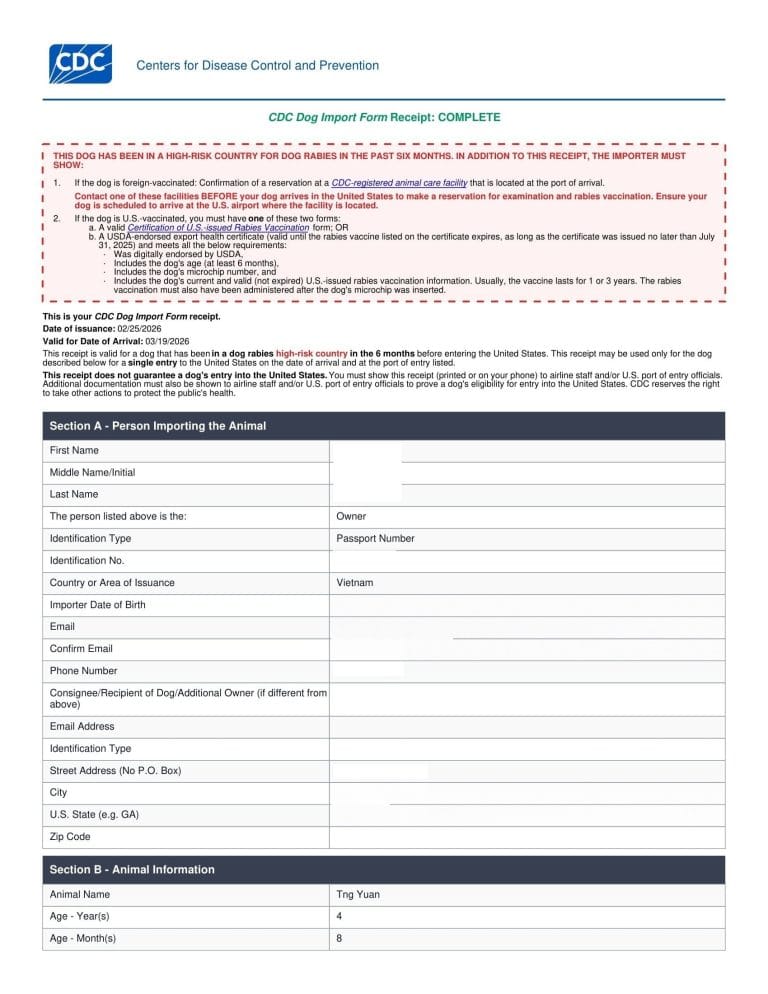
| Landing Airport (CDC ACF Authorized) | Dogs originating from high-risk countries like Vietnam MUST land at 1 of 8 CDC-approved ACF airports (LAX, JFK, MIA, ATL, PHL, IAD, DFW, SEA). You must select a carrier offering routes connecting to these specific entry gateways. |
| Carrier Live Animal Policies | Airlines impose strict weight and crate limits. For instance, Japan Airlines caps checked pets at 32 kg total, whereas EVA Air allows up to 45 kg including crate weight. |
| Restricted Breed Directories | Most carriers enforce strict embargoes on brachycephalic (short-nosed) breeds (French Bulldogs, Pugs, Persian cats) and powerful breeds (Pit Bulls, Mastiffs). You must verify carrier breed lists prior to booking. |
| Transit Country Regulations | Transit hubs enforce independent biosecurity laws. Hong Kong prohibits in-cabin and checked baggage pet transits, permitting only standalone Manifest Cargo (booked directly with the airline’s cargo department under an Air Waybill / AWB). |
| Aircraft Body Specs | Narrow-body aircraft (such as Airbus A320 or Boeing 737) feature small cargo doors that cannot accommodate oversized rigid plastic crates required for large dogs. |
Part 2: Transit Hubs — The Crucial Factor Often Overlooked
Vietnam Airlines flies nonstop between Ho Chi Minh City (SGN) and San Francisco (SFO), but it does not transport dogs on any flight between Vietnam and the United States. Cats can take this nonstop route in the cabin or as checked baggage. Every dog, and every pet shipped as Manifest Cargo on the carriers below, travels via a connecting flight through a third-country hub, most commonly South Korea (ICN), Japan (NRT/HND), Taiwan (TPE), or Hong Kong (HKG).
Layover times range from 2–4 hours to 15–20 hours depending on flight schedules. Selecting routes with short transit windows minimizes stress for your pet. When longer layovers are unavoidable, choosing hubs with climate-controlled live animal facilities is essential.
- Transit welfare standards: IATA establishes baseline live animal handling rules. Hubs like Seoul Incheon (ICN) and Taipei Taoyuan (TPE) operate specialized climate-controlled cargo terminals protecting pets from outdoor weather.
- Layover duration: IATA guidelines recommend layovers for live animals not exceed 4 hours. Connecting flight schedules must be audited before finalizing bookings.
- Ambient temperature: Summer heat at transit hubs represents a severe risk. Seoul (ICN), Taipei (TPE), and Tokyo (NRT) offer more temperate conditions than Hong Kong (HKG) during peak summer months.
- Direct connections to US ACF gateways: Your transit hub determines available US entry points. Airlines can be stricter than the CDC: under Korean Air’s own policy, dogs vaccinated in a high-risk country such as Vietnam may only enter the US on Korean Air at 2 of the 8 CDC ACF airports: Washington Dulles (IAD) and Atlanta (ATL) — so the ACF reservation must match an entry airport the airline accepts.
Part 3: Korean Air — The Most Established Carrier from Vietnam
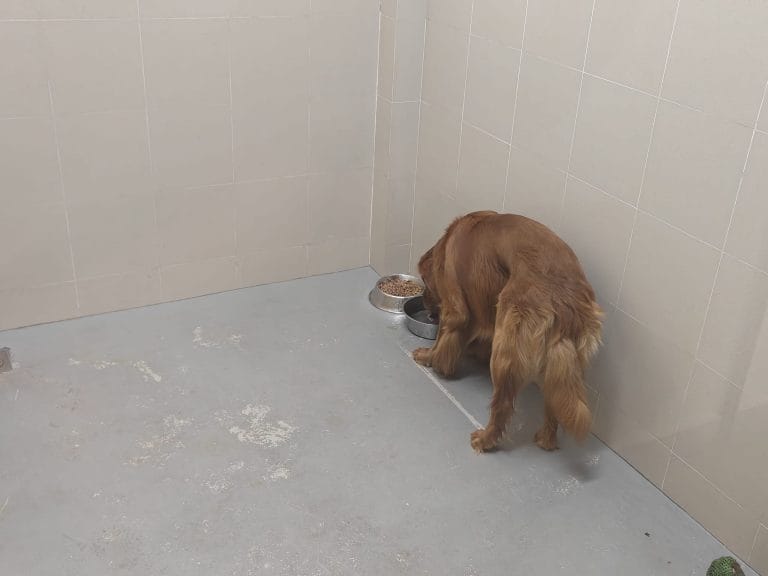
Korean Air operates regular live animal transport services from Ho Chi Minh City (SGN) and Hanoi (HAN) connecting via Seoul Incheon (ICN) to major US airports, making it the most trusted carrier for the Vietnam–USA route.
| Operational Parameter | Carrier Rule & Detail |
|---|---|
| Vietnam Departure Airports | SGN (Tan Son Nhat), HAN (Noi Bai) |
| Transit Hub Airport | Seoul Incheon (ICN) – features a climate-controlled live animal reception center at the cargo terminal |
| US Airports Served | JFK, LAX, ORD, ATL, SFO, and other major gateway cities |
| ACF-Approved Destinations | IAD, ATL only (Korean Air’s own rule for dogs vaccinated in high-risk countries such as Vietnam) |
| Manifest Cargo Acceptance | Yes – accepts dogs and cats under Manifest Cargo (booked directly with the airline’s cargo department under an Air Waybill / AWB) |
| Short-Nosed Breed Policy | Strictly restricted – seasonal and permanent embargoes apply to specific breeds |
Why Korean Air leads the market: Incheon Airport’s cargo terminal operates climate-controlled holding areas for live animal transit. For dogs, plan the US entry around Korean Air’s own rule: only 2 of the 8 CDC ACF airports — Washington Dulles (IAD) and Atlanta (ATL) — are accepted for dogs vaccinated in high-risk countries such as Vietnam.
Part 4: China Airlines & EVA Air — Taiwan Transit Routing
Both China Airlines and EVA Air operate routes connecting through Taipei Taoyuan Airport (TPE). Taiwan’s cargo terminal infrastructure offers excellent climate care and live animal handling capabilities.
China Airlines:
- Operates routes from SGN/HAN to major US gateways connecting via Taipei (TPE).
- Routes connecting to primary US ACF gateways: LAX, JFK, and SFO.
- Accepts dogs and cats as Manifest Cargo; enforces strict breed embargoes for brachycephalic and aggressive breeds.
- Offers reasonable layover layovers in Taipei (typically 2–4 hours).
EVA Air:
- Routes connecting SGN/HAN through Taipei to US cities including LAX, SFO, JFK, and Chicago (ORD).
- Accepts live animal cargo in IATA-compliant crates. Routes connecting to LAX and JFK offer CDC ACF compatibility .
- EVA Air maintains attentive transit care protocols. For a real-world case, review our study on shipping Pun the dog from Saigon to Houston via LAX on EVA Air.
Part 5: Cathay Pacific — Hong Kong Transit Hub
Cathay Pacific operates connecting flights from Vietnam to US airports (JFK, LAX, SFO) via Hong Kong (HKG).
Critical Operational Restrictions:
- ⚠️ Hong Kong bans in-cabin and checked baggage pet transits: HKG Airport permits live animal transits ONLY under Manifest Cargo. If you plan to fly alongside your pet in the cabin or as checked baggage, you cannot choose flights transiting via Hong Kong.
- Summer heat embargo risks: Hong Kong summer temperatures (June through September) regularly exceed 33°C. During extreme heat spikes, the airline may enact temporary embargoes halting live animal cargo acceptance.
Part 6: Japan Transit Routes — ANA & JAL
All Nippon Airways (ANA) and Japan Airlines (JAL) provide connecting flights from Vietnam to the USA via Tokyo Narita (NRT) or Haneda (HND).
- Routes connecting via Tokyo serve major US entry points such as LAX and JFK with authorized ACF facilities .
- Japanese carriers are renowned for exceptional ground handling and animal care during layovers.
- However, cargo acceptance is subject to strict summer temperature embargoes. Both ANA and JAL frequently suspend live animal cargo bookings during peak summer months.
Part 7: Step-by-Step Airline Selection Protocol
To ensure your pet’s safety and regulatory compliance, airline selection for US relocations must follow a strict 6-step protocol:
- Step 0 — Route consultation prior to ticket purchase: Contact a pet shipping specialist to audit route feasibility based on breed, weight, and travel dates before buying personal flight tickets.
- Step 1 — Confirm US entry airport: Select 1 of the 8 CDC-approved ACF airports (LAX, JFK, MIA, ATL, PHL, IAD, DFW, SEA) closest to your final US destination. Note that SEA only accepts Manifest Cargo shipments.
- Step 2 — Filter available airlines: Identify carriers operating connecting flights to your chosen ACF port.
- Step 3 — Audit cargo acceptance: Verify directly with the airline’s cargo desk that live animal bookings are open for your target departure dates.
- Step 4 — Check crate sizing and aircraft specs: Ensure your pet’s breed is accepted and the IATA crate dimensions clear the aircraft cargo door.
- Step 5 — Reserve cargo space and secure an AWB: Complete CDC import documentation → Obtain barcode receipt → Lock in cargo booking for an Air Waybill (AWB) number → Submit email reservation for CDC ACF facility inspection. See our real case on shipping Ki the Poodle to Los Angeles for practical details.
Frequently Asked Questions
Can dogs ship to the USA transiting through Hong Kong (HKG)?
Hong Kong International Airport strictly prohibits pets from transiting in-cabin or as checked baggage. Live animals can only transit Hong Kong when booked as independent Manifest Cargo under an Air Waybill (AWB).
Which US entry airports are mandatory for dogs arriving from Vietnam?
Under 2026 CDC regulations, dogs originating from high-risk rabies countries like Vietnam MUST land at 1 of 8 CDC-approved Animal Care Facility (ACF) entry airports: LAX (Los Angeles), JFK (New York), MIA (Miami), ATL (Atlanta), PHL (Philadelphia), IAD (Washington Dulles), DFW (Dallas-Fort Worth), or SEA (Seattle, cargo-only).
Last updated 16 Oct 2026
Compiled by our specialists from the regulations in force on the date above, for reference only. Rules may change after this date. Please verify with the competent authorities or contact us for the most accurate information.