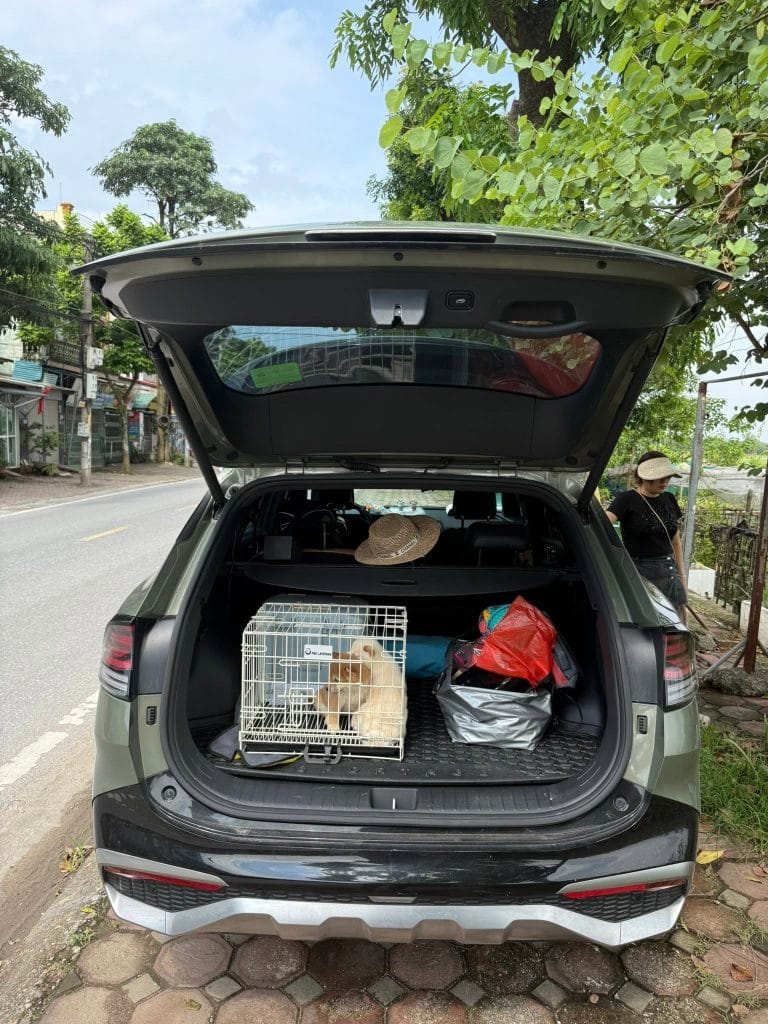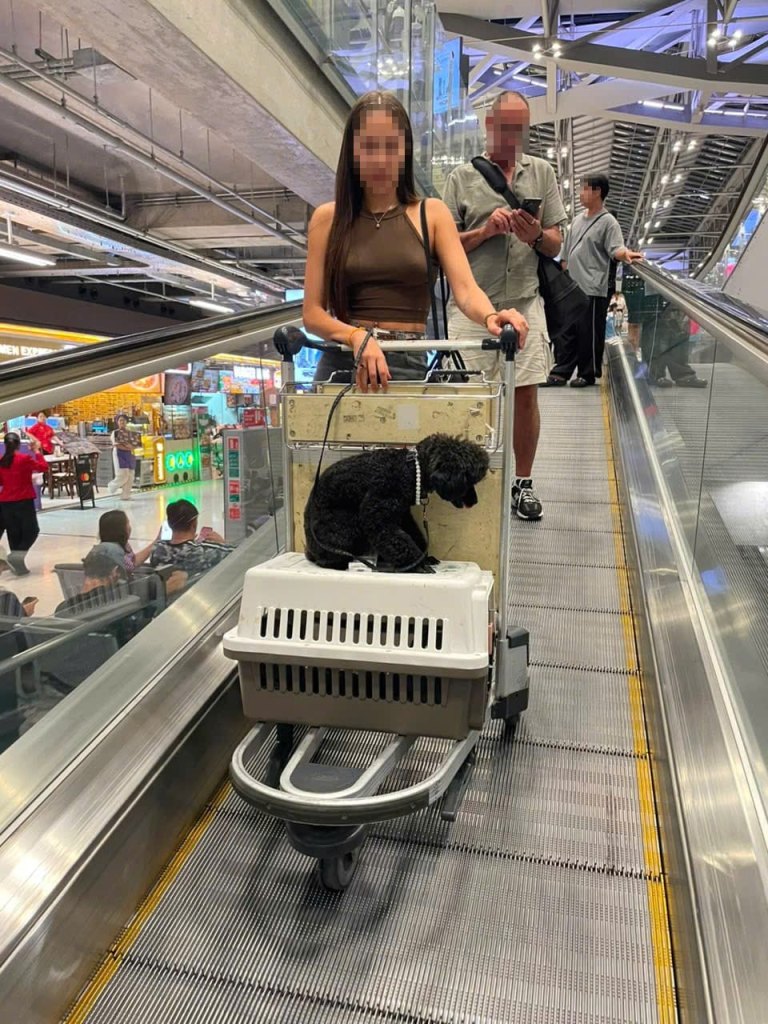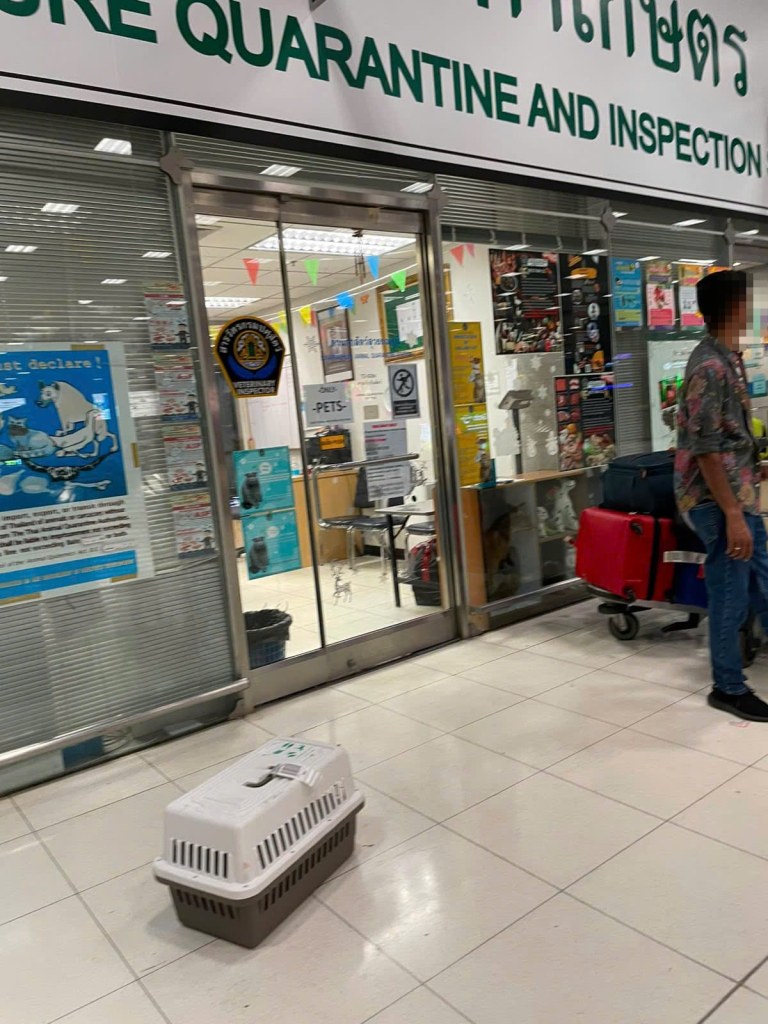
Most dogs and cats arriving in Bangkok land at Suvarnabhumi Airport (BKK). A pet that flies with you clears at a quarantine desk next to baggage belt 8, open 24 hours. A pet that flies as cargo clears at the cargo Free Zone, which works only on weekdays.
This guide covers the arrival day in Bangkok: where to collect the pet, what to show, how long it takes, what you pay and what happens on a Friday night. It assumes you already hold the Thai import permit.
Quick answers
- Where do I collect my pet? In the cabin or as checked baggage: the quarantine desk in the arrivals hall. As cargo: the quarantine office in the Free Zone, building CE-1.
- Is the desk open at night? The passenger desk works around the clock. The cargo office works Monday to Friday, 08:30–16:30.
- What do I pay the government? 500 baht per pet plus 10 baht per application for the import licence, then customs duty on the pet’s declared value. Owners usually report about 1,500–2,000 baht of duty per pet.
- How long does it take? With complete papers, about 15–30 minutes at the quarantine desk and 10 minutes at Customs.
- Can I fly on to Phuket or Samui? Yes, but the pet clears into Thailand in Bangkok first.
Suvarnabhumi or Don Mueang: where will your pet land?
Bangkok has two airports. Suvarnabhumi (BKK) handles the long-haul and full-service airlines that carry pets. Don Mueang (DMK) mostly serves low-cost airlines, and most of them do not carry animals at all.
The airport decides which quarantine station issues the import permit. A permit from the Suvarnabhumi station does not work at Don Mueang. Our guide to applying for the Thailand pet import permit lists the email for each station.
Arriving at Suvarnabhumi with a pet in the cabin or as checked baggage
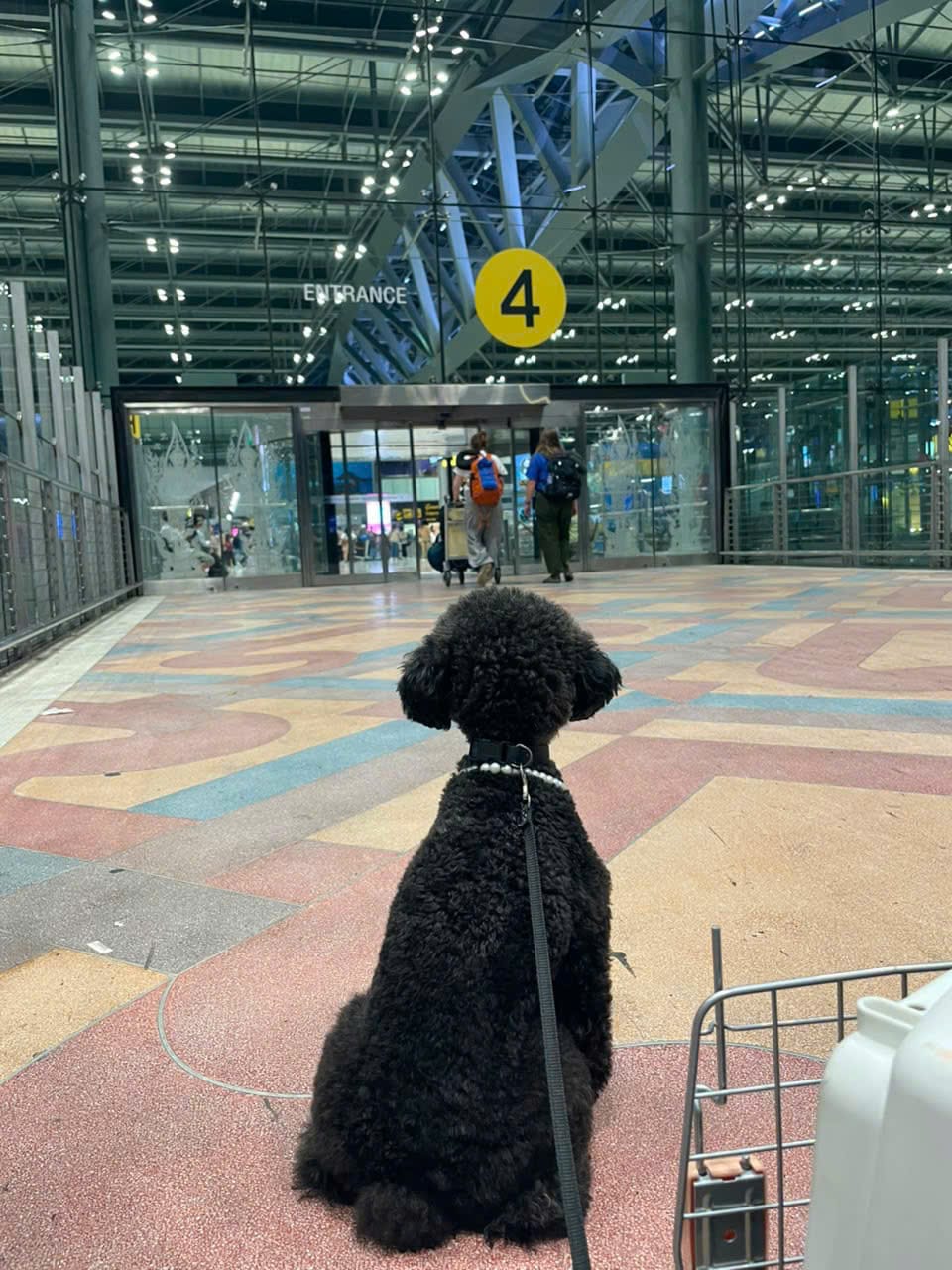
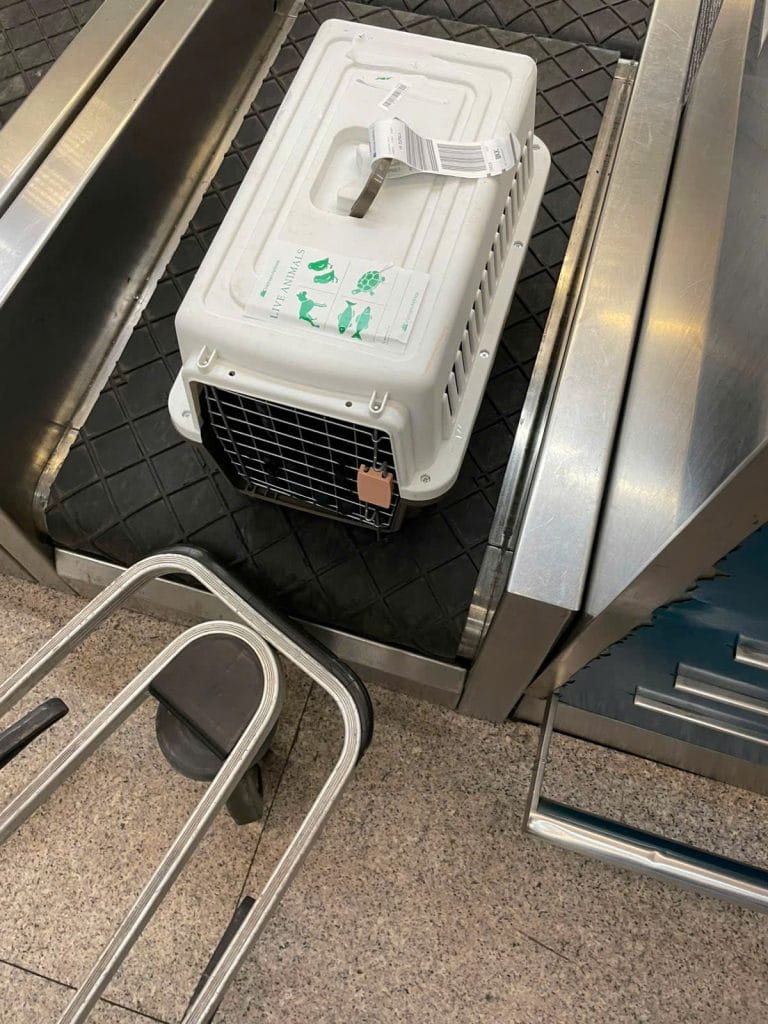
A pet in the cabin or in checked baggage stays with its owner through the passenger terminal. The steps run in this order:
- Immigration. The owner passes passport control with the pet in its carrier.
- Baggage claim. Collect a checked pet with your bags in the baggage hall.
- Quarantine desk. Take the pet to the Animal Quarantine Station (AQS) desk next to baggage belt 8. The vet checks the papers and scans the microchip.
- Import licence. The vet issues Form R.7 and collects 500 baht per pet plus 10 baht per application. Keep the receipt.
- Customs. Walk to the red “Goods to Declare” channel with the pet and Form R.7. Customs sets the duty and you pay it there.
- Exit. You leave the airport with the pet and both receipts.
With a permit issued in advance and complete papers, the desk takes about 15–30 minutes in our experience. Customs adds about 10 minutes. The passenger desk’s phone is +66 2 134 0636.
Documents to carry through the Bangkok airport
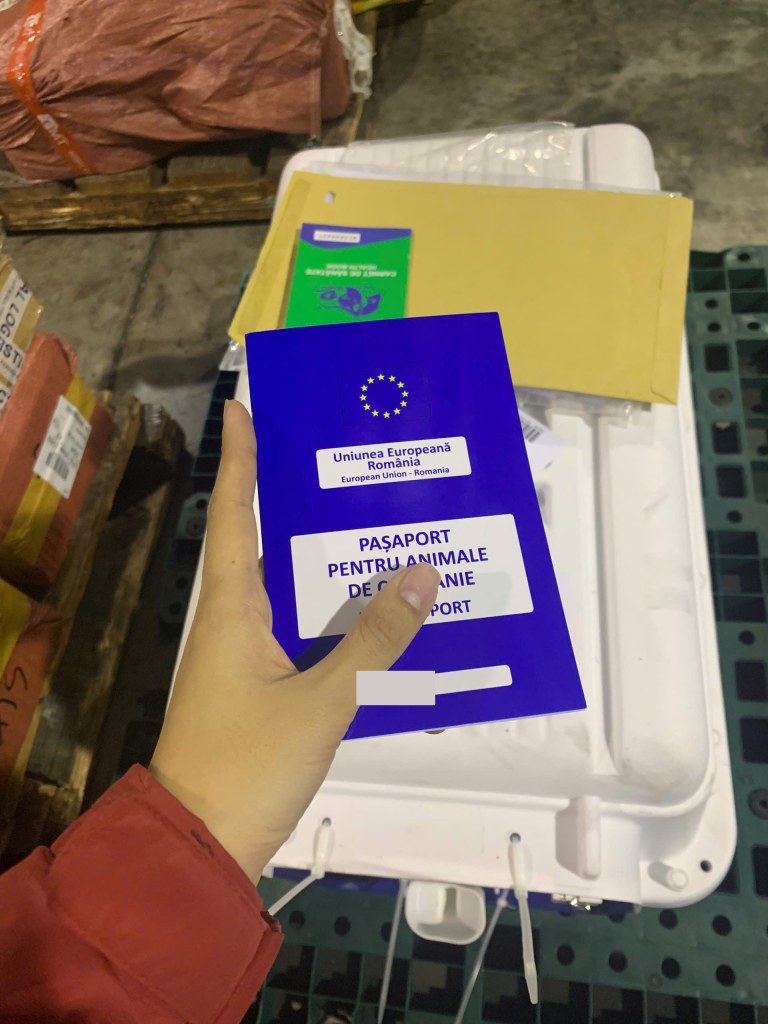
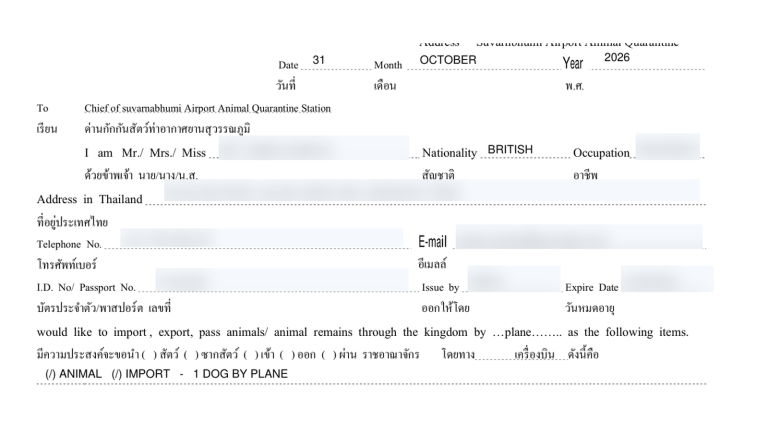
- Import permit (Form R.6): printed, with the right airport, breed and microchip numbers. The chip must match the microchip implant record you carry.
- Health certificate: the original from your country’s government vet service, endorsed within the last 10 days.
- Vaccination record: the original, with the microchip number, vaccine names, batch numbers and the vet’s signature.
- Passport: the owner’s passport, or the collector’s passport for a cargo pet.
- Air waybill: for a cargo pet only.
The rules behind these papers, such as vaccines and the 21-day wait, are in our guide to Thailand’s entry rules for dogs and cats.
Collecting a cargo pet at the Suvarnabhumi Free Zone
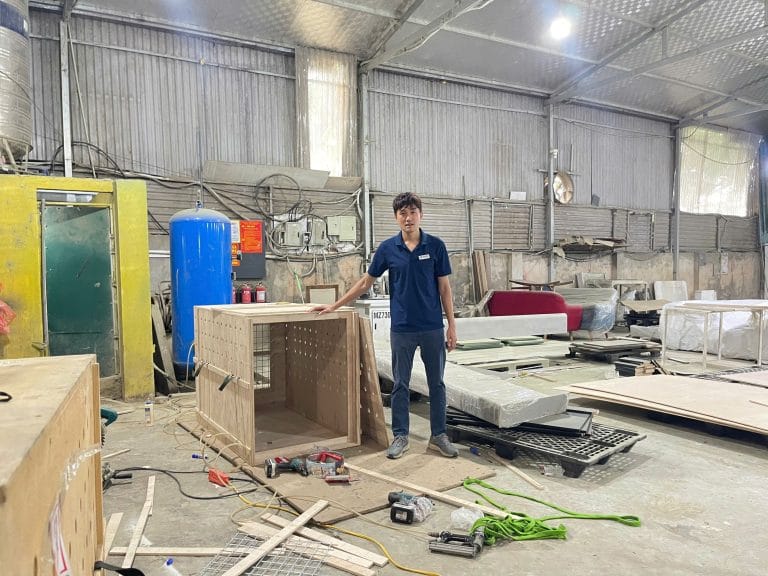
A pet that flies as manifested cargo goes to the airline’s cargo terminal, not to the passenger hall. The owner or an agent collects it in the Free Zone.
- Quarantine office: the AQS office on the ground floor of building CE-1 checks the papers and the pet, then issues Form R.7.
- Customs: the cargo customs office in building BC-1, second floor, takes a short-form declaration with the passport, air waybill and Forms R.6 and R.7. It assesses the duty.
- Warehouse: the cargo terminal releases the crate once its handling and storage fees are paid.
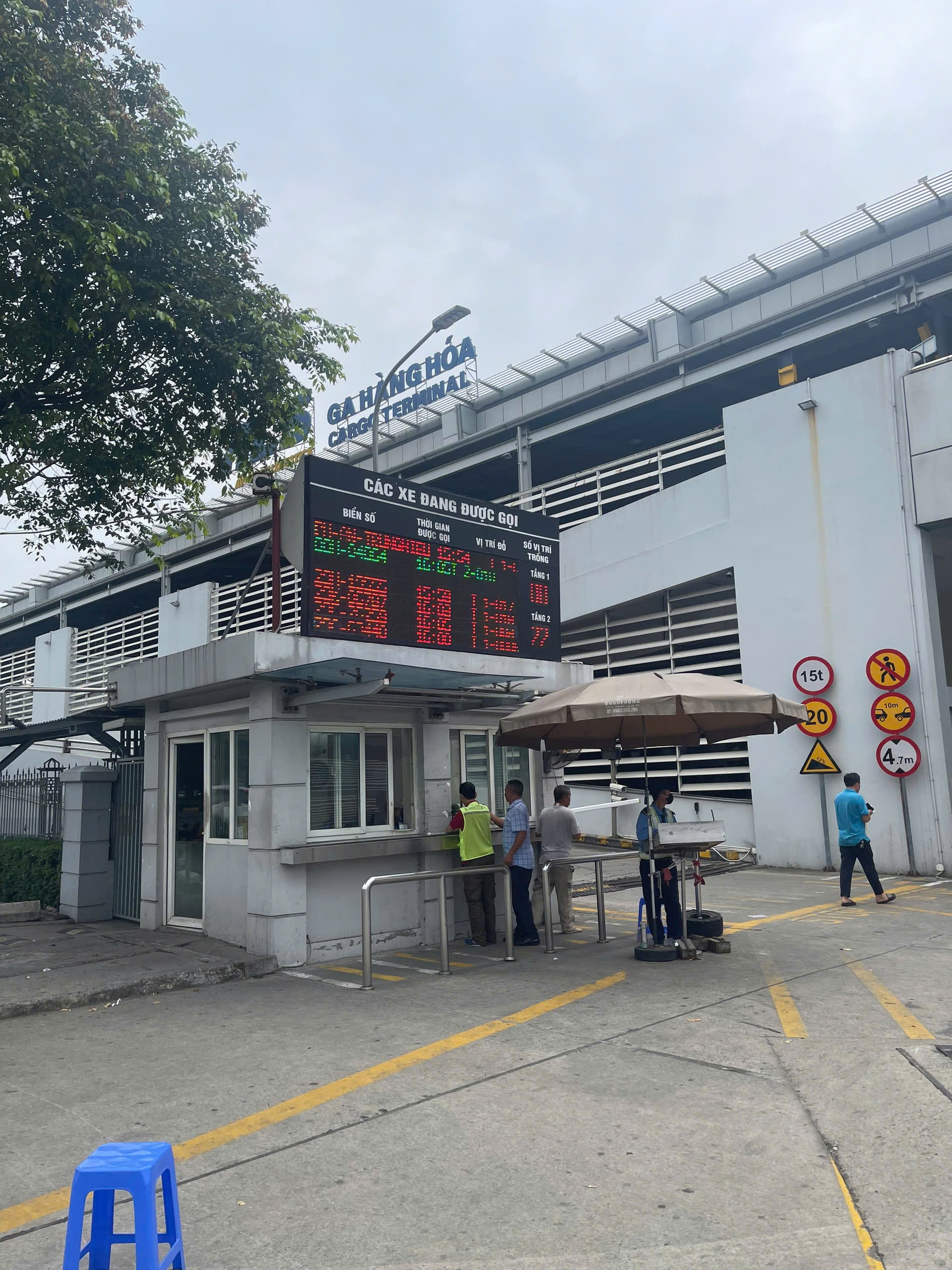
Thai Customs does not require a customs broker for a pet. You can clear it yourself, but you walk between several buildings and need a cargo area pass. Many owners hire a local clearing agent for that reason.
The cargo quarantine office works Monday to Friday, 08:30–16:30. It closes on weekends and Thai public holidays. Its phone is +66 2 134 0731.
Arriving in Bangkok on a Friday night or a weekend
The answer depends on how the pet flies.
- Cabin or checked baggage: the passenger desk works around the clock, including weekends. A late-night arrival is not a problem.
- Cargo on a weekday after 16:30: one owner in early 2026 had two cats released the same evening. The duty vet from the passenger desk came out, and Customs charged an overtime fee of about 600 baht. With clearance and warehouse fees, the owner paid about 5,600 baht and spent about 5 hours.
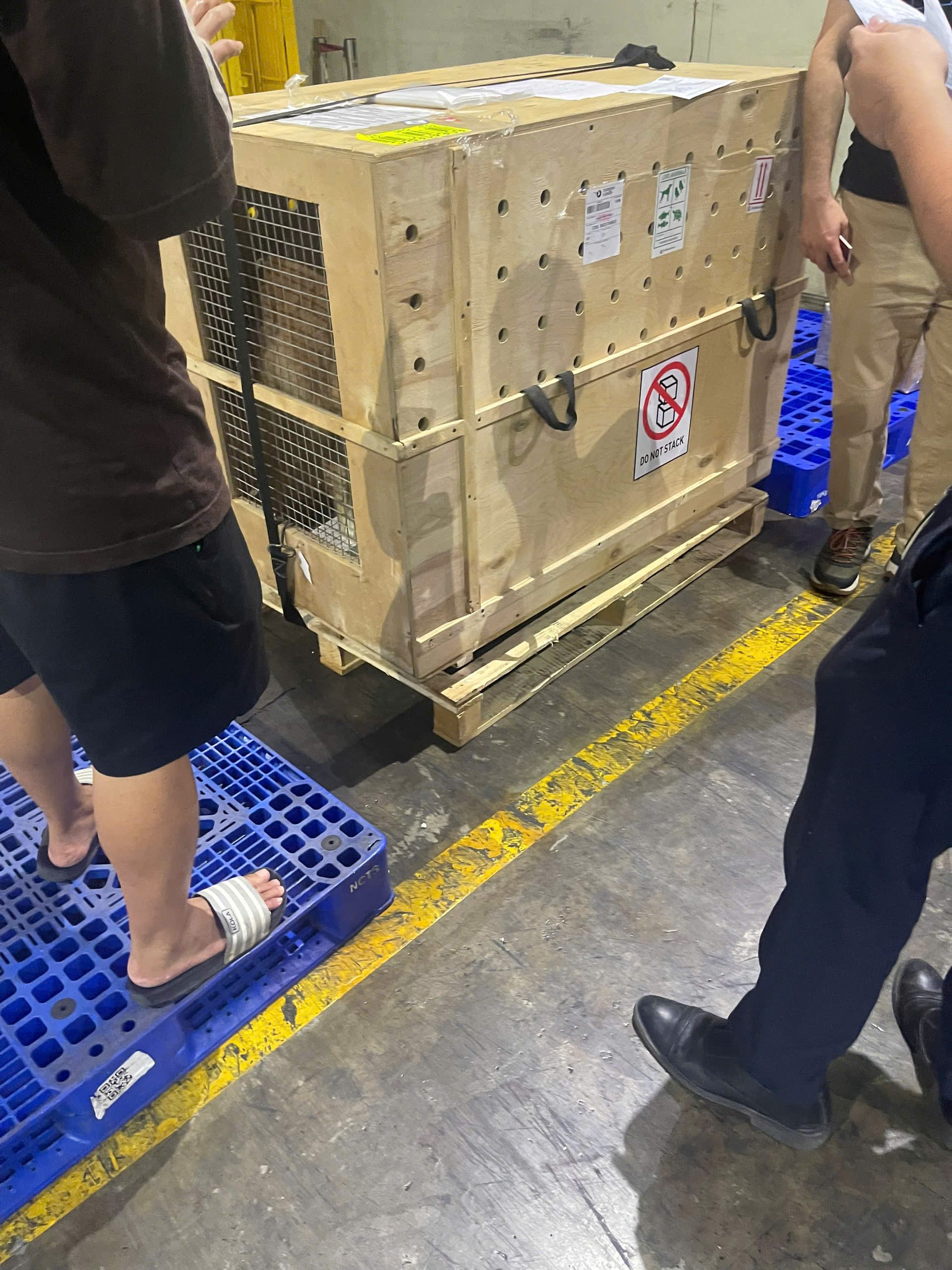
- Cargo on a weekend or holiday: this includes a Friday-night landing. Plan on the pet staying at the cargo terminal until the next working day. THAI Cargo keeps live animals in a room at 20–25°C and feeds them on the owner’s instructions.
The Thai consulate in Sydney advises a cargo pet to land between 08:30 and 16:00 on a weekday, so book a cargo arrival for a weekday morning where you can.
One more trap: a pet booked as checked baggage can be moved to the cargo terminal if the airline has no space or the booking was not confirmed. The owner then collects it at the Free Zone, under cargo hours. Confirm the pet’s booking with the airline before the flight.
Arriving at Don Mueang Airport with a pet
The Don Mueang quarantine station issues its own import permits by email at qsdm_bkk@dld.go.th. Its desk for pets travelling with passengers is in Terminal 1, near baggage belts 1 and 2. The station office sits in Warehouse 1, second floor, room 210.
Most international flights into Don Mueang are run by low-cost airlines that do not carry pets. Nok Air carries pets on its domestic flights only. Check with the airline before you book. Our guide to airlines flying pets to Thailand compares the carriers that do. Timatic, the database airlines use at check-in, lists only the Suvarnabhumi, Chiang Mai and Phuket stations for advance permits. If you do fly into Don Mueang, apply to the Don Mueang station and carry the printed permit to check-in.
Arrival-day costs in Bangkok
Only one fixed government fee applies on arrival: 500 baht per pet plus 10 baht per application for the import licence (Form R.7), paid at the quarantine desk. Customs then sets the duty from the value you declare, and a cargo pet adds terminal handling and storage charges. The DLD fee schedule has no “import fee” of hundreds of US dollars and no cash payment to an officer, so ask for a receipt for every payment. The amounts owners report, item by item, are in our pet relocation cost guide for Thailand.
The duty is waived only when the same pet comes back within one year and the owner obtained a re-import document from Customs when it left. Keeping an old receipt is not enough.
What happens if your pet’s papers are incomplete on arrival
Thai consular guidance states that a pet without the right papers can be “returned to exporting country or detained” in a government-approved quarantine place. All expenses fall on the importer. The DLD’s own import conditions add that a pet may be destroyed without compensation.
In practice, owners rarely report a pet refused at the Bangkok desk. The arrivals that go wrong usually go wrong earlier, when the airline refuses the pet at check-in. Treat every paper as required anyway: the arrival desk is the one place you cannot fix a missing document quickly.
Bringing your own pet home to Thailand by cargo
Thai residents bringing a dog or cat home follow the same rules as visitors. The pet needs the import permit, a health certificate from the country it leaves and valid vaccines. Thai nationality does not waive the licence fee of 500 baht per pet plus 10 baht per application, or the duty.
Many pets coming home from Japan, Korea, Taiwan, Europe or the US fly as cargo, because the airline will not take them in the cabin. The pet then clears at the Free Zone on a weekday. A clearing agent is optional, and quotes vary widely, so compare what each one includes.
Flying on to Phuket, Chiang Mai or Koh Samui
A pet heading to an island or the north still clears into Thailand at Bangkok, then continues on a domestic flight or by road. Our guide to pets in Phuket, Chiang Mai and Koh Samui covers the domestic airlines, the Samui ferry and the road options.
After you leave the airport
Keep Form R.7 with the pet’s vaccination record and the other papers from the trip. The station issues R.7 on arrival to complete the import, and you do not renew it while the pet stays in Thailand. When the pet leaves Thailand, it needs a new export permit and health certificate from the quarantine station at the departure airport, as our page on the papers Thailand issues when a pet leaves explains.
Plan the way back early. Thailand is not rabies-free, so a later move to the UK or the EU needs about 4 months of preparation, Japan about 7 months, New Zealand 8–9 months and Australia 10–12 months.
If you will live in Bangkok, a city ordinance from 2024 asks owners to microchip and register a dog within 30 days. Parts of it may only take effect on 10 January 2027, so check the current rules when you move in. For the whole move, from the permit to the domestic leg, see our pet relocation guide for Thailand.
Arriving in Bangkok with a pet: FAQ
Is the quarantine desk at Suvarnabhumi open 24 hours?
Yes, for pets travelling with passengers. The desk next to baggage belt 8 works around the clock. The cargo office in the Free Zone works only Monday to Friday, 08:30–16:30.
Will my pet be quarantined in Bangkok?
Not when the papers are complete and the pet is healthy. The pet leaves the airport with you the same day. The quarantine vet can hold a pet that shows signs of disease.
Do I need a customs broker for a pet arriving as cargo?
No. Thai Customs lets the owner clear a pet with the passport, air waybill and Forms R.6 and R.7. An agent saves time between the cargo buildings.
What happens if my cargo pet lands on a weekend?
The cargo quarantine office is closed on weekends and Thai public holidays. Plan on the pet staying at the cargo terminal until the next working day.
Sources: Suvarnabhumi Animal Quarantine Station import instructions; DLD requirements for the importation of dogs and cats (2015); DLD fee regulation B.E. 2559 (2016); Royal Thai Embassy, Washington; Thai Customs, Suvarnabhumi Airport Cargo Clearance Customs Office, via thailand.go.th; THAI Cargo 2026 tariff.
Last updated 2 Nov 2026
Compiled by our specialists from the regulations in force on the date above, for reference only. Rules may change after this date. Please verify with the competent authorities or contact us for the most accurate information.
Official sources cited in this guide
- Suvarnabhumi Animal Quarantine Stationaqs-suvarn-dld.go.th
- Royal Thai Embassy, Washingtonwashingtondc.thaiembassy.org
- thailand.go.th
- THAI Cargothaicargo.com