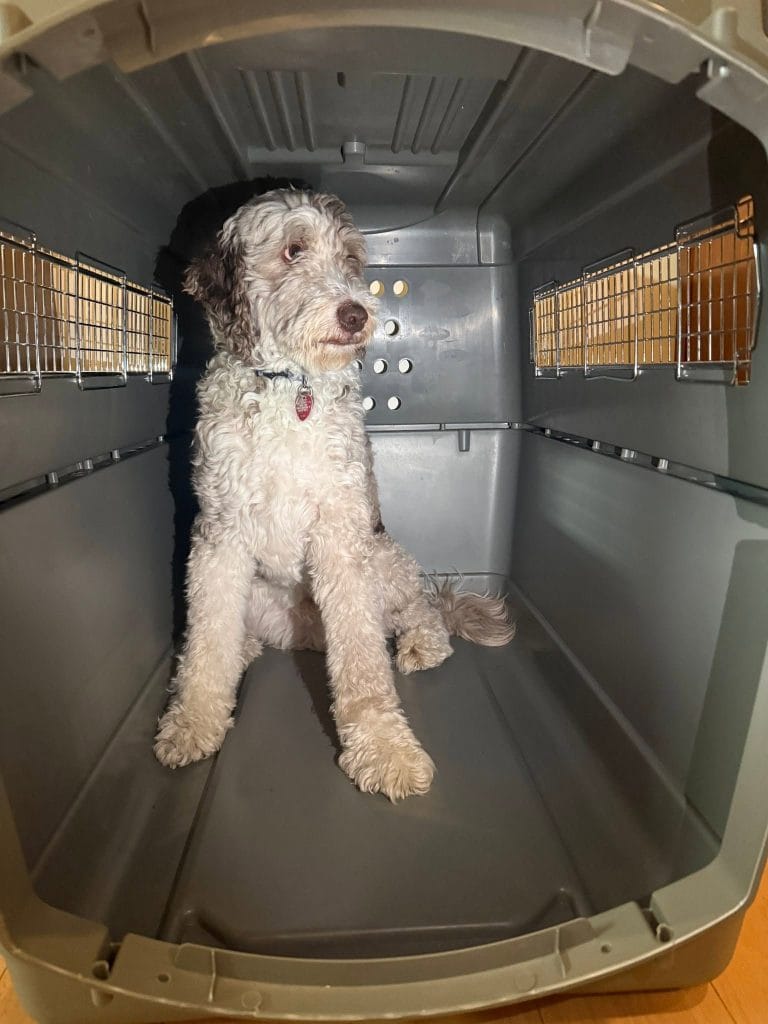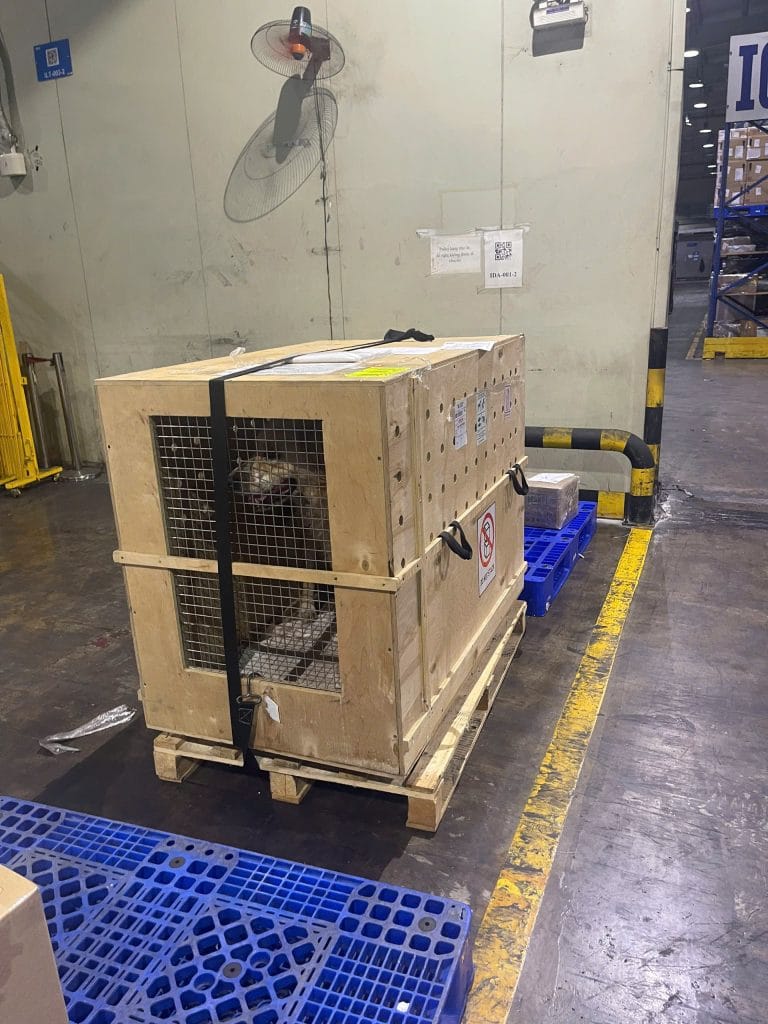
Most pets fly in a molded plastic crate, and for most pets that is exactly the right choice. A custom wooden crate is not an upgrade on it—it is a repair for a short list of situations where a standard crate cannot meet the rules, cannot fit the animal, or cannot hold it.
Four of those situations come up again and again. Each has a reason rooted in the regulations or in freight pricing, not in preference—and each has a catch worth knowing before you order anything. The rules below follow the IATA Live Animals Regulations, 52nd edition, valid until 31 December 2026.
Are wooden crates allowed for air travel? What IATA’s 2026 rules say
Yes, with a catch. IATA’s Live Animals Regulations (LAR) permit solid wood and plywood for dog and cat crates, but each airline decides whether it accepts one. The LAR also say that IATA does not certify, approve, endorse or sell any container manufacturer, brand or model—so a crate is never “IATA approved”, only compliant or not with the written standard, Container Requirement 1 (CR1). That standard permits fiberglass, metal, rigid plastic, welded wire mesh, solid wood or plywood, and the full set of IATA crate requirements applies to wood exactly as it does to plastic.
Two details matter before anything else. First, the same regulations note that certain operators will not carry wooden containers, so material acceptance is decided airline by airline. Second, all wood used in a crate for international transport must comply with IPPC standards, which shapes how the crate is built. The wording comes from IATA’s published pet container requirements.
When to use a custom crate instead of a standard one
A standard plastic crate stays the right answer for most pets. A custom crate earns its place when one of three things is true: the rules cannot be met by any standard size (the openings a cat is allowed), the dog is too strong or too big for a plastic shell, or the crate’s shape wastes freight volume the dog never uses. Four situations cover most cases.
Large cats (Maine Coon): why plastic crates often fail the 19 mm rule
Cats have a tighter ventilation rule than dogs. CR1 caps every opening at 25 × 25 mm for dogs and 19 × 19 mm for cats, and adds that openings may need to be smaller still to be nose- and paw-proof. Welded wire mesh must be at least 2.0 mm thick for cats, against 2.5 mm for dogs.
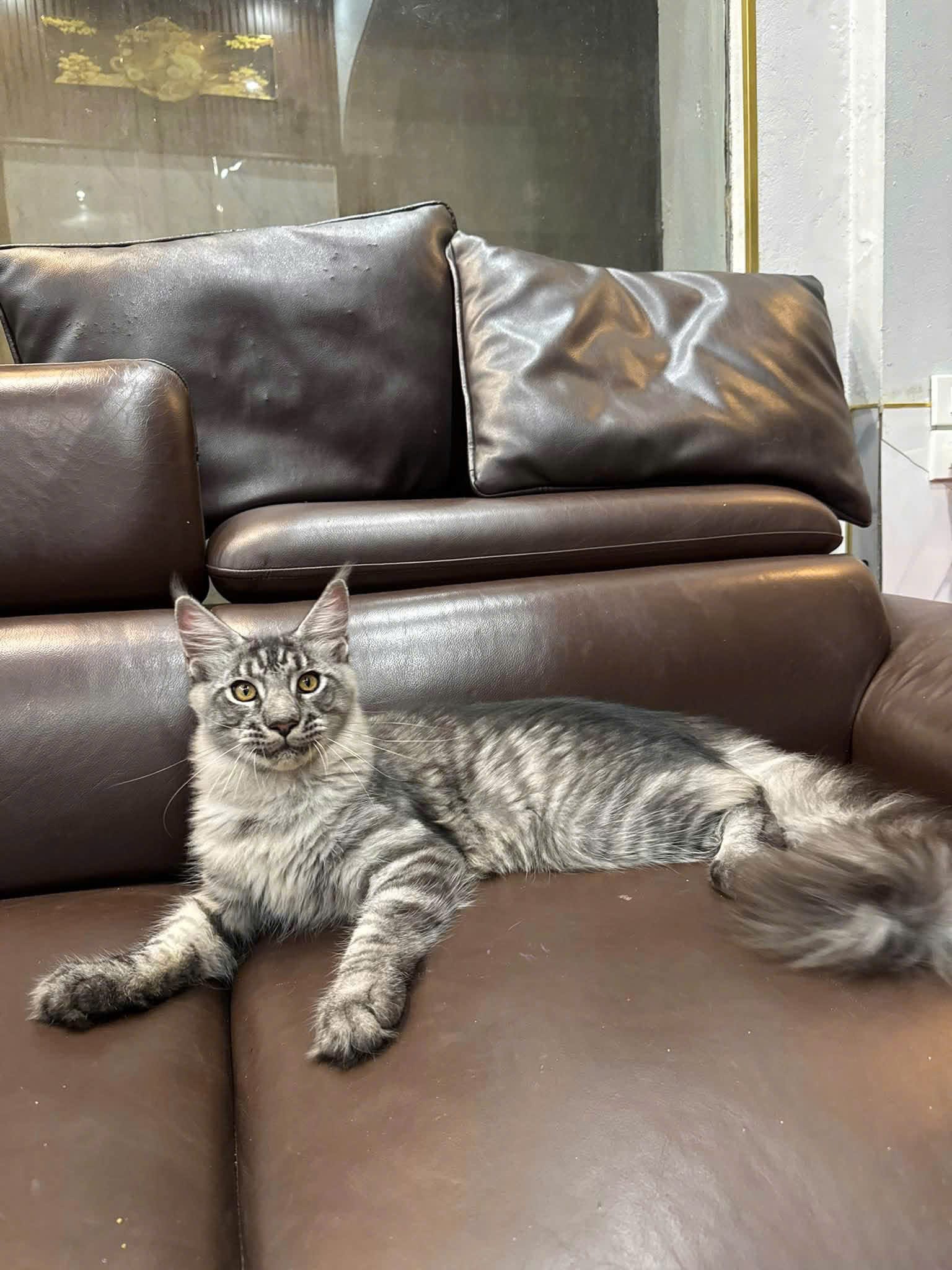
In our experience, the smallest plastic crates usually meet the cat limit, but the molded openings on the larger sizes tend to follow the dog limit of 25 mm. An adult Maine Coon rarely fits the smallest sizes. That leaves two options: a bigger plastic crate whose openings are wider than a cat is allowed, or a crate built to the cat’s measurements. The differences between IATA and standard crates are mostly differences in openings and fasteners, which is where a molded crate runs out of room to adapt.
There is a third route on paper. CR1 allows a second layer of welded mesh over openings on containers for cats and small dogs, provided both layers meet the minimum for the species. On a molded plastic shell that second layer is hard to fix so that an animal cannot dislodge it, and whether it is accepted is the airline’s call at check-in—the usual reasons are covered in why crates get rejected at the airport.
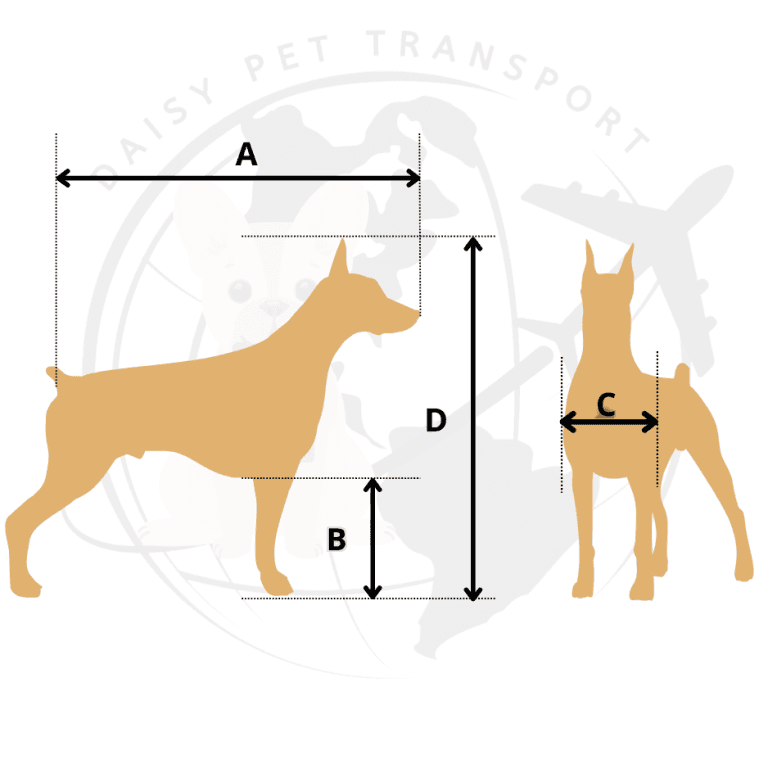
A wooden crate sidesteps the problem. Ventilation holes are drilled at the right diameter, mesh windows are fixed to the frame, and for cats CR1 allows thinner walls: a minimum of 6 mm on the sides against 12 mm for dogs, although the roof stays at 12 mm for both. Start from the A-B-C-D measuring method so the crate is sized to the cat, not to a catalogue size.
Large, giant and powerful dogs: when plastic is too small or too weak
Fit is not the only test. The LAR say rigid plastic containers suit most breeds of dogs, but their acceptability is at the airline’s discretion, and some may not be suitable for large dogs or dogs that are aggressive. In practice that matters most for powerful breeds, such as pit-type dogs and mastiffs, even when the dog fits the crate comfortably.
There have been cases where a strong dog in a correctly sized plastic crate got out during the flight. A molded crate is held together by bolts, latches and a molded door, and a determined dog loads exactly those points; an escape in the hold is dangerous for the dog and for everyone who has to handle it. A wooden crate with a screwed frame, solid walls and a metal-bolted door is a different kind of structure, which is why reinforced wood is often chosen for powerful dogs whatever the size. Some airlines make it mandatory for named breeds: Lufthansa, for example, requires reinforced wood for nine breeds that include pit-type dogs and Rottweilers. Sedation is not a substitute: IATA does not recommend tranquillizing dogs or cats for air transport, as the guide on sedating pets before flying explains.
Size is the second reason. The largest plastic crate we can source measures 121 × 82 × 90 cm on the outside, and a giant breed measured with the IATA formula can need more height than that, because the crate must clear the dog’s head or ears while standing, plus bedding. Then plastic is simply not available, and a crate built to measure is the only route. It brings its own limits: it has to pass through the aircraft’s cargo door, and airlines publish maximum dimensions for a single piece, so confirm the aircraft type before building.
Size also triggers a hardware rule. When the combined weight of crate and animal exceeds 60 kg, CR1 requires forklift spacers at least 5 cm high so the crate can be lifted. Builders usually meet it with raised runners or a pallet base; confirm with the airline that the arrangement counts.
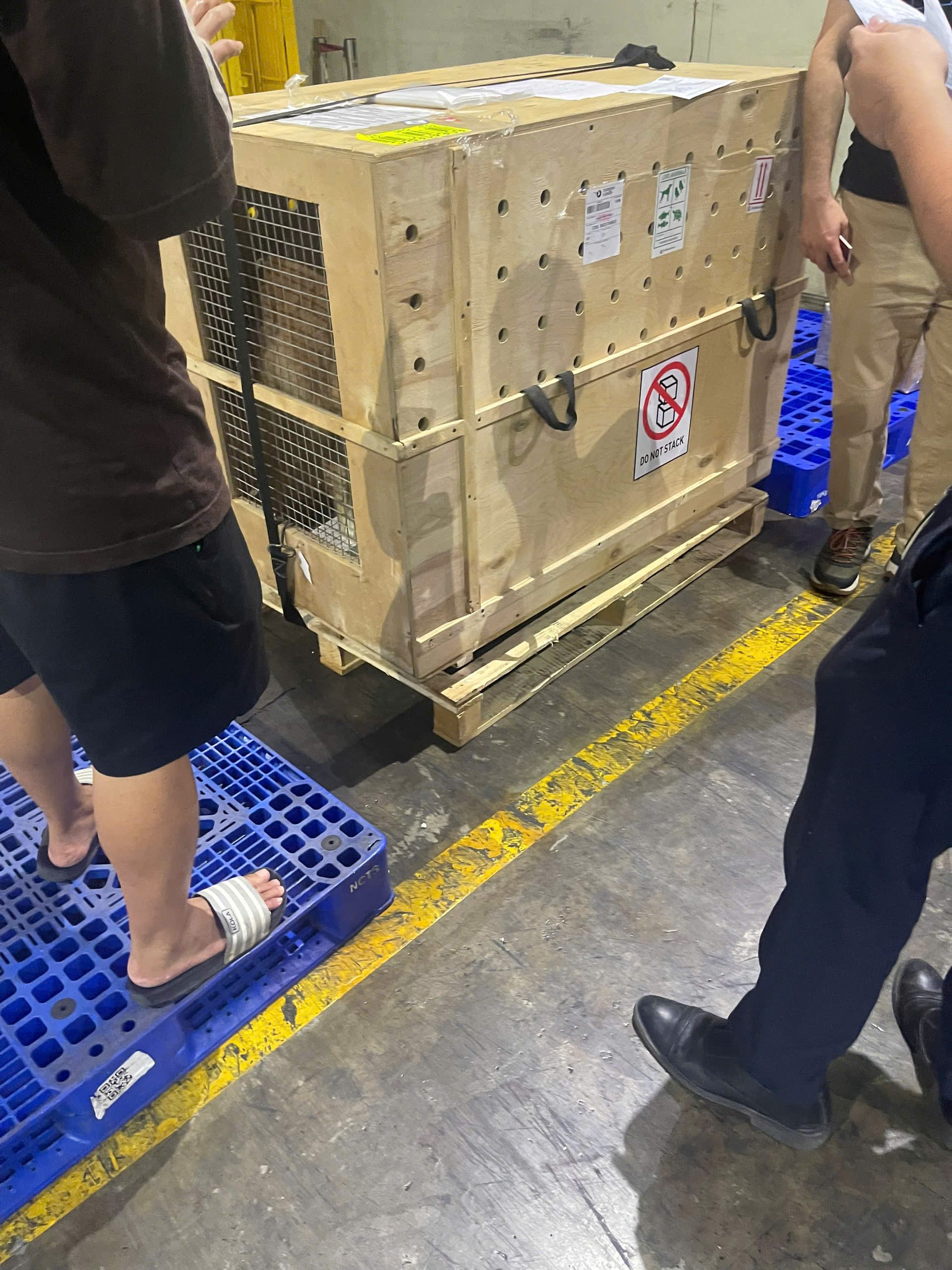
Long, low dogs (corgi, dachshund): paying for height they never use
Airlines charge live-animal freight on the greater of two numbers: the actual weight, or a volumetric weight worked out from the crate’s length, width and height. The conversion factor differs between airlines, so the same crate can be billed differently on two carriers. Anything the dog does not need inside the crate is still billed as volume—the same reason why sharing a crate between two dogs rarely saves money.
IATA’s sizing formula sets the crate length at the nose-to-tail measurement plus half the elbow height (A + ½B) and the height at the standing height plus bedding. A corgi, a dachshund or another long, low dog therefore needs real length but very little height. Standard crates are molded with average proportions, so the size that gives enough length comes with a lot of extra height on top.
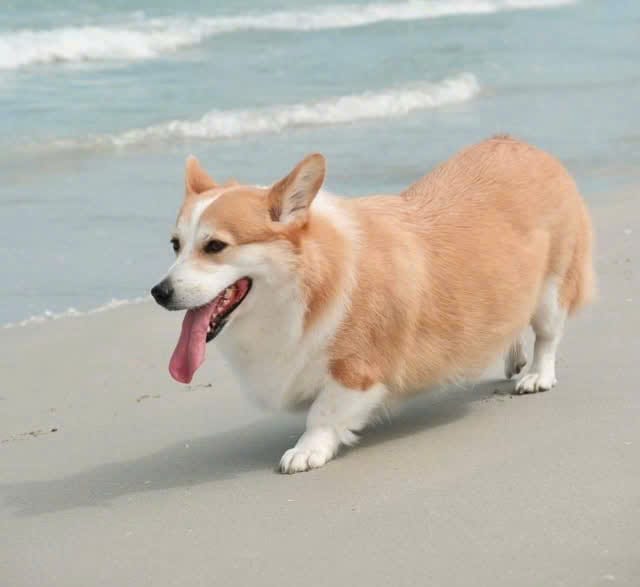
The arithmetic is simple. Take an 80 × 56 × 59 cm crate and cut the height to 40 cm, leaving length and width as they are: about a third of the volume disappears, and roughly the same share of the volumetric weight. That is an illustration, not a quote—the real saving depends on the dog’s measurements and on the airline’s factor.
Tall, narrow dogs: how crate width changes the freight bill
The same volume logic works in the other direction. The formula sets the crate width at twice the shoulder width (C × 2), so a dog that stands tall but is narrow across the shoulders—sighthound types are the classic case—needs far less width than most catalogue sizes provide. On a 100 × 67 × 75 cm crate, trimming 10 cm off the width removes about 15 percent of the volume.
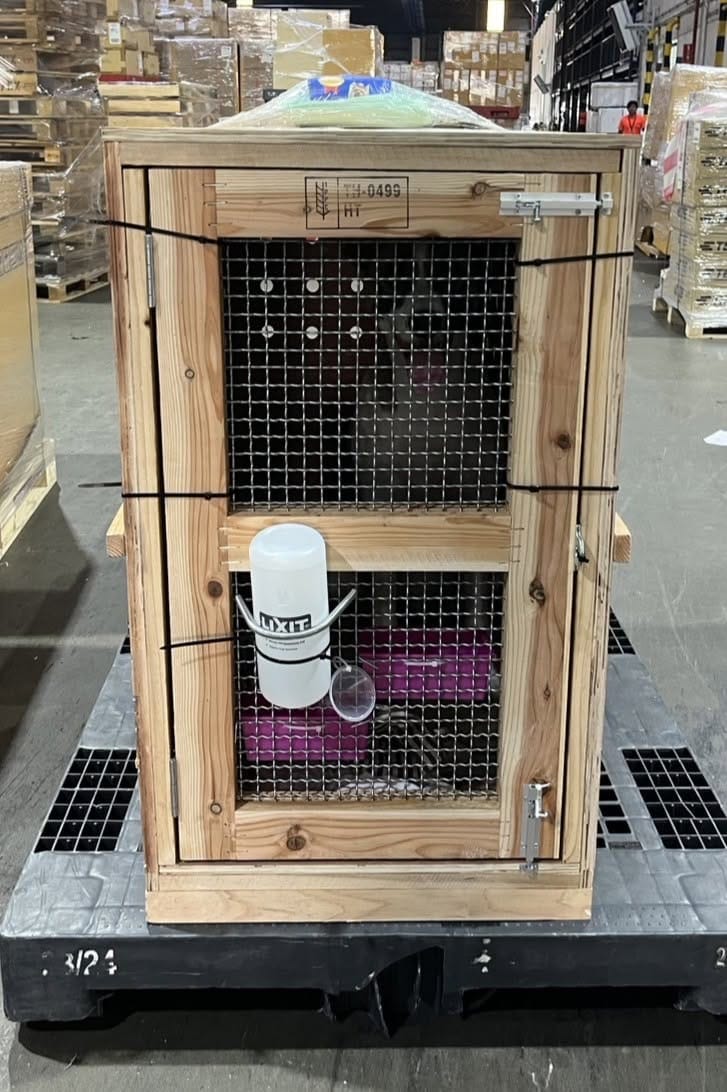
Whether a narrower crate is allowed depends on the dog’s own measurements, and whether it is worth building depends on the airline. The way to find out is to ask the airline or agent to price both sets of dimensions, the nearest standard size and the made-to-measure crate. The IATA crate size calculator shows where the standard sizes sit.
CR82 and breed lists: which airlines require a reinforced wooden crate in 2026
In 2026 only some airlines still point to CR82; others now describe a reinforced CR1 wooden crate for named breeds. Under the 2026 edition of the LAR (52nd edition, Addendum I of 15 January 2026), Lufthansa’s variation LH-05 allows nine dog breeds and their crosses only in a reinforced wooden crate—reworded in that addendum from CR82 to CR1 with additional reinforcements: American Pit Bull Terrier, American Staffordshire Terrier, Staffordshire Bull Terrier, Bull Terrier (except Miniature), American Bulldog, Dogo Argentino, Kangal, Caucasian Ovcharka and Rottweiler. Dogs aged three to six months are exempt.
The reinforcement is specific: a frame of at least 25 × 25 mm wooden or steel beams; solid wood of at least 12 mm, bolted or screwed together; an extra layer of mesh if the door is fully ventilated by welded mesh; ventilation holes covered with welded mesh; stops behind the door; a lock that can be secured with a cable tie; and handles on both long sides.
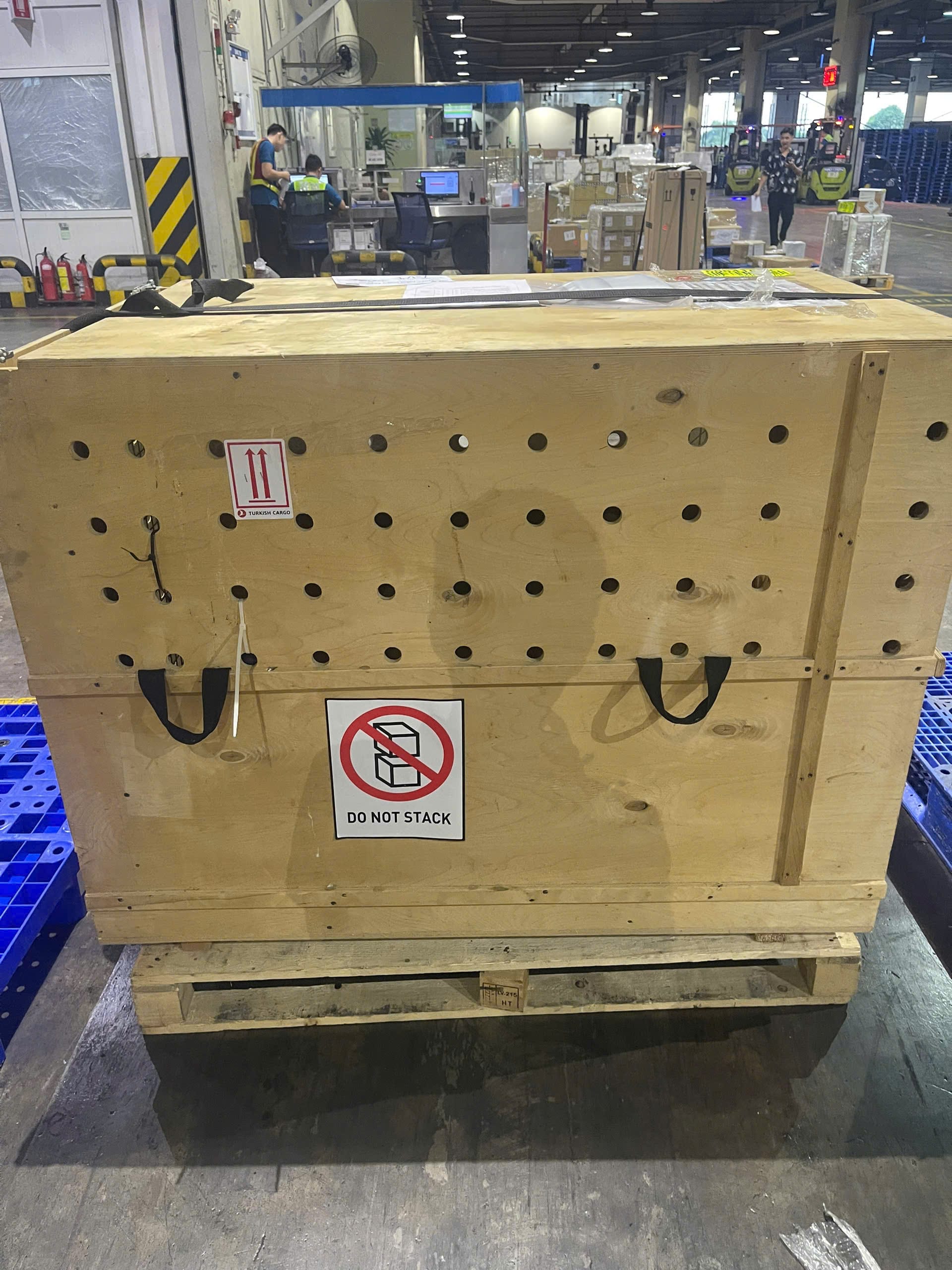
Austrian Airlines applies the same list and the same reinforcements under OS-04, also framed as CR1 plus additional reinforcements instead of CR82. Turkish Cargo’s variation TK-03 still lists about thirty dog breeds and types for carriage to CR82 requirements, including Cane Corso, Boxer, Great Dane, Mastiff, Doberman and Rottweiler, while puppies between two and a half and six months may travel under CR1.
CR82 is a separate IATA container specification, and its text is not part of the CR1 section above. If an airline names CR82 for your dog, ask the carrier for its exact specification in writing and build to that, not to a generic wooden crate. Which breeds are affected changes by carrier; the guide to breed restrictions for flying pets tracks the main ones.
Wooden crate requirements under IATA CR1: thickness, ventilation, mesh and door
A wooden crate for a dog or cat must meet the same CR1 standard as any other crate, plus the points below that apply to wood. The table follows the 52nd edition of the LAR (January 2026).
| Requirement | What CR1 says |
|---|---|
| Walls and roof | Wood or plywood sides: at least 12 mm for dogs, 6 mm for cats. Roof: at least 12 mm for both. |
| Wood treatment | All wood must comply with IPPC standards. |
| Openings | No larger than 25 × 25 mm for dogs and 19 × 19 mm for cats, smaller if needed to be nose- and paw-proof. |
| Welded mesh | At least 2.5 mm for dogs, 2.0 mm for cats. Fixed with staples at least 19 mm long at intervals of no more than 25 mm; on dog crates, wood strips at least 12 mm thick are screwed over the mesh edges. |
| Ventilation | At least 16% of the surface of the four sides, with openings on all four sides. Side and back openings sit in the upper two-thirds. The whole of one end, which can be the door, is welded mesh. |
| Door | Forms the whole of one end. Locking pins must engage the crate by at least 1.6 cm. |
| Spacers and handles | Spacers along both long sides and the back so other freight cannot block ventilation. Handles that keep handlers clear of the animal. Forklift spacers at least 5 cm high when the total weight exceeds 60 kg. |
| Floor, water and bedding | Solid, leak-proof floor. Absorbent bedding. An open-top water dish fixed inside and fillable from outside; a bottle does not replace it. |
Drilled round holes alone rarely add up to 16 percent of four large wooden walls, which is why builders add mesh-covered windows; CR1 expressly permits larger openings when they are covered in welded mesh.
On wood treatment: plywood and other processed panels are generally exempt from ISPM 15 marking, but a crate usually also contains solid-wood frames, battens or a pallet, and those parts carry the heat-treatment (HT) mark. Ask the builder which parts are solid wood and where the marks are.
How heavy is a wooden dog crate, and does weight change the freight bill?
A custom wooden crate for a large dog, about 131 × 80 × 97 cm outside, weighs around 25 kg, and smaller crates weigh less. On cargo that weight rarely changes the bill, because airlines charge the greater of actual and volumetric weight and the volume of a large crate usually wins. Ask for the weighed figure of the finished crate and its outer dimensions in writing before you compare quotes.
Two limits make the number matter. Some airlines cap the combined weight of pet and crate in checked baggage—Vietnam Airlines publishes 32 kg—after which the pet must fly as cargo. And CR1 requires forklift spacers once the total passes 60 kg.
Which airlines refuse wooden crates?
Some do. Cathay Pacific lists fiberglass, metal, rigid plastic and welded mesh and states that no wooden cage is allowed, and some other carriers accept only rigid plastic—while Lufthansa Group and Turkish Cargo ask for wood on certain breeds. The material one airline requires, another bans, so acceptance has to be confirmed per airline and per route before anything is built.
Destinations can add their own wood rules as well. Taiwan, for example, applies its own treatment and marking rules to wood used in crates, down to bedding boards and pallets. The overview of airline pet policies shows how far carrier rules diverge.
Questions to ask before you order a custom crate
- Which airline and route, and has the airline confirmed in writing that it accepts a wooden crate?
- Does the destination apply its own rules to wood?
- Are the openings, mesh gauge and wall thickness set to the species—19 mm and 2.0 mm for cats, 25 mm and 2.5 mm for dogs?
- Which parts are solid wood, and do they carry an IPPC mark?
- What are the outer dimensions and weighed empty weight, in writing?
- Do the dimensions come from the pet’s own A-B-C-D measurements rather than the nearest catalogue size?
If the answers are vague, that is useful information. Once the crate is built, the crate preparation checklist covers what goes inside and what goes on the outside.
A new crate also needs time. Whatever the material, a pet should spend weeks getting used to it; the crate training timeline for flights shows how.
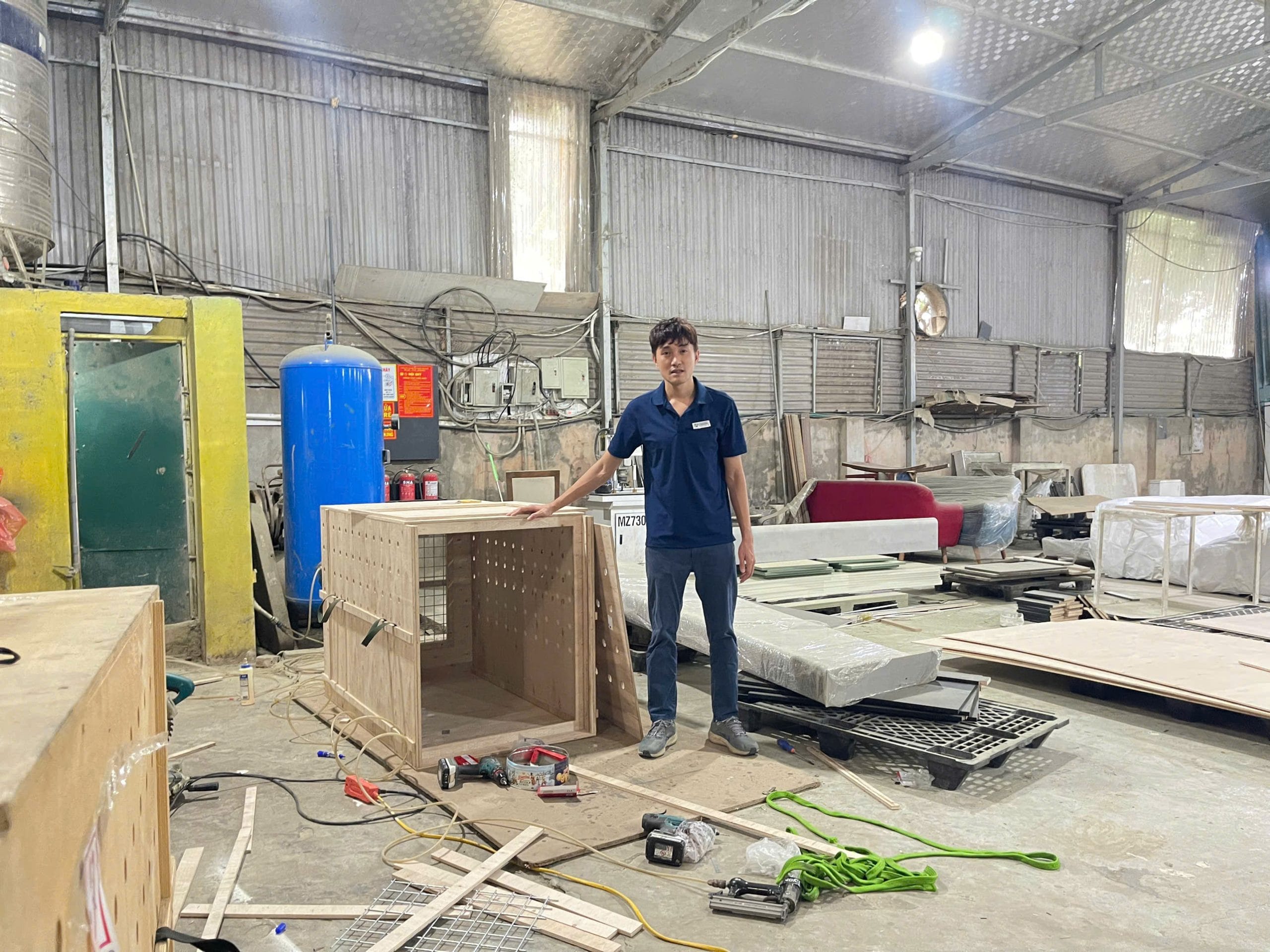
Daisy Pet Transport builds custom wooden crates to the pet’s measurements, with the solid-wood parts heat-treated and marked to the IPPC standard for export, so the crate can leave the country with the pet. To get a crate built, send the pet’s weight and A-B-C-D measurements when you request a quote.
Wooden dog crate FAQ
Are wooden crates allowed on airlines?
IATA’s rules list solid wood and plywood as permitted materials for dog and cat crates, but the same regulations note that certain operators will not carry wooden containers. Cathay Pacific, for example, states that no wooden cage is allowed, while some airlines require reinforced wood for listed breeds. Confirm material acceptance with your airline, in writing, before the crate is built.
Is there an IATA-approved wooden crate?
No. The IATA Live Animals Regulations state that IATA does not certify, approve, endorse or sell any container manufacturer, brand or model. A wooden crate is either compliant with Container Requirement 1 or it is not, and each airline decides whether to accept it. Treat any crate sold as ‘IATA approved’ with caution and check the specification instead.
When should I use a custom crate instead of a standard plastic one?
Use a custom crate when a standard size cannot meet the rules or fit the animal: a large cat whose openings must stay under 19 mm, a powerful dog that a plastic crate may not hold, a giant breed taller than the biggest plastic size, or a long, low or tall, narrow dog that pays for unused volume. For most other pets a standard IATA plastic crate is the simpler choice.
Can a strong dog escape from a plastic crate?
IATA’s rules note that some rigid plastic containers may not be suitable for large dogs or dogs that are aggressive, and acceptance is at the airline’s discretion. There have been cases of powerful dogs getting out of correctly sized plastic crates during a flight, which is why reinforced wood is often chosen for powerful breeds even when the size fits.
Does a wooden pet crate need an IPPC stamp?
IATA requires all wood used in a crate for international transport to comply with IPPC standards. Plywood and other processed panels are generally exempt from ISPM 15 marking, but solid-wood frames, battens and pallets normally carry the heat-treatment mark. Ask the builder which parts are solid wood and where the marks are.
Is a custom crate cheaper to ship?
Not automatically. Freight follows the greater of actual and volumetric weight, and a crate built to your pet’s measurements can have less volume than the nearest standard size, which matters most for long, low dogs such as corgis and for tall, narrow dogs. A wooden crate can also weigh more and costs more to build. Ask the airline or agent to price both sets of dimensions before deciding.
Can a large cat use a standard IATA plastic crate?
Only if the openings are no larger than 19 × 19 mm, are nose- and paw-proof, and any welded mesh is at least 2.0 mm thick. Larger molded crates are often built with 25 mm openings sized for dogs, which exceeds the cat limit.
What is a CR82 crate?
CR82 is a separate IATA container requirement that some airlines reference for listed dog breeds, such as Turkish Cargo’s variation TK-03. Lufthansa and Austrian Airlines no longer point to CR82 for their listed breeds; since January 2026 they describe a reinforced CR1 wooden crate in their own variations. Ask the carrier for its exact specification in writing and build to that.
Last updated 15 Oct 2026
Compiled by our specialists from the regulations in force on the date above, for reference only. Rules may change after this date. Please verify with the competent authorities or contact us for the most accurate information.
Official sources cited in this guide
- iata.orgiata.org
- Vietnam Airlines publishes 32 kgvietnamairlines.com
- Cathay Pacific lists fiberglass, metal, rigid plastic and welded meshcathaycargo.com