VietnamGermany

Pet Shipping from Vietnam to Germany 2026 Complete Guide

Vietnam is not on Germany’s list of pre-approved rabies-free countries, which puts a mandatory blood test and a fixed 90-day wait on every shipment — knowing the sequence before you start is what keeps a move on schedule.

Last updated 18 Oct 2026i

White fluffy dog in a blue bandana standing on a bus seat
21 Entry Points
Know this first

Key Facts Before Shipping a Pet to Germany

Four things that make Germany’s process different from a typical EU destination.

01

RNATT Required

Vietnam is an unlisted country — a rabies antibody blood test is mandatory

02

Two Agencies

Zoll checks the border, BMLEH sets the requirement list and entry points

03

21 Entry Points

Frankfurt and Munich handle the bulk of arrivals from Vietnam

04

4-5 Month Prep

Driven by a fixed 90-day wait after the rabies blood test

Requirements

Core Requirements for Dogs and Cats from Vietnam

Six requirements every pet must clear before a Germany-bound flight is booked.

01

Microchip & Minimum Age

An ISO 11784/11785 microchip must be implanted before, or on the same day as, the rabies vaccine — a chip placed afterward invalidates that dose and forces a restart. The pet also needs to be at least 12 weeks old on the day it’s vaccinated, since that date anchors every deadline that follows.

02

Rabies Vaccine & 21-Day Wait

The vaccine must be given after the microchip and becomes valid 21 days after the primary dose — not the injection date itself. A booster keeps the same vaccine “chain” alive only within the previous dose’s validity window; miss it, and the sequence restarts from a fresh primary vaccination.

03

RNATT Blood Test (Unlisted Country)

Because Vietnam sits outside Germany’s pre-approved country list, an antibody titer test is mandatory on top of the vaccine. The sample must be drawn at least 30 days after vaccination, with a result of 0.5 IU/ml or higher from an EU-recognised lab.

04

Health Certificate (10-Day Window)

Issued or endorsed by an official vet in Vietnam, the certificate is valid for only 10 days between issue and the border check, and it has to be written in both German and English — a single-language certificate isn’t accepted.

05

Written Declaration & 5-Day Rule

The owner signs a declaration confirming the move is non-commercial. If someone else accompanies the pet, they must arrive within 5 days of the owner’s own trip, or German authorities can reclassify the movement as commercial.

06

Breed Must Not Be Banned

Four breeds cannot move to Germany — the only opening is a stay of up to four weeks with a non-resident owner — and a separate set of state-level rules can apply on top depending on where the dog will live — two rules that get confused constantly.

Entry process

How Entry Into Germany Actually Works

Two mechanics that catch owners who’ve researched a different “strict” destination first.

No Advance Permit

For a standard non-commercial pet, Germany doesn’t require an import permit or licence before departure — clearing the border check with complete paperwork is the only step.

Two Agencies, Two Jobs

BMLEH sets the official requirement list and the entry-point map. Zoll, federal customs, is the agency that physically checks the pet, the documents, and the microchip at the border.

Timeline

Preparation Timeline: 4-5 Months

The 90-day wait after the blood test is fixed by law — no amount of urgency shortens it.

01

Day 1: Microchip & Vaccine

Microchip implanted, then the rabies vaccine given at the same visit or shortly after — a chip placed after the vaccine invalidates that dose. This date anchors every deadline that follows.

02

Day 31: RNATT Blood Draw

Earliest legal day for the blood sample — 30 full days after the vaccine. Drawing it even a day early means starting the wait over from zero.

03

Weeks 5-7: Lab Result

Turnaround varies by lab, since there’s no EU-recognised titer lab in Vietnam and the sample ships abroad. A result of 0.5 IU/ml or higher is what starts the 90-day countdown.

04

Day 121: 90-Day Wait Ends

Earliest day the vet can issue the health certificate, because the blood draw must be at least 90 days old on the issue date — counted from the draw date itself (Day 31), not from whenever the lab result came back.

05

Day 121: Certificate & Declaration

Health certificate issued in German and English and the non-commercial declaration signed. The certificate is valid for 10 days until the entry check, so the flight is booked to land inside that window rather than done early.

06

Days 121-130: Departure & Arrival

Pet departs and clears the document and microchip check at one of Germany’s approved entry points — the point where every earlier step either matches or doesn’t.

Entry points

Where a Pet Is Allowed to Land

21 approved points nationwide — landing anywhere else isn’t an option, regardless of paperwork.

21 Approved Points

Airports, seaports, and land crossings across Germany are approved to receive pets from non-exempt countries like Vietnam, each with a dedicated veterinary border post.

Frankfurt & Munich

The two entry points most Vietnam-origin routes connect through, each with its own dedicated veterinary border authority (TGSH in Hessen, BIP-MUC in Bavaria).

Breed rules

Two Different Rules — Which One Applies to Your Dog

Germany splits breed restrictions into two layers that work nothing alike.

Satz 1: Federal Ban

  • Four named breeds — Pit Bull Terrier, American Staffordshire Terrier, Staffordshire Bull Terrier, and Bull Terrier — plus their crosses cannot be brought in to live in Germany. For a family pet, the only exception is a stay of up to four weeks with someone who doesn’t live in Germany.

Satz 2: State Lists

  • Breeds like Rottweiler, Cane Corso, or Kangal may appear on a specific state’s own list, depending on where the dog will live. Unlike Satz 1, these breeds can also move to Germany permanently.
Moving permanently

Moving to Germany Permanently? Two Clocks, Not One

A visa can move fast. A pet’s biological timeline can’t — plan both together.

Two Clocks

A pet’s 30-day and 90-day waits are fixed by biology, not paperwork speed — starting the microchip and vaccine step the day the visa application goes in avoids months of drift.

The 5-Day Rule

If the pet doesn’t travel with its owner, whoever does accompany it must arrive within five days of the owner’s own trip, or the movement risks reclassification as commercial.

How your pet flies

Three Shipping Methods for a Long-Haul Route

Germany is a long-haul route, so most pets travel checked baggage or cargo rather than in-cabin.

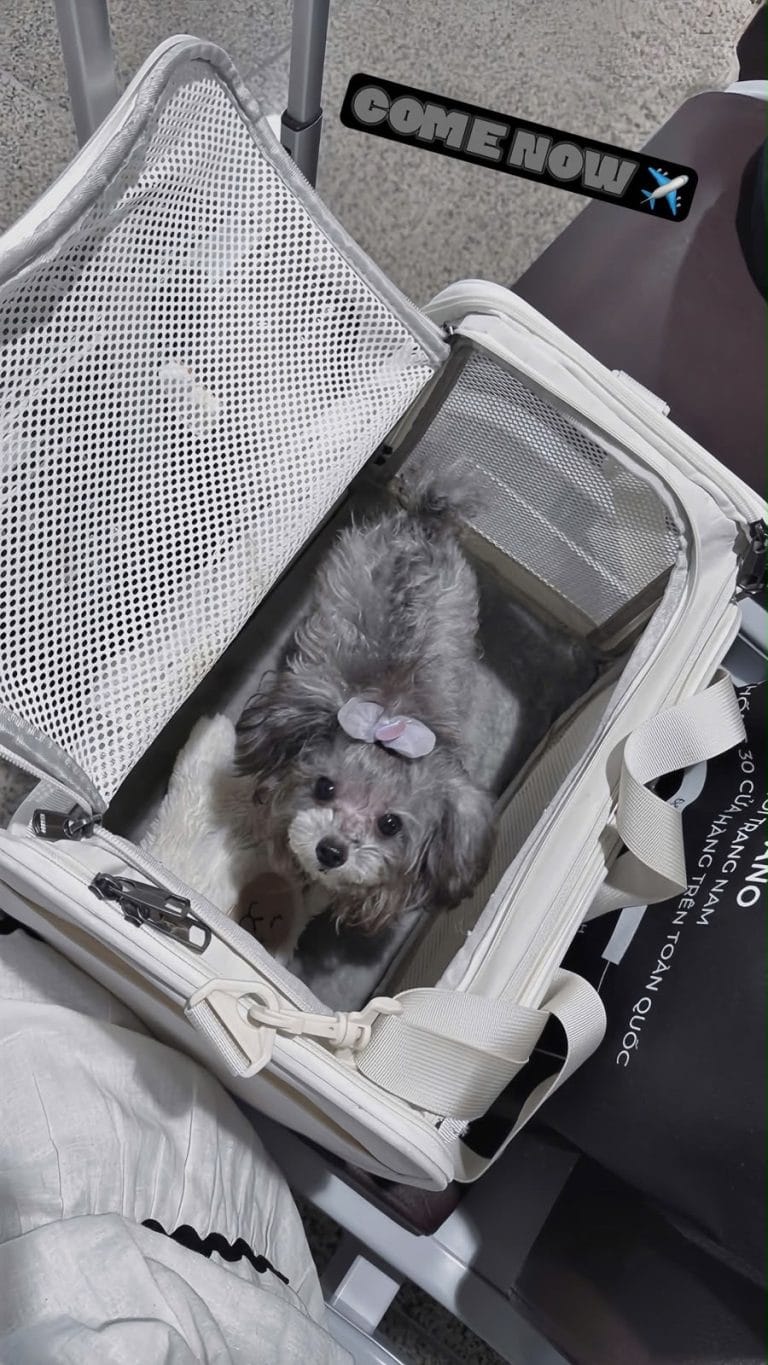
Poodle in a soft-sided travel bag at the airport

In-Cabin (PETC)

Travels in the cabin with the owner, in a soft-sided carrier under the seat.

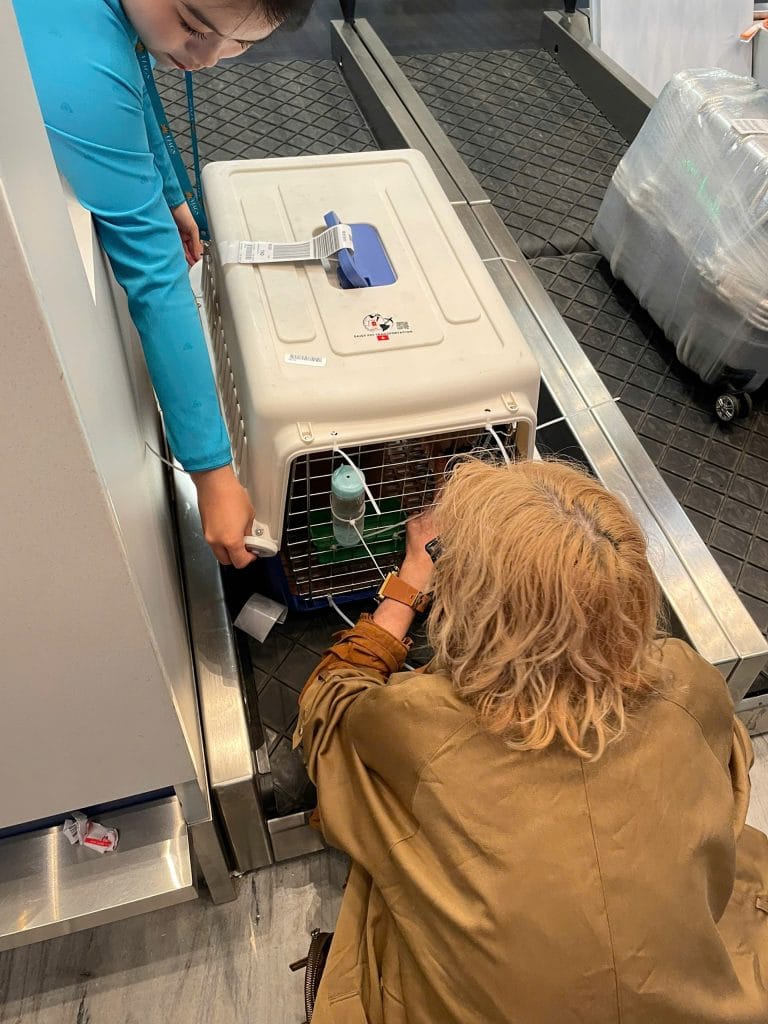
Pet owner checking in a dog crate at the airline counter

Checked Baggage (AVIH)

Flies on the same flight as the owner, in the temperature-controlled hold.

Pet crate on a pallet in the airport cargo warehouse

Manifest Cargo

Does not fly with the owner, with fewer limits on weight and size.

Pet welfare

Welfare Standards That Apply

Applied to every pet flying the Germany route.

Age and Cabin Limits Vary by Carrier

Eight weeks and fully weaned is the floor for carriage, and some airlines set it higher. Cabin allowances count pet and crate together. Pregnant animals are not accepted.

Sedation Is Not Used

IATA and IPATA both advise against sedation, and a pet known to be sedated can be refused at the counter. Crate conditioning on a six-week schedule does that work instead.

How Daisy Pet Supports Your Germany Relocation

One point of contact for every stage — from the first blood draw to clearance at the German border post.

Owner Services

  • Travel Planning: Entry-point selection and flight coordination on the Vietnam-Germany route
  • Documentation: Bilingual health certificate coordination and the non-commercial declaration
  • Procedures: 5-day accompaniment rule compliance and coordination with our Germany-side contacts

Pet Services

  • Essential kit: ISO microchip and IATA-compliant travel crate sized correctly for the pet
  • Veterinary coordination: rabies vaccination scheduling aligned to the 21-day and 30-day waits
  • RNATT blood test: sample collection timed to the 30-day rule, shipped to an EU-recognised lab

Pricing Transparency

Every shipment is priced by weight, crate size, and requirements — we break down every line, no hidden fees.

What Is Included

  • Flight & Cargo: Cargo booking, Air Waybill (AWB), and all freight charges
  • Export Documents: Health certificate, microchip, and RNATT test processing
  • Origin Customs: Vietnam-side customs declaration and warehouse fees
  • Germany Import Process: Border-post document check and Zoll coordination

What Is NOT Included

  • Travel Crate: IATA-compliant crate, quoted separately based on breed and size
  • German Import Charges: Zoll may assess duties or VAT depending on the shipment
  • Post-Arrival: Any holding period if the paperwork doesn’t clear at the border
  • Ground Transport: Onward transport from the German airport to your final address
4 steps

How to Work With Us

Our process is designed to be simple and fully guided — so pet owners always know what to expect at every stage of the journey.

01

Submit a Quotation Request

Pet owners begin by submitting essential information about their pet, destination, and travel needs through our online form.

02

Consultation & Quotation

Our team reviews your case and provides a clear travel plan with a detailed quotation.

03

Documents & Preparation

We handle the vaccination schedule, RNATT blood test, bilingual health certificate, and non-commercial declaration in the correct sequence.

04

Travel & Arrival

Your pet travels according to the approved plan, with careful handling from departure through the German border check and final handover.

FAQ

FAQs — Pet Shipping from Vietnam to Germany

Does Germany require an import permit before departure?+
No. For a standard non-commercial pet — one traveling with its owner, not being sold or rehomed — Germany doesn’t require an advance import permit or licence from BMLEH. As long as the microchip, rabies vaccination, and health certificate are in order, there’s no separate application to file before travel.
Is my dog banned just because it’s a large or protection-type breed?+
No. Only four named breeds — Pit Bull Terrier, American Staffordshire Terrier, Staffordshire Bull Terrier, and Bull Terrier — are banned at the federal level: they can’t be brought in to live in Germany, and the only opening for a family pet is a stay of up to four weeks with someone who doesn’t live there. Other breeds like the Rottweiler or Cane Corso aren’t banned nationally, but may appear on a specific state’s own list.
Will my pet be quarantined on arrival?+
Not automatically. Germany doesn’t run a fixed-length quarantine facility for compliant pets — a pet with complete, matching documentation clears at the entry point. Quarantine only applies when something doesn’t match, such as an expired vaccine or a missing titer test.
Can someone other than me bring my pet to Germany?+
Yes, but a written declaration is required confirming the movement is non-commercial, and the person accompanying the pet has to travel within five days of the owner’s own trip. Missing that window risks the movement being reclassified as commercial.
Do the requirements differ for cats?+
Mostly not. Cats follow the same microchip, vaccination, and titer test requirements as dogs. Cats don’t need the Echinococcus tapeworm treatment dogs require in certain cases, and no German state maintains a breed restriction list for cats.

Last updated 18 Oct 2026

Compiled by our specialists from the regulations in force on the date above, for reference only. Rules may change after this date. Please verify with the competent authorities or contact us for the most accurate information.

Airplane Texture 1

Ready to Relocate Your Pet?

Tell us about your pet and destination. Our team will review your case and provide a clear, tailored quotation.

GET A QUOTE CONTACT US