Most countries leave the choice of cabin, checked baggage, or cargo up to the airline. Australia doesn’t. If a pet is leaving Australian soil for good, the government requires it to travel as manifest cargo — no cabin seat, no checked-baggage counter, no exception for a calm cat in a soft carrier. That single rule shaped almost every step of getting Franny, a three-year-old ginger-and-white Domestic Shorthair from Sydney, home to her family in Vietnam.
Meet Franny
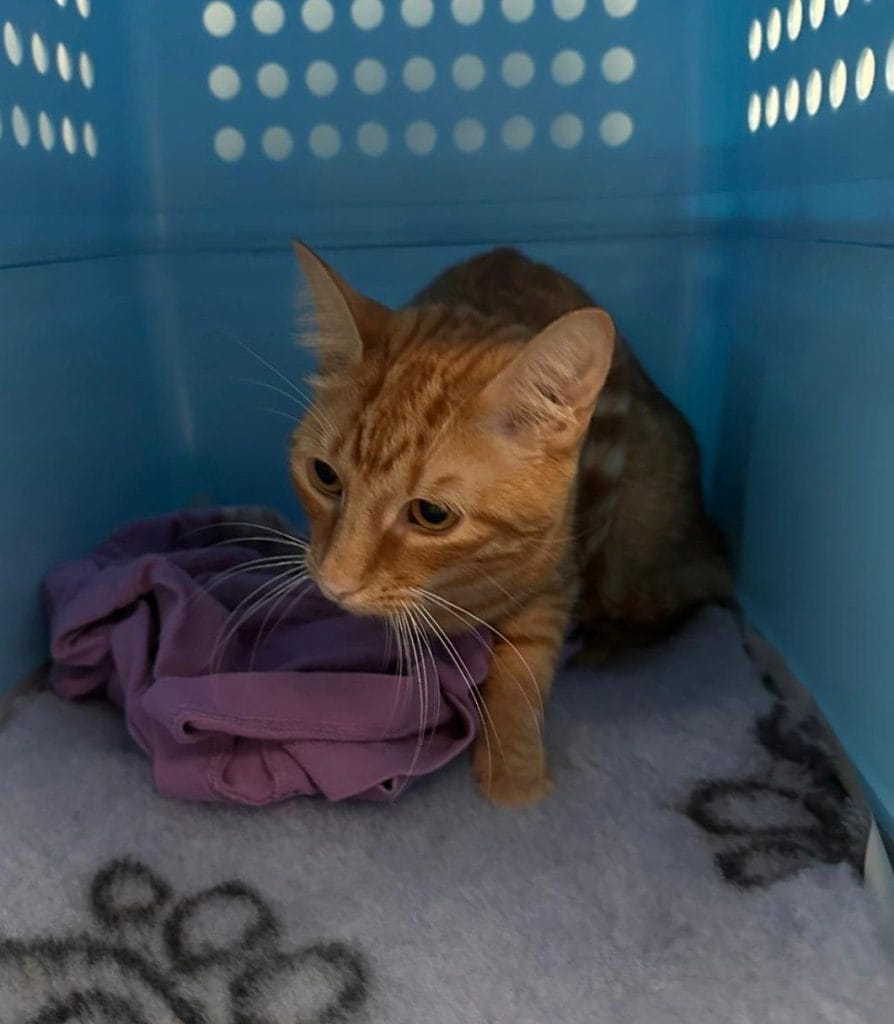
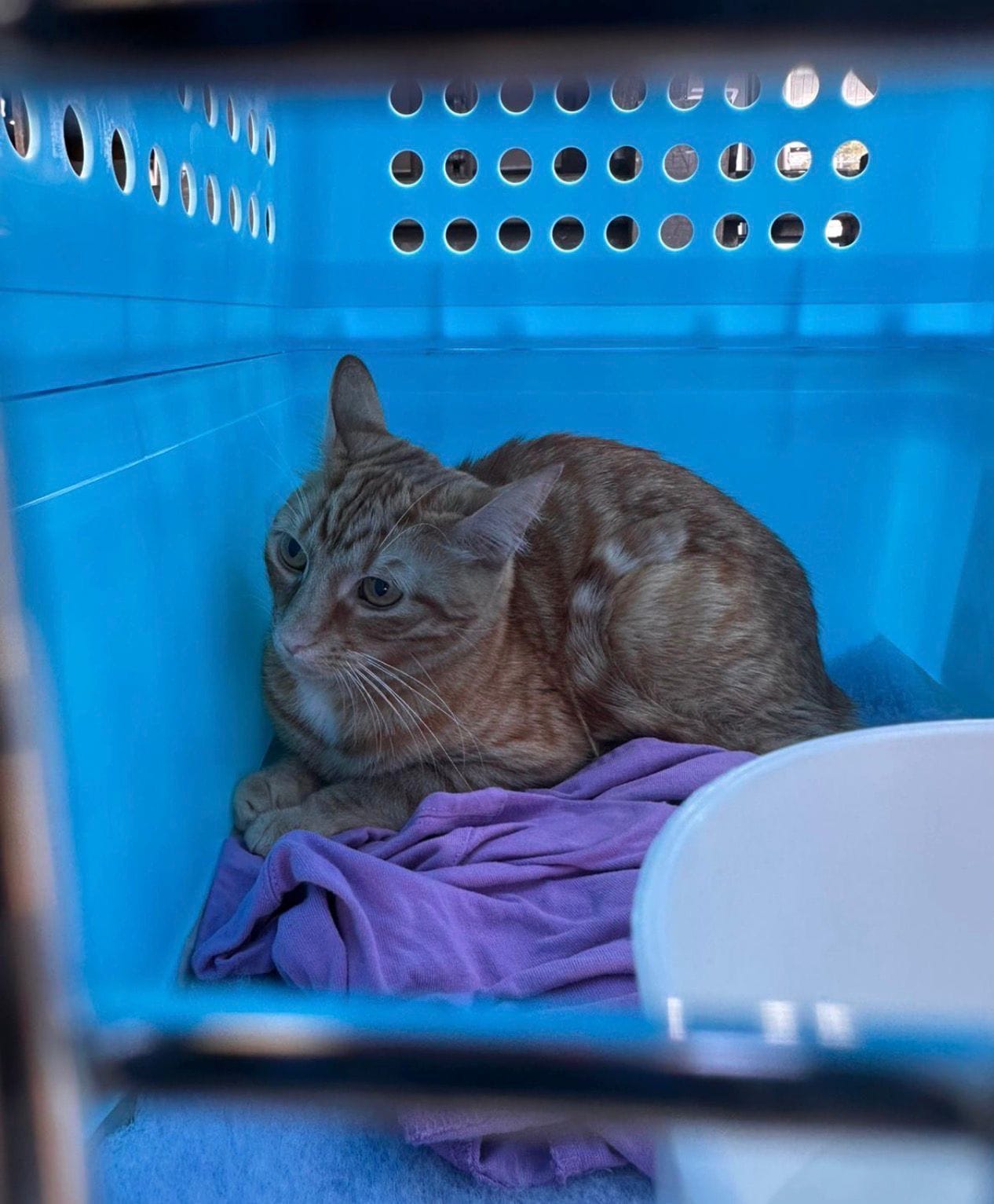
Franny is a spayed female Domestic Shorthair, ginger and white, born in January 2023. She’d been vaccinated at the same Sydney clinic since kittenhood and was microchipped and registered on the NSW Companion Animals Register years before anyone talked about a flight to Vietnam. In April 2026, she was booked to travel alone — no owner in the seat next to her, just a crate, an air waybill, and a stack of government paperwork that had to be exactly right before she was allowed to leave the country.
Why Australia’s Export Rule Doesn’t Leave Room for Improvising
Of every country Daisy Pet Transport ships in and out of, Australia is the only one where the government itself — not the airline — mandates manifest cargo for an outbound pet. The Department of Agriculture, Fisheries and Forestry (DAFF) issues a Permit to Export Animals alongside the health certificate, and that permit comes with a hard clock attached: the animal has to leave Australia within 72 hours of the permit being granted, or the approval lapses. Because Franny was flying unaccompanied, there was no owner on the ground to react if a date slipped. The final vet exam, the DAFF officer’s inspection, the permit issue, and the flight itself all had to land inside that window with nothing left to chance.
The Paperwork That Had to Be Airtight
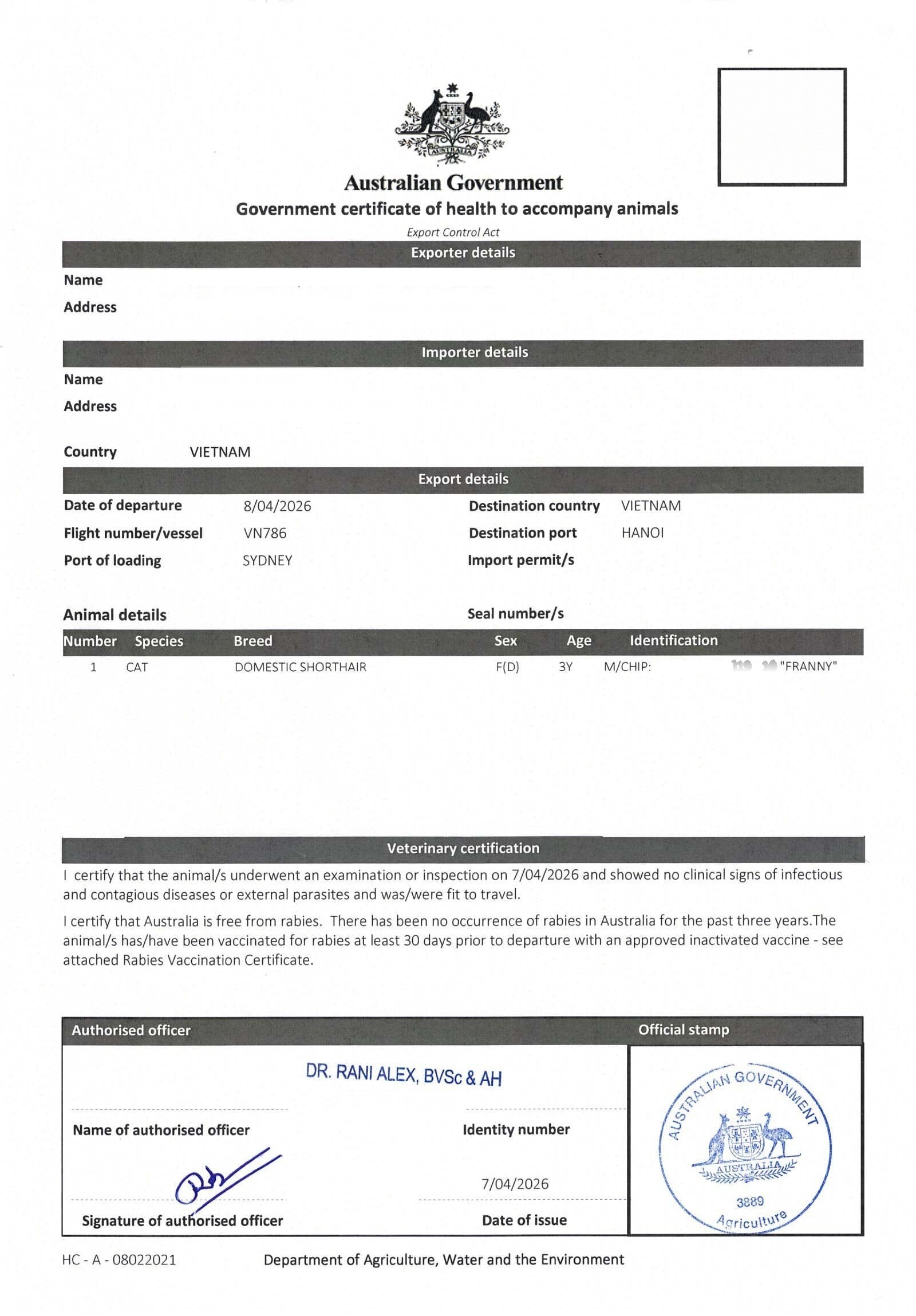
Four documents carried Franny out of Australia, and each one confirmed something different:
| Document | What it confirmed | Date |
|---|---|---|
| Government Certificate of Health to Accompany Animals | Australia’s rabies-free status, and no signs of infectious disease on exam | 7 Apr 2026 |
| Permit to Export Animals | DAFF’s approval to leave, with the 72-hour departure clock attached | 7 Apr 2026 |
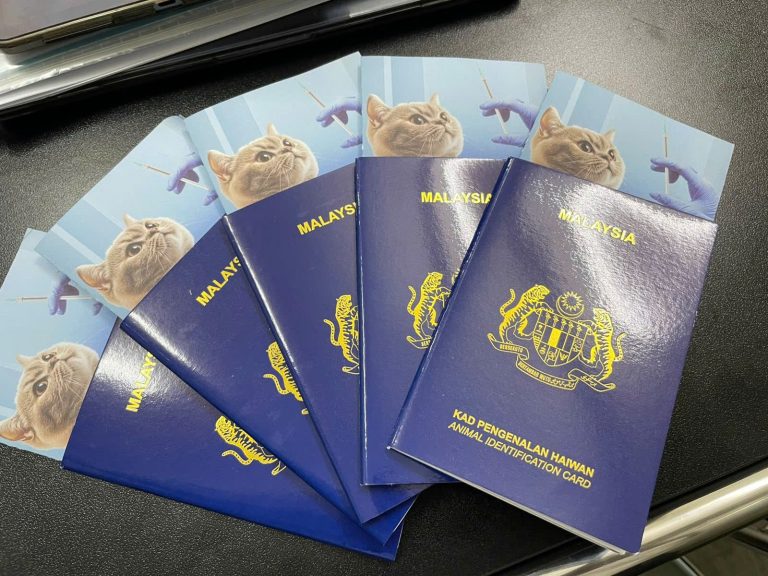
| Rabies Vaccination Certificate (Form 4) | Vaccine brand, batch, and date — proof she cleared the 30-day minimum before travel | Vaccinated 2 Feb 2026 |
| Microchip verification | Matched her permanent ID against the NSW Companion Animals Register | On file since kittenhood |
Franny’s rabies shot went in on 2 February 2026 — more than two months before departure, well clear of DAFF’s 30-day rule and consistent with what Vietnam expects for an incoming cat as well. All four documents were signed off by a DAFF-authorised veterinarian on 7 April, one day before her flight — inside the 72-hour window on both ends, with no margin to spare if any step had been left until the last minute.
An IATA Crate Built to Her Size
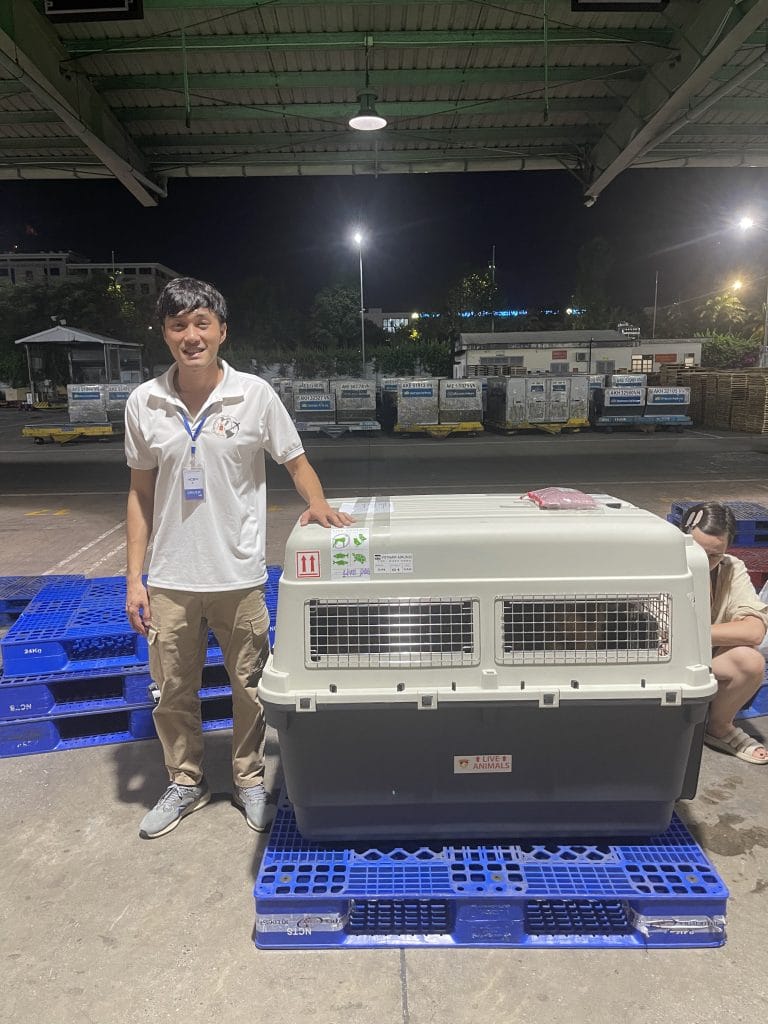
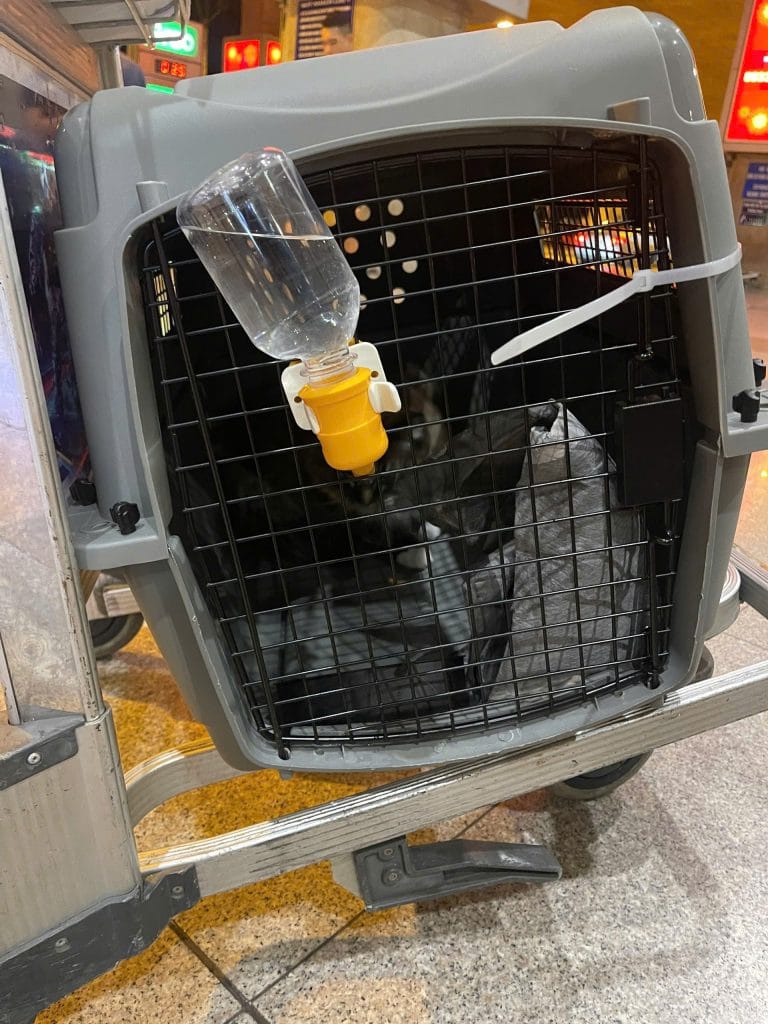
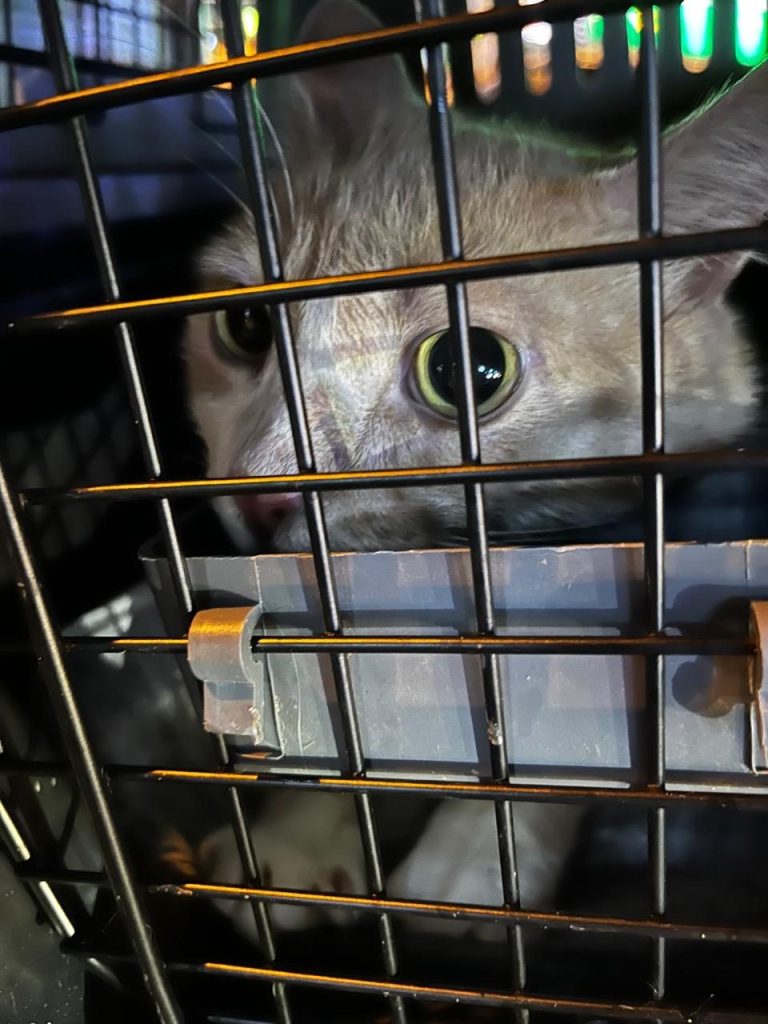
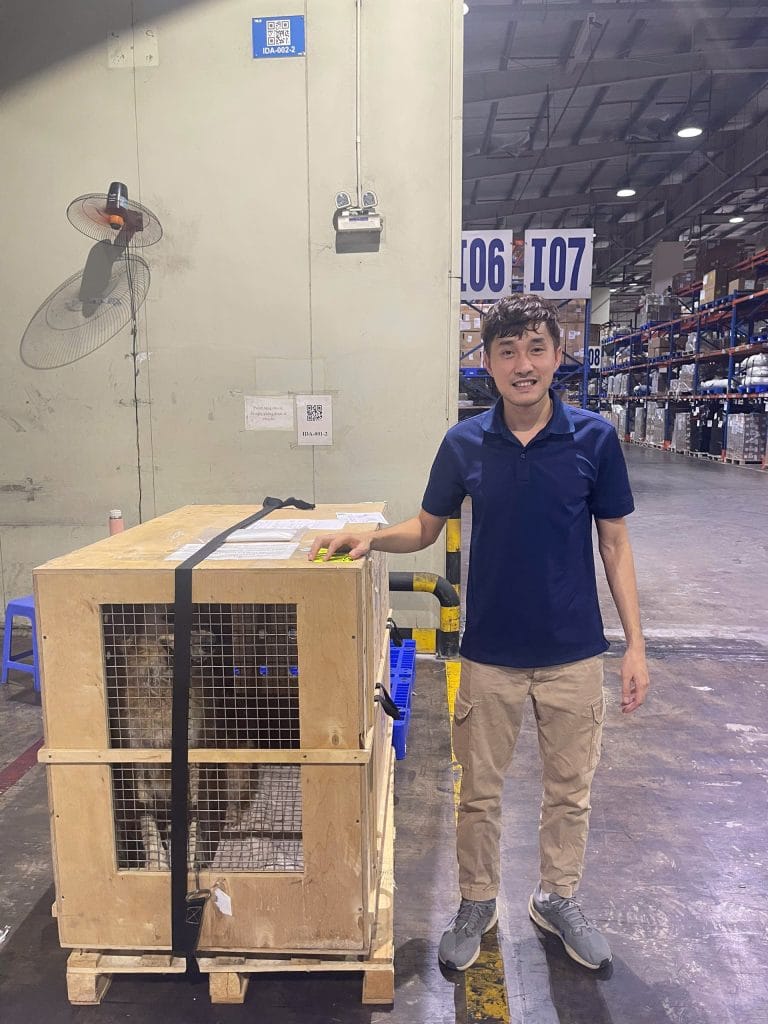
Franny travelled in a hard-sided IATA-compliant crate measuring 62 × 41 × 45 cm — sized so she could stand, turn around, and lie down without touching the sides, with mesh ventilation on multiple faces, a secure metal door, and a water dish clipped inside the front gate. For a cargo-only departure like Australia’s, the crate isn’t just a comfort detail — it’s one of the things a DAFF officer checks before the export permit is finalised, so getting the size right the first time avoided any last-minute scramble against that 72-hour clock.
Wheels Up on VN786
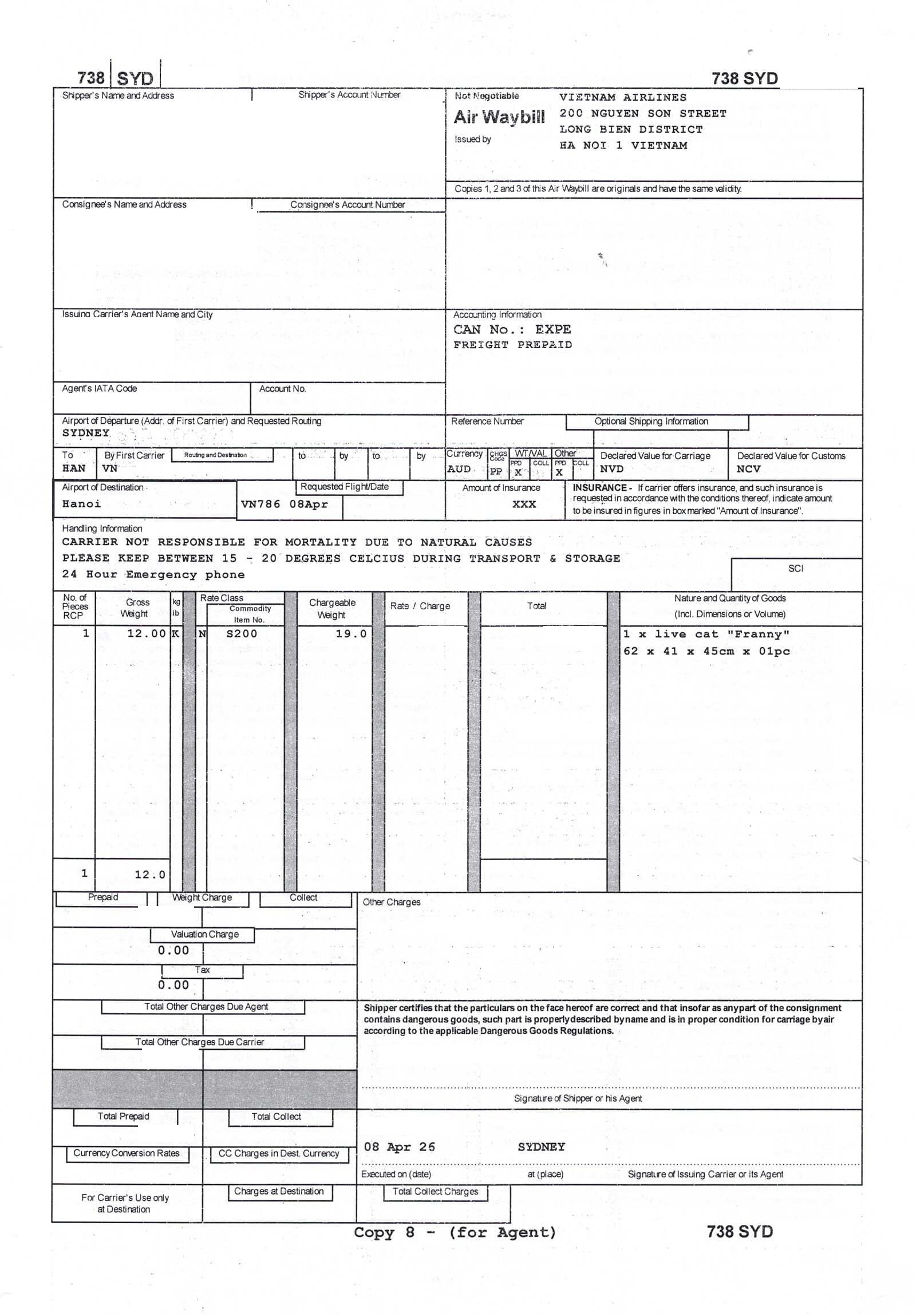
Franny departed Sydney on 8 April 2026 aboard Vietnam Airlines flight VN786 to Hanoi, travelling as manifest cargo under Air Waybill 738-05982911. Gross weight for her and the crate came to 12 kg, with the airline’s own handling notes specifying she be kept between 15–20°C for the duration of transport. Freight for the shipment ran to roughly AUD 341 door-to-airport, prepaid before departure — the kind of concrete number that’s easy to plan around once the preparation timeline is mapped out early instead of rushed.
Landing in Vietnam: Quarantine, Duties, and the Road to Hai Duong
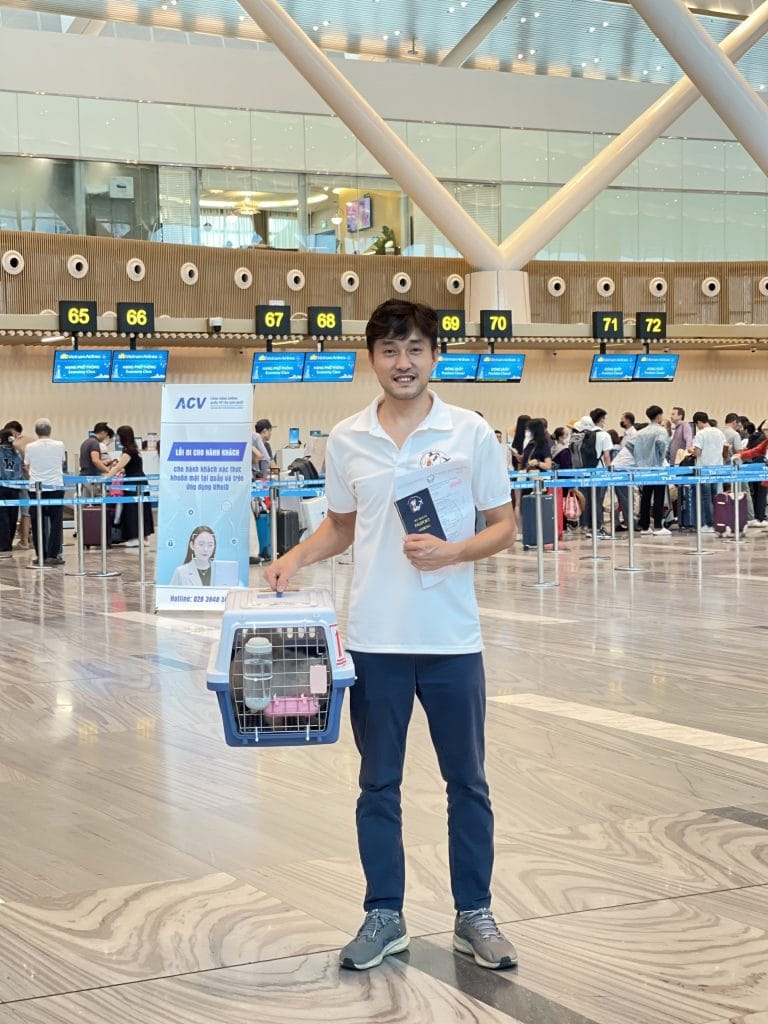
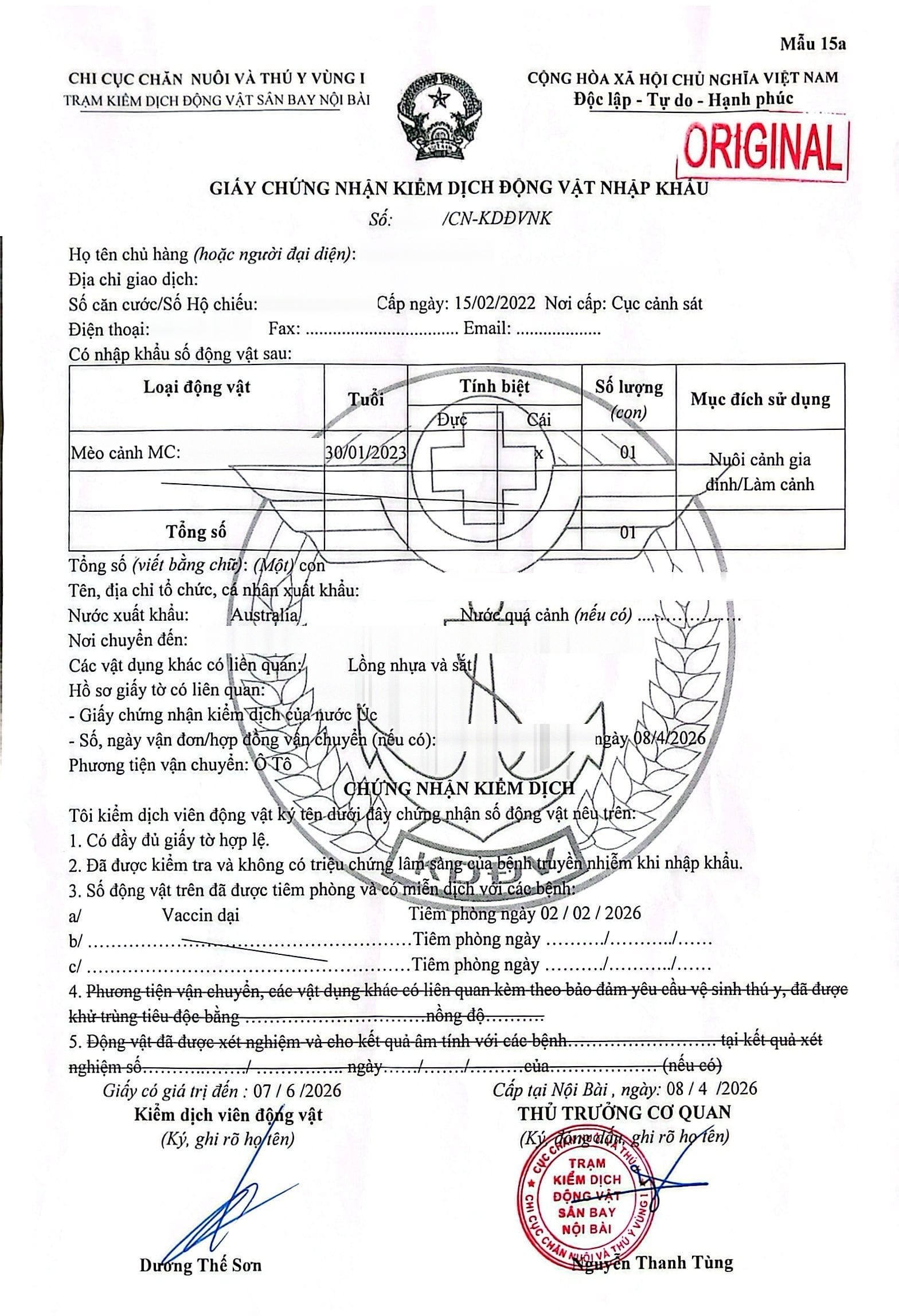
On arrival in Hanoi, our team met Franny and took her straight into Vietnam’s import process at the Region I Animal Health Sub-Department’s quarantine station at Noi Bai Airport. With only one cat in the shipment — below the threshold where Vietnam requires a full import permit — the paperwork on this side ran through the standard Form 3 (Mẫu 3) quarantine declaration rather than a separate permit application. The quarantine station issued her clearance certificate the same day, duties were settled, and customs was cleared before she continued by road to her family in Hai Duong province.
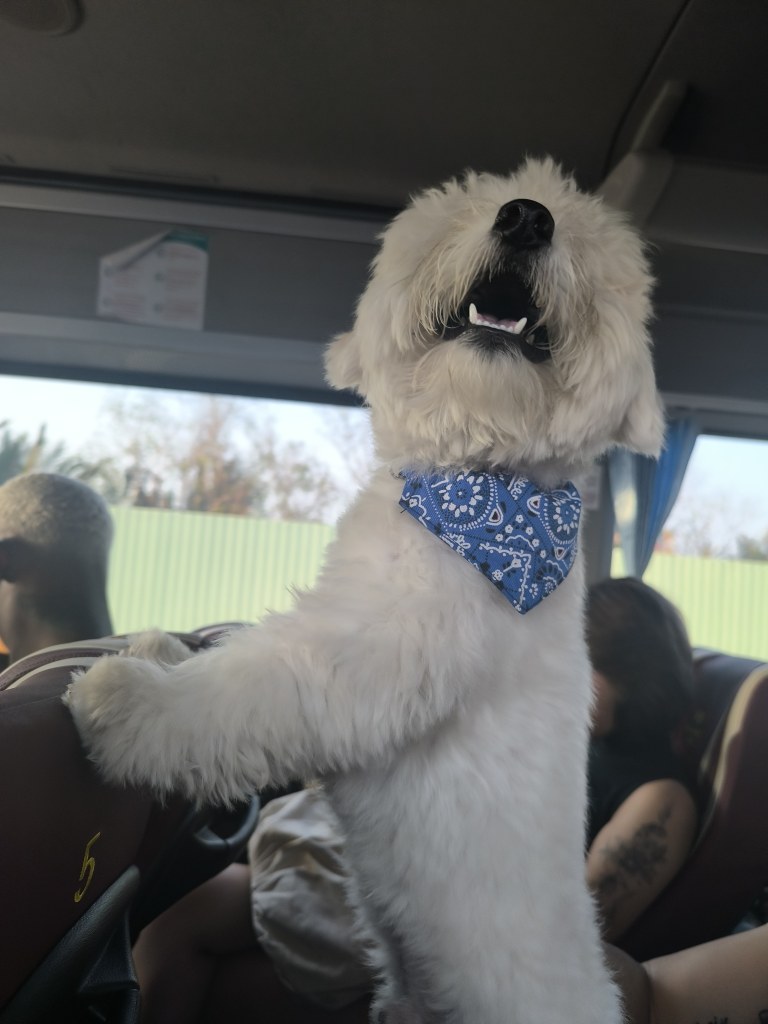
Not every pet entering Vietnam arrives this way. Koopi, a dog who flew in from the Philippines with his owner for a one-week stay, went through the same kind of import quarantine step — but as an accompanied passenger rather than manifest cargo, and only for a short visit before flying home again.
The Reunion
By the time her crate was opened in Hai Duong, Franny had travelled under more paperwork than most owners ever see the inside of — a DAFF export permit, a health certificate, an air waybill, a quarantine stamp — and none of it showed on her. She stepped out, took a slow look around the room, and went looking for somewhere to nap. That’s the outcome the whole process is built for: a cat who arrives like nothing happened, because everything that could go wrong was already accounted for on paper before she ever boarded.
Australia’s cargo-only rule and its 72-hour permit window catch a lot of owners off guard, especially when the pet is travelling without them. If you’re moving a pet out of Australia, or bringing a cat into Vietnam and want the documentation handled end-to-end, our pet import service covers exactly this kind of case.
Last updated 15 Oct 2026 · First published 13 Aug 2026