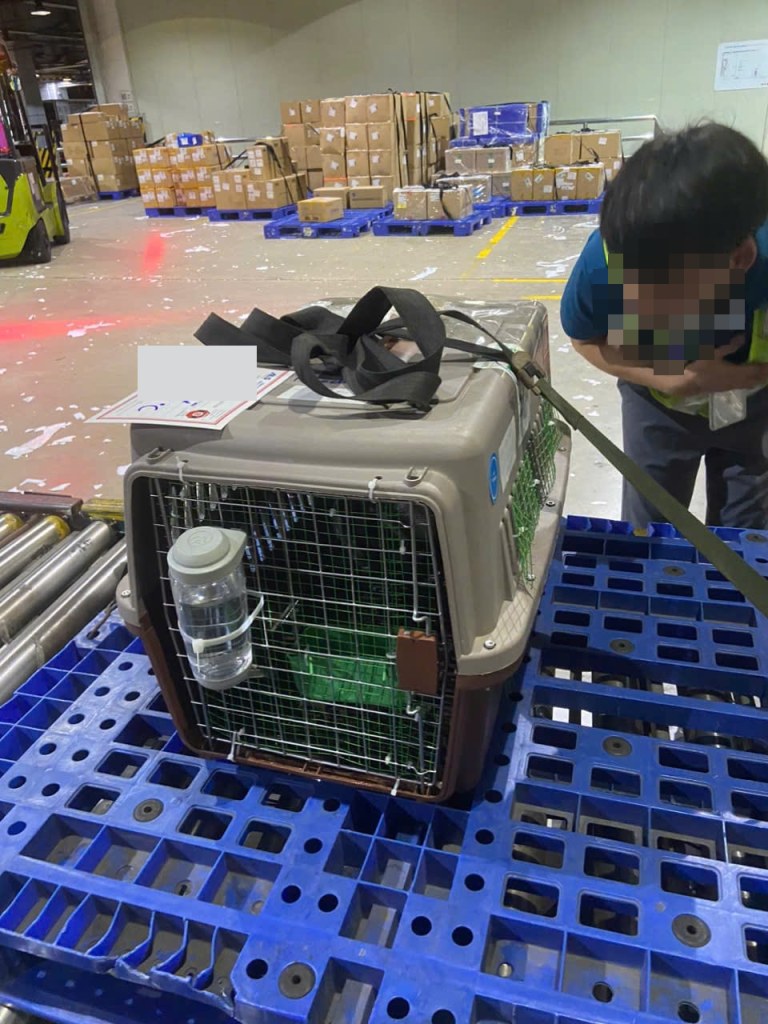
Search “how to bring a dog to India” and you’ll get a single checklist: microchip, rabies vaccine, health certificate, done. That checklist is real — but it only describes one half of a system that actually runs on two completely different tracks. Pick the wrong one, or fail to qualify for the free one, and the same pet import that should take a few weeks turns into a two-month gamble that involves customs duty and possible quarantine. Most guides skip this distinction entirely. It’s the single most important thing to understand before you plan a move to India with a dog or cat.
This guide covers the full technical picture: which path you qualify for, what each government body actually controls, the documents both paths require, and where the real costs and delays come from. For quick answers to specific scenarios, see the FAQ at the end of this guide.
Why India Controls Pet Imports So Tightly
India’s rules can feel disproportionately strict compared to neighboring countries — no other country in the region runs a dual-track licensing system just for pets. There’s a specific reason: India records more human deaths from rabies than any other country on earth, accounting for roughly a third of the world’s total rabies deaths according to the World Health Organization. Biosecurity policy here isn’t bureaucratic caution for its own sake — it’s a direct response to a disease burden most import countries never have to think about. That context explains a lot of what follows: why documentation gets checked so literally, why the commercial track exists as a separate, harder-to-pass gate, and why officers at the port of entry have real discretion over what happens to your pet on arrival.
The Two Paths Every Pet Import Falls Into
Every dog or cat entering India goes through one of two tracks, and which one applies to you is decided by why you’re bringing the pet in — not by which airport you land at or which paperwork you happen to file first.
| Track | Who it’s for | Government license needed | Quarantine |
|---|---|---|---|
| Non-commercial | Relocating owners and foreign workers/students — see the two groups below | NOC from AQCS only | Not required if documents are complete and the pet passes the arrival health check |
| Commercial / DGFT-authorized | Anyone who doesn’t qualify for the non-commercial track: tourists and other short stays (even with a sponsor in India), more than 2 pets, research/security animals | DGFT import authorization + NOC | Same arrival inspection; quarantine where AQCS requires it — see below |
The difference is not cosmetic. The non-commercial track is the one nearly every Daisy Pet client from Vietnam should be aiming for — it’s faster, it’s free of customs duty, and it doesn’t carry an automatic quarantine stay. The commercial track exists for cases the non-commercial rules don’t cover, and it comes with a materially harder, slower, and more expensive process. We break down exactly what that involves in our DGFT commercial license guide — read it before assuming this is the route you need.
Path 1 — Non-Commercial Import: Who Qualifies
India’s baggage rules recognize two practical situations where a pet owner can import without a DGFT license. You only need to fit one of them.
1. You’re relocating to India after 2+ years abroad
This is the classic “Transfer of Residence” case — you’re moving your life to India, and you’ve lived outside India continuously for at least two years. You’ll need to show visa/immigration proof covering that entire period, evidence you’re closing out your life abroad (a cancelled visa, a lease closure, a household goods shipment), and proof the pet has genuinely been living with you. Up to two pets qualify under this route with no DGFT license required at all — only the AQCS No Objection Certificate (NOC).
2. You’re a foreign national moving to India for work or study
This is good news that surprisingly few guides mention: if you’re relocating to India on a valid work or study visa, you do not need to show two years of prior residence abroad the way returning Indian nationals do. A valid long-term visa is enough to qualify for the same non-commercial, NOC-only pathway. For Vietnamese professionals taking a job assignment in India, this is usually the fastest legitimate route available — plan around the NOC steps below, not the much longer DGFT process.
Path 2 — The Commercial Track (DGFT Authorization)
If you don’t fit either group above — you’re visiting as a tourist or for another short stay, you’re bringing more than two pets, or you’ve been abroad less than two years and aren’t on a qualifying work/study visa — you’re routed into DGFT’s import-authorization system. In practice, this is treated closer to a commercial goods import than a personal pet relocation: customs duty applies, and quarantine remains possible where AQCS requires it. Approval also isn’t guaranteed — in our experience working with in-country partners, it comes down to roughly even odds, and the process typically runs closer to two months than the one month often quoted online. We cover the full mechanics, costs, and risk factors in the dedicated DGFT guide.
Tourists and short stays. A holiday or short visit does not qualify for the NOC-only route, even with a host in India. India’s DGFT rules require an import authorisation for any short stay, and DGFT’s own guidance says short-duration (tourist) imports are generally not allowed and approved only in rare cases. A local host, relative or family member who signs an undertaking to take legal responsibility if the pet is not taken back out is one of the documents filed with that DGFT application — it does not replace it. If a short trip is your plan, read the DGFT guide before you book anything.
The Regulatory Framework: Who’s in Charge
Three government bodies share authority over live pet imports, and knowing which one does what saves a lot of confusion when something needs escalating:
- DAHD (Department of Animal Husbandry and Dairying) — sets national veterinary and quarantine policy.
- AQCS (Animal Quarantine and Certification Service) — the operational arm, present at every entry port. AQCS issues the NOC, inspects pets on arrival, and runs the quarantine stations.
- DGFT (Directorate General of Foreign Trade) — issues the import authorization required for the commercial track described above.
The Seven Approved Entry Ports
Pets may only enter India through a port with an active AQCS station. Since Kochi was added in October 2024, that’s seven locations — older lists still show six:
| City | IATA Code | Import Type |
|---|---|---|
| New Delhi | DEL | Full import/export |
| Mumbai | BOM | Full import/export |
| Chennai | MAA | Full import/export |
| Bengaluru | BLR | Full import/export |
| Hyderabad | HYD | Full import/export |
| Kolkata | CCU | Import only |
| Kochi | COK | Import only |
Your NOC is issued for one specific entry port and one specific flight. If your routing changes after the NOC is approved, you need a new one — decide your entry city before you apply, not after.
Health Certificate and Documentation
The veterinary health certificate must be issued by a licensed veterinarian in Vietnam and, for our clients, endorsed by Vietnam’s Department of Animal Health (DAH) — India’s own certificate template asks for a signature and official stamp confirming the animal shows no clinical signs of rabies, distemper, parvovirus, or leptospirosis (feline enteritis and panleukopenia for cats), plus proof of a valid rabies vaccination. In practice, India recognizes this certificate for only 10 days before arrival — even though the certificate itself may state a longer validity period, don’t schedule the vet visit too early, or you’ll be re-doing it before departure.
Microchip
Every pet needs an implanted microchip with a number that matches identically across the health certificate, vaccination records, and NOC. Any mismatch between documents is one of the fastest ways to get flagged at the AQCS inspection on arrival.
Vaccinations
India does not require a Rabies Neutralizing Antibody Titer Test (RNATT/FAVN) — a real advantage compared to destinations like Japan, Australia, or Taiwan. The core requirements:
| Requirement | Detail |
|---|---|
| Rabies vaccine | At least 30 days, no more than 12 months, before travel |
| Core vaccines | DHPPi for dogs; FVRCP for cats — required, not optional |
| Leptospirosis | Required for dogs, not merely recommended |
| 3-year rabies vaccine label | India only recognizes the first year of validity, regardless of the label |
| Delhi entry specifically | Requires two consecutive rabies vaccinations, not one — confirm with your vet if Delhi is your entry port |
| Minimum age | 3 months for the non-commercial (AQCS) track; DGFT’s commercial track restricts animals under 7 months |
The Delhi-specific double-vaccination rule and the 3-year-label restriction rarely appear in general guides — confirm your entry port before finalizing your pet’s vaccination schedule, since Delhi’s requirement doesn’t apply at the other six ports.
Quarantine: It Depends on Your Track, Not Just Your Pet’s Health
This is the point where most guides oversimplify. Quarantine isn’t a fixed number of days that applies to every arriving pet — it depends entirely on which of the two tracks above you’re on:
- Non-commercial track: no quarantine, provided your documents are complete and your pet passes the physical inspection at the port of entry.
- Commercial/DGFT track: AQCS’s procedure for short stays uses the same arrival inspection — a fit pet receives its final NOC at the airport. DGFT’s rules add that animals are quarantined where required, so keep a possible stay in your plan.
When a pet does go into quarantine because it fails the arrival inspection, AQCS’s current procedure sets the stay at 15 days at the station attached to the entry port.
For the full breakdown of what happens during an AQCS inspection and what quarantine actually involves when it does apply, see our AQCS quarantine guide.
Import Limits
Up to two pets can travel under the non-commercial track. Bringing a third pet automatically pushes the entire shipment — not just the extra animal — into the commercial/DGFT track, with the duty and quarantine risk that come with it.
Breed Restrictions
As of 2026, India has no enforceable national breed ban — a proposed nationwide ban on 23 breeds was issued in 2024 but struck down by the Delhi and Karnataka High Courts within weeks. Individual cities can and do legislate locally: Chandigarh, for example, has banned six breeds under its own 2025 bylaws. The Chandigarh list covers the American Pit Bull Terrier, American Bulldog, Bull Terrier, Cane Corso, Dogo Argentino and Rottweiler, plus crosses of these breeds; dogs registered before the bylaws keep their registration but must be leashed and muzzled in public. Check your destination city’s current rules before moving a large or powerful breed.
Summary Checklist
- Confirm which track applies to you — non-commercial (2 groups above) or commercial/DGFT (including tourist and short-stay visits)
- Microchip implanted before any vaccination record is created
- Rabies vaccine 30 days–12 months before travel (2 doses if entering via Delhi)
- Core vaccines current — DHPPi + Leptospirosis for dogs, FVRCP for cats
- Health certificate issued by a Vietnamese vet, DAH-endorsed, completed within 10 days of the flight
- Advance NOC applied for on the ATITHI 2.0 portal, for your confirmed entry port
- DGFT authorization secured first, if you’re on the commercial track
- Owner name and address identical across every document
- IATA-compliant crate of the correct dimensions
For a complete cost breakdown across both tracks, see Pet Relocation Cost to India.
How to Get the NOC: 5 Steps
Every dog or cat entering India needs an Advance NOC from AQCS before it boards, and a final NOC at the arrival airport. On the DGFT route, the DGFT licence comes first and its copy goes into the NOC application.
- Choose the entry airport. The NOC is issued by the AQCS station at one specific airport for one specific flight. Decide your entry city before you apply.
- Prepare the documents. Draft health certificate (final version within 10 days of arrival, DAH-endorsed), rabies and core vaccine records, microchip number, flight details, passport and visa copies, proof for your category (visa history for transfer of residence, or your work/study visa), and the DGFT licence if you are on that route.
- Apply on the ATITHI 2.0 portal. Register with your own passport and submit at least 7 days before embarkation. AQCS’s procedure asks owners to apply themselves; if you cannot, you can authorise someone using the AQCS authorisation form.
- Receive the Advance NOC. AQCS’s procedure promises it within one working day of a complete file; in practice, allow at least two working days. Check every line against your booking. Airlines board the pet only with a valid Advance NOC.
- Clear AQCS on arrival. AQCS checks the original health certificate and scans the microchip. A fit pet gets the final NOC at the port, which AQCS issues round the clock; a pet that fails goes to the quarantine station for 15 days. The processing fee is ₹1,000 per application, paid online through Bharatkosh.
Mistakes That Delay the NOC
| Mistake | What happens | Prevention |
|---|---|---|
| Applying before the flight is booked | AQCS cannot issue an NOC without a date and airport | Book the flight first |
| Name or address written differently across documents | File flagged, processing stops | Use one identical format everywhere |
| Rabies vaccine less than one month before travel | Pet can be refused at inspection | Count from the vaccination date to the flight date |
| Leptospirosis missing for a dog | Record treated as incomplete | Check DHPPi and leptospirosis are both on the certificate |
| Changing the arrival airport after approval | NOC no longer valid | Apply again for the new airport |
| Delhi entry with a single rabies dose | Does not meet the Delhi requirement | Plan two consecutive doses if landing in Delhi |
Week-by-Week Timeline: Both Tracks
The non-commercial route is short because there is only one government step. The DGFT route is long because the licence review cannot be sped up.
| When | Non-commercial (NOC only) | DGFT route |
|---|---|---|
| Week 1 | Confirm track and entry airport; vet check; microchip and vaccine status | File DGFT form ANF-2M; vet check starts in parallel |
| Weeks 1–2 | Rabies (two doses for Delhi), DHPPi and leptospirosis for dogs, FVRCP for cats | Same vaccinations |
| Weeks 2–9 | — | DGFT, DAHD and committee review: typically 45–60 days, no guarantee |
| Week 3–4 / week 10 | Book the flight; apply for the Advance NOC on ATITHI 2.0 (≥7 days before departure) | If approved: book the flight; apply for the NOC with the licence copy |
| Within 10 days of the flight | Final health certificate, DAH-endorsed | Same |
| Arrival | AQCS inspection; final NOC at the airport if the pet passes | AQCS inspection; quarantine where required |
The only date with no flexibility is the rabies window: the vaccine must be more than one month old on departure day.
Frequently Asked Questions
Do I need a DGFT license to bring my dog or cat to India?
Not if you are transferring your residence to India after at least two years abroad, or moving on a valid work or study visa, with no more than two pets — then the AQCS NOC is the only permit. Tourists and other short stays, more than two pets, and anyone outside those two groups need DGFT import authorisation first.
Can I bring my pet to India as a tourist if someone in India sponsors me?
Only through DGFT. A short stay always needs DGFT import authorisation, and DGFT states that tourist imports are generally not allowed and approved only in rare cases. The local host’s signed undertaking is one of the documents filed with that application; it does not replace it.
How do I apply for the NOC?
Register on the ATITHI 2.0 portal with your own passport and apply for the Advance NOC at least 7 days before the flight, for one entry airport and one flight. AQCS issues it within one working day under its procedure; in practice allow at least two working days. The final NOC is issued at the arrival airport after inspection.
Is quarantine mandatory when my pet arrives in India?
Not on the non-commercial route, as long as the documents are complete and the pet passes the arrival inspection. A pet that fails the inspection stays 15 days at the AQCS station. On the DGFT route, the same inspection applies, but AQCS can order quarantine where required — keep it in your plan.
Is a rabies titer test (RNATT/FAVN) required for India?
No. India requires a rabies vaccination given more than one month and within 12 months before travel; pets entering through Delhi need two consecutive rabies vaccinations.
Which airports can my pet enter India through?
Seven: Delhi, Mumbai, Chennai, Kolkata, Bengaluru, Hyderabad and Kochi. Kolkata and Kochi accept imports only. The NOC is issued for one airport, so a change of routing means a new NOC.
Are any dog breeds banned from entering India?
There is no national breed ban in force. A March 2024 central circular naming 23 breeds was set aside by the Delhi and Karnataka High Courts. Some cities have their own rules: Chandigarh bans six breeds under its 2025 bylaws.
How early should I start?
On the non-commercial route, about 4–5 weeks is realistic if vaccinations are already valid. On the DGFT route, file at least 10–12 weeks ahead: DGFT review alone typically takes 45–60 days and approval is not guaranteed.
Last updated 20 Oct 2026
Compiled by our specialists from the regulations in force on the date above, for reference only. Rules may change after this date. Please verify with the competent authorities or contact us for the most accurate information.
Official sources cited in this guide
- World Health Organizationwho.int