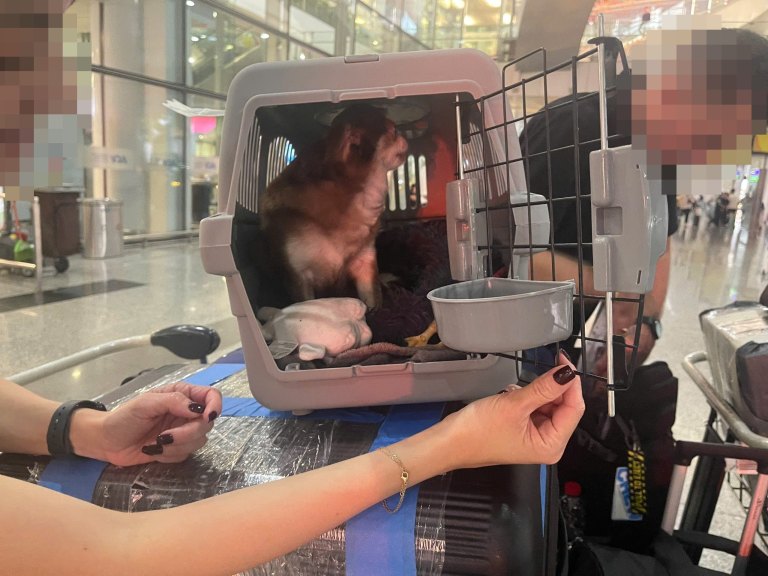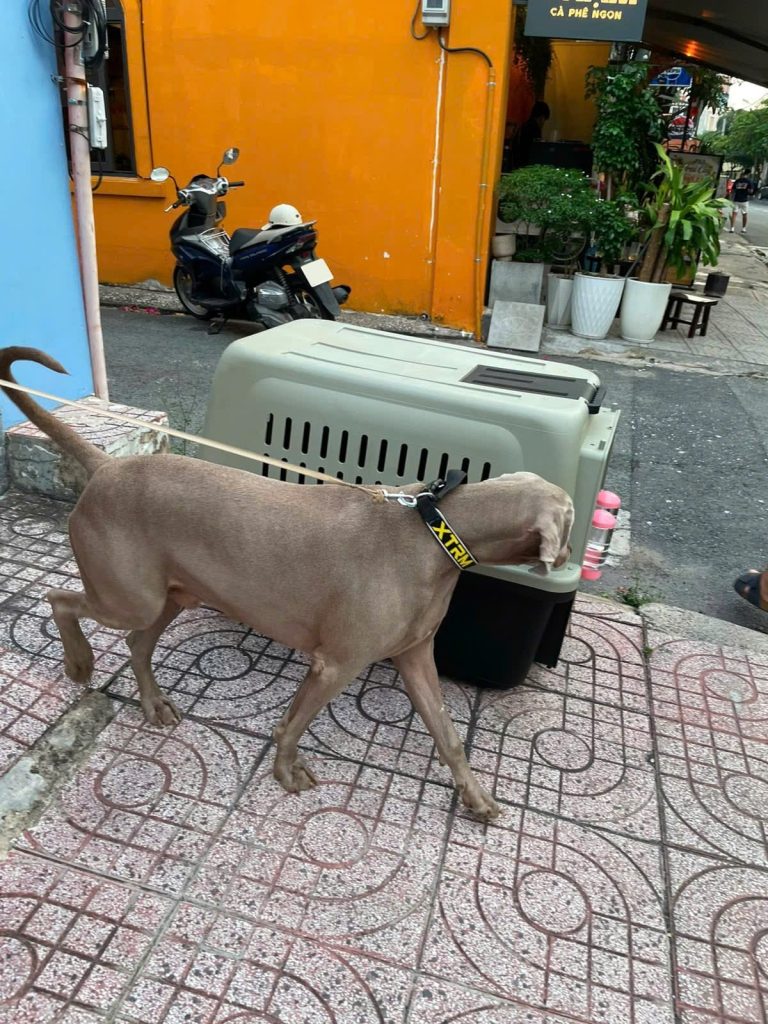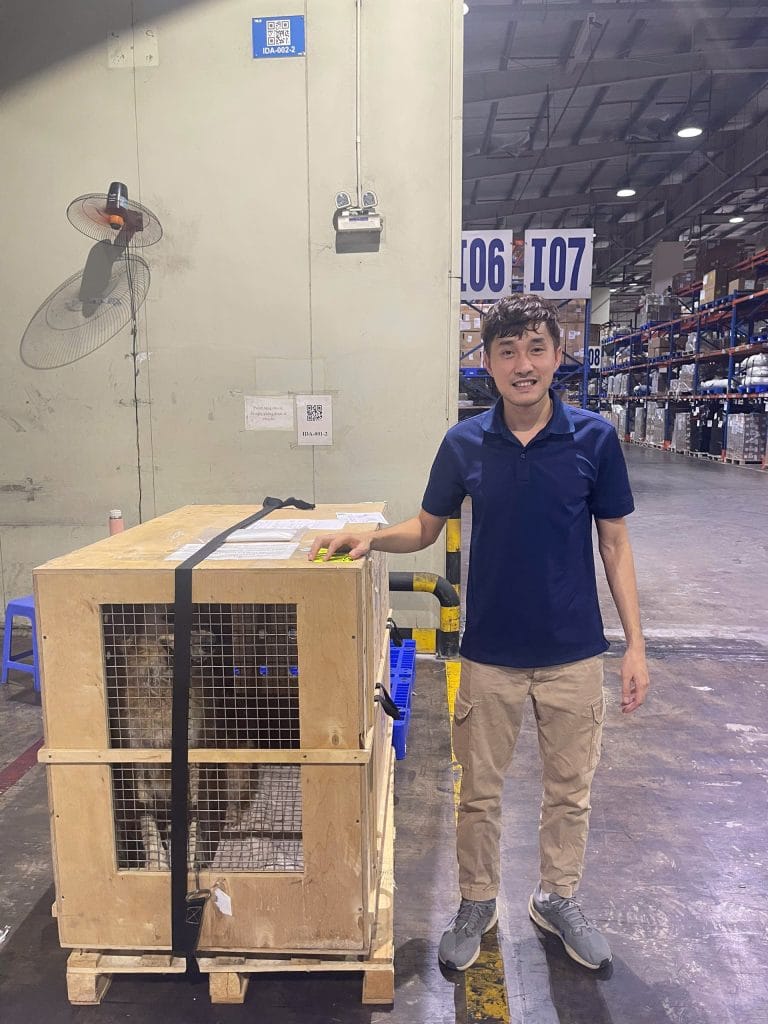
On paper, Pablo’s shipment weighed 50 kilograms. The air waybill that landed with him in Hanoi said 100 — and nobody on the Turkish side had told us the numbers had changed. Pablo, a four-year-old English Setter, flew alone as manifest cargo from Turkey to Vietnam on 22 September 2026 — Turkish Airlines, Istanbul to Noi Bai International Airport. Getting him through took two fixes most owners never see: one to the name on his paperwork, and one to the weight on his waybill.
Meet Pablo, an English Setter with a full vaccine record
Pablo is a cream-and-white English Setter, born in February 2022 and microchipped as a puppy. He was moving to Vietnam with his owner, who was relocating from Türkiye to Hanoi. His Turkish pet passport records a rabies vaccination every year since 2022, with the latest booster given on 13 August 2026 — 40 days before he flew.
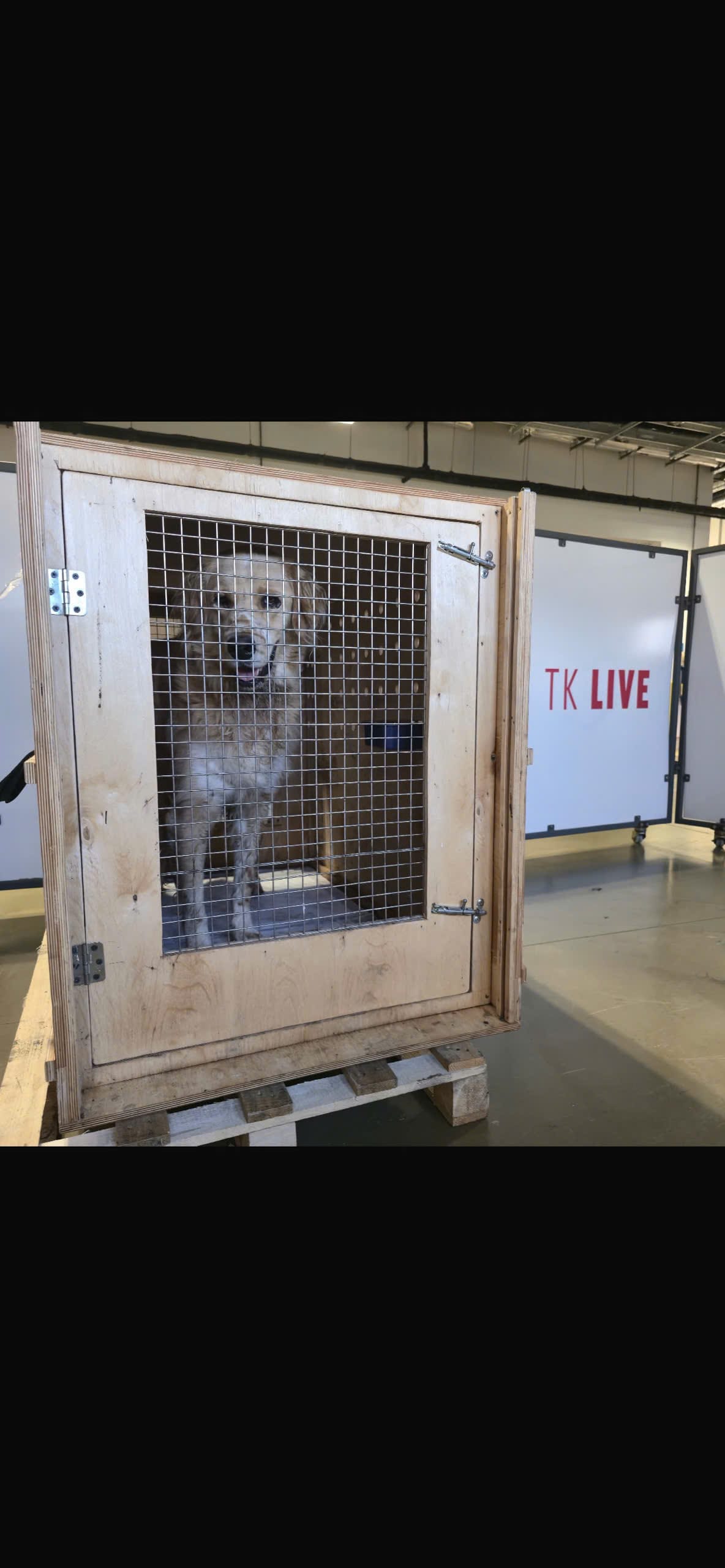
That timing matters more than how long the passport goes back. Vietnam asks for one thing on rabies: the current shot must be between 30 days and 12 months old on the day of travel. It does not require a titer test, and it does not care that Pablo’s new booster came a month after the previous one was due. For destinations that require a titer test, a late booster like that usually means restarting the vaccination and testing sequence. For Vietnam, only the current shot counts — and the rest of the preparation fits inside a 30-day import preparation timeline.
Why Pablo flew as manifest cargo
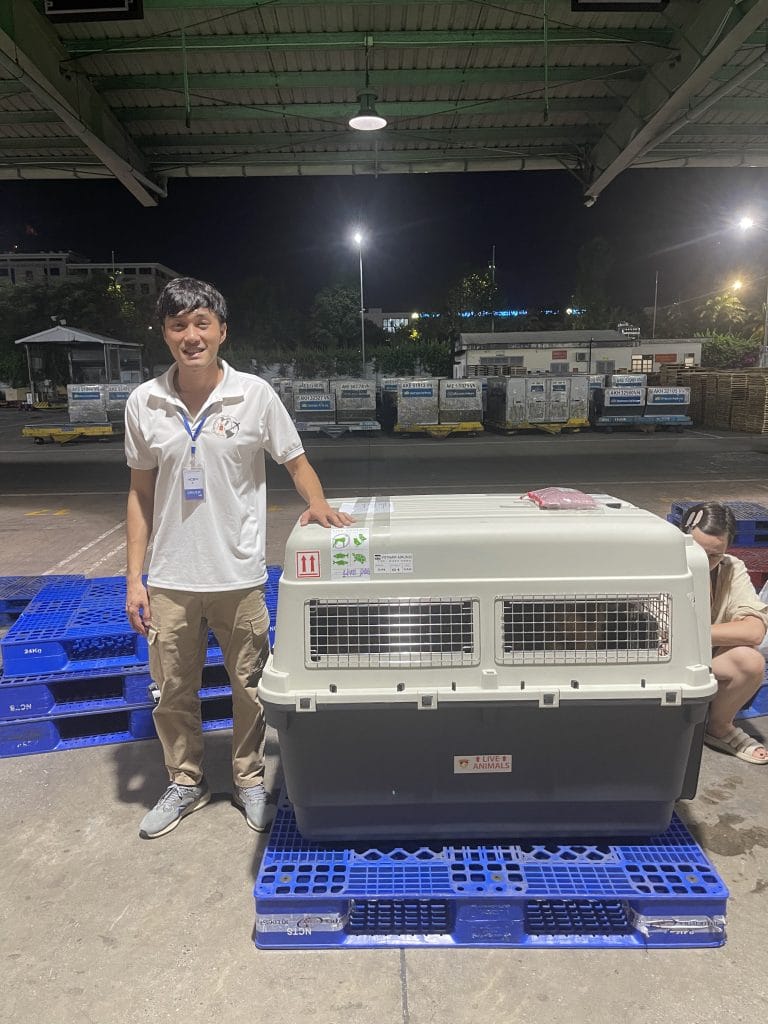
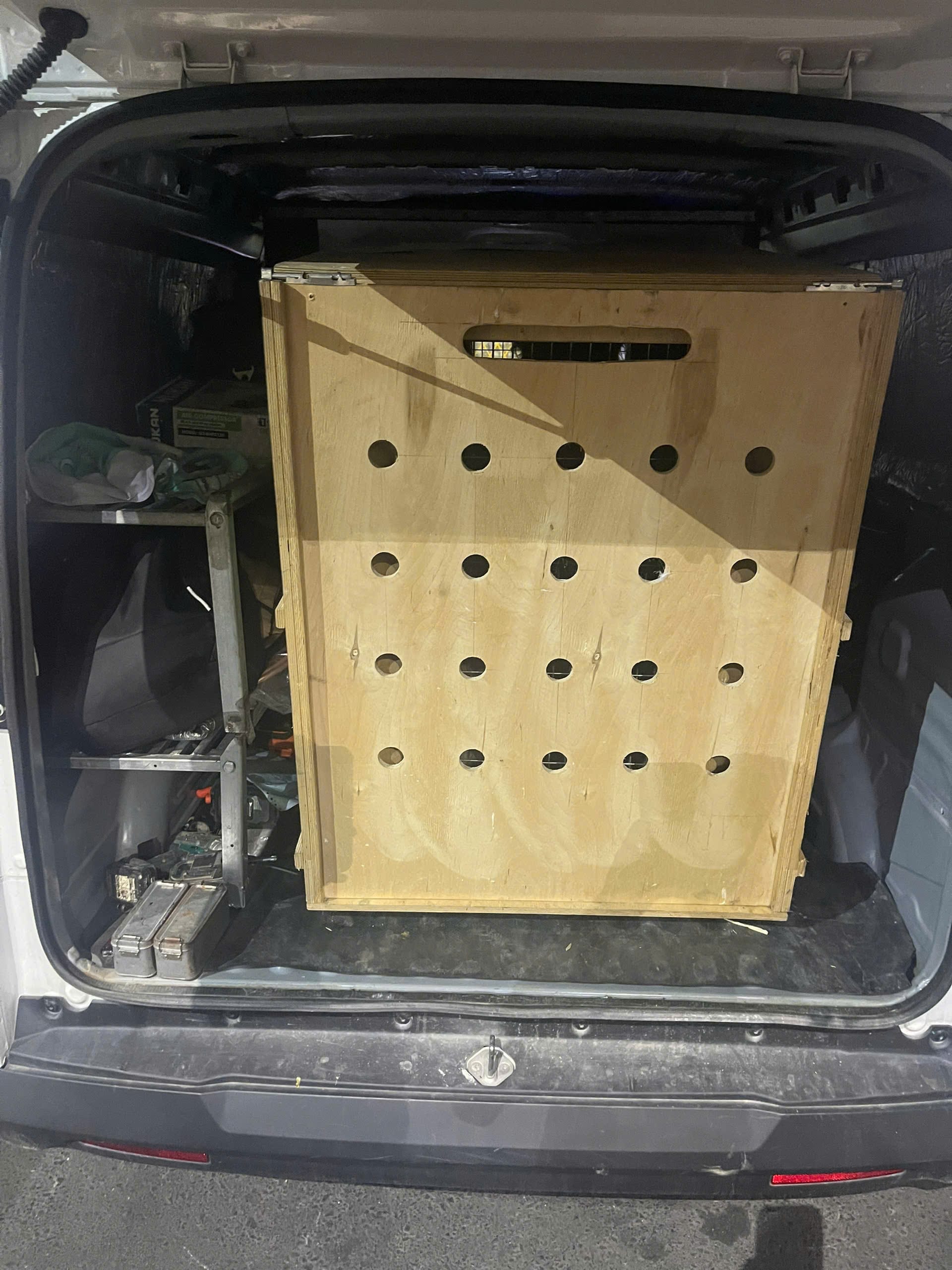
A dog Pablo’s size travels in a crate far too large for checked baggage. His final crate measured 128 × 78 × 94 cm, so he flew as manifest cargo — on his own, under an air waybill, rather than alongside his owner.
Turkish Airlines carries pets into Vietnam as cargo from its Istanbul hub, and flight TK164 took Pablo to Hanoi in a single flight, with no transit stop along the way.
Cargo changes what happens on arrival. A pet flying with its owner is inspected and released at the airport quarantine counter. A pet flying as cargo goes to the airport’s cargo terminal, where the shipment needs a customs declaration, a quarantine inspection and a physical customs check before it can leave. The differences between cabin, checked baggage and cargo go well beyond price — they decide who has to be where, and when.
Whose name goes on the paperwork?
Our standard advice for cargo arrivals is to list a Daisy Pet Transport staff member as consignee on the export documents and the air waybill. The shipment then clears in our name, and the owner never has to visit the cargo terminal to sign anything.
The Turkish agent explained that this wasn’t possible for the export health certificate: in Türkiye, the certificate can only be issued in the owner’s name. We agreed to keep the owner on the certificate and list our staff member as consignee on the air waybill only.
The certificate was issued by a district office of Türkiye’s Ministry of Agriculture and Forestry and reached us in the evening. Under Turkish rules, this certificate is issued no earlier than 48 hours before the pet leaves the country. That was when the problem became visible: the two documents named different consignees. A shipment whose documents disagree on who is receiving it is exactly the kind that stalls at a cargo terminal, so we fixed it that night (times in Vietnam):
- 20:06 — The export health certificate arrives. By 20:14, we have flagged that its consignee does not match the draft air waybill.
- 20:23 — The Turkish agent confirms the certificate can only name the owner.
- 21:06 — After checking with Vietnam Customs, we ask for the waybill’s consignee to match the certificate: the owner’s full name and passport number.
- 21:41 — The forwarder issuing the waybill replies that Turkish Airlines won’t accept a shortened “Hanoi, Vietnam” address. The airline wants the full address.
- 21:51 — We send the owner’s full Hanoi address, with our team’s phone number and email as the contact.
- 22:14 — The corrected air waybill comes back, with consignee, passport number and address now matching the certificate.
The fix had a consequence. With the owner named as consignee, the release documents at the Hanoi cargo terminal were in his name, so he had to come to the terminal in person to sign. Our team still handled the quarantine and customs work — he only needed to be there for his signature. Anyone shipping a dog from Turkey to Vietnam as cargo should settle the consignee question first, before the export certificate is issued, and plan for the owner to be in Vietnam and reachable on arrival day if the paperwork carries their name.
Does Vietnam require an import permit before the dog boards?
The Turkish agent asked us this on 19 September. It’s a fair question — some destinations, including the UAE, Indonesia and Thailand, require an import permit that the airline checks before it will load an animal.
Vietnam doesn’t work that way for a personal import of one or two pets. Nothing has to be issued before departure. On arrival, the quarantine station examines the animal and scans its microchip against the documents, and if everything matches, it issues the import quarantine certificate. What other destinations ask for up front is covered in our guide to pet import permits.
The one form filed in advance is the quarantine declaration known as Form 3 (Mẫu 3), lodged with the airport’s regional quarantine office ahead of the landing. For a cargo shipment, the air waybill goes into that same file — which is exactly where Pablo’s second problem was hiding.
The air waybill that said 50 kg — and the one that said 100 kg
Every waybill we received before the flight was a draft. The final waybill that arrived with Pablo in Hanoi described a much bigger shipment:
| Draft air waybill | Final air waybill | |
|---|---|---|
| Gross weight | 50 kg | 100 kg |
| Crate dimensions | 105 × 73 × 76 cm | 128 × 78 × 94 cm |
| Volume | 0.583 m³ | 0.938 m³ |
| Chargeable weight | 100 kg | 270 kg |
The crate built for Pablo was considerably larger than the dimensions on the draft. When Turkish Airlines accepted the shipment in Istanbul at 12:34 local time on 21 September, it was recorded at 100 kg. The new figures were never passed on to us.
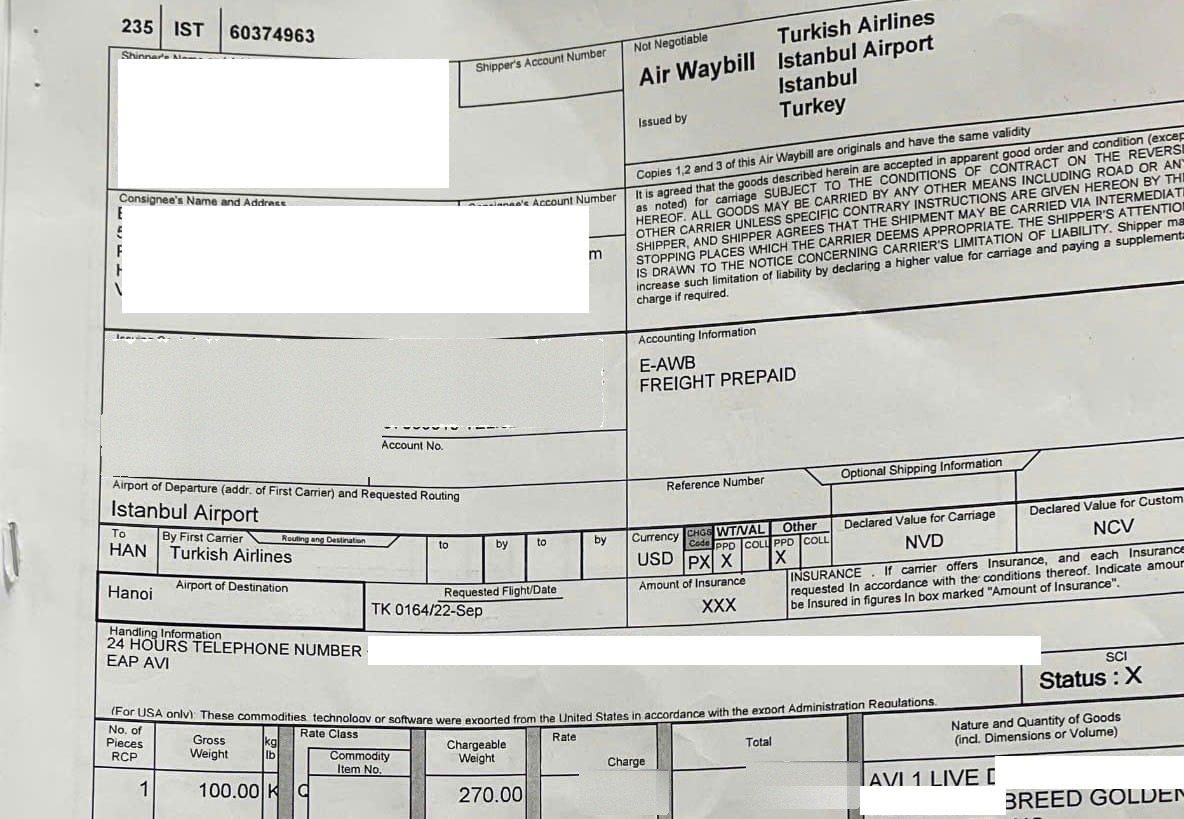
Everything on the Vietnamese side had been prepared from the draft. Weight is one of the figures that has to agree across the airline’s manifest, the cargo terminal’s records and the customs declaration — and on arrival day, it didn’t. We reconciled the figures with the airline, the cargo terminal and customs that afternoon, and Pablo’s clearance went ahead the same day.
The practical takeaway is to ask for the final air waybill after the airline has accepted the pet, not the draft sent days earlier, and to check the weight and crate dimensions on it line by line. Cargo is billed on chargeable weight, not on what the dog weighs: on Pablo’s final waybill, a 100 kg crate was charged as 270 kg. The crate size your breed actually needs drives that number more than anything else.
Arrival at the Noi Bai cargo terminal
TK164 left Istanbul at 02:11 local time on 22 September and landed in Hanoi mid-afternoon — on a Tuesday. We had asked for a weekday arrival from the start: Vietnamese government offices close at weekends, so a Saturday landing can push a cargo clearance to Monday.
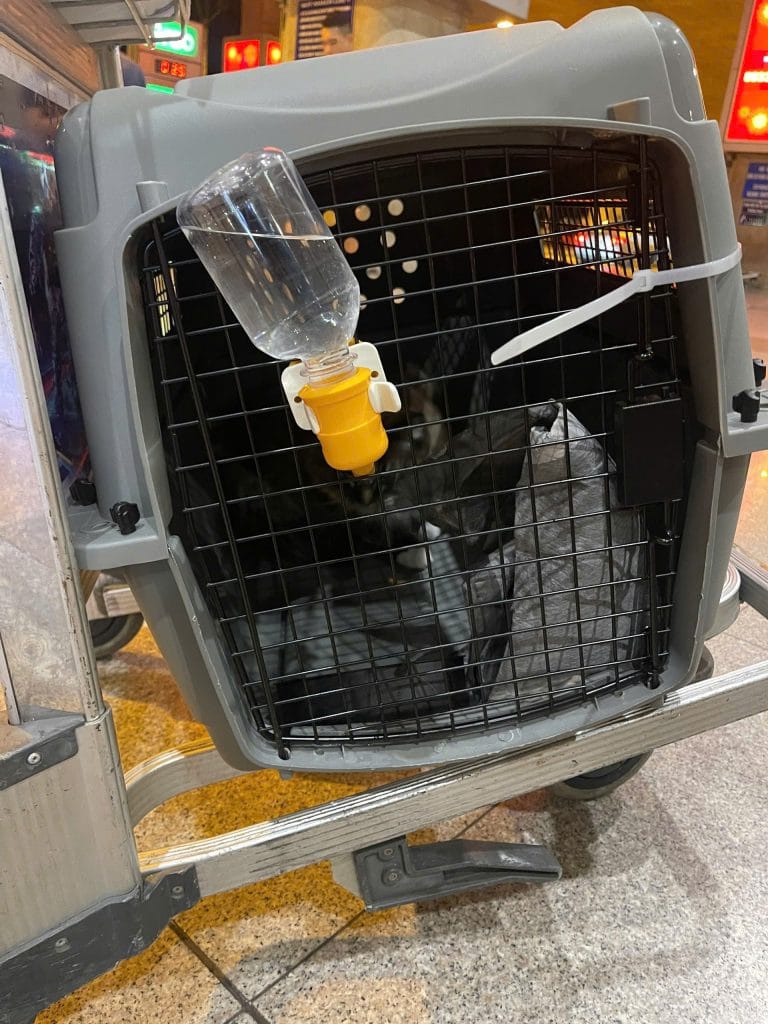
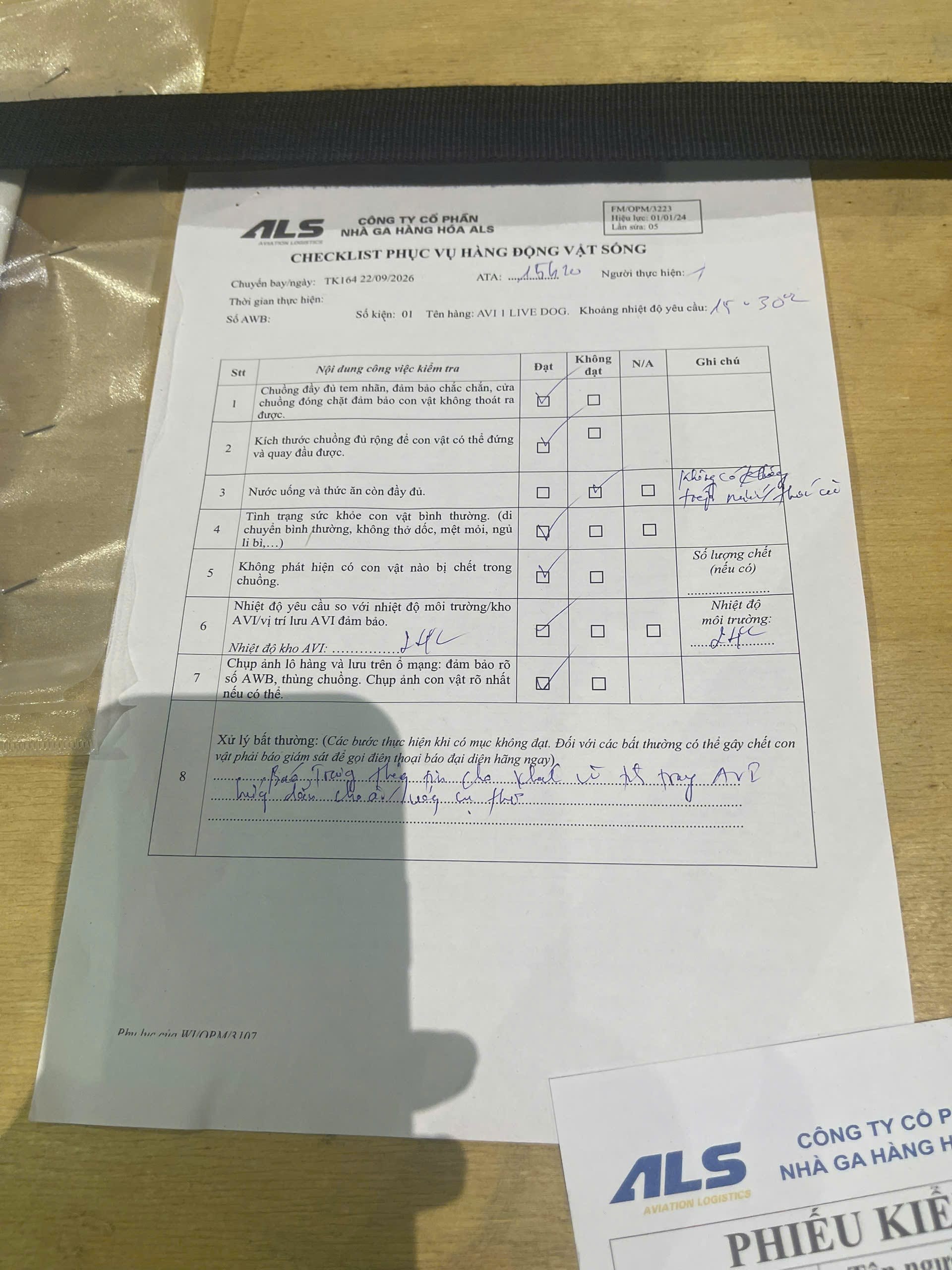
The cargo terminal logs every live animal on a handling checklist. Pablo’s recorded a secure, correctly labelled crate, enough room to stand and turn, normal behaviour, and a storage temperature of 24°C, inside the required 15–30°C range. One line was marked as not met: food and water in the crate. Once he was out of the crate, Pablo got a long drink of water.
Customs then inspected the shipment physically, checking that what had arrived matched what had been declared. This inspection applies to cargo pets on top of the quarantine check. Franny, a cat who flew cargo from Sydney to Hanoi, went through the same terminal steps.
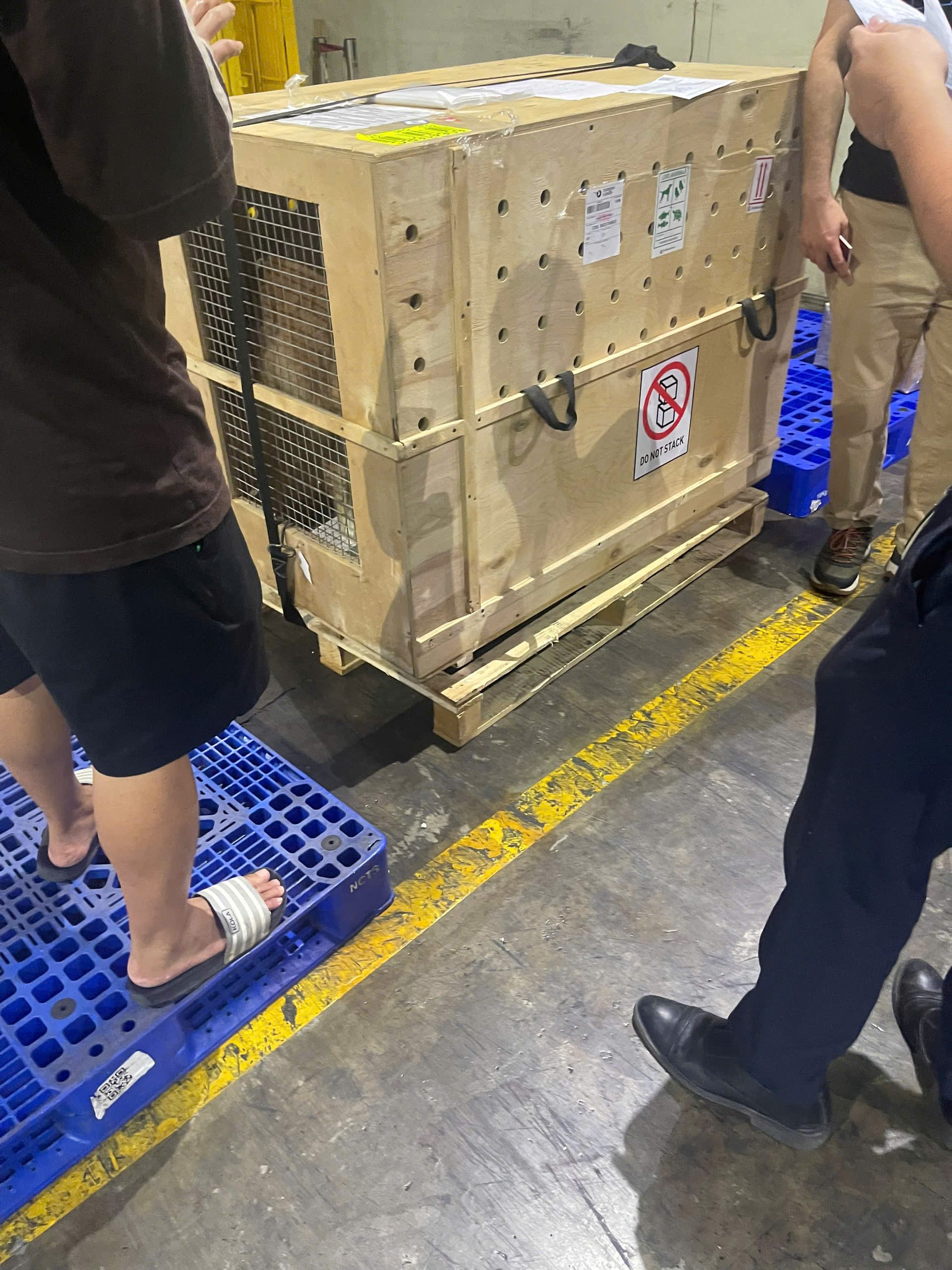
A member of our Hanoi team met Pablo’s owner near the airport and took him to the cargo terminal for his signature, while the quarantine and customs clearance ran through our pet import service in Vietnam.
Our team member also brought a leash and a muzzle. Since 1 August 2026, taking a dog into a public place in Vietnam without a muzzle, or without a leash and a handler, can be fined 1–2 million VND — and for anyone bringing a dog to Vietnam, that rule applies from the moment the dog leaves the terminal.
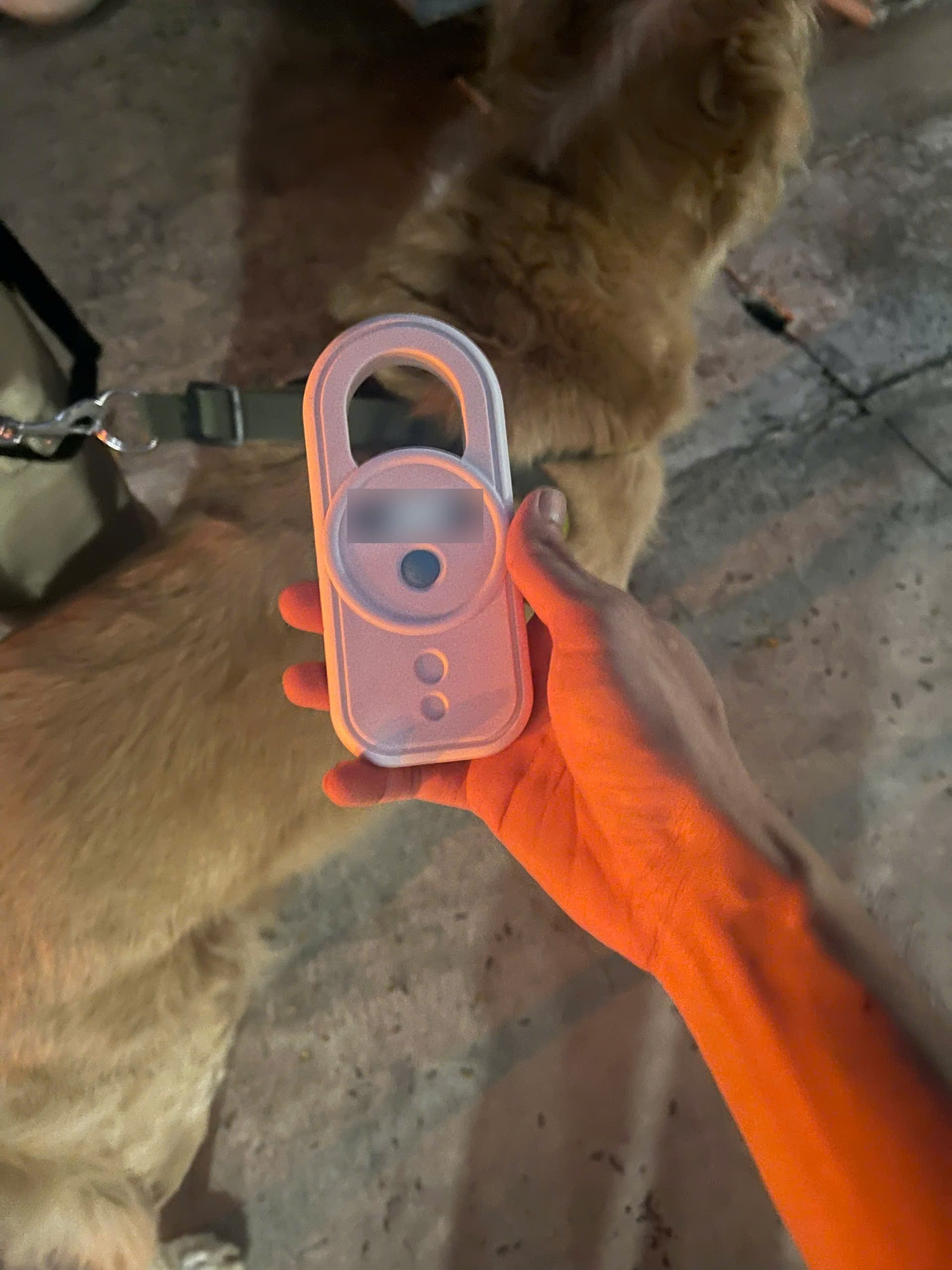
Before handover, we scanned Pablo’s microchip once more and matched it against his documents — the microchip that ties every document together is checked by quarantine on arrival, and it is the last thing we check before a dog goes home.
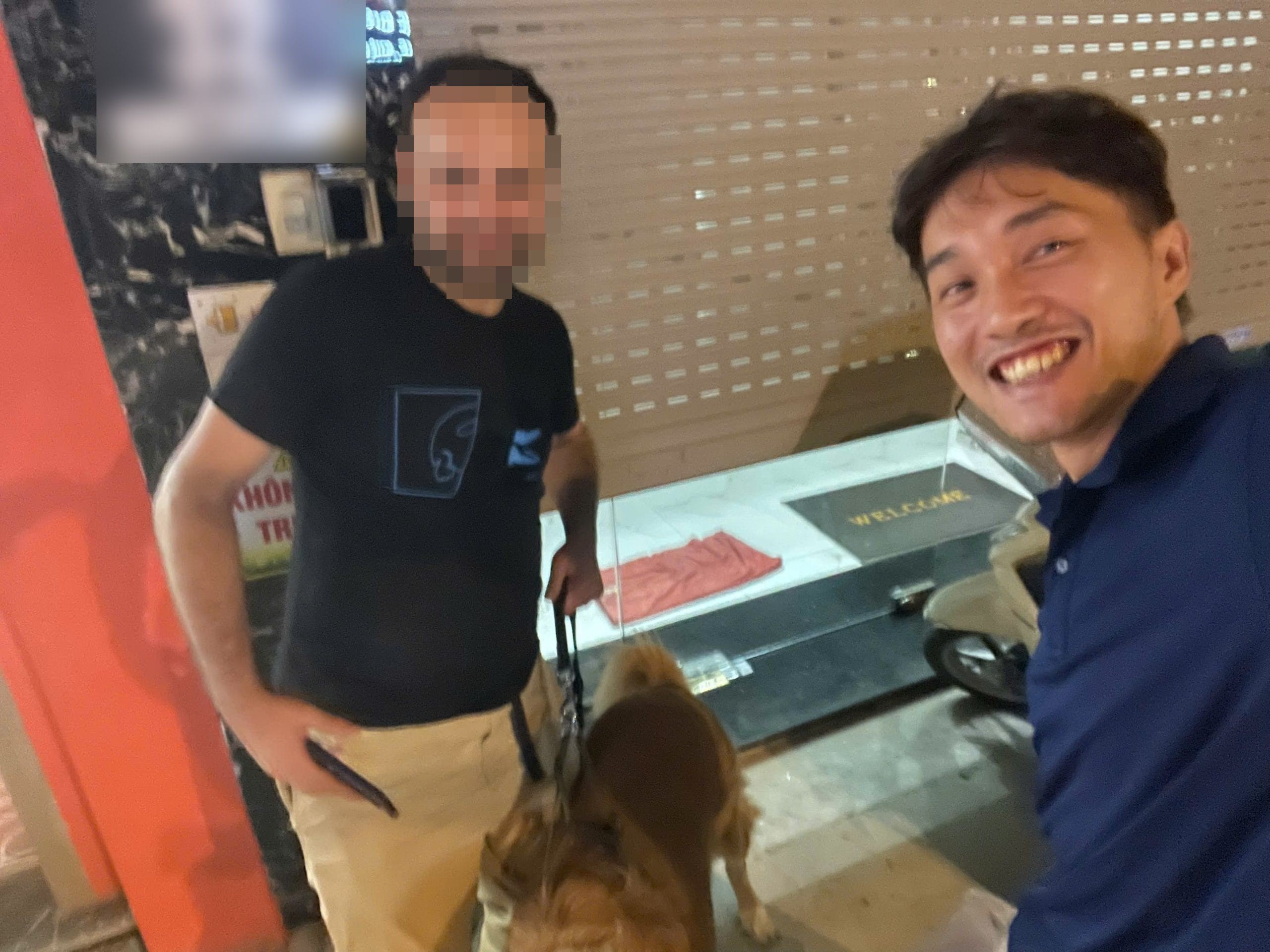
Reunited in Hanoi
At 20:12 that evening, we messaged the Turkish agent that Pablo had arrived safely and completed import clearance. His owner’s reply came a minute later: “Finally we solved everything, thanks everyone.”
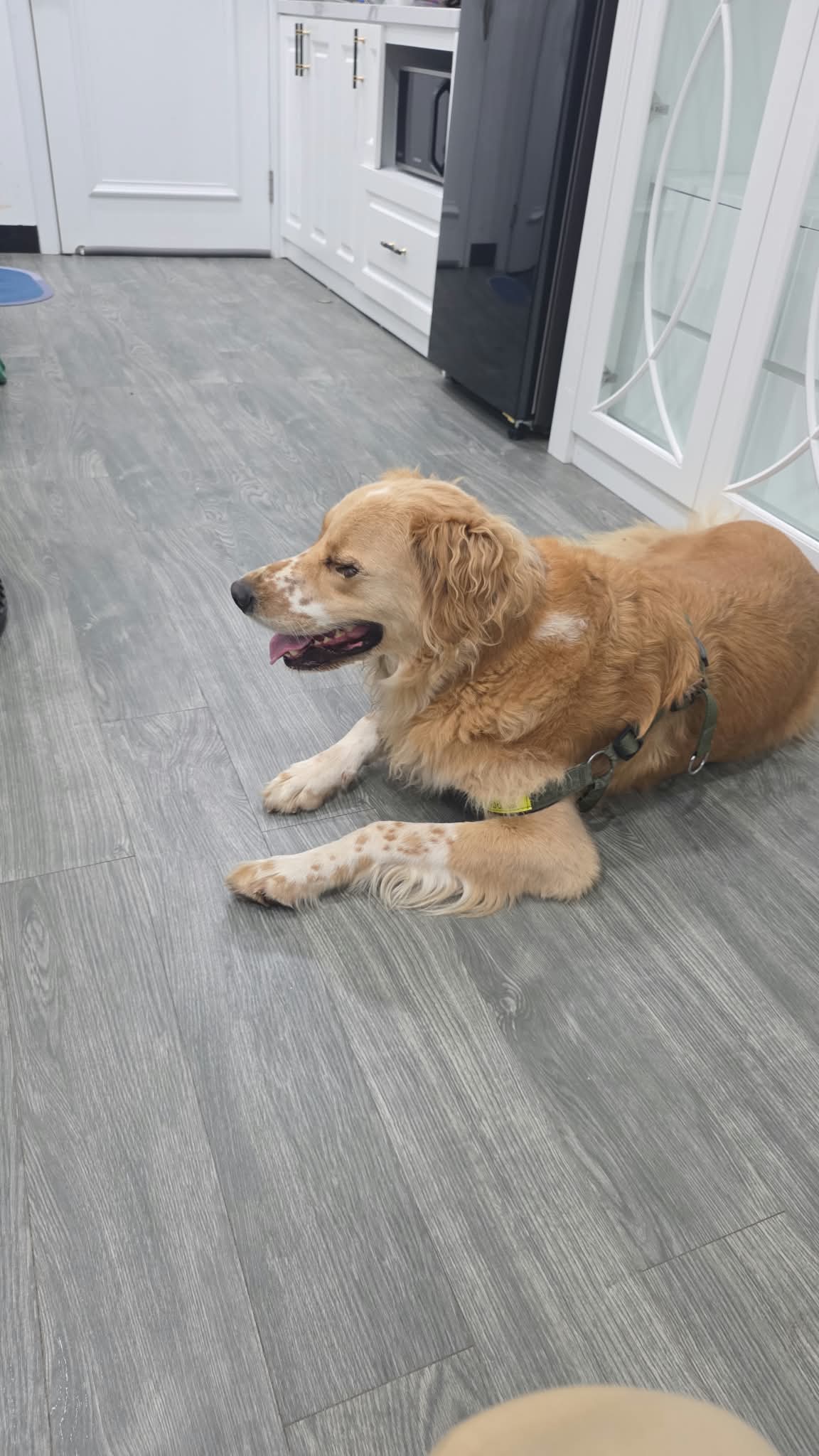
Hanoi isn’t Pablo’s last stop — his owner is planning an onward trip to Da Nang, and we’re working out that leg with him now. For the moment, though, he has a floor to stretch out on after more than a day in his crate.
What Pablo’s case means for shipping a dog from Turkey to Vietnam
None of Pablo’s problems had anything to do with his health or his vaccines. Both came from documents telling slightly different stories about the same shipment. For anyone planning the same route:
- Settle the consignee first. In Pablo’s case, the Turkish export health certificate could only be issued in the owner’s name, and the air waybill’s consignee had to match it. If the owner is named, they need to be in Vietnam and able to sign at the cargo terminal on arrival day.
- Give the airline a full address. Include the consignee’s passport number; Turkish Airlines would not accept a city name alone.
- Ask for the final waybill, not the draft. Compare the weight and crate dimensions once the airline has accepted the dog.
- Time the rabies booster. The current shot must be at least 30 days and no more than 12 months old on travel day.
- Skip the advance permit. For one or two pets, Vietnam issues the import quarantine certificate on arrival.
- Land on a weekday. Bring a leash and a muzzle for the walk out of the cargo terminal.
Last updated 21 Oct 2026 · First published 23 Sep 2026